2027 AI Bachelor's Programs With No SAT or ACT Requirements

Co-Founder and Chief Data Scientist
Many prospective students face barriers when applying for ai bachelor's programs due to SAT or ACT score requirements, which can delay or block entry into this rapidly growing field. Standardized tests may not reflect a candidate's true potential or relevant skills, particularly for those pivoting from unrelated fields. This obstacle complicates career transitions and narrows access to accredited education in artificial intelligence.
This article highlights 2027 AI bachelor's programs that waive SAT and ACT requirements, offering flexible admission pathways. It aims to guide readers toward accessible, quality programs that foster successful entry into the ai industry without test-based limitations.
Key Things You Should Know
- Several U.S. universities now offer AI bachelor's programs without SAT or ACT requirements, expanding access and addressing standardized testing critiques in 2027 admissions.
- These programs focus on practical skills like machine learning and data analysis, aligning curricula with growing AI job markets offering 15% annual growth through 2030.
- Waiving standardized tests increased enrollment diversity by up to 25%, benefiting underrepresented groups and promoting inclusive pathways into AI-related STEM careers.
Which accredited universities offer AI bachelor's degrees without requiring SAT or ACT scores?
Several accredited universities offer artificial intelligence bachelor's programs without requiring SAT or ACT scores, aligning with a growing trend toward test-optional admissions. Notable examples include University of California, Berkeley, which provides a comprehensive AI major through its electrical engineering and computer sciences department without mandatory standardized test submissions. Northeastern University also offers an AI bachelor's degree featuring a flexible testing requirement policy that prioritizes holistic review over test scores. These institutions exemplify how accredited universities with AI bachelor's programs and no SAT ACT requirement are expanding access.
Other universities, such as Arizona State University and University of Southern California, have incorporated AI concentrations within their computer science or engineering programs under test-optional frameworks. Applicants are assessed based on GPA, coursework rigor, essays, and recommendations instead of traditional standardized tests. This expansion of AI bachelor's degrees available without standardized test scores from accredited institutions provides opportunities for students from diverse academic backgrounds.
Prospective students should focus on excelling in relevant STEM coursework and participating in extracurriculars like robotics or coding clubs to strengthen their applications. This approach particularly benefits international and non-traditional students by reducing barriers associated with standard testing. It remains important to check individual admissions webpages since policies may vary or change annually. Based on overall data and university practices, program quality and accreditation increasingly take precedence over standardized testing in AI education pathways.
For those interested in career outcomes related to AI education, exploring details such as applied artificial intelligence salary can offer valuable insights into potential future opportunities.
What are the typical admission requirements for test-optional AI bachelor's programs?
Typical admission requirements for test-optional AI bachelor's programs emphasize holistic evaluation over standardized tests. Applicants must submit high school transcripts showing strong academic performance, particularly in math, computer science, and other STEM subjects. A competitive GPA, usually above 3.0 on a 4.0 scale, is important to demonstrate readiness for challenging AI coursework. Letters of recommendation from teachers or mentors often highlight technical skills, problem-solving, and motivation. This comprehensive approach reflects common application criteria for no SAT or ACT AI bachelor's degrees.
Many programs require a personal statement or essay outlining interest in AI, career goals, and relevant experiences such as coding projects or internships. Some schools ask for a portfolio showcasing programming skills or completed AI-related projects to better evaluate practical aptitude. Participation in STEM clubs or research activities strengthens applications further.
While SAT or ACT scores are optional, submitting them can enhance an application. Institutions that accept scores tend to report median SAT results around 1,190, indicating moderate competitiveness. Specific AI programs may also require placement exams or foundational math assessments. Early communication with admissions officers is advisable for tailored application advice.
Students interested in affordable options may consider programs like the cheapest online master's mechanical engineering degrees, which can complement AI studies by providing a strong technical foundation.
How do online AI bachelor's programs compare to campus-based options for students avoiding standardized tests?
Online ai bachelor's programs without standardized tests offer flexible admission criteria, appealing especially to nontraditional students, working professionals, and those with varied academic backgrounds. Many programs eliminate SAT or ACT requirements, allowing applicants to focus on GPA, work experience, or relevant skills. Some universities even waive prerequisites for students demonstrating competency through portfolios or prior coursework, while others provide AI bootcamps or foundational courses to ease transitions.
Campus-based ai degrees for students skipping SAT and ACT exams still provide valuable in-person experiences like networking and lab access. However, many online programs now include virtual labs, collaborative projects, and real-time faculty interaction, narrowing the traditional gap between online and campus learning. This flexibility suits students balancing jobs or family obligations who need to learn at their own pace and schedule.
Growth in online education continues, with STEM fields such as AI making up a significant portion of online bachelor's degrees. Prospective students should confirm program accreditation and investigate support services like tutoring, career advising, and internship placements to ensure a credible degree. For those exploring options, affordable choices exist and can be found through reliable resources, including AI degrees.
What core coursework and technical skills are covered in AI bachelor's degree curricula?
AI bachelor's degree programs focus on core AI coursework for bachelor's degree programs, combining foundational subjects such as data structures, algorithms, linear algebra, calculus, probability, and statistics. These mathematical foundations are essential for solving complex AI problems and building robust models. Programming instruction emphasizes Python, used in 87% of AI and machine learning undergraduate curricula, highlighting its role in coding models and working with frameworks like TensorFlow and PyTorch.
Technical skills taught in AI undergraduate curricula include machine learning, neural networks, natural language processing, computer vision, and robotics. Students gain hands-on experience with tools such as Jupyter notebooks, cloud platforms, and databases to replicate real-world development scenarios. Ethics, data privacy, and bias mitigation are integrated into the curriculum, preparing graduates to deploy AI responsibly.
Electives allow specialization in areas like reinforcement learning, deep learning, and AI applications for healthcare or finance. Graduates develop expertise in managing large datasets, coding algorithms, and critically evaluating AI system performance, ensuring they are job-ready without needing further certification. Prospective students should have a strong grasp of Python and foundational math before enrolling to succeed in these demanding programs.
Those interested in advancing their skills might consider pursuing an online MS data science program, which complements AI expertise and enhances career prospects in data-driven fields.
How long does it take to complete an AI bachelor's degree, and what is the average total cost?
Completing an ai bachelor's degree generally takes about four years of full-time study at a traditional university. This timeline aligns with typical undergraduate programs in computer science or engineering, where ai is often a concentration or specialized track. Some accelerated programs enable students to finish in three years by attending year-round or carrying heavier course loads. Conversely, part-time students or those working while studying may require five or more years. Online and hybrid formats offer flexibility but usually follow similar overall durations to ensure comprehensive skill development.
The cost of obtaining an ai degree varies widely. The College Board's 2024-2025 Trends in College Pricing report estimates the average total cost for a four-year in-state public university degree at $28,950, covering tuition, fees, room, and board. Private institutions often charge more, sometimes over $50,000 annually, while community colleges providing transfer pathways can reduce initial expenses. Additional costs include textbooks, software, and hardware essential for ai coursework.
Financial support through scholarships and employer tuition assistance may help offset expenses. Some public universities offer flexible admissions policies that waive standardized tests like the SAT or ACT, still maintaining the typical four-year completion track. Carefully weighing these factors allows students to plan their education and career effectively in the evolving ai field.
What entry-level and mid-career job titles are available to AI bachelor's degree graduates?
Graduates with a bachelor's degree in Artificial Intelligence can enter diverse roles such as machine learning engineer, data analyst, AI software developer, and research assistant. These positions involve developing algorithms, analyzing large datasets, and creating AI models applied across various industries. Early career professionals often build practical skills through internships or junior roles before advancing to positions requiring strategic decision-making and ethical considerations in AI.
Mid-career opportunities include senior machine learning engineer, AI product manager, data scientist, and AI systems architect. These positions demand expertise in designing scalable AI solutions, managing teams, and integrating AI with technologies like cloud computing or robotics. Specializations such as natural language processing, computer vision, and reinforcement learning allow professionals to focus on sectors including healthcare, finance, and autonomous systems.
The demand for machine learning engineers is increasing rapidly, with job postings growing 74% from 2022 to 2024, reflecting a strong market need for skills in deep learning frameworks, model optimization, and deployment pipelines. Understanding these evolving job titles and industry trends can help prospective students and working professionals identify valuable skills for long-term career growth in Artificial Intelligence.
What is the projected job growth and salary range for AI professionals with a bachelor's degree?
Job growth for AI professionals with a bachelor's degree is projected to be notably strong, with the U.S. Bureau of Labor Statistics estimating a 23% increase for computer and information research scientists from 2023 to 2033. This rate far surpasses the 3% average expected for all occupations, highlighting a rapidly expanding job market.
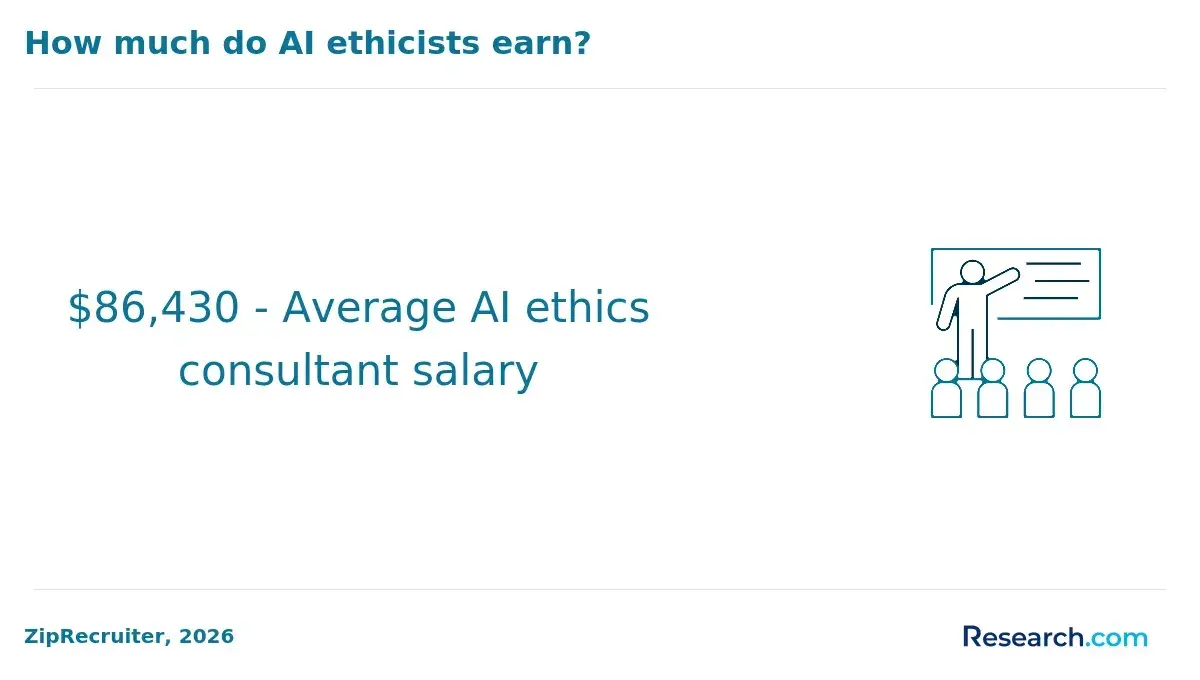
Starting salaries for AI graduates typically begin around $85,000 annually, varying by location and employer. Professionals with experience often earn between $110,000 and $140,000, while those in specialized roles like machine learning engineers or data scientists can command salaries above $160,000, especially at major tech companies or financial institutions.
Factors influencing salary include industry, geography, and specific AI skills. For example, professionals in tech hubs such as San Francisco or New York usually receive higher pay compared to smaller cities. Expertise in advanced AI algorithms, programming languages, and cloud platforms further enhances earning potential.
Emerging fields such as natural language processing, computer vision, and robotics offer growing opportunities and attractive salaries. Pursuing certification courses and internships in these areas can improve job prospects.
Are there industry certifications or professional credentials recommended alongside an AI bachelor's degree?
Alongside an AI bachelor's degree, industry certifications significantly enhance career prospects by showcasing specialized skills. Cloud platform certifications, particularly Google Cloud credentials, are increasingly valued. Coursera's 2024 Skills Index reports a 156% rise in Google Cloud certifications between 2022 and 2024, underscoring their growing relevance. These credentials validate expertise in deploying AI solutions on scalable cloud infrastructures, a vital skill in many AI roles.
Additional certifications from Microsoft Azure, AWS Certified Machine Learning, and IBM AI Engineering offer expertise across varied cloud environments and AI tools. Combining these with academic qualifications demonstrates practical abilities in model implementation, data pipeline management, and workflow automation-key competencies in real-world projects.
Beyond cloud certifications, professional credentials in data science, machine learning, and deep learning improve employability. Credentials such as the Certified Analytics Professional (CAP) and TensorFlow Developer Certificate validate proficiency in data analytics and AI frameworks. These often fill gaps left by degree programs by focusing on applied skills aligned with industry needs.
Employers prioritize candidates who hold both academic achievements and relevant certifications, especially for AI engineering, research, and product development roles. Pursuing these credentials during or soon after studies offers a competitive advantage and eases the transition into AI careers.
How should prospective students evaluate the quality and reputation of test-optional AI programs?
Students exploring test-optional AI bachelor's programs should weigh institutional reputation and curriculum quality alongside admission standards. According to the 2024 Hired State of Tech Hiring report, 64% of employers recruiting for AI roles prefer candidates from schools ranked within the top 100 by reputation. This highlights the significance of program prestige when planning education and career paths. Yet, 31% of AI professionals come from non-top-tier schools, showing that valuable programs exist beyond elite rankings.
Key factors to assess include faculty expertise, research opportunities, and industry connections. Programs that offer access to AI labs, internships with tech companies, or collaborations on real-world projects provide practical experience that employers highly regard. It is important to review whether the curriculum addresses core AI subjects such as machine learning, data science, and ethics, as well as evolving areas like natural language processing.
Accreditation status and alumni outcomes offer further insight into program quality. Students should confirm that institutions are accredited by recognized STEM education bodies and consider alumni success in AI roles or graduate studies as evidence of effectiveness. Because test-optional policies eliminate standardized exams as a gatekeeper, applicants should also evaluate support services like tutoring and career counseling that enhance academic achievement and career placement. Balancing accessibility with academic rigor helps identify test-optional AI degrees that meet both career ambitions and market demands.
What transfer pathways and prior learning options exist for adult learners entering AI bachelor's programs?
Adult learners seeking a bachelor's degree in artificial intelligence often benefit from well-established transfer pathways and prior learning assessment (PLA) options that help expedite degree completion. Many four-year colleges partner with community colleges, allowing STEM credits to transfer directly and simplifying progress toward AI-related degrees. According to the American Association of Community Colleges, students transferring from community colleges make up 36% of bachelor's degree earners at four-year institutions, with STEM transfer completion rates reaching 58% due to expanded PLA policies.
Prior learning assessments provide credit for relevant work experience, military training, certifications, and professional development, a valuable option for working adults with skills gained outside traditional classrooms. This can include credits for AI-related certifications in areas like machine learning or data science from recognized sources. Some schools also accept portfolio assessments, where students demonstrate competencies through projects or exams.
Transfer requirements usually include a minimum GPA of around 2.5 to 3.0 and may limit the age of transferable credits to maintain relevance. Prospective students should verify articulation agreements between their colleges and AI programs, focusing on programming, math, and statistics courses. Many institutions offer transfer advising and online tools for effectively mapping credits.
To maximize credit transfer and PLA benefits, students should prepare detailed transcripts, course syllabi, and documentation of prior learning early. This proactive approach minimizes delays and helps uncover the most credit possible for efficient progress in artificial intelligence bachelor's degrees without standardized test barriers.
Other Things You Should Know About Artificial Intelligence
Success in artificial intelligence bachelor's programs typically requires strong foundations in mathematics, especially linear algebra, calculus, and statistics. Programming proficiency-commonly in languages like Python or Java-is essential, as well as logical thinking and problem-solving abilities. Communication skills also play a crucial role, since AI professionals must often collaborate across technical and non-technical teams.
Internships and hands-on projects are highly recommended in AI programs to apply theoretical knowledge in real-world contexts. Many AI degrees incorporate capstone projects or lab work that simulate industry challenges. Practical experience increases job readiness and helps students build portfolios that are attractive to employers.
Ethics is a growing focus within AI education to ensure responsible development and deployment of AI technologies. Bachelor's programs usually include coursework on the societal impacts of AI, data privacy, algorithmic bias, and legal issues. These topics prepare graduates to recognize and mitigate ethical challenges in AI applications.
These programs often emphasize a holistic admissions process, focusing on high school performance, personal statements, and letters of recommendation. Some universities may also consider online course certifications or competitions. For those interested in advancing their education, exploring a master’s in medical AI could be beneficial.
References
- AI Jobs With No Experience â 10+ Entry-Level Roles | Beginner Guide 2026 â Mindrift https://mindrift.ai/blog/ai-jobs-with-no-experience
- Best Online AI, Machine Learning, and Computer Science Summer Programs and Research Internships for High School Students in 2026 https://www.eduretix.com/post/best-online-ai-machine-learning-and-computer-science-summer-programs-and-research-internships-for
- How Long Does It Take to Complete an AI Course https://www.epw.com/blog/courses/how-long-is-ai-course
- Best AI Certifications in 2025 https://cpoclub.com/career/best-ai-certifications/
- 16 Artificial Intelligence Career Paths https://www.calmu.edu/news/artificial-intelligence-career-paths
- Key Skills Gained from a Bachelor of Science in Artificial Intelligence https://tetr.com/blog/key-skills-gained-from-a-bachelor-of-science-in-artificial-intelligence
- Apply to a Bachelor’s Program at CEU https://www.ceu.edu/admissions/bachelor
- Artificial Intelligence admission requirements in detail https://www.srh-university.de/en/master/bls/information-technology-artificial-intelligence/artificial-intelligence-admission-requirements-in-detail/
- AI Course Duration: How Long Does It Take to Become AI-Ready? https://rcm.ac.in/ai-course-duration-how-long-does-it-take-to-become-ai-ready/
- Transfer Pathways Steer Students and Institutions to Undergraduate Success https://agb.org/trusteeship-article/transfer-pathways-steer-students-and-institutions-to-undergraduate-success/