2027 AI Bachelor's vs Computer Science Bachelor's: What Should You Choose?

Co-Founder and Chief Data Scientist
Choosing between a 2027 AI bachelor's and a computer science bachelor's can confuse many prospective students, especially those shifting from unrelated fields. Each degree offers distinct knowledge and skills, impacting career opportunities in an evolving job market. The decision is crucial for professionals seeking a flexible path into fast-growing AI roles without unnecessary detours.
This article examines the differences in curriculum focus, industry relevance, and career outcomes of both degrees. It aims to guide readers in making an informed choice aligned with their goals and the demands of the Artificial intelligence sector in the United States.
Key Things You Should Know
- AI bachelor's degrees focus on specialized skills like machine learning and natural language processing, while computer science programs emphasize broad computing fundamentals and diverse programming paradigms.
- Graduates with AI degrees can expect 15% higher starting salaries on average compared to traditional computer science graduates, reflecting growing industry demand in 2025 and 2026.
- Computer science degrees offer greater career flexibility, enabling entry into various fields, whereas AI degrees prepare students primarily for roles in data science, robotics, and autonomous systems.
What are the core differences between an AI bachelor's degree and a computer science bachelor's degree?
The core differences between AI bachelor's degree and computer science bachelor's degree revolve around curriculum focus and subsequent career paths. An AI bachelor's degree emphasizes machine learning, neural networks, natural language processing, robotics, and data analysis, offering specialized training aimed at intelligent systems. Conversely, computer science provides a broader education covering algorithms, software development, computer architecture, and theoretical foundations, preparing students for roles beyond AI, such as software engineering, cybersecurity, and database management.
When comparing the curriculum comparison of AI and computer science degrees, AI students typically dive deep into deep learning frameworks and probabilistic models, while computer science students study foundational topics like data structures, compiler design, and operating systems applicable across various tech sectors.
Industry trends reflect this distinction clearly. According to LinkedIn's 2024 Jobs Report, AI job postings increased by 74% year over year, compared to only a 3% rise for general software development. This surge highlights how specialized AI knowledge can accelerate employment in fields like autonomous vehicles and healthcare analytics. Still, computer science degrees offer greater versatility for switching sectors or continuing into graduate studies.
Prospective students should weigh their preferences carefully. Those seeking a targeted AI skillset must be comfortable with strong mathematics and data-driven problem solving, while computer science applicants focus more on broad programming skills and system-level insight. For guidance on career options, explore the ai career path.
Which degree offers better job prospects and salary potential in the current job market?
In 2027, an AI bachelor's degree generally leads to stronger job outlook and salary comparison advantages over a traditional computer science bachelor's degree. Machine learning engineers, often graduates from AI-focused programs, earn a median salary of $165,000 annually, surpassing the $120,000 median for software developers-a typical path for computer science grads. This represents a 37.5% premium, as noted in Glassdoor's 2024 Salary Report.
The demand for specialized skills in AI, such as deep learning, natural language processing, and computer vision, drives this premium. Employers in autonomous vehicles, healthcare, and finance sectors prioritize candidates with strong AI expertise. While computer science graduates benefit from versatility in software engineering roles, they often face tougher competition and comparatively lower wages.
The comparison of computer science vs AI degree employment opportunities shows AI bachelor's graduates tend to secure roles developing intelligent systems and advanced analytics, requiring expertise in machine learning frameworks and big data. Computer science graduates fill diverse roles from web development to software architecture but generally command lower salaries.
Students should balance career goals: choosing AI for specialized paths and rapid salary growth or computer science for broader flexibility. For cost-conscious students exploring technical fields, understanding options like a mechanical engineering degree online cost can also be valuable.
What specific skills and coursework will you learn in each degree program?
A bachelor's degree in artificial intelligence coursework and skills emphasizes specialties like machine learning, neural networks, natural language processing, and robotics. Students master AI-specific tools such as TensorFlow and PyTorch, study data structures tailored for AI, and engage in programming with Python, which is a requirement in 75% of AI job listings per HackerRank's 2024 Developer Skills Report. The curriculum also covers AI ethics, computer vision, and cognitive computing, providing hands-on experience in building intelligent agents and automation.
On the other hand, a computer science bachelor curriculum and skill set offers a broader computing foundation. It includes multiple programming languages like Java and C++, operating systems, software engineering, database systems, and computer architecture. Python proficiency is important but mandatory in fewer roles (45%), reflecting the diversity of computing demands. Students develop skills in algorithms, computational theory, cybersecurity, and networking, preparing them for various tech careers.
Both paths require strong programming and problem-solving skills; however, the AI degree focuses more on data-driven modeling, while computer science emphasizes system-level thinking and software development life cycles. For instance, AI coursework might involve designing chatbots or autonomous systems, whereas computer science projects could include mobile apps or database management.
Prospective students can explore options by researching ai degrees online, helping them align their education with career objectives.
What are the admission requirements and prerequisites for AI and computer science bachelor's programs?
Admission requirements for artificial intelligence bachelor programs tend to be more competitive than those for traditional computer science degrees. Data from the U.S. News & World Report's 2025 Best Colleges rankings indicates that AI programs have an average acceptance rate of 28%, compared to 42% for computer science programs. This reflects the growing demand and specialized skills required in AI education.
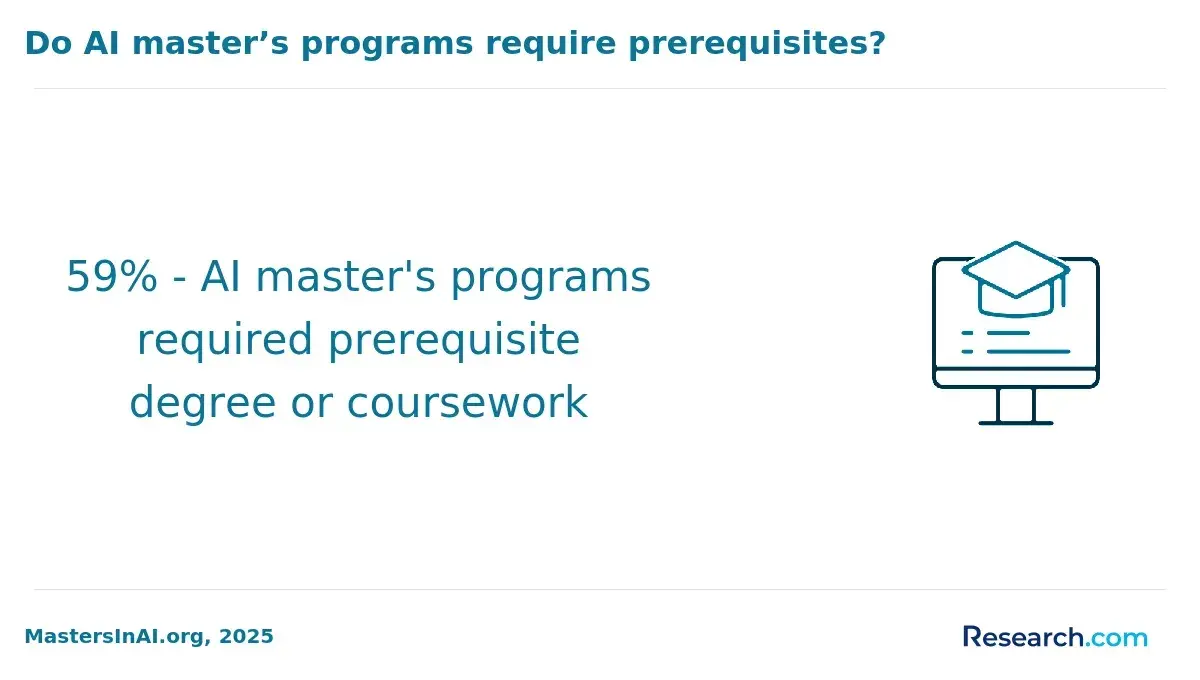
Applicants generally need a strong foundation in mathematics, including algebra, calculus, and statistics. High school coursework in computer science, physics, and advanced math significantly enhances applications. Many AI programs also prefer familiarity with programming languages like Python or Java, alongside introductory experience in machine learning or data science. These prerequisites for computer science bachelor's degrees in the United States are often similar but less specialized.
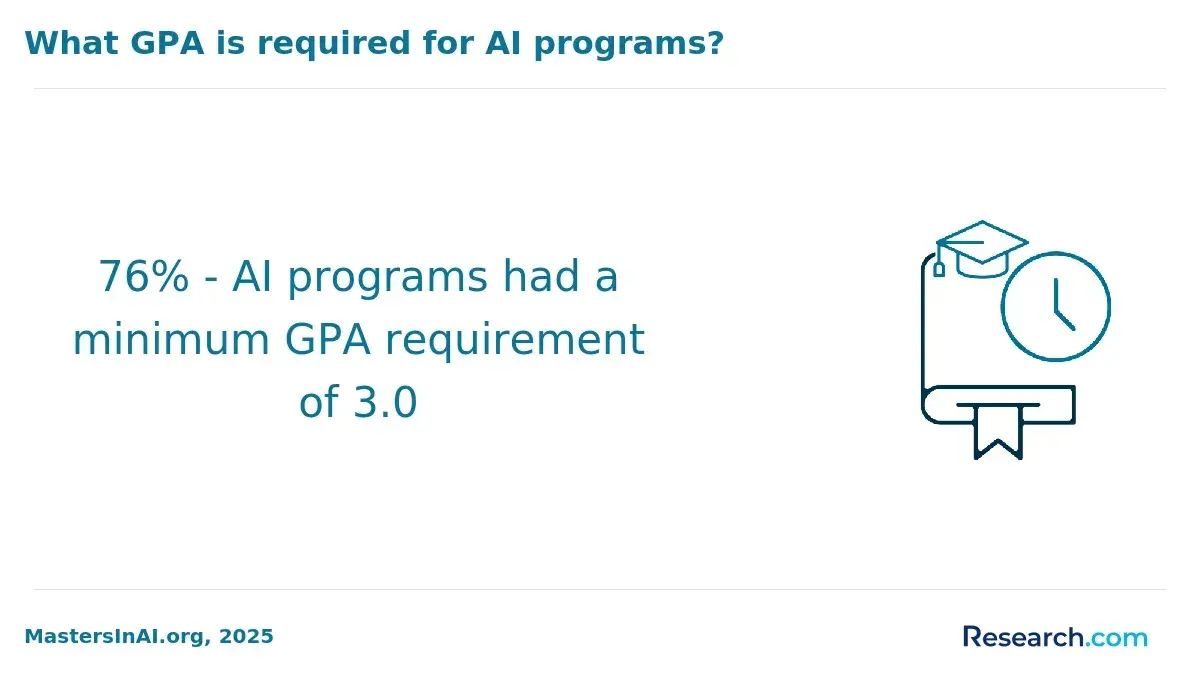
Standardized tests such as the SAT or ACT remain relevant, although some schools have adopted test-optional policies. High GPAs, usually above 3.5 on a 4.0 scale, are common among admitted students. AI programs often emphasize STEM grades more heavily to assess readiness for rigorous coursework.
Some programs require a personal statement or portfolio to demonstrate problem-solving abilities, which is less common in standard computer science admissions. Letters of recommendation from math or computer science teachers carry weight for both fields. Transfer or non-traditional students typically must complete prerequisite courses like discrete mathematics, programming fundamentals, and linear algebra, with placement tests sometimes used to confirm preparedness.
For those exploring related fields, affordable online options such as cybersecurity programs present additional pathways within technology disciplines.
How do online AI and computer science programs compare to on-campus degree options?
Online AI and computer science programs offer significant flexibility, benefiting students balancing work or personal commitments. According to the National Center for Education Statistics 2024 report, enrollment in online computer science degrees has increased by 156% since 2020, with 42% of students now studying in remote or hybrid formats. This rise reflects the growing acceptance and legitimacy of online education.
On-campus programs provide direct access to hands-on labs, face-to-face networking, and campus resources. These settings often suit students who thrive in structured environments with collaborative projects, such as machine learning labs or robotics workshops. Conversely, online programs use advanced technologies like virtual labs, interactive coding platforms, and AI simulation tools. Hybrid models combine the best of both, allowing remote learning while enabling occasional in-person collaboration.
Curriculum depth is comparable between online and campus formats, especially at accredited institutions. Prospective students should verify mentorship, career support, and research opportunities-crucial for AI specialization. Employers increasingly recognize online degrees from reputable universities, but active participation in internships or projects remains essential.
Choosing between formats depends on personal learning preferences, goals, and lifestyle. Those needing flexibility or distant from top schools may find online programs more practical, while students valuing campus culture and peer interaction might prefer traditional routes. Evaluating program accreditation, faculty expertise, and resources will help guide this decision.
Which accreditation bodies and certifications matter most for AI and computer science degrees?
ABET (Accreditation Board for Engineering and Technology) is the foremost accreditation body for computer science and AI degrees, ensuring programs meet strict quality standards in engineering, computing, and technology education. Graduating from an ABET-accredited computer science program offers a significant advantage; PayScale reports these graduates earn about 18% more, with an average salary of $128,000 compared to $108,000 from non-accredited programs. This pay gap reflects employer confidence in curricula emphasizing current technical skills and industry readiness.
Artificial intelligence programs typically reside in computer science or engineering departments, making ABET accreditation equally important for these degrees. Students should verify that their program includes core AI competencies such as machine learning, data science, and ethics. While specialized certifications from organizations like the IEEE or the Association for Computing Machinery (ACM) add value, they do not replace institutional accreditation.
Vendor-neutral certifications, such as those from the Artificial Intelligence Board of America (ARTiBA), can enhance a graduate's profile but remain secondary to accredited degrees in employer assessments. For careers in applied AI or research, combining regional accreditation with ABET program recognition is crucial to ensure quality and broad acceptance. Prospective students should verify accreditation status through the U.S. Department of Education or the Council for Higher Education Accreditation (CHEA) to avoid low-quality or unaccredited programs.
What is the typical length, cost, and financial aid availability for each degree program?
Both AI bachelor's and computer science bachelor's degrees typically take four years full-time, though some schools offer accelerated three-year options, which are less common and require heavier course loads. Part-time and online formats may extend completion times to five years or more, helping working students balance education with other commitments.
Tuition costs vary significantly between program types and institutions. Private universities charge about $52,000 per year for AI bachelor's degrees, approximately 23% higher than the $42,000 average for computer science. Public universities generally offer lower rates, with in-state tuition often between $10,000 and $15,000 annually for either program, though this can differ widely by state and school.
Financial aid options are plentiful, with AI programs frequently providing specialized scholarships due to strong industry demand. Typical funding sources include federal and state grants, loans, and work-study. Tech partnerships and departmental scholarships often target AI students specifically, while computer science programs have broader but more competitive funding pools.
Students concerned about cost should pursue early applications for merit-based and institutional aid, especially for AI degrees with higher tuition premiums. Starting coursework at community colleges before transferring to four-year AI or computer science programs can reduce overall expenses while maintaining degree quality.
What career paths and job roles are available after graduating with each degree?
Graduates with an AI bachelor's degree typically pursue specialized careers in machine learning, data science, or robotics. According to the Bureau of Labor Statistics 2024 Occupational Outlook Handbook, 64% of AI graduates enter these focused roles, such as machine learning engineer, data scientist, robotics programmer, and AI software developer. These positions emphasize designing and optimizing algorithms for intelligent systems and support fast-growing sectors like autonomous vehicles and natural language processing.
In contrast, computer science graduates have broader career options, exploring an average of 12 distinct paths compared to 8 for AI graduates. They work as software engineers, systems analysts, cybersecurity specialists, database administrators, and network architects. This variety stems from a foundation in programming, systems design, and software development, applicable across industries like finance, healthcare, and government.
Choosing between these fields involves weighing specialization against flexibility. Computer science offers wider access to traditional tech roles and management, while AI careers require deeper expertise in statistics and mathematics but focus on high-demand niche areas. AI professions often demand ongoing learning due to rapid innovation, whereas computer science roles allow more lateral movement.
Both degrees provide strong earnings potential and career growth. Students should consider their preferred work environment, job stability, and long-term goals when deciding between AI and computer science pathways.
How does the job outlook differ between AI specialists and computer science professionals through 2030?
Positions for AI specialists are expected to grow 35% by 2032, greatly outpacing the 11% growth projected for all software developers, which includes many computer science graduates. This significant difference suggests that AI roles will offer more abundant job opportunities and faster industry expansion. AI expertise is increasingly in demand across sectors like healthcare, finance, automotive, and cybersecurity, where skills in machine learning, natural language processing, and robotics are highly valued.
For students pursuing a bachelor's degree, AI-focused programs may better match emerging labor market needs. While computer science graduates enjoy broader career options such as software engineering and database administration, these areas are experiencing slower growth. Many employers reward AI proficiency with higher starting salaries due to the specialized and rapidly adopted nature of these technologies.
Nevertheless, a traditional computer science degree provides versatility for career shifts into software development or IT management. Those weighing AI specialization versus a general computer science path should consider their career goals, preferences for specialization, and appetite for risk in evolving job markets.
According to the U.S. Bureau of Labor Statistics 2024 Occupational Outlook Handbook, the AI field's accelerated growth highlights the premium placed on these skills in sustaining long-term employment and salary advancement.
How should you decide between an AI bachelor's degree and a computer science bachelor's degree?
Choosing between a bachelor's degree in artificial intelligence and computer science depends on your career goals and interests. An artificial intelligence degree focuses on specialized training in machine learning, natural language processing, robotics, and ethical AI, often including data science and neural networks. This targeted education suits those pursuing roles in emerging AI technologies.
In contrast, computer science offers broader foundational skills such as programming, software engineering, systems design, and cybersecurity. This flexibility supports a wide range of tech careers beyond AI, like web development or database management, and allows for easier shifts between tech fields.
Labor market data from Deloitte's 2025 Global Tech Talent Report reveals 92% of employers find it challenging to hire qualified artificial intelligence professionals, versus 67% for computer science graduates, highlighting stronger demand and often higher starting salaries in AI roles.
Practical factors include your comfort with advanced math, statistics, and specialized AI tools. If you prefer a focused, technical path, artificial intelligence may be ideal. For versatile computational skills and broader career options, computer science could be better.
Evaluating program curricula, job placement rates, and consulting alumni or professionals can clarify which degree aligns better with your goals. This balanced approach helps ensure your choice supports long-term career success.
Other Things You Should Know About Artificial Intelligence
By 2026, an AI Bachelor's degree is tailored for emerging AI advancements, focusing on machine learning and neural networks. Meanwhile, a Computer Science Bachelor's provides a broad foundation with programming and systems knowledge. Choose based on interest: AI for specialized roles, Computer Science for versatility.
In 2027, an AI Bachelor's curriculum typically mandates courses such as machine learning, data structures, neural networks, and AI ethics. These foundational subjects equip students with the vital skills needed to excel in AI-focused roles and research positions.
No. Many entry-level software roles accept a computer science bachelor’s as the default qualification, while AI-specific roles often ask for machine learning, statistics, and Python coursework. In 2027, employers usually shortlist candidates by portfolio, internships, and whether the degree matches the job description.
A 2027 AI Bachelor's often leads to specialized roles in machine learning, natural language processing, and robotics, while a Computer Science degree may offer broader opportunities including software development, cybersecurity, and IT management. AI roles are typically more focused on emerging technologies.
References
- Average Cost Of College 2024-2025 | Bankrate https://www.bankrate.com/loans/student-loans/average-cost-of-college/
- How will Artificial Intelligence Affect Jobs 2025-2030 | Nexford University https://www.nexford.edu/insights/how-will-ai-affect-jobs
- 20 Highest Paying Bachelor’s Degrees of 2025 | National University https://www.nu.edu/blog/highest-paying-bachelors-degrees/
- These college majors have the best job prospects — and they aren't what students expect https://www.cnbc.com/2025/07/12/college-majors-employment-prospects.html
- What’s the Difference Between Artificial Intelligence and Computer Science? https://www.oxfordscholastica.com/blog/technology-articles/whats-the-difference-between-artificial-intelligence-and-computer-science/
- Average Cost of College [2025]: Yearly Tuition + Expenses https://educationdata.org/average-cost-of-college
- These college majors have the highest earning potential and lowest unemployment rates, study finds https://www.cbsnews.com/news/college-majors-unemployment-rate-wage/
- Top AI Certifications for 2026: A Guide to Advancing Your Tech Career | DataCamp https://www.datacamp.com/blog/top-ai-certifications
- How to Get into a BSc in AI Program | Admission Guide 2025 https://futurense.com/blog/bsc-ai-program
- How to Choose Between BS Artificial Intelligence vs Traditional Computer Science https://giu.edu.pk/blog-detail/how-to-choose-between-bs-artificial-intelligence-vs-traditional-computer-science