2027 AI Master's Programs With Monthly Start Dates

Co-Founder and Chief Data Scientist
Professionals with unrelated undergraduate degrees often face challenges when seeking flexible, accredited pathways to pivot into the AI industry. Traditional graduate programs frequently require fixed start dates and rigid schedules, complicating timely enrollment and career transitions. Monthly start options offer the flexibility needed to balance current commitments while advancing education in artificial intelligence.
This article highlights master's programs available in 2027 that provide monthly start dates, helping readers identify viable, adaptive routes to enter the AI workforce efficiently and with minimal delay.
Key Things You Should Know
- Many U.S. universities now offer AI master's programs with monthly start dates, increasing flexibility for working professionals and career changers seeking timely entry into the field.
- Recent data shows a 35% enrollment growth in AI-related graduate programs from 2024 to 2025, reflecting growing industry demand for specialized skills.
- Curricula frequently combine machine learning, ethics, and data science, aligning education with job market needs focused on responsible AI development and deployment.
Which U.S. universities offer AI master's degrees with flexible monthly enrollment options?
Several U.S. universities now offer ai master's programs with flexible monthly start dates, catering especially to working professionals and non-traditional students. Institutions like Northeastern University, University of Texas at Austin, and Arizona State University have developed fully online AI master's programs with rolling enrollment, allowing students to begin coursework without waiting for fall or spring semesters.
Flexible monthly start dates reduce downtime and accelerate career transitions by enabling immediate course engagement. For example, Northeastern's MS in Artificial Intelligence provides new cohorts monthly with asynchronous classes, supporting students across time zones without scheduling conflicts. Similarly, the University of Texas at Austin's online Master of Science in Computer Science with an AI specialization offers year-round start dates through rolling admission, promoting accessibility and flexibility.
These programs typically offer both part-time and full-time pacing, helping students balance work and study effectively while benefiting from online delivery regardless of location. Monthly start dates also foster personalized advising and strong cohort integration tailored to individual schedules. Over 200 universities across the U.S. have expanded AI master's degrees with online and flexible enrollment options as standard among top-ranked institutions (U.S. News & World Report Education Data, 2024).
Prospective students should assess programs for accreditation, curriculum quality, faculty expertise, and career services alongside flexible admissions. For those seeking accelerated pathways, exploring a 1 year computer science degree online could complement their AI master's studies or professional goals.
What are the typical admission requirements and prerequisites for entering an AI master's program?
Admission requirements for entering an AI master's program in 2026 generally include a bachelor's degree, with 78% of programs requiring it to be in a STEM field such as computer science, engineering, mathematics, or physics. This foundation ensures strong skills in programming, algorithms, and quantitative analysis. However, 22% of programs accept applicants from non-technical backgrounds if they complete prerequisite coursework or can demonstrate strong quantitative skills, often covering linear algebra, probability, statistics, and programming languages like Python. These prerequisites for entering an AI master's degree are essential for non-STEM candidates to meet program expectations.
Applicants typically need to submit undergraduate transcripts, recommendation letters, and a statement of purpose focused on their interest in AI. Some schools require GRE scores, especially verbal and quantitative reasoning sections. Relevant work experience or research in AI can strengthen applications but is not mandatory. Candidates without strong mathematics backgrounds should consider MOOCs or community college courses in calculus, discrete math, and coding to fill gaps.
International applicants must provide proof of English proficiency through tests like TOEFL or IELTS and submit visa documentation. Many programs offer rolling admissions with flexible start dates, demanding current application materials that reflect up-to-date skills. Prospective students exploring options might consult the data science master us ranking to find affordable programs compatible with their goals.
Careful attention to each institution's specific criteria and early preparation improves acceptance chances. Understanding typical admission requirements for AI master's programs helps candidates tailor their applications effectively and close any prerequisite gaps ahead of deadlines.
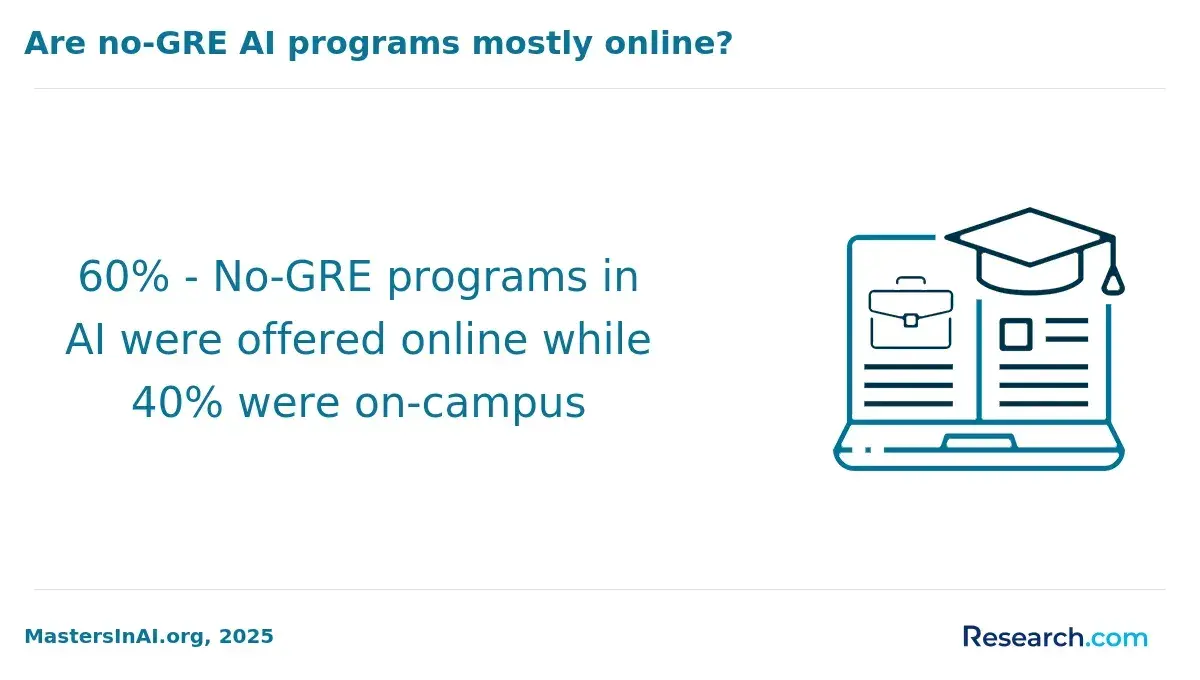
How do online AI master's programs compare to campus-based options in terms of curriculum and learning outcomes?
Online AI master's programs closely mirror campus-based curricula with identical core courses and specialized electives. Universities often deliver the same rigorous content digitally, using synchronous lectures, interactive assignments, and group projects to maintain strong learning objectives and competencies. A 2024 Coursera & University Partnership Report found that 89% of online AI master's students report comparable or superior learning outcomes relative to traditional campus programs, highlighting that online formats uphold academic quality in complex topics like machine learning algorithms, natural language processing, and computer vision.
Flexibility remains a key advantage, with 91% of students valuing it most. Monthly start dates accommodate working professionals and those with family commitments, contrasting the fixed semester schedules and in-person attendance required by campus programs. Such adaptability supports self-paced learning and the ability to revisit lectures, improving retention of challenging material. These features are critical in considering online AI master's programs curriculum comparison for prospective students.
Campus programs often provide richer access to physical lab resources, face-to-face mentoring, and networking opportunities that enhance practical skills and connections. Hybrid models blend both, offering on-campus labs alongside online coursework to balance convenience with hands-on experience. When weighing options, students should match their learning style, career goals, and availability.
For those interested in financial aspects, exploring the online engineering degree cost can provide useful context when budgeting for AI education. The learning outcomes of campus vs online AI degrees suggest that each format has unique strengths depending on student priorities.
What is the average cost and duration of an AI master's degree in the United States?
The average cost of an AI master's degree in the United States varies widely, ranging from $30,000 to $120,000. This range depends heavily on the type of institution and the program format. On-campus programs at public universities generally have higher tuition, often around $40,000, whereas online alternatives may reduce costs by approximately 30%, bringing some programs closer to $28,000. The typical duration of AI master's programs in the US is about two years for full-time students, though accelerated paths allow completion in 12 to 18 months. Part-time options extend the timeline to three or four years, providing flexibility for working professionals balancing careers and studies.
When selecting a program, prospective students should consider how the duration and average cost of an AI master's degree in the United States align with their career goals and learning preferences. Campus-based programs often provide more direct faculty engagement and networking opportunities, while online options offer significant cost savings. Additionally, scholarships and employer tuition assistance plans can ease the financial burden considerably.
For those comparing AI education options, exploring related data science degrees can also reveal affordable online program alternatives. Ultimately, evaluating total costs, program length, and format will help students find the best fit for advancing their careers in technology fields.
What core coursework and specialization tracks are included in accredited AI master's programs?
Master's programs in artificial intelligence focus heavily on core areas such as machine learning, deep learning, algorithms, data structures, and probabilistic models. These foundational courses provide the essential mathematical and computational background for advanced AI study. Around 98% of programs mandate machine learning and deep learning due to their importance in practical AI applications (Association of Graduate Programs in Computing, 2024). Students also explore ethics in AI, reinforcement learning, and AI system design to confront real-world and societal issues effectively.
Specialization tracks have grown notably, with 72% of programs now offering focused options compared to 45% previously. Popular tracks include generative AI, which focuses on creating new content like text and images; computer vision, dedicated to analyzing visual data; and natural language processing (NLP), which enables machines to understand human language. These tracks mix theoretical knowledge with practical projects, helping students acquire skills specific to industries such as healthcare, autonomous technologies, or finance.
Electives often delve into AI hardware acceleration, multi-agent systems, or AI-driven robotics, appealing to those interested in research or innovation roles. Most programs require a capstone or thesis project to demonstrate real-world application of skills gained. Prospective students should carefully examine course options to match their career goals, especially in rapidly evolving areas like generative AI that demand cutting-edge expertise.
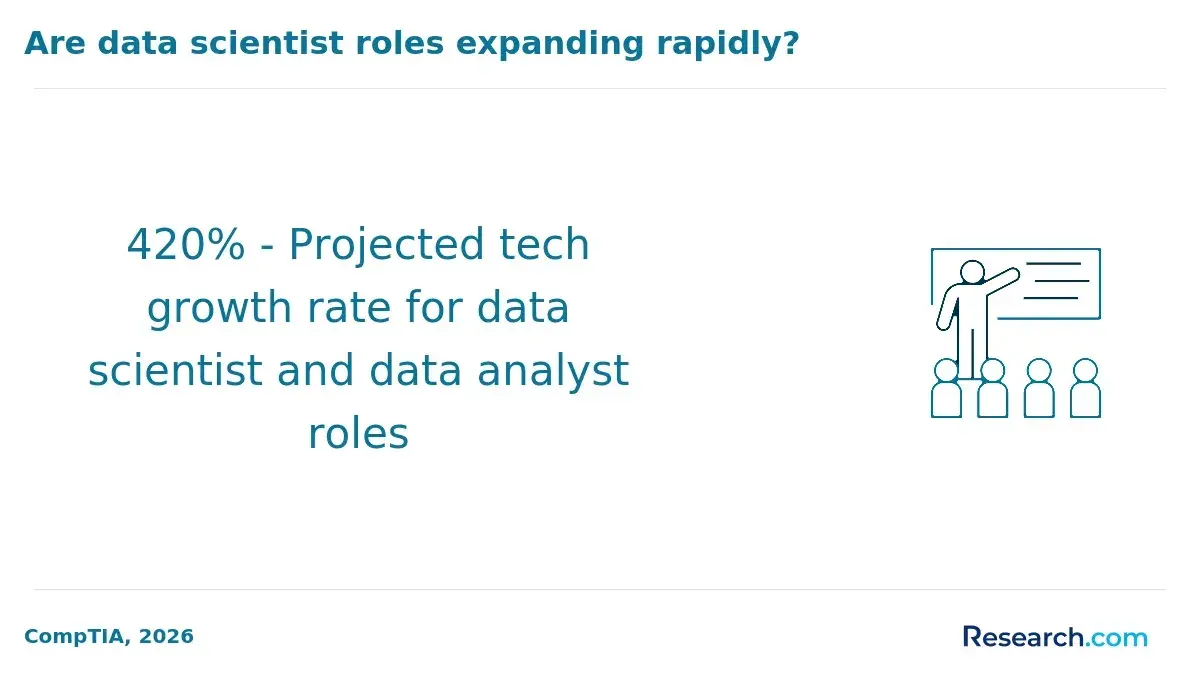
What career roles and job titles do AI master's graduates typically pursue after graduation?
Graduates of AI master's programs commonly take on specialized roles in technical development, research, and product management within the artificial intelligence sector. The most frequent job titles include Machine Learning Engineer (28%), AI Research Scientist (22%), Data Scientist (18%), and AI Product Manager (15%), illustrating diverse yet focused career options (LinkedIn Workforce Report, 2024). Machine Learning Engineers develop and deploy algorithms that allow systems to learn from data, often using Python along with frameworks such as TensorFlow or PyTorch, and working closely with software engineering teams.
AI Research Scientists focus on pushing the boundaries of AI theory and innovative architectures. They typically work in academic, corporate, or government research labs, contributing to published work and pioneering experimental technologies, especially in deep learning, natural language processing, and computer vision.
Data Scientists analyze complex data sets by combining machine learning techniques with statistical methods and domain expertise, bridging the gap between technical teams and business stakeholders to drive strategic decisions.
AI Product Managers oversee the creation of AI-driven products, aligning technical possibilities with market demands, managing cross-functional teams, and ensuring timely delivery.
Notably, 87% of AI master's graduates secure employment within six months, underscoring strong market demand (LinkedIn Workforce Report, 2024). Prospective students should enhance employability by focusing on practical projects, internships, and effective communication skills tailored to these career paths.
What is the current job outlook and salary range for AI master's degree holders?
Jobs for individuals with a master's degree in artificial intelligence are expected to grow by 35% through 2032, significantly outpacing the overall job market growth of 3.5%. This surge is driven by expanding demand in industries such as healthcare, finance, automotive, and cybersecurity, which increasingly rely on AI technologies for better efficiency and decision-making. Roles specializing in machine learning, natural language processing, and robotics are particularly in high demand.
The median annual salary for AI master's holders is around $145,000, per the U.S. Bureau of Labor Statistics Occupational Outlook Handbook. Salaries vary depending on experience, location, and job role. Entry-level positions often start near $100,000, while highly specialized engineers and researchers, especially in tech hubs like Silicon Valley or New York City, can command higher pay. Emerging career paths include AI policy, ethics, and product management, providing competitive salaries and broader opportunities outside pure technical roles.
To stay competitive, graduates should pursue continual learning through certifications and online courses. Engagement in AI-focused communities and attendance at industry conferences are effective strategies for growth and networking. Programs offering accelerated monthly start dates help professionals quickly adapt to shifting AI industry demands, supporting timely entry into the workforce.
What accreditation standards and quality indicators should you verify when evaluating an AI master's program?
Verify regional accreditation when evaluating AI master's programs to ensure the institution meets educational quality standards recognized by the U.S. Department of Education. Accreditation from agencies like the Higher Learning Commission (HLC) or Middle States Commission on Higher Education (MSCHE) confirms institutional legitimacy. Additionally, check if the AI program has specialized accreditation from organizations such as ABET, which assesses computing and engineering programs for industry relevance and rigor.
Only about 34% of AI master's programs hold ABET accreditation or an equivalent credential, making this a crucial factor in program selection (ABET Accreditation Database & National Center for Education Statistics, 2024). Programs without specialized accreditation may lack updated curricula, modern technologies, or faculty with relevant industry experience. This credential is particularly important for students seeking competitive employment or doctoral studies, as employers often prefer graduates from accredited programs.
Assess curriculum quality by examining course content, faculty expertise, research opportunities, and industry connections. Look for programs covering foundational topics such as machine learning, natural language processing, and computer vision alongside ethical applications. Active faculty research and participation in AI conferences indicate academic vigor and current expertise.
Consider the program's graduation rates, job placement data, and alumni career paths to gauge real-world success. Also, evaluate course delivery formats and start dates to find flexibility that fits your schedule without compromising education quality. Career services focusing on AI fields-like internships, mentorships, and networking-are valuable for building professional pathways and reducing risks in evolving industries.
Are there professional certifications or industry credentials that complement an AI master's degree?
Professional certifications greatly enhance an AI master's degree by validating practical skills and boosting job prospects. Within two years after graduation, about 68% of AI master's graduates obtain certifications like the Google Cloud Professional ML Engineer or the AWS Certified Machine Learning Specialty. These credentials emphasize hands-on expertise in cloud platforms, machine learning deployment, and data engineering-areas often covered more theoretically in academic programs.
Certified professionals typically earn 12-18% higher salaries, reflecting strong industry demand (LinkedIn Career Skills Report, 2024). The Google Cloud Professional ML Engineer certification focuses on designing and productionizing scalable ML models. Meanwhile, AWS's certification highlights optimizing ML workloads on cloud infrastructures, a critical skill given the industry's reliance on cloud technology for AI applications.
Other valuable certifications include the Microsoft Certified: Azure AI Engineer Associate and the IBM AI Engineering Professional Certificate, which cater to different vendor ecosystems and AI pipelines. Selecting certifications aligned with your targeted sector, such as finance, healthcare, or technology, can provide strategic career advantages.
Beyond technical expertise, credentials in data ethics, security, or project management further enhance career readiness. Graduates should weigh certification costs, renewal demands, and relevance to their career goals to maximize their return on investment.
How do you compare program reputation, faculty expertise, and placement rates across different AI master's programs?
Program reputation, faculty expertise, and placement rates are key factors when choosing an AI master's program. Top-ranked schools typically have placement rates between 92-98% within six months after graduation, reflecting strong industry relationships and curricula aligned with employer needs, based on the QS World University Rankings by Subject, 2024.
Faculty expertise is often demonstrated through ongoing research and industry experience. Graduates from programs with faculty active in AI research tend to earn starting salaries approximately 34% higher. Faculty involved in startups or leading labs enhance mentorship and internship opportunities, making it crucial to review faculty profiles for recent publications and industry ties.
Analyzing placement data in detail is important. Employment sectors, roles, and locations vary widely; for example, research-focused jobs suit academic career paths, while tech-industry roles emphasize practical skills. Programs with monthly start dates can offer flexibility, but it's essential to confirm that recruitment support and employer networks are as robust as those in semester-based programs.
Applicants should prioritize schools with transparent placement statistics and active faculty involvement to leverage both academic and professional growth in the competitive field of artificial intelligence.
Other Things You Should Know About Artificial Intelligence
Programming languages such as Python, R, and Java are essential for students in AI master's programs. Python is particularly favored due to its rich libraries and frameworks like TensorFlow and PyTorch that support machine learning and deep learning. Familiarity with these languages enables students to develop and implement AI models effectively.
Many AI master's programs with monthly start dates offer flexible online formats designed for working professionals. Part-time enrollment and asynchronous coursework often allow students to balance work and study. However, time management is crucial due to the technical rigor of AI subjects.
Yes, most AI master's programs include hands-on projects, research components, or internships to provide practical experience. These opportunities help students apply theoretical knowledge to real-world problems and build a portfolio demonstrating their skills to potential employers.
Graduates of AI master's programs with monthly start dates in 2027 can look forward to robust career opportunities. The demand for AI specialists continues to grow across industries such as healthcare, finance, and technology. Graduates often find roles as data scientists, machine learning engineers, AI researchers, and more, with competitive salaries and numerous opportunities for advancement.
References
- Evaluation Criteria for Artificial Intelligence - EvalCommunity Academy https://academy.evalcommunity.com/evaluation-criteria-for-artificial-intelligence/
- University Master's degree in Artificial Intelligence https://web.ua.es/en/masteres/inteligencia-artificial/quality-standards.html
- What Jobs Can I Get With a Master's in Artificial Intelligence? | CSU Global https://csuglobal.edu/blog/what-jobs-can-you-get-masters-artificial-intelligence
- AI Certifications: Accredited Programs, Vendor Credentials, and Emerging Standards - Total Seminars https://totalsem.com/ai-certifications-accredited-programs-vendor-credentials-and-emerging-standards/
- Earn a Master’s in Artificial Intelligence in One Year - MastersInAI.org https://www.mastersinai.org/degrees/one-year-masters-in-ai/
- Application and admission - Master Artificial Intelligence https://www.uva.nl/shared-content/programmas/en/masters/artificial-intelligence/application-and-admission/international-prior-education/international-prior-education-foldout-menu.html
- Best AI Certifications in 2025 https://cpoclub.com/career/best-ai-certifications/
- Artificial Intelligence (AI) https://ai-master.org/requirements
- How an Online Master’s in AI Can Prepare You for the Future of Tech https://www.ucumberlands.edu/blog/how-online-masters-ai-can-prepare-you-future-tech
- University Degree vs AI Bootcamp: Which is Best Career Path? https://agilefever.com/university-degree-vs-ai-bootcamp-which-is-best/