2027 What Can You Do With an Associate Degree in Artificial Intelligence?

Co-Founder and Chief Data Scientist
Many professionals with undergraduate degrees in unrelated fields encounter obstacles when attempting to enter the artificial intelligence industry. They struggle to find accessible, credible education paths that provide the technical skills needed for a career transition. An associate degree in artificial intelligence offers a practical solution by delivering foundational knowledge and hands-on experience without the time or cost of a full bachelor's program.
This article explores the career opportunities, skill development, and educational flexibility associated with earning an associate degree in artificial intelligence, guiding readers on how to leverage this credential to enter the evolving AI workforce successfully.
Key Things You Should Know
- An associate degree in artificial intelligence equips graduates with foundational skills in machine learning, data analysis, and programming, preparing them for entry-level tech roles requiring 1-2 years of experience.
- Employment in AI-related fields is projected to grow by 20% from 2024 to 2034, with median annual salaries around $85,000 for positions such as AI technician and data analyst.
- Many graduates use this degree as a stepping stone to bachelor's programs, increasing job prospects in specialized sectors like robotics, automation, and natural language processing.
What career jobs can you get with an associate degree in artificial intelligence?
An associate degree in artificial intelligence opens doors to numerous entry-level job opportunities in a rapidly growing sector. Careers with an associate degree in artificial intelligence often include roles such as machine learning technician, who supports model development and system monitoring, and data analyst, tasked with interpreting complex datasets to guide AI-driven decisions. AI support specialists are also in demand, providing technical assistance and troubleshooting for organizations implementing AI technologies.
Other career paths include AI testing and quality assurance, where graduates assess algorithm accuracy and ethical implications, as well as AI application developers who build user interfaces that connect with AI systems. Jobs in robotic process automation (RPA) are accessible too, as graduates manage software bots that automate routine tasks.
The demand for such professionals is significant: AI-related job postings have risen by 74% year-over-year across industries like healthcare, finance, and manufacturing. Employers seek candidates with foundational AI knowledge and practical skills in programming languages such as Python and SQL, along with cloud platform proficiency. Gaining practical experience through internships or certifications in tools like TensorFlow or Azure AI enhances job prospects.
Continuous learning and specialization in fields such as natural language processing or computer vision add value. Those considering further advancement may explore a best online computer science degree to deepen expertise and increase career options.
What is the average salary for professionals with an associate degree in artificial intelligence?
Professionals with an associate degree artificial intelligence salary range typically falls between $65,000 and $75,000 annually. Data from the U.S. Bureau of Labor Statistics highlights that AI and machine learning technicians with this education earn about 12% more than general IT technician roles. This reflects the specialized skills and increasing demand in AI-related fields.
The average salary for associate degree in artificial intelligence holders varies by geographic location, industry, and job responsibilities. AI technicians employed in tech hubs or metropolitan areas often earn salaries near or above the higher end of this range. Industries such as healthcare technology, robotics, and autonomous systems tend to offer higher pay due to the advanced nature of the work involved.
Entry-level positions may start around $60,000, with increases tied to experience in AI frameworks, machine learning algorithms, and data processing. Certifications and hands-on project experience also boost earning potential. In contrast, typical IT technicians without AI specialization generally make less than $65,000, underscoring the financial benefit of AI skills.
For those researching educational options, exploring a mechanical engineering online degree may provide additional pathways in tech fields. Overall, an associate degree in artificial intelligence offers foundational expertise valued by employers for roles involving AI system maintenance, machine learning implementation, and data analysis.
What is the job outlook and demand for artificial intelligence associate degree holders in the United States?
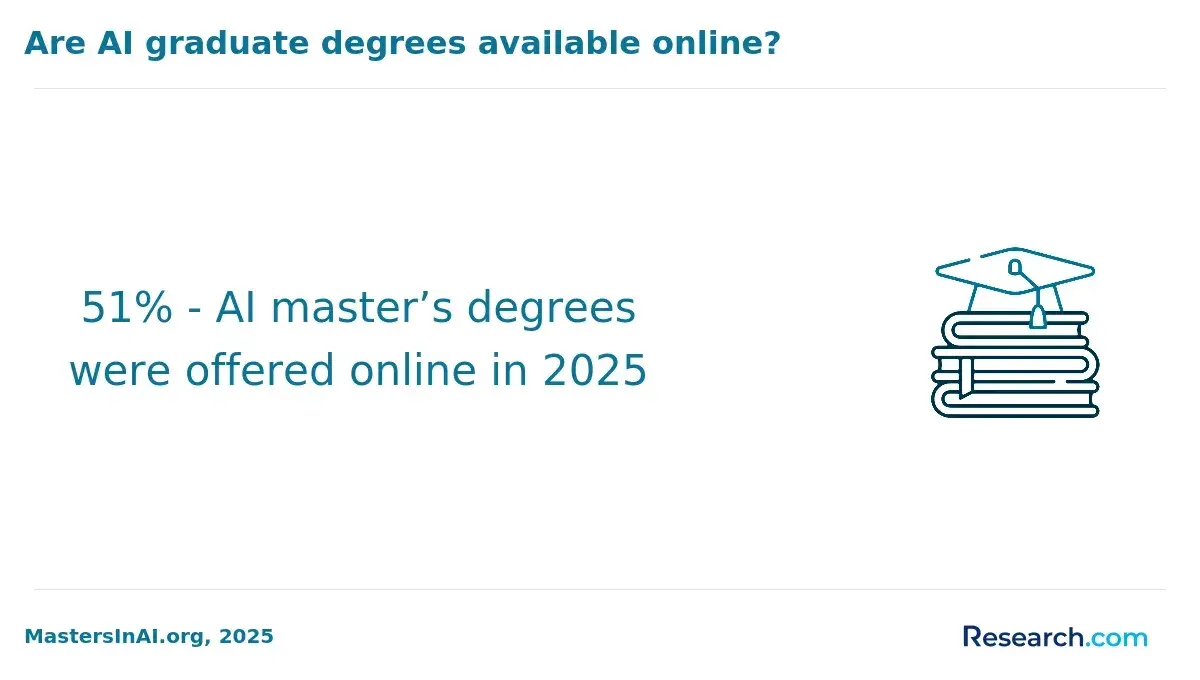
Employment demand for associate degree holders in artificial intelligence in the United States is growing quickly. The U.S. Bureau of Labor Statistics Occupational Outlook Handbook projects AI-related technical roles to increase by 35% through 2032, a rate much higher than the average growth across all occupations. This surge highlights a strong market need for workers with foundational AI skills and practical qualifications.
Graduates with an associate degree can pursue roles like AI technicians, machine learning support specialists, data analysts, and automation coordinators. These positions focus on implementing AI models, supporting development teams, managing data workflows, and maintaining AI systems. Companies in healthcare, finance, manufacturing, and retail increasingly rely on AI tools, driving demand for professionals who can bridge complex research and real-world applications.
The artificial intelligence associate degree job market in the United States also includes opportunities in IT support for AI systems, quality assurance, and junior data science roles. These positions often serve as stepping stones toward specialization or advancing to bachelor's programs. Enhancing employability typically involves gaining hands-on experience and earning industry certifications alongside the degree.
Prospective students considering further education may explore options like an online masters in AI, which can provide advanced skills and open new career pathways.
What are the admission requirements and prerequisites for an associate degree program in artificial intelligence?
Admission requirements for an associate degree in artificial intelligence generally emphasize strong foundational math skills. According to ABET and ACBSP accreditation reviews in 2024, 78% of accredited AI associate programs require completion of algebra and basic statistics. This ensures students have the quantitative reasoning needed for coursework involving algorithms, data analysis, and probability. Meeting these prerequisites is crucial for enrolling in artificial intelligence associate degree programs.
While prior programming experience is helpful, 45% of programs accept students without it, recognizing diverse academic backgrounds. Many offer introductory coding courses in Python or Java to develop necessary skills during the degree. However, applicants familiar with programming often progress faster and adapt more easily to the curriculum.
High school graduation or equivalent is a universal requirement, with some institutions also requesting SAT or ACT scores, especially those with competitive admissions. Submission of transcripts showing relevant math or science coursework-such as precalculus or basic computer science-can improve chances of acceptance. Placement testing or diagnostic assessments are common to confirm prerequisites or tailor coursework accordingly. Students lacking the required math background should consider remedial or bridge courses to reduce early academic challenges.
Prospective students seeking pathways into tech fields may also explore the best online cyber security degrees to complement their skill sets. Overall, fulfilling math prerequisites and demonstrating readiness for programming fundamentals are essential steps for successful admission into associate degree programs focused on artificial intelligence.
How long does it take to complete an associate degree in artificial intelligence, and what is the typical cost?
An associate degree in artificial intelligence generally requires about two years of full-time study, though program length can vary by institution and schedule. Many community colleges offer flexible options such as evening or online classes, which allow working students to extend their studies beyond the typical timeline. Some accelerated programs may shorten completion to around 18 months, but these are less common.
The total cost usually ranges from $18,000 to $28,000. Community colleges provide more affordable pathways, often costing between $10,000 and $12,000 for the entire program. In contrast, private colleges can charge more than $28,000 in tuition and fees. Additional costs for textbooks, software, and technology can add $1,000 to $3,000 depending on the program's requirements.
Choosing accredited community colleges offering specialized AI certificates or tracks can be financially efficient. Many programs have transfer agreements with four-year universities, enabling graduates to pursue a bachelor's degree seamlessly. It is important for students to confirm that the curriculum aligns with their career objectives, especially if they plan to enter AI-driven industries immediately after graduation.
What core coursework and technical skills will you learn in an artificial intelligence associate degree program?
An associate degree in Artificial Intelligence develops essential technical skills and industry-relevant knowledge for emerging AI careers. Programming, especially Python, remains a core focus, reflecting its widespread use in AI development and data processing. According to the ABET Engineering Technology Accreditation 2024, 94% of accredited AI associate programs integrate Python with machine learning algorithms and data analysis, enabling students to build models, manage datasets, and interpret AI outputs efficiently.
Students gain hands-on experience with applied machine learning topics, such as supervised and unsupervised learning, neural networks, and natural language processing. This practical training equips learners to design, test, and optimize AI systems across varied industries. Complementary data analysis coursework emphasizes statistical methods, data visualization, and data-driven decision-making skills.
Cloud computing knowledge is increasingly incorporated; 71% of programs use platforms like Amazon Web Services and Microsoft Azure to prepare students for deploying AI models and managing cloud infrastructures in real-world environments. Coursework also covers mathematical foundations including linear algebra, calculus, and probability theory, which provide the algorithmic understanding essential for AI development.
Ethical considerations and AI governance are integral to many programs, fostering responsible AI use awareness. Collaborative projects, coding labs, and real-world assignments ensure graduates possess practical skills to tackle challenges in data preprocessing, algorithm tuning, and performance evaluation, making them ready for roles such as AI technician, data analyst, or junior machine learning engineer.
Are artificial intelligence associate degree programs available online, and how do they compare to campus-based options?
Associate degree programs in artificial intelligence are increasingly accessible online, providing flexibility for students managing work or personal commitments. Enrollment in online programs grew by 41% from 2023 to 2024, reflecting rising demand and broader accessibility according to the National Center for Education Statistics 2024. These online programs typically cover fundamental AI subjects such as machine learning, data analysis, and programming languages like Python, closely mirroring campus-based curricula.
The academic rigor of online degrees matches traditional formats through virtual labs, interactive projects, and real-time faculty engagement. According to the National Center for Education Statistics 2024, 82% of online graduates report job placement rates equal to or better than those of their campus-based counterparts, demonstrating strong employer confidence in online credentials. Many community colleges and accredited universities incorporate synchronous or hybrid courses to boost student interaction and networking.
When choosing between online and campus-based AI programs, prospective students should consider accreditation, curriculum depth, and available support services. While online study offers advantages in scheduling and location independence, campus programs often provide more hands-on experience in AI labs and research environments-an important factor for some employers during hiring.
Ultimately, online associate degrees in artificial intelligence prepare students for roles like AI technician or data analyst. Individuals should weigh their personal learning styles, professional goals, and resources to determine the best educational path.
What professional certifications or credentials complement an associate degree in artificial intelligence?
Professional certifications that complement an associate degree in Artificial Intelligence can significantly boost career opportunities and earning potential. Credentials from leading cloud platforms such as AWS Certified Machine Learning - Specialty, Google Professional Machine Learning Engineer, and Microsoft Certified: Azure AI Engineer Associate validate hands-on skills in deploying AI solutions on scalable infrastructures. These certifications enhance knowledge of machine learning pipelines, model deployment, and cloud management-topics often only briefly covered in an associate degree program.
Other valuable certificates include the Certified Artificial Intelligence Practitioner (CAIP) and IBM AI Enterprise Workflow certification. They provide deeper expertise in AI model development, ethical considerations, and workflow optimization, which employers highly value for managing AI projects beyond theoretical concepts.
Data science-related certifications like Certified Data Scientist (CDS) or SAS Certified AI & Machine Learning Professional further strengthen skills in statistical analysis and programming, which are crucial for training and evaluating AI models effectively.
Such certifications help bridge the gap between academic learning and industry needs. Cloud certifications prepare candidates to handle real-world AI infrastructure, while AI practitioner certificates cultivate experience with ethical AI governance and operational workflows.
According to the Coursera Skills Index 2024, professionals holding both an associate degree and certifications from AWS, Google Cloud, or Microsoft Azure earn 18-22% higher salaries in AI technical roles, underscoring the tangible benefits of pursuing these credentials alongside formal education.
How do you choose between accredited artificial intelligence associate degree programs?
Selecting an accredited artificial intelligence associate degree program requires careful evaluation of accreditation status, curriculum, and graduate success. Programs accredited by ABET demonstrate a notable advantage, with a 91% employment rate within six months after graduation, compared to 68% for non-accredited counterparts, according to ABET Program Outcomes Data 2024. This makes accreditation pivotal for job placement and employer recognition.
Ensure the curriculum comprehensively covers core subjects such as machine learning, data analytics, programming languages like Python and R, and ethics in AI. Programs with hands-on labs or real-world projects offer practical experience that enhances readiness for industry challenges.
Faculty expertise is essential; instructors with relevant industry or research backgrounds provide a richer learning environment and valuable networking opportunities. Flexibility in program formats such as online, part-time, or hybrid models can help accommodate diverse student needs.
Review graduation rates and alumni career paths where available. Partnerships with tech companies and proximity to technology hubs facilitate internships and employment prospects.
Consider total program costs alongside financial aid options but avoid basing decisions solely on tuition since lower costs might reflect fewer resources or outdated curricula. Contact admissions offices directly and engage with current students or alumni to confirm the program aligns with your career goals.
What is the difference between an associate degree and a bachelor's degree in artificial intelligence for career advancement?
The main difference between an associate degree and a bachelor's degree in artificial intelligence lies in depth of knowledge and career opportunities. An associate degree offers foundational skills and practical training for early entry into the AI workforce, often leading to roles such as technician or junior developer. In contrast, a bachelor's degree covers advanced topics like machine learning algorithms, data structures, and ethical AI design, preparing graduates for research, development, and leadership positions.
On average, bachelor's degree holders in AI earn 28% more than those with an associate degree and typically reach senior roles about 2.3 years faster, according to the PayScale Career Path Analysis 2024. This reflects the greater technical autonomy and project management skills gained during a bachelor's program. For example, associate graduates might start as AI support specialists or data lab technicians, while bachelor's graduates often qualify as AI software engineers or data scientists.
Associate degrees are ideal for individuals seeking rapid workforce entry or those planning to transfer credits toward a bachelor's later. However, for senior AI roles, research positions, or higher salaries, the advanced knowledge of a bachelor's degree is usually required. Industries like healthcare AI and autonomous vehicles often demand this expertise.
Career goals, time commitment, and tuition costs should guide the choice between these degrees.
Other Things You Should Know About Artificial Intelligence
Yes, an associate degree often serves as a stepping stone to bachelor's programs in artificial intelligence, computer science, or related fields. Many colleges have articulation agreements that allow credits earned in an associate program to transfer towards a four-year degree, facilitating continued education.
Industries such as healthcare, finance, manufacturing, and technology sectors frequently seek candidates with AI skills for roles involving data processing, automation support, and basic AI model implementation. These sectors value practical skills in programming, data management, and machine learning frameworks.
An associate degree in artificial intelligence typically includes coursework in programming languages like Python, data analysis, machine learning principles, and AI fundamentals. Some programs may also offer classes in neural networks and computer vision, providing a foundational understanding for further study or entry-level jobs.
Most employers do not require certification for entry-level AI support jobs, but industry credentials can help. Common options include the AWS Certified AI Practitioner, Microsoft Azure AI Fundamentals (AI-900), and CompTIA AI Essentials. These certificates usually require passing one exam and show basic AI literacy to hiring managers.
References
- 59 AI Job Statistics: Future of U.S. Jobs | National University https://www.nu.edu/blog/ai-job-statistics/
- AI Jobs on the Rise: Q1 2025 Labor Market Analysis - Veritone https://www.veritone.com/blog/ai-jobs-growth-q1-2025-labor-market-analysis/
- What Skills Will You Gain from an Artificial Intelligence Certified Course? https://dev.to/alexa143/what-skills-will-you-gain-from-an-artificial-intelligence-certified-course-3dho
- 11 Best AI Certifications in 2025 to Deepen Your Technical Knowledge | DigitalOcean https://www.digitalocean.com/resources/articles/ai-certifications
- Ultimate Guide: How to Choose the Right AI Training Course to Boost Your Career - ONLC https://www.onlc.com/blog/how-to-choose-ai-training-courses/
- Top AI Certifications for 2026: A Guide to Advancing Your Tech Career | DataCamp https://www.datacamp.com/blog/top-ai-certifications
- 23 Top AI Certifications to Know | Built In https://builtin.com/articles/ai-certification
- How to Choose the Right AI Degree Program https://humainelabs.com/blogs/agentic-ai-engineering/how-to-choose-the-right-ai-degree-program
- How Long Do AI Courses Take? https://www.nobledesktop.com/learn/ai/how-long-do-ai-courses-take
- AI Certification Programs: Which Ones Matter for Your Career https://www.businessplusai.com/blog/ai-certification-programs-which-ones-matter-for-your-career