2027 Artificial Intelligence Degree Levels Explained: Associate vs Bachelor's vs Master's

Co-Founder and Chief Data Scientist
Choosing the right artificial intelligence degree can be daunting for professionals wanting to switch careers in 2027. Uncertainty about whether to pursue an associate, bachelor's, or master's degree often hinders progress. The differences in curriculum depth, time commitment, and career outcomes can create confusion, especially for those with unrelated undergraduate backgrounds.
This challenge can delay entry into a fast-growing industry demanding specialized skills. This article clarifies the distinctions between associate, bachelor's, and master's degrees in artificial intelligence to help readers make informed decisions aligned with their career goals and time constraints.
Key Things You Should Know
- Associate degrees in artificial intelligence typically take two years and focus on foundational skills, while bachelor's programs require four years and offer deeper technical and theoretical knowledge.
- Master's degrees in artificial intelligence, usually two additional years, emphasize research, advanced algorithms, and specialization, boosting job prospects by up to 20% compared to bachelor's holders.
- In 2025, 35% of AI-related job postings preferred candidates with a master's degree, reflecting growing industry demand for advanced expertise beyond undergraduate education.
What are the key differences between associate, bachelor's, and master's degrees in artificial intelligence?
The key differences between associate, bachelor's, and master's degrees in artificial intelligence programs lie mainly in depth of knowledge, career opportunities, and earnings. An associate degree offers foundational skills in programming and basic machine learning over two years, preparing students for entry-level roles like AI technicians or junior data analysts. However, advancement beyond these roles is limited.
A bachelor's degree builds on core concepts with rigorous coursework in algorithms, data structures, statistics, and specialized areas such as natural language processing. This four-year program equips graduates for roles including AI developers, data scientists, and machine learning engineers. Bachelor's degree holders enjoy broader career options and higher income, with computer programmers earning a median wage of $102,460, according to the U.S. Bureau of Labor Statistics. This comparison highlights the importance of reviewing the key differences between associate, bachelor's, and master's degree outcomes in artificial intelligence careers when planning your education path.
The master's degree emphasizes advanced theories, research methods, and practical applications like robotics, computer vision, and AI ethics within one to two years beyond the bachelor's level. It suits professionals aiming for leadership, research, or specialized technical expertise. Graduates typically become computer and information research scientists, earning a median salary of $136,620, reflecting a substantial salary premium for advanced AI credentials.
The progression from associate to master's degree represents increasing specialization and responsibility. Those seeking high-impact AI roles or research careers should pursue at least a bachelor's degree, preferably a master's for cutting-edge positions. For those valuing expedited workforce entry, an associate degree offers a quicker route with known trade-offs.
Prospective students might consider an online computer science degree as an alternative or complement to strengthen their skills in this evolving field.
What are the typical admission requirements for AI degree programs at each level?
Admission requirements for associate, bachelor's, and master's artificial intelligence degrees differ widely by education level. Associate degree programs often require a high school diploma or equivalent, with emphasis on math and science. Applicants may need to submit transcripts, standardized test scores like the SAT or ACT, and sometimes letters of recommendation. Flexible admission criteria accommodate working adults and career changers. These requirements reflect typical admission requirements for associate, bachelor's, and master's artificial intelligence degrees.
Bachelor's programs expect a high school diploma plus a competitive GPA, typically around 3.0 or higher. SAT or ACT scores are usually required, though some schools are test-optional. Strong performance in advanced math courses such as calculus and statistics is important. Personal statements about interest in artificial intelligence or computer science, as well as letters of recommendation, may be requested. Transfer students often need foundational college-level math or programming coursework.
Master's programs have the highest standards, generally requiring a bachelor's in computer science, engineering, mathematics, or related fields with a GPA between 3.0 and 3.5. Some programs request GRE scores and emphasize relevant experience through coursework, research, or projects. Letters of recommendation, statements of purpose, and occasionally work portfolios are commonly required. Prior exposure to machine learning or programming languages is often preferred.
According to LinkedIn's 2024 Jobs Report, 67% of AI specialist roles prefer candidates with a master's or higher, up from 54% in 2022. This highlights increasing entry barriers for advanced credentials in AI careers. Prospective students seeking an online degree in mechanical engineering may find similar admission policies and competitive standards in STEM-related fields.
How long does it take to complete an associate, bachelor's, or master's degree in artificial intelligence?
An associate degree duration in artificial intelligence programs typically spans about two years of full-time study. This level offers foundational skills in programming, mathematics, and basic AI concepts, ideal for entry-level technical roles or as a pathway to a bachelor's degree. Many community colleges provide these programs, often facilitating credit transfers toward a four-year degree.
Completing a bachelor's degree in artificial intelligence or related fields, such as computer science with an AI focus, usually takes four years of full-time study. These programs cover advanced topics like machine learning, data science, robotics, and AI ethics, preparing students for professional careers or graduate education. Accelerated tracks may shorten the duration to three years, while part-time enrollment can extend it.
Time to complete bachelor's and master's degrees in artificial intelligence varies by program and student circumstances. Master's degrees generally require 1.5 to 3 years full-time, though the National Center for Education Statistics reports an average of 3.2 years for computer science-related master's degrees, reflecting challenges faced by working students. These programs emphasize advanced AI methods, research, and applied skills, opening doors to specialized positions or doctoral programs.
Students balancing work and study often opt for part-time or online master's programs for flexibility, even if that means a longer duration. For those exploring affordable options, a variety of online engineering degrees include AI concentrations that can suit different career goals and schedules.
What is the average cost of AI degree programs, and what financial aid options are available?
The average cost of artificial intelligence degree programs in the United States varies significantly by degree level and institution type. Associate degrees generally cost between $6,000 and $15,000 total, depending on attendance at community colleges or technical schools. Bachelor's programs have wider tuition ranges, with in-state public universities charging between $10,000 and $30,000 annually, while private institutions may exceed $50,000 per year. Master's degrees in AI and related STEM fields tend to be the most expensive, with graduate tuition and fees averaging $25,000 to $60,000 annually, according to The College Board's report.
Financial aid options for bachelor's and master's artificial intelligence degrees are broad and include federal and state grants, scholarships, and loans. Many AI students qualify for specialized scholarships aimed at STEM and technology careers, provided by universities, nonprofits, and tech companies. Employer tuition assistance is another key support, benefiting about 42% of graduate students in technology fields. Research assistantships and fellowships, especially at the master's level, can also offset tuition in exchange for research contributions.
Flexible program formats such as online or part-time study can reduce living costs and lost income during study periods. Early FAFSA submission and communication with university financial aid offices are important to maximize resources for AI-focused learners. For those exploring related fields, programs like cybersecurity masters online may offer alternative options with distinct financial aid pathways.
What curriculum and core coursework should you expect in an AI degree program?
AI degree programs follow a structured path that varies by level and specialization. Associate degrees focus on fundamental topics like programming basics, data structures, statistics, and introductory machine learning, covering languages such as Python and Java alongside core mathematics like linear algebra and calculus.
Bachelor's degrees offer a broader curriculum with advanced courses in machine learning, deep learning, natural language processing, computer vision, and AI ethics. A 2024 ACM analysis revealed that 89% of bachelor's programs now include machine learning and deep learning, up from 62% in 2021. Additional studies often involve algorithms, neural networks, robotics, and data science, combined with practical projects and software engineering experience.
Master's programs focus on advanced specialization in reinforcement learning, neural networks, computer vision systems, and deploying AI solutions. These typically require thesis work or applied research projects and emphasize innovative problem-solving skills for real-world AI applications. Ethical AI governance, explainable AI, and industry-specific applications are common topics.
Hands-on experience and interdisciplinary collaboration are key across programs, with tools like TensorFlow and PyTorch regularly used. Strong skills in mathematics, programming, and statistics remain essential. Prospective students should carefully review course catalogs to align their studies with career paths in AI development, research, or applied fields.
What are the career outcomes and job roles available after completing each level of AI degree?
Completing an associate degree in Artificial Intelligence often leads to entry-level roles such as AI technician, data analyst, or junior machine learning developer. These positions involve implementing AI models, data preparation, and supporting system maintenance, typically under supervision. Salaries for associate degree holders usually range from $50,000 to $70,000 annually, varying by industry and location.
Bachelor's degree graduates qualify for a broader range of jobs, including AI software engineer, data scientist, and AI research assistant positions. These roles require skills in algorithm development, programming, and statistics, with responsibilities such as leading smaller projects and contributing to product development across sectors like healthcare and technology. According to the World Economic Forum's Future of Jobs Report, AI and machine learning specialist roles are growing at 74% annually, reflecting strong demand. Median salaries typically fall between $80,000 and $110,000 per year.
Master's degree holders are prepared for advanced careers including AI research scientist, machine learning engineer, or AI strategist. These professionals design new algorithms, lead research, and manage cross-disciplinary teams in high-impact areas like autonomous vehicles or robotics. Annual salaries range from $120,000 to $160,000. This level of education also facilitates entry into academic and PhD research pathways. Practical experience remains crucial for success in this rapidly evolving field.
AI Awareness Among U.S. Adults by Education Level in 2026

What is the salary potential and job outlook for AI degree graduates in the United States?
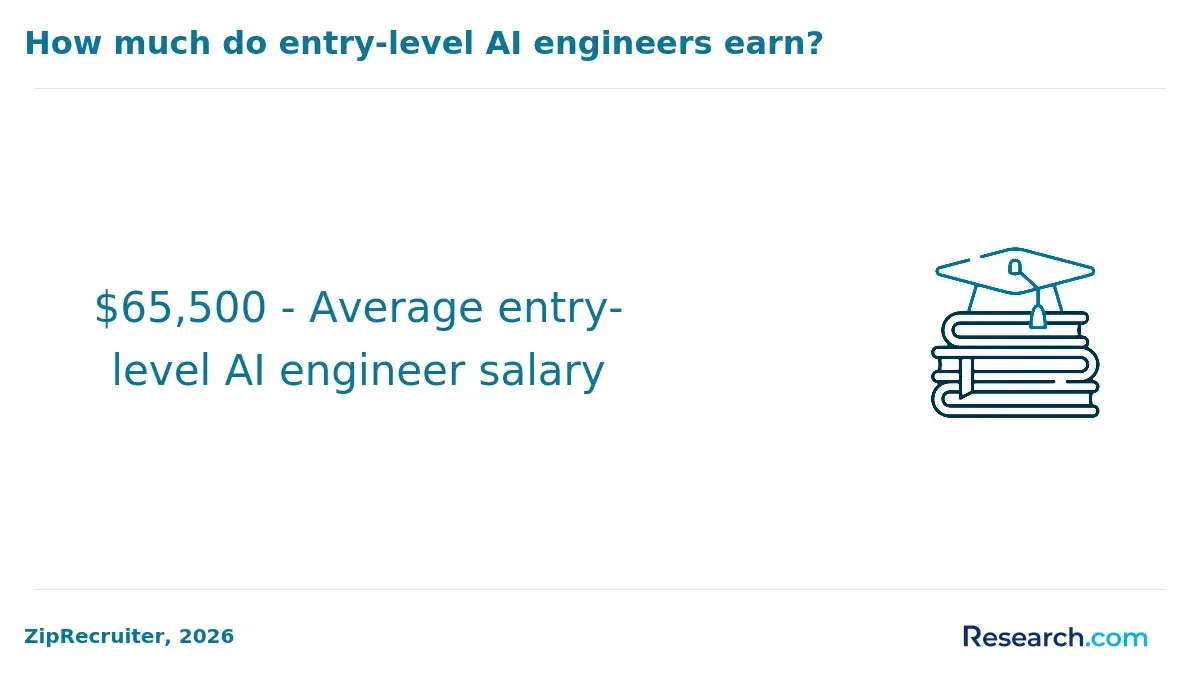
Salary potential for artificial intelligence degree graduates in the United States varies widely by education and experience. Entry-level AI engineer roles with associate or bachelor's degrees start around $110,000, reflecting strong demand across technology, finance, and healthcare sectors. While bachelor's degree holders commonly qualify for these positions, rising competition drives the need for additional skills and practical experience.
Master's degree graduates often receive significantly higher compensation. Senior AI engineers with advanced degrees earn median salaries over $185,000, a 68% increase over five years, highlighting the value placed on specialized expertise and leadership ability. These positions frequently involve research, system design, or advanced AI algorithm work requiring comprehensive knowledge.
The job outlook for AI-related careers remains robust, with over 30% projected growth for roles such as computer and information research scientists, typically needing graduate degrees. Associate degree holders may enter technician or support roles but should consider further education to enhance opportunities and earnings.
Prospective students should align their educational choices with career goals. Bachelor's programs offer rapid entry and solid starting salaries, while master's degrees better serve those seeking leadership or research roles. Internships and hands-on experience significantly improve employability and salary negotiation.
How do online AI degree programs compare to campus-based options in terms of accreditation and credibility?
Online artificial intelligence degree programs from accredited institutions now rival campus-based options in accreditation and credibility. A recent survey by the Chronicle of Higher Education found that 73% of employers view online STEM degrees, including AI, as equally credible to those earned on campus. This increasing acceptance reflects a substantial shift since 48% of employers felt this way in 2021.
Accreditation remains the key determinant of a program's legitimacy. Degrees from regionally or nationally accredited schools adhere to the same academic standards whether pursued online or in person. For instance, an online bachelor's in artificial intelligence from a regionally accredited university will follow equivalent curriculum and faculty requirements as its on-campus version.
Candidates should confirm the accrediting body, as some employers favor recognition from agencies like ABET for engineering-related programs or AACSB for AI in business. Specialized endorsements can also boost a program's credibility.
Employers value program reputation and graduates' demonstrated abilities. Degrees from established institutions tend to carry more weight than those from newer providers, regardless of delivery. Many online programs now include virtual labs and collaborative projects to offer practical experience comparable to campus labs, benefiting working professionals seeking flexibility without quality compromise.
What professional certifications or credentials complement an AI degree?
Professional certifications enhance the value of an artificial intelligence degree by validating specialized skills and demonstrating current industry knowledge. Notable certifications include the Certified Artificial Intelligence Practitioner (CAIP), Google Professional Machine Learning Engineer, and Microsoft Certified: Azure AI Engineer Associate, which emphasize AI development, deployment, and cloud integration.
Certifications in data science and machine learning, such as the Data Science Council of America (DASCA) Senior Data Scientist and the TensorFlow Developer Certificate, complement AI degrees by focusing on data handling, model building, and key programming frameworks widely used in AI projects.
Cybersecurity certifications like Certified Information Systems Security Professional (CISSP) are increasingly relevant for professionals working with AI systems that require secure deployment and ethical management. As AI's role grows in sensitive areas, knowledge of data privacy and security becomes essential.
According to CompTIA's State of the Tech Workforce report, professionals with both degrees and AI or machine learning certifications earn 31% more and advance 40% faster than those without certifications. This demonstrates that combining formal education with industry-accepted credentials accelerates career growth and boosts earning potential.
Employers seek candidates who balance formal degrees with up-to-date technical expertise and ethical awareness. Pursuing certifications helps students and professionals focus on emerging tools, algorithms, and standards, improving their readiness for real-world challenges and strengthening their appeal to recruiters.
How should you evaluate and choose a reputable AI degree program?
Verify the accreditation status of an AI degree program, as it significantly affects job prospects. Data from the National Science Foundation's Survey of Earned Doctorates shows that graduates from ABET-accredited computer science programs have a 94% job placement rate within six months, while those from non-accredited programs have 76%. Prioritize programs accredited by recognized agencies such as ABET or regional bodies, and confirm the curriculum includes key AI topics like machine learning, data structures, algorithms, and ethics.
Faculty qualifications and research activity are essential indicators of program quality. Programs led by professors actively involved in AI research or with published work provide valuable learning and networking opportunities. Look for partnerships with tech firms or research labs that can offer internships or hands-on projects.
Consider program flexibility and delivery format. Online and hybrid options suit working professionals but should maintain rigor equivalent to on-campus programs. Evaluate support services like career counseling and mentoring to help transition into AI roles.
Check alumni outcomes and employer connections, as strong industry ties often enhance placement success. Reviewing syllabi and capstone projects ensures exposure to practical experience. Finally, balance tuition costs with potential return on investment, and select a program fitting your education level, career goals, and financial situation for the best results.
Other Things You Should Know About Artificial Intelligence
Yes, AI degree programs often integrate courses from related fields such as computer science, data science, cognitive psychology, and ethics. This interdisciplinary approach equips students to address real-world challenges involving AI technology, human interaction, and societal impacts.
Many AI programs incorporate internships, co-op placements, or project-based learning to provide hands-on experience. These practical opportunities help students apply theoretical knowledge to real AI applications and improve job readiness after graduation.
Research involvement increases at higher degree levels. While associate programs focus on foundational skills, bachelor's programs introduce students to research methods, and master's degrees often require original research projects or a thesis. Engaging in research sharpens critical thinking and contributes to advancements in AI technology.
In 2027, job prospects differ by degree level: associate degree holders often qualify for entry-level roles, bachelor's graduates may secure positions like AI analyst, and those with a master's, especially in specialized fields like online master's in AI and finance, are poised for advanced roles in AI research or management.
References
- How AI is challenging the credibility of some online courses https://ca.news.yahoo.com/ai-challenging-credibility-online-courses-161657248.html
- Pardon Our Interruption https://www.aiuniv.edu/degrees/business-administration/articles/bachelor-vs-master-degrees
- How to Choose the Right AI Degree Program https://humainelabs.com/blogs/agentic-ai-engineering/how-to-choose-the-right-ai-degree-program
- What Is The Best Degree for Artificial Intelligence? https://campus.edu/blog/artificial-intelligence/what-is-the-best-degree-for-artificial-intelligence
- Colleges are touting AI degree programs. Here's how to decide if it's worth the cost https://www.cnbc.com/2024/03/02/college-ai-degree-programs-are-booming-will-jobs-exist-for-graduates.html
- How Much Do AI Research Programs Cost? [2026 Pricing Guide] https://algoverseairesearch.org/blog/ai-research-program-cost-pricing
- How an Online Master’s in AI Can Prepare You for the Future of Tech https://www.ucumberlands.edu/blog/how-online-masters-ai-can-prepare-you-future-tech
- Cost to Study Artificial Intelligence in 2026 https://checkmateittech.com/cost-to-study-artificial-intelligence-usa/
- International study programs: Artificial Intelligence https://www.mpowerfinancing.com/blog/artificial-intelligence
- What level of education is required for artificial intelligence? https://www.outrightcrm.com/blog/what-level-of-education-is-required-for-artificial-intelligence/