2027 Best On-Campus Artificial Intelligence Degree Programs in America

Co-Founder and Chief Data Scientist
As demand for skilled professionals in AI surges, many students with unrelated undergraduate degrees struggle to find clear pathways into this evolving field. Identifying on-campus programs that offer robust, accredited curricula while accommodating career changers is challenging. Prospective students need flexible options that combine foundational theory with practical experience to succeed in today's competitive job market.
This article highlights the best on-campus Artificial Intelligence degree programs in America for 2027, focusing on accredited institutions that support flexible learning and career transitions. It aims to guide readers toward informed decisions about graduate studies that facilitate entry into the AI industry.
Key Things You Should Know
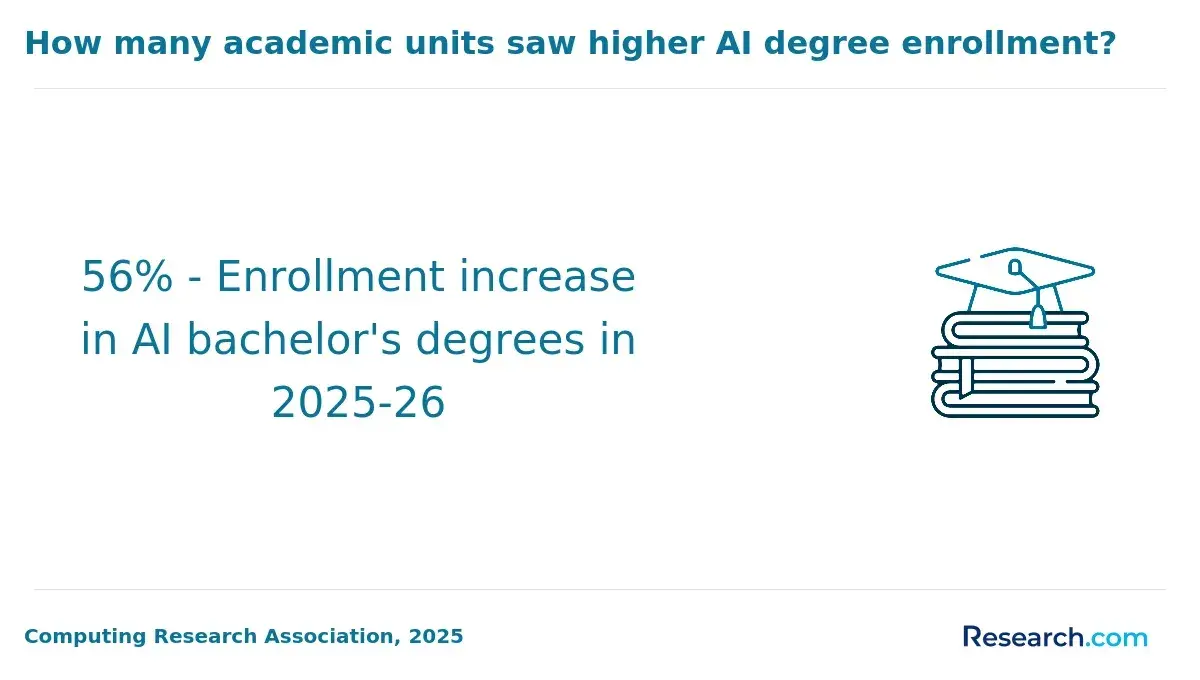
- Over 150 U.S. universities offer on-campus artificial intelligence degrees as of 2026, with enrollment growing 12% annually since 2024 due to rising industry demand.
- Programs emphasize interdisciplinary study, combining computer science, ethics, and data analytics to prepare students for diverse AI careers across sectors.
- Graduates' average starting salaries exceed $90,000, reflecting strong employer demand, particularly in tech hubs like Silicon Valley, Boston, and Seattle.
What are the top-ranked on-campus artificial intelligence degree programs in the United States?
Carnegie Mellon University ranks highest among on-campus artificial intelligence degree programs in the United States, recognized for its focus on machine learning, robotics, and natural language processing. Students benefit from access to expert faculty and advanced research facilities, making it a leader in the field.
Trailing closely are Princeton University, MIT, Stanford University, and the University of California, Berkeley, completing the top five. Princeton combines theoretical foundations with practical applications, ideal for those developing new AI algorithms. MIT's rigorous interdisciplinary curriculum merges computer science, data science, and engineering. Stanford leverages its Silicon Valley location to provide outstanding internship and job placement opportunities, while UC Berkeley emphasizes innovation in deep learning and autonomous systems through its prominent research centers.
Choosing among the best on-campus artificial intelligence degrees in America requires evaluating each program's specialization, faculty expertise, and research resources. These programs offer essential hands-on experiences through projects and industry partnerships, helping students build competitive careers. Many also support collaboration with peers and mentors in structured learning settings, benefiting those preferring direct engagement over online options.
Students interested in the career outlook for AI can explore details on applied artificial intelligence salary to understand potential earnings and industry demand, which underscores the value of pursuing these top-ranked artificial intelligence degree programs in the United States.
What are the admission requirements and prerequisites for entering an on-campus AI degree program?
Admission requirements for on-campus artificial intelligence degree programs in the United States remain highly competitive. Most top graduate programs seek applicants with a solid quantitative background, usually evidenced by a bachelor's degree in computer science, engineering, mathematics, or related STEM fields. Prerequisites often include coursework in linear algebra, calculus, statistics, and programming languages like Python or Java. Applicants without these foundations may need to complete prerequisite courses before enrollment.
Graduate Record Examination (GRE) scores are critical for many admission decisions. According to recent data from leading AI institutions, the average GRE quantitative reasoning score for admitted students is 165 or above, highlighting the importance of analytical and problem-solving skills. While verbal and writing sections matter, they usually carry less weight.
Strong letters of recommendation from academic or professional supervisors who can attest to research aptitude and technical skills enhance applications. A personal statement or statement of purpose is essential, allowing candidates to clearly define their career goals in artificial intelligence and relevant experience. Some programs also require a resume detailing internships, projects, or work related to AI, machine learning, or data analysis. For international students, TOEFL or IELTS scores are necessary to prove English proficiency.
Certain universities also conduct interviews to evaluate communication skills and motivation. Admission committees generally prioritize candidates who demonstrate both technical competence and a capacity for innovative research. Prospective students may also find it helpful to explore options such as an online mechanical engineer degree for complementary skills or alternative engineering pathways. Understanding prerequisites for enrolling in American on-campus artificial intelligence degree courses ensures better preparation for admission success.
What is the typical curriculum and core coursework in an on-campus artificial intelligence degree?
The typical curriculum for on-campus artificial intelligence degrees in America combines foundational computer science courses with specialized AI topics. Students often start with programming, data structures, algorithms, and discrete mathematics. Core coursework in American on-campus artificial intelligence programs prominently features machine learning and deep learning, which are included in 94% of AI degrees, covering techniques like supervised and unsupervised learning, neural networks, convolutional networks, and reinforcement learning.
Advanced classes may explore natural language processing, computer vision, robotics, and AI ethics. Programs emphasize practical experience through labs and projects, such as training models to classify images or generate text with frameworks like TensorFlow or PyTorch. Mathematical subjects like linear algebra, probability, and optimization are essential for understanding model performance.
Additional studies in databases, cloud computing, and software engineering support scalable AI applications. Electives might include human-computer interaction, AI in healthcare, or autonomous systems. Many programs conclude with a capstone project or thesis to design and analyze an AI system under supervision. Prospective students should also consider if courses balance theory with real-world practice to improve employability.
Those interested in technology degrees may also explore online colleges for game design as alternative career paths within computing fields.
How long does an on-campus artificial intelligence degree take to complete, and what are the typical costs?
On-campus artificial intelligence degree programs typically require two years of full-time study at the master's level. Some accelerated options can reduce this to 12-18 months, while part-time or dual-degree tracks may extend the duration to three or more years. Bachelor's degrees with an AI focus usually take four years, though specialized tracks can affect overall length. The duration of on-campus artificial intelligence degree programs in America varies based on these factors and student circumstances.
Tuition costs for AI master's programs at leading U.S. universities generally range from $45,000 to $65,000 annually, leading to total expenses between $90,000 and $130,000 for completion. These figures exclude additional fees such as living costs, textbooks, and technology essentials. Prospective students should consider residency status, as in-state tuition can offer significant savings, and public universities often provide more affordable options than private institutions, which may justify higher prices with enhanced industry ties and research opportunities.
Financial aid options like scholarships, assistantships, and employer tuition assistance help manage these costs. Working professionals may prefer part-time or evening programs to balance employment while studying without the pressure of upfront full tuition payments each year. For those seeking alternative routes, online ms data science programs provide flexible and often more affordable choices.
Despite high costs, earning an on-campus AI degree is linked to expanded career prospects and salary advancement in fields including machine learning engineering, data science, and robotics development. Cost estimates for on-campus artificial intelligence degrees in the United States highlight the importance of thorough financial planning before enrollment.
What career paths and job roles are available to graduates with an on-campus AI degree?
Graduates with an on-campus artificial intelligence degree have access to a wide range of career opportunities across multiple industries. Key roles such as machine learning engineer, AI researcher, and data scientist make up 58% of AI job postings, according to LinkedIn's 2024 Jobs Report. Machine learning engineers design and deploy models that allow systems to learn from data and are vital in sectors like healthcare, finance, autonomous vehicles, and technology. AI researchers push the boundaries of both theory and application in areas such as natural language processing, robotics, and computer vision, often through academic or corporate labs.
Data scientists utilize AI techniques to analyze large datasets, driving predictive analytics and automation to inform business decisions. Other notable roles include AI product managers who align technical development with market goals, AI ethics specialists focusing on fairness and accountability, and AI software developers integrating AI into software platforms.
With a 74% year-over-year increase in AI job postings, demand is strong in emerging fields like conversational AI and fraud detection. Combining AI expertise with domain knowledge in healthcare informatics or financial engineering enhances prospects. Practical skills in Python, neural networks, and cloud computing boost employability. Leveraging internships, research projects, and AI competitions helps build a strong portfolio aligned with industry innovation and needs.
What is the job outlook and salary potential for artificial intelligence degree holders in the current job market?
Employment for computer and information research scientists, including AI specialists, is projected to grow 23% between 2023 and 2033 according to the U.S. Bureau of Labor Statistics. This growth rate is substantially higher than the average 3% across all occupations, driven by increasing demand in industries such as healthcare, finance, automotive, and technology. These sectors continue to invest heavily in artificial intelligence, creating a variety of career opportunities.
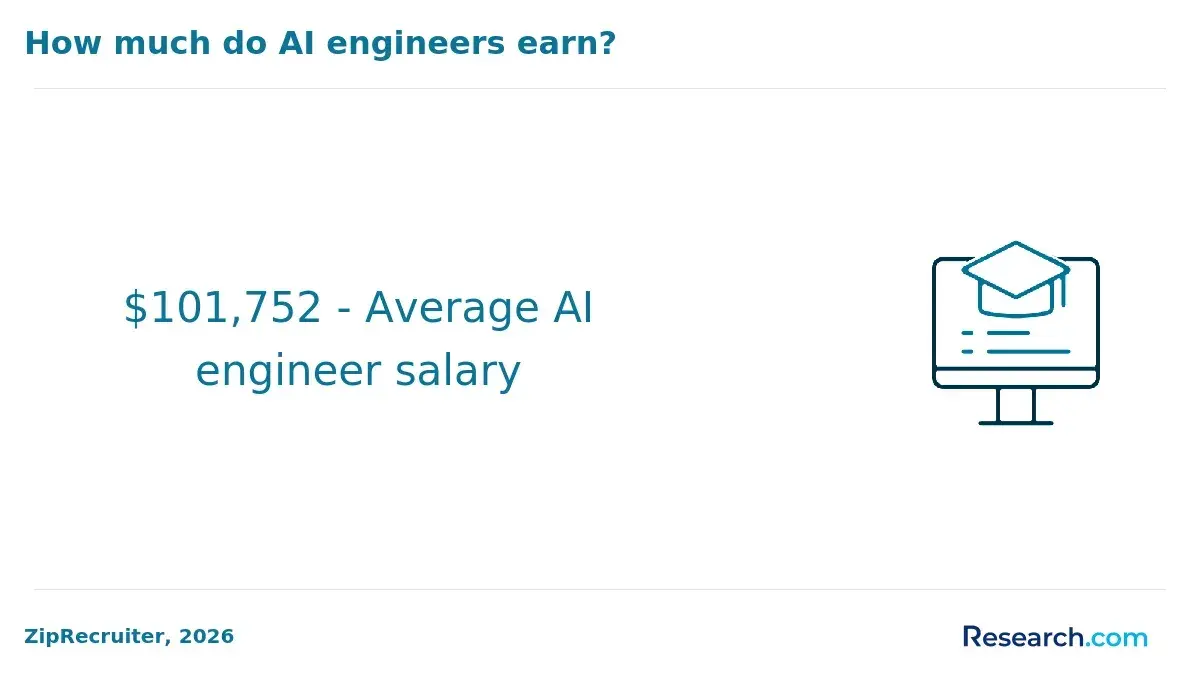
Salary prospects vary by role, experience, and location. Entry-level AI engineers typically earn between $90,000 and $110,000 annually. More experienced professionals, including machine learning engineers and AI research scientists, report median salaries ranging from $130,000 to $160,000. Specialized areas like natural language processing or robotics can offer salaries exceeding $180,000, especially in competitive urban markets. Advanced degrees and strong technical skills often lead to top-tier compensation.
Job roles extend beyond development to include AI ethics specialists, data scientists, and AI hardware engineers. Proficiency in programming languages such as Python, frameworks like TensorFlow or PyTorch, and cloud platforms enhances hiring prospects. Interdisciplinary knowledge combining AI with business or healthcare is increasingly valued.
Hands-on experience via internships and projects strengthens resumes. Continuous upskilling remains essential to navigate rapid technological changes. As noted by the Bureau of Labor Statistics, an artificial intelligence degree offers strong career growth and long-term stability.
What accreditation standards and quality indicators should you look for when choosing an on-campus AI program?
ABET accreditation is a key indicator of quality for on-campus artificial intelligence programs, as it confirms the program meets strict engineering and technology standards. Only about 12% of AI and machine learning programs in the U.S. have this accreditation, suggesting many lack industry-aligned curricula or sufficient resources. Besides ABET, regional accreditation from bodies like the Middle States Commission on Higher Education or WASC ensures the overall academic quality and recognition of the degree.
Look for comprehensive curricula covering machine learning, natural language processing, robotics, and ethics, balanced between theory and hands-on projects. This approach prepares students for the ever-evolving field. Faculty expertise is essential-professors should have advanced degrees in AI-related fields and active research or industry ties. Schools connected to research labs provide valuable exposure to the latest advancements.
Quality programs often feature active industry partnerships, internship opportunities, and career services that connect academic learning to real-world skills, improving job prospects. Prospective students should verify these elements carefully, as they enhance readiness for AI careers.
How do on-campus artificial intelligence programs differ from online and hybrid degree options?
On-campus artificial intelligence programs provide unparalleled access to specialized labs and equipment, enabling students to engage in hands-on experiments, robotics, and real-time coding challenges. This practical experience is invaluable for mastering complex AI techniques like machine learning model deployment and hardware integration. Such immersive environments foster direct interaction with faculty and peers, creating opportunities for mentorship, collaborative projects, and industry networking that are difficult to replicate in online settings.
Online programs offer more flexibility but often depend on virtual labs and simulations, which may lack the tactile feedback and immediacy of physical labs. Hybrid degrees include some in-person components, yet typically fall short of the continuous, immersive experience available on campus. Students in hybrid or online tracks should look for programs with strong lab simulation tools and structured networking to compensate for this.
A 2024 National Center for Education Statistics study reports that 68% of employers favor on-campus AI graduates for specialized roles, valuing their hands-on experience and professional connections. For those aiming at research or industry careers, on-campus programs provide a clear advantage. However, working professionals or those with geographic constraints may find hybrid or online options more feasible.
What professional certifications or credentials complement an on-campus artificial intelligence degree?
Professional certifications paired with an on-campus artificial intelligence degree can greatly boost employability and technical skills. A Coursera report reveals that 73% of AI professionals hold at least one additional industry certification beyond their degree. The most common are Google Cloud AI and AWS Machine Learning certifications, which validate expertise in cloud-based AI infrastructure crucial for real-world applications.
Popular certifications include the Google Professional Machine Learning Engineer, emphasizing scalable ML model implementation, and the AWS Certified Machine Learning - Specialty, focusing on building, training, and deploying ML solutions on AWS. Both require practical experience and are widely recognized by employers globally.
Additional relevant credentials are the Microsoft Certified: Azure AI Engineer Associate and the IBM AI Enterprise Workflow V1 Data Science Specialist, addressing platform-specific skills and workflows. For those targeting research roles, certifications in data science and advanced statistics from providers such as SAS or Coursera's Deep Learning Specialization enhance analytical expertise.
Industry certifications bridge the gap between academic knowledge and job market demands, offering hands-on experience with up-to-date AI technologies. Students and graduates are advised to prioritize certifications aligned with their career goals, whether focused on cloud AI, machine learning engineering, or data science.
What factors should you consider when comparing multiple on-campus artificial intelligence degree programs?
When selecting on-campus artificial intelligence degree programs, prioritize internship and industry partnerships, as 82% of AI graduate students highlight these as key decision factors. Hands-on experience through internships boosts applied skills and enhances job prospects by connecting students with top tech companies.
Evaluate faculty expertise and the program's research focus, whether in machine learning, robotics, or natural language processing. Choose programs aligned with your career goals to gain relevant knowledge. Also review course diversity and electives in emerging fields such as ethical AI and AI-driven cybersecurity.
Facilities like advanced computing labs, GPU clusters, and AI-specific software platforms play a critical role in effective learning. Investigate if the program partners with local tech firms or research centers for collaborative projects beyond classroom training.
Consider class size, program length, and student-to-faculty ratios, as smaller cohorts often offer stronger mentorship and networking. Alumni outcomes including job placement rates and industries entered provide insight into a program's success in preparing students for AI careers.
Financial considerations and geographic location are important; programs near tech hubs can facilitate internships. Transparent tuition, scholarships, and assistantships information help assess return on investment when choosing a program.
Other Things You Should Know About Artificial Intelligence
Many on-campus artificial intelligence programs incorporate coursework or modules focused on AI ethics, data privacy, and the societal implications of AI technologies. These courses explore responsible AI development, bias mitigation, and regulatory challenges to prepare students for ethical decision-making in their professional careers. This emphasis reflects growing industry and academic recognition of AI's broader impact.
Research opportunities are commonly available in reputable on-campus AI programs, often through faculty-led projects or dedicated AI labs. Students can engage in cutting-edge work involving machine learning, natural language processing, or robotics, sometimes resulting in publications and conferences. These experiences are valuable for those planning graduate studies or careers in AI research and development.
Most on-campus artificial intelligence bachelor's degrees require 120 to 128 semester credit hours for graduation. Programs usually include core coursework in programming, calculus, linear algebra, machine learning, and capstone or lab work, with some schools requiring separate general education credits in addition to the AI major.
In 2027, many top on-campus AI degree programs offer specialized tracks in areas like natural language processing, robotics, and computer vision. Students interested in these niches might also consider exploring an online AI master’s for non-technical students for flexible learning options.
References
- Bls https://www.bls.gov/ooh/computer-and-information-technology/computer-and-information-research-scientists.htm
- Criteria for Accrediting Computing Programs, 2025 - 2026 - ABET https://www.abet.org/accreditation/accreditation-criteria/criteria-for-accrediting-computing-programs-2025-2026/
- 20 Best Artificial Intelligence Schools for College Students https://www.computersciencedegreehub.com/best/artificial-intelligence-engineering-schools/
- Artificial Intelligence Degree Admission Requirements: What You Need https://hakia.com/degrees/artificial-intelligence/admission-requirements/
- Top Artificial Intelligence Courses: Fees and Duration https://collegevidya.com/blog/artificial-intelligence-course-fees-structure-duration/
- Artificial Intelligence Course Syllabus: Topics and Modules https://futurense.com/blog/artificial-intelligence-course-syllabus
- Bachelor in Management and Artificial Intelligence https://www.kozminski.edu.pl/en/programs/undergraduate-programs-bachelor/bachelor-management-and-artificial-intelligence
- Should AI Factor Into Your College Major Choice? https://www.road2college.com/should-ai-factor-into-choosing-a-college-major/
- Top On-campus Artificial Intelligence (Ai) Courses in USA from 75 Universities https://www.hotcoursesabroad.com/india/training-degrees/us-usa/full-time/artificial-intelligence-ai-courses/loc/211/smode/1/cgory/cb.31-4/sin/ct/programs.html
- Artificial Intelligence (procedure for non-EU students) https://apply.unipv.eu/enter/295