Are Artificial Intelligence Degrees Worth It in 2027?

Co-Founder and Chief Data Scientist
Many professionals with unrelated undergraduate degrees face uncertainty about how to transition into the artificial intelligence field in 2027. The fast-paced evolution of AI technologies demands relevant expertise, yet questions remain about the value of pursuing specialized degrees amid alternative learning options. Prospective students often worry about balancing cost, time commitment, and the credibility of various programs.
This article examines whether artificial intelligence degrees provide tangible career advantages and strategic pathways for those seeking flexible, accredited education. It aims to clarify how graduate-level AI education can influence job prospects and skills acquisition for career changers in the current market.
Key Things You Should Know
- Degrees in artificial intelligence typically lead to high-demand roles, with a 28% employment growth rate projected by 2031 according to the U.S. Bureau of Labor Statistics.
- Graduates earn median salaries around $100,000 annually, reflecting industry investments in skills like machine learning, data analysis, and AI ethics.
- Programs increasingly emphasize interdisciplinary skills, combining computer science, ethics, and domain expertise to meet evolving employer expectations and technological advancements.
What is the job outlook for AI degree graduates through 2027 and beyond?
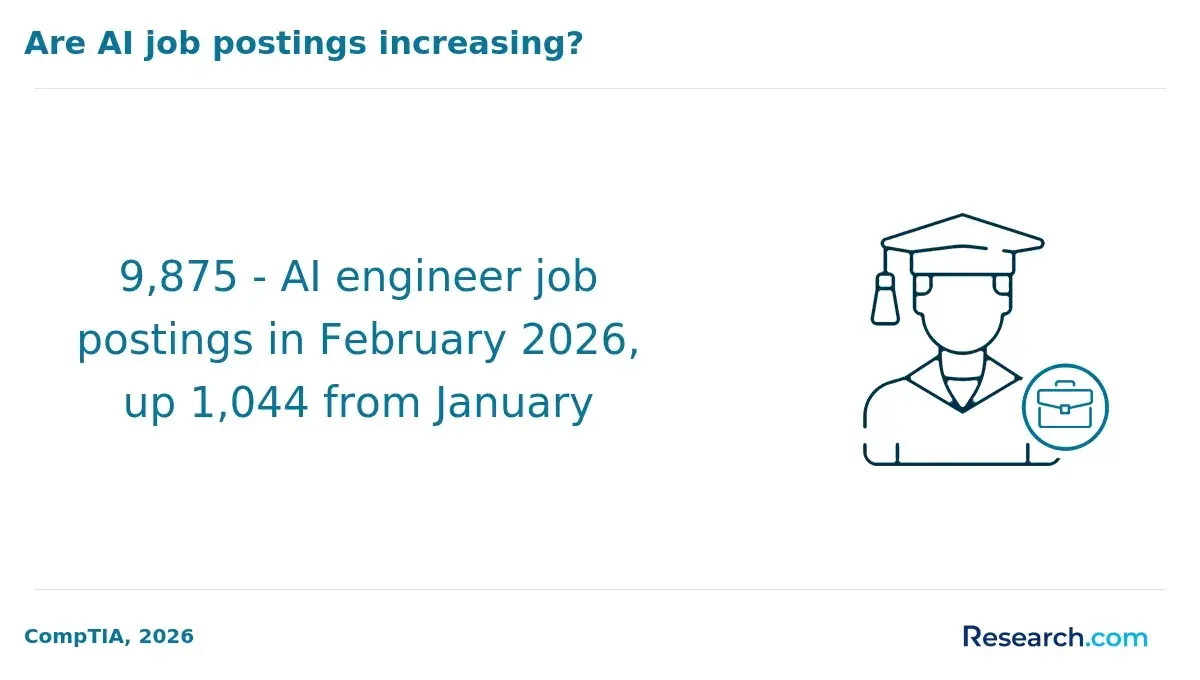
The job outlook for AI degree graduates in North America remains exceptionally robust, with the U.S. Bureau of Labor Statistics projecting a 15% growth in computer and information technology roles from 2023 to 2033. This growth outpaces the average for all occupations and is fueled by rising demand for artificial intelligence across industries such as healthcare, finance, automotive, and cybersecurity.
Career prospects for artificial intelligence graduates in Canada and the U.S. include positions like machine learning engineer, data scientist, AI researcher, and AI solutions architect. These roles focus on developing algorithms, enhancing natural language processing, and building autonomous systems. The healthcare sector increasingly hires AI professionals to analyze medical imaging and develop predictive patient models, while financial services use AI to combat fraud and improve trading.
Emerging fields such as ethical AI, AI policy development, and AI system auditing are creating new career avenues in response to regulatory and societal needs. Employers prioritize candidates with hands-on experience in AI frameworks and programming languages, emphasizing the importance of practical skills alongside theoretical knowledge. For those considering further education options, exploring an online counselor degree can be a valuable complement to AI expertise.
While competition may increase, graduates with strong AI algorithms knowledge, data handling capabilities, and interdisciplinary skills will remain in demand. Staying updated with evolving AI technologies and earning relevant certifications will enhance employability and career advancement opportunities.
How much can you earn with an artificial intelligence degree in the United States?
In the United States, individuals with an artificial intelligence degree can expect strong earnings due to high demand for AI expertise. According to Glassdoor's salary data, machine learning engineers with AI skills earn an average base salary of $165,000 annually. This reflects a solid return on investment for those pursuing such education.
The average earnings with an artificial intelligence degree US vary according to experience, location, and specialization. Entry-level salaries typically range from $90,000 to $120,000, especially in tech hubs like San Francisco, Seattle, and New York. Mid-career professionals specializing in natural language processing, computer vision, or robotics often see salaries between $140,000 and $180,000. Senior AI engineers and lead researchers may earn more than $200,000 annually when bonuses and stock options are included.
Other roles linked to AI, such as data scientists and AI product managers, generally offer salaries from $110,000 to $150,000. Salaries can be influenced by geographic factors; remote positions might offer lower base pay but greater flexibility and reduced living costs.
Graduates should explore developing specialized skills in machine learning frameworks, cloud computing, or AI ethics to accelerate salary growth. Certifications and practical experience also boost earning potential. For those comparing educational pathways, consider programs like the cheapest online master's in counseling to complement your skill set.
What types of artificial intelligence degree programs are available, and how do they differ?
Programs offering types of artificial intelligence degree programs available in 2027 generally fit into three categories: general AI degrees, specialized AI degrees, and interdisciplinary AI programs. General AI degrees cover broad foundational knowledge in AI principles, algorithms, and programming, ideal for students seeking a comprehensive understanding applicable to various AI roles.
Specialized AI degrees emphasize focused fields such as machine learning, deep learning, or natural language processing (NLP). These specializations reflect job market demands, with LinkedIn's 2024 AI Skills Report indicating that 68% of AI job postings require expertise in one of these areas. Machine learning programs explore statistical models and predictive analytics, deep learning focuses on neural networks and complex data structures, while NLP covers human-computer language interaction, including speech recognition and text analysis. Understanding the differences between artificial intelligence degrees and specializations helps students target skills most valued by employers.
Interdisciplinary AI programs blend AI with robotics, computer vision, or cognitive science for students aiming to combine AI with hardware or human behavior analysis. These often include hands-on labs and industry partnerships. Degree levels range from bachelor's degrees for foundational skills to master's degrees offering deeper technical and research opportunities, and PhDs for advanced research or academic careers. Prospective students should assess curriculum, faculty expertise, and alignment with their specialization.
Students interested in merging AI with other disciplines might find valuable options through an online MFT program, which reflects the growing trend of interdisciplinary education.
Share of US Job Postings Mentioning AI by Occupation Category (End of 2025)

Are artificial intelligence degrees offered online, and how do they compare to campus-based programs?
Artificial intelligence degree programs online have become increasingly popular, with data showing 35% of STEM graduate students enrolled in online or hybrid formats, and AI-specific online programs boasting an 82% completion rate. This reflects strong engagement and effectiveness in virtual learning environments.
A comparison of online and campus-based artificial intelligence degrees reveals that online programs offer greater flexibility, ideal for working professionals or those with other commitments. Platforms like Coursera and edX provide extensive curricula taught by faculty from top institutions, incorporating virtual labs and coding projects that simulate hands-on experience.
Campus-based degrees often provide richer in-person interaction, networking, and access to on-site research facilities, valued by students and employers alike. Hybrid programs are emerging, merging online coursework with periodic on-campus sessions for labs or seminars, balancing convenience and direct engagement.
Choosing between delivery formats should focus on factors such as program reputation, faculty expertise, and industry ties rather than format alone. Employers increasingly accept accredited online degrees when paired with practical skills and portfolios. Transparency in career outcomes and resources is essential for prospective students considering AI education.
Individual needs like schedule flexibility and learning style largely determine the best path. For those exploring related fields, CACREP accredited counseling programs online offer a model of accessible quality education. Overall, well-designed online AI degrees match campus programs in rigor and value, making them a viable option for many learners in today's environment.
What accreditation standards should you verify when choosing an AI degree program?
ABET accreditation remains the gold standard for evaluating artificial intelligence and computer science degree programs in the United States. Only a small portion of these programs-around 12%-hold ABET accreditation, a testament to their adherence to rigorous academic and industry standards. This accreditation ensures a program meets critical curriculum requirements, faculty qualifications, and resource availability that align with evolving professional and technological needs.
Students considering AI degrees should verify ABET compliance through the official ABET directory. Employers, especially in technical roles, often prefer graduates from ABET-accredited programs as they signal comprehensive training in computing fundamentals, AI algorithms, and ethical issues. Additionally, confirming the institution's regional accreditation is vital, as it guarantees broader educational quality and impacts eligibility for federal financial aid as well as credit transferability.
Some programs may also hold supplementary accreditations from professional bodies like IEEE or AI-focused organizations, though these are less common. Prospective learners should also assess curriculum depth, faculty expertise, industry partnerships, and available internships to enhance practical experience and job readiness. This approach addresses common challenges in distinguishing reputable AI degrees from less-established or online-only offerings.
What coursework and technical skills are covered in artificial intelligence degree curricula?
AI degree curricula cover a broad spectrum of coursework and skills vital for careers in this fast-evolving field. Programming languages, especially Python, are central due to their widespread use in AI development. The World Economic Forum's 2025 Future of Jobs Report highlights Python as a top technical skill listed in 87% of AI job postings, reflecting strong industry demand. Students also learn to work with machine learning frameworks like TensorFlow and PyTorch, essential for building and deploying AI models.
Statistical analysis is another key area, teaching probability, statistics, and data modeling to help students interpret data and evaluate algorithm efficiency. Additional programming languages such as R, Java, or C++ are often part of the curriculum to enhance algorithm optimization and software integration capabilities.
Specialized courses focus on natural language processing, computer vision, robotics, and reinforcement learning, exposing students to practical AI applications from voice assistants to autonomous machines. Foundational knowledge in data structures, algorithms, and linear algebra supports the development of sophisticated AI models.
Hands-on experience with projects, labs, and internships is integral, ensuring students apply theory to real-world challenges. Ethical AI development and bias mitigation are also emphasized, reflecting the growing call for responsible AI. Graduates leave equipped with skills in AI software development, data science, and analytical problem-solving, aligning with employer priorities across the AI job market.
How long does it take to complete an artificial intelligence degree, and what are typical costs?
Completing an artificial intelligence degree usually takes about two years for a master's program, while bachelor's degrees generally require four years. For quicker entry into the field, professional certificates or associate degrees related to artificial intelligence can be finished within one to two years. Full-time master's students complete 30 to 36 credit hours, covering topics like machine learning, data science, and computational algorithms.
Costs vary widely based on the type of institution and residency. According to College Board data, private universities charge between $80,000 and $120,000 for a master's degree in artificial intelligence. Public universities offer more affordable tuition, averaging $30,000 to $50,000 for in-state students. Online or part-time programs may take longer but enable students to spread out costs while working.
Beyond tuition, applicants should plan for fees, books, and living expenses. Living costs in metropolitan areas often exceed $15,000 annually. Financial aid differs greatly, with public institutions frequently offering scholarships or assistantships in STEM fields that include artificial intelligence.
Program format and intensity impact duration and cost. Accelerated degrees shorten time but can increase per-term expenses. Evaluating personal budget and career goals is essential before committing to an artificial intelligence program.
What are the admission requirements for undergraduate and graduate artificial intelligence programs?
Admission to undergraduate artificial intelligence programs typically requires a high school diploma or equivalent, with strong coursework in mathematics-especially calculus and algebra-and science classes such as physics or computer science. Competitive SAT or ACT scores are often expected, although many institutions have adopted test-optional policies. Prior programming experience or participation in STEM extracurricular activities can enhance an application. Letters of recommendation and a personal statement explaining interest in artificial intelligence further strengthen candidacy.
Graduate programs usually require a bachelor's degree in computer science, engineering, mathematics, or a closely related STEM field. These programs emphasize strong academic performance in quantitative subjects and programming skills. Many institutions value Graduate Record Examinations (GRE) scores, where top-tier AI applicants often score 165 or higher on the quantitative section, significantly above average. Admission committees also seek letters of recommendation from faculty or professionals familiar with the applicant's technical abilities.
A detailed statement of purpose outlining AI research interests and career goals is crucial. Relevant work or research experience, particularly in machine learning, data science, or software development, is sometimes required or highly recommended. Proficiency in programming languages such as Python, Java, or C++ is commonly necessary for admission to advanced artificial intelligence training.
What professional certifications complement or substitute for artificial intelligence degrees?
Professional certifications can effectively complement or substitute for artificial intelligence degrees, depending on career goals and industry demands. Certifications that focus on practical skills and current technologies hold strong value among employers. For instance, Google Cloud AI and AWS Machine Learning certifications emphasize real-world applications such as model deployment and scalable machine learning pipelines. According to Coursera's 2024 Global Skills Report, 42% of AI professionals hold at least one industry certification, with certified individuals earning 18% more on average than non-certified peers.
Certifications like the Microsoft Certified: Azure AI Engineer Associate and IBM AI Engineering Professional Certificate target popular platforms and tools, offering hands-on experience with AI algorithms and system integration. These credentials suit professionals aiming for roles valuing technical proficiency over academic research.
For those unable or unwilling to pursue formal degrees, certifications provide a faster route into AI careers. Employers often prefer certifications combined with proven project experience, making them viable alternatives to traditional degrees.
Advanced certifications in machine learning operations (MLOps) and data science further boost employability since many AI roles require cross-disciplinary expertise. Selecting certifications aligned with industry and technology stacks maximizes their relevance and impact.
What career roles and industries hire artificial intelligence degree graduates?
Graduates with an artificial intelligence degree have diverse career opportunities across multiple industries. Technology companies employ about 35% of these graduates in roles such as machine learning engineer, data scientist, AI research scientist, and AI software developer. These professionals focus on developing products like natural language processing, computer vision, and recommendation engines.
Financial services recruit 28% of AI graduates to work on risk modeling, fraud detection, algorithmic trading, and credit scoring. Banks, investment firms, and insurance providers seek AI specialists who combine technical skills with knowledge of finance and economics to enhance decision-making and operational efficiency.
Healthcare industries employ 18%, placing AI professionals in roles related to medical imaging analysis, drug discovery, patient data management, and predictive diagnostics. These positions demand familiarity with both AI technologies and healthcare regulations.
Other sectors hiring AI graduates include automotive (autonomous vehicles, robotics), manufacturing (predictive maintenance, process automation), and retail (customer analytics, supply chain optimization). Common job titles across these industries include AI engineer, data analyst, AI consultant, and research scientist.
Other Things You Should Know About Artificial Intelligence
Students often encounter rigorous coursework involving complex algorithms, data structures, and statistical modeling. Staying current with rapidly evolving AI technologies and theories can be demanding. Additionally, hands-on projects require strong programming skills and critical thinking to solve real-world problems effectively.
Yes, graduates with artificial intelligence degrees are well-positioned to start ventures in emerging tech fields such as machine learning applications, automation, and data analytics. The knowledge gained equips them to develop innovative products or services, often attracting investment in tech startups focused on AI solutions.
Ongoing education is crucial due to the fast-paced advancement in artificial intelligence research and applications. Professionals often engage in continuous learning through workshops, certifications, and specialized courses to remain competitive and adapt to new tools, frameworks, and ethical considerations in the field.
A background in computer science is beneficial but not always necessary for pursuing an artificial intelligence degree. Many programs are designed to teach foundational computer science skills alongside AI-specific coursework, making it accessible for students from diverse academic backgrounds. However, familiarity with programming and mathematical concepts can be advantageous.
References
- 16 Artificial Intelligence Career Paths https://www.calmu.edu/news/artificial-intelligence-career-paths
- AI and the Future of Work: Professions that Will Survive Through 2026. https://technologicinnovation.com/2025/09/05/ai-and-the-future-of-work-jobs-safe-through-2026/
- What are the Best Degrees in AI in 2025? – 365 Data Science https://365datascience.com/trending/best-degrees-in-ai/
- A Complete 4-Year Course Plan for an Artificial Intelligence Undergraduate Degree https://www.mihaileric.com/posts/complete-artificial-intelligence-undergraduate-course-plan/
- ARTiBA Accreditation Program | Elevate Your AI Education Standards https://www.artiba.org/artiba-accreditation-program
- AI Jobs That Will GROW in 2026 | Future Careers in Artificial Intelligence https://aiwebbiz.com/blog/ai-jobs-that-will-grow-in-2026-%F0%9F%9A%80-future-careers-in-artificial-intelligence/
- Best AI Certifications to Boost Your Career in 2026 – Dataquest https://www.dataquest.io/blog/best-ai-certifications/
- Key Skills Gained from a Bachelor of Science in Artificial Intelligence https://tetr.com/blog/key-skills-gained-from-a-bachelor-of-science-in-artificial-intelligence
- AI Is Eliminating Entry-Level Jobs Faster Than Anyone Expected. Here's What 2026 Graduates Must Do Differently to Build a Career. https://lumichats.com/blog/ai-replacing-entry-level-jobs-2026-what-new-grads-must-do-now
- Will Your Degree Still Matter in 2026? AI Is About to Rewrite the Rules of Education | by Claudio Lupi | Stackademic https://blog.stackademic.com/will-your-degree-still-matter-in-2026-ai-is-about-to-rewrite-the-rules-of-education-f2e8cf60126c