2027 AI Bachelor's Degree Programs With Strong Retention Rates

Co-Founder and Chief Data Scientist
Switching careers into the artificial intelligence field can be daunting, especially when faced with programs that have high dropout rates or lack flexible options for students with unrelated undergraduate degrees. Many prospective students struggle to find accredited bachelor's degree programs that not only offer strong foundational knowledge but also support sustained progress through to graduation.
Retention rates often reflect program quality, student engagement, and effective curriculum design. This article reviews bachelor's degree programs known for strong retention, helping readers identify options that maximize the chance of completing a valuable, career-focused education in artificial intelligence efficiently and effectively.
Key Things You Should Know
- AI bachelor’s degree programs with strong retention rates typically reflect high levels of student satisfaction and academic support, indicating that learners are successfully adapting to coursework in programming, mathematics, and machine learning fundamentals.
- These programs often provide structured onboarding, tutoring services, and early intervention systems, which help identify academic challenges early and support students in maintaining consistent progress toward graduation.
- Strong retention is also associated with well-designed curricula that balance rigor and accessibility, ensuring students remain engaged while gradually building the technical and analytical skills required for AI-related careers.
Which bachelor's AI programs have strong student retention and graduation rates?
Several U.S. bachelor's degree programs in artificial intelligence with high retention rates consistently exceed the national benchmark of an 81% first-year retention rate (NCES/IPEDS, 2024). Programs featuring structured curricula, early engagement, and integrated support services report retention rates above 85%.
For instance, Carnegie Mellon University's AI-focused bachelor's programs maintain retention rates near 90%, helped by proactive advising and rigorous academic support.
Universities embedding AI studies within computer science or engineering departments often demonstrate top student retention rates in artificial intelligence bachelor programs, especially when offering specialized AI tracks combined with project-based learning.
Georgia Tech's Bachelor of Science in Computer Science with an AI specialization reports approximately 87% first-year retention, attributed to its emphasis on research opportunities and hands-on labs.
Community colleges articulating AI-related associate degrees to four-year bachelor's pathways also boost retention and graduation. These affordable and accessible routes support underrepresented STEM students.
For example, Northern Virginia Community College's AI-related transfer programs report student retention exceeding 83%, aligned with institutional support services.
Key factors influencing strong retention include:
- Early academic advising matched to AI career goals
- Capstone projects and industry internships in AI fields
- Cohort models fostering peer collaboration
- Access to tutoring and specialized AI skill workshops
Prospective students seeking a computer science degree accelerated with AI specialization should prioritize programs with transparent retention data and robust student support. High retention often signals clear curriculum design and engagement with real-world AI applications, crucial for timely degree completion and career readiness.
What accreditation should an AI bachelor's degree program have in the U.S.?
Prospective students seeking an AI bachelor's degree in the U.S. should prioritize ABET Computing Accreditation. ABET is a globally respected accrediting body with 4,564 accredited computing programs worldwide, ensuring that programs meet high standards in curriculum, faculty, facilities, and student outcomes.
This accreditation guarantees graduates are well-prepared for technical and professional challenges in AI-related fields.
ABET-accredited programs emphasize foundational knowledge such as algorithms, data structures, machine learning, and ethical considerations essential for AI careers. Choosing an ABET-accredited program reduces the risk of substandard education and enhances eligibility for certifications and graduate study.
Additionally, recognized U.S. regional accreditation for artificial intelligence degrees, from agencies like the Higher Learning Commission or Middle States Commission, plays a crucial role in credit transfer, financial aid, and employer recognition.
Some programs might also hold specialized endorsements from professional organizations like IEEE or AAAI, although this is less common for undergraduate studies. Students should verify accreditation status through the ABET website or institution disclosures, as selecting a non-accredited program can limit internship, scholarship, and employment prospects, affecting career progression.
For those researching cost-effective options, an affordable data science degree may align with AI-related studies while maintaining quality standards in accreditation.
Is an online AI bachelor's degree respected by employers and graduate schools?
Online AI bachelor's degrees from accredited and reputable institutions enjoy strong employer recognition. According to SHRM's 2024 Talent Trends, 79% of employers are now more willing to hire candidates with online degrees than in past years, reflecting increased trust in quality online education.
Graduate school acceptance for AI bachelor's graduates is also favorable. Top programs typically assess applicants based on academic achievement, relevant experience, and research potential rather than whether their degree was earned online. Applicants earning their AI bachelor's from regionally accredited universities with rigorous curricula have solid admission prospects.
Prospective students should verify their school's accreditation and ensure a challenging curriculum that includes fundamentals, hands-on labs, and industry-recognized certifications. Enhancing an online AI degree with internships or project-based learning further boosts employability and graduate admission chances.
To summarize key points:
- Employer acceptance is high for online degrees from credible institutions per SHRM's 2024 data.
- Graduate schools prioritize academic merit over degree delivery mode, especially if the program is accredited and rigorous.
- Supplementing online AI degrees with internships or projects improves employability and graduate admissions prospects.
Choosing carefully and gaining self-driven experience remain essential to maximizing career and academic opportunities with an online AI bachelor's degree. Students exploring options can also review degrees in AI that balance affordability with quality.
What admissions requirements are typical for AI bachelor's degree programs?
Typical entry requirements for AI undergraduate programs include strong preparation in mathematics and science, reflecting the field's technical demands. Applicants usually need a high school transcript featuring coursework in calculus, algebra, and statistics.
Completion of physics and computer science courses is often required to demonstrate problem-solving skills and foundational coding ability. Many institutions still rely on standardized test scores like the SAT or ACT, with particular emphasis on math sections above the 75th percentile.
Application essays often highlight analytical thinking, motivation to study AI, and relevant experiences such as coding projects or math competitions. Letters of recommendation are generally requested from STEM teachers who can attest to the applicant's quantitative reasoning and perseverance with complex subjects.
Some universities also ask for portfolios showcasing programming work or participation in AI-related clubs. Interview components, if used, assess both technical knowledge and soft skills such as communication and teamwork.
According to Common App's 2025 Applicant & Application Trends update, applicants targeting AI fields tend to submit more applications, reflecting rising competition. This trend underlines the importance of strong academic credentials and practical coding experience early on.
Prospective students may also explore cybersecurity programs as a future step after gaining foundational AI bachelor's degree admissions criteria experience.
What courses and skills are covered in an AI bachelor's degree curriculum?
Bachelor's degree programs in artificial intelligence combine foundational theory with practical technical skills essential for AI and machine learning careers. Central to the curriculum is programming, with Python highlighted as the most sought-after skill for AI roles, based on Lightcast's 2024 skills analysis.
Students typically study key areas such as:
- Data structures and algorithms for efficient AI model creation.
- Probability, statistics, and linear algebra to support machine learning concepts and data interpretation.
- Machine learning methods including supervised, unsupervised, and reinforcement learning.
- Natural language processing (NLP) to handle human language tasks.
- Computer vision for interpreting visual data.
- Deep learning and neural networks focusing on layered data processing and pattern recognition.
- Ethics in AI to address social impact and responsible innovation.
Additional studies often cover software engineering tailored to AI, database management, cloud computing, and AI system deployment. Many programs emphasize hands-on learning through labs and capstone projects, fostering skills like data cleaning, model evaluation, and performance optimization.
Graduates develop strong problem-solving abilities for AI system design and work with tools such as TensorFlow or PyTorch. This well-rounded training aligns with employer needs across sectors like healthcare and finance.
How much do AI bachelor's degree programs cost, and what aid is available?
AI bachelor's degree tuition in the U.S. generally aligns with public four-year college averages. According to College Board's Trends in College Pricing & Student Aid 2024, average in-state tuition and fees at public four-year institutions hover around $11,300 per year.
Private schools offering AI degrees, however, often charge between $30,000 and $50,000 annually.
Financial aid options play a critical role in affordability. Federal aid includes Pell Grants for eligible students, which don't require repayment, and federal student loans featuring fixed interest rates and income-driven repayment plans. Additionally, many programs offer institutional scholarships targeting merit, need, or specific groups such as women and underrepresented minorities in STEM fields.
Other sources of support include work-study programs, state grants, and tuition waivers aimed at residents pursuing in-demand fields like AI. Employer tuition assistance is increasingly common for working professionals, often covering part or all of the tuition for relevant degrees.
Students should analyze net costs by subtracting aid from sticker prices and compare financial aid packages across schools to find more affordable options. Early FAFSA submission is essential to maximize both federal and institutional aid.
- Average public in-state tuition and fees: $11,300/year
- Private AI bachelor's tuition: $30,000-$50,000/year
- Key aid types: Pell Grants, loans, scholarships, work-study, state grants, employer assistance
How long does it take to earn an AI bachelor's degree full time or part time?
Full-time students pursuing a bachelor's degree in artificial intelligence usually take four to five years to graduate. However, data from the National Center for Education Statistics (NCES, 2024 Digest) shows that only about 41% of first-time, full-time bachelor's students at four-year institutions complete their degrees within four years.
This suggests that many students need more time than the traditional timeline.
Part-time students, such as working professionals, often take six to eight years to finish their degree. Many colleges offer flexible or evening classes to help balance jobs and studies.
Key factors affecting completion time include:
- Program rigor, as AI degrees often include challenging coursework in mathematics, programming, and data science.
- Cooperative education or internships that extend study duration but provide valuable experience.
- Credit transfer options that can shorten the path for those with prior related coursework or associate degrees.
Retention rates and academic support services also influence how long students take to graduate. Early advising helps in planning course loads and prerequisites, improving progress through AI curricula.
Prospective students should carefully assess these elements when choosing programs to ensure a realistic timeline and successful degree completion.
What careers can you get with a bachelor's degree in artificial intelligence?
A bachelor's degree in artificial intelligence opens doors to a wide range of high-demand careers in technology and data-driven industries. Graduates often pursue roles such as AI and machine learning specialists, software engineers with AI expertise, data scientists, and robotics engineers, all of which require strong programming skills, mathematical knowledge, and proficiency in designing intelligent systems.
Common job titles include:
- Machine Learning Engineer developing predictive models and algorithms
- Data Scientist analyzing complex data sets to support business strategies
- AI Research Scientist advancing innovative AI methods and applications
- Robotics Engineer creating automated systems for healthcare and manufacturing
- Natural Language Processing (NLP) Engineer building conversational AI and language tools
The World Economic Forum's Future of Jobs Report 2025 highlights AI and machine learning specialists among the fastest-growing roles through 2030, emphasizing strong job prospects. Additionally, graduates can find roles in cybersecurity, autonomous vehicles, and healthcare technology.
Experience with AI frameworks like TensorFlow or PyTorch and programming languages such as Python or Java significantly improve employability.
Graduates can expect opportunities in established tech companies and innovative startups. Practical experience through internships or research projects enhances career readiness.
Success in these roles often depends on problem-solving skills, critical thinking, and the ability to manage complex automated systems, with competitive salaries across industries.
How much can AI bachelor's degree graduates earn in common roles?
Graduates holding a bachelor's degree in artificial intelligence find competitive salaries across familiar roles. According to the U.S. Bureau of Labor Statistics' Occupational Employment and Wage Statistics (May 2024), software developers earn a median annual wage of about $132,930.
Entry-level salaries in AI-related fields start lower but grow quickly with experience and specialization.
Key job roles and typical earnings include:
- Software Developer: Median pay around $132,930 annually; roles typically involve AI software, automation, and machine learning integration.
- Data Scientist: Starting salaries range from $85,000 to $110,000, with median wages surpassing $120,000 as expertise increases.
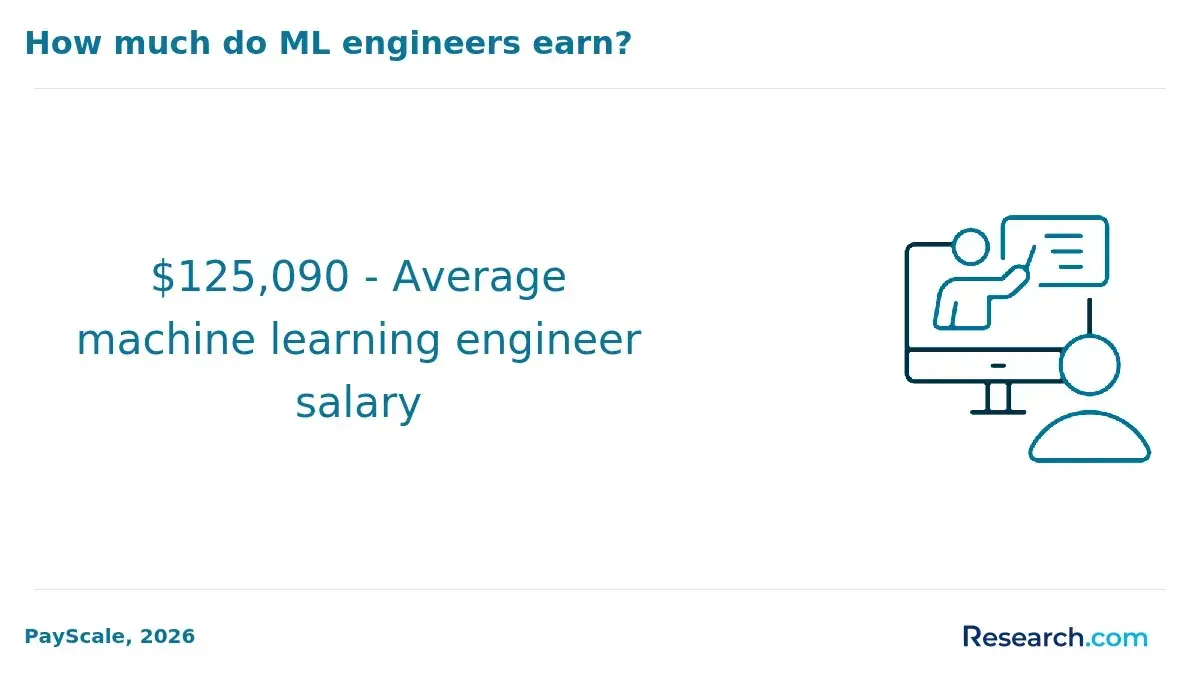
- Machine Learning Engineer: Median earnings usually fall between $110,000 and $140,000, reflecting demand for algorithm optimization.
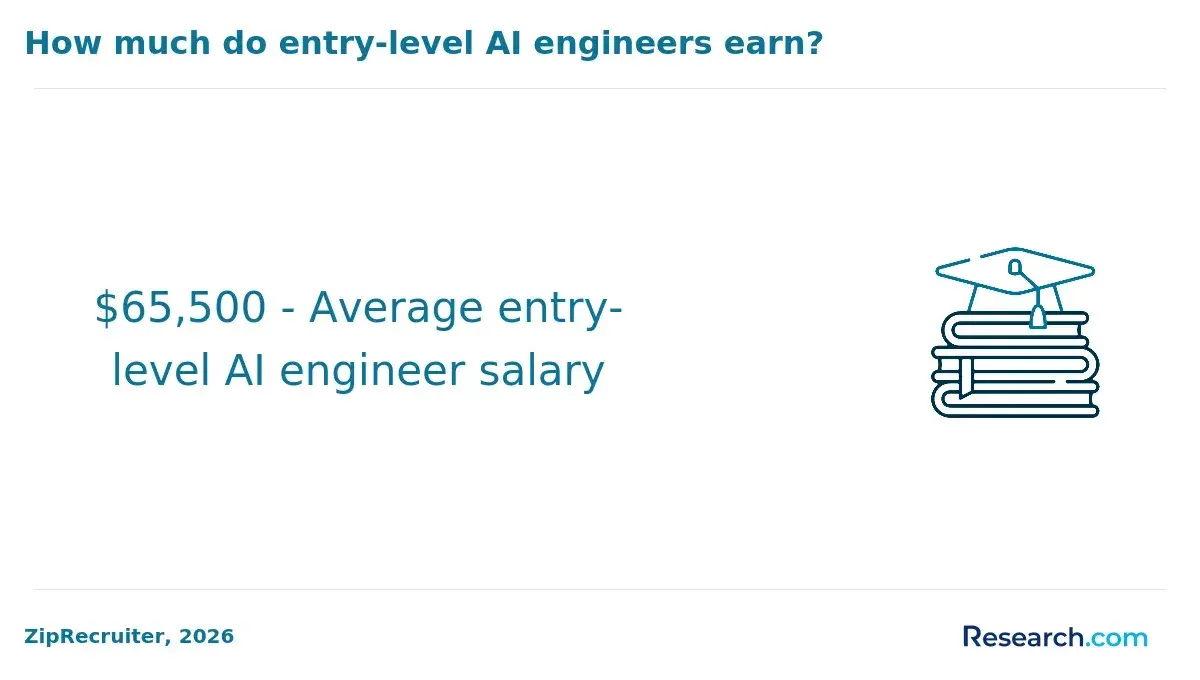
- AI Research Assistant: Salaries start from $60,000 to $90,000, with further growth potential in academia or industry.
Salary levels vary by geography, industry, and company size. Technology centers such as Silicon Valley offer higher salaries but come with higher living costs. Building proficiency in programming languages like Python and frameworks like TensorFlow enhances earning potential.
Internships and certifications can also boost starting salaries and career progress.
Which certifications should AI bachelor's students consider for career readiness?
AI bachelor's students boost career readiness by earning certifications that validate both core IT and specialized AI skills. Essential certifications such as CompTIA's Security+, Network+, and A+ establish foundational knowledge in cybersecurity, networking, and systems management. According to CompTIA's IT Industry Outlook 2025, 91% of employers value IT certifications when hiring, highlighting their importance alongside an AI degree.
For specialized AI roles, vendor-neutral certifications like the Certified Artificial Intelligence Practitioner (CAIP) and vendor-specific ones such as the Microsoft Certified: Azure AI Engineer Associate or IBM AI Engineering Professional Certificate confirm abilities in machine learning algorithms, AI model deployment, and data analysis.
Those aiming for data science or machine learning careers often benefit from the Google Professional Machine Learning Engineer certification, which focuses on practical AI problem-solving and cloud integration. Additionally, project management credentials like Certified ScrumMaster (CSM) or Project Management Professional (PMP) prepare students for leadership paths managing AI initiatives.
- Start with entry-level IT certifications to build a strong technical base.
- Pursue AI and machine learning certificates to showcase specialized expertise.
- Obtain management certifications to qualify for team leadership or project delivery roles.
Combining an AI degree with recognized certifications aligns well with industry demands and significantly enhances employability.
Other Things You Should Know About Artificial Intelligence
Undergraduate students in artificial intelligence programs often have access to research opportunities involving machine learning algorithms, natural language processing, robotics, and computer vision. Many universities encourage student participation in faculty-led projects or independent studies, allowing hands-on experience that complements theoretical coursework. These opportunities can enhance practical skills and strengthen graduate school or job applications.
Ethical considerations are increasingly integral to AI curricula, covering topics such as bias in algorithms, data privacy, and the societal impact of automation. Programs typically include dedicated courses or modules on AI ethics, responsible AI, and policy implications. This ensures graduates are prepared to develop AI technologies with awareness of their ethical and social consequences.
Internships are highly valued in AI bachelor's programs as they provide practical industry experience and networking opportunities. Many programs offer structured internship placements or encourage students to seek relevant internships during summer breaks. Completing an internship can improve job prospects and give insight into real-world AI applications and workplace expectations.
High retention rates in 2027 AI bachelor's programs generally result from engaging curricula, supportive faculty, and practical experiences like internships. Schools with pathways to advanced education, such as an online master’s in AI governance, also help retain students by presenting clear career progression opportunities.
References
- Bachelor in Management and Artificial Intelligence https://www.kozminski.edu.pl/en/programs/undergraduate-programs-bachelor/bachelor-management-and-artificial-intelligence
- AI Certification Programs: Which Ones Matter for Your Career https://www.businessplusai.com/blog/ai-certification-programs-which-ones-matter-for-your-career
- 9 Must-Have AI Certifications for Boosting Your Career | Cake https://www.cake.me/resources/career-development/ai-certifications
- Who Accredits Artificial Intelligence (AI) Degree Programs? - AI Degrees Online https://aidegreesonline.com/accreditation/who-accredits-ai-degree-programs/
- Cost to Study Artificial Intelligence in 2026 https://checkmateittech.com/cost-to-study-artificial-intelligence-usa/
- Top College Degrees That Will Land You the Highest-Paying AI Jobs in 2026 https://www.investopedia.com/top-college-degrees-that-will-land-you-the-highest-paying-ai-careers-in-2026-11923863
- Best AI Research Programs for College Students [2026] https://algoverseairesearch.org/blog/ai-research-programs-college-students
- How Much is the Artificial Intelligence Course Fee in Philippines? https://datamites.com/blog/how-much-is-the-artificial-intelligence-course-fee-in-philippines/
- AI Careers: Roles, Salaries, and Certifications to Get You Hired - ONLC https://www.onlc.com/blog/ai-careers-roles-salaries-certifications/
- How Long Does It Take to Complete an AI Course https://www.epw.com/blog/courses/how-long-is-ai-course