2027 Students With No Coding Background in AI Programs

Co-Founder and Chief Data Scientist
Many students with no coding background face significant challenges when transitioning into AI programs. They often struggle with prerequisite technical skills, feeling unprepared for curriculum demanding programming knowledge. This barrier can deter capable candidates from pursuing careers in AI, limiting diversity in the field. Institutions increasingly offer flexible pathways, yet prospective students need clarity on program expectations and resources. Understanding these options is crucial for making informed decisions and successfully entering the AI workforce without a traditional tech foundation. This article examines accessible routes and strategies tailored to non-coders aiming to advance in Artificial Intelligence programs.
Key Things You Should Know
- In 2026, over 45% of AI program enrollees in the U.S. lack prior coding experience, reflecting increased accessibility in AI education.
- Many institutions now emphasize foundational AI concepts and no-code tools, allowing students without programming backgrounds to succeed.
- The demand for interdisciplinary AI skills grows, with roles valuing domain expertise alongside AI literacy, broadening career prospects beyond traditional coding.
Can students with no coding background succeed in artificial intelligence degree programs?
Students without coding experience in artificial intelligence programs can succeed by adopting strategic learning approaches and leveraging available resources. Many AI degree programs offer beginner-friendly programming courses, especially focusing on Python, which is essential in AI development. Foundational modules in mathematics and logic help build skills before tackling advanced AI topics. Success factors for non-coders in artificial intelligence degrees include consistent practice, using online tutorials, and joining peer study groups or coding bootcamps tailored to beginners.
Practical projects and internships, particularly those emphasizing applied AI over pure coding, are valuable for accelerating understanding and gaining real-world experience. Universities increasingly provide AI tools with user-friendly interfaces that minimize coding requirements, helping novices explore earlier. Key challenges often involve overcoming intimidation and filling gaps in algorithmic thinking, but focused mentorship and support services effectively address these issues.
Students should consider AI subfields less reliant on heavy programming, such as AI ethics or data analysis, which can better match diverse skill sets. For those interested, learning more about what is applied AI engineering can provide a useful career direction. With the rapid growth in AI skills demand, especially now, the landscape offers promising opportunities for a wide range of learners.
What types of AI programs are available for beginners without programming experience?
Beginners without programming experience can find multiple beginner-friendly AI courses with no coding required, tailored to help students grasp foundational AI concepts, applications, and ethics. Many universities now offer "AI-broad" programs emphasizing data literacy, AI ethics, machine learning theory without coding, and AI policy studies. These programs often use case studies and project management frameworks to teach conceptual understanding rather than technical skills.
Certificate and non-degree programs focused on AI literacy are widely available. These typically cover AI tools, natural language processing applications, and visual AI interfaces that require minimal technical setup. Additionally, interdisciplinary programs in areas like business analytics, digital humanities, or social sciences include AI modules teaching meaningful AI usage and interpretation, supporting students without a programming background.
Examples of practical skills from such programs include using no-code machine learning platforms, AI for decision-making, and AI-driven data visualization. These skills enable learners to collaborate effectively with technical teams and understand AI's organizational impact. For those exploring options, it's also worth researching affordable engineering schools that offer diverse AI education pathways.
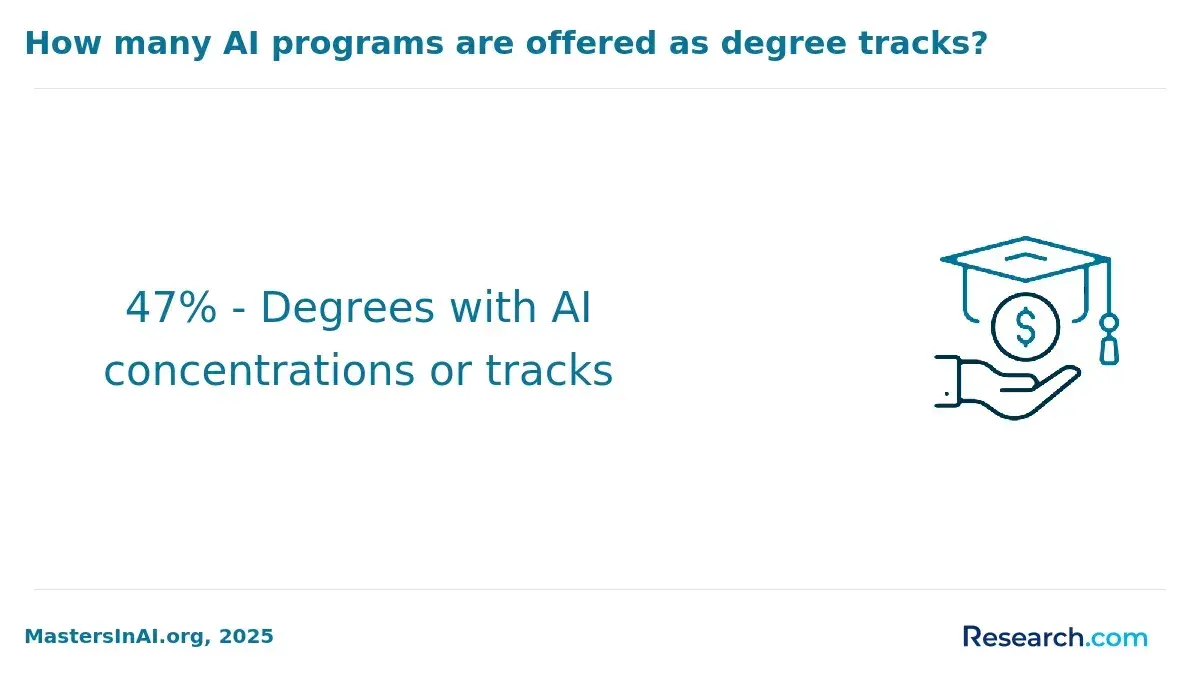
From 2018/19 to 2022/23 academic years in the Netherlands, enrollment in AI-broad programs, distinct from pure computer science, grew by 47%, reaching nearly 22,000 students annually. This data highlights expanding opportunities for non-coders across AI fields.
Students and professionals seeking AI knowledge without programming should target programs with applied, interdisciplinary content emphasizing AI concepts, ethical frameworks, and hands-on experience with user-friendly AI tools for diverse career paths.
Do you need math or computer science prerequisites to start an AI major?
You do not always need advanced math or computer science prerequisites to start an artificial intelligence major, though the math requirements for starting an artificial intelligence major vary by program. Many universities now offer AI tracks tailored for students without strong coding backgrounds or math skills. These begin with foundational courses covering basics in programming, statistics, and linear algebra before advancing to more complex AI topics.
Computer science prerequisites for artificial intelligence programs differ widely; some allow entry with minimal experience by providing preparatory modules such as Python programming and discrete mathematics. Others require placement tests or completion of introductory computer science courses during the first year. Practical skills like logic, problem-solving, and basic statistics can be enough initially, while more technical subjects like calculus and algorithms are gradually introduced. Students lacking these prerequisites should be prepared to invest extra effort early on.
There are also interdisciplinary AI programs designed for non-technical majors such as psychology or business, focusing on AI applications and ethical issues rather than deep technical content. This broadens access to AI education without heavy upfront emphasis on math or CS.
Student demand reflects this trend: over 91,000 students enrolled in Dutch AI-related programs, with about 67% completing an AI diploma. Prospective students should carefully review program requirements and consider bridge courses or bootcamps. Advising offices can help plan a path to building foundational skills alongside AI specialization. For those interested in a technology-related path, options like a game design degree also offer accessible entry points into programming and design fields.
How do online artificial intelligence programs compare to campus-based options for beginners?
Online artificial intelligence programs for beginners without coding experience provide flexible learning options that allow students to progress at their own pace without location constraints. These programs typically feature interactive tools, video lectures, and regular assessments, helping those new to programming languages like Python grasp core concepts. In contrast, campus-based artificial intelligence courses for students with no coding background offer structured schedules, direct faculty access, and hands-on labs that encourage deeper engagement and peer collaboration.
Campus options often include in-person workshops and tutoring for additional support, though commuting and fixed class times may pose challenges for some. Both formats demonstrate strong career prospects; data from Statistics Netherlands' AI Monitor 2024 show graduates were employed quickly, mainly in sectors like Information and Communication, Specialized Business Services, and Trade.
When selecting a program, consider your learning style, time availability, and networking goals. Online learners need self-discipline, while campus students benefit from immersive environments and direct mentorship. Hybrid models can offer a balanced approach combining flexibility and support.
Prospective U.S. students should prioritize programs with clear beginner coding curricula, career services, and industry connections that emphasize practical projects and skills. Exploring roles such as AI training jobs can further illustrate the value of applied knowledge regardless of delivery method.
What core courses and skills do AI programs teach to students new to coding?
AI programs designed for students without coding experience focus on foundational courses that teach programming alongside core AI concepts. They often start with Python, covering syntax, basic data structures, and logic to build essential coding skills. This foundation allows students to engage effectively with AI technologies.
Core lessons explore machine learning fundamentals, including supervised and unsupervised algorithms, data preprocessing, and model evaluation. Practical training emphasizes hands-on use of libraries like TensorFlow and scikit-learn, enabling students to develop AI models without needing extensive software engineering knowledge.
Mathematical fundamentals such as linear algebra, probability, statistics, and calculus are integrated to deepen understanding of how AI models operate, which is crucial for troubleshooting and optimization. Data skills also play a key role, teaching students to clean, visualize, and interpret real-world datasets for practical AI applications.
Soft skills, including critical thinking, ethical considerations in AI, and problem-solving, are embedded throughout these programs to prepare students for responsible innovation and collaboration in multidisciplinary environments.
According to the Code.org 2025 State of AI + CS Education Report, the median advertised salary for AI and machine learning specialists in the U.S. surpasses $150,000, more than 80% higher than the median for all occupations. This highlights the significant career value of acquiring AI and coding skills, even for those starting from a non-coding background.
How long do AI degree and certificate programs take for non-coders, and what do they cost?
AI degree and certificate programs for students without coding experience generally last from a few months up to two years, depending on credential level and program depth. Beginner-friendly certificate programs take about 3 to 6 months, focusing on foundational AI concepts, practical applications, and introductory programming skills. These are often offered online or part-time, providing flexible learning options.
Full degree programs, like bachelor's or master's degrees in AI or related fields, usually require 1.5 to 2 years if students transfer credits, or up to 4 years starting from scratch. Their comprehensive curricula include math, machine learning, and programming courses designed for novices.
Program costs vary widely: certificates typically range from $1,000 to $5,000, while degrees can cost between $20,000 and $70,000 depending on institution type and program length. Many schools provide financial aid, scholarships, or employer tuition support to help offset expenses.
A 2025 study from Computers & Education: X found that novices using generative AI tools completed 27-50% more programming tasks correctly and faster than those without assistance, cutting down instructional time and accelerating skill mastery.
Students should seek programs with strong AI tool integration and hands-on projects for optimal learning. Shorter certificate paths offer quick, affordable entry, while full degrees prepare learners for advanced AI careers.
How can prospective students verify accreditation and quality of AI programs in the U.S.?
Prospective students should verify that AI programs hold accreditation from recognized agencies like the Accreditation Board for Engineering and Technology (ABET) or regional bodies such as the Middle States Commission on Higher Education. Accreditation confirms programs meet high academic standards and undergo regular evaluation. Students can check accreditation through the U.S. Department of Education's Database of Accredited Postsecondary Institutions and Programs or the Council for Higher Education Accreditation (CHEA) website.
Faculty expertise is another key quality marker. Strong AI programs employ instructors with doctoral degrees and active research in AI fields. Reviewing faculty profiles on program websites helps students assess instructor credentials and publication records.
Curriculum quality is vital. Top programs offer balanced courses in machine learning, data science, ethics, and practical coding projects. Programs focusing on hands-on experience with popular AI platforms better prepare students for industry roles.
Student outcomes give concrete insight. Important metrics include graduation rates, job placement in AI roles, and alumni success stories. Research summarized by Programs.com from Quizlet and Digital Education Council found 92% of students use AI tools in their studies, with 88% employing generative AI for tests, highlighting the importance of responsible AI tool instruction.
Additional steps include reading independent reviews on educational sites specializing in AI learning and contacting admissions with questions about accreditation, faculty, and job placement to ensure program reliability.
What entry-level AI and machine learning careers are open to graduates without prior coding?
Graduates without coding backgrounds can enter several roles in artificial intelligence that focus more on domain expertise, data management, or process support rather than programming. Jobs like AI project coordinator, data annotation specialist, and quality assurance tester emphasize organizing datasets, labeling data, and verifying AI outputs. These positions offer practical AI experience without requiring advanced coding skills.
Other roles such as AI business analyst or AI ethics assistant involve interpreting AI results for decision-making and ensuring compliance with ethical standards, relying heavily on critical thinking instead of programming. Technical recruiters and AI sales consultants also interact with AI from a user or stakeholder perspective, leveraging communication and industry knowledge.
To enhance employability, non-coders should build foundational skills in statistics, logic, and domain-specific knowledge. Many tasks, including data cleaning and model monitoring, use tools with graphical interfaces that reduce direct coding demands. However, challenges like understanding mathematical concepts and logic remain significant. A 2026 study in the Journal of Computer Science highlights how beginner intentions to use AI tools are influenced by perceived usefulness and social factors, while greater ethical awareness correlates with hesitations about AI adoption.
Graduates are encouraged to develop AI literacy and data interpretation skills along with soft skills such as communication and project management. This combination enables non-coders to effectively support AI developers and bridge technical gaps in teams.
What salary ranges and job outlook can AI graduates without coding backgrounds expect?
AI graduates without coding experience can expect entry-level salaries between $60,000 and $85,000 annually in the U.S., varying by role and industry. Common jobs include AI project coordinators, data annotators, AI ethics specialists, and user experience analysts for AI-based products. With experience, salaries in roles such as AI product managers or strategy consultants can rise to $90,000-$120,000, emphasizing interdisciplinary skills over direct coding. Employers increasingly prioritize abilities in data interpretation, communication, and conceptual understanding.
The job market remains competitive for non-coding AI graduates compared to their coding-savvy peers. A 2025 multi-institution study on generative AI use in programming courses found over 70% of students primarily use AI for concept clarification and debugging, though this help is often superficial. This highlights the importance of formal education that deepens conceptual understanding and practical AI tool skills rather than relying on basic AI assistance.
Candidates combining AI literacy with domain expertise or soft skills like project management are especially sought after. Career paths such as AI consultancy, compliance, and education are accessible without heavy coding. Practical steps include:
- Pursuing certifications in AI tool applications
- Collaborating with coders on projects
- Focusing on AI ethics, policy, or interface design to enhance employability and salary potential
How should students with no coding experience choose a reputable AI program or school?
Students without coding experience should prioritize AI programs that offer accessible curricula tailored for beginners. Look for courses featuring introductory modules on AI concepts, data literacy, and user-friendly tools that don't require prior programming knowledge. These foundational classes help bridge knowledge gaps and make the learning curve manageable.
Accreditation and connections with industry leaders enhance program credibility and relevance. Verify that institutions have recognized academic accreditation and partnerships with tech companies to provide up-to-date content and internship opportunities. Faculty expertise, especially instructors skilled in teaching AI to diverse learners, is equally important.
Hands-on learning through project-based activities using no-code platforms like Google's Teachable Machine or IBM Watson's beginner-friendly AI services can improve practical skills and employability. Such approaches allow students to apply AI principles without deep coding.
Student support is crucial, including tutoring, peer groups, and mentoring tailored for non-coders. Accessible support systems improve retention and comprehension, easing adjustment to technical material.
Cost and program length are significant factors as well. Flexible pacing or certificate options can accommodate working professionals or career changers. Evaluate tuition relative to financial aid availability and return on investment.
The AI-powered education market is expected to exceed $20 billion by 2027, driven largely by non-coding students adopting AI tools, according to Programs.com.
Other Things You Should Know About Artificial Intelligence
Students should develop strong analytical thinking, problem-solving abilities, and a basic understanding of statistics and logic. Communication skills are also valuable for presenting AI concepts clearly to non-technical stakeholders. Additionally, creativity and curiosity are important to innovate and adapt in the evolving AI field.
Yes, ethical issues such as data privacy, algorithmic bias, and the implications of automation are fundamental topics in AI education. Understanding these concerns prepares students to build responsible AI systems that minimize harm and promote fairness. Many programs include ethics modules to raise awareness of these critical challenges.
Yes, combining AI with fields like psychology, linguistics, or business can deepen a student's understanding and expand career opportunities. For example, knowledge of human cognition can improve natural language processing applications. This interdisciplinary approach enables the design of AI solutions that better meet real-world needs.
Students can begin with the basics of machine learning, neural networks, and natural language processing. Understanding AI's ethical implications, data handling, and real-world applications is also crucial. Programs like an AI policy and governance master’s can broaden their understanding and prepare them for non-technical roles in AI.
References
- Teach and Learn AI with Code.org | Explore AI Education https://code.org/en-US/artificial-intelligence
- Why Early AI and Coding Skills Matter for Students Today https://realprogramming.com/from-classroom-to-career-how-early-ai-and-coding-skills-are-setting-students-ahead/
- AI made easy – 10 beginner courses on the AI Campus | AI Campus https://ki-campus.org/en/node/1438
- Top 25 High Paying Non Coding IT Roles for Beginners 2026 https://wininlifeacademy.com/high-paying-non-coding-it-roles-for-beginners/
- Summer AI Programs That Aren't Just Coding: Hands-On Options for High School Students https://www.bettermindlabs.org/post/summer-ai-programs-that-aren-t-just-coding-hands-on-options-for-high-school-students
- Which is the Best AI Course? - Code Institute Global https://codeinstitute.net/blog/which-is-the-best-ai-course/
- AI Career in India 2025 | Coding & Non-Coding Paths https://futurense.com/blog/ai-career
- Quality Assurance with AI and Automation: The Prospects for Educational Assessment https://www.ieac.org.uk/40-Quality-Assurance-with-AI-and-Automation-The-Prospects-for-Educational-Assessment-blog.php
- AI Coding Education: Preparing Students for the Future with TutorFlow https://tutorflow.io/blog/coding-education-with-ai
- AI Certification vs. Traditional Degree: What Actually Gets You Hired in 2026? https://www.nplus.global/blogs/ai-certification-vs-traditional-degree/