2027 Associate to Bachelor's in Artificial Intelligence Transfer Guide

Co-Founder and Chief Data Scientist
The main decision for students moving from an associate degree into artificial intelligence is not simply where to enroll. It is whether the credits, prerequisites, cost, schedule, and career outcomes make the transfer path worth it compared with starting in a four-year program. A well-planned associate to bachelor’s pathway can reduce tuition, preserve academic momentum, and give working adults a realistic route into AI without starting over.
This guide explains how associate to bachelor’s artificial intelligence pathways work, what transfer students should check before applying, which requirements commonly affect admission, and how program format, cost, coursework, accreditation, and career outcomes should shape your decision. It is designed for community college students, associate degree graduates, career changers, and working professionals who want a practical, lower-risk way to enter the AI field.
Key Things You Should Know
- Associate to bachelor's transfer in artificial intelligence typically requires completion of foundational courses in programming, mathematics, and ethics, ensuring a smooth transition into advanced curriculum.
- Data from 2024 shows a 15% enrollment increase in AI bachelor's programs from transfer students, reflecting growing industry demand and expanded university articulation agreements.
- Students benefit from choosing accredited programs with clear transfer pathways and updated AI specializations in machine learning, robotics, and natural language processing to boost career prospects.
What is an associate to bachelor's degree pathway in artificial intelligence, and how does it differ from a traditional four-year program?
An associate to bachelor’s degree pathway in artificial intelligence is a transfer route that lets students complete the first part of college at a community college or two-year institution, then finish advanced bachelor’s-level AI coursework at a four-year college or university. The goal is to apply associate-level credits toward the bachelor’s degree so students do not repeat general education or foundational technical courses.
The biggest difference from a traditional four-year program is sequencing. In a direct four-year AI degree, students begin at the university as first-year students and follow one institution’s curriculum from start to finish. In a transfer pathway, students usually complete general education, programming, mathematics, computer science fundamentals, and introductory AI-related coursework first, then move into upper-division topics such as machine learning, robotics, data analytics, neural networks, and applied AI systems.
This pathway can be attractive because the associate portion is often less expensive and more accessible. The National Center for Education Statistics notes an average tuition saving of $20,000 compared to direct four-year enrollment. However, savings depend heavily on whether credits transfer cleanly, whether the student remains on track with prerequisites, and whether the receiving bachelor’s program accepts the associate degree as intended.
Students should not assume that every associate degree in computer science, information technology, or data analytics will automatically satisfy AI bachelor’s requirements. AI programs are often math-intensive and may expect specific courses in calculus, linear algebra, statistics, discrete mathematics, programming, and data structures. Missing one or two prerequisites can delay graduation and reduce the cost advantage of transferring.
- Best fit: students who want a lower-cost start, smaller classes, flexible scheduling, or time to strengthen math and programming skills before entering upper-division AI coursework.
- Potential drawback: transfer credit evaluation can be complicated, especially if the associate program does not have a formal articulation agreement with the university.
- Key action: compare the associate degree plan against the bachelor’s degree map before enrolling, not after completing the associate degree.
Students considering online or faster technology pathways may also want to compare AI transfer options with a computer science degree accelerated pathway, especially if they want broader software development preparation before specializing in artificial intelligence.
Which community colleges and universities offer accredited associate to bachelor's transfer programs in artificial intelligence?
Accredited associate to bachelor’s transfer options in artificial intelligence are often built through partnerships between community colleges and universities. Some programs are labeled specifically as artificial intelligence, while others use computer science, data science, software engineering, or information technology degrees with AI concentrations or upper-division AI tracks.
Examples include Northern Virginia Community College (NOVA), which partners with George Mason University for articulation into a bachelor’s in computer science with an AI concentration. De Anza College in California offers transfer opportunities to San José State University’s AI and data analytics program. The University of Florida offers an Interdisciplinary Artificial Intelligence Bachelor’s that accepts credits from Florida’s state college system. Rochester Institute of Technology provides a transfer agreement for students completing an associate degree in computing fields to enter its AI bachelor’s track with junior standing.
These examples show the most common structure: students start in a computing-related associate program, then transfer into a bachelor’s program where AI specialization becomes more prominent in the final two years. Because AI is still an evolving undergraduate major, students should search beyond the phrase “artificial intelligence transfer program” and also review computer science programs with machine learning, data science, robotics, analytics, or intelligent systems pathways.
The Coursera 2024 Global Skills Report highlights a 74% year-over-year surge in AI course enrollments through community college and university partnerships. That growth signals wider access, but students still need to verify quality and transferability. Enrollment growth alone does not prove that a program has strong advising, employer connections, or full credit acceptance.
When comparing schools, confirm three things before applying:
- Institutional accreditation: the community college and university should be accredited by recognized accrediting bodies.
- Program-level alignment: look for ABET accreditation where applicable, especially in computer science, engineering, or computing programs tied to AI roles.
- Written transfer agreement: ask for an articulation agreement or transfer guide showing exactly which associate courses count toward the bachelor’s degree.
Students planning graduate study later may also want to compare long-term costs and pathways into related fields, including options such as the cheapest master in data science.
What are the admission requirements and prerequisites for transferring from an associate degree to a bachelor's program in artificial intelligence?
Transfer admission into a bachelor’s program in artificial intelligence typically depends on GPA, completed prerequisites, official transcripts, and the receiving institution’s transfer-credit rules. Many programs set a minimum cumulative GPA of 3.0, but a stronger academic record can matter in competitive programs. The American Association of Collegiate Registrars and Admissions Officers (AACRAO) reports that students with a 3.5 or higher hold a significantly better chance of acceptance-92%, compared to 68% for a 3.0 GPA.
The most important prerequisites are usually technical and mathematical. Students should expect programs to review whether they have completed introductory programming, calculus, linear algebra, statistics, and core computer science coursework. Some bachelor’s programs also require discrete mathematics, data structures, computer organization, algorithms, database concepts, or introductory data science before students can enter upper-division AI classes.
Common application materials may include:
- official transcripts from all colleges attended;
- a completed transfer application;
- proof of associate degree completion or progress toward completion;
- a personal statement or transfer essay;
- letters of recommendation, when required;
- standardized test scores such as the SAT or ACT, when still required by the institution;
- English language proficiency documentation for international students.
Students with associate degrees in computer science, software development, mathematics, engineering, information technology, or data analytics usually have the clearest path, provided their courses match the bachelor’s prerequisites. Students with associate degrees in unrelated fields can still transfer, but they may need extra math and programming coursework before entering advanced AI classes.
The most common mistake is waiting until the final semester of the associate degree to check requirements. Transfer students should contact both schools early, request a degree audit, and ask whether each completed course applies to the major, general education, or electives. A course that transfers only as an elective may not help satisfy AI degree requirements.
Students comparing AI with adjacent technical fields may also review a cheap online engineering degree if they want a broader engineering pathway that can still support AI, robotics, automation, or intelligent systems careers.
How long does it take to complete an associate to bachelor's degree in artificial intelligence, and what is the typical total cost?
An associate to bachelor’s degree in artificial intelligence typically takes about four years of full-time study in total: about two years for the associate degree and about two additional years after transfer to complete the bachelor’s degree. For students who have already finished the associate degree, the bachelor’s completion phase commonly takes around two to three years, depending on transfer credit, course load, prerequisite gaps, and program availability.
The timeline can stretch if credits do not transfer as expected, if required AI or computer science courses are offered only once per year, or if the student attends part time. Working professionals should plan carefully because taking fewer courses each term may make the program more manageable but can extend graduation.
The average total cost for transferring from associate to bachelor’s degree in artificial intelligence ranges between $30,000 and $40,000, according to the U.S. Bureau of Labor Statistics. This estimate generally includes tuition, fees, and relevant course materials for the final two years at a four-year institution. By comparison, a traditional four-year degree at a private university can exceed $120,000.
To estimate the real cost, students should look beyond headline tuition. Important cost factors include:
- Credit acceptance: lost credits can add semesters and tuition.
- Residency status: in-state public universities usually cost less than out-of-state options.
- Program format: online programs may reduce commuting or housing costs, but they can include technology fees.
- AI-specific requirements: some courses may require software, cloud computing credits, hardware, lab access, or specialized platforms.
- Part-time enrollment: working while studying can preserve income but may delay completion.
- Financial aid: grants, scholarships, federal aid, employer tuition assistance, and transfer scholarships can reduce out-of-pocket cost.
The best way to avoid unexpected cost increases is to request a transfer credit evaluation before committing to the bachelor’s program. Students should also ask whether the university has guaranteed admission, block transfer, or junior-standing policies for graduates of specific associate programs.
Students comparing technology fields with strong employment demand may also consider online cyber security degrees, especially if they are interested in AI applications in threat detection, automation, and digital risk management.
What core coursework and technical skills are covered in associate to bachelor's artificial intelligence degree programs?
Associate to bachelor’s artificial intelligence programs usually begin with the foundations of computing and mathematics, then build toward applied AI, machine learning, and data-driven problem-solving. The associate stage often covers general education, introductory programming, computer science fundamentals, statistics, calculus, and sometimes early data analytics. The bachelor’s stage moves into more advanced AI theory, model development, deployment, and domain applications.
Programming is central. Python is especially important because many AI libraries, machine learning frameworks, and data science workflows use it. LinkedIn’s 2024 Jobs Report notes a 45% increase in job postings requiring Python over the past year. Students may also encounter R, Java, C++, SQL, or cloud-based development tools, depending on the program.
Core coursework commonly includes:
- Programming and software development: Python, object-oriented programming, version control, debugging, and software design.
- Mathematics for AI: calculus, probability, statistics, linear algebra, and discrete mathematics.
- Computer science foundations: data structures, algorithms, databases, computer systems, and sometimes operating systems.
- Machine learning: supervised learning, unsupervised learning, model training, evaluation, bias, and optimization.
- Data analysis: data cleaning, visualization, statistical modeling, and working with large datasets.
- AI frameworks: hands-on work with tools such as TensorFlow or PyTorch.
- Specialized AI topics: artificial neural networks, natural language processing, computer vision, robotics, and intelligent systems.
- Ethics and responsible AI: fairness, transparency, privacy, accountability, and the social impact of automated decision-making.
Strong programs include projects, labs, or capstones that require students to build, test, and explain AI models rather than only study theory. Transfer students should pay close attention to course sequencing. For example, missing linear algebra or data structures can block entry into machine learning courses even if the student has completed many general education credits.
By graduation, students should be able to write code, prepare datasets, select appropriate models, evaluate performance, communicate technical results, and understand the limits of AI systems. These skills are more valuable to employers than simply listing AI-related course titles on a transcript.
Are artificial intelligence transfer programs available online, on campus, or in hybrid formats?
Artificial intelligence transfer programs are available online, on campus, and in hybrid formats. Community colleges increasingly offer accessible transfer pathways in artificial intelligence and computer science, with 68% now providing hybrid or fully online programs, up from 32% just a few years ago. This expansion gives students more control over scheduling, but each format has trade-offs.
Online programs
Online AI transfer programs are often best for working adults, students with family responsibilities, military learners, or those who do not live near a university offering AI coursework. These programs may use recorded lectures, live virtual sessions, remote labs, coding platforms, discussion boards, and cloud-based development environments. The main advantage is flexibility. The main risk is that students must be disciplined and comfortable learning technical material with less face-to-face support.
On-campus programs
On-campus programs provide direct access to faculty, labs, tutoring, peer study groups, research opportunities, and recruiting events. This format can be especially useful for students interested in robotics, computer vision, embedded systems, or research-intensive AI work that benefits from physical labs and close mentorship. The trade-off is less scheduling flexibility and often higher commuting or housing costs.
Hybrid programs
Hybrid programs combine online coursework with scheduled in-person classes, labs, or exams. They can be a strong option for students who need flexibility but still want structured contact with instructors and classmates. Evening, weekend, and blended courses can help part-time students stay enrolled while working.
Before choosing a format, students should ask whether online and hybrid students have the same access to advising, tutoring, career services, internships, software, cloud resources, and faculty office hours as on-campus students. They should also confirm whether any upper-division AI courses require in-person attendance, proctored exams, lab visits, or synchronous class meetings.
What career roles and job titles are available to graduates with a bachelor's degree in artificial intelligence?
Graduates with a bachelor’s degree in artificial intelligence can pursue technical, analytical, and product-focused roles across technology, finance, healthcare, automotive, manufacturing, government, cybersecurity, and consumer services. Entry-level job titles vary because many employers still place AI work under computer science, data science, software engineering, or analytics departments.
Common roles include:
- AI engineer: builds and maintains AI-powered systems, integrates models into applications, and improves performance over time.
- Machine learning engineer: develops algorithms, trains models, evaluates accuracy, and works with data pipelines and deployment tools.
- Data scientist: analyzes large datasets, builds predictive models, and communicates insights that support business or research decisions.
- AI research analyst: studies emerging methods, evaluates AI tools, and supports experimentation or applied research teams.
- Computer vision engineer: develops systems that interpret images or video for uses such as healthcare imaging, quality inspection, and autonomous vehicles.
- Natural language processing specialist: works on systems that process human language, including chatbots, search, translation, and document analysis.
- Robotics engineer: applies AI to machines, automation systems, sensors, and control technologies, especially in manufacturing and logistics.
- AI product manager: connects technical teams with business goals, customer needs, compliance issues, and product strategy.
The U.S. Bureau of Labor Statistics projects a 35% growth in AI and machine learning employment from 2023 to 2033, far exceeding the 3% average for all occupations. This growth reflects demand for professionals who can help organizations use AI safely, efficiently, and profitably.
A bachelor’s degree can qualify graduates for many entry-level and early-career roles, but employers often expect evidence of applied skill. Internships, capstone projects, GitHub portfolios, research assistantships, cloud experience, and experience with Python, R, data engineering, and machine learning frameworks can make a candidate more competitive.
Salaries vary by industry, location, employer, and experience. Entry-level roles begin near $80,000 annually and rise sharply with specialization and leadership. Students who want stronger job prospects should choose programs that include practical projects, internship support, employer partnerships, and career services focused on technical hiring.
What is the average salary and job outlook for artificial intelligence professionals with a bachelor's degree?
Artificial intelligence professionals with a bachelor’s degree can earn strong starting salaries, particularly when they have programming, machine learning, data analysis, and cloud computing experience. Glassdoor’s 2025 Salary Report lists an average starting salary of $95,000 annually for AI professionals with a bachelor’s degree. Median salaries rise above $130,000 after five years of experience.
Job outlook remains favorable because AI skills are being adopted across many sectors, including healthcare, finance, autonomous systems, cybersecurity, manufacturing, education technology, and enterprise software. Roles such as machine learning engineer, data scientist, AI software developer, and AI engineer are among the technology careers most closely tied to this demand.
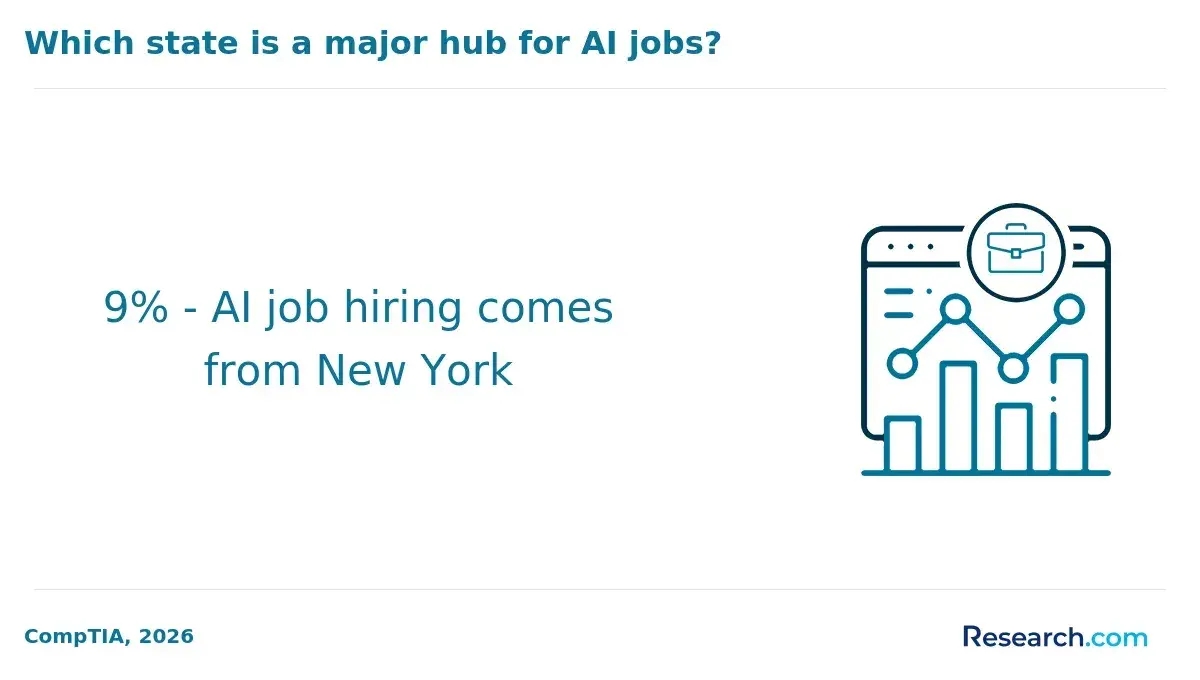
Location can affect pay. AI professionals in tech hubs such as San Francisco and New York earn 15% to 25% more than the national average because of employer concentration, competition for talent, and higher living costs. Remote roles can expand access to employers outside a student’s local market, although compensation may align with average salary ranges rather than the highest hub-based salaries.
Students should interpret salary figures carefully. Pay depends on role, portfolio quality, internships, industry, employer size, technical depth, and ability to work with real data and production systems. A graduate who has completed strong projects, internships, certifications, or research may have better salary prospects than a graduate whose experience is mostly classroom-based.
To improve employability, students should look for bachelor’s programs that offer applied machine learning projects, career coaching, internship pipelines, industry-standard tools, and opportunities to document work in a portfolio. Salary negotiation is also easier when candidates can show measurable project results, not just coursework completion.
What professional certifications or credentials should artificial intelligence bachelor's degree holders pursue after graduation?
Professional certifications can help artificial intelligence bachelor’s degree holders demonstrate specific technical skills, especially when applying for roles that involve cloud platforms, machine learning frameworks, data science workflows, or AI governance. Certifications do not replace a degree or project experience, but they can strengthen a resume when aligned with the job target.
Common credentials include the Certified Artificial Intelligence Practitioner (CAIP) and the Microsoft Certified: Azure AI Engineer Associate, which focus on AI application development and cloud AI solutions. Graduates who want to demonstrate practical machine learning framework experience may consider the TensorFlow Developer Certificate. Those moving toward analytics-heavy roles may benefit from a Certified Data Scientist credential that emphasizes data manipulation, statistical modeling, and applied analysis.
According to the CompTIA 2024 IT Certifications Outlook, certified IT professionals earn 15-20% more than their non-certified peers, with AI and machine learning certifications commanding the highest salary increase at 22%. While individual outcomes vary, these figures show why credentials can matter in a competitive technical labor market.
Ethics and governance credentials are also becoming more relevant. The IEEE Certified AI Ethics Professional may be useful for graduates working on AI systems that affect privacy, fairness, safety, compliance, or public trust. For graduates who expect to lead teams or manage AI initiatives, credentials such as Certified ScrumMaster (CSM) or Project Management Professional (PMP) can support roles that combine technical and organizational responsibility.
The best certification depends on the career path:
- AI engineering: prioritize cloud AI, machine learning, and deployment credentials.
- Data science: choose credentials focused on statistics, modeling, data pipelines, and analytics tools.
- Research or advanced modeling: build a portfolio and consider framework-specific credentials.
- AI governance or responsible AI: consider ethics, risk, compliance, or policy-oriented credentials.
- Team leadership: project management or agile credentials may be more useful than another technical certificate.
Graduates should avoid collecting certifications without a strategy. A small number of relevant credentials, supported by projects and work samples, is usually stronger than a long list of disconnected certificates.
How do you evaluate and compare the quality and reputation of artificial intelligence transfer programs?
The best way to evaluate artificial intelligence transfer programs is to look for evidence that credits transfer cleanly, the curriculum matches current AI workforce needs, and graduates receive strong academic and career support. Marketing claims are less useful than accreditation, degree maps, course requirements, faculty qualifications, employer connections, and student outcomes.
Accreditation is a starting point. According to the Council for Higher Education Accreditation (CHEA), 87% of employers favor graduates from ABET-accredited computer science and engineering programs for AI roles. ABET accreditation is especially relevant when the AI pathway sits within computer science, engineering, or computing. Institutional accreditation also matters because it affects credit transfer, financial aid eligibility, and employer recognition.
Students should compare programs using practical criteria:
- Transfer policy: Is there a formal articulation agreement? Does the associate degree provide junior standing? Which credits apply to the major rather than electives?
- Curriculum depth: Does the program include machine learning, data science, natural language processing, computer vision, ethics, and applied projects?
- Math and computing rigor: Are calculus, linear algebra, statistics, data structures, and algorithms included where needed?
- Faculty expertise: Do instructors publish research, work with AI systems, or have industry experience?
- Hands-on learning: Are there labs, capstones, internships, research opportunities, or portfolio-building assignments?
- Employer connections: Does the school have partnerships with technology firms, research centers, healthcare systems, finance companies, or government agencies?
- Student outcomes: Are graduation rates, transfer success rates, employment outcomes, and alumni placements available?
- Support services: Are advising, tutoring, career coaching, and technical support accessible to transfer, online, hybrid, and part-time students?
Reputation should be judged in context. A nationally known university may offer strong employer recognition, but a regional public university with a clear articulation agreement and strong internship network may be the better value for a transfer student. Similarly, an online program can be reputable if it has strong accreditation, rigorous coursework, qualified faculty, and transparent outcomes.
Before enrolling, students should request a written transfer evaluation, a full degree plan, tuition and fee estimates, prerequisite requirements, and career outcome data. A high-quality program should be able to explain exactly how the associate degree connects to the bachelor’s curriculum and what students must do to graduate on time.
Other Things You Should Know About Artificial Intelligence
Graduates of 2027 Associate to Bachelor's in Artificial Intelligence programs are often recruited in sectors like healthcare, finance, automotive, and technology. These industries seek AI professionals for roles in data analysis, automation, machine learning engineering, and more, reflecting the growing demand for AI expertise across various fields.
The minimum GPA required for transferring to a bachelor's program in artificial intelligence is typically 2.5 to 3.0 in 2027, depending on the institution. It's essential to check specific program requirements for precise standards and additional criteria.
Yes, but only courses that match the receiving university’s catalog and are accepted through a formal articulation agreement. Most schools transfer 30 to 60 semester credits, and major-specific AI or computer science courses usually must be completed with a grade of C or higher.
Ethical issues in artificial intelligence include data privacy, algorithmic bias, transparency, and the societal impact of AI technologies. Students should learn about responsible AI development practices, such as fairness and accountability, to ensure their work benefits society and mitigates potential harm. Many programs now incorporate ethics as a core component of the curriculum.
References
- AI Certification Programs: Which Ones Matter for Your Career https://www.businessplusai.com/blog/ai-certification-programs-which-ones-matter-for-your-career
- Artificial Intelligence (A24710) https://brunswickcc.edu/program/artifical-intelligence-a24710/
- 16 Artificial Intelligence Career Paths https://www.calmu.edu/news/artificial-intelligence-career-paths
- Top 5 Flexible Online AI Programs for High School Students in US https://www.bettermindlabs.org/post/top-5-flexible-online-ai-programs-for-high-school-students-in-us
- Artificial Intelligence BEng (Hons) at Ulster University 2026/27 entry - Full-time Undergraduate Study https://www.ulster.ac.uk/courses/202627/artificial-intelligence-41372
- Artificial Intelligence Salary and Jobs in 2026 – Is It Still in High Demand? https://certempire.com/artificial-intelligence-salary-and-jobs/
- Best Artificial Intelligence Course After Graduation: Career Path, Skills & Salary https://www.utilities-online.info/blogs/best-artificial-intelligence-course-after-graduation-career-path-skills--salary
- Best Artificial Intelligence Associate's Degree Programs 2026 https://hakia.com/degrees/artificial-intelligence/best-associates-programs/
- Transfer to a new college with AI – Microsoft 365 https://www.microsoft.com/en-us/microsoft-365-life-hacks/everyday-ai/transfer-to-a-new-college-with-ai
- AI Course Duration: How Long Does It Take to Become AI-Ready? https://rcm.ac.in/ai-course-duration-how-long-does-it-take-to-become-ai-ready/