2027 Best AI Bachelor's Degrees for Business Intelligence Careers

Co-Founder and Chief Data Scientist
Professionals from diverse fields often face challenges when attempting to enter the business intelligence sector, especially without a formal background in artificial intelligence. This gap can limit career growth and the ability to contribute effectively to data-driven decision-making. Finding accessible and accredited bachelor's degree programs tailored for transitioning students is essential to overcome these hurdles.
Such programs offer flexible learning paths that merge core business intelligence concepts with applied artificial intelligence skills. This article examines the best bachelor's degrees designed for aspiring business intelligence specialists, highlighting how each curriculum supports a seamless career pivot into this rapidly evolving industry.
Key Things You Should Know
- Top AI bachelor's degrees for business intelligence blend data analytics, machine learning, and business strategy, preparing students for roles with a projected 28% job growth by 2031.
- Programs increasingly emphasize ethical AI use and data privacy, responding to rising regulatory demands and corporate responsibility.
- Graduates gain skills in predictive modeling and decision support systems, critical to improving business outcomes across finance, marketing, and operations sectors.
What is an AI bachelor's degree for business intelligence careers?
An AI bachelor's degree for business intelligence careers equips students with crucial technical skills and analytical knowledge to harness artificial intelligence in data-driven decision-making. This interdisciplinary program combines core areas of computer science, data analytics, and business management. Students gain expertise in developing AI algorithms, applying machine learning models, and using statistical tools to extract actionable business insights from large datasets.
Typical coursework covers programming languages like Python and R, data mining, predictive analytics, database management, and business strategy. Graduates understand how to integrate AI technologies within business intelligence platforms to optimize operations, forecast trends, and enhance competitive advantage. Projects may include natural language processing to analyze customer feedback or building recommendation systems that boost sales.
Careers in business intelligence with AI bachelor's programs commonly lead to roles such as data analyst, business intelligence developer, or AI consultant focused on improving organizational efficiency. Some programs also offer specialized tracks in AI ethics or cloud computing to address important concerns like bias and data security.
According to the World Economic Forum's Future of Jobs Report 2025, 86% of employers expect AI and information-processing technologies to transform business processes by 2030. This growing demand highlights the value of combining technical proficiency and strategic insight. For those interested in this dynamic field, exploring an applied artificial intelligence degree can provide a strong foundation.
Which AI bachelor's programs best prepare graduates for business intelligence roles?
Bachelor's programs designed for business intelligence roles often combine applied artificial intelligence concepts with data analytics, database management, and business strategy. These top undergraduate degrees for AI and business intelligence careers typically focus on core skills like machine learning, natural language processing, and data mining, alongside courses in statistics, programming, and decision-making frameworks.
Leading AI bachelor's programs emphasize experiential learning through real-world projects, internships, or partnerships with industry, providing students with practical experience. Universities with AI labs and business analytics centers often foster collaborative environments where students develop actionable solutions for business challenges.
Graduates seeking roles in business intelligence should look for programs covering:
- Data visualization and dashboard development using tools like Tableau or Power BI
- Statistical methods and predictive analytics
- Database design and SQL querying
- AI ethics and data governance practices
- Business process modeling and strategic decision analysis
According to the National Center for Education Statistics, completions in Artificial Intelligence are rapidly growing. Choosing a specialized AI degree over a general computer science degree with a minor in AI generally offers deeper technical competence aligned with business intelligence demands.
Assessing faculty expertise, industry ties, and resources is vital. Programs that rapidly adapt to evolving AI tools-like cloud platforms or AutoML frameworks-provide a competitive edge. For those exploring further education options, affordable and flexible paths such as a mechanical engineer degree online may also complement technical skills important in data-driven fields.
How do AI bachelor's graduates transition into business intelligence careers?
Graduates with a bachelor's degree in artificial intelligence (AI) transition into business intelligence (BI) roles by combining technical expertise and domain knowledge gained during their studies. Courses in AI typically cover data analysis, machine learning, and programming, all essential for interpreting and visualizing business data. This pathway aligns closely with career paths from AI bachelor's programs to business intelligence jobs.
Key approaches include:
- Utilizing data mining and predictive analytics to uncover business trends and opportunities.
- Employing programming languages such as Python or R to develop BI dashboards and reports.
- Applying AI algorithms to enhance decision-making automation within business settings.
Hands-on experience through internships or projects focused on data-driven business challenges accelerates the shift into BI roles. AI graduates often boost their profiles by mastering BI tools like Tableau or Power BI. Business-focused electives such as statistics and economics further prepare students for BI responsibilities, which frequently overlap with roles like data analyst or analytics consultant.
Salary data support this career route's appeal. According to the National Association of Colleges and Employers (NACE) 2024 Salary Survey, data analytics bachelor's graduates, who closely mirror AI graduates entering BI, command an average starting salary of $75,400, reflecting strong market demand and financial incentives.
To strengthen employability, graduates should develop a robust portfolio showcasing BI skills, including data visualization and effective insight communication. Those exploring how graduates with AI bachelor's degrees enter business intelligence roles can also research affordable options by reviewing AI degrees to find programs that balance cost and quality.
What accreditation should AI bachelor's programs have for business intelligence careers?
ABET accreditation is a key quality marker for AI bachelor's degrees aimed at business intelligence careers. This accreditation ensures that programs meet high standards in core areas such as data analytics, database management, machine learning, and decision support systems-essential skills for success in business intelligence. Students choosing ABET-accredited programs can expect a rigorous curriculum that aligns with industry expectations.
In addition to ABET, regional accreditation of the institution, such as approvals by the Higher Learning Commission or other recognized bodies, is important. This broader accreditation guarantees academic quality across disciplines and maintains eligibility for federal financial aid.
Specialized AI bachelor's degrees may also feature endorsements from professional groups like the Association for Computing Machinery (ACM) or include AI-focused certification opportunities embedded within coursework. These accreditations enhance program credibility and align education with professional standards.
Prospective students should verify whether programs offer hands-on experience with industry-standard business intelligence tools and realistic data environments, often demonstrated through capstone projects or cooperative education requirements. These practical experiences are critical for preparing graduates for BI roles.
For those exploring pathways into AI and data science fields, reviewing options among the best data science master's programs can complement knowledge of accreditation standards for AI bachelor's degrees in business intelligence. Considering the best regional and national AI program accreditations for business intelligence careers supports informed decision-making.
What courses and skills matter most for AI-driven business intelligence jobs?
SQL remains a crucial skill for AI-driven business intelligence (BI) careers, appearing in about 25% of U.S. analytics job postings, according to Lightcast. Mastery of SQL supports efficient data querying and manipulation, fundamental in BI roles. Programming in Python and R is essential for developing AI algorithms and performing data analysis.
Python's machine learning libraries, such as TensorFlow and scikit-learn, enable versatile AI applications, while R is widely used for statistical modeling. Courses covering machine learning, data mining, and natural language processing (NLP) enhance the ability to extract actionable insights. Proficiency with data visualization tools like Tableau or Power BI is vital for presenting AI-driven findings clearly to decision-makers.
Additionally, critical thinking and problem-solving are key to aligning data strategies with business goals. Familiarity with cloud platforms like AWS and Azure, as well as big data frameworks such as Hadoop and Spark, is increasingly important as businesses handle vast data volumes.
- Database management and SQL query optimization
- Programming with Python and R
- Fundamentals of machine learning and AI applications in BI
- Data visualization and interpretation techniques
- Cloud computing and big data technologies
Developing these skills through targeted coursework improves readiness for practical challenges in AI-enabled BI roles and meets evolving employer demands.
What are the admission requirements for AI bachelor's programs focused on business intelligence?
Admission for AI bachelor's programs in business intelligence requires a solid academic background in math and science. Applicants should have a high school diploma or equivalent, with coursework emphasizing calculus, statistics, and computer science or information technology. Most programs expect a minimum GPA of around 3.0, while more competitive schools may ask for 3.5 or higher.
Standardized tests like the SAT or ACT are often part of the requirements. Although some schools adopt test-optional policies, scores above 1300 on the SAT or 28 on the ACT strengthen admission chances. Advanced Placement classes in relevant subjects also enhance applications.
Additional materials, such as personal statements, letters of recommendation, and sometimes interviews, help assess an applicant's passion for artificial intelligence and business intelligence, alongside critical thinking and problem-solving skills. International students must demonstrate English proficiency through TOEFL or IELTS, with typical minimum scores of 80 on TOEFL iBT or 6.5 on IELTS.
Rising application numbers have increased selectivity. The Common App notes a 6% rise in first-year applications, intensifying competition for AI-related programs. Highlighting projects involving data analytics, machine learning, or programming languages is advised to stand out.
How long do AI bachelor's programs take, and what do they cost?
Bachelor's degrees in artificial intelligence aimed at business intelligence careers generally require four years of full-time study. This timeframe aligns with typical undergraduate programs at most U.S. public and private institutions. Some students may complete degrees faster through accelerated schedules or credit transfers, while part-time options extend the duration.
Tuition costs differ widely based on institution type and residency. According to the Trends in College Pricing 2024 report by the College Board, average in-state tuition and fees at public four-year universities were $11,260 annually, while out-of-state students often pay between $25,000 and $40,000. Private universities typically charge $35,000 to $60,000 per year. Additional expenses include textbooks, software licenses, and technology resources essential for artificial intelligence and business intelligence education.
Programs combining data analytics, AI, and business management may require extra credits, potentially increasing time and cost. Paid internships or cooperative education components can help offset expenses through stipends. Students should explore scholarships dedicated to STEM and AI fields and investigate employer tuition assistance if studying part-time. Financial aid opportunities can substantially reduce overall costs for both traditional and working students pursuing artificial intelligence education.
What's the difference between online and on-campus AI bachelor's programs for BI?
The main difference between online and on-campus AI bachelor's programs in business intelligence (BI) is the delivery method and interaction style. Online programs provide flexibility, enabling students to complete about 20% of undergraduate courses entirely online, according to the National Center for Education Statistics. This format suits working professionals or those facing geographic or scheduling challenges.
On-campus programs emphasize face-to-face engagement with faculty and peers, essential for mastering complex AI topics through immediate feedback and collaboration. Laboratories for machine learning or data visualization often require physical attendance to use specialized resources.
Online BI AI programs employ asynchronous lectures, discussion boards, and virtual labs, demanding strong self-discipline and time management. Assessments may include online exams, project submissions, and video presentations. Checking if live office hours and networking opportunities are available is important for professional readiness.
Campus-based learners benefit from AI research centers, internships, and job fairs that support career connections, although tuition and commuting costs are typically higher. Hybrid programs combining online theory with scheduled on-campus labs offer a balance of flexibility and practical experience.
Students should compare curriculum depth, faculty expertise, and technical support between formats. Prioritizing programs that integrate real-world BI case studies and tools over purely theoretical content strengthens career preparation.
What jobs can you get with an AI bachelor's for business intelligence?
An AI bachelor's degree with a focus on business intelligence opens doors to several high-demand roles, including data scientist, business intelligence analyst, machine learning engineer, and data engineer. These professionals extract actionable insights from complex datasets, build predictive models, and design automated systems to boost business outcomes.
Data scientist positions are notably well-paid, with a median annual wage of $108,020 per the U.S. Bureau of Labor Statistics. Business intelligence analysts help drive strategic decisions by collaborating with teams in marketing, finance, and operations to optimize processes and identify growth potential.
Machine learning engineers develop AI algorithms that improve system performance over time across sectors like finance, healthcare, and retail. Data engineers build and maintain scalable data pipelines essential for real-time analytics. Other potential roles include AI product management, blending technical expertise with business acumen.
Employers value practical skills in Python, SQL, and AI frameworks such as TensorFlow and PyTorch. Experience with cloud platforms like AWS, Azure, or Google Cloud further boosts job prospects. Crafting a portfolio with projects based on real-world data challenges is a strong way to demonstrate your ability to solve business problems using AI-driven insights.
What salary and job outlook can you expect in AI-enabled business intelligence careers?
Careers in AI-enabled business intelligence offer strong growth and competitive salaries. Employment for data scientists, a central role in AI-driven business intelligence, is projected to increase by 36% over a decade, one of the fastest-growing occupations in this sector according to the U.S. Bureau of Labor Statistics.
Salaries vary by experience and location:
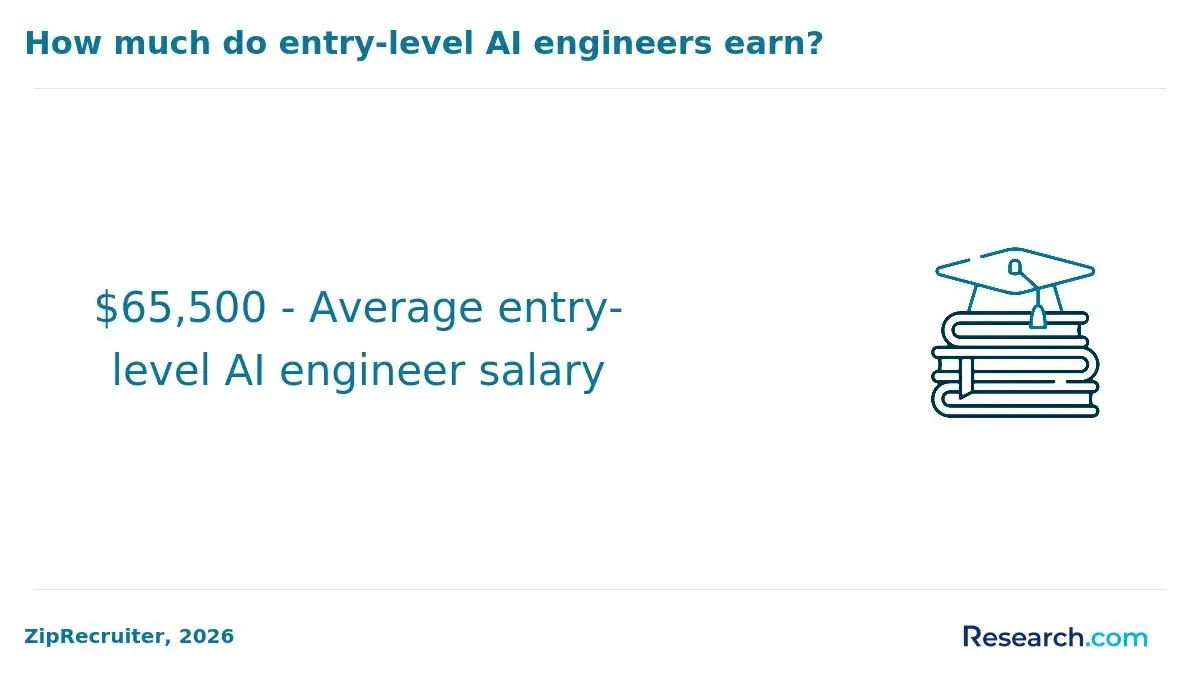
- Entry-level AI and BI analysts typically earn between $70,000 and $85,000 annually.
- Mid-career professionals with expertise in machine learning, data mining, and AI integration can expect $100,000 to $130,000.
- Senior professionals and BI managers may command salaries above $150,000.
Key sectors driving demand include finance, healthcare, and technology. Common roles include AI business analyst, data scientist, and machine learning engineer, with responsibilities ranging from predictive analytics to automating data reporting and supporting strategic decisions.
Continuous upskilling is crucial as AI technologies evolve rapidly. Skills in programming languages like Python and R, plus proficiency with tools such as TensorFlow, enhance employability. Certifications in AI, data science, or business intelligence further improve job prospects. Geographic locations influence compensation, with metropolitan areas like San Francisco, New York, and Boston offering higher pay alongside elevated living costs.
Other Things You Should Know About Artificial Intelligence
A strong foundation in mathematics is crucial for AI studies, particularly for business intelligence in 2027. Mathematics underpins key AI concepts like algorithms and data analysis, which are vital for informed decision-making and strategic planning in business.
Interdisciplinary skills significantly enhance success in AI-related business intelligence roles. Combining knowledge in computer science, business analytics, and communication helps graduates translate complex AI outputs into actionable business strategies. This blend of technical and soft skills is highly sought after in the industry.
Ethical considerations are critical in artificial intelligence education to ensure responsible AI development and deployment. Programs increasingly cover topics like data privacy, algorithmic bias, and transparency. Understanding these issues prepares students to create AI systems that are fair, accountable, and compliant with regulations.
Internships play a vital role in artificial intelligence bachelor's degrees by offering practical experience and industry exposure. They allow students to apply theoretical knowledge to real-world business intelligence projects, improving their skills and employability. Many programs encourage or require internships as part of the curriculum.
In 2027, graduates with this degree can expect strong career prospects in roles such as data analysts, business intelligence developers, and AI consultants. As AI technology advances, emerging opportunities also exist in specialized fields such as AI in healthcare master’s degree.
References
- The Skills That Will Matter Most in an AI-Driven Future - Aplin Blog https://www.aplin.com/blog/the-skills-that-will-matter-most-in-an-ai-driven-future/
- Online vs. On-Campus IT Courses: Which One is Right for You? - Belgium Campus iTversity https://www.belgiumcampus.ac.za/2024/12/12/online-vs-on-campus-it-courses-which-one-is-right-for-you/
- AI Skills in Demand 2026 | Top 10 Skills to Learn https://futurense.com/blog/ai-skills-in-demand
- raia | Enterprise AI Agent Platform https://www.raiaai.com/blogs/skyrocket-your-ai-skills-the-10-best-ai-for-business-courses
- Best AI Bachelor's Degrees - AIDegreeProgams.org https://aidegreeprograms.org/rankings/best-ai-bachelor-degrees/
- Degrees That Transfer to Emerging AI Careers https://www.careergroupcompanies.com/blog/degrees-that-transfer-to-emerging-ai-careers
- Admission requirements for Business Analytics & Artificial Intelligence https://en.itu.dk/Programmes/MSc-Programmes/Applying-to-a-MSc-programme/Admission-requirements-BAAI/
- Business Intelligence Jobs: Careers With A Data Degree | Walbrook https://www.walbrook.ac.uk/subjects/data-science/business-intelligence-jobs-career-path/
- Exciting Career Opportunities in Artificial Intelligence (AI) https://ebsedu.org/blog/career-opportunities-artificial-intelligence/
- Computer Engineering: Artificial Intelligence https://apply.wseiz.pl/en_GB/courses/course/62-bsc-computer-engineering-artificial-intelligence