2027 AI Bachelor's Degree Programs That Include AI for Business Courses

Co-Founder and Chief Data Scientist
Many students with unrelated undergraduate degrees face the challenge of entering the rapidly evolving field of artificial intelligence without specialized backgrounds. They often struggle to find programs that blend foundational AI knowledge with practical business applications, limiting their ability to contribute strategically in AI-driven industries. This gap can delay or derail career transitions into AI roles that require both technical understanding and business acumen.
This article explores bachelor's degree programs that integrate AI for business courses, highlighting flexible, accredited options designed to equip learners with the interdisciplinary skills needed for successful career pivots into the AI sector.
Key Things You Should Know
- In 2026, over 40 U.S. universities offer AI bachelor's degrees with integrated AI for business courses, reflecting a 25% growth since 2024.
- These programs combine technical AI skills with business strategy, preparing students for roles in data analytics, automation, and AI-driven decision-making.
- Graduates benefit from strong career prospects, with the U.S. Bureau of Labor Statistics projecting 23% job growth in AI-related business roles through 2030.
What is an AI bachelor's degree with AI for business coursework?
An AI bachelor's degree with business applications integrates core artificial intelligence principles with practical business strategies, gearing students to meet growing industry demands. These programs develop technical skills in machine learning, data analytics, and programming alongside business knowledge, enabling graduates to create AI-driven solutions that improve marketing, finance, operations, and customer service.
Undergraduate AI courses focused on business strategies typically cover machine learning algorithms, natural language processing, AI ethics, and business analytics. Students are trained to assess business challenges and construct AI tools that boost decision-making and operational effectiveness. Examples include building predictive models for sales forecasting and designing chatbots to enhance customer engagement.
For those exploring options, a computer science accelerated program may provide a faster route to gaining such competencies.
Which accredited schools offer AI bachelor's programs with business-focused AI courses?
Several accredited schools offering AI bachelor's programs with business applications blend technical knowledge with strategic insights. Carnegie Mellon University's Bachelor of Science in artificial intelligence includes courses like AI in Business Analytics and Automated Decision Systems. Northeastern University offers a Bachelor's in Computer Science with a concentration in AI and Business, combining machine learning basics with innovation management and business process automation.
Universities with AI bachelor's degrees focused on business courses also include the University of California, Berkeley, delivering interdisciplinary programs through minors or electives in AI applications for marketing, finance, or supply chain management. Indiana University's Kelley School of Business features a bachelor's track emphasizing AI tools for business intelligence and strategic decision-making.
Programs offering practical AI applications such as data-driven marketing, predictive analytics, and AI-enabled customer relationship management help students bridge AI concepts with real-world business challenges. When choosing a program, verifying accreditation, industry partnerships, and experiential learning opportunities is crucial to develop both analytical skills and the strategic mindset demanded in AI-driven business environments.
According to the National Center for Education Statistics-IPEDS (2024 provisional release), over 100,000 computer and information sciences bachelor's degrees were awarded by U.S. institutions recently, reflecting the growing availability of AI and business-oriented coursework.
Prospective students can also explore affordable options like online mechanical engineering degrees to complement AI knowledge with strong technical skills in related fields.
What careers do AI business bachelor's programs prepare you for?
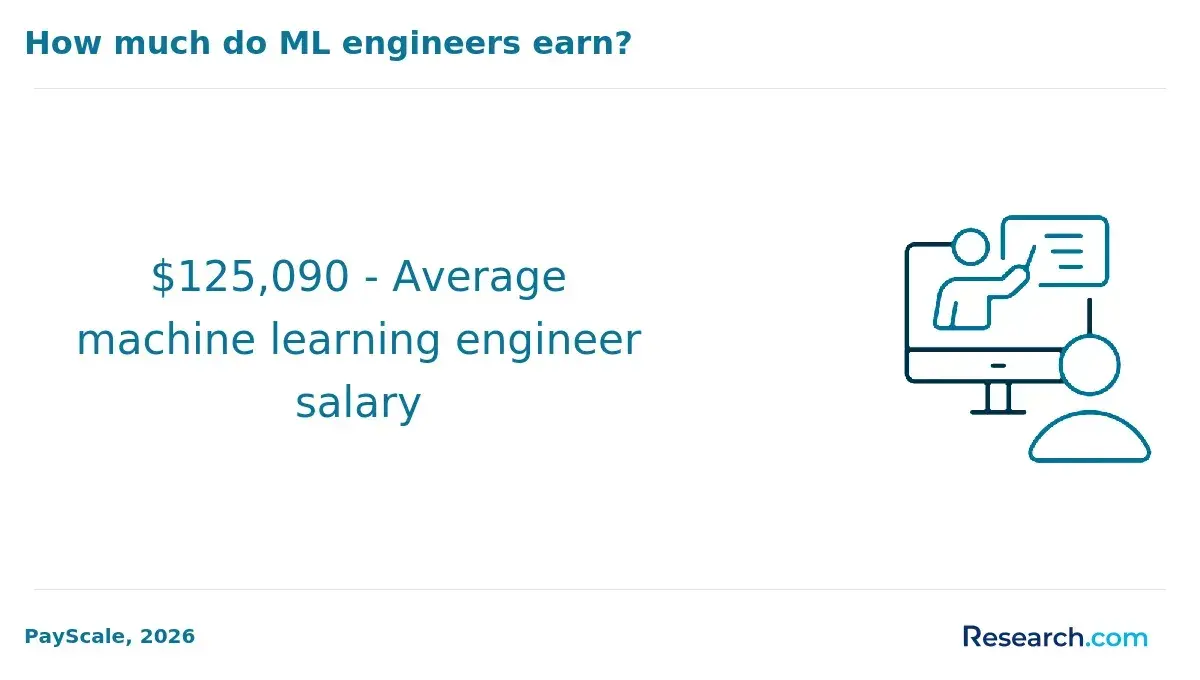
Bachelor's degree programs focused on AI for business open diverse career opportunities at the intersection of technology and commerce. Graduates often pursue roles as AI and machine learning specialists who develop algorithms to improve business processes and decision-making. These positions are among the fastest-growing occupations worldwide through 2030, according to the World Economic Forum's Future of Jobs Report.
Other in-demand roles include data analysts and data scientists, who analyze large datasets to support strategic business initiatives. Business intelligence analysts also use AI tools to track market trends and strengthen competitive advantage. AI business degree career opportunities extend to AI product managers, who align AI capabilities with business goals by overseeing AI-driven project development.
AI consultants apply tailored solutions across industries like healthcare, finance, and retail, addressing challenges such as enhancing customer experience and optimizing supply chains. Professionals with a business roles with AI bachelor's degree are well-equipped to handle ethical AI deployment and regulatory compliance, especially in sectors like banking and insurance. Careers in AI ethics and governance focus on the social implications of deploying AI in commercial environments.
Employment settings range from established corporations to startups and consulting firms, where interdisciplinary expertise fosters collaboration between technical teams and business leaders. Graduates benefit from strong programming, statistics, and strategy skills to keep pace with evolving AI technologies. Students interested in related fields might also explore a game design online degree for creative technology careers.
What business-oriented AI courses and skills are typically included in these programs?
Business applications of artificial intelligence courses in bachelor's degree programs focus on practical skills aligned with evolving corporate needs. Core areas include machine learning for business analytics, predictive modeling, and decision automation. These programs teach students to apply AI tools for analyzing customer data, optimizing supply chains, and enhancing marketing strategies.
Key skills taught in artificial intelligence for business programs include natural language processing for customer interactions, AI-driven financial forecasting, and ethical AI considerations. Integrating AI into business functions is emphasized through case studies and project-based learning to develop solutions that improve operational efficiency and strategic planning.
Students also gain expertise in data visualization and business intelligence, helping them communicate AI insights effectively to stakeholders. Proficiency in AI-powered customer relationship management (CRM) and digital advertising platforms often forms part of the curriculum, highlighting AI's role in sales and customer experience.
Familiarity with AI software frameworks like TensorFlow and business-centric platforms such as Salesforce Einstein is also emphasized. Programs highlight the collaboration between AI and human teams, focusing on workforce upskilling and change management. According to Microsoft & LinkedIn's 2024 Work Trend Index, 66% of business leaders won't hire candidates without AI skills, underscoring the importance of these competencies.
Graduates skilled in AI can tackle challenges such as automating routine tasks, interpreting complex datasets, and implementing ethical AI solutions in business environments. Many interested learners explore a data science degree online as a pathway to deepen these capabilities.
How do online AI bachelor's programs compare with on-campus options for business AI?
Online AI bachelor's degree programs increasingly provide coursework equivalent to traditional on-campus offerings, covering core subjects, specialized business AI applications, and hands-on projects. This parity equips students with crucial skills in machine learning, data analysis, and AI-driven decision-making no matter the delivery method.
Differences remain in learning environments and networking. On-campus programs offer face-to-face interaction, immediate faculty access, and collaborative labs that enhance engagement with complex AI tools. Online options, however, provide flexibility for working professionals, using interactive platforms, virtual labs, and asynchronous discussions to simulate in-person experiences.
Practical experience is vital. Leading online programs often partner with companies to provide remote internships and projects, such as virtual consulting in market analysis or supply chain optimization, offering valuable real-world exposure.
Cost and accessibility vary as well. Online learning reduces expenses related to commuting and relocation. According to the 2024 National Center for Education Statistics, 53% of U.S. postsecondary students took distance education courses recently, demonstrating growing demand and investment in online learning infrastructure.
Prospective students should consider program accreditation, faculty expertise in AI business integration, career support services, and the technical skills and discipline necessary for success in online study compared to the structured environment on campus.
What are the admission requirements and prerequisites for AI bachelor's programs?
Admission to AI bachelor's degree programs focused on business applications typically requires a strong foundation in mathematics and analytical skills. Most U.S. colleges expect applicants to have completed high school coursework in algebra, geometry, and precalculus or calculus to prepare for programming and statistics classes essential in AI studies.
Standardized test scores remain a critical factor. According to ACT's The Condition of College & Career Readiness, only 20% of ACT-tested graduates met the math readiness benchmark, underscoring the importance of proficiency. Competitive programs often look for ACT or SAT math scores above the 75th percentile to ensure applicants are prepared.
Communication skills are also valued, especially when AI intersects with business. Schools may require English proficiency tests or prioritize strong SAT Evidence-Based Reading and Writing results. Some programs prefer applicants with prior computer science coursework or demonstrated interest in technology fields.
Many programs consider letters of recommendation, personal statements, or portfolios highlighting problem-solving and coding experience. Transfer students or professionals may need proof of college-level math and programming courses to meet prerequisites for rigorous AI curricula blending technical and business skills.
How long do AI bachelor's programs take, and what do they cost?
AI bachelor's degree programs usually span four years of full-time study, consistent with most undergraduate programs in the U.S. This allows students to build a solid foundation in computer science, data analytics, machine learning, and business applications of AI. Options like accelerated tracks or part-time study can shorten or extend this timeframe depending on prior credits or work commitments.
Tuition costs vary widely. Public four-year colleges average $11,610 annually for in-state students, totaling about $46,440 over four years, excluding inflation and extra fees. Private schools can exceed $40,000 per year, pushing total tuition above $160,000. Additional expenses often include textbooks, technology fees, and living costs, adding several thousand dollars annually. Online programs may lower overall expenses by eliminating relocation and commuting.
Financial aid, scholarships, and employer tuition reimbursement are important to consider. Prospective students should weigh the return on investment by evaluating program curriculum, reputation, and availability of business-focused AI courses to align with career goals.
How can you verify institutional and programmatic accreditation for AI degrees?
To verify accreditation for AI degrees, start by consulting the U.S. Department of Education's Database of Accredited Postsecondary Institutions and Programs (DAPIP). This federally maintained directory lists thousands of accredited institutions and programs, ensuring the school offering the AI bachelor's degree meets recognized quality standards.
Determine whether the institution has regional or national accreditation. Regional accreditation, such as from the Higher Learning Commission (HLC) or the Middle States Commission on Higher Education (MSCHE), is generally more prestigious and widely accepted by employers and graduate schools. National accreditors typically oversee vocational or specialized schools and may affect credit transferability.
For AI bachelor's degrees with a business focus, check if the program holds accreditation from bodies like ABET, which approves computing and information science curricula. While not mandatory for all AI programs, ABET accreditation signals a rigorous and specialized education.
When contacting the school's admissions office, ask for official accreditation documents, including renewal status, scope (institution-wide or program-specific), and any relevant state licensing. Be cautious of institutions citing unrecognized accreditation agencies that are not federally or state registered.
Using DAPIP and verifying accreditation details protects students from enrolling in unrecognized programs and helps maintain eligibility for financial aid, certification, and employment opportunities.
What salaries can graduates expect in AI and business analytics roles?
Graduates holding a bachelor's degree that includes ai for business courses can expect competitive salary prospects in data analysis and business analytics roles. The U.S. Bureau of Labor Statistics reports a median annual wage of $108,020 for data scientists, providing a solid benchmark for both entry-level and mid-career professionals combining ai insights with business strategies.
Salary ranges depend on factors such as job title, industry, and location. Entry-level positions like ai business analyst or junior data scientist usually start between $70,000 and $90,000 annually. Professionals with three to five years of experience often earn from $100,000 to $130,000, reflecting greater expertise in machine learning and business strategy integration.
High-demand sectors such as finance, healthcare, and technology frequently offer salaries above $130,000, especially for roles involving predictive analytics and ai model deployment. Positions that include management or consulting responsibilities related to ai-driven decision support systems may see higher compensation.
Skills in Python, R, advanced analytics platforms, and cloud-based ai services enhance salary growth potential. Certifications in business intelligence and ai further boost earning power. Geographic regions like Silicon Valley, New York, and Seattle tend to offer top-tier salaries aligned with their living costs.
What certifications complement an AI bachelor's degree for business and analytics jobs?
Certifications that enhance an AI bachelor's degree for business and analytics roles play a vital role in proving practical expertise. According to Skillsoft's IT Skills and Salary Report (2024), 87% of IT decision-makers value certifications for verifying skills. Targeted credentials in data analytics, machine learning, and business intelligence boost employability significantly.
Key certifications for bridging AI knowledge with business impact include:
- Certified Analytics Professional (CAP): Validates the ability to extract actionable insights from data and link AI models to business strategy.
- Microsoft Certified: Azure AI Fundamentals: Provides essential understanding of cloud-based AI services widely used in industry.
- Google Professional Data Engineer: Emphasizes designing and building scalable data processing systems for AI-driven analytics.
- IBM AI Engineering Professional Certificate: Focuses on machine learning, deep learning, and AI tools to strengthen hands-on skills.
Additional certifications like SAS Certified AI and Machine Learning Specialist or Tableau Desktop Specialist elevate proficiency in predictive analytics and data visualization, crucial for integrating AI insights with decision-making roles.
Professionals should select certifications aligned with their career path: those focused on AI implementation benefit from cloud and engineering credentials, while strategy-oriented roles gain from analytics and visualization certifications. Certified candidates often achieve higher salaries and faster advancement.
Other Things You Should Know About Artificial Intelligence
Programming knowledge is essential for students pursuing AI bachelor's degrees with a business focus. Learning languages like Python or R enables students to design, implement, and analyze AI models used in business analytics and decision-making. Without programming skills, it is challenging to develop practical AI solutions or collaborate effectively with technical teams in business environments.
In 2027, AI Bachelor's graduates can specialize further through master's programs like AI for Business or pursue certifications in AI ethics, data analytics, or machine learning. These opportunities enhance their skills, allowing them to tackle complex business challenges effectively.
Ethics and transparency are growing priorities in AI education for business applications. Programs now often include coursework on responsible AI use, bias mitigation, and regulatory compliance. Understanding these concepts helps future professionals create AI systems that are fair, accountable, and trustworthy in commercial contexts.
Internships and practical projects are critical components of AI bachelor's programs emphasizing business. They provide hands-on experience with real-world datasets and business challenges, bridging theoretical knowledge with practical application. Such experiences enhance students' problem-solving skills and increase their employability in competitive job markets.
References
- Bachelor of Arts in Artificial Intelligence for Business Digital https://www.euruni.edu/en/Bachelor-s/Artificial-Intelligence-for-Business-Digital.html
- B.Sc. in Artificial Intelligence https://www.studyinpoland.pl/en/programme
- International Bachelor of Science in AI https://psl.eu/en/education/international-bachelor-science-ai
- Bachelor in Management and Artificial Intelligence https://www.kozminski.edu.pl/en/programs/undergraduate-programs-bachelor/bachelor-management-and-artificial-intelligence
- Cost to Study Artificial Intelligence in 2026 https://checkmateittech.com/cost-to-study-artificial-intelligence-usa/
- Online AI Degrees vs On-Campus: Which Is Right for You in 2026? https://aidegreeonline.com/online-ai-degrees-vs-on-campus-which-is-right-for-you-in-2026/
- Online vs On-Campus Artificial Intelligence Degrees: Which Is Better? https://hakia.com/degrees/artificial-intelligence/online-vs-campus/
- These 14 colleges offer bachelor's degrees in AI—including one Ivy League school https://www.cnbc.com/2025/01/22/colleges-that-offer-bachelors-degrees-in-ai.html
- Best AI Business Courses and Certifications https://learnprompting.org/blog/ai-business-courses
- ARTiBA Accreditation Program | Elevate Your AI Education Standards https://www.artiba.org/artiba-accreditation-program