2027 Artificial Intelligence Education Trends Report

Co-Founder and Chief Data Scientist
Many professionals with degrees in unrelated fields struggle to enter the rapidly evolving artificial intelligence industry. Traditional pathways often demand extensive technical backgrounds or full-time study, creating barriers for career changers seeking flexibility. This gap limits access to opportunities and slows workforce diversification. This article outlines current trends in artificial intelligence education, highlighting flexible, accredited programs designed for individuals with varied academic histories. It offers insights into emerging curricula, delivery methods, and credentialing options aimed at helping readers make informed decisions and successfully transition into artificial intelligence careers.
Key Things You Should Know
- By 2026, over 65% of U.S. universities will offer focused artificial intelligence programs, reflecting a 20% growth since 2024 in curriculum adoption nationwide.
- Employment projections indicate a 40% increase in U.S. AI-related job openings through 2030, emphasizing the importance of specialized education credentials for competitive advantage.
- Artificial intelligence courses increasingly integrate ethical training and interdisciplinary approaches, with 72% of programs including modules on AI bias and social impact as of 2025 data.
What is artificial intelligence education and how is it evolving across U.S. colleges?
Artificial intelligence education trends in U.S. colleges reflect a shift from niche electives in computer science to comprehensive multidisciplinary programs. These curricula span engineering, business, healthcare, and social sciences, emphasizing hands-on learning through labs, AI-focused capstone projects, and internships to prepare students for practical challenges.
The evolution of artificial intelligence curriculum across American universities includes expanding beyond algorithms and machine learning to cover AI ethics, explainability, and societal impact. Institutions such as MIT and Stanford offer collaborative courses integrating AI with policy analysis or healthcare innovation, meeting industry demand for graduates skilled in both technical and human-centered AI aspects.
The global AI education market is projected to grow from $7.05 billion in 2025 to $136.79 billion by 2035, with a 35% annual growth rate, signaling increasing demand for AI competencies in the workforce. Prospective students should look for programs with core courses in machine learning, data science, and neural networks; interdisciplinary electives exploring AI's societal roles; practical applications via case studies and internships; and research opportunities with faculty connected to industry.
- Core courses in machine learning, data science, and neural networks
- Interdisciplinary electives exploring AI's societal roles
- Practical applications through case studies and internships
- Opportunities for research under faculty with industry ties
This approach equips graduates for careers in software engineering, AI research, data analysis, and emerging roles like AI ethics compliance or AI product management. For insight into potential earnings, explore applied artificial intelligence salary trends to understand the financial outlook of this growing field.
What types of artificial intelligence degrees and certificates can students earn?
Students pursuing artificial intelligence degree programs in the United States can find a range of options tailored to different career goals and educational levels. At the undergraduate level, many institutions offer Bachelor of Science degrees in computer science with AI concentrations, covering foundational topics like machine learning, natural language processing, and robotics.
Graduate students may choose Master's programs focused specifically on artificial intelligence or data science with an AI emphasis. These programs often include advanced study in deep learning, computer vision, and AI ethics, preparing graduates for technical roles in research and development. Doctoral degrees (PhDs) provide a path for those interested in academic or advanced R&D careers through original contributions to the field.
For working professionals, online artificial intelligence certificate courses for students and industry practitioners provide practical skills in areas such as AI fundamentals, machine learning engineering, and product management without the time investment of a full degree. These certificate programs emphasize hands-on coding frameworks and real-world applications.
The labor market reflects a strong demand for AI skills: job postings mentioning AI have surged notably, underscoring the importance of aligning education with evolving workforce needs. Prospective students should evaluate programs based on curriculum rigor, project opportunities, and industry ties.
Cost-conscious learners may consider options like the cheapest engineering degree programs, which can provide valuable pathways toward AI careers without excessive financial burden.
How do online artificial intelligence programs compare with campus-based options?
Online artificial intelligence education compares with campus programs in flexibility and accessibility. Online degrees accommodate working professionals and students in remote areas by offering flexible scheduling and eliminating relocation costs. These programs use interactive platforms, recorded lectures, and virtual labs, but may lack some networking and hands-on opportunities available on campus.
Campus-based versus online artificial intelligence degree benefits include direct access to faculty, research labs, and collaborative projects, crucial for hands-on experience. Many campus programs integrate internships and partnerships with local tech companies, providing in-person mentorship and career support. Structured schedules on campus also help students maintain discipline.
Enrollment growth reflects the rising demand for AI education, with the number of graduates receiving a master's degree rising 96% between 2022 and 2023 according to the Stanford HAI AI Index 2025. Students should weigh factors such as flexible timing versus immersive learning, network access, faculty quality, and costs, including potential relocation.
- Need for flexible timing versus desire for immersive, hands-on learning
- Access to network and career services
- Quality and reputation of faculty and curriculum
- Cost differences and potential relocation expenses
Those targeting research-oriented roles typically favor campus programs, while online formats suit those balancing work or family. Accreditation and alumni outcomes remain essential considerations. For related fields, exploring options like a game design online degree can also be worthwhile.
What are the admission requirements for artificial intelligence majors and bootcamps?
Admission requirements for artificial intelligence degree programs typically demand a strong foundation in mathematics and programming. Most master's programs expect applicants to hold a bachelor's degree in computer science, engineering, mathematics, or a closely related discipline. Submission of GRE scores, transcripts showcasing proficiency in linear algebra, calculus, and probability, and relevant work or research experience are standard. Letters of recommendation and personal statements often play a key role in highlighting an applicant's motivation and exposure to AI concepts.
Bootcamps provide more accessible eligibility criteria for artificial intelligence bootcamp enrollment, focusing on career changers and working professionals. These programs usually require demonstrated coding skills via online assessments or prior coursework in languages like Python or Java. Basic knowledge of statistics and algorithms is often recommended. While many bootcamps accept candidates without prior degrees, select top-tier programs use interviews or project evaluations to ensure readiness for intensive training.
Gaining practical experience through internships, personal AI projects, or coding competitions strengthens applications across all admission types. Prospective students should also evaluate the financial return on investment. According to a National University synthesis of salary data, master's graduates in AI and machine learning earn a median salary near $145,000 three years post-graduation, compared to approximately $115,000 for general computer science graduates. Additionally, those interested in technology degrees may find valuable guidance by exploring the best online electrical engineering degree programs for veterans.
How can students verify accreditation and quality standards for AI programs?
Students seeking quality artificial intelligence programs should start by confirming institutional accreditation from recognized U.S. bodies such as the Accrediting Commission for Senior Colleges and Universities of the Western Association of Schools and Colleges (WASC) or the Middle States Commission on Higher Education (MSCHE). This accreditation guarantees that the program adheres to rigorous academic standards and qualifies for federal aid.
Program-specific endorsements, like those from ABET, signal that the curriculum meets industry and academic requirements in computer science and engineering fields, ensuring relevant AI-focused training.
Faculty expertise is another key factor. Students should look for instructors with notable research, industry experience, or contributions to respected AI conferences. Evaluating course syllabi for essential topics such as machine learning, neural networks, data ethics, and generative AI is critical, especially since 92% of students use generative AI in some capacity.
Practical experience through internships, partnerships with AI companies, and engagement with research centers enhances learning quality. Alumni feedback and program outcomes, including graduation rates, job placement figures, and professional certification opportunities, provide valuable insight into program effectiveness.
What core courses and technical skills are taught in artificial intelligence curricula?
Core courses in artificial intelligence curricula typically include machine learning, data structures and algorithms, probability and statistics, computer vision, natural language processing (NLP), and robotics. These foundational topics equip students to develop, evaluate, and optimize AI models. For example, machine learning studies cover supervised and unsupervised methods like neural networks and decision trees, while NLP focuses on creating systems that interpret and generate human language.
Students gain technical proficiency in programming languages such as Python and R, alongside popular AI libraries including TensorFlow, PyTorch, and Scikit-learn. Key skills include managing large datasets, data preprocessing, and deploying AI applications on cloud platforms. Ethical training is increasingly integrated, emphasizing responsible AI development and bias reduction.
AI education also emphasizes hands-on experience through project-based learning and interdisciplinary applications. Students might build AI tools for healthcare diagnostics or autonomous vehicles, reflecting real-world challenges. Recent data from the Center for Democracy & Technology, cited by NEA, shows a surge in K-12 teachers using generative AI-from 51% to 83%-highlighting growing AI adoption in education.
Graduates should master theoretical AI concepts and practical skills like data manipulation, model training, evaluation metrics, and AI ethics. Understanding deployment issues such as scalability and interpretability is vital for success in competitive, regulated industries.
How long do artificial intelligence programs take and what do they typically cost?
Artificial intelligence education varies significantly in duration and depth, catering to different career goals and time commitments. Certificate courses provide focused, practical training within three to six months, ideal for professionals seeking rapid upskilling. Associate degrees, commonly offered by community colleges, require around two years and build a solid technical foundation. Bachelor's degrees span four years, covering computer science principles, algorithms, and applied AI methods. Advanced study options include master's programs lasting one to two years and PhD programs extending three to five years, emphasizing original research and innovation.
Tuition costs reflect the program type and institution. Short certificate courses typically cost between $2,000 and $10,000. Associate degrees range from $5,000 to $15,000. Bachelor's degrees at public universities usually fall between $10,000 and $30,000 per year, while private universities may exceed $50,000 annually. Graduate programs often cost $20,000 to $60,000 per year. Financial aid, scholarships, and employer support can help manage expenses.
Research shows AI-powered learning environments enhance outcomes significantly: test scores improve by 54%, learning outcomes by 30%, and engagement increases tenfold compared to traditional methods. This higher engagement speeds mastery and retention, making intensive programs effective despite shorter durations.
What careers can artificial intelligence graduates pursue and in which industries?
Graduates with artificial intelligence degrees can pursue diverse roles such as machine learning engineers, data scientists, AI research scientists, and AI software developers. These positions involve designing and deploying AI algorithms to solve complex problems across industries.
The healthcare industry uses AI to enhance diagnostics, tailor treatments, and streamline administrative tasks. AI professionals often develop models for medical imaging analysis or patient outcome prediction. In finance, AI experts help with fraud detection, algorithmic trading, and risk management solutions. Manufacturing companies apply AI to optimize supply chains, improve quality control, and integrate robotics.
Technology firms are the largest employers, focusing on natural language processing, autonomous systems, and recommendation engines. Government agencies and defense contractors also require AI expertise for cybersecurity, surveillance, and intelligence work. The Asia-Pacific region shows rapid growth in AI education and job availability, with a 48% compound annual growth rate.
Key skills include programming languages like Python, familiarity with tools such as TensorFlow, and data management capabilities. Gaining practical experience through internships or projects aligned with industry interests increases job prospects.
Continuous learning through professional certifications and advanced degrees is vital for succeeding in specialized sectors like autonomous vehicles, natural language processing, and AI ethics advisory.
What is the salary outlook for artificial intelligence roles in the United States?
Artificial intelligence roles in the U.S. offer competitive salaries shaped by experience, skills, and industry demand. Entry-level AI engineers earn between $90,000 and $110,000 annually, while mid-level professionals with three to five years' experience can make $130,000 to $160,000. Senior specialists, especially those in leadership or research roles like machine learning scientists, often surpass $200,000, with top tech firms paying above $250,000.
Rising demand spans healthcare, finance, automotive, and technology sectors, driving salary growth. Proficiency in machine learning, natural language processing, and data engineering remains highly sought after. Despite concerns-41% of higher-education students globally worry AI may reduce job opportunities by graduation, according to the Digital Education Council AI in Higher Education Global Survey 2026-specialized skills improve job security and market value.
Practical skills such as Python programming, TensorFlow expertise, and data science knowledge correlate with better pay. Combining AI with domain expertise like cybersecurity or healthcare analytics further enhances earning potential. Certifications and advanced degrees signal expertise to employers and boost salary prospects.
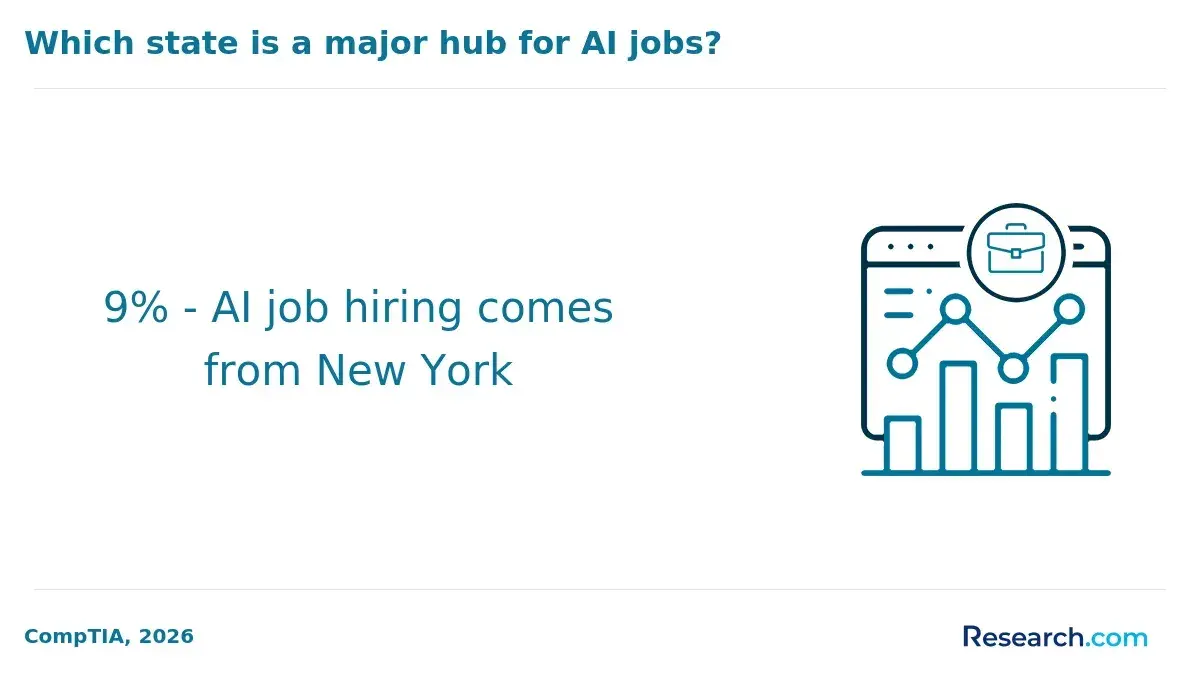
Geographic location matters: urban hubs such as San Francisco, New York, and Seattle offer higher salaries but come with increased living costs. The rise of remote work is beginning to affect salary structures, opening negotiation possibilities beyond traditional tech centers.
Are certifications or professional credentials needed for artificial intelligence careers?
In the evolving landscape of artificial intelligence careers, certifications have become crucial for demonstrating specialized skills beyond traditional degrees in computer or data science. Employers increasingly value credentials from recognized bodies and vendor-specific programs offered by major cloud providers or professional organizations. These certifications validate expertise in areas like machine learning algorithms, AI ethics, and model deployment.
Notably, only 7% of schools worldwide have formal AI guidance policies, with 40% of those relying on informal frameworks, creating a governance gap in AI education (according to Programs.com). This inconsistency elevates the importance of industry-recognized credentials to ensure professionals meet technical and ethical standards.
Prospective students should consider certifications based on their career goals:
- Technical certifications emphasizing machine learning, deep learning, and AI programming for hands-on roles.
- Ethics and governance credentials aimed at policy, risk management, or compliance positions.
- Specialized certificates in AI project management and data strategy for leadership pathways.
Certification courses often combine theory with practical application, making them especially valuable for graduates and professionals lacking formal AI education. These credentials offer a tangible way to show expertise alongside degrees and experience, enhancing employability in a competitive job market.
Other Things You Should Know About Artificial Intelligence
AI education programs in 2027 should cover FERPA, COPPA, and GDPR when student data, minors’ data, or cross-border data is used. Schools should also teach model-training consent, data minimization, retention limits, and vendor review rules before using generative AI tools in classrooms.
Ethical concerns in artificial intelligence education focus on responsible AI use, data privacy, and bias mitigation. Educators emphasize teaching students about the social impact of AI technologies and the importance of designing fair, transparent algorithms. Ethical training prepares graduates to develop AI systems that respect user rights and avoid harmful consequences.
While a strong foundation in math, especially linear algebra, calculus, and statistics, is important, many programs offer preparatory courses to help students build these skills. Practical experience with coding and problem-solving can also support success in artificial intelligence studies. Some institutions provide flexible curricula that accommodate learners from diverse academic backgrounds.
In 2027, AI governance is becoming crucial in artificial intelligence education, with curricula increasingly incorporating responsible AI deployment and policy-making. Programs, including the best master’s programs in AI governance, emphasize ethical decision-making and framework development to guide future industry leaders.
References
- How Much Does it Cost to Learn AI? https://blog.nobledesktop.com/learn/ai/ai-cost-to-learn
- Artificial Intelligence Degree Requirements: What Do You Need to Apply? https://aifwd.com/education/artificial-intelligence-degree-requirements/
- Trend Report: Learners in the Age of AI - EdTech Hub https://edtechhub.org/report/trend-report-learners-in-the-age-of-ai/
- Degree Programs in Artificial Intelligence | ComputerScience.org https://www.computerscience.org/degrees/artificial-intelligence/
- III. The Current State of Artificial Intelligence in Education | NEA https://www.nea.org/resource-library/artificial-intelligence-education/iii-current-state-artificial-intelligence-education
- Quality Assurance with AI and Automation: The Prospects for Educational Assessment https://www.ieac.org.uk/40-Quality-Assurance-with-AI-and-Automation-The-Prospects-for-Educational-Assessment-blog.php
- AI pricing: how much does AI cost in 2025? | Future Processing https://www.future-processing.com/blog/ai-pricing-is-ai-expensive/
- Best AI and Machine Learning Bootcamps in 2026 https://hakia.com/bootcamps/ai-machine-learning/
- Artificial Intelligence Certification | AI Certification | USAII® https://www.usaii.org/artificial-intelligence-certifications
- Online Bachelor’s Degree: Artificial Intelligence https://www.umgc.edu/online-degrees/bachelors/artificial-intelligence-ai