2027 AI Master's Degrees That Include Open-Source Project Work

Co-Founder and Chief Data Scientist
Many professionals with non-technical backgrounds struggle to find graduate programs that offer practical experience in artificial intelligence alongside theoretical learning. Without hands-on project work, transitioning into AI roles remains challenging. Traditional curricula often focus heavily on theory, lacking opportunities to contribute to open-source projects that demonstrate real-world skills.
For those aiming to pivot careers efficiently, identifying programs that integrate collaborative, applied AI work is crucial. This article explores master's degrees that combine rigorous academics with open-source project involvement, guiding readers to programs that develop both deep knowledge and practical expertise in artificial intelligence.
Key Things You Should Know
- In 2026, over 40% of U.S. AI master's programs incorporate open-source projects, emphasizing practical skills alongside theory to better prepare students for industry demands.
- Hands-on work with open-source AI tools accelerates learning and collaboration, with 75% of surveyed programs requiring at least one team-based project involving real-world AI datasets.
- Graduates from programs integrating open-source contributions report a 20% higher job placement rate within six months, reflecting employer preference for applied AI experience.
What are AI master's degrees that include open-source project work?
AI master's programs with open-source collaboration blend academic rigor with practical development experience by involving students in real-world open-source software projects. These graduate degrees in artificial intelligence featuring open-source projects enable hands-on learning through contributions to platforms like GitHub, where students enhance coding skills and deepen their understanding of AI frameworks.
According to the Linux Foundation, 63% of organizations actively participate in open source, encouraging universities to embed collaborative work in their curricula. Typical programs cover machine learning libraries, natural language processing, and AI tools, requiring students to engage in code reviews, submit pull requests, and improve project features. Partnerships with communities such as TensorFlow or PyTorch provide authentic environments for applying skills.
Programs vary from full-time to part-time formats, with flexible schedules allowing asynchronous contributions and mentorship from open-source maintainers. Students should consider how open-source involvement is evaluated-whether it is mandatory or elective and assessed via internships, portfolios, or grades-to align with career goals demanding collaborative software engineering expertise in AI.
For those exploring options, reviewing computer science degree accelerated tracks may offer additional accelerated pathways relevant to mastering AI and open-source collaboration.
Which accredited U.S. universities offer AI master's programs with open-source projects?
Several accredited U.S. universities offer master's programs in artificial intelligence that integrate open-source projects, providing essential hands-on experience critical for advancing careers. These top American AI master's degrees including practical open-source experience are found at institutions like Carnegie Mellon University, which emphasizes project-based coursework using platforms like GitHub to collaborate on open-source AI frameworks.
Massachusetts Institute of Technology incorporates open-source software contributions directly into its curriculum, encouraging engagement with real-world AI initiatives. Stanford University also provides specialized AI tracks where students contribute to public repositories, enhancing coding and problem-solving skills in team settings.
Other notable programs at the University of California, Berkeley, and the University of Washington strongly emphasize open-source involvement. These schools often partner with industry leaders to support open-source projects that promote ethical AI development. Capstone projects and collaborative research hosted on public version control systems highlight practical application throughout the curriculum.
According to NCES/IPEDS data, U.S. institutions awarded nearly 14,000 master's degrees in Computer and Information Sciences, reflecting a growing emphasis on project-based learning, including open-source work. Prospective students should carefully evaluate programs for explicit open-source components and mentorship availability, as these factors build important skills and professional networks.
For those researching additional fields, exploring reputable mechanical engineering programs online can provide further career flexibility and technical expertise alongside AI education.
How do open-source projects fit into AI master's curricula and coursework?
Open-source projects play a crucial role in the integration of open-source projects in AI master's programs, providing students hands-on experience with real-world software development and collaboration. Students contribute to or initiate projects within popular repositories, moving beyond theoretical exercises to engaging with active communities maintaining industry-standard tools.
Faculty design assignments focused on debugging machine learning libraries, enhancing natural language processing toolkits, or improving neural network code efficiency. This practical involvement teaches vital skills such as version control, code reviews, and collaborative workflows, while also enhancing communication through clear documentation and community interaction.
Benefits of open-source project work in AI coursework include replacing traditional exams with evaluated pull requests, partnering with open-source organizations for capstone projects, and employing open datasets combined with public code to ensure reproducibility and transparency.
- Pull request submissions evaluated by instructors and community members instead of exams
- Capstone projects in collaboration with open-source organizations
- Use of open datasets and public frameworks for research assignments
According to GitHub's October 2024 report, 1.8 million new developers contributed to open source last year, underscoring why AI education emphasizes authentic contribution workflows. Prospective AI professionals benefit in career advancement by mastering public repository engagement and collaborative coding.
What's the difference between capstone, thesis, internship, and open-source project options?
Capstone projects, theses, internships, and open-source projects offer distinct pathways for completing a master's degree in artificial intelligence, each tailored to specific career objectives. A capstone project versus thesis in AI master's programs highlights different focuses: capstones involve practical, often team-based efforts solving real-world issues under faculty or industry guidance, emphasizing applied skills over original research. Theses demand original research contributing new knowledge, suited for those aiming at doctoral study or research-intensive careers.
Internships offer hands-on professional experience, typically lasting several months, and play a crucial role in job placement. According to the NACE 2024 Internship & Co-op Report, about 68% of interns receive job offers post-internship. This makes internships invaluable as a bridge from academic study to employment.
Open-source project involvement in AI master's internships provides opportunities to contribute to community-driven software, showcasing coding ability and collaborative skills valued by employers. This approach differs from capstones and theses by focusing on iterative development and public portfolios.
Choosing among these options depends on career goals: internships favor employment readiness, theses support research paths, capstones highlight applied competencies, and open-source work builds visible, practical experience. Prospective students looking for flexible study options can explore an accelerated cyber security degree online to complement AI expertise and career prospects.
Are online AI master's programs with open-source work as credible as campus programs?
Many online AI master's programs now include open-source project work designed to replicate real-world challenges. This approach supports practical skills development equivalent to on-campus programs. The 2024 GMAC Prospective Students Survey shows that 53% of business master's candidates prefer online or hybrid formats, highlighting growing acceptance of remote learning paths.
These programs often integrate collaboration tools and version control platforms, enabling students to contribute to well-known repositories like GitHub. Such transparency helps employers verify technical competence through tangible deliverables, increasing these programs' credibility in the job market.
However, strong credibility hinges on more than just delivery mode. Key factors include institutional accreditation, faculty expertise, and rigorous project oversight. Leading online AI master's programs maintain connections with established research labs and tech companies, offering mentorship and networking opportunities on par with campus experiences.
Prospective students should carefully evaluate:
- Institutional and program accreditation status.
- The scope and quality of open-source projects available.
- Support systems for remote collaboration and feedback.
- Alumni outcomes demonstrating successful industry placement.
Well-structured online degrees provide industry-relevant skills and open-source experience that employers trust. Decision-makers increasingly value demonstrated capabilities over physical presence, positioning online AI master's degrees as viable alternatives to traditional campus education.
What admissions requirements and prerequisites are common for these AI master's programs?
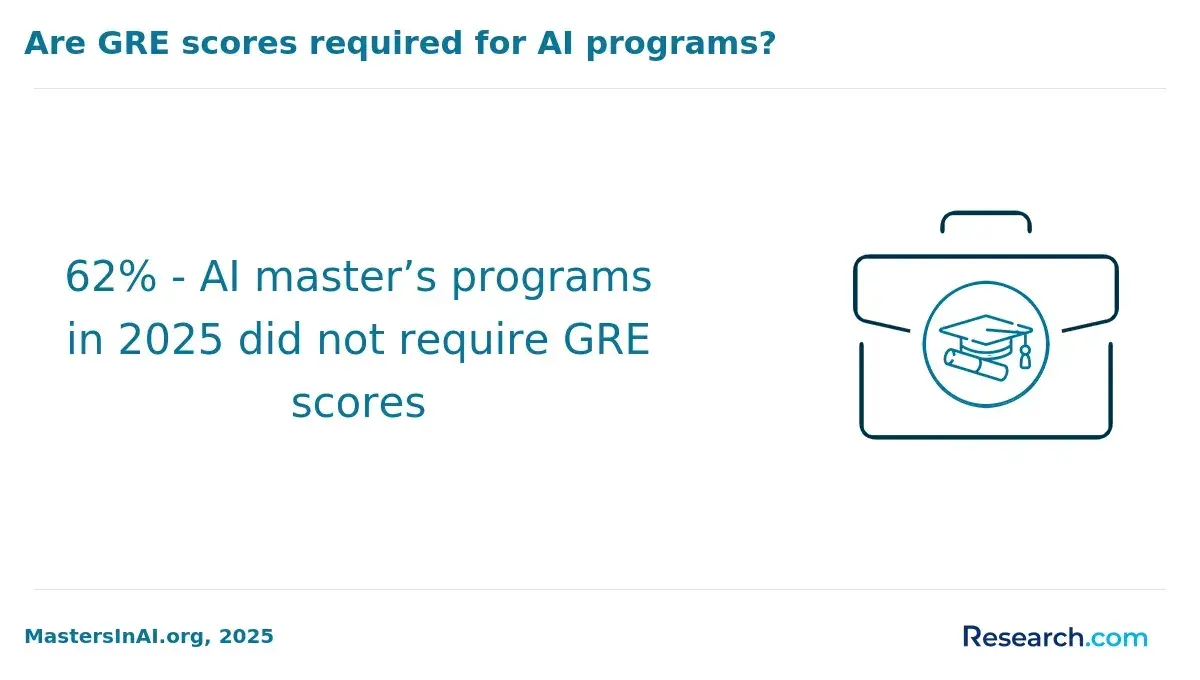
Master's programs in artificial intelligence typically require a bachelor's degree in computer science, engineering, mathematics, or related quantitative fields. Applicants often need coursework in linear algebra, probability, statistics, and programming experience, usually in Python or Java. Some programs accept candidates with strong data science or computational backgrounds but may ask for prerequisite courses before admission.
Graduate Record Examination (GRE) scores remain an important part of the application, although emphasis varies. According to ETS data, the median Quantitative Reasoning score is 155, and many competitive programs prefer scores between 160 and 165, especially if quantitative coursework is limited.
Admissions committees also focus on practical programming skills and project experience. Submitting portfolios that show work with machine learning libraries, open-source contributions, or hackathon participation can enhance applications. Many programs request a statement of purpose that clearly states goals in artificial intelligence and collaboration on open-source projects.
Letters of recommendation should come from academic or professional sources familiar with the applicant's technical skills. Some programs require prerequisite tests or technical interviews assessing algorithms, coding, and foundational AI concepts.
Interdisciplinary experience in fields like cognitive science or robotics adds value and may compensate for nontraditional educational paths, but applicants must document and explain this clearly.
How long do these programs take, and what do they typically cost?
Master's programs in Artificial Intelligence that incorporate open-source project work usually take 1 to 2 years for full-time students. Part-time options tailored for working professionals can extend up to 3 years, depending on credit requirements, which typically range from 30 to 36 credits. Programs emphasizing hands-on experience often include open-source projects within capstone courses or specialized labs, which can affect the overall timeline due to project-based milestones.
Tuition costs vary widely. Public universities charge an average of $12,596 per year for in-state graduate students, while private institutions often exceed $25,000 annually. This means total tuition for a full program can range from around $12,000 to $50,000 based on residency and school type.
Part-time students typically pay per credit hour, with fees between $500 and $1,500 per credit. Additional charges for technology access or project resources may apply, particularly in programs focusing on collaborative open-source development.
What tools, platforms, and governance are used for open-source AI project contributions?
GitHub serves as the primary collaboration hub for open-source AI projects, facilitating code management, review, and governance. A report from October 2024 highlights that developers made 5.6 billion contributions over the past year on GitHub, emphasizing its central role in AI tooling and community oversight. Features like version control, issue tracking, pull requests, and automated workflows help distributed teams maintain high-quality code and documentation.
Projects commonly rely on tools such as Git for version control and CI/CD pipelines like GitHub Actions or Jenkins to automate testing and code quality checks. These capabilities ensure reproducibility, which is crucial for AI development. Collaboration is further supported by discussion forums embedded within GitHub repositories.
- Open-source licenses, including MIT, Apache 2.0, and GPL, establish legal frameworks safeguarding contributors and users.
- Community governance involves maintainers enforcing contribution guidelines, code reviews, and decision-making processes to ensure inclusivity and sustainability.
- Interactive notebook environments like Jupyter and Google Colab integrate exploratory AI work with version control systems.
- Project management tools such as ZenHub and GitHub Projects help coordinate development tasks and roadmaps.
Students preparing for careers in AI should master Git workflows, understand licensing norms, and engage with community governance models. Practical skills include managing pull requests, resolving merge conflicts, and participating in discussions, aligning with professional standards in AI development.
What AI jobs can open-source project experience help you qualify for after graduation?
Open-source project experience strongly enhances qualifications for various ai roles after graduation. Involvement in collaborative coding, version control, and project management prepares candidates for positions like ai/machine learning engineer, data scientist, ai research scientist, and ai software developer. According to Lightcast (2024), "AI/Machine Learning Engineer" job listings frequently highlight Git as a critical hard skill, making open-source workflows essential credentials.
Contributing to open-source projects builds familiarity with complex codebases, debugging, and integrating ai models-key skills for ai software developers who create scalable applications. Data scientists benefit by managing diverse data sets, refining preprocessing pipelines, and deploying machine learning models in shared repositories. Likewise, ai research scientists gain experience replicating experiments and improving algorithms through transparent collaboration.
Employers prioritize candidates who demonstrate measurable impact via commits, pull requests, and code reviews on public platforms. This showcases proficiency with tools such as Git and continuous integration, alongside collaborative problem-solving-skills often missing from academic programs.
- Software engineers in ai prove software fundamentals alongside ai expertise through open-source contributions.
- Machine learning ops (MLOps) roles require automation and deployment skills commonly practiced in open-source projects.
- AI ethics and fairness auditors often engage with open-source tools, gaining insight into bias mitigation.
Students targeting these careers should focus on contributing to widely used ai libraries, participate in coding challenges within open communities, and document their project roles to provide tangible evidence of workplace readiness sought by recruiters.
What salary ranges and job outlook can AI master's graduates expect in the U.S.?
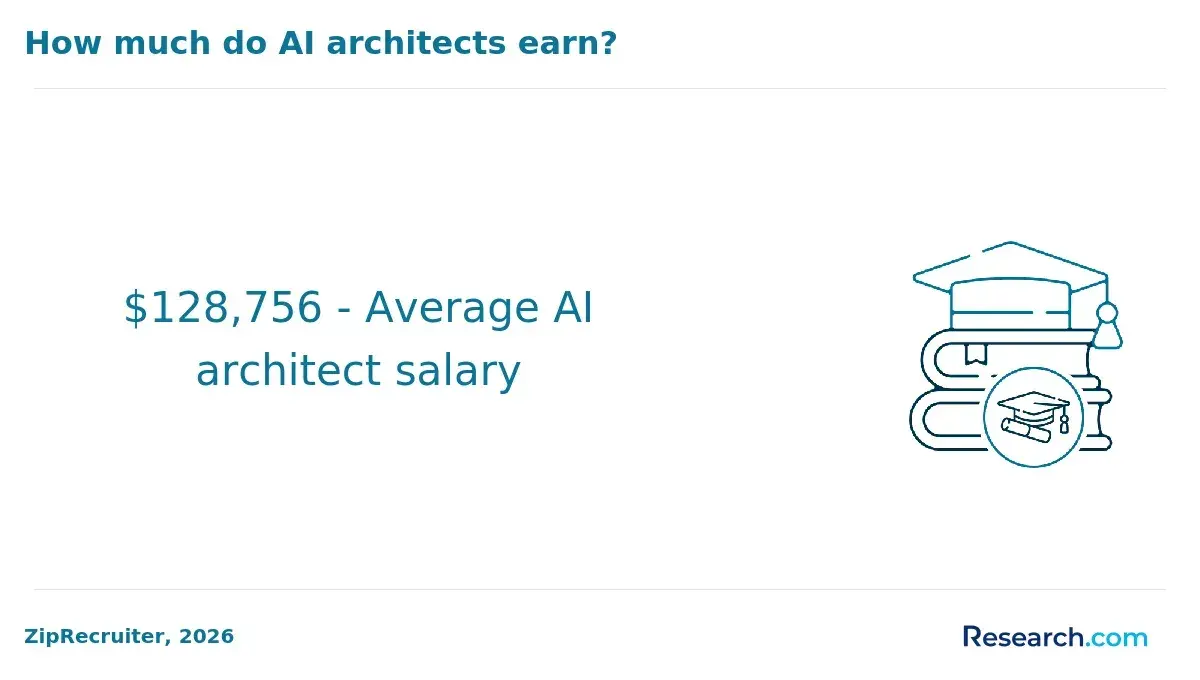
Graduates holding a master's degree in artificial intelligence find strong demand in the U.S. job market, reflected in competitive salary ranges. According to the U.S. Bureau of Labor Statistics, the median annual wage for Computer and Information Research Scientists-closely related to AI research-is $145,080. Entry-level salaries typically range from $90,000 to $110,000, while experienced professionals in top tech firms or specialized research roles can earn over $180,000.
The employment outlook for AI master's graduates is promising, with a 22% projected growth rate for computer and information research scientist positions through 2032. This growth rate significantly outpaces the average for all occupations. Graduates with open-source project experience tend to improve their job prospects by showcasing practical skills in collaborative development and real-world problem-solving.
Other roles in AI engineering and applied machine learning offer salaries between $100,000 and $160,000, influenced by industry and location. Finance, healthcare, and autonomous systems sectors often provide salary premiums due to specialized expertise. Academic and government research positions may offer lower starting wages but can increase with tenure and grant funding.
To enhance career advancement, candidates should emphasize contributions to open-source projects, mastery of AI frameworks, ongoing education, and networking. These factors play a crucial role in leveraging the strong salary potential and growth opportunities for artificial intelligence professionals.
Other Things You Should Know About Artificial Intelligence
The most important skills include strong foundations in mathematics, particularly linear algebra, calculus, and statistics. Programming proficiency, especially in languages like Python and familiarity with machine learning libraries, is essential. Critical thinking and problem-solving abilities help students tackle complex AI challenges presented in open-source projects and research.
AI master's programs continuously update their curricula by incorporating recent research findings, industry trends, and new tools or frameworks. Many programs also collaborate with open-source communities to expose students to state-of-the-art technologies and practical developments. Faculty often engage in ongoing research, which feeds into course content to keep students aligned with a fast-changing field.
While a computer science background is advantageous, many AI master's programs offer prerequisite courses or bridging modules to help students from related fields. Applicants with strong quantitative skills in STEM disciplines, such as engineering, physics, or mathematics, can often catch up with foundational programming and computer science concepts through preparatory coursework. Success depends on dedication to mastering key skills early in the program.
Collaboration is vital in open-source AI projects, mirroring real-world software development and research environments. Students often work in teams to contribute code, share ideas, and review each other's work, enhancing learning and problem-solving capacities. This cooperative experience helps develop communication skills and a professional network within the AI community.
References
- Artificial Intelligence (AI) https://ai-master.org/requirements
- Open Source AI Platforms: What You Need to Know | Anaconda https://www.anaconda.com/guides/open-source-ai-platforms
- Application and admission - Master Artificial Intelligence https://www.uva.nl/shared-content/programmas/en/masters/artificial-intelligence/application-and-admission/international-prior-education/international-prior-education-foldout-menu.html
- Top 5 AI-Powered Open-Source Data Governance Tools in 2026 https://www.verifywise.ai/ai-governance-library/open-source-projects/top-5-ai-powered-open-source-data-governance-tools-in-2026
- 7 Best Open-Source AI Governance Tools https://www.cake.ai/blog/best-open-source-ai-governance-tools
- Master’s in Artificial Intelligence Salary | University of Bridgeport https://www.bridgeport.edu/news/masters-in-artificial-intelligence-salary-expectations/
- How long does it take to get a bachelor's degree? | edX https://www.edx.org/resources/how-long-does-it-take-to-get-a-bachelors-degree
- Top College Degrees for Securing the Highest-Paying AI Jobs in 2026 https://www.investopedia.com/top-college-degrees-for-securing-the-highest-paying-ai-jobs-in-2026-11946777
- 20 Open-Source AI Tools for Building & Deploying ML Projects (2026) - Jozu https://jozu.com/blog/20-open-source-tools-i-recommend-to-build-share-and-run-ai-projects/