2027 Admission Requirements for AI Doctorate Degree Programs

Co-Founder and Chief Data Scientist
Prospective students with unrelated undergraduate degrees often face uncertainty about how to meet admission criteria for doctorate programs in artificial intelligence. Confusion arises from varied prerequisites, required experience, and standardized test expectations. This complexity can delay or derail career transitions into this fast-evolving field.
Understanding the essential qualifications and application components is crucial for a successful admission process. This article clarifies these requirements, providing clear guidance on eligibility, documentation, and evaluation factors to help applicants strategically prepare and improve their chances of acceptance into accredited, flexible doctorate programs in artificial intelligence.
Key Things You Should Know
- Top AI doctorate programs require a master's degree in computer science, engineering, or related STEM fields, with competitive GRE scores and strong research experience.
- Applicants must demonstrate proficiency in programming, machine learning, and data analysis, with many programs preferring published research or relevant internships.
- In 2026, over 70% of programs emphasize interdisciplinary skills, integrating AI ethics and policy knowledge due to rising industry demand and evolving technology standards.
What are the typical admission requirements for AI PhD programs?
Typical admission requirements for AI PhD programs include a strong academic record, relevant research experience, and specialized knowledge in computer science, mathematics, or related fields. Most programs expect applicants to have a master's degree, although some exceptional candidates gain entry directly after a bachelor's degree by demonstrating outstanding capabilities. Transcripts showing a minimum GPA-often 3.5 or higher on a 4.0 scale-are essential. GRE scores are becoming optional in many places but may still be requested, particularly for international students.
Research experience is a critical factor in these programs. Committees give priority to those who have contributed to AI-related projects, published papers, or presented at conferences. A well-written statement of purpose should clearly outline your research interests, previous work, and its alignment with faculty expertise. Strong letters of recommendation from professors or professionals familiar with your research potential carry significant weight.
Technical skills are also thoroughly evaluated, including proficiency in machine learning algorithms, programming languages like Python or Java, and mathematical foundations such as linear algebra and probability theory. Some programs require submission of a research proposal or samples of previous work, emphasizing practical research capabilities.
Competitive admissions processes are reflected by the 3.1% increase in U.S. graduate applications from 2022 to 2023, signaling heightened demand for clear evidence of research potential and academic excellence. Prospective students should be ready to stand out with unique research ideas and a strong publication record to better their chances.
For those interested in understanding how a doctoral degree can shape your professional trajectory, exploring the AI career path offers valuable insight into future opportunities within this dynamic field.
Do AI doctorate programs require a master's degree or research experience?
AI doctorate programs typically do not require a master's degree for admission, but substantial research experience is essential. Many programs admit students directly from a bachelor's degree if they demonstrate strong research potential and academic excellence. However, most successful applicants have completed a master's degree or gained significant research involvement in AI-related fields.
Research experience prerequisites for AI doctorate programs emphasize the ability to conduct independent research, contribute original ideas, and address complex technical challenges. Doctoral studies demand rigorous, long-term research commitment, often spanning multiple years.
Some universities offer integrated master's/PhD tracks that combine coursework with research opportunities. Others require a completed master's thesis or demonstrated research projects in AI or related areas such as machine learning, robotics, and data science.
According to data from the National Science Foundation's Survey of Earned Doctorates, the average time for U.S. research doctorate recipients to complete their degrees is approximately 5.7 years, highlighting the importance of extensive research engagement beyond coursework.
To strengthen their applications, prospective students should build a research portfolio through internships, publications, conference presentations, or lab assistantships. These experiences prove readiness for the challenges of an AI PhD program. For those interested in engineering fields, resources about the most affordable online degrees, such as a mechanical engineering degree, can provide additional pathways into AI research careers.
What standardized tests and application materials do AI PhD programs require?
Many AI doctorate programs require a mix of standardized test scores and comprehensive application materials. While GRE General Test scores were once commonly requested, numerous U.S. graduate schools have now made the GRE optional or eliminated it entirely. ETS reported that global GRE test volume in 2024 remains significantly below pre-pandemic levels, illustrating this shift in admissions policies. Prospective students should always check each university's specific requirements, as they differ widely.
Essential application materials for AI PhD programs generally include:
- Official transcripts from all previously attended institutions.
- Two to three letters of recommendation from faculty or professionals familiar with the applicant's research capabilities.
- A statement of purpose outlining research interests, career objectives, and reasons for pursuing the AI specialization.
- A resume or curriculum vitae highlighting academic achievements, projects, and relevant work experience.
Some programs also request a writing sample or research proposal, especially for research-focused tracks. International candidates may need to submit TOEFL or IELTS scores to prove English proficiency, which is separate from GRE requirements. Candidates should emphasize a strong research portfolio and align their interests with faculty expertise, since these aspects usually carry more weight than test scores. Nevertheless, submitting competitive GRE scores when optional can still enhance an application by demonstrating relevant analytical skills.
Those interested in fields related to AI may also explore options such as a game development degree, which shares overlapping technical foundations.
How important are math, programming, and CS prerequisites for AI doctoral applicants?
Strong math and programming prerequisites are essential for AI doctoral applicants. Admissions committees prioritize candidates with solid foundations in linear algebra, calculus, probability, and discrete mathematics, reflecting the computer science foundation requirements for AI doctorate programs. Without these, applicants face considerable challenges. Programming proficiency, especially in Python, is critical due to its prevalence in machine learning frameworks and AI research.
Lightcast's skills and labor-market data highlight "Python" and "machine learning" as top requested skills in AI-related job ads, reinforcing why doctoral programs emphasize practical coding and quantitative skills. Applicants should expect careful evaluation of:
- Grades in math and CS courses at undergraduate or master's levels.
- Hands-on programming ability demonstrated through projects, coding tests, or portfolios.
- Familiarity with algorithms, data structures, and statistical modeling.
Applicants missing formal prerequisites can bolster applications with post-baccalaureate courses, online certifications, or research roles focused on computational methods. Explicitly describing such efforts in statements of purpose is advisable.
For prospective students looking to strengthen their credentials, exploring a data science degree online can provide valuable training relevant to AI doctoral studies. Overall, a robust computer science foundation is indispensable for admission and success in AI research.
How do accredited AI doctorate programs differ from unaccredited or nontraditional options?
Accredited AI doctorate programs uphold rigorous academic standards set by recognized bodies such as ABET or regional accreditors. These programs offer a carefully designed curriculum, qualified faculty, and essential research resources, ensuring students receive comprehensive, industry-relevant training. Outcomes like job placement and research funding tend to be clearer and more reliable.
In contrast, unaccredited or nontraditional programs often lack oversight and standardized evaluation, which can lead to curricula misaligned with academic and industry requirements. This results in limited recognition by employers and hindered access to academic advancement opportunities such as postdoctoral fellowships. Additionally, these programs typically do not provide transparent outcome data, making it difficult to assess return on investment.
The U.S. Department of Education's College Scorecard data show earnings and debt information only for accredited institutions participating in federal aid programs, highlighting a critical transparency gap for unaccredited providers. Prospective students should verify accreditation status and review available outcome data before enrolling.
- Accreditation guarantees quality assurance and funding eligibility.
- Graduates with accredited degrees gain access to advanced roles in academia, research, and industry.
- Unaccredited credentials may limit career and educational opportunities.
Choosing accredited AI doctorate programs provides clearer career pathways and measurable educational quality essential for long-term success.
Can you earn an AI doctorate online, and what are common residency requirements?
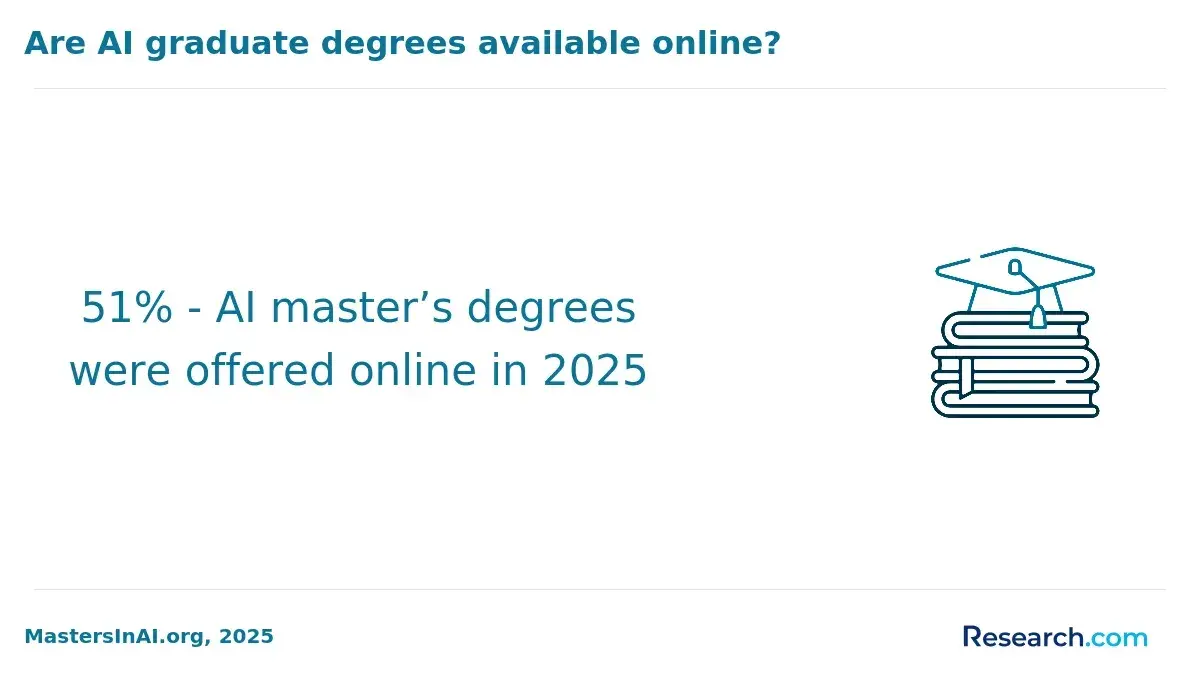
Many AI doctorate programs offered online include mandatory residency or in-person research components, making fully online options rare. These residency requirements support advanced research collaboration and access to specialized labs. Typically, students must participate in campus visits lasting from a few days to several weeks annually to engage in hands-on experimentation, receive faculty mentorship, and join seminars or workshops.
Residency formats can vary widely:
- Annual on-site research residencies of 2 to 4 weeks
- Multiple short visits per semester
- Extended stays during dissertation phases
Hybrid programs commonly combine asynchronous coursework with periodic in-person engagements, such as defending proposals or presenting research findings on campus. Prospective students should verify residency policies early, as these influence scheduling, funding, and travel logistics, especially for working professionals or international attendees.
Accreditation and state authorization also affect enrollment eligibility through organizations like NC-SARA, which manages interstate online education compliance. NC-SARA's annual report highlights over 1.3 million interstate online enrollments, reflecting the growing acceptance of regulated distance education while doctoral programs maintain essential in-person research components.
What coursework and research expectations are standard in AI PhD programs?
AI PhD programs combine advanced coursework with demanding research contributions. Core classes typically cover machine learning, deep learning, natural language processing, computer vision, and robotics, equipping students with essential theory and practical skills. Additional topics often include statistics, algorithms, data mining, and AI ethics. Most programs require 2 to 3 years of coursework before students fully engage in research.
Research expectations are high, as candidates must produce original work suitable for publication in peer-reviewed journals or conferences. According to Stanford's AI Index Report 2024, the volume of newly published AI papers continues to rise, highlighting the competitive environment students face. PhD candidates are generally expected to publish multiple articles during their studies.
Students often present research proposals early and must pass preliminary or qualifying exams based on coursework and research progress. Collaboration with faculty and research groups is crucial. Participation in conferences and workshops is encouraged to build networks and gain feedback.
Key components of AI PhD programs include:
- 2-3 years of advanced AI-focused coursework covering diverse subfields.
- Significant original research output measured by peer-reviewed publications.
- Early validation of research potential via proposals and exams.
- Active engagement with faculty and the scientific community through collaboration and conferences.
How long do AI doctorate programs take, and how does funding work?
AI doctorate programs generally require 4 to 6 years to complete, with full-time students averaging about 5 years. Some programs offer accelerated paths for candidates with relevant master's degrees or significant research experience. Others may extend timelines for those engaged in part-time study or complex projects.
Funding is mainly through research assistantships, teaching assistantships, and fellowships. According to NSF's Survey of Earned Doctorates, most U.S. research doctorate recipients rely on institutional funding rather than personal finances, highlighting the importance of university and grant-based support.
Typical funding packages include stipends ranging from $30,000 to $40,000 annually plus full tuition waivers. Fellowships offer merit-based support with higher stipends and no work obligations but are competitive. Securing multi-year funding is important to avoid financial disruptions, and many programs require annual academic progress reviews.
Additional support may come through supplemental grants or travel awards for conferences. International students should check visa restrictions and eligibility for internal funding. Careful financial planning is essential, as overreliance on loans or personal savings can be burdensome over extended program durations.
What careers can you pursue with an AI doctorate, and which industries hire?
With a doctorate in artificial intelligence, graduates enter diverse roles spanning research, development, and leadership. Popular careers include AI research scientist, machine learning engineer, data scientist, computational neuroscientist, and AI ethics specialist. Doctoral talent often leads AI innovation teams or designs sophisticated algorithms within software companies, autonomous vehicle manufacturers, and robotics firms.
Beyond technology, the healthcare sector demands expertise for medical imaging analysis, personalized medicine, and drug discovery. Financial institutions apply AI for algorithmic trading, fraud detection, and risk management. Manufacturing and automotive industries leverage AI to optimize supply chains, enhance quality control, and perform predictive maintenance.
The World Economic Forum's Future of Jobs Report 2025 highlights AI and big data as among the fastest-growing global job categories, signaling robust demand for doctoral-level researchers and leaders. Opportunities exist in private industry and government labs focused on climate modeling, energy, and national security.
Key employer sectors include:
- Technology firms specializing in AI-driven software and hardware
- Healthcare organizations advancing AI diagnostics
- Financial services utilizing AI for investment and compliance
- Manufacturing and automotive companies employing AI for automation
- Academic and government institutions conducting foundational AI research
Targeting roles that emphasize innovation, leadership, and collaboration ensures strong career growth.
What salary ranges and job outlook are typical for AI PhD graduates?
AI PhD graduates enter a job market with high salaries and strong growth prospects. The U.S. Bureau of Labor Statistics reports a median annual wage of $145,080 for Computer and Information Research Scientists, a category that often includes AI doctorate holders. This premium reflects the demand for expertise in AI algorithms, machine learning, and data analytics.
Employment in this field is expected to grow 23% from 2022 to 2032, much faster than the average for all jobs. Growth is fueled by AI's expanding role in sectors like healthcare, finance, autonomous vehicles, and cybersecurity. Opportunities also exist in government research labs and academia.
Salary varies by sector, location, and specific role. For example, AI researchers in tech hubs such as San Francisco or Boston often earn over $170,000 annually. Academic and government positions may offer lower starting salaries but provide benefits like tenure and access to research funding.
AI PhD holders can pursue diverse career paths including applied research, data science leadership, and AI ethics, all offering competitive compensation. Navigating job offers wisely requires understanding both industry-specific and regional salary trends.
Overall, AI doctorate holders benefit from lucrative salaries and rapid job market expansion, highlighting the significant value of advanced skills in this field.
Other Things You Should Know About Artificial Intelligence
As of 2027, many AI doctorate programs require applicants to submit GRE scores. However, some institutions are waiving this requirement, focusing more on academic performance, research experience, and relevant skills. Additionally, international applicants may need to provide TOEFL or IELTS scores to demonstrate English language proficiency.
Admissions to artificial intelligence PhD programs are highly competitive due to increasing demand and the field's rapid growth. Applicants typically need strong academic records, relevant research experience, and a clear research proposal to stand out. The selection process often involves evaluating an applicant's fit with faculty interests and available research funding.
Having published papers or presented at conferences can significantly strengthen an application to an artificial intelligence doctorate program. It demonstrates the candidate's ability to conduct rigorous research and contribute original findings to the field. While not strictly required, such accomplishments are highly valued by admissions committees when reviewing prospective students.
Yes, interdisciplinary skills are increasingly important in artificial intelligence doctoral studies. Combining expertise in areas like statistics, cognitive science, neuroscience, or ethics can provide broader perspectives and enhance research quality. Doctoral candidates benefit from collaboration across disciplines to address complex AI challenges effectively.
References
- Ph.D. in Artificial Intelligence https://www.ucumberlands.edu/academics/executive/phd-artificial-intelligence
- ELLIS PhD Program: Call for Applications 2025 https://ellis.eu/news/ellis-phd-program-call-for-applications-2025
- 16 Artificial Intelligence Career Paths https://www.calmu.edu/news/artificial-intelligence-career-paths
- Machine Learning PhD Applications — Everything You Need to Know — Tim Dettmers https://timdettmers.com/2018/11/26/phd-applications/
- Online Doctorate (DBA) in Artificial Intelligence (AI/ML)| IMET https://imetworldwide.com/dba-in-artificial-intelligence-usa/
- Distinguishing the NAAI Online PhD Program from Traditional Doctoral Education https://thenaai.org/index/index/newsdata1/id/997.shtml
- How to Pursue a PhD in Artificial Intelligence by 2026 [Step-by-Step Guide] https://cambridgedissertation.co.uk/blog/how-to-pursue-a-phd-in-artificial-intelligence-by-2026-step-by-step-guide/
- The Artificial Intelligence (AI) Residency Program - Meta AI https://ai.meta.com/join-us/residency-program/
- PhD Applications https://www.mpi-inf.mpg.de/departments/computer-vision-and-machine-learning/application/phd-applications
- My Journey to PhD Admission in Artificial Intelligence | Towards Data Science https://towardsdatascience.com/my-journey-to-phd-admission-in-artificial-intelligence-35593adb923f/