2027 Where AI Graduates Earn the Highest Salaries

Co-Founder and Chief Data Scientist
Many graduates face uncertainty about which regions or institutions offer the best financial returns in the ai field. Choosing the right path affects lifetime earnings and career progression, especially for those switching from unrelated disciplines. Without clear data, potential graduates risk investing time and money into programs that may not maximize their salary potential. Understanding where ai graduates command the highest salaries can guide informed decisions and optimize career outcomes. This article examines key locations and sectors that reward ai graduates with top compensation, providing insights to help readers strategically plan their education and career transitions.
Key Things You Should Know
- In 2026, AI graduates in the U.S. earn median starting salaries between $90,000 and $120,000, reflecting a 10% increase from 2024 due to growing industry demand.
- Top-paying states include California, Washington, and Massachusetts, where average AI-related roles exceed $130,000 starting salary due to tech sector concentration.
- Advanced degrees in AI boost earning potential by 25% compared to bachelor's holders, highlighting education's impact on salary in competitive tech markets.
Which artificial intelligence degrees lead to the highest starting and mid-career salaries?
The highest paying artificial intelligence degrees in the US often stem from computer science, machine learning, and data science programs with AI specializations. These degrees typically offer starting salaries above $90,000 due to strong foundations in programming, algorithms, and systems design. Degrees focused on machine learning engineering or deep learning equip students with skills in neural networks and pattern recognition, leading to mid-career salaries ranging from $130,000 to $160,000.
Degrees that emphasize applied mathematics, statistics, and data engineering also produce professionals with lucrative opportunities, especially when combined with practical AI techniques like natural language processing or computer vision. These interdisciplinary skills are highly valued for solving complex industry problems.
Employers also appreciate candidates with knowledge in ethical AI, robotics, or human-computer interaction, but these fields often enhance rather than replace core technical degrees. Hands-on experience such as internships or research in AI labs substantially improves salary prospects.
According to Qubit Labs' AI Engineer Salaries report, AI engineers in the United States earn an average of $147,524 annually, the highest globally. Canada and Australia follow with $129,850 and $128,400 respectively, highlighting the advantages of studying in the U.S. For those considering the best AI degrees for top salary growth, programs offering extensive AI coursework combined with practical training are ideal.
For more details on career paths, see what can you do with an applied artificial intelligence degree.
- highest paying artificial intelligence degrees in the US
- best AI degrees for top salary growth
In which U.S. cities and states do AI graduates earn the most money?
In 2026, lead AI engineers in San Francisco earn the highest salaries among major U.S. tech hubs, with monthly earnings reaching up to $20,300. This top-paying city reflects a strong concentration of tech companies willing to offer premium wages, creating substantial regional pay disparities. Seattle, New York, and Boston also rank among the best-paying states for AI graduates, with Seattle's salaries about 10-15% lower than San Francisco but still above the national average.
States excelling in AI job markets often combine access to renowned universities with thriving tech ecosystems. California leads due to Silicon Valley's dominance, followed closely by Washington, Massachusetts, and New York. Graduates in these regions benefit from advanced technological environments and higher salary potentials, making location a critical factor for career planning.
Comparing international salaries further highlights this trend. For instance, senior AI professionals in Mexico earn around $6,700 per month, less than one-third of San Francisco's pay, underscoring the premium placed on AI talent in leading U.S. cities.
Prospective students seeking to maximize earnings should also consider cost of living versus salary, as higher wages in cities like San Francisco often offset greater expenses. For those exploring educational paths, reviewing the best online AI degree programs offers flexible options to enter this competitive field.
Key considerations for aspiring professionals include:
- Top U.S. cities for ai graduate salaries offer diverse opportunities and pay scales.
- Best-paying states for ai graduates tend to align with strong tech and academic institutions.
What AI job titles and industries pay the highest salaries to recent graduates?
Entry-level roles offering the highest salaries in AI include machine learning engineer, data scientist, and AI research scientist. These positions, particularly in the US, command starting salaries ranging from Rs 40 lakh to Rs 60 lakh annually, especially in industries like finance, healthcare, and technology. Recent graduates aiming for the highest paying AI job titles for recent graduates in the US should focus on sectors such as finance and fintech, healthcare, and e-commerce, where AI optimizes everything from risk assessment to personalized medicine and supply chains.
Industries offering top salaries for AI entry-level positions in America also include technology firms specializing in natural language processing, computer vision, and autonomous systems.
- Finance and fintech, harnessing AI-driven trading and risk models.
- Healthcare, with AI-powered diagnostics and drug discovery.
- Technology companies advancing robotics and NLP.
- E-commerce platforms improving logistics and customer experience.
Advanced education plays a key role in salary potential. According to EnvisionEdu's 2026 AI & Data Science jobs abroad salary guide, a one-year master's in data science from the UK can recoup Rs 35-50 lakh tuition and living costs within 12-18 months thanks to starting salaries between Rs 40-60 lakh. Graduates should consider upskilling in deep learning frameworks, cloud computing, and domain knowledge to increase employability in this competitive market.
For those pursuing academic advancement, exploring an online PhD artificial intelligence program can further boost prospects and career growth in AI-driven fields.
What degree level in artificial intelligence (bachelor's, master's, PhD) maximizes earnings?
Master's degrees in artificial intelligence consistently lead the degree levels in artificial intelligence with highest salaries in the US, balancing advanced technical expertise and practical skills valued by employers. The 2026 AI Salary Guide from Pikr reveals AI positions offer about 28% higher pay than traditional software roles globally, with mid-level AI engineers-typically holding master's degrees-experiencing the fastest salary growth at 9% year-over-year.
Bachelor's degree holders usually start in junior roles like data analysts, with slower salary progression. PhD graduates, while specialized in research and academic roles, often face narrower job markets and lower early-career pay, reflecting masters versus phd earnings in artificial intelligence careers where master's graduates see quicker financial returns in industry.
Choosing a master's degree gives practical benefits including:
- Access to high-paying roles such as AI engineer, machine learning specialist, or data scientist
- Faster career advancement to mid-level responsibilities
- Broader employment opportunities in sectors like finance, healthcare, and technology
Students exploring options can also consider pursuing the fastest cyber security degree to complement AI skills and enhance their tech profiles for diversified career paths.
How do online AI programs compare with campus-based programs for salary outcomes?
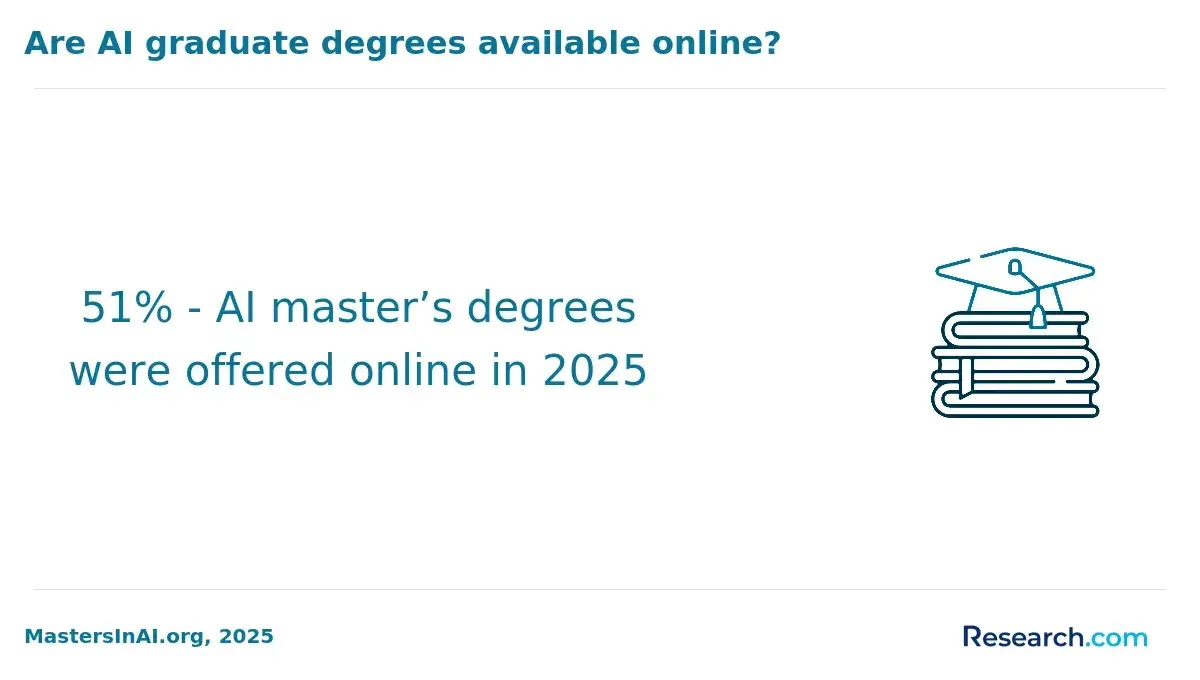
Online ai programs deliver salary outcomes comparable to campus-based programs when accredited and respected. Employers now prioritize skills and certifications verified by rigorous coursework and portfolios over the study format alone. Graduates from top-tier online ai master's or certification programs offered by reputable universities often command salaries within 5-10% of their on-campus peers.
The main advantage of campus programs lies in networking, internships, and research opportunities that often lead to higher starting salaries, particularly in competitive U.S. markets. Access to faculty mentorship and industry connections can translate into roles with more leadership responsibilities and faster wage growth. Conversely, online learners gain flexibility and may leverage existing work experience to negotiate higher salaries quickly after graduation.
- Program reputation
- Alumni outcomes
- Employer partnerships
- Alignment with career goals
International data reveals other factors affecting salary, such as location and market demand. For example, data scientists and AI engineers in Switzerland earn over $140,000 annually, according to MBA ESG's 2026 ranking. Prospective students, especially working professionals, might benefit from online programs' flexibility, while fresh graduates may prefer the networking of campus programs.
Both paths require robust, demonstrable skills to maximize compensation in this high-demand field.
Which accredited U.S. universities and online schools offer top-earning AI programs?
Top-tier ai programs in accredited U.S. universities and online schools are closely linked to institutions that integrate strong technical curricula with applied research opportunities. Prestigious universities like Carnegie Mellon University, Massachusetts Institute of Technology, Stanford University, and the University of California, Berkeley continually produce professionals earning among the highest salaries in the nation. Their programs focus on machine learning, robotics, natural language processing, and computer vision-skills highly sought by leading technology companies and research organizations.
Online education options are increasingly popular for balancing competitive salaries with flexible learning. Schools such as Georgia Tech and the University of Illinois Urbana-Champaign offer accredited online master's degrees in computer science with specialized ai tracks designed for working professionals. Columbia University's online AI certificate programs provide targeted skill development without the need for full degree enrollment.
Salary progression in ai roles varies by experience. According to the Dice Tech Salary Report 2026 summarized by LiftmyCV, entry-level positions start near $80,000 annually, while senior specialists can earn over $200,000, with an average around $160,000. This significant growth highlights the importance of choosing programs that combine rigorous theoretical knowledge with practical, hands-on experience.
Prospective students should target universities with active AI research centers or faculty publishing in leading conferences. Evaluating internship availability, project involvement, and industry partnerships can greatly impact post-graduation earning potential and career opportunities.
What admissions requirements do high-paying AI degree programs typically have?
High-paying artificial intelligence degree programs demand strong academic credentials and demonstrated technical skills. Applicants typically need a bachelor's degree in computer science, engineering, mathematics, or related STEM fields. Competitive programs often require a minimum GPA of 3.5 and may ask for GRE scores, emphasizing quantitative reasoning to showcase problem-solving abilities.
Proficiency in programming languages like Python, C++, or Java is essential, along with experience using machine learning frameworks such as TensorFlow or PyTorch. Many programs request a statement of purpose highlighting prior AI-related research, internships, or projects. Letters of recommendation from academic or industry professionals who can verify technical expertise and work ethic are standard components.
Hands-on experience with AI algorithms, data analysis, or published research can strengthen an application. Practical knowledge in math-intensive areas like linear algebra, statistics, and optimization is often evaluated through coursework or placement exams. A portfolio showcasing problem-solving on real-world AI challenges also adds value.
These rigorous admissions standards correspond with data indicating that senior AI engineers in the U.S. earn between $13,333 and $20,833 per month, according to RemotelyTalents' 2025 salary benchmarks. Meeting or exceeding these criteria is vital for those seeking programs with strong industry connections and high salary potentials.
What core courses and technical skills correlate most with higher AI salaries?
Data from Coursera's 2026 AI salary guide, using Glassdoor and BLS data, reveals a median base pay of $134,188 for AI engineers in the U.S.-approximately 2.7 times higher than the overall workforce median of $49,500. This significant salary premium highlights the importance of acquiring specific core courses and technical skills aligned with higher earnings.
Graduates who excel in machine learning, deep learning, and data structures are among the top earners. Key academic foundations include algorithms, statistical modeling, and probability theory, which are crucial for building effective predictive models and managing complex data sets.
Practical experience with programming languages such as Python and R, alongside popular AI frameworks like TensorFlow and PyTorch, is highly valued. Skills in natural language processing (NLP) and computer vision bring salary advantages, particularly in industries like healthcare and autonomous technology.
Additional expertise in cloud computing platforms (AWS, Azure) and big data tools (Apache Spark, Hadoop) complements AI knowledge, supporting model deployment and scalable infrastructure integration. Familiarity with API development and containerization further enhances marketability.
Specialized roles increasingly require understanding reinforcement learning and neural network architectures, including convolutional and recurrent neural networks.
- Strong theoretical knowledge combined with hands-on skills drives demand in AI engineering.
- Targeted education and applied expertise contribute greatly to earning potential.
What is the job outlook and demand forecast for AI careers in the United States?
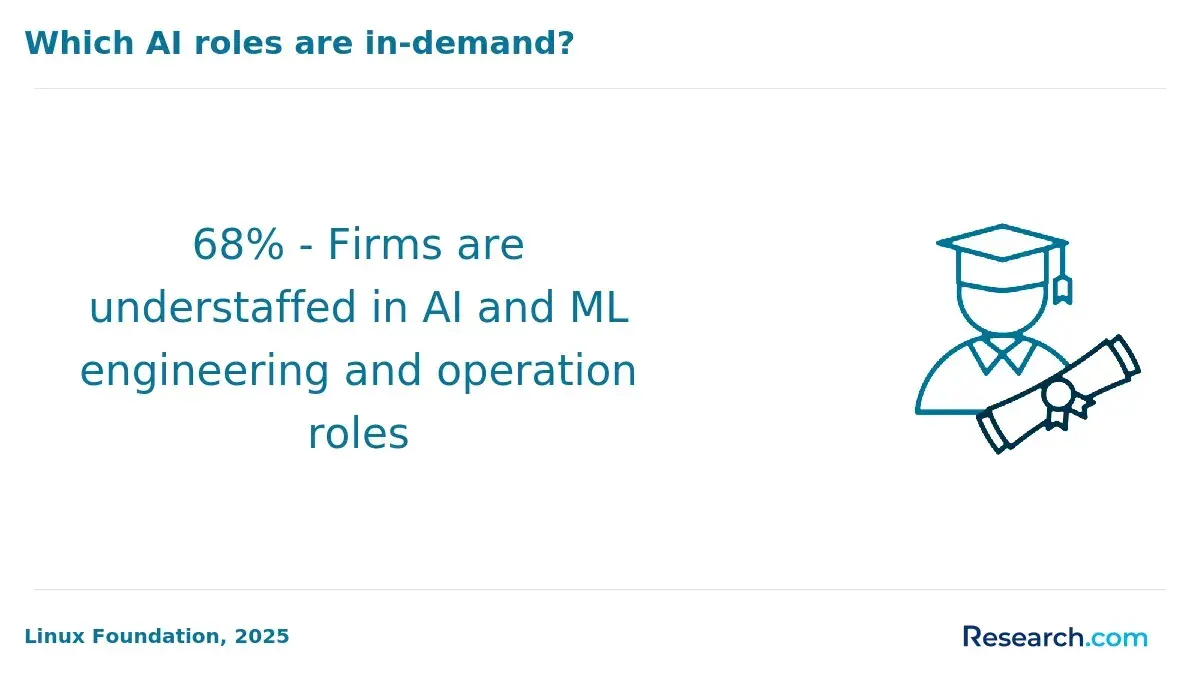
The United States job market for artificial intelligence careers is experiencing robust growth, with demand significantly outpacing the supply of skilled professionals. According to the World Economic Forum's Future of Jobs 2025 report, as cited in EnvisionEdu's 2026 analysis, demand for ai and machine learning specialists is projected to increase by 40% by 2027. This surge leads to persistent talent shortages, creating plentiful opportunities for both new graduates and experienced candidates.
Employers across sectors such as technology, healthcare, finance, and manufacturing urgently seek ai specialists to develop cutting-edge models, automate workflows, and enhance decision-making through data insights. Common roles include machine learning engineers, data scientists, ai research scientists, and software developers specializing in ai. Candidates can pursue focused areas like natural language processing, computer vision, or robotics to fit their interests.
Competitive salaries and fast career advancement reflect the scarcity of qualified talent. Staying updated with technologies and mastering programming languages like Python, TensorFlow, and PyTorch are essential. Gaining practical experience via internships, open-source projects, or research strengthens a candidate's job prospects.
Even amid economic shifts, demand for professionals capable of applying ai solutions in dynamic industries remains strong. Strategic skill development aligned with market needs delivers long-term career benefits for students and professionals exploring artificial intelligence education and growth.
How can prospective students choose a reputable, accredited AI program aligned with salary goals?
Accreditation from recognized bodies like ABET or regional agencies is essential for AI programs, ensuring they meet industry standards and boost employability. Advanced degrees, such as master's or PhDs, generally lead to higher salaries. According to Salary.com data compiled by Qubit Labs, AI engineers with PhD/MD or equivalent credentials earn between $155,193 and $165,936 annually in the U.S., compared to $146,716-$158,116 for those with only a high-school diploma or technical certificate, reflecting a premium of around $8,000 to $9,000 for advanced qualifications.
When evaluating programs, consider faculty expertise, research output, and the school's connections with leading tech companies. Strong internship and job placement rates highlight practical value, especially if the program has partnerships with major AI employers, creating pathways to higher-paying roles.
Focus on curricula that cover emerging subfields like machine learning, natural language processing, and computer vision to prepare for specialties with premium salaries. Conducting a cost-benefit analysis is wise, as higher tuition can be justified by measurable salary gains post-graduation. Regional salary data can help align program choices with local job markets.
Finally, seek alumni testimonials and career outcomes data to verify how well a program bridges education and income goals in AI careers.
Other Things You Should Know About Artificial Intelligence
Critical skills for advancing in artificial intelligence include proficiency in programming languages such as Python and R, understanding of machine learning algorithms, and expertise in data analysis. Additionally, strong foundations in mathematics, particularly linear algebra and calculus, and experience with neural networks improve career progression opportunities. Soft skills like problem solving and communication also play a key role in successful collaboration and leadership within AI teams.
In 2027, top countries for AI graduates with high-paying opportunities include the United States, Canada, and Germany. These nations offer robust tech ecosystems, investment in AI research, and competitive salaries, making them attractive destinations for AI professionals seeking career growth and lucrative positions.
Beyond the core technology sector, artificial intelligence professionals find growing opportunities in healthcare, finance, automotive, and manufacturing industries. Healthcare uses AI for diagnostics and personalized medicine, finance applies AI for fraud detection and trading algorithms, while automotive companies develop autonomous driving systems. This diversity allows AI graduates to pursue specialized roles tailored to various industry needs.
Certifications can enhance an AI professional's credentials by validating specific skills and knowledge in areas like machine learning, deep learning, or cloud AI services. While not always mandatory, recognized certifications from reputable organizations or tech companies can improve job prospects and salary potential. They provide a way to stay current with evolving AI technologies and industry standards.
References
- How Online AI Master's Degrees Affect Salary in 2026 https://www.nexford.edu/insights/how-online-ai-masters-degrees-affect-salary
- Top AI skills engineers should learn in 2026 https://www.morson.com/blog/top-ai-skills-engineers-should-learn-2026
- AI Programs and Courses | DeVry University https://www.devry.edu/online-programs/area-of-study/artificial-intelligence.html
- Highest Paying AI Jobs in 2026 (Salaries, Skills & How to Get Hired) https://everyonewhocode.com/highest-paying-ai-jobs-in-2026-roles-salaries-skills-and-certifications/
- Top AI Courses After 12th to Kickstart Your Tech Career https://www.msruas.ac.in/blog/lead-the-future-of-artificial-intelligence-with-top-ai-courses-after-12th
- Artificial Intelligence Degree Career Outcomes: Jobs, Salaries & Growth https://hakia.com/degrees/artificial-intelligence/career-outcomes/
- Top 26 Careers in AI and Machine Learning: Roles, Salaries, Skills, and 2026 Outlook - AscendurePro https://ascendurepro.com/careers-in-ai-and-machine-learning/
- AI Skills Demand in the U.S. Job Market (2026) | Gloat https://gloat.com/blog/ai-skills-demand/
- AI Careers: Roles, Salaries, and Certifications to Get You Hired - ONLC https://www.onlc.com/blog/ai-careers-roles-salaries-certifications/
- Can Online Colleges Offer Competitive Career Outcomes? https://www.onlineu.com/magazine/popular-online-schools-career-outcomes