2027 Best AI Master's Degrees for Responsible AI Careers

Co-Founder and Chief Data Scientist
Many professionals with degrees outside STEM fields struggle to find graduate programs that provide a credible pathway into the evolving ai industry. The rapid integration of ai into diverse sectors creates demand for specialists who understand ethical implications and responsible development practices. Without targeted education, aspiring practitioners risk entering the field unprepared to handle complex social and regulatory challenges. This challenge is especially acute for those needing flexible, accredited options to balance career transitions with ongoing commitments.
This article reviews leading master's degrees designed to equip students with practical skills and a strong foundation in responsible ai development, helping guide informed educational decisions.
Key Things You Should Know
- Master's programs in responsible Artificial Intelligence emphasize ethics, fairness, and transparency, preparing over 60% of graduates for AI governance and policy roles by 2027.
- U.S. universities increasingly integrate hands-on AI ethics labs and interdisciplinary collaboration, reflecting a 45% rise in applied curricula since 2024.
- Industry demand for responsible AI experts grows 30% annually, driving a focus on explainability, bias mitigation, and regulatory compliance in top AI master's degrees.
What are responsible AI careers, and how does a master's degree prepare you?
Careers in responsible AI focus on designing and managing AI systems that uphold ethical standards, fairness, transparency, and legal compliance. Professionals in this field, including AI ethicists, governance specialists, and data privacy officers, work to ensure AI technologies avoid bias, protect privacy, and align with societal values. A responsible ai career path with a master's degree typically requires expertise in both technical AI and regulatory frameworks, as well as skills in social impact assessment and risk management.
Graduate programs often combine computer science, ethics, law, and public policy to prepare students comprehensively. Courses cover AI ethics, algorithmic bias mitigation, data governance, and human-centered AI design. Hands-on projects may involve creating bias detection tools or establishing transparent AI auditing procedures. Such training equips graduates to embed responsible practices throughout the AI lifecycle.
Understanding regulatory environments like GDPR and the AI Act is crucial. Communication skills are also emphasized to work effectively with engineers, legal experts, and policymakers. This preparation aligns well with how a master's degree prepares you for responsible ai jobs by addressing multidisciplinary challenges and compliance requirements.
Recent trends show rapid growth in roles related to AI governance and ethical AI development. According to LinkedIn's Future of Work report, there is a significant rise in demand for professionals skilled in responsible development. Students interested in this field may also explore applied artificial intelligence degree to deepen technical expertise and expand career opportunities.
Which AI master's programs are best for responsible AI and governance roles?
Top AI master's programs for responsible AI and governance roles integrate technical skills with policy, ethics, and regulatory frameworks. These programs address the growing institutional demand; according to the OECD AI Policy Observatory, over 70 countries had national AI strategies by 2024, underscoring the urgent need for governance talent. Leading universities such as Stanford and MIT emphasize interdisciplinary training combining machine learning with law, ethics, and social impact. For example, Stanford's Master of Science in Computer Science offers electives in AI ethics and policy while MIT's Media Lab includes AI governance in its research and coursework.
Programs like Carnegie Mellon's Master of Science in Public Policy and Management focus on policy design, risk assessment, and regulatory compliance to develop expertise in AI governance frameworks. Similarly, the University of Washington's Master's in Human Centered Design & Engineering prepares graduates to align AI development with human values and societal needs. These Responsible AI master's programs in North America are especially valuable for those seeking leadership roles in shaping AI policy.
Key features to seek in the best AI governance graduate degrees include:
- Courses on AI ethics, fairness, transparency, and accountability
- Collaboration with law, public policy, or social science departments
- Research opportunities in AI safety, social impact, and regulation
- Exposure to AI strategy formulation by governments or international bodies
Professionals benefit from programs balancing technical depth with legal and ethical literacy. Specialized dual degrees combining AI and law or AI and public policy provide distinct advantages for navigating regulatory complexities and driving responsible implementation. For those interested in related STEM fields, exploring options such as a mechanical engineering program online can complement AI expertise.
How do you choose an accredited AI master's program for ethical AI work?
Choosing an accredited AI master's program for ethical careers involves verifying regional accreditation recognized by the U.S. Department of Education, which guarantees quality standards and access to federal financial aid. Focus on programs that embed ethics, fairness, and social responsibility into their curriculum, with courses covering algorithmic bias, AI governance, and data privacy to prepare students for real-world challenges. This approach aligns with how to find accredited AI master's programs for ethical careers effectively.
Faculty expertise is crucial-look for instructors engaged in AI ethics research or collaborating on policy initiatives, as this enriches both learning and networking. Transparency in career outcomes also matters; according to the U.S. Department of Education College Scorecard, master's graduates often earn significantly more than bachelor's holders. Prioritize programs that provide up-to-date employment statistics and salary data to assess your return on investment.
Consider flexible program formats such as online, part-time, or hybrid options that suit working professionals. Strong industry connections, including partnerships with tech companies or ethics-centered nonprofits, can offer internships and project experience. Alumni often succeed in roles like AI ethics specialist or compliance officer. This knowledge is beneficial when choosing the best accredited master's degree for responsible artificial intelligence work.
Look for multidisciplinary programs combining computer science, law, and social sciences to ensure a well-rounded ethical AI education. For related areas, explore game design online as an example of affordable, accredited learning paths in technology fields.
What curriculum and courses matter most for responsible AI specialization?
Curricula for a responsible artificial intelligence curriculum and core courses must balance technical expertise with ethical considerations. Core subjects typically include machine learning algorithms, fairness in AI, bias mitigation, and data ethics. Hands-on training in model interpretability and explainability helps students grasp how AI decisions affect diverse populations. Practical skills in AI governance, risk assessment, and auditing are increasingly important. The Stanford HAI AI Index Report shows industry-built AI models outpace academic ones by over fivefold, underscoring the need for graduates skilled in managing deployment risks and compliance.
Courses often address key regulations like GDPR and the AI Act, alongside frameworks for responsible innovation. Training in data privacy, security, and transparency enables students to anticipate and mitigate AI misuse. Interdisciplinary programs that combine computer science with philosophy, law, and social sciences enrich understanding. For example, ethical AI seminars paired with workshops on adversarial robustness promote balanced perspectives.
Master's degree courses for ethical artificial intelligence careers frequently include capstone projects or internships, allowing students to apply governance policies or audit live systems.
Essential curriculum topics include:
- Algorithmic bias detection and correction
- Audit methodologies for AI systems
- Governance and regulatory compliance
- Privacy-preserving machine learning
- AI model transparency and explainability
For students seeking cost-effective options, the cheapest masters in data science programs often integrate responsible AI content, providing a solid foundation for accountability and transparency careers in AI.
What prerequisites and admission requirements do AI master's programs typically require?
Master's programs in artificial intelligence typically expect applicants to have a strong foundation in STEM fields such as computer science, engineering, mathematics, or statistics. Candidates from other backgrounds may be considered if they demonstrate proficiency in essential technical skills.
Common prerequisites include coursework in programming languages like Python, Java, or C++, along with linear algebra, calculus, probability, statistics, and data structures. Depending on the program's focus, knowledge in machine learning, algorithms, or databases may also be required.
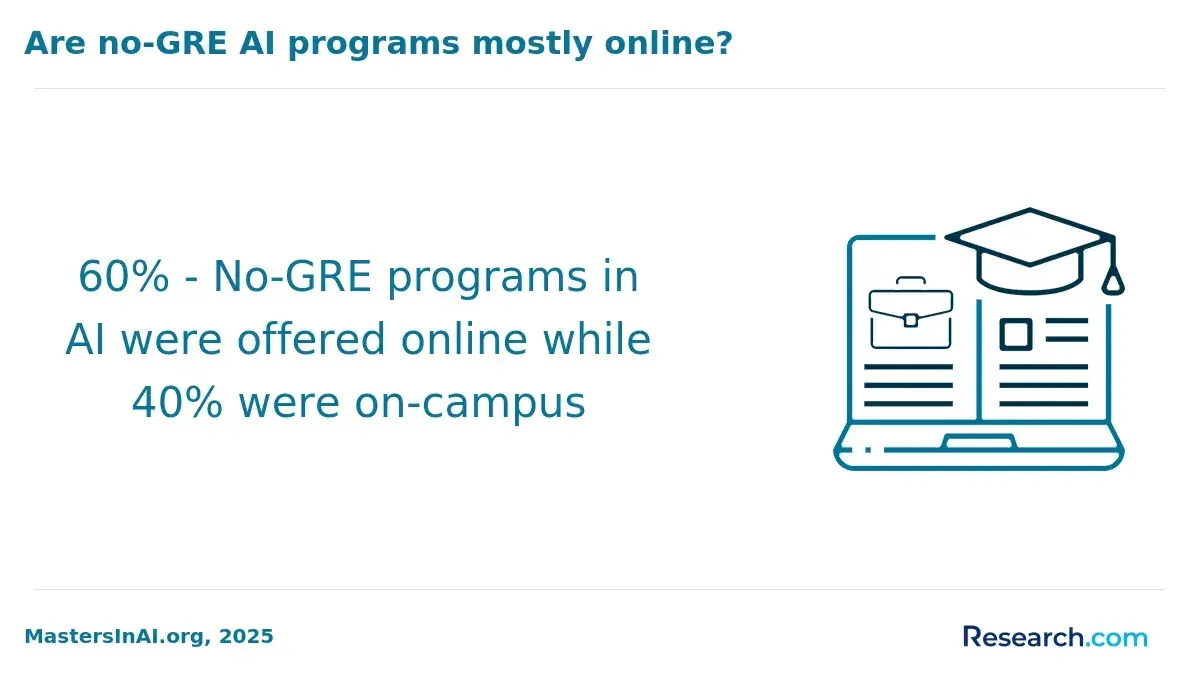
Many schools require or recommend standardized tests such as the GRE, though some have adopted test-optional policies to broaden access. Letters of recommendation from academic or professional supervisors and a compelling statement of purpose outlining AI career goals and research interests are important components of the application.
Relevant work experience in software development, data science, or research can enhance an application but isn't always mandatory. Bridge courses are sometimes available for students moving from non-technical fields.
The Council of Graduate Schools documents that AI-related master's programs face increasing application volumes, raising competition. Prospective students should carefully review program-specific requirements which may specify programming languages or foundational courses. Early preparation and thorough documentation of experience are key to success in the admissions process.
How do online AI master's degrees compare with on-campus programs for quality?
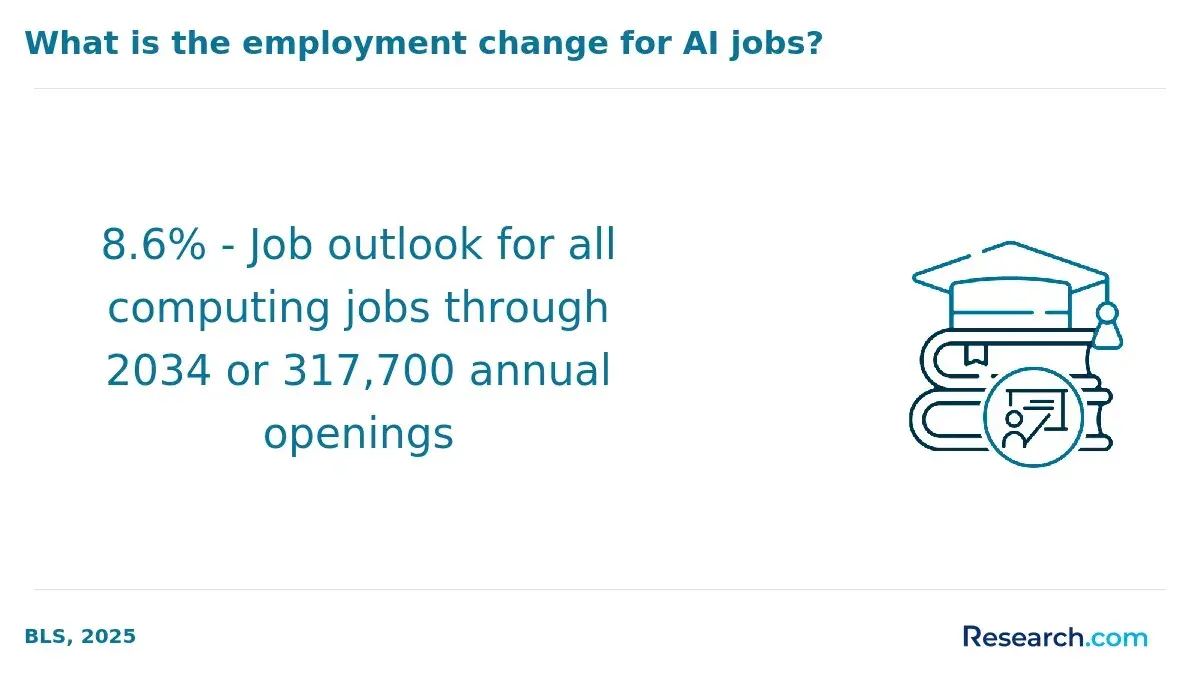
Advancements in digital learning have made online AI master's degrees comparable in quality to on-campus programs. Accredited institutions now offer fully online degrees featuring the same coursework, faculty, and evaluation standards as their traditional counterparts. According to the National Center for Education Statistics, IPEDS (2024), millions of students enroll in distance-education programs annually, reflecting strong acceptance of online formats in graduate technical fields.
Prospective students should evaluate program accreditation, faculty expertise, and curriculum rigor rather than focusing solely on delivery mode. Leading programs utilize synchronous classes, recorded lectures, and virtual labs to match or even enhance the on-campus experience. Georgia Tech and Stanford, for example, provide online AI master's degrees with equivalent rigor, including access to research projects and collaboration with industry partners.
Online students face challenges such as reduced face-to-face networking and limited hands-on lab time but often benefit from virtual collaboration tools, cloud-based AI resources, and intensive capstone projects. Flexibility in asynchronous study also supports those balancing work or family commitments.
Important criteria to assess quality include:
- Curriculum aligned with AI ethics and responsible AI standards
- Access to current AI computing resources and datasets
- Faculty with strong credentials and active research involvement
- Opportunities for internships or practicum experiences
- Robust technical support and peer collaboration platforms
Graduates from programs meeting these standards are well-prepared for careers in responsible AI, whether trained online or on campus. Scrutinizing specific program offerings and outcomes remains essential to making an informed decision.
How long do AI master's programs take, and what do they cost?
Master's programs in artificial intelligence in the U.S. typically span 12 to 24 months. Full-time students usually complete the degree in about two academic years (four semesters), though accelerated options may finish within one year. Part-time and online formats allow working professionals to extend completion to three years or more. The length varies with curriculum design, including required courses, thesis projects, internships, or capstone experiences.
Tuition fees differ significantly by institution and residency status. OECD data shows international students often pay several times more than domestic students. In the U.S., annual tuition ranges from roughly $20,000 for in-state students at public universities to over $60,000 at elite private schools. Beyond tuition, students should factor in additional costs such as fees, living expenses, and materials, which can raise total spending by 30-50%.
Key considerations include:
- Confirming residency requirements early to access in-state rates.
- Exploring part-time or online AI master's programs that reduce living costs.
- Seeking scholarships and assistantships focused on AI fields to lower expenses.
Careful planning is essential to balance time and financial commitments effectively when pursuing advanced education in artificial intelligence.
What job titles can you pursue with a responsible AI-focused AI master's?
Graduates of responsible AI-focused master's programs can access diverse careers blending technical skills with ethical oversight. The World Economic Forum Future of Jobs Report (2025) highlights roles such as AI and Machine Learning Specialists as rapidly expanding through 2030. Careers in responsible AI emphasize fairness, governance, and compliance beyond development alone.
Popular roles include:
- AI Ethics Specialist - designing frameworks to prevent bias and ensure fairness in algorithms.
- Responsible AI Engineer - creating AI systems aligned with ethical and regulatory standards.
- AI Governance Lead - developing policies, auditing models, and managing organizational risks.
- Machine Learning Auditor - auditing AI implementations to identify and mitigate unintended impacts.
- AI Policy Advisor - influencing legislation and corporate policies on AI safety and impact.
- Fairness and Transparency Analyst - improving explainability and reducing discrimination in automated systems.
Graduates often serve sectors like healthcare, finance, and government, where AI accountability is essential. Their work may include assessing datasets for bias, establishing ethical guidelines, or ensuring compliance with regulations such as the EU's AI Act or proposed U.S. standards.
These careers demand strong technical expertise combined with knowledge of ethical AI frameworks and emerging compliance standards. Collaboration across data science, legal, and compliance teams is common, reflecting AI's inherently interdisciplinary nature.
Rising regulatory scrutiny and societal concerns about AI misuse continue to drive demand. Professionals equipped with both AI mastery and ethical insight are well positioned for impactful, sustained careers.
What salary ranges can you expect in responsible AI and AI governance roles?
Salary ranges for responsible AI and AI governance roles generally start around $100,000 and can exceed $160,000 annually, depending on experience, industry, and location. The U.S. Bureau of Labor Statistics reports that the median annual wage for "Computer and Information Research Scientists," a category encompassing many advanced AI roles, is above $140,000, serving as a benchmark for master's-level professionals.
Entry-level roles in smaller organizations or the public sector often offer salaries between $90,000 and $110,000. Mid-career professionals with 5 to 10 years' experience in AI governance, ethical compliance, or explainability usually earn $120,000 to $150,000. Senior positions integrating AI strategy, corporate governance, and ethics oversight command upwards of $160,000 to $180,000 annually.
Key factors affecting pay include industry sector-finance, healthcare, and technology companies tend to offer higher wages-and geographic location, with tech hubs like San Francisco and New York providing premium compensation. Roles requiring both technical expertise and legal or policy knowledge attract better pay due to their involvement in complex regulatory and public trust issues.
Professionals should target job titles such as AI ethics specialist, responsible AI engineer, or AI policy advisor. Employers committed to AI governance initiatives tend to invest more in these experts. Obtaining certifications in AI policy and governance, along with a master's degree in AI or data science, can further enhance salary prospects.
What certifications and standards support responsible AI careers after a master's?
Certifications and standards play a vital role for professionals pursuing careers in responsible Artificial Intelligence after completing a master's degree. The ISO/IEC 42001 standard, introduced in 2023 and broadly adopted thereafter, establishes an international benchmark for AI management systems. This certification demonstrates expertise in creating and managing auditable AI governance frameworks, meeting employer demands for transparency and accountability.
Important certifications include:
ISO/IEC 42001: Internationally recognized, focusing on AI system lifecycle management with emphasis on ethics, safety, and transparency.Certified Ethical Emerging Technologist (CEET) by IEEE: Highlights ethical principles and risk management in emerging technologies like AI.AI Ethics Certification by the Association for Computing Machinery (ACM): Covers real-world AI ethics application, bias mitigation, and inclusive design.
Alongside these credentials, gaining knowledge of legal frameworks like the EU AI Act or the U.S. Algorithmic Accountability Act enhances understanding of regulatory environments. Employers prioritize candidates familiar with global standards and ethical AI deployment practices.
ISO/IEC (2024) reports rapid uptake of the ISO/IEC 42001 standard by certification bodies, reflecting the increasing organizational demand for auditable AI governance. Master's programs integrating these certifications equip students to address challenges such as regulatory compliance and bias reduction while standing out in a competitive job market.
Other Things You Should Know About Artificial Intelligence
GRE scores are not universally required. Many 2027 AI master’s programs use test-optional admissions, but some still ask for GRE scores, especially for applicants with non-technical degrees. Schools usually specify minimum GPA, transcripts, recommendation letters, and English proficiency scores for international applicants.
AI master's programs in 2027 emphasize ethical considerations such as ensuring data privacy, preventing algorithmic bias, and addressing AI's societal impact. These issues are explored through courses on AI ethics, case studies, and projects supervised by experts in responsible AI practices.
Applicants should have a bachelor's degree in computer science or a related field, strong programming skills, and foundational knowledge in machine learning and data science to enroll in the 2027 best AI master's programs for responsible AI careers.
References
- Trustworthy and Responsible AI (TRAI) https://programmes.polytechnique.edu/en/master/all-msct-specializations/trustworthy-and-responsible-ai-trai
- 23 Top AI Certifications to Know | Built In https://builtin.com/articles/ai-certification
- Top AI Security Management Jobs and Career Paths You Can Pursue With an AAISM Certification https://destcert.com/resources/aaism-certified-jobs/
- New Careers in Responsible AI This Week! — All Tech Is Human https://alltechishuman.org/all-tech-is-human-blog/new-careers-in-responsible-ai-this-week-june-28
- Top 10 AI certifications and courses for 2025 https://www.techtarget.com/whatis/feature/10-top-artificial-intelligence-certifications-and-courses
- qa.com | Top AI Certifications - 2025 | QA https://www.qa.com/en-us/browse/certifications/ai-certifications/
- 16 Artificial Intelligence Career Paths https://www.calmu.edu/news/artificial-intelligence-career-paths
- 25 Best Master's in AI Programs - MastersInAI.org https://www.mastersinai.org/degrees/best-masters-in-artificial-intelligence/
- Master of Artificial Intelligence https://wscs.eu/master-of-artificial-intelligence/
- Online vs On-Campus Artificial Intelligence Degrees: Which Is Better? https://hakia.com/degrees/artificial-intelligence/online-vs-campus/