2027 Best AI Degrees With Undergraduate and Graduate Research Options

Co-Founder and Chief Data Scientist
Professionals with degrees outside STEM fields often face challenges when seeking to enter the artificial intelligence industry. Uncertainty about which academic programs offer both foundational knowledge and practical research opportunities can hinder career transitions. Many struggle to find accredited degrees that balance flexibility with rigorous curriculum tailored to non-technical backgrounds.
This makes it difficult to select programs that align with career goals in a rapidly evolving field. This article examines top undergraduate and graduate AI degree options that provide robust research paths, guiding readers to informed decisions for a successful pivot into artificial intelligence careers.
Key Things You Should Know
- Top U.S. universities now offer combined undergraduate and graduate AI degrees, integrating hands-on research to meet a 28% job growth forecast through 2031 by the Bureau of Labor Statistics.
- Interdisciplinary programs blend AI with data science, robotics, and ethics, reflecting industry demand for graduates skilled in both technical and societal AI challenges.
- Graduate research opportunities, including funded assistantships, are expanding, allowing students to contribute to cutting-edge AI advancements in areas like natural language processing and machine learning.
What is an AI degree, and how is it different from computer science?
An SI degree emphasizes the theory, development, and practical application of artificial intelligence technologies. Unlike traditional computer science degrees that cover broad topics like algorithms and systems design, ai degrees focus on machine learning, natural language processing, robotics, and computer vision. This specialization equips students with expertise in AI tools and frameworks required for advanced roles.
Programs often include core coursework on neural networks, deep learning models, and ethics in AI, while many computer science curricula offer these subjects only as electives or limited modules. Students benefit from ai degree programs with undergraduate and graduate research options to explore cutting-edge advances such as generative models, reinforcement learning, and AI interpretability, gaining hands-on experience with evolving AI challenges.
Lightcast reports a nearly fourfold jump in U.S. job postings seeking "generative AI" skills, highlighting a growing demand not fully addressed by typical computer science programs. This trend underscores the differences between ai degrees and computer science degrees, reinforcing the value of specialized AI education for careers in autonomous systems, AI-driven analytics, and intelligent agents.
Students interested in AI careers should seek programs with comprehensive AI-focused courses, faculty engaged in AI innovation, and access to real-world labs. The distinction can impact employability, as hiring managers increasingly prioritize demonstrated AI competence beyond general software skills. For insights into career outlooks and artificial intelligence degree salary, exploring dedicated resources is recommended.
Which colleges offer the best AI degrees with undergraduate and graduate research?
Top U.S. universities offering ai degrees with research opportunities are typically research-intensive institutions with significant R&D budgets. According to the National Science Foundation's Higher Education R&D Survey (HERD) 2024, these campuses invested approximately $108.8 billion in research during FY2023.
Leading examples include Carnegie Mellon University, Massachusetts Institute of Technology (MIT), Stanford University, and the University of California, Berkeley. These schools provide structured undergraduate programs that integrate early hands-on research experience, often starting in freshman or sophomore year.
The best colleges for ai degrees with undergraduate and graduate research cultivate advanced study and innovation in fields such as machine learning, robotics, and natural language processing. Carnegie Mellon's School of Computer Science, for example, offers specialized AI tracks for both undergraduate and graduate students, along with funded lab positions that promote early research involvement.
When choosing a program, prospective students should consider if it:
- Provides access to AI faculty engaged in high-impact research projects
- Offers funded research assistantships or internships within AI labs
- Maintains strong industry partnerships supporting applied AI innovation
Graduate students gain from interdisciplinary AI research centers like MIT's Computer Science and Artificial Intelligence Laboratory (CSAIL) and Stanford's emphasis on cross-department collaboration, enhancing research breadth. Selecting a program with both undergraduate and graduate research opportunities helps ensure comprehensive skill development and a competitive edge in AI careers. For those seeking to become a data scientist, valuable information can be found via a data scientist degree guide that highlights affordable and quality educational paths.
What can you do with an AI degree in the United States?
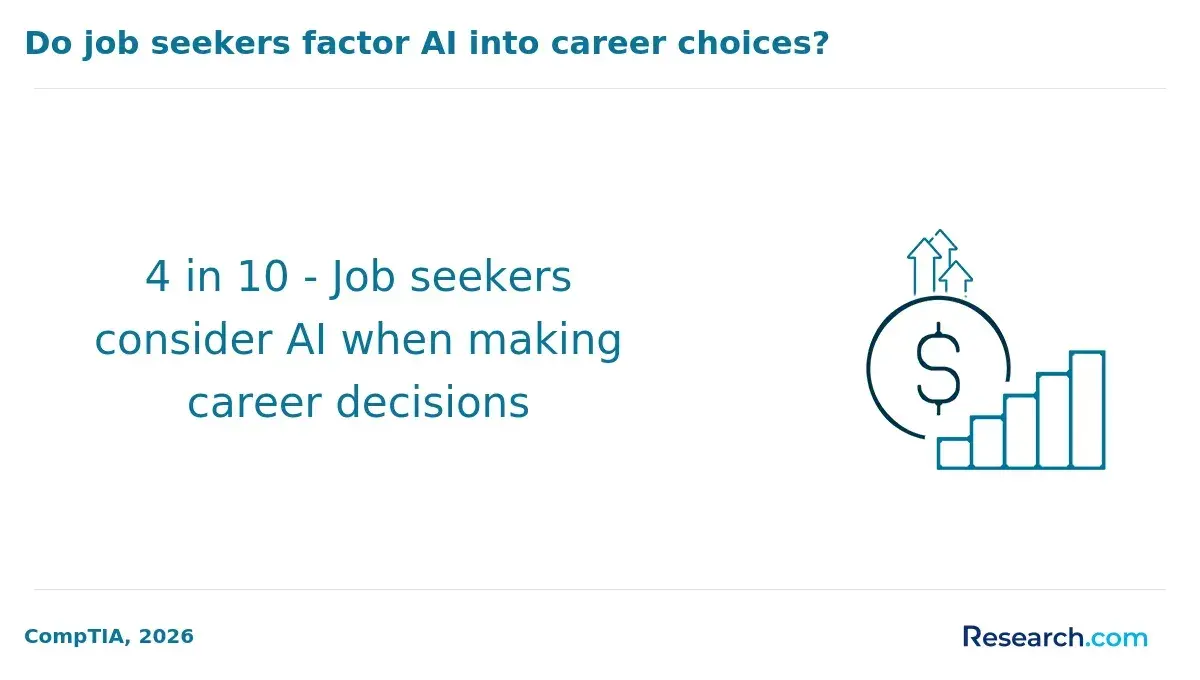
An AI degree in the United States offers diverse career opportunities across industries such as healthcare, finance, autonomous vehicles, cybersecurity, and government agencies. Graduates often pursue roles like data scientists, machine learning engineers, AI research scientists, and software developers specializing in AI applications.
According to the U.S. Bureau of Labor Statistics, employment for data scientists is projected to grow by 35% from 2022 to 2032, reflecting strong demand for these skills.
Specializations within artificial intelligence include natural language processing, computer vision, robotics, and ethical AI development. AI degree career opportunities in the United States also extend beyond purely technical roles, encompassing AI policy-making, ethics consulting, and product management positions that require understanding AI's societal impact.
Students and graduates looking to strengthen their prospects should build programming expertise, gain hands-on experience with machine learning frameworks, and engage in internships or research projects. Graduates with research experience contribute to advancing AI algorithms and interdisciplinary projects involving big data and cloud computing. Networking in professional AI communities further supports career growth.
Those interested in studying AI affordably may consider options like the cheapest online computer engineering degree, which can provide foundational skills applicable to AI careers.
What research opportunities should you look for in AI bachelor's programs?
When evaluating ai bachelor's program research projects in North America, focus on structured undergraduate research opportunities that connect students with faculty mentors. Only about 41% of seniors at four-year U.S. institutions participate in faculty-led projects, according to the 2024 National Survey of Student Engagement, making programs with formal research access a distinctive advantage. Seek programs that provide dedicated AI research labs where undergraduates contribute to active projects in fields like machine learning, robotics, natural language processing, or computer vision.
Look for programs offering:
- Research assistant roles for hands-on experimentation and data analysis specific to undergraduates.
- Chances to co-author papers or present at conferences, which are valuable for graduate school applications.
- Interdisciplinary, collaborative projects applying AI in domains such as engineering, healthcare, or social sciences.
Programs that embed research within capstone courses or senior theses allow students to explore AI topics deeply under expert supervision. Summer research internships or industry partnerships can broaden exposure to practical applications. Consider how accessible these opportunities are, since strict prerequisites or limited availability may hinder participation.
Also, evaluate if graduate-level research is open to undergraduates to enable earlier involvement in advanced studies. Research areas like ethical AI, algorithmic fairness, and data privacy are growing rapidly and indicate a forward-looking curriculum. Strong faculty mentorship, clear project outcomes, and iterative learning opportunities are key markers of quality research environments that support undergraduate research opportunities in artificial intelligence.
For those interested in cybersecurity education alongside AI studies, exploring the best online cyber security degrees can offer complementary skills for evolving tech careers.
What research opportunities matter most in AI master's and PhD programs?
Top AI master's and PhD programs are closely tied to well-funded, interdisciplinary research centers linked to government agencies, national laboratories, and industry partners. The United States leads in establishing new AI-focused research hubs and national R&D initiatives, supported by organizations like NSF, DOE, and DARPA. These programs offer students access to advanced projects, high-performance computing resources, and collaboration with top experts in fields such as machine learning, natural language processing, robotics, and ethical AI.
Prospective students should look for programs that provide:
- Hands-on experience through externally funded projects addressing real-world problems;
- Access to shared labs, large datasets, and computing clusters;
- Cross-disciplinary collaboration involving computer science, neuroscience, and cognitive science;
- Strong industry partnerships offering internships and applied research;
- Support for publishing in leading conferences and journals.
Evaluating mentorship quality and lab productivity is essential. Faculty consistently securing external funding often indicate vibrant, sustainable research environments. Programs without strong funding ties may lack the resources and visibility needed for cutting-edge work.
Integrating well-funded centers and national initiatives equips students with superior infrastructure and collaborative opportunities that prepare them to lead in AI research and careers.
Can you earn an accredited AI degree online, and how do online research options work?
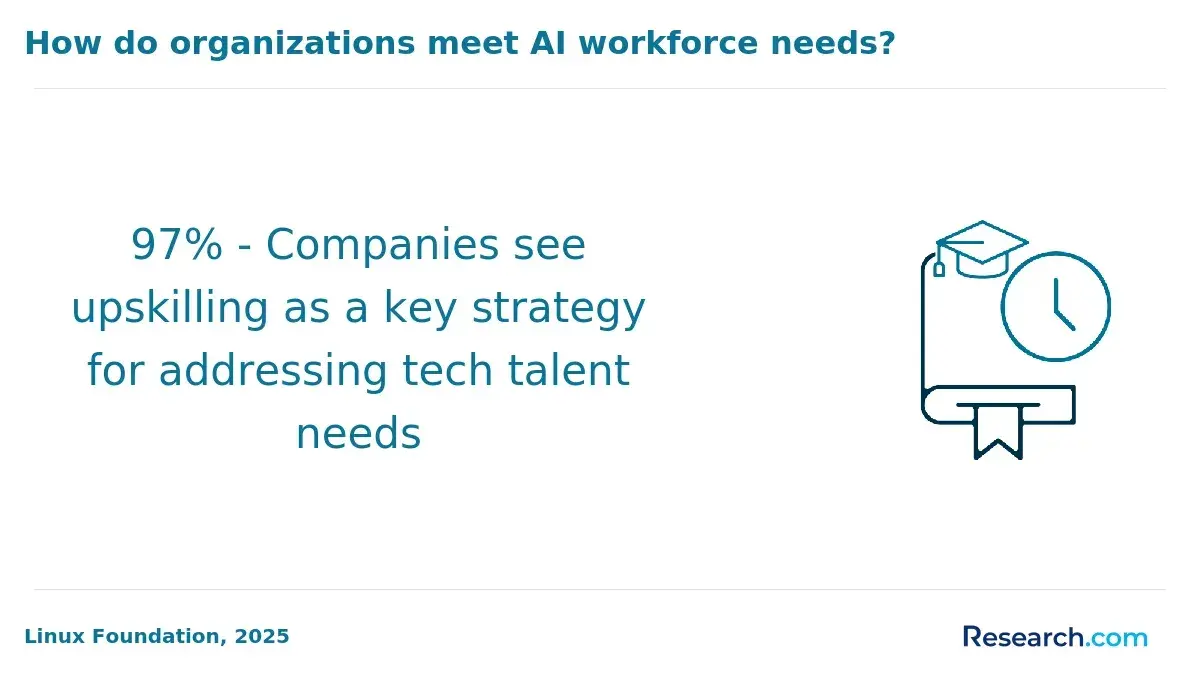
Many universities offer accredited online AI degrees at both undergraduate and graduate levels, recognized by bodies such as ABET or regional agencies. These programs deliver rigorous curricula comparable to traditional campus courses, covering core areas like machine learning, data science, and robotics.
Online research opportunities have advanced greatly, with students participating in hands-on AI projects remotely. According to the National Center for Education Statistics (NCES), millions of U.S. undergraduates enroll in at least one distance-education course, reflecting widespread acceptance of online learning. Accredited programs often include cloud-based labs, virtual research environments, and tools for distributed collaboration.
For instance, graduate students may use cloud computing platforms for experiments involving neural networks or natural language processing, enabling remote simulations. Collaboration happens through video conferencing and shared digital workspaces where teams co-author research or develop code.
Prospective students should confirm whether programs feature structured research mentorship, as requirements vary. Some insist on brief in-person residencies; others offer fully virtual faculty supervision. Those targeting academic or specialized AI careers should prioritize programs with robust research and publication options.
Essential factors when selecting an online AI degree include accreditation status, access to cloud labs, remote collaboration capabilities, and faculty expertise in AI research, helping ensure a quality education aligned with career goals.
What prerequisites and admissions requirements do AI degree programs typically have?
Strong foundations in mathematics, programming, and computer science are essential for pursuing degrees in artificial intelligence. Undergraduate programs typically require completion of high school algebra and calculus, plus introductory programming courses.
Graduate tracks, such as master's or Ph.D. programs, usually demand a bachelor's degree in computer science, engineering, mathematics, or a related field. Key coursework includes linear algebra, probability, statistics, and data structures. Proficiency in coding languages like Python, Java, or C++ is often evaluated through transcripts or coding portfolios.
Research experience significantly strengthens applications to graduate AI programs. Applicants are encouraged to showcase projects, internships, or publications related to machine learning, robotics, or data analytics. Contributions to open-source AI repositories and participation in competitions like Kaggle also enhance candidacy. Recent trends indicate a decline in GRE and GMAT submissions as many AI programs adopt test-optional policies, placing more emphasis on academic records, technical skills, and research.
Strong letters of recommendation from professors or supervisors who are familiar with an applicant's technical skills and research potential are crucial. Personal statements should clearly express career goals in AI and relevant practical experiences. International students may need to meet English proficiency requirements and submit credential evaluations. Some programs also recommend foundational AI or machine learning online courses for those from non-technical backgrounds.
Preparation for AI degrees includes mastering mathematical and programming basics, presenting documented research or projects, and demonstrating clear career motivation in AI.
What core courses and specializations are common in AI degree curricula?
Core courses in artificial intelligence degree programs build both theoretical understanding and practical skills. Typical subjects include machine learning, algorithms, data structures, probability and statistics, neural networks, and robotics. Programming with languages like Python and frameworks such as TensorFlow is essential to gain hands-on coding experience.
Specializations align with research trends and industry needs. The Stanford HAI AI Index Report 2024 highlights areas like computer vision, natural language processing (NLP), and reinforcement learning as leading fields in research output and benchmarks. Many AI programs feature tailored tracks or electives focusing on these disciplines.
- Computer vision: image recognition, object detection, video analysis, 3D reconstruction
- Natural language processing (NLP): sentiment analysis, language modeling, speech recognition, machine translation
- Reinforcement learning: decision-making algorithms, game theory applications, robotics control
Additional specializations often include ethics and fairness in AI, explainability, AI for healthcare, and autonomous systems. Graduate students usually participate in research projects, deepening expertise in specific subfields. Seeking programs with strong faculty research alignment, internship options, and lab collaboration opportunities can effectively prepare students for roles in academia or industry.
How long do AI degrees take, and what do they cost?
Degrees in artificial intelligence typically require four years for undergraduate study, with graduate programs adding one to six years depending on the level. A bachelor's degree in AI or related fields like computer science with an AI emphasis usually takes four academic years of full-time study. Master's programs commonly last one to two years, while PhD programs can extend from four to six years based on research intensity and dissertation demands.
Costs vary significantly by institution and residency. Public four-year universities charge around $11,600 annually for in-state tuition and fees, with out-of-state students paying about $30,800. This means completing a bachelor's in AI can cost approximately $46,400 in-state or $123,200 out-of-state, excluding living expenses and additional fees.
For graduate education, master's degrees range between $20,000 and $60,000 total, influenced by the school's prestige and private or public status. Many PhD candidates benefit from assistantships or fellowships, which may cover tuition and provide stipends, but availability varies by program.
Additional expenses may include textbooks, specialized software, and lab fees, adding several thousand dollars yearly. Institutions with strong AI research programs might have higher costs but offer valuable opportunities that can boost career growth.
Students should weigh program length, total expenses, and financial aid options carefully to find the best fit for their AI education goals.
What are typical AI salaries and job outlook by role and industry?
Salaries in artificial intelligence vary widely by role and sector, highlighting the diverse expertise required. For research-focused positions like computer and information research scientists, the median annual wage is about $145,000, often requiring advanced degrees such as master's or PhDs. These professionals develop new algorithms and foundational theories in AI.
Applied AI roles, including machine learning engineers and data scientists, generally earn between $110,000 and $135,000, influenced by experience and industry specialization. AI specialists in fields like finance and healthcare can exceed $130,000 due to the critical nature of AI applications in these sectors.
Entry-level careers in AI-related software development or product management typically start around $85,000 to $100,000, with rapid growth linked to skills and achievements. Industries with strong job growth encompass technology, automotive, and government research, driven by advancements in automation, natural language processing, and computer vision.
Prospects remain promising, with a projected 22% growth for research scientists through 2032. Interdisciplinary skills in ethics, data privacy, and human-AI interaction improve job outlook and salary potential. Enhancing employability through graduate research and internships in leading sectors further supports career advancement in this competitive field.
Other Things You Should Know About Artificial Intelligence
Success in artificial intelligence programs typically requires strong skills in mathematics, especially linear algebra, calculus, and statistics. Programming proficiency in languages such as Python or Java is also essential. Additionally, analytical thinking and problem-solving abilities help students design and implement AI models effectively.
Interdisciplinary studies bring valuable perspectives to artificial intelligence by integrating fields like cognitive science, robotics, ethics, and data science. This broad approach helps students understand AI's applications and societal impact more comprehensively. Programs that encourage collaboration across disciplines prepare graduates for diverse challenges in AI development and deployment.
Graduate programs in artificial intelligence commonly use experimental, theoretical, and applied research methods. Experimental methods involve designing and testing algorithms with real or simulated data. Theoretical research focuses on developing new models and mathematical frameworks, while applied research emphasizes creating practical AI solutions for industry problems.
Internships and industry partnerships provide AI students with practical experience and networking opportunities. These experiences allow students to apply classroom knowledge to real-world projects, often using cutting-edge tools and technologies. Collaborations with companies also help students understand industry needs and improve their job prospects after graduation.
References
- How Long Do AI Courses Take? https://www.nobledesktop.com/learn/ai/how-long-do-ai-courses-take
- AI Paygrades https://aipaygrad.es/
- Artificial Intelligence PhD and Masters Research Topics https://phdservices.org/artificial-intelligence-phd-and-masters-research-topics/
- B.Sc. in Artificial Intelligence https://www.studyinpoland.pl/en/programme
- What to Study for a Career in AI https://www.savemyexams.com/learning-hub/careers/what-to-study-career-in-ai/
- Artificial Intelligence Jobs in USA: An In-Depth Guide to Opportunities & How To Apply For Jobs https://opencv.org/artificial-intelligence-jobs-in-usa/
- How Long Does It Take to Complete an AI Course https://www.epw.com/blog/courses/how-long-is-ai-course
- What’s the Difference Between Artificial Intelligence and Computer Science? https://www.oxfordscholastica.com/blog/technology-articles/whats-the-difference-between-artificial-intelligence-and-computer-science/
- Best Colleges to Study Artificial Intelligence https://www.collegeadvisor.com/resources/study-artificial-intelligence/
- Top 10 AI graduate degree programs https://www.cio.com/article/350315/top-10-ai-graduate-degree-programs.html