
2027 BS in Business Administration Decision Guide: A Formal Concentration or a Career-Focused Minor
Audited and Verified:
Our Editorial and Data Verification Process
Research.com uses government datasets, official education statistics and primary institutional information to support its career and degree guides. Our review process checks factual accuracy, occupational definitions, source dates and the requirements associated with the credentials discussed.
How This Article Was Fact-Checked
Our editorial team verifies salary estimates, employment projections, education requirements and program information against original data providers and official organizations. Salary figures are checked against the relevant occupational definitions and reporting periods. Information about licensure, accreditation and required in-person training is reviewed separately.
Fact-checked and verified on:

Co-Founder and Chief Data Scientist
A concentration and a minor can both add direction to a BS in Business Administration, but they do different academic work. Choosing the wrong one may leave you without a course you need - or add requirements that do little for your target role. This guide is for students planning a degree and for returning students checking how prior credits apply. It explains what each option officially represents, how to compare its courses and applied opportunities, and what to confirm with an adviser before committing time or money.
Key Things You Should Know
- Choose a formal concentration when you want deeper study within the business major and its required courses closely match your target function.
- Choose a minor when a distinct second field fills a specific skill gap; confirm that it appears on your record and that its courses fit your degree audit.
- Neither option guarantees a job or salary. For context, the U.S. median annual wage for market research analysts was $78,760 in May 2025 - an occupation-wide figure, not a starting salary for graduates.
What Is the Difference Between a Business Administration Concentration and Minor?
A concentration is a formally defined area of study within the business administration major, such as marketing, operations, or finance. A minor is a separate, smaller academic program alongside the major; it might be in data science, communication, psychology, or another field. Schools set their own rules for both, including whether the credential is recorded on a transcript.
The distinction that matters most is not the label but how the requirements fit together. A concentration may use business electives already required for the BS. A minor may add courses from another department, with separate prerequisites or limits on counting a course toward both programs. Neither is a second bachelor's degree, and an informal cluster of electives is not an official concentration.
The comparison below shows what to verify in a school's current catalog and your individual degree audit. A program's published course list alone cannot establish how your transfer credits will apply.
| Decision factor | Formal concentration | Career-focused minor |
| Academic home | Part of the business major | Separate program alongside the major |
| Typical advantage | More connected study of one business function | Skills or perspective from another discipline |
| Main planning risk | Required courses may have limited availability | Prerequisites or double-counting rules may add coursework |
| Credential check | Confirm official designation and transcript notation | Confirm declaration rules and transcript notation |
If your goal requires substantially more depth than either option offers, compare a specialized bachelor's degree instead. For example, someone moving into project management could examine whether they can use prior college credits in a project management bachelor's rather than assume a few business electives provide equivalent preparation.
Which Is Better for Career Goals: A Business Concentration or Minor?
Start with the work you want to do, then compare required courses - not just credential names - with the skills that work calls for. A marketing concentration may be the stronger choice for a student seeking campaign or market-research experience if it includes research methods, analytics, and an applied project. A data-focused minor could be more valuable if the business core already covers marketing but offers little practice with statistics or data tools.
For an early-career student, either choice works best alongside evidence of ability: an internship, relevant employment, or a permitted work sample. For an experienced employee, identify the gap between current responsibilities and the next role. Someone already coordinating operations may benefit more from analytical coursework than from repeating introductory management topics. Someone entering a new function may need supervised experience before a concentration becomes persuasive to employers.
Choose the concentration when its sequence develops the exact business function you want and fits within your remaining major requirements. Choose the minor when a complementary field supplies knowledge the business curriculum lacks and the added courses are feasible. If neither has enough functional depth, consider a specialized degree, targeted training, or relevant work experience instead.
For example, a supply chain goal calls for checking how much operations, procurement, and analytics each pathway actually teaches. A comparison of supply chain college costs versus potential career outcomes can inform that broader degree decision, but occupation-wide earnings should not be treated as a return promised by any concentration.
What Courses Are Included in a Business Administration Concentration or Minor?
The BS business core often introduces accounting, finance, marketing, management, economics, and quantitative reasoning. A concentration should add more connected study within a function; a minor should add a defined sequence in its own field. Neither description guarantees particular courses at a particular school.
To judge the incremental learning value, put the proposed courses beside the business core. A finance concentration might extend introductory accounting and finance into financial analysis; a statistics minor might add methods for evaluating data and uncertainty. Look for prerequisites, software access, applied assignments, and whether a capstone or internship can use the subject. A single analytics elective does not establish advanced analytical competence.
Course titles can conceal important differences. A general operations elective may not provide the supply chain depth of a specialized program; students weighing that alternative can compare three-year-or-less supply chain degrees, while verifying actual transfer evaluations and course schedules before relying on an advertised timeline.
Choose the format in which you can complete the specific concentration or minor courses, not merely the business core. An online BS may still require live meetings, group presentations, scheduled exams, or an internship. A minor taught by another department may have fewer online sections than the major.
Ask for a recent course schedule covering every required class, including prerequisites. Check whether courses rotate, whether seats are restricted by major, and how advising, faculty access, and career support work at a distance. Campus study may make employer events or group work easier to attend; online delivery may reduce travel, but it does not automatically make deadlines flexible. When comparing ranked school options for studying business online, confirm that the particular minor or concentration is available in the format you need.
First verify the institution's recognized accreditation and the school's eligibility for the aid you expect to use. Then check whether the business unit or program holds applicable AACSB, ACBSP, or IACBE accreditation. These are distinct questions: institutional accreditation does not mean the business program holds specialized accreditation, and a business school's claim does not establish that every degree or delivery location is covered.
Use the accreditor's directory and the institution's current disclosures to confirm scope. Accreditation can be one quality screen, but it does not prove that a desired minor is available, that required courses run regularly, or that graduates obtain particular jobs. If financing affects your choice, compare business administration degree costs after FAFSA-based assistance using each school's actual aid offer rather than assuming accreditation itself determines your award.
Admission to the institution, entry into the business major, and declaration of a concentration or minor may be separate decisions. Requirements can depend on whether you apply as a first-year, transfer, or returning student. Schools may request transcripts and completion of particular foundational courses before entry to the major or to a course sequence; do not assume one program's mathematics, GPA, or application rules apply elsewhere.
Before applying, ask admissions and the business adviser when you may declare each option and whether any courses are restricted until you do. If you have prior college work, obtain an official evaluation showing which credits satisfy the core, concentration, minor, or only general electives. Schools with zero-cost college applications may reduce the cost of comparing options, but an application-fee policy says nothing about credit applicability or final admission.
The relevant timeline is the time remaining to your BS, not the advertised length of a minor in isolation. A concentration may fit existing elective space; a minor may require additional courses. Either can extend graduation if a prerequisite must be taken first or a required class is offered infrequently.
Request a term-by-term plan for each option and have an adviser check course rotation, transfer applicability, minimum grades, and any residency rules. Compare plans at a pace you can sustain. Business programs with accelerated online classes may shorten the calendar for some students, but compressed classes do not remove coursework, sequencing constraints, or scheduling obligations.
There is no reliable universal price difference between a concentration and a minor. At one school, both may fit within credits already needed for graduation; at another, a minor may add courses or delay completion. Compare the total cost to finish: remaining tuition and fees, required materials or software, travel or technology expenses, and the cost of any additional term. Account for aid eligibility and employer reimbursement only after confirming the applicable rules.
Ask each school for a degree audit and a written estimate based on the courses you still need, not its published price for a full degree. Returning students should pay particular attention to credits accepted as electives that do not satisfy major or minor requirements. Low-tuition pathways to a business administration degree are worth comparing, but the lowest advertised rate may not produce the lowest completion cost for your audit.
A concentration or minor can support applications for function-specific entry roles, but hiring depends on demonstrated skills, experience, location, and the employer's requirements. A marketing-focused student might seek marketing coordinator or research-support work; an operations-focused student might seek coordination or procurement-support roles. Supervisory and specialist positions commonly require more than relevant coursework.
The U.S. Bureau of Labor Statistics reports a May 2025 median annual wage of $78,760 for market research analysts and projects 7% employment growth from 2025 to 2035. That median covers workers across experience levels; it is not an expected starting wage for someone with a marketing concentration or data minor. Use occupation data to identify promising functions, then examine local postings for actual entry requirements. Likewise, comparisons of business administration program length and salary context cannot substitute for your own cost estimate or a role-specific job search.
Do Business Administration Careers Require Certifications or Licensure?
Many business coordination and generalist roles do not require an occupational license, but requirements change with the work. A concentration in accounting does not by itself establish CPA eligibility; financial-services activities may require separate licenses. HR and project management certifications have their own eligibility and assessment rules. Check the relevant regulator, credentialing body, and job postings before choosing courses for a credential goal.
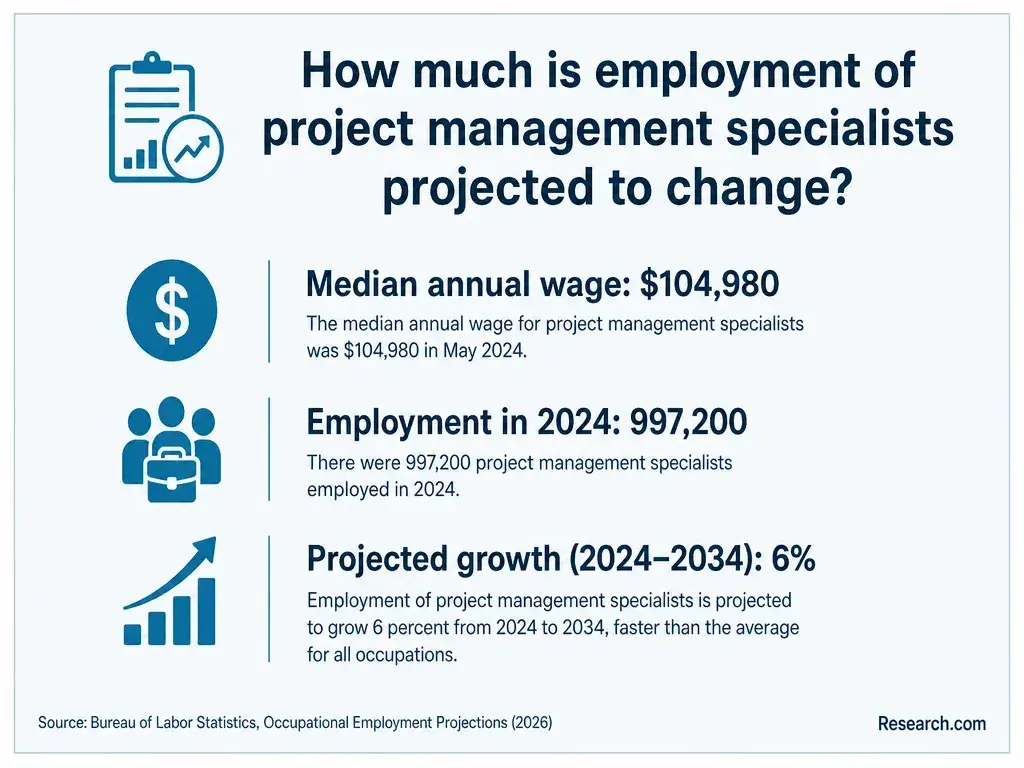
For project-focused work, distinguish an academic pathway from a professional certification and compare their separate costs. Guidance on funding an online project management bachelor's degree is relevant if you are considering that alternative, but aid for a degree should not be mistaken for coverage of a certification exam or proof of certification eligibility.
Other Things You Should Know About Business Administration
Possibly. Schools set double-counting limits, and departments may have additional rules. Ask an adviser to show the proposed overlap on your official degree audit before enrolling.
Not necessarily. A school may record it on the transcript without printing it on the diploma. Verify the school's notation policy and describe the credential accurately on your résumé.
Often, but a change may leave completed courses counting only as electives or create new prerequisites. Request an updated audit and graduation plan before switching.
That depends on the minor's grading policy and your school's degree rules. Confirm the permitted grading basis before registration; a passed course may not satisfy a requirement that calls for a letter grade.
- What is a Major, Minor, or Concentration? | SUL ROSS https://www.sulross.edu/about/what-is-a-major-minor-or-concentration/
- AACSB vs. ACBSP vs. IACBE: Business School Accreditation | Pittsburg State University https://degree.pittstate.edu/online-programs/mba/general/aacsb-accreditation-explained/
- Undergraduate Academics - Belk College of Business - UNC Charlotte https://belkcollege.charlotte.edu/academics/undergraduate-programs/undergraduate-academics/
- Majors & Minors - C. T. Bauer College of Business - University of Houston https://www.bauer.uh.edu/undergraduate/majors-minors/
- What Is a Minor in College and Why Should You Earn One? | Saint Leo University https://www.saintleo.edu/about/stories/blog/what-is-a-minor-in-college-and-why-should-you-earn-one
- Majors - UW Undergraduate Advising - University of Washington https://advising.uw.edu/degree-overview/majors/
- Major vs. Minor vs. Concentration: What's the Difference? | snhu.edu https://www.snhu.edu/about-us/newsroom/education/major-vs-minor-vs-concentration
- What a College Minor Is and Why It Matters | usnews.com https://www.usnews.com/education/best-colleges/what-is-a-college-minor


