2027 Online BS in Business Administration vs. a BS in Cybersecurity Management: Which Route Fits Your Career Plan?
Audited and Verified:
Our Editorial and Data Verification Process
Research.com uses government datasets, official education statistics and primary institutional information to support its career and degree guides. Our review process checks factual accuracy, occupational definitions, source dates and the requirements associated with the credentials discussed.
How This Article Was Fact-Checked
Our editorial team verifies salary estimates, employment projections, education requirements and program information against original data providers and official organizations. Salary figures are checked against the relevant occupational definitions and reporting periods. Information about licensure, accreditation and required in-person training is reviewed separately.
Fact-checked and verified on:

Co-Founder and Chief Data Scientist
An online business administration degree and a cybersecurity management degree can both lead toward organizational leadership, but they prepare you to solve different problems. If you are choosing a bachelor's program while working, transferring credits, or changing careers, the distinction matters more than the word "management" in either title. This comparison explains the coursework, likely entry routes, salary evidence, cost, and credentials behind each option. You can use it to identify which degree fits your target job - and which program details to verify before enrolling.
Key Things You Should Know
- Choose business administration for broader preparation in operations, finance, marketing, and organizational decisions; choose cybersecurity management if your goal is specifically to help organizations govern security risk.
- Neither degree makes a new graduate a manager. The U.S. Bureau of Labor Statistics projects 7% employment growth for project management specialists from 2025 to 2035, but roles on either path still require job-specific skills and experience.
- Compare the courses and credits you would actually need to finish - not just degree titles or advertised tuition. A cybersecurity management program may emphasize policy and risk while offering less technical practice than a cybersecurity engineering program.
What Is the Difference Between Business Administration and Cybersecurity Management Degrees?
A BS in Business Administration teaches how organizations allocate resources, serve customers, manage people, and evaluate performance. A BS in Cybersecurity Management concentrates on how organizations assess security risk, set controls and policies, respond to incidents, and meet governance obligations. Both may include management and analytics, but their purposes differ.
The comparison below focuses on what each degree is designed to add to your existing experience. Actual course titles and technical depth vary by school.
| Decision point | Business administration | Cybersecurity management |
| Primary focus | Decisions across business functions | Organizational security risk and oversight |
| Typical academic emphasis | Accounting, finance, operations, marketing, and management | Security governance, risk assessment, incident planning, and technology context |
| Strongest fit | Someone seeking flexibility among business functions | Someone committed to security, compliance, or cyber-risk work |
| Important limitation | May offer little security-specific preparation | May offer less hands-on technical training than an IT or technical cybersecurity degree |
A business concentration in information systems is not automatically equivalent to a separately awarded cybersecurity management major. Conversely, if your goal is coordinating projects across industries rather than specializing in security risk, compare dedicated options such as lower-cost colleges for project management majors before assuming either degree is the most direct route.
Which Career Paths Can Each Bachelor's Degree Prepare You For?
Start with the work you want to do next, not a distant management title. Business administration can support applications for operations coordinator, project coordinator, procurement, sales operations, or HR support roles when your coursework and experience match the duties.
Cybersecurity management can support entry into security coordination, compliance support, risk documentation, or governance work - particularly if you can demonstrate familiarity with systems and security practices.
For project management specialists, the Bureau of Labor Statistics projects 7% U.S. employment growth from 2025 to 2035. That forecast describes an occupation, not openings reserved for graduates of either major; relevant project experience still matters.
A student with substantial transfer credit and a specific project career goal may also want to examine a project management bachelor's transfer planning guide rather than defaulting to a broader major.
Cybersecurity management is generally an experience-dependent destination. If you have worked in IT, audit, operations, or regulated administration, identify which security tasks you already perform and which technical or regulatory gaps remain. If you have no related experience, look for supervised projects, internships, or entry-level support roles instead of assuming the degree leads directly to oversight of an incident-response team.
How Do Business Administration and Cybersecurity Management Salaries Compare?
There is no reliable single salary for either degree: employers pay for an occupation, level of responsibility, location, and experience - not the degree title alone. As one relevant benchmark, the Bureau of Labor Statistics reports a May 2025 median annual wage of $102,320 for U.S. project management specialists. That is an occupation-wide median, not the expected pay of a new business administration graduate.
A cybersecurity management graduate might work in security compliance, technology risk, or another role with a different pay scale. Comparing that graduate with an established security manager would distort an entry-level decision.
For a useful personal comparison, collect local postings for the same experience level, note required technical skills and credentials, and compare attainable roles rather than senior titles. If your business interest is specifically logistics, supply chain degree duration and salary considerations offer a more relevant specialized comparison than cyber-management pay.
Business administration commonly combines financial accounting, economics, marketing, operations, organizational behavior, statistics, and business communication. You might analyze a budget or propose a process improvement.
Cybersecurity management typically combines business decision-making with security governance, risk assessment, privacy, incident planning, and the technical concepts needed to communicate with security staff. You might evaluate a hypothetical control gap or write an incident-response plan.
Read the required-course list, not just the program description. If you want to configure systems or investigate attacks, check for labs, networking, scripting, and hands-on assessments; a policy-heavy management curriculum may not provide enough practice.
If you want a general operations career, check whether the cyber major leaves room for accounting and operations coursework. Likewise, students drawn to logistics should examine specialized course sequencing; accelerated degree planning for supply chain undergraduates can help frame that curriculum comparison.
Ask for examples of assessed projects and the software used. A classroom risk plan or business case is evidence of learning, not proof that you have managed a real company's finances or security incident.
Completion time depends chiefly on credits that apply to your degree requirements, required course sequencing, and how many courses you can take while meeting other obligations. The two majors can take different amounts of time for the same transfer student: prior accounting courses may satisfy business requirements, while prior IT courses may fit cybersecurity requirements. Accepted credits that count only as electives may do less to shorten either path.
Ask each school for a program-specific degree audit showing remaining general education, major, elective, and residency requirements. Then check how often required courses run and whether prerequisites create a wait. Quick online bachelor's pathways can be worth exploring, but a shorter calendar does not reduce the coursework or guarantee that the pace fits a working student.
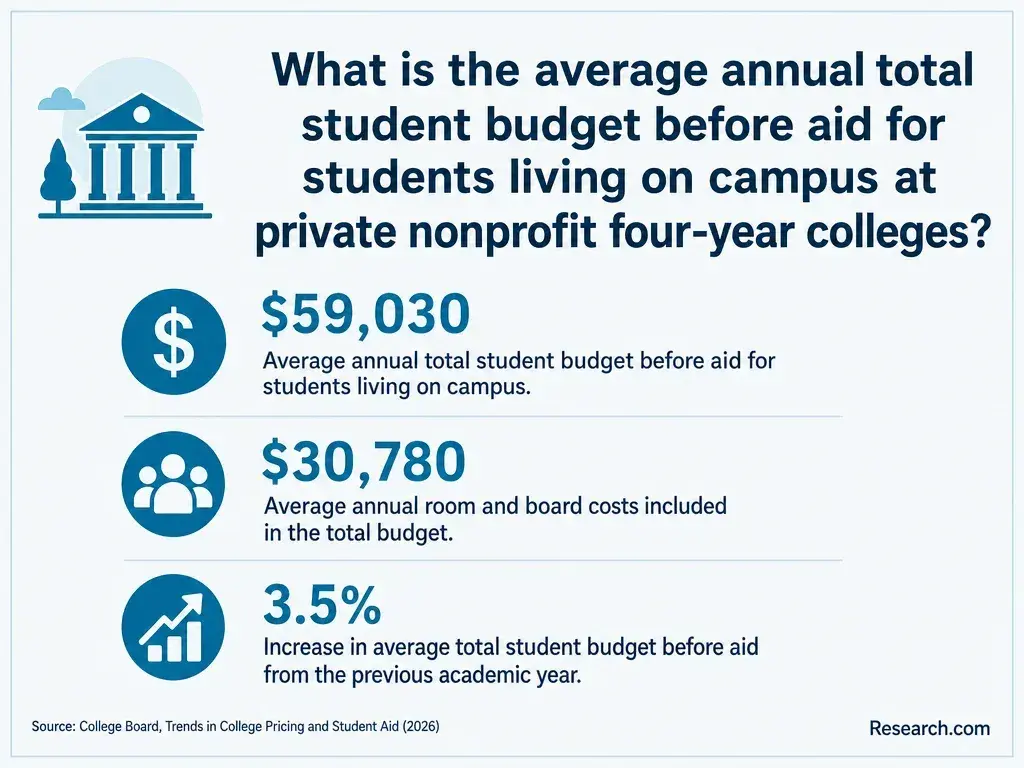
Neither degree has an inherent price advantage. Your meaningful comparison is the cost to finish at each school: tuition for remaining applicable credits, mandatory fees, software or lab charges, books, and any travel or proctoring expenses.
Cybersecurity coursework may involve specialized software; business courses may carry their own technology or assessment costs. Verify charges rather than assuming either format is cheaper.
Request written estimates based on each school's transfer evaluation and expected enrollment pace. Ask whether scholarships, federal aid, or employer reimbursement apply to your circumstances - and whether reimbursement arrives only after you pay.
When reviewing online business administration degrees at lower prices, compare the remaining required courses as carefully as the advertised tuition rate. An inexpensive program that requires you to repeat substantial coursework may cost more to complete.
Schools commonly review prior academic records for bachelor's admission, but their GPA rules, application materials, and transfer policies differ. A cybersecurity management major may require or recommend preparation in computing or quantitative subjects; a business major may specify mathematics, accounting, or other foundational courses. Neither assumption substitutes for the program's published requirements.
Before applying, separate three questions: Can you enter the institution? Can you enter the major now? Which previous courses will satisfy graduation requirements? Ask the admissions office about eligibility and the appropriate academic or transfer office about course applicability.
If you are coming from a non-business field, check prerequisites before applying to business administration programs; do the equivalent review for any cybersecurity option. Prior professional experience can strengthen your application, but it does not automatically award academic credit.
Online study can remove a commute, but it does not necessarily remove scheduled meetings, team assignments, timed exams, or deadlines. Campus study may make in-person labs, networking, and employer events easier to access. For either major, the better format is the one in which you can complete the required work and gain relevant experience - not simply the one advertised as flexible.
Ask online programs which courses require live attendance, whether security labs use remote systems, how group work is scheduled, and whether internships or campus visits are mandatory.
Ask campus programs when required classes meet and whether working students can access them. Application costs also belong in your comparison; you can explore fee-free online university applications while still checking each program's actual scheduling and academic requirements.
First, verify that the institution holds recognized institutional accreditation. Then check whether any additional accreditation covers the specific program you are considering. AACSB, ACBSP, and IACBE relate to business education, but their coverage varies; a business school's accreditation does not automatically cover a separate cybersecurity management degree.
A cybersecurity-related program may have a different accreditation or designation, whose scope you should check directly. Accreditation alone does not establish that courses meet your career goal or that credits will transfer elsewhere.
Confirm program coverage with the accreditor or school and review the curriculum separately. If federal aid is part of your plan, compare affordable business administration programs with federal aid access, then verify the individual institution's eligibility and your own aid circumstances before budgeting.
Which Certifications and Professional Standards Matter for Each Career Path?
A degree, a certification, and job experience serve different purposes. Business graduates may encounter role-specific credentials in project management, HR, accounting, or another function; eligibility can depend on experience, examinations, or separate education. A business degree by itself does not grant a professional license.
Cybersecurity management students should look for coursework that applies recognized security-risk, control, and incident-response concepts, then check any intended certification's current eligibility rules with its issuing organization. Some security credentials expect documented work experience, so an aligned course is preparation rather than automatic qualification.
Similarly, compare an accredited degree with a professional project credential on its actual requirements - not just its name. Accredited project management programs with low tuition provide another degree option if project delivery, rather than general business or cyber risk, is your specific goal.
Before enrolling, choose a target role, identify the skills and credentials appearing in relevant job postings, and ask each school where its required courses and applied assignments develop those skills. That test is more informative than a list of certifications a program says its students might pursue.
Other Things You Should Know About Business Administration
Not necessarily, but you need enough technical understanding to evaluate security risks and communicate with technical teams. Check whether your target program requires programming or hands-on labs; requirements differ.
Possibly, if your instructor approves the scope and your employer permits the work and data use. Remove confidential, personal, or proprietary information unless you have explicit authorization to use it.
An MBA is graduate-level business education, not a substitute for meeting undergraduate admission or graduation requirements. If you already hold a bachelor's degree, compare a graduate program with targeted courses or credentials based on the job you want.
No. Online study demonstrates that you can learn remotely, but employers assess the role's duties, your experience, and their work-location policies. Build evidence of relevant collaboration and results rather than treating delivery format as a hiring credential.
- Accreditation in the U.S. | ed.gov http://www.ed.gov/laws-and-policy/higher-education-laws-and-policy/college-accreditation/accreditation-in-the-us
- How to Transfer Credits from One College to Another | neit.edu https://www.neit.edu/blog/how-to-transfer-credits-from-one-college-to-another
- Cybersecurity & Business Administration | D'Amore-McKim School of Business https://damore-mckim.northeastern.edu/programs/bs-cybersecurity-business-administration/
- BA vs BS: Which is the Better Business Degree? - UC Online https://www.online.uc.edu/blog/ba-vs-bs-which-is-the-better-business-degree-uc-online.html
- How Do Transfer Credits Work When You Go Back to School? | Whitworth Online https://online.whitworth.edu/news-articles/how-do-transfer-credits-work-when-you-go-back-to-school/
- Online vs. In-Person College: What Employers Really Think About Each - CityU of Seattle https://cityu.edu/online-vs-in-person-college/
- What to Expect During an Online BS in Cybersecurity Program | UMass Global https://www.umassglobal.edu/blog-news/expect-during-online-bs-cybersecurity-program
- Re-Thinking Entry-Level Job Requirements Can Connect Employers With the Right Talent | Generation https://www.generation.org/news/re-thinking-entry-level-job-requirements-can-connect-employers-with-the-right-talent/