
2027 How To Become a U.S. Marshal

Co-Founder and Chief Data Scientist
Becoming a U.S. Marshal is not a typical law enforcement career path. The U.S. Marshals Service is a federal agency tied directly to the federal courts, fugitive operations, prisoner custody, witness protection, and seized asset management. That makes the job attractive to people who want high-responsibility field work, but it also makes the hiring process selective, physically demanding, and difficult to predict.
This guide explains how to become a U.S. Marshal in 2027, what deputy U.S. marshals actually do, what qualifications matter, how training works, what the pay structure looks like, and how to decide whether this federal law enforcement path fits your goals. It is written for college students choosing a major, military veterans planning a transition, current law enforcement officers, and career changers comparing federal investigative roles.
Quick answer: How do you become a U.S. Marshal?
Most candidates begin by qualifying for a deputy U.S. marshal position, not by becoming one of the 94 presidentially appointed U.S. Marshals. To compete, you generally need to meet federal eligibility rules, build a strong education or law enforcement experience profile, apply through USAJOBS.gov, pass assessments and background screening, complete medical and fitness requirements, and graduate from the U.S. Marshals Service training program at the Federal Law Enforcement Training Center.
- The U.S. Marshals Service has broad federal authority. Its work includes fugitive investigations, federal court security, prisoner transport, witness protection, and management of seized assets.
- The realistic entry point is deputy U.S. marshal. Only a small number of people become presidentially appointed U.S. Marshals, while most sworn personnel build their careers as deputies, supervisors, specialists, and leaders inside the agency.
- Eligibility is strict. Applicants must satisfy citizenship, age, background, medical, vision, hearing, and physical fitness requirements before appointment.
- Training is intensive. New deputies complete a 17½-week academy program that combines law, tactics, firearms, fitness, court security, and operational procedures.
- Pay rises with grade, experience, and locality. Entry-level deputy U.S. Marshals start at the GL-07 pay level, and senior roles can exceed $85,000 with federal benefits and locality adjustments.
- What does a U.S. marshal do?
- What are the steps to becoming a U.S. marshal in 2027?
- What is U.S. marshals's training like?
- How do you advance from Deputy U.S. marshal to U.S. marshal?
- What’s the salary and career growth for U.S. marshals?
- What skills and traits make a good U.S. marshal?
- What are the biggest challenges of being a U.S. marshal?
- How can you strengthen your U.S. Marshal application?
- How do evolving legal and policy environments shape the role of a U.S. Marshal?
- How do U.S. Marshals manage stress and mental health challenges?
- How can specialized legal education boost your career as a U.S. Marshal?
- How can retiring U.S. Marshals transition to legal careers?
- How do U.S. Marshal qualification standards differ from those in other federal agencies?
- What is the work-life balance and job flexibility for U.S. marshals?
- What are the best alternative career paths to being a U.S. marshal?
- What advanced educational opportunities can elevate a U.S. Marshal’s career path?
- Future Trends in the U.S. Marshals Services
What does a U.S. marshal do?
A U.S. Marshal works within the U.S. Marshals Service, the oldest federal law enforcement agency in the country, established in 1789. The agency operates across all 94 federal judicial districts and supports the federal justice system from the courtroom to the field. In practice, most people who join the agency serve as deputy U.S. marshals, while U.S. Marshals are senior officials appointed to lead districts.
The work is more varied than many applicants expect. A deputy may assist with federal court security one week, participate in a fugitive operation the next, and support prisoner movement or witness security depending on district needs. The role requires legal knowledge, tactical readiness, sound judgment, and the ability to work with federal, state, and local partners.
Core duties of the U.S. Marshals Service
| Responsibility | What it involves | Why it matters |
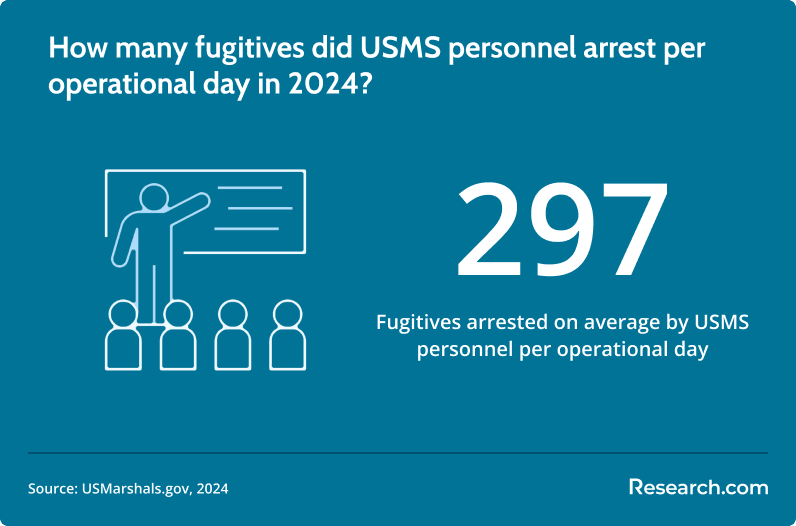
| Fugitive investigations | Locating and arresting people wanted for federal crimes and assisting other agencies with high-priority arrests. | The agency arrests an average of 337 fugitives daily, making fugitive apprehension one of its most visible missions. |
| Judicial security | Protecting federal judges, prosecutors, court staff, jurors, witnesses, and federal court facilities. | Federal courts cannot operate safely without credible protection against threats, intimidation, and violence. |
| Witness Security Program | Helping protect, relocate, and safeguard high-risk witnesses and eligible family members. | The program supports prosecutions in serious criminal cases where witness safety is at risk. |
| Prisoner operations | Managing custody, transport, and production of federal prisoners for court proceedings. | Secure prisoner movement is essential to the functioning of the federal court system. |
| Asset management | Handling property seized from criminal activity and supporting asset forfeiture processes. | Proper asset management helps preserve evidence, recover value, and support lawful enforcement actions. |
Students interested in this mission often choose criminal justice, public administration, security studies, political science, or related majors. A homeland security degree can also be relevant for readers who want a broader foundation in national security, emergency response, and federal operations.
What are the steps to becoming a U.S. marshal in 2027?
The path is best understood as a sequence: qualify, build a competitive background, apply when openings are posted, pass screening, complete training, and begin in an entry-level deputy role. Because openings and hiring timelines can change, applicants should treat the official vacancy announcement as the controlling source for current requirements.
Step-by-step path
| Step | What to do | Decision point for applicants |
| 1. Confirm basic eligibility | Applicants must be U.S. citizens and generally between 21 and 36 years old, with exceptions for veterans and certain law enforcement officers. | If you are outside the age range, check whether a formal exception applies before investing time in the process. |
| 2. Prepare for background and medical screening | Candidates must pass a background investigation, medical exam, vision and hearing tests, and a physical fitness assessment. | Disqualifying issues can end a candidacy, so address fitness, documentation, and medical questions early. |
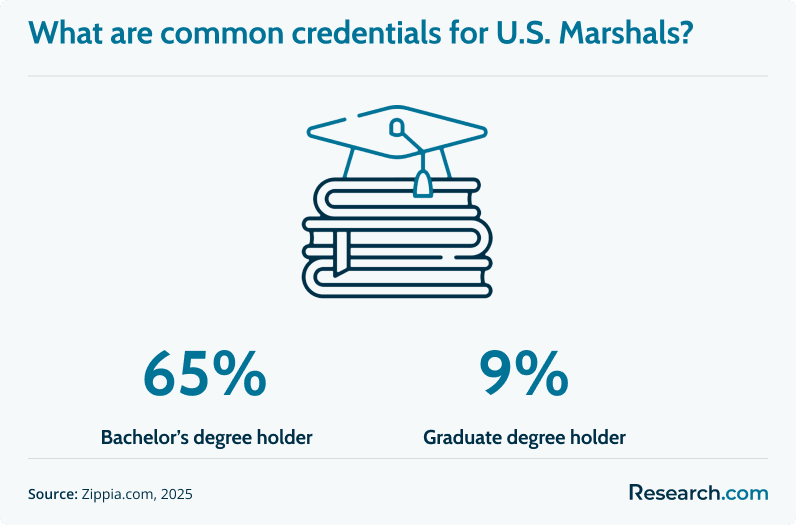
| 3. Build education or qualifying experience | Many candidates have a bachelor’s degree in criminal justice, law enforcement, public policy, or another relevant field. Applicants without a degree may qualify through specialized law enforcement experience at the GL-5 level. | If you are early in your career, a degree may help you compete; if you already have sworn experience, document duties clearly. |
| 4. Monitor federal postings | Vacancies are listed on USAJOBS.gov, where applicants submit required forms, transcripts, resumes, and supporting records. | Federal resumes are detailed. Do not submit a private-sector style one-page resume if the announcement asks for specific experience evidence. |
| 5. Complete assessments and interview steps | Candidates may face structured interviews, evaluations of readiness, background investigation stages, and other screening procedures. | Prepare examples that show judgment, integrity, teamwork, communication, and calm decision-making under pressure. |
| 6. Attend academy training | Selected candidates complete the U.S. Marshals Service basic training program at the Federal Law Enforcement Training Center in Glynco, Georgia. | Arrive physically prepared; the academy is not the place to begin building baseline fitness. |
| 7. Start as a deputy U.S. marshal | New hires typically begin in deputy positions and gain experience through district assignments, field operations, court security, and agency missions. | Be ready for relocation, irregular hours, and assignments based on agency need rather than personal preference. |
What should you study?
There is no single major that guarantees selection. Criminal justice is common, but hiring decisions also value strong writing, ethical judgment, maturity, physical readiness, and relevant work history. Degrees in political science, public administration, psychology, cybersecurity, security studies, and legal studies can all be useful when paired with practical experience.
Some degrees are less direct but may support specialized interests. For example, readers comparing broad undergraduate options may review high-earning medical bachelor’s degrees, although healthcare-focused programs are usually more relevant to medical security, corrections healthcare, investigations involving health systems, or later career pivots than to the standard deputy U.S. marshal pipeline.
Who is this path best for?
- People who want federal law enforcement work tied closely to the courts and fugitive operations.
- Applicants who can meet demanding fitness, background, and mobility expectations.
- Military veterans and law enforcement officers who can translate operational experience into federal hiring language.
- Students willing to build a long-term profile instead of expecting immediate selection after graduation.
Who should consider a different path?
- Applicants who want predictable schedules or minimal travel.
- People who prefer desk-based intelligence analysis over field enforcement.
- Candidates unwilling to relocate or accept assignments based on agency needs.
- Students who are mainly interested in forensic lab science, counseling, private security management, or legal practice rather than sworn federal operations.
What is U.S. Marshals training like?
U.S. Marshals Service training is designed to determine whether candidates can perform under the physical, legal, and tactical pressures of federal law enforcement. The program is commonly described as 17½ weeks, while some career sources round it to an intensive 18-week course. Training takes place at the Federal Law Enforcement Training Center in Glynco, Georgia.
The academy is not only about learning procedures. It tests whether trainees can apply law, communicate clearly, use force appropriately, protect courts, conduct safe operations, and maintain fitness while under stress. Students are housed in dormitories or nearby hotels, meals and transportation are provided, and trainees may bring personal vehicles or bikes for mobility.
Training areas candidates should expect
| Training area | Examples of what trainees practice | Why it matters on the job |
| Physical conditioning | Running distances from 1.5 to 10 miles, obstacle courses, sprints, push-ups, sit-ups, calisthenics, and final fitness testing. | Deputies may have to pursue fugitives, move safely in high-risk settings, and function during long operations. |
| Firearms and use of force | Weapon handling, judgment-based scenarios, safety protocols, and lawful application of force. | Deputies carry significant authority and must use it within legal and policy limits. |
| Court security | Federal courthouse procedures, high-threat trial protection, screening, and response planning. | Judicial protection is one of the agency’s central missions. |
| Legal procedures | Search and seizure, arrest authority, courtroom conduct, prisoner handling, and documentation. | Operational mistakes can affect prosecutions, civil rights, and officer safety. |
| Defensive tactics and officer survival | Control techniques, situational awareness, high-pressure response, and scenario-based drills. | Deputies often work around fugitives, prisoners, witnesses, and volatile courtroom situations. |
| Surveillance and investigations | Observation, intelligence gathering, fugitive tracking, and coordination with partner agencies. | Successful fugitive operations depend on preparation, patience, and evidence-based decisions. |
Testing and graduation
Trainees must pass five exams with a minimum score of 70%. They also complete hands-on exercises that require them to demonstrate procedures rather than simply describe them. Failure to maintain academic, tactical, professional, or fitness standards can put graduation at risk.
Applicants interested in healthcare-adjacent security or detention settings may also compare online medical assistant programs, but those programs should be viewed as supplemental career preparation rather than a substitute for law enforcement qualifications.
How do you advance from deputy U.S. marshal to U.S. marshal?
Career advancement inside the U.S. Marshals Service is different from simply being appointed as a U.S. Marshal. Most employees progress through deputy, senior, supervisory, and management responsibilities based on performance, experience, agency needs, and leadership readiness. Becoming one of the 94 U.S. Marshals is a separate political appointment process.
Deputy progression versus presidential appointment
| Path | How it works | What candidates should know |
| Deputy U.S. marshal career ladder | Deputies gain experience in field operations, judicial security, prisoner operations, fugitive work, and district assignments. | This is the standard career path for most sworn personnel in the agency. |
| Supervisory and leadership roles | Experienced deputies may move into supervisory, specialist, or command responsibilities. | Advancement depends on demonstrated judgment, leadership, mission performance, and organizational need. |
| U.S. Marshal appointment | U.S. Marshals are appointed by the President and confirmed by the U.S. Senate. | This is not a routine promotion; it involves nomination, vetting, and confirmation. |
| Attorney General-related pathway | In smaller to mid-sized offices, the Attorney General may promote a Deputy Chief Marshal to the U.S. marshal position. | These offices account for about 70 of the 94 federal judicial districts. |
Advanced education can support leadership preparation, especially for deputies who want stronger policy, legal, or administrative knowledge. Programs such as affordable online master of legal studies programs may help professionals understand legal systems, compliance, policy interpretation, and court-related procedures more deeply. Education alone, however, does not replace field credibility and leadership performance.
What’s the salary and career growth for U.S. marshals?
Deputy U.S. marshal pay is tied to federal law enforcement grade levels, experience, promotion, and locality pay. Entry-level deputy U.S. Marshals begin at the GL-07 level, with base pay between $38,511 and $48,708. Locality pay can increase earnings in higher-cost regions. FederalPay.org reports that the average salary across the agency exceeds $85,000.
Salary progression cited for deputy U.S. marshals
| Grade | Salary range | What it generally represents |
| GL-07 | $38,511 – $48,708 | Common entry-level range for new deputy U.S. marshals. |
| GL-08 | $40,139 – $51,425 | Possible progression after one year, depending on eligibility and agency rules. |
| GL-09 | $42,948 – $55,413 | Further promotion level as responsibilities and experience increase. |
| Locality-adjusted pay | Varies by duty station | Locations such as Los Angeles and Miami may result in higher pay because of federal locality adjustments. |
Federal benefits
- Retirement coverage through the Federal Employees Retirement System.
- Paid annual leave and sick leave.
- Health insurance and life insurance options.
- Family and Medical Leave Act protections.
- Employee Assistance Program support.
Is the career financially worth it?
The answer depends on your goals. The pay can become competitive over time, and federal benefits are a major advantage. But applicants should weigh those advantages against relocation, physical risk, irregular schedules, and the opportunity cost of preparing for a selective process. If your main goal is maximum income with less physical danger, a different federal, legal, technology, or private-sector security role may fit better.
Students considering long-term advancement may benefit from degrees that build government, law, and policy knowledge. A political science degree can be useful for understanding federal institutions, public policy, constitutional issues, and the structure of government authority.
What skills and traits make a good U.S. marshal?
Successful deputy U.S. marshals combine physical capability with restraint, communication, legal awareness, and ethical judgment. The job is not simply about being tough. It requires knowing when to act, when to slow down, when to escalate, and when to coordinate with other agencies or court officials.
Skills that matter most
| Skill | Why it matters | How applicants can build it |
| Knowledge of law enforcement procedures | Deputies must understand arrests, warrants, search and seizure, prisoner handling, and courtroom expectations. | Study criminal justice, gain sworn experience, complete internships, or pursue relevant public safety training. |
| Physical fitness | The role can involve pursuits, long operations, defensive tactics, and high-stress movement. | Train for endurance, strength, mobility, recovery, and academy-style fitness standards. |
| Communication | Deputies work with judges, attorneys, witnesses, prisoners, victims, local officers, and federal partners. | Practice clear writing, de-escalation, interviewing, briefing, and report preparation. |
| Critical thinking | Field decisions often happen quickly and may have legal, safety, and public consequences. | Use scenario training, after-action reviews, case analysis, and leadership roles to build judgment. |
| Surveillance and observation | Fugitive investigations rely on patience, detail, pattern recognition, and accurate intelligence. | Seek investigative assignments, develop documentation habits, and learn lawful information-gathering methods. |
| Computer literacy | Modern enforcement uses databases, digital records, intelligence systems, and case documentation. | Build comfort with secure systems, data entry accuracy, digital research, and cybersecurity awareness. |
| Tact and diplomacy | Many situations involve trauma, fear, conflict, and legal sensitivity. | Develop de-escalation skills, cultural competence, listening ability, and professional restraint. |
Personal traits that help deputies last
- Integrity: Federal law enforcement depends on trust, accuracy, and lawful conduct.
- Composure: Deputies must remain functional when situations are dangerous, emotional, or confusing.
- Adaptability: Assignments, schedules, threats, and partner agencies can change quickly.
- Attention to detail: A small error in identification, evidence handling, or documentation can create major consequences.
- Team orientation: The work is rarely solo; coordination is central to safe operations.
- Resilience: Long hours, exposure to trauma, and high-stakes missions require sustainable coping skills.
A bachelor’s degree is not always the only way to qualify, but it can help applicants build writing ability, legal understanding, and professional credibility. Readers comparing lower-cost options may review affordable online bachelor’s degrees and then evaluate whether the curriculum supports federal law enforcement preparation.
What are the biggest challenges of being a U.S. marshal?
The hardest parts of the job are not limited to physical danger. Deputies may arrest violent fugitives, move high-risk prisoners, protect federal witnesses, secure courtrooms, and respond to credible threats against judges and court personnel. These duties can involve long periods of vigilance followed by sudden, high-pressure action.
There is also cumulative stress. Exposure to violence, trauma, threats, and unpredictable schedules can affect mental health over time. The work may also create pressure on family life because assignments can require travel, relocation, nights, weekends, holidays, and on-call availability.
Operational challenges to understand before applying
- Personal risk: Fugitive apprehension, prisoner transport, and courthouse security can involve people who are armed, desperate, or unstable.
- Legal scrutiny: Deputies must act decisively while respecting constitutional limits, court rules, and agency policy.
- Digital threats: Online harassment, doxxing, and cyber-enabled intimidation can complicate judicial protection and officer safety.
- Resource pressure: Security work often requires prioritizing the most serious risks when time, staffing, and technology are limited.
- Emotional strain: Witness protection, violent crime, and high-risk trials can expose personnel to distressing situations.
People drawn to public safety but unsure about direct fugitive operations may explore adjacent fields such as disaster management, environmental enforcement, or resource protection. For example, comparing online geoscience and geology degree programs may be useful for readers considering careers that connect public safety, natural hazards, and environmental protection.
How can you strengthen your U.S. Marshal application?
A strong application shows more than interest in federal law enforcement. It proves maturity, physical readiness, ethical judgment, communication skill, and relevant experience. Because the selection process is competitive, applicants should build evidence before an opening appears.
Practical ways to become more competitive
- Train before you apply. Build running capacity, strength, mobility, recovery habits, and consistency so the fitness requirement is not a last-minute obstacle.
- Gain public safety or military experience if possible. Patrol, corrections, court security, investigations, emergency response, or military police experience can help if documented clearly.
- Choose education intentionally. A degree in criminal justice, homeland security, legal studies, psychology, public administration, political science, or cybersecurity can support the mission if paired with practical skills.
- Learn federal resume writing. Federal applications often require detailed evidence of duties, hours, dates, supervisors, and experience level.
- Keep your background clean and documented. Financial responsibility, drug history, employment records, driving history, and integrity issues can affect suitability.
- Practice interview examples. Prepare specific stories showing judgment, de-escalation, leadership, teamwork, accountability, and calm performance under pressure.
- Build writing skills. Clear reports, accurate documentation, and concise case summaries are essential in federal enforcement.
If cost is a major concern, compare programs carefully before enrolling. A lower-cost online criminal justice degree may be a practical option when it is properly accredited, fits your schedule, and helps you develop relevant writing, legal, and analytical skills.
Common mistakes applicants should avoid
| Mistake | Why it hurts | Better approach |
| Waiting until the announcement opens to get fit | Fitness standards require sustained preparation, not a short burst of training. | Train year-round and track measurable progress. |
| Submitting a vague resume | Federal screeners need evidence that you meet the qualification standard. | Describe duties, scope, dates, hours, outcomes, and law enforcement responsibilities clearly. |
| Choosing a school only because it is cheap | Low tuition does not help if credits do not transfer or the school lacks proper accreditation. | Check accreditation, transfer rules, student support, and career relevance. |
| Assuming any degree guarantees selection | Hiring depends on the full profile, including fitness, background, assessments, and agency need. | Combine education with experience, leadership, and documented readiness. |
| Ignoring relocation expectations | Federal law enforcement assignments may not align with personal location preferences. | Discuss mobility honestly with family before applying. |
How do evolving legal and policy environments shape the role of a U.S. Marshal?
Deputy U.S. marshals work inside a legal environment that changes through court decisions, federal policy updates, agency guidance, and emerging security threats. Changes in law and policy can affect arrest procedures, use-of-force expectations, asset management practices, witness protection protocols, information security, and courthouse threat response.
This is why continuing education matters. Deputies must understand not only what they are authorized to do, but also how to document decisions, protect rights, preserve evidence, and coordinate with prosecutors and courts. Readers comparing criminal justice career outcomes may also review higher-paying criminal justice careers to understand how legal knowledge, leadership, and specialization can influence long-term options.
How do U.S. Marshals manage stress and mental health challenges?
Stress management is a career survival issue in this field. The work can involve critical incidents, threats, long hours, trauma exposure, and the responsibility of protecting vulnerable witnesses or court personnel. Healthy coping is not a sign of weakness; it is part of operational readiness.
Support may include access to mental health professionals, peer support, resilience training, debriefings after serious incidents, and stress-management education. Individual deputies also need personal routines that support sleep, physical conditioning, family communication, and recovery after intense assignments.
Professionals who want to better understand the legal and policy systems surrounding law enforcement, courts, and public agencies can explore career options with a master of legal studies.
How can specialized legal education boost your career as a U.S. Marshal?
Legal education can strengthen a deputy’s ability to understand courtroom processes, evidentiary standards, case documentation, witness issues, administrative rules, and policy compliance. It is especially useful for professionals who want to move toward leadership, training, court security planning, legal support roles, or post-law-enforcement careers.
Not every legal credential is necessary for every deputy. The right choice depends on your goal. A short certificate may help with legal terminology and document preparation, while a graduate legal studies program may be better for policy, compliance, or leadership roles. For a practical legal support credential, some readers may compare an ABA-approved online paralegal certificate.
How can retiring U.S. Marshals transition to legal careers?
Retiring deputy U.S. marshals often have experience that legal employers value: investigation, procedure, security planning, witness coordination, evidence awareness, report writing, courtroom familiarity, and disciplined decision-making. Those strengths can translate into legal consulting, litigation support, compliance, investigations, courthouse administration, training, or public-sector advisory roles.
The transition is easier when field experience is paired with a credential that explains legal processes in employer-recognized terms. A fast-track paralegal program may help experienced law enforcement professionals prepare for legal assistance, case organization, document review, and litigation support roles after retirement.
How do U.S. Marshal qualification standards differ from those in other federal agencies?
U.S. Marshals Service qualifications emphasize hands-on law enforcement readiness, physical capability, legal authority, threat response, court security, and fugitive operations. Other federal agencies may prioritize different strengths. For example, some intelligence roles focus more heavily on analysis, language ability, source evaluation, cyber skills, or classified research, while U.S. Marshals Service roles often require immediate operational judgment in the field.
| Career path | Primary emphasis | Best fit for |
| Deputy U.S. marshal | Fugitive operations, judicial protection, prisoner transport, witness security, and federal enforcement. | Applicants who want physically demanding federal law enforcement tied to the court system. |
| CIA officer path | Intelligence gathering, analysis, critical thinking, operational judgment, and national security work. | Applicants more interested in intelligence, analysis, foreign affairs, or clandestine work than courtroom enforcement. |
| Local or state police path | Patrol, community response, traffic enforcement, investigations, and local public safety. | Applicants who want community-based law enforcement with a local or state agency. |
| Legal support path | Case preparation, legal documents, research, compliance, and litigation support. | Applicants who want law-related work without sworn federal enforcement duties. |
For a more detailed comparison with an intelligence-focused route, review CIA officer requirements and qualifications.
What is the work-life balance and job flexibility for U.S. marshals?
Work-life balance can be difficult for deputy U.S. marshals. The mission comes with irregular hours, operational urgency, travel, courtroom schedules, prisoner movement, fugitive cases, and possible relocation. Some assignments may be more predictable than others, but applicants should not choose this career expecting a fixed Monday-to-Friday routine.
What affects schedule and flexibility?
- Assignment type: Judicial security may be more schedule-driven than fugitive operations, although emergencies can still occur.
- District needs: Staffing, caseload, courthouse activity, prisoner movement, and threat levels vary by location.
- On-call demands: Some operations require nights, weekends, holidays, or rapid response.
- Relocation: Advancement or assignment opportunities may require moving to another district or office.
- Leave availability: Federal leave benefits exist, but timing can be affected by workload, staffing, and mission needs.
Retirement and long-term stability
U.S. marshals can retire after 25 years of service or at age 50 with 20 years of service. That long-term stability is appealing, but it comes with a high-commitment lifestyle. Before applying, discuss mobility, risk tolerance, finances, and family expectations honestly.
What are the best alternative career paths to being a U.S. marshal?
If the U.S. Marshals Service mission interests you but the hiring timeline, relocation, or physical risk does not fit, several related careers may be worth comparing. The right alternative depends on whether you prefer field enforcement, investigation, intelligence, courts, corrections, environmental protection, or legal support.
Similar law enforcement and investigative careers
| Career | Typical focus | When it may be a better fit |
| FBI agent | Federal investigations involving national security, organized crime, cyber threats, public corruption, and other federal matters. | You want a broader investigative portfolio and meet that agency’s qualifications. |
| Criminal investigator | Evidence collection, interviews, surveillance, case development, and arrests at federal, state, or local levels. | You prefer investigations over court security and prisoner operations. |
| Homicide detective | Investigating murders and serious violent crimes, usually within a police department. | You want local investigative work focused on violent crime. |
| Police officer | Patrol, emergency response, community safety, arrests, and local enforcement. | You want a more accessible entry point into sworn law enforcement. |
| Sheriff’s deputy | County law enforcement, jail operations, court security, warrants, and rural patrol. | You want courthouse or warrant work in a county system. |
| Narcotics officer | Drug investigations, surveillance, informant work, and interagency operations. | You want specialized criminal investigations tied to drug enforcement. |
| Fire investigator | Determining fire origins, arson causes, and related evidence. | You are interested in technical investigation with a public safety focus. |
| Conservation officer | Enforcing wildlife, environmental, and natural resource laws. | You want law enforcement work outdoors and tied to resource protection. |
| United States Park Police | Public safety and law enforcement in national parks and historic sites. | You want federal law enforcement connected to public lands and visitor safety. |
Readers interested in criminal behavior, victim issues, and mental health in the justice system may also consider a forensic psychology major, especially if they are open to investigative support, corrections, victim advocacy, or behavioral assessment roles.
What advanced educational opportunities can elevate a U.S. Marshal’s career path?
Advanced education can help experienced deputies move toward leadership, intelligence coordination, policy development, training, risk assessment, or post-retirement consulting. It is most valuable when it fills a specific gap rather than simply adding another credential.
How to choose advanced education wisely
- Match the program to your target role. Intelligence, legal studies, cybersecurity, public administration, and emergency management prepare for different kinds of advancement.
- Check accreditation first. Accreditation affects transferability, financial aid eligibility, and employer confidence.
- Do not focus only on tuition. Consider fees, books, travel, schedule flexibility, transfer credits, and time away from work.
- Ask whether the curriculum is practical. Courses should strengthen writing, analysis, leadership, law, policy, or security decision-making.
- Look for flexibility. Working law enforcement professionals often need asynchronous, part-time, or online options.
For deputies interested in intelligence analysis, threat assessment, and operational decision-making, online master’s programs in intelligence may be worth comparing.
Future Trends in the U.S. Marshals Service
The U.S. Marshals Service is adapting to a security environment shaped by cyber risk, insider threats, technology modernization, and increasingly complex threats against the judiciary. These trends do not replace traditional enforcement work, but they change the tools, policies, and coordination required to perform it well.
Technology, cybersecurity, and modernization
The agency has emphasized stronger cybersecurity practices, risk-based security strategies, training, audits, and protection of sensitive information. This matters because the agency handles data related to personnel, witnesses, prisoners, fugitives, court security, and law enforcement operations.
Modernization also includes replacing outdated systems, improving workflows, reviewing policies, and adopting software tools that help personnel manage information more effectively. Readers interested in the technology side of public safety may find it useful to explore how to become an app developer, especially if they are interested in building systems that support secure operations, records, logistics, or workflow management.
Insider threat prevention
Insider threat detection is another priority. Agencies that manage sensitive law enforcement information must reduce risks from unauthorized access, misuse of data, and internal vulnerabilities. Monitoring systems, automation, training, and clear policy enforcement all play a role.
Judicial security coordination
Threats against courts increasingly include online harassment, information exposure, and coordinated intimidation. The U.S. Marshals Service must work with judicial security partners to standardize cyber and information security practices while continuing to protect people and facilities in the physical world.
Questions to ask before pursuing this career
- Am I willing to start as a deputy U.S. marshal and build toward leadership over time?
- Can I meet the age, citizenship, background, medical, hearing, vision, and physical fitness requirements?
- Am I prepared for relocation, travel, nights, weekends, holidays, and unpredictable assignments?
- Do I want field enforcement work, or would intelligence, legal support, cybersecurity, or policy work fit me better?
- Have I chosen an educational path that is accredited, affordable, and relevant to federal law enforcement?
- Can I explain my qualifications in the detailed format required for federal hiring?
- Do I have healthy systems for managing stress, trauma exposure, family demands, and recovery?
Key Insights
- The most realistic route into the U.S. Marshals Service is through a deputy U.S. marshal position, not immediate appointment as one of the 94 presidentially appointed U.S. Marshals.
- U.S. Marshals Service work is centered on the federal justice system, including fugitive arrests, judicial protection, witness security, prisoner transport, and asset management.
- The agency arrests an average of 337 fugitives daily, which shows why physical readiness, surveillance skill, judgment, and interagency coordination are central to the job.
- New deputy U.S. Marshals enter at the GL-07 level, with pay cited between $38,511 and $48,708 before locality adjustments; earnings can rise with promotion, location, and experience.
- The academy lasts 17½ weeks and includes firearms, legal procedures, court security, defensive tactics, surveillance, and fitness requirements at the Federal Law Enforcement Training Center.
- Education can help, but no degree guarantees selection. The strongest applicants combine relevant coursework, practical experience, fitness, clean background records, and clear federal application materials.
- The career offers federal benefits and long-term stability, but applicants should weigh those advantages against risk, stress, relocation, irregular hours, and family impact.
- Advanced education in legal studies, intelligence, cybersecurity, public administration, or criminal justice is most useful when tied to a specific career goal such as leadership, policy, threat assessment, or post-retirement transition.
- The Witness Security Program has protected over 19,000 witnesses and their families, showing the agency’s central role in protecting people who make major federal prosecutions possible.
References:
- U.S. Marshals Service. (n.d.). United States Marshals Service.
- Federal Law Enforcement. (n.d.). How to become a U.S. marshal.
- Legal Career Path. (n.d.). How to become a U.S. marshal.
- Indeed. (n.d.). How to become a U.S. marshal.
- Indeed. (n.d.). Law enforcement job ranks.
- Criminal Justice Degree Schools. (n.d.). U.S. Marshals Service career guide.
- U.S. Marshals Service. (2020). Strategic plan 2020–2024.
- U.S. Marshals Service. (2024). U.S. Marshals arrest over 74,000 fugitives in FY 2024, strengthening public safety.
- U.S. Marshals Service. (2025). Facts and figures 2025.
Other Things You Should Know About Being a U.S. Marshal
Applicants must pass a full federal background investigation for a Top Secret clearance and a polygraph examination. The U.S. Marshals Service also reviews criminal history, drug use, financial responsibility, and prior conduct before hiring a deputy U.S. marshal.
To become a U.S. Marshal in 2027, candidates must attend the U.S. Marshals Service Training Academy in Glynco, Georgia. This program includes 17½ weeks of basic training covering firearms safety, self-defense, prisoner handling, and tactical driving skills, among other essential areas.
Applicants must pass the U.S. Marshals Service Physical Fitness Test (PFT) in 2027, which includes a 1.5-mile run, push-ups, sit-ups, and a sit-and-reach test. Specific benchmarks must be met for each exercise to qualify.


