
2027 How to Become a Radiology Technician in Maine

Co-Founder and Chief Data Scientist
If you want to become a radiology technician in Maine, the central decision is straightforward but important: you need the right education, certification, state licensure, and clinical readiness before you can safely perform diagnostic imaging exams. Radiology technicians, also called radiologic technologists, use imaging equipment to help physicians identify injuries, illnesses, and treatment needs. The role blends patient care, anatomy, radiation safety, technology, and precise clinical judgment.
This guide explains how the path works in Maine, including education requirements, ARRT certification, licensing steps, salary expectations, job outlook, work settings, career advancement options, common mistakes, and current technology trends. It is designed for students comparing healthcare careers, career changers looking for a stable clinical role, and working healthcare employees considering a move into medical imaging.
Quick answer: How do you become a radiology technician in Maine?
To become a radiology technician in Maine, you generally complete an accredited radiologic technology program, gain supervised clinical experience, pass the American Registry of Radiologic Technologists (ARRT) certification exam, and apply for Maine state licensure. Most candidates start with an associate degree in radiologic technology because it combines classroom instruction with required clinical training in imaging settings.
Key facts about becoming a radiology technician in Maine
- The average annual salary for a Radiology Technician in Maine is $92,849.
- By 2032, projected employment for Radiology Technicians in Maine is expected to reach 1,060.
- Auburn reports the highest average annual salary for Radiology Technicians in Maine at $103,192.
- In 2022, the national workforce of radiologic technologists and technicians reached 222,452.
- As of 2023, approximately 320 radiologic technologists were employed in Maine.
- What level of education is required to become a radiology technician in Maine?
- What essential skills do you need to be a radiology technician in Maine?
- What are the licensing or certification requirements for radiology technicians in Maine?
- How much can radiology technicians earn in Maine?
- What is the job outlook for radiology technicians in Maine?
- Which industries provide the best opportunities for radiology technicians?
- How can interdisciplinary collaboration improve radiology technician outcomes in Maine?
- How can radiology technicians transition to complementary healthcare roles in Maine?
- How can obtaining complementary certifications enhance your radiology career in Maine?
- How can advanced certifications broaden radiology technician roles in Maine?
- What support networks exist for radiology technicians in Maine?
- What are the latest trends and emerging technologies in radiology?
- What challenges should you expect as a radiology technician in Maine?
- What legal and ethical best practices should radiology technicians follow in Maine?
- What career and professional development opportunities exist for radiology technicians in Maine?
What level of education is required to become a radiology technician in Maine?
The typical education route for a radiology technician in Maine is an accredited associate degree in radiologic technology. This type of program teaches the clinical and technical foundation needed to produce diagnostic images safely, work with patients, and qualify for certification and licensure.
A strong radiologic technology program should include anatomy and physiology, radiographic positioning, imaging equipment, radiation physics, radiation protection, patient care, medical terminology, pathology, and image evaluation. Just as important, it should place students in supervised clinical rotations where they practice under experienced technologists in hospitals, outpatient imaging centers, or other approved healthcare settings.
Accreditation matters because it can affect certification eligibility, licensing, transfer options, employer confidence, and financial aid access. Before enrolling, students should confirm that the program is recognized for radiologic technology preparation and that graduates are eligible to sit for the ARRT exam.
| Education option | When it makes sense | Key considerations |
| Associate degree in radiologic technology | Best fit for most first-time students who want the standard entry route into radiography | Look for accreditation, clinical placement quality, ARRT exam eligibility, and Maine licensing alignment |
| Certificate pathway | May fit applicants who already have healthcare education or related clinical experience | Confirm that the program satisfies ARRT and Maine requirements before enrolling |
| Bachelor’s degree or completion program | Useful for technologists who want leadership, education, management, or broader imaging roles | Often more relevant after entry-level certification rather than as the fastest path into the field |
| Related healthcare degree | Helpful for students still comparing imaging with other clinical careers | Compare prerequisites, licensure rules, clinical hours, cost, and career outcomes before deciding |
Students interested in the physician side of imaging can also review the path to becoming radiologist. Radiologists and radiology technicians work closely together, but they follow very different education timelines and responsibilities.
What essential skills do you need to be a radiology technician in Maine?
Radiology technicians need more than the ability to operate imaging machines. The best candidates combine technical accuracy with calm patient communication, strong safety habits, and the physical ability to support patients during exams.
| Skill area | Why it matters in radiology | How to build it |
| Imaging equipment operation | Technologists must produce usable X-ray images and may later train in CT, MRI, or other modalities | Choose a program with strong lab instruction and varied clinical rotations |
| Patient positioning | Small positioning errors can lead to poor image quality, repeat exams, and unnecessary radiation exposure | Practice anatomy, landmarks, positioning protocols, and patient mobility techniques |
| Radiation safety | Technologists are responsible for protecting patients, coworkers, and themselves | Learn shielding, exposure settings, ALARA principles, and equipment safety procedures |
| Communication | Patients may be injured, anxious, in pain, or unfamiliar with imaging procedures | Practice clear instructions, plain-language explanations, and empathetic interaction |
| Attention to detail | Correct patient identity, exam order, image markers, and documentation reduce clinical risk | Use checklists and develop consistent pre-exam and post-exam routines |
| Physical stamina | The job can involve standing, moving equipment, assisting patients, and working busy shifts | Build safe body mechanics and understand patient transfer protocols |
| Teamwork | Radiology departments coordinate with radiologists, nurses, emergency teams, surgeons, and medical assistants | Use clinical rotations to practice professional communication and workflow awareness |
Employers in Maine also value reliability. Imaging departments often depend on technologists who can manage schedules, follow protocols, adapt to urgent cases, and maintain composure when the department is busy.
What are the licensing or certification requirements for radiology technicians in Maine?
Radiology technicians in Maine must meet credentialing expectations before practicing legally. The core credential is ARRT certification, which is commonly required after completing an approved educational program and passing the ARRT exam. Maine licensing also requires applicants to submit proof of education and credentials, complete the application process, pay required fees, and meet any applicable background-check standards.
Because licensure rules can change, applicants should verify current requirements directly with the appropriate Maine licensing authority before enrolling in a program or applying for a job. This is especially important for students completing online or out-of-state education, since not every program automatically satisfies Maine’s clinical or licensing expectations.
| Requirement | What it means for applicants | Decision tip |
| Accredited education | You need formal radiologic technology training that prepares you for certification and clinical practice | Ask the school whether graduates are eligible for ARRT certification |
| Clinical training | Programs should include supervised patient-facing experience in approved imaging environments | Confirm where clinical placements occur and whether travel is required |
| ARRT certification | Passing the ARRT exam validates entry-level professional competence | Ask programs for exam preparation support and graduate outcomes |
| Maine licensure | State licensure allows you to practice legally in Maine | Check the current application process, fees, and documentation requirements before applying |
| Continuing education | Credentialed professionals must keep learning to maintain certification and remain current | Track continuing education early so renewal deadlines do not become a problem |
If you are comparing other imaging fields, the guide on how do i become an ultrasound technologist can help you understand how sonography differs from radiography in training, equipment, patient interaction, and career direction.
This chart from US BLS shows the employment change in various radiology positions from 2023 to 2033.
How much can radiology technicians earn in Maine?
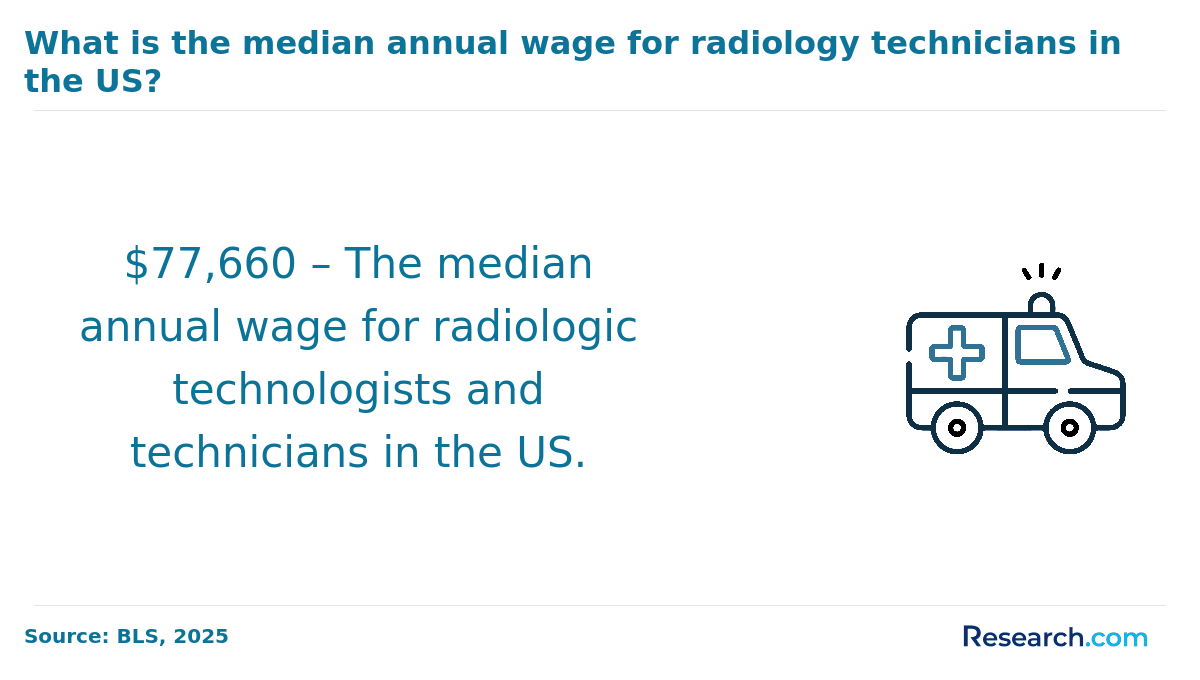
Radiology technician pay in Maine varies by location, employer type, shift, experience, modality, and certification. Entry-level radiology technicians typically earn between $45,000 and $50,000 annually, while the average annual salary for a Radiology Technician in Maine is $92,849. Auburn reports the highest average annual salary for Radiology Technicians in Maine at $103,192.
Private corporations and diagnostic imaging centers may pay technicians with specialized skills or credentials between $95,000 and $110,000 annually. Public hospitals and government agencies may offer compensation near the statewide average, often with structured benefits, overtime opportunities, and more predictable advancement policies. Nonprofit and outpatient care settings may offer lower base pay in some cases but can provide scheduling flexibility, education support, or a less acute work environment.
| Pay factor | How it can affect earnings | What to ask before accepting a job |
| Experience level | New graduates usually start lower than technologists with several years of clinical experience | How are raises determined after the first year? |
| Modality skills | CT, MRI, mammography, and other advanced skills may improve earning potential | Does the employer pay for cross-training or certification? |
| Shift and call requirements | Evenings, weekends, emergency coverage, and overtime can change total compensation | Are shift differentials, call pay, and overtime available? |
| Work setting | Hospitals, outpatient centers, government facilities, and private imaging groups may offer different pay-benefit mixes | What benefits are included beyond salary? |
| Location | Local demand and employer concentration can influence pay | How does the offer compare with similar roles in nearby Maine markets? |
For students still deciding whether radiology fits their long-term healthcare goals, reviewing broader degrees in healthcare can help compare education timelines, licensing requirements, and career mobility.
What is the job outlook for radiology technicians in Maine?
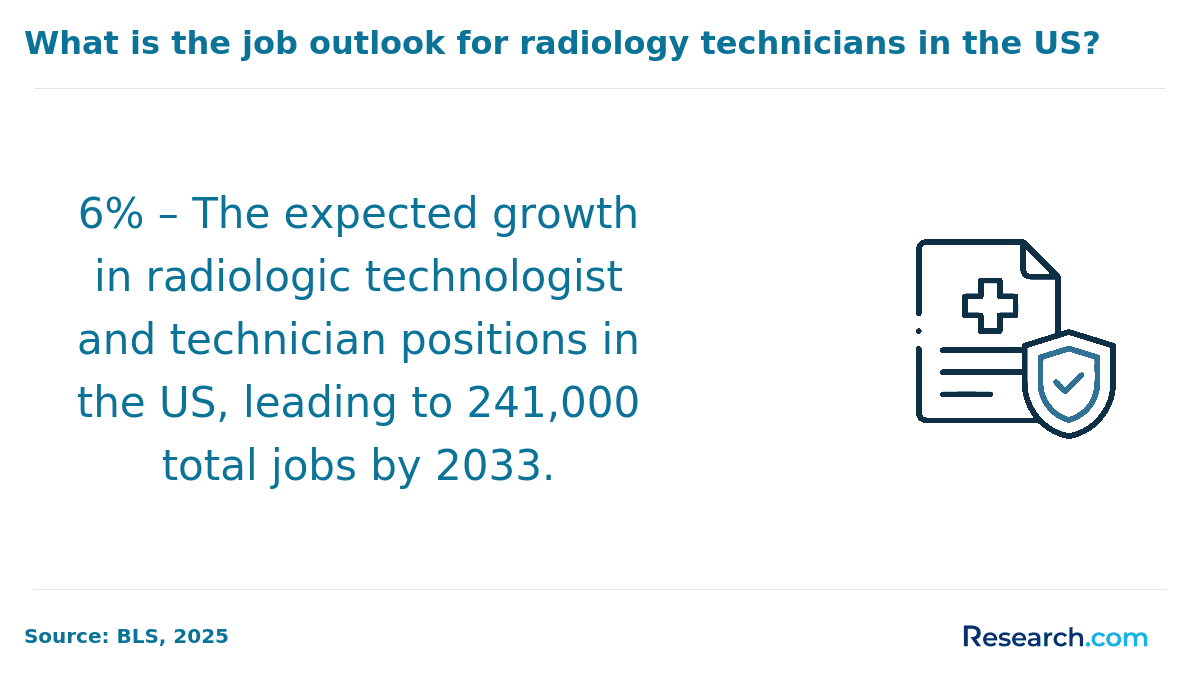
Maine’s outlook for radiology technicians is best understood as steady rather than rapidly expanding. Projected employment for Radiology Technicians in Maine is expected to reach 1,060 by 2032. At the same time, Maine shows no projected growth from 2022 to 2032, with around 60 annual job openings during that period.
That combination means students should not assume unlimited job growth, but they also should not overlook the ongoing need created by retirements, turnover, healthcare access needs, and diagnostic imaging demand. Hospitals, outpatient centers, and diagnostic laboratories continue to need qualified technologists who can produce reliable images while maintaining patient safety.
Specialization can matter. Technologists who add CT, MRI, mammography, or other advanced credentials may be more competitive for certain roles, especially in larger systems or facilities that need flexible imaging staff.
| Job outlook point | What it means | How to respond as a student or job seeker |
| Projected employment is expected to reach 1,060 by 2032 | Maine is expected to maintain a defined radiology workforce | Target accredited training and clinical experience that local employers recognize |
| No projected growth from 2022 to 2032 | Competition may depend heavily on location, employer, and specialization | Build a strong resume through clinical performance, references, and modality readiness |
| Around 60 annual job openings | Openings still occur even without overall growth | Monitor hospital systems, outpatient imaging centers, and rural healthcare employers |
| Technology keeps changing imaging practice | Employers may prefer technologists who can adapt to digital systems and new workflows | Keep continuing education current and stay comfortable with imaging software |
If speed to employment is a major factor, compare radiology programs with the best healthcare degree programs you can earn in 2 years or less to see which healthcare paths match your timeline, cost tolerance, and licensing goals.
Which industries provide the best opportunities for radiology technicians?
Radiology technicians in Maine can work in several healthcare environments, and the best choice depends on whether you value pay, schedule stability, benefits, patient variety, advancement, or community impact most.
| Work setting | Why it may appeal to radiology technicians | Possible trade-offs |
| Hospitals | Hospitals often offer broad case variety, emergency imaging experience, benefits, overtime possibilities, and room to move into advanced modalities | Schedules may include nights, weekends, holidays, or high-pressure urgent cases |
| Outpatient imaging centers | These settings may provide more predictable hours and focused imaging workflows | Case variety may be narrower than in hospitals, depending on the facility |
| Private diagnostic imaging groups | Specialized facilities may value technologists with CT, MRI, or other advanced skills | Benefits, pace, and job security can vary by employer |
| Government healthcare facilities | Veterans’ hospitals and public facilities may offer stability, structured advancement, and strong benefits | Hiring processes can be formal and may take longer |
| Nonprofit and community health settings | These roles can be meaningful for technologists who want to serve local or rural populations | Base pay may be lower than some private or hospital roles |
| Teleradiology-supported environments | Digital image sharing can support access in areas without on-site specialists | Technologists still need strong local image quality, documentation, and communication practices |
Students should use clinical rotations strategically. A hospital rotation can show whether you enjoy fast-paced acute care, while an outpatient rotation can help you decide whether scheduled exams and predictable workflow are a better fit.
How can interdisciplinary collaboration improve radiology technician outcomes in Maine?
Radiology technicians rarely work in isolation. They coordinate with radiologists, physicians, nurses, medical assistants, emergency staff, surgical teams, and administrative personnel. Strong collaboration can shorten delays, improve exam accuracy, reduce duplicate work, and make patients feel more supported during stressful procedures.
Cross-training does not mean a radiology technician should perform duties outside their scope. Instead, it means understanding how other clinical roles contribute to patient intake, safety checks, documentation, transfer assistance, and follow-up. Students who want a stronger grasp of front-line patient coordination can review the best medical assistant programs in Maine to see how medical assisting training approaches clinical workflow and patient communication.
How can radiology technicians transition to complementary healthcare roles in Maine?
Radiology can be a long-term career, but it can also become a platform for broader healthcare mobility. Some technologists move into advanced imaging, education, leadership, informatics, radiation therapy, diagnostic medical sonography, or nursing. The right transition depends on whether you want more patient management responsibility, more technical specialization, a leadership track, or a different work schedule.
| Possible transition | Best fit for | What to evaluate first |
| Advanced imaging modality | Technologists who enjoy imaging technology and want deeper specialization | Certification requirements, employer training support, and local openings |
| Nursing | Professionals who want broader patient care responsibility and clinical decision-making | Prerequisites, clinical hours, licensure requirements, and program cost |
| Healthcare administration or supervision | Technologists who enjoy operations, staff training, quality improvement, or scheduling | Leadership experience, degree expectations, and management pathways |
| Diagnostic medical sonography | Imaging professionals interested in ultrasound rather than ionizing radiation-based imaging | Program requirements, clinical training access, and credentialing rules |
If nursing is one of your possible next steps, the guide on how to become a nurse in Maine explains the education and licensing path for that profession.
How can obtaining complementary certifications enhance your radiology career in Maine?
Complementary certifications can strengthen a radiology career when they match employer needs and your preferred work setting. A credential should not be pursued only because it sounds impressive. It should help you qualify for a role, expand your scope appropriately, improve scheduling flexibility, or support promotion into a higher-responsibility position.
Radiology technicians considering a major cross-disciplinary move should compare the time and cost of each option. For example, learning how to get a nursing license in Maine may be useful if your long-term goal is to move from diagnostic imaging into broader patient care and clinical practice.
How can advanced certifications broaden radiology technician roles in Maine?
Advanced certifications can make radiology technicians more versatile, especially in facilities that need staff who can support multiple imaging services. Common advancement areas include computed tomography, magnetic resonance imaging, mammography, bone densitometry, and related imaging specialties. These credentials may lead to expanded duties, stronger job competitiveness, and improved compensation potential, though outcomes depend on employer demand and local openings.
Ultrasound is another imaging-related path, but it is not identical to radiography. It uses different technology, different scanning techniques, and separate credentialing expectations. Technologists interested in this direction can review how to become an ultrasound technician in Maine before committing to a program or certification plan.
What support networks exist for radiology technicians in Maine?
Professional support can make a difference during school, licensure, job search, and career advancement. Maine radiology technicians can look for mentorship through clinical sites, professional associations, local healthcare systems, alumni networks, continuing education events, and online imaging communities. A strong network can help with job leads, modality training advice, exam preparation, and navigating workplace expectations.
New healthcare workers who are still deciding between allied health roles may also compare radiology with patient-facing support careers such as how to become a medical assistant in Maine. Comparing roles early can prevent choosing a program that does not match your preferred pace, patient interaction level, or career ladder.
What are the latest trends and emerging technologies in radiology?
Radiology is becoming more digital, connected, and data-driven. In Maine, these changes matter because imaging services must support both larger healthcare centers and communities where access to specialists may be more limited.
Digital radiography, CT, MRI, image archiving systems, electronic health records, and teleradiology workflows have changed how technologists capture, review, transmit, and document imaging studies. Artificial intelligence is also becoming more visible in image analysis and workflow support. AI does not replace the need for skilled technologists; it increases the importance of high-quality image capture, correct patient information, reliable protocols, and careful communication with radiologists.
Technologists should also understand privacy and cybersecurity basics. Imaging files and health records contain sensitive patient information, so secure data handling is part of professional practice.
Technology skills radiology technicians should keep building
- Comfort with digital imaging platforms and electronic health record systems
- Ability to follow updated protocols for CT, MRI, and other advanced imaging environments when trained and authorized
- Awareness of how AI-assisted tools may support radiologists and imaging workflows
- Understanding of cybersecurity practices that protect patient data
- Clear communication in remote, hybrid, and team-based care environments
- Commitment to continuing education as equipment and protocols evolve
This chart from ASRT displays the primary place of employment for radiology technicians.
What challenges should you expect as a radiology technician in Maine?
Radiology can be a strong healthcare career, but applicants should understand the challenges before investing in a program. Maine students may face limited program options, competitive clinical placements, commuting considerations, and employer concentration in certain areas. Once employed, technologists must manage physical demands, patient anxiety, urgent exams, radiation safety expectations, and continuous technology changes.
| Common challenge | Why it matters | Better approach |
| Choosing a program without checking accreditation | Program quality can affect certification and licensure eligibility | Confirm accreditation and ARRT exam eligibility in writing before enrolling |
| Looking only at tuition | Fees, uniforms, books, background checks, immunizations, travel, and lost work time can affect total cost | Ask for a full cost estimate, including clinical-related expenses |
| Assuming online coursework is enough | Radiologic technology requires hands-on clinical training | Verify how clinical placements are arranged and where they occur |
| Ignoring licensing rules | Graduating from a program does not automatically guarantee authorization to practice | Check Maine licensing requirements before applying to schools |
| Underestimating the physical side of the job | Technologists may stand for long periods, move equipment, and assist patients | Learn body mechanics and evaluate whether the work environment fits your health needs |
| Assuming salary outcomes are guaranteed | Pay depends on employer, location, modality, shift, and experience | Compare actual job postings and ask employers about advancement and differentials |
Cost-conscious students can also compare radiology education options with what is the most affordable online associates degree in radiology, but they should verify clinical placement and state eligibility before choosing any online or hybrid program.
What legal and ethical best practices should radiology technicians follow in Maine?
Radiology technicians work with radiation, medical orders, protected health information, and patients who may be vulnerable or in pain. Legal compliance and ethical judgment are not optional parts of the job; they are central to safe imaging practice.
Core legal and ethical standards
- Maintain Maine licensure and ARRT certification requirements as applicable
- Use the ALARA principle, meaning radiation exposure should be kept As Low As Reasonably Achievable
- Confirm patient identity and the correct exam before beginning any procedure
- Follow facility protocols for pregnancy screening, shielding, contrast procedures, and exam documentation
- Protect patient privacy under HIPAA and employer confidentiality policies
- Communicate clearly with patients about positioning, exam expectations, and safety instructions
- Document accurately and report equipment issues, safety concerns, or image-quality problems
- Stay within professional scope and ask for guidance when an order, protocol, or patient situation is unclear
Ethical practice also includes cultural awareness and respect. Patients may have different communication needs, mobility limitations, trauma histories, religious concerns, or anxiety about imaging. A professional technologist combines technical precision with patience and dignity.
What career and professional development opportunities exist for radiology technicians in Maine?
Career growth for radiology technicians often comes from a combination of experience, continuing education, advanced modality training, and professional networking. The American Registry of Radiologic Technologists (ARRT) requires 24 continuing education credits every two years to maintain certification, which helps technologists stay current with safety practices and imaging technology.
Radiology technicians in Maine may pursue specialization in computed tomography, magnetic resonance imaging, mammography, bone densitometry, or related imaging areas. Others move into lead technologist, supervisor, clinical instructor, quality assurance, equipment applications, or department management roles.
| Advancement option | What it can lead to | Best first step |
| CT or MRI certification | Advanced modality roles and broader employability | Ask your employer about cross-training and supervised case requirements |
| Mammography or bone densitometry | Specialized outpatient or hospital imaging roles | Research credentialing standards and local demand |
| Lead technologist or supervisor | Team coordination, scheduling, protocol oversight, and training duties | Build reliability, communication, and quality-improvement experience |
| Clinical education | Teaching students, supporting clinical rotations, or working with education programs | Mentor students and document strong clinical performance |
| Radiologist assistant or related advanced role | Expanded imaging support responsibilities in selected settings | Review education, certification, and state practice expectations carefully |
Professional development resources may include the Maine Radiologic Technologists Association (MRTA), workshops, seminars, employer-sponsored education, professional conferences, and programs at Central Maine Community College and Southern Maine Community College. When comparing opportunities, prioritize options that align with your desired work setting rather than collecting credentials without a career plan.
Questions to ask before choosing a radiology technician program in Maine
- Is the program accredited for radiologic technology education?
- Are graduates eligible to take the ARRT exam?
- Does the program satisfy Maine licensing expectations?
- Where are clinical rotations located, and will I need to travel?
- What are the total costs beyond tuition?
- What support is available for exam preparation?
- How does the program help students secure clinical placements and references?
- Can credits transfer if I later pursue a bachelor’s degree or advanced healthcare credential?
- What percentage of coursework is online, in person, and clinical?
- Does the program have relationships with Maine hospitals, outpatient centers, or imaging employers?
Key insights
- The standard path to becoming a radiology technician in Maine is accredited radiologic technology education, supervised clinical training, ARRT certification, and state licensure.
- Salary can be attractive, but it varies by employer, location, shift, modality, and experience. The average annual salary for a Radiology Technician in Maine is $92,849, and Auburn reports $103,192.
- Maine’s job outlook is steady rather than fast-growing: projected employment is expected to reach 1,060 by 2032, with around 60 annual job openings despite no projected growth from 2022 to 2032.
- Program choice matters. Accreditation, clinical placement quality, ARRT eligibility, licensing alignment, and total cost are more important than convenience alone.
- Advanced certifications in CT, MRI, mammography, bone densitometry, or related imaging areas can improve career flexibility when they match employer demand.
- Technology is changing the profession, but strong fundamentals still matter most: patient positioning, radiation safety, communication, documentation, and image quality.
- Do not assume every online or hybrid radiology program qualifies you for Maine licensure. Verify requirements before enrolling.
Related Articles for Nearby States
- 2027 How to Become a Radiology Technician in New Hampshire
- 2027 How to Become a Radiology Technician in Massachusetts
- 2027 How to Become a Radiology Technician in Vermont
- 2027 How to Become a Radiology Technician in Connecticut
- 2027 How to Become a Radiology Technician in Rhode Island
- 2027 How to Become a Radiology Technician in New York
- 2027 How to Become a Radiology Technician in New Jersey
- 2027 How to Become a Radiology Technician in Pennsylvania
- 2027 How to Become a Radiology Technician in Delaware
- 2027 How to Become a Radiology Technician in Maryland
References:
- ASRT (2024). ASRT Enrollment Snapshot 2024. Retrieved from https://www.asrt.org/docs/default-source/research/enrollment-snapshot/enrollment-snapshot-2024.pdf?sfvrsn=494bb9ce_4
- DATA USA (n.d.). Radiologic Technologists and Technicians. Retrieved from https://datausa.io/profile/soc/radiologic-technologists-and-technicians
- O*NET OnLine (2025). Maine Employment Trends 29-2034.00 - Radiologic Technologists and Technicians. Retrieved from https://www.onetonline.org/link/localtrends/29-2034.00?st=ME
- US BLS (2023). Radiologic and MRI Technologists. Retrieved from https://www.bls.gov/ooh/healthcare/radiologic-technologists.htm
- ZipRecruiter (2025). Radiology Technician Salary in Maine. Retrieved from https://www.ziprecruiter.com/Salaries/Radiology-Technician-Salary--in-Maine
Other Things You Should Know About Being a Radio Technician in Maine
Maine does not issue a separate state radiology technician license. Employers look for ARRT certification, and radiographers must meet federal radiography standards through an accredited program, usually an associate degree of about 60 credit hours, before sitting for the ARRT exam.
Radiology technicians in Maine must complete 24 continuing education credits every two years to maintain certification. The credits can include subjects like patient care and radiologic technology advancements, and they must be approved by the American Registry of Radiologic Technologists (ARRT).


