
2027 Healthcare Degree Programs You Can Earn in 2 Years or Less

Co-Founder and Chief Data Scientist
Short healthcare programs are attractive because they can lead to paid clinical or administrative work faster than a four-year degree. The hard part is choosing a credential that is quick without being risky. In healthcare, the wrong program can affect licensure eligibility, certification exams, clinical placement, transfer credit, financial aid, and whether local employers will take the credential seriously.
This guide is for students comparing healthcare degrees, diplomas, and certificates that can usually be completed in two years or less. You will learn which programs lead to defined careers, how online and campus formats differ, what costs to expect, what admissions requirements are common, and how to evaluate accreditation, clinical training, career services, and long-term advancement before enrolling.
Quick Answer: Should You Consider a 2-Year Healthcare Degree?
Yes. A two-year healthcare degree can be a strong option if it is accredited, fits your state’s licensing or certification rules, includes required clinical experience, and prepares you for a job you are willing to do day to day. The careers in this guide report 2023 median annual salaries from $42,000 to $86,070, with projected growth from 5.5% to 26%, depending on the occupation.
- A short healthcare credential can lead to roles such as registered nurse, radiologic technologist, physical therapist assistant, surgical technologist, dental assistant, medical assistant, medical records specialist, or licensed practical nurse.
- Online learning is most practical for administrative and theory-based healthcare programs. Patient care, imaging, rehabilitation, nursing, and surgical support programs usually require labs, simulations, practicums, or clinical rotations in person.
- The best choice is not necessarily the fastest or least expensive program. Students should confirm accreditation, exam eligibility, clinical placement support, transfer options, graduate outcomes, and total cost before committing.
- 10 healthcare programs you can complete in 2 years or less for 2027
- Online vs. campus-based 2-year healthcare programs
- Average cost of a 2-year healthcare degree
- Financial aid options for healthcare students
- Common admission requirements and prerequisites
- Employer value of 2-year healthcare degrees
- How to choose the right 2-year healthcare program
- Salary potential with an associate degree in healthcare
- How to advance after earning an associate degree
- Job market for 2-year healthcare graduates
- Why accreditation matters
- Return on investment for 2-year healthcare degrees
- Using supplemental online courses to build career skills
- Credit transfer from a 2-year healthcare program
- Academic pathways after a 2-year healthcare credential
- Doctoral-level healthcare pathways after a 2-year credential
- Healthcare administration options after a 2-year program
- Using a 2-year healthcare degree to move toward leadership
- How clinical partnerships affect outcomes, including leadership planning and administration pathways
- Transitioning into healthcare administration faster
- Career services and job placement support
- Employment outcomes after graduation
- Supplemental online science degrees
- How to evaluate program quality
- Supplemental science coursework
- Accelerated healthcare program pathways
- Benefits and challenges of 2-year healthcare degrees
- How 2-year healthcare degrees match industry needs for 2027
10 Healthcare Degree Programs You Can Finish in 2 Years or Less for 2027
Because healthcare programs can determine whether you qualify for a license, certification exam, federal aid, clinical placement, or future transfer credit, students should compare schools using verifiable information rather than marketing language alone. Research.com reviews data from the IPEDS database, Peterson's database, including the Distance Learning Licensed Data Set, the College Scorecard database, and the National Center for Education Statistics. You can review additional details on our methodology page.
| Healthcare program | Common career target | 2023 median annual salary listed in this guide | Projected growth listed in this guide |
| Associate of Science in Nursing | Registered nurse | $86,070 | 5.6% from 2022 to 2032 |
| Ultrasound Technology | Diagnostic medical sonographer or related imaging role | $80,850 | 11% from 2023 to 2033 |
| Neurodiagnostic Technology | Neurodiagnostic technician | $80,850 | 11% from 2022 to 2032 |
| Radiology Technology | Radiologic technologist | $73,410 | 5.5% from 2022 to 2032 |
| Physical Therapy Assistant | Physical therapist assistant | $64,080 | 26% from 2022 to 2032 |
| Surgical Technology | Surgical technologist | $60,610 | 5.5% from 2022 to 2032 |
| Diploma in Practical Nursing | Licensed practical nurse or licensed vocational nurse | $59,730 | 5.3% from 2022 to 2032 |
| Medical Billing and Coding | Medical records specialist | $48,780 | 8.5% from 2022 to 2032 |
| Dental Assisting | Dental assistant | $46,540 | 6.9% from 2022 to 2032 |
| Medical Assisting | Medical assistant | $42,000 | 13.8% from 2022 to 2032 |
1. Associate of Science in Nursing (ASN)
An Associate of Science in Nursing prepares students for registered nursing practice and direct patient care. Typical training includes assessment, medication administration, care coordination, patient education, safety procedures, documentation, and communication with physicians and other members of the care team. Registered nurse employment is projected to grow 5.6% from 2022 to 2032, with 193,100 new jobs anticipated. The 2023 median annual salary for registered nurses was $86,070.
The ASN can also serve as a stepping stone. Many nurses work as RNs first, then complete a bachelor’s degree or pursue specialty graduate education. Nurses considering psychiatric mental health as a future specialty may eventually compare the cheapest online PMHNP programs when planning a longer education pathway.
Institutions offering Associate of Science in Nursing programs:
- Georgia State University
- Southern Illinois University Edwardsville
- Purdue University Northwest
2. Ultrasound Technology
Ultrasound technology programs train students to use sonography equipment, obtain diagnostic images, explain procedures to patients, and help physicians evaluate medical findings. This option fits students who want a hands-on diagnostic role that blends anatomy, technology, communication, and visual problem-solving. Ultrasound technologist jobs are projected to grow 11% from 2023 to 2033. The 2023 median annual salary was $80,850.
Institutions offering ultrasound technology programs:
- Thomas Jefferson University
- San Diego Mesa College
- Wake Technical Community College
3. Neurodiagnostic Technology
Neurodiagnostic technology centers on tests involving the brain, spinal cord, nerves, and related systems. Students may study electroencephalograms, nerve conduction procedures, and other diagnostic techniques used when providers evaluate epilepsy, sleep disorders, neuropathies, and neurological conditions. Neurodiagnostic technician employment is projected to grow 11% from 2022 to 2032. The 2023 median annual salary was $80,850.
Institutions offering neurodiagnostic technology programs:
- Georgia Southern University
- Southern California University of Health Sciences
- Mercy College
4. Radiology Technology
Radiology technology programs prepare students to create diagnostic images through tools and modalities such as X-rays, MRIs, and CT scans. Students learn patient positioning, anatomy, equipment use, radiation protection, image quality, and safety practices. The occupation is projected to grow 5.5% from 2022 to 2032, with about 13,100 new positions expected. The 2023 median annual salary was $73,410.
This pathway can also introduce students to broader imaging and medical careers. If your long-term goal is to become a physician specializing in imaging, study the full process for how to become a radiologist, because radiologists complete medical school and residency rather than a two-year technologist program alone.
Institutions offering radiology technology programs:
- University of Arkansas for Medical Sciences
- Delaware Technical Community College
- Santa Barbara City College
5. Physical Therapy Assistant
Physical therapy assistant programs train students to work under the supervision of licensed physical therapists. PTAs help patients perform therapeutic exercises, practice mobility skills, follow rehabilitation plans, and document progress after injuries, surgeries, or chronic health conditions. Among the two-year healthcare occupations in this guide, this role has the highest projected growth at 26% from 2022 to 2032. The 2023 median annual salary was approximately $64,080.
Institutions offering physical therapy assistant programs:
- St. Philip's College
- Santa Fe Community College
- Tennessee College of Applied Technology
6. Surgical Technology
Surgical technology programs prepare students for operating room support work. Surgical technologists organize sterile instruments, prepare procedure areas, pass tools to surgeons, maintain aseptic technique, and help the surgical team keep procedures safe and efficient. Employment is projected to grow 5.5% from 2022 to 2032, with about 7,200 new U.S. positions expected during that period. The 2023 median annual salary was approximately $60,610.
Institutions offering an associate degree in surgical technology:
- Aims Community College
- University of Saint Francis
- Southwestern Community College
7. Diploma in Practical Nursing (DPN)
A diploma in practical nursing is included because it can provide a comparatively quick route into hands-on patient care, although it is not technically a degree. These programs often take about 12 months and prepare students for licensed practical nurse or licensed vocational nurse roles, depending on the state. LPNs and LVNs monitor patients, provide basic nursing care, assist with medications within their scope, and communicate with RNs and physicians. Employment is expected to grow 5.3% from 2022 to 2032. The 2023 median annual salary was approximately $59,730.
Institutions offering LPN/VPN programs:
- Rasmussen University
- Brookline College
- Unitek College
8. Medical Billing and Coding
Medical billing and coding programs focus on the business and documentation side of healthcare. Students learn to convert diagnoses, procedures, and services into standardized codes, assist with claims, support accurate records, and follow compliance rules. This is one of the better-suited healthcare paths for online study because it generally does not require the same level of direct patient care training as clinical programs. Employment is projected to grow 8.5% from 2022 to 2032. The median annual salary for medical records specialists was approximately $48,780.
Institutions offering medical billing and coding programs:
- Everett Community College
- North-West College
- Rasmussen University
9. Dental Assisting
Dental assisting programs teach students to support dentists and dental hygienists in both clinical and office responsibilities. Training may include chairside assisting, infection control, dental radiography, patient communication, instrument setup, and dental office workflows. Employment is projected to grow 6.9% from 2022 to 2032, and the median annual salary for dental assistants was approximately $46,540.
If you like oral healthcare but want a role with more advanced clinical duties, compare the education and licensing steps for how to become a dental hygienist before deciding whether dental assisting is your endpoint or your first step.
Institutions offering dental assisting programs:
- Carrington College
- Pima Medical Institute
- Southern Illinois University Carbondale
10. Medical Assisting
Medical assisting programs combine front-office training with basic clinical skills. Students may learn to measure vital signs, prepare exam rooms, update electronic health records, schedule visits, support patient intake, and assist physicians or nurses in outpatient care settings. The occupation is projected to grow 13.8% from 2022 to 2032, with a median annual salary of about $42,000.
Medical assisting can be a useful entry point for students who want healthcare experience before moving into nursing. If nursing is your long-term target, review the steps from medical assistant to RN before selecting a program so you understand which credits and experiences may or may not help.
Institutions offering medical assisting programs:
- Keiser University
- Virginia College
- Miller-Motte College
Online vs. On-Campus 2-Year Healthcare Programs: Which Format Fits?
Online healthcare education can reduce commuting and make scheduling easier, but format should follow the career goal. Administrative programs, including medical billing and coding, may be available mostly online. Programs tied to patient care, imaging equipment, physical skills, sterile technique, or supervised practice usually include required in-person components. For example, students looking at medical assistant to LPN online options should still expect local clinical training, skills labs, or campus visits.
| Decision factor | Online format | Campus-based format |
| Best for | Students who need flexibility, have work or family obligations, or live far from campus | Students who learn best through in-person practice and regular access to labs and faculty |
| Clinical or lab work | May involve local placements, scheduled labs, simulations, or occasional campus sessions | Usually connects classroom instruction with campus labs and nearby healthcare sites |
| Peer and faculty interaction | Uses learning platforms, video meetings, discussion boards, and virtual office hours | Offers face-to-face coaching, live demonstrations, and hands-on peer practice |
| Programs that often translate better | Medical billing and coding, health information, and selected general education courses | Nursing, radiology, ultrasound, surgical technology, and physical therapy assistant programs |
| Main issue to verify | Whether the online program meets licensure, certification, clinical, and state requirements | Whether commuting, lab schedules, and clinical site assignments are manageable |
Choose the delivery model that lets you complete the required training well. Flexibility is valuable, but it should not override accreditation, licensure eligibility, or clinical readiness.
What Does a 2-Year Healthcare Degree Usually Cost?
Program cost depends on the school type, program length, required equipment, clinical fees, and whether the institution is public or private. Tuition commonly ranges from $3,000 to $20,000 at community colleges or vocational schools. Public two-year colleges average around $3,800 per academic year. Private institutions may charge from $10,000 to $25,000 for a two-year program.
Students should calculate the full price, not only tuition. Healthcare programs often add costs for textbooks, uniforms, immunizations, physical exams, background checks, drug screenings, CPR certification, lab supplies, certification exams, licensing applications, and transportation to clinical sites. Ask each school for a written cost breakdown before enrolling.
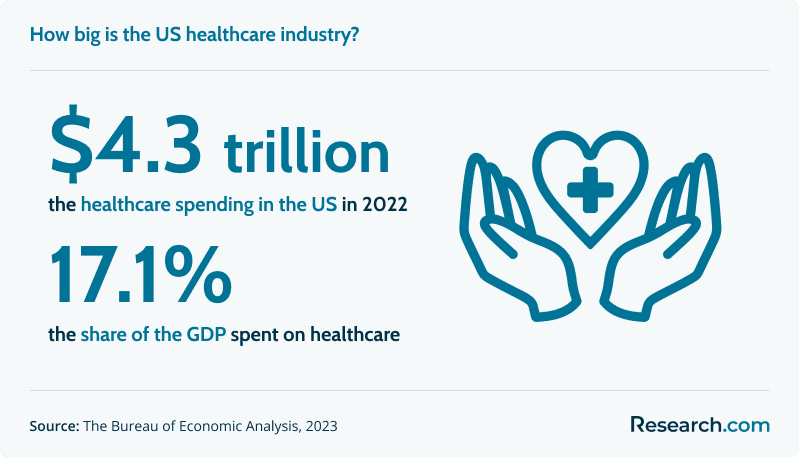
The healthcare sector is a major part of the U.S. economy. Health care spending reached about $4.3 trillion, or roughly 17.1% of the country’s GDP.
Financial Aid Options for Students in Short Healthcare Programs
Students enrolled in eligible two-year healthcare programs may qualify for federal, state, institutional, or private financial aid. A common first step is completing the Free Application for Federal Student Aid, or FAFSA. Federal aid can include grants, work-study, and loans. Pell Grants do not require repayment, while federal student loans must be repaid with interest.
Community colleges, technical colleges, and vocational schools may also offer healthcare scholarships, need-based aid, payment plans, or workforce development support. Some states provide funding for residents preparing for high-demand healthcare occupations. Before choosing a school, confirm whether it is among the colleges that accept FAFSA, because federal aid eligibility can substantially affect affordability.
Common Prerequisites and Admission Requirements
Admissions standards differ by school and program. Some colleges allow general admission first, then require students to apply separately to a competitive nursing or allied health program after completing prerequisites.
- High school diploma or GED: Most schools require proof that applicants completed secondary education or an equivalent credential.
- Minimum GPA: Some programs accept students with a GPA around 2.0 or higher, while selective clinical programs may require stronger academic performance.
- Math and science background: Programs may require biology, chemistry, anatomy, physiology, algebra, or related courses before entry.
- Entrance exams: Nursing and allied health departments may use tests such as the TEAS or Accuplacer.
- Clinical clearance documents: Background checks, drug tests, immunization records, CPR certification, physical exams, and safety training are common before students can enter clinical sites.
- Technical standards: Nursing, imaging, PTA, and surgical technology programs may set physical, communication, mobility, and safety requirements tied to patient care.
Ask whether meeting the stated minimums guarantees admission or only qualifies you to compete for a limited seat.
Do Employers Respect 2-Year Healthcare Degrees?
Employers commonly value two-year healthcare credentials when they come from accredited programs and prepare graduates for the license, certification, or registry required for the role. Hiring managers typically look for practical competence, patient safety awareness, professionalism, accurate documentation, and dependability in clinical or administrative settings.
Demand also shapes employer interest. Projections show about 55,100 annual openings for licensed practical nurses, 18,100 for physical therapist assistants, and 15,000 for medical billers and coders. Even so, the credential itself is only part of the hiring equation. Certification status, clinical evaluations, communication skills, work ethic, and local employer relationships can influence outcomes.
How to Choose the Right 2-Year Healthcare Program
A good program should match your target job, state requirements, budget, schedule, learning style, and future education plans. Use this checklist before you apply.
- Confirm accreditation: Check institutional accreditation and, when the occupation expects it, programmatic accreditation from a recognized organization such as the Commission on Accreditation of Allied Health Education Programs (CAAHEP).
- Verify exam and license eligibility: Ask whether graduates qualify for the specific certification, registry, or license required in your state.
- Review clinical placement policies: Find out whether the school arranges placements, how far students may travel, and whether placement is guaranteed.
- Compare complete costs: Add tuition, school fees, uniforms, supplies, exams, transportation, background checks, and potential lost work time.
- Inspect the curriculum: Strong healthcare programs combine coursework, lab practice, simulation, supervised clinical experience, and current documentation standards.
- Ask about transfer options: If a bachelor’s degree may be part of your future, look for written articulation agreements. Nursing students may want a path that later supports affordable RN to BSN online programs.
- Evaluate employment support: Ask about resume assistance, mock interviews, employer partnerships, job fairs, graduate placement data, and alumni connections.
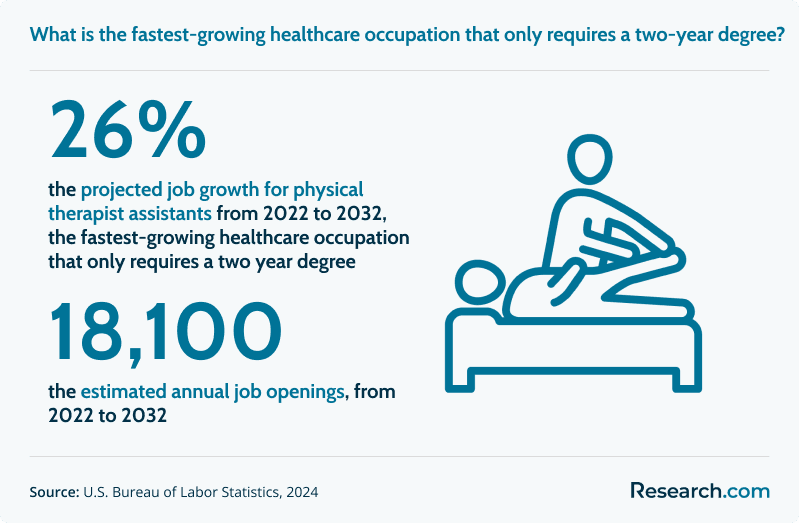
Physical therapist assisting is the fastest-growing occupation in this guide that requires a two-year healthcare degree, with projected job growth of 26% from 2022 to 2032.
Salary Potential With an Associate Degree or Short Healthcare Credential
Pay varies by occupation, employer, location, experience, certification, specialty, and shift. The 2023 median annual salaries below show the range for the roles covered in this guide.
- Registered Nurses: $86,070
- Diagnostic Medical Sonographers and Cardiovascular Technologists: $80,850
- Radiologic Technologists: $73,410
- Physical Therapist Assistants: $64,080
- Surgical Technologists: $60,610
- Licensed Practical and Licensed Vocational Nurses: $59,730
- Medical Records Specialists: $48,780
- Dental Assistants: $46,540
- Medical Assistants: $42,000
Some programs on this list may appear in discussions of easy degrees that pay well because they take less time than a bachelor’s degree and lead to specific jobs. Still, “quick” does not mean effortless. Clinical programs require strong attendance, science preparation, hands-on competence, professionalism, and patient safety judgment.
How to Advance After a 2-Year Healthcare Degree
A short healthcare credential can be the beginning of a career ladder. Advancement usually depends on experience, additional education, certifications, specialty training, and performance in the workplace.
- Develop credibility in your first position: Strengthen documentation habits, technical accuracy, patient communication, teamwork, and reliability.
- Add credentials that match your role: Relevant certifications can demonstrate focused knowledge and may support movement into specialty duties.
- Continue into a higher degree when useful: Nurses with an ASN may later consider an accelerated BSN program online, while allied health graduates may move into health sciences, informatics, or administration.
- Use short courses selectively: Targeted online certifications that pay well can help build administrative, technical, leadership, or software skills.
- Build relationships inside healthcare: Supervisors, clinical preceptors, professional associations, alumni, and colleagues can help you identify bridge programs and specialty openings.
Education can affect long-term earnings. In 2023, bachelor’s degree holders had a median weekly salary of $1,493, compared with $1,058 for associate degree holders.
Job Market Outlook for Graduates of 2-Year Healthcare Programs
The labor market for short healthcare program graduates is supported by continued need for patient care, diagnostic imaging, rehabilitation services, outpatient support, documentation, and claims processing. Registered nurses are projected to have about 193,100 annual job openings from 2022 to 2032. Administrative roles such as medical billing and coding also remain important because healthcare organizations depend on accurate records, coding, and reimbursement processes.
Across the careers discussed in this guide, projected growth ranges from 5.5% to 26% for the 2022 to 2032 projection period. However, hiring conditions differ by region. Before choosing a program, review current job postings near you and note which credentials, certifications, and experience levels employers request.
Why Accreditation Matters in 2-Year Healthcare Programs
Accreditation is a major quality checkpoint in healthcare education. It signals that a school or program has been reviewed against recognized standards for curriculum, faculty, student support, resources, and outcomes. In many fields, accreditation can affect certification exams, state licensure, federal financial aid, credit transfer, and employer acceptance.
If you plan to move into management later, choose a pathway that will not block future graduate study, including options such as online MHA programs. Before enrolling, ask the admissions office to identify the school’s institutional accreditor and any programmatic accreditor connected to your healthcare field.
Is a 2-Year Healthcare Degree a Good Return on Investment?
A two-year healthcare program can offer a favorable return when it leads to a licensed or clearly defined job, keeps debt reasonable, and leaves room for future advancement. To evaluate ROI, compare total program cost, time away from work, exam pass rates, job placement support, local demand, and realistic salary expectations for your area.
Some graduates improve their career options by adding focused credentials after they begin working. For example, medical certificate programs may complement an associate degree or diploma when employers in the target role actually ask for those skills.
Can Supplemental Online Courses Help You Move Ahead Faster?
Supplemental online courses can be useful when they address a specific skill gap. They often work well for administrative healthcare skills, software practice, compliance knowledge, coding refreshers, and exam preparation. For instance, medical billing and coding online courses can help students or working professionals strengthen coding, records, and reimbursement skills.
Extra courses should not replace accredited clinical education or mandatory licensure preparation. Use them to sharpen skills, explore a specialty, or prepare for a credential, not to bypass requirements.
Can Credits From a 2-Year Healthcare Program Transfer?
Transfer credit depends on the receiving school, the original institution’s accreditation, course grades, course content, and whether a formal articulation agreement exists. Some associate degrees are built for transfer, while workforce-focused programs may apply only partially toward a bachelor’s degree.
If you intend to continue school, ask for written transfer guidance before enrolling. Cost comparisons also matter early. Students reviewing medical assisting pathways, for example, may want to understand how much is a medical assistant program before deciding between a certificate, diploma, or associate degree.
Can a 2-Year Healthcare Credential Lead to Higher Degrees?
Yes. Many healthcare workers use a two-year credential as the first step toward a bachelor’s, master’s, or professional program. Common routes include RN-to-BSN programs, bachelor’s degrees in health sciences, healthcare administration degrees, and specialized graduate study.
Some pathways are longer and more competitive than others. Students interested in pharmacy, for example, may eventually compare accredited online PharmD programs, but a two-year healthcare credential alone does not qualify someone to practice as a pharmacist. It can help with healthcare exposure and prerequisite planning, but additional admissions requirements still apply.
Can a 2-Year Healthcare Degree Lead Toward Doctoral-Level Careers?
A two-year healthcare credential can be an early foundation for doctoral or professional healthcare goals, but it is not a shortcut around required education. Doctoral and professional programs commonly require bachelor’s-level coursework, prerequisites, competitive applications, clinical or research preparation, and a long academic timeline.
Students interested in advanced pharmacy practice or pharmacy leadership can research Pharm D online programs while mapping prerequisites and transfer plans. The safest approach is to understand the full education sequence before selecting the first short program.
How Healthcare Administration Fits After a 2-Year Healthcare Program
After gaining clinical or administrative experience, some graduates shift toward operations, compliance, scheduling, budgeting, supervision, or department coordination. A healthcare administration degree can help build skills in management, finance, quality improvement, policy, and leadership.
This path may fit you if you prefer healthcare systems, team coordination, and organizational problem-solving over direct patient care. Before enrolling, compare admissions standards, transfer credit policies, internship options, and whether the program is designed for working adults.
How a 2-Year Healthcare Degree Can Support Future Leadership Roles
Healthcare leadership usually grows from technical competence, reliable performance, communication skills, experience, and additional training. A two-year credential can get you into the field, but supervisory roles often require demonstrated workplace success and sometimes a bachelor’s degree or management credential.
Graduates interested in operations, compliance, scheduling, team supervision, or department management can review the responsibilities and education patterns tied to top paying healthcare administration jobs. A practical strategy is to gain frontline experience while seeking mentorship, leadership coursework, and project responsibility over time.
How Clinical Partnerships and Industry Affiliations Affect Outcomes
Clinical partnerships can shape how well students are prepared for employment. Programs with strong healthcare affiliates may offer access to real patient care environments, current equipment, professional expectations, and potential employer contacts. In clinical fields, placement quality can be just as important as classroom instruction.
Ask which hospitals, clinics, imaging centers, rehabilitation facilities, or dental offices host students. Also clarify whether the school assigns clinical placements or expects students to find their own. If your broader plan includes another healthcare profession, such as pharmacy, reviewing how long to be a pharmacist can help you decide how early clinical experience fits your timeline.
Can a 2-Year Healthcare Degree Speed Up a Move Into Administration?
A short healthcare credential can help you enter the healthcare system sooner, which may make later administration training more meaningful. Direct clinical or front-office experience can give future managers insight into patient flow, staffing, documentation, scheduling, safety procedures, and reimbursement.
If management is your goal, look for bridge or completion programs that recognize previous credits and work experience. A fast track healthcare administration degree may suit working professionals who want business and leadership training without starting from the beginning.
Career Services and Job Placement Support to Look For
Strong healthcare programs should provide support beyond coursework. Valuable services include resume reviews, mock interviews, certification exam preparation, employer visits, clinical coordination, job fairs, and alumni networking.
Employer connections can be especially important in specialized programs. Students comparing sonography options, for example, may review colleges for ultrasound technician and ask each school about clinical sites, registry exam preparation, and job placement support for recent graduates.
How to Interpret Post-Graduation Employment Statistics
Employment data should be reviewed at the program level. Do not rely only on promotional claims. Ask for recent completion rates, certification or licensure pass rates, graduate employment rates, and the school’s definition of “job placement.” A placement rate is more useful when it refers to employment in the field rather than any type of job.
Students who want broader career flexibility may later compare medical related online degrees that build on an initial credential. This can help graduates move from a narrow technical role into health sciences, informatics, administration, or another healthcare specialty.
Can an Online Science Degree Strengthen a 2-Year Healthcare Credential?
Additional science study may help students who want to pursue research, laboratory work, pre-professional tracks, or bachelor’s-level healthcare education. A stronger biology background can also improve understanding of anatomy, physiology, disease processes, and clinical evidence.
Students looking for a quicker academic route may compare the fastest online degree in biology. Before enrolling, confirm whether credits support your long-term goal and whether online labs satisfy future prerequisites or professional school requirements.
How to Judge the Quality of a 2-Year Healthcare Program
Program quality should be evaluated with evidence, not slogans. Start with accreditation, then examine completion rates, certification or licensure exam pass rates, clinical placement strength, graduate employment data, faculty qualifications, student support, and employer partnerships.
If advanced education is part of your plan, ask whether graduates have successfully transferred into bachelor’s, master’s, or professional programs. Students with pharmacy goals, for example, may later compare a doctor of pharmacy degree, but should first verify that prerequisites and transfer credits align.
When Supplemental Science Courses Make Sense
Targeted science courses can add value when they support a clear next step. Biology, anatomy, physiology, microbiology, and chemistry may help students prepare for competitive programs or deepen their understanding of clinical concepts.
An online biology degree program may be useful for students planning for research, laboratory science, healthcare education, or graduate preparation. Students should still verify whether online lab courses meet the rules of future programs.
Are Accelerated Healthcare Program Pathways Available?
Some schools use condensed terms, year-round scheduling, block formats, or accelerated certificates to reduce completion time. These options can help students enter the workforce sooner, but they are often more intense. Faster formats may require heavier weekly study, stricter attendance, and less flexibility during clinical rotations.
Students seeking quick entry into outpatient care may compare fast track medical assistant programs. Before enrolling, make sure the accelerated structure still prepares you for employer expectations, certification exams, and safe practice.
Benefits and Challenges of 2-Year Healthcare Degrees
A two-year healthcare degree can be worthwhile if you want a faster path into healthcare, can handle clinical requirements, and choose a program tied to a real labor market. It may not be the right choice if your desired occupation requires a bachelor’s, graduate, or professional degree from the beginning.
| Potential advantage | Why it can matter | What you should confirm |
| Quicker entry into work | You may start earning and building healthcare experience sooner than you would in a four-year program. | Whether the program qualifies you for the required license, registry, or certification. |
| Potentially lower total cost | A shorter program may reduce tuition costs and time away from employment. | Total price, including fees, supplies, exams, transportation, uniforms, and clinical expenses. |
| Clear occupational pathway | Many programs are designed for specific roles such as RN, PTA, radiologic technologist, or medical assistant. | Whether local employers are hiring for that role and what credentials they prefer. |
| Future transfer possibilities | Some associate degrees can support later bachelor’s completion. | Written articulation agreements and the receiving school’s transfer credit policy. |
Common Challenges
- Advancement may require more education: Specialty, leadership, and higher-paying roles often require additional credentials.
- Clinical schedules can be demanding: Students may need daytime rotations, travel, and strict attendance at assigned sites.
- Licensure rules can be complicated: Requirements differ by state and occupation, so eligibility must be verified before enrollment.
- Selective programs may be competitive: Nursing, imaging, and allied health programs may have limited seats even at community colleges.
- Online study has limits: Hands-on patient care and technical fields usually cannot be completed fully online.
Graduates interested in data, systems, records, and healthcare technology may later consider a health informatics online degree to build on clinical or administrative experience.
How 2-Year Healthcare Degrees Align With Industry Needs for 2027
Two-year healthcare programs match several ongoing workforce needs, including direct patient care, diagnostic testing, rehabilitation support, outpatient services, accurate documentation, and efficient clinical operations. Nursing, medical assisting, health information, imaging, and rehabilitation roles help hospitals, clinics, long-term care facilities, and outpatient centers deliver care.
Technology is also changing what employers expect from entry-level healthcare workers. Electronic health records, telemedicine platforms, imaging systems, digital scheduling tools, coding software, and compliance systems require employees who can use technology accurately while protecting patient privacy. Students should look for programs that teach current software, documentation standards, and hands-on procedures where appropriate.
Students who eventually want executive, business, or strategy-focused healthcare roles may consider an MBA healthcare management online after gaining experience and completing the necessary undergraduate education.
Common Mistakes to Avoid When Choosing a Short Healthcare Program
- Prioritizing speed over eligibility: A fast program is a poor investment if it does not meet licensure, certification, registry, or employer requirements.
- Skipping accreditation checks: Missing or inappropriate accreditation can affect financial aid, exams, transfer credits, and hiring.
- Comparing tuition only: Fees, uniforms, supplies, clinical travel, background checks, exams, and licensing costs can change affordability.
- Assuming online means no campus time: Many healthcare programs require labs, simulations, practicums, or clinical rotations.
- Forgetting state-specific rules: Scope of practice and licensure requirements vary by state and occupation.
- Ignoring transfer limits: Career-focused credits may not always apply neatly toward a bachelor’s degree.
- Depending only on rankings: Rankings can be useful, but accreditation, clinical placement quality, cost, outcomes, and fit matter more.
Questions to Ask Before You Enroll
- Is the school institutionally accredited, and does the specific healthcare program have programmatic accreditation when the field expects it?
- Will graduating from this program make me eligible for the required certification, registry, exam, or license in my state?
- Does the school arrange clinical placements, and where have recent students completed them?
- What are the most recent completion rates, exam pass rates, and job placement rates?
- What is the full estimated cost, including tuition, fees, supplies, uniforms, exams, background checks, and transportation?
- Can credits transfer into a bachelor’s program, and are articulation agreements available in writing?
- Which courses are online, hybrid, or in person, and what campus or clinical requirements are mandatory?
- What career services are available during the program and after graduation?
Key Insights
- A two-year healthcare credential can be a practical path into the workforce when it leads to a recognized role and meets state, certification, and employer requirements.
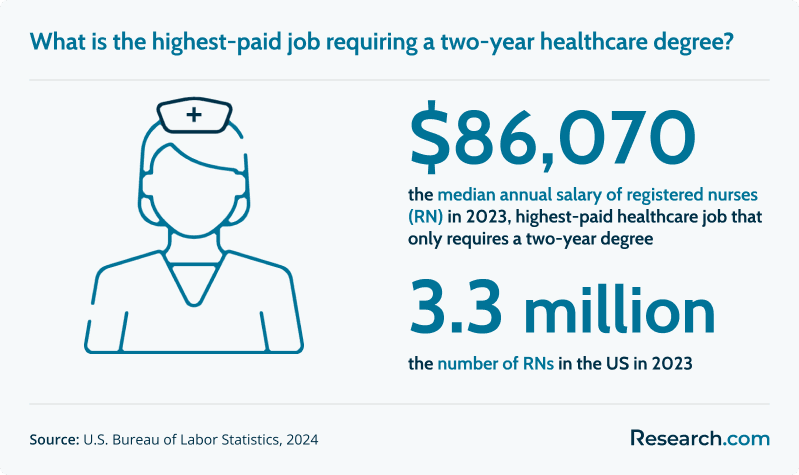
- Registered nurse is the highest-paid career in this guide, with a 2023 median annual salary of $86,070.
- There are approximately 3.3 million registered nurses in the United States as of 2023, which shows the size of the occupation.
- Physical therapist assistant is the fastest-growing role listed here, with projected job growth of 26% from 2022 to 2032.
- Physical therapist assistants are projected to have 18,100 annual job openings over the same period.
- Online programs are most suitable for administrative or theory-heavy healthcare coursework; clinical and technical programs usually require in-person practice.
- Accreditation, clinical placement quality, exam eligibility, total cost, and transfer options are more important than choosing the shortest program available.
- The strongest strategy is to pick a credential that can help you get employed now while keeping realistic pathways open for bachelor’s study, specialty certification, leadership, or healthcare administration later.
References:
- Projections Central. (2024). Long-term occupational projections (2022-2032). Retrieved October 1, 2024, from Projections Central.
- U.S. Bureau of Labor Statistics. (2024). Licensed practical and licensed vocational nurses. Retrieved October 1, 2024, from BLS.
- U.S. Bureau of Labor Statistics. (2024). Registered nurses. Retrieved October 1, 2024, from BLS.
- U.S. Bureau of Labor Statistics. (2024). Physical therapist assistants and aides. Retrieved October 1, 2024, from BLS.
- U.S. Bureau of Labor Statistics. (2024). Dental assistants. Retrieved October 1, 2024, from BLS.
- U.S. Bureau of Labor Statistics. (2024). Medical assistants. Retrieved October 1, 2024, from BLS.
- U.S. Bureau of Labor Statistics. (2024). Radiologic and MRI technologists. Retrieved October 1, 2024, from BLS.
- U.S. Bureau of Labor Statistics. (2024). Surgical assistants and technologists. Retrieved October 1, 2024, from BLS.
- U.S. Bureau of Labor Statistics. (2024). Medical records specialists. Retrieved October 1, 2024, from BLS.
- U.S. Bureau of Labor Statistics. (2024). Diagnostic medical sonographers and cardiovascular technologists and technicians. Retrieved October 1, 2024, from BLS.
Other Things You Should Know About 2-Year Healthcare Degree Programs
In 2027, you can pursue various two-year healthcare degrees such as an Associate Degree in Nursing (ADN), Associate of Science in Radiologic Technology, or a Pharmacy Technician certificate. These programs provide a quick path to entering the healthcare workforce.
Many associate degrees can lead to licensure, including nursing, dental hygiene, radiologic technology, and respiratory care. Graduation alone is not enough; graduates must meet state board requirements and pass a national exam such as the NCLEX-RN, NBDHE, ARRT, or NBRC.
Yes, clinical hours are typically required for healthcare degree programs that can be completed in two years or less by 2027. These hours provide practical experience and are essential components of programs such as nursing or radiologic technology, ensuring students gain hands-on skills in real healthcare settings.


