2027 Online Sociology Degrees With Practice-Ready Social Science Curricula

Co-Founder and Chief Data Scientist
Choosing an online sociology degree means deciding whether a flexible social science program can lead to real workplace skills, not just a broad major. The decision matters because many sociology-related roles sit in growing service, research, human resources, justice, and policy fields; the U.S. Bureau of Labor Statistics reported a May 2024 median wage of $58,400 for community and social service occupations.
This guide is for transfer students, working adults, career changers, and first-time undergraduates who want to compare degree levels, costs, curricula, admissions, accreditation, and career outcomes before enrolling.
Key Things You Should Know
- Accredited online sociology degrees can be academically comparable to campus programs when they use the same faculty standards, general education requirements, research-methods sequence, and institution-level regional accreditation.
- Cost varies more by residency, transfer credits, fees, and time to completion than by online format alone; College Board's 2024-25 data lists average published tuition and fees at $11,610 for in-state public four-year students and $43,350 for private nonprofit four-year students.
- Sociology is most practical when paired with applied skills such as statistics, qualitative interviewing, program evaluation, GIS or data visualization, case documentation, grant writing, policy analysis, and supervised field or capstone work.
What is an online sociology degree and how does it compare to campus programs?
An online sociology degree is a college program that studies how people, groups, institutions, and social systems interact. Students learn to examine topics such as inequality, family structures, work, race and ethnicity, gender, crime, health, migration, social movements, and public policy using research methods rather than opinion alone.
The online format usually changes delivery, not the academic subject. In a well-designed program, students still complete general education, theory, statistics, research methods, writing-intensive assignments, and upper-level electives. The main difference is how students participate: online learners may use recorded lectures, live web meetings, discussion boards, virtual labs, remote library access, and local internships instead of daily campus attendance.
The best choice depends on learning style, schedule, budget, and access to local professional opportunities. This comparison highlights the trade-offs that matter most before you apply.
| Factor | Online sociology degree | Campus sociology degree | Decision point |
| Schedule | Often asynchronous or hybrid, helpful for working adults | Usually set class times and in-person attendance | Online fits students who need flexibility; campus may fit students who want a fixed routine |
| Applied learning | May use local internships, virtual research projects, and online capstones | May offer easier access to campus research centers and local agency partnerships | Ask how the program places online students in field experiences |
| Peer interaction | Discussion boards, group projects, video meetings, and cohort models | In-person seminars, student clubs, and campus events | Students who need face-to-face accountability may prefer campus or hybrid study |
| Cost | May reduce commuting and housing costs, but fees vary | May include campus-based fees, housing, and transportation | Compare total cost, not just tuition per credit |
| Career preparation | Strong when the curriculum includes data, writing, and fieldwork | Strong when students actively use faculty mentoring and campus networks | Format matters less than curriculum quality, advising, and experience |
Online sociology is a strong option for students who can manage independent deadlines and want to connect social science training to practical work. It may be less ideal for students who need daily in-person structure, want a highly residential campus experience, or are pursuing a career that requires a separate, state-regulated clinical credential.
How do accredited online sociology degrees ensure rigorous, practice-ready social science training?
Accreditation is the first quality filter. In the United States, most reputable sociology degrees are offered by institutions accredited by recognized regional or national accrediting agencies. Sociology itself typically does not require a separate programmatic accreditor for general undergraduate study, so students should verify institutional accreditation through the U.S. Department of Education's Database of Accredited Postsecondary Institutions and Programs or the Council for Higher Education Accreditation directory.
Practice-ready training means the curriculum prepares students to use sociology in workplaces, not only discuss social theory. A rigorous online program should assess students through research papers, data assignments, field observations, literature reviews, group projects, presentations, and capstone work. It should also teach students how to interpret evidence ethically, communicate findings clearly, and understand the limits of social data.
Look for these quality markers when evaluating whether an online sociology program is academically serious and career-relevant.
- Required coursework in sociological theory, statistics, research methods, and social inequality rather than an elective-only major structure.
- Assignments that require analysis of real data, interview or observation methods, policy briefs, community assessments, or program-evaluation reports.
- Faculty with graduate training in sociology or closely related social science fields and regular interaction with online students.
- Clear access to advising, writing support, library databases, disability services, career services, and technology support for distance learners.
- A culminating capstone, thesis, internship, practicum, or applied research project that can be shown to employers or graduate schools.
Students interested in human services should also confirm where sociology stops and professional counseling begins. For example, a sociology degree can support preparation for community work, advocacy, research, or case coordination, but becoming a licensed counselor typically requires a separate graduate pathway such as an online masters degree in mental health counseling.
What types of online sociology degrees are available and which level should I choose?
Online sociology programs are available at several academic levels. The right level depends on your current education, career target, budget, and whether you need broad social science training or advanced research preparation.
The table below compares common degree levels and the decisions they support. Use it to match your goal to the credential rather than choosing the fastest or most familiar option by default.
| Degree level | Typical purpose | Best fit | When to consider another option |
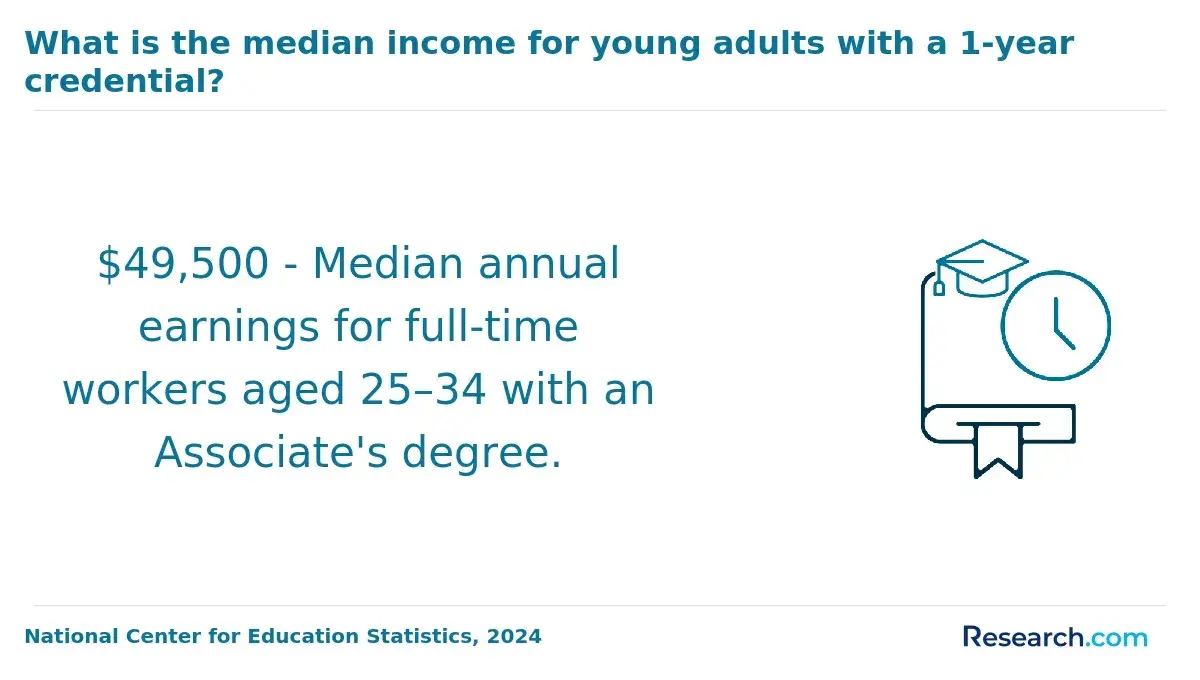
| Associate degree in sociology | Introduces sociology, general education, and transfer preparation | Students seeking a lower-cost start before a bachelor's degree | If the target job requires a bachelor's degree or specialized training |
| Bachelor's degree in sociology | Builds broad social science, research, writing, and analysis skills | Students seeking entry-level roles in human services, research support, HR, policy, justice, or graduate preparation | If the goal is licensed therapy, social work licensure, or advanced quantitative research without further study |
| Master's degree in sociology | Develops advanced theory, research design, data analysis, teaching, or applied research expertise | Students targeting research, nonprofit leadership, policy analysis, community college teaching, or doctoral preparation | If a shorter certificate would satisfy a narrow skill gap |
| Graduate certificate in sociology or applied social research | Adds focused training in a topic such as survey research, diversity, demography, or program evaluation | Professionals who already hold a degree and need a targeted credential | If the role requires a full degree for advancement |
| Doctorate in sociology | Prepares for academic research, advanced policy research, or high-level data and social science leadership | Students committed to long-term research, teaching, or specialized expertise | If the goal is a faster career transition into entry-level practice |
A bachelor's degree is the usual entry point for students who want the broadest balance of flexibility, career access, and graduate-school preparation. An associate degree can be cost-effective if transfer agreements are strong. A master's degree makes more sense when the reader already has a bachelor's degree and wants advanced research, leadership, or policy skills.
Students who are mainly drawn to direct helping professions should compare sociology with counseling, social work, psychology, and human services. A counselling degree may be a better fit when the primary goal is supervised clinical practice, while sociology may be better for systems analysis, advocacy, social research, and community program work.
What courses and applied learning experiences are included in a practice-ready sociology curriculum?
A strong sociology curriculum combines big-picture social theory with applied evidence skills. Students should expect to read research, write analytical papers, interpret social data, and connect social patterns to real organizations and communities.
Most practice-ready programs include a mix of foundational, methods-based, topical, and experiential courses. These course areas matter because they help students move from "understanding society" to producing useful analysis for employers, agencies, or graduate programs.
| Curriculum area | Common courses or experiences | Practice-ready skill developed |
| Foundations | Introduction to sociology, social problems, sociological theory | Explaining how social institutions shape behavior and opportunity |
| Research methods | Qualitative methods, survey design, statistics, data analysis | Collecting, interpreting, and presenting evidence responsibly |
| Social inequality | Race and ethnicity, gender, class, disability, aging, immigration | Understanding equity issues in policy, workplaces, schools, and services |
| Institutions | Family, education, health, religion, work, law, criminal justice | Analyzing how systems affect individuals and communities |
| Applied learning | Internship, service learning, community research, capstone project | Producing work samples and applying classroom concepts to real problems |
Applied learning is especially important in an online degree because it helps employers see concrete skills. If a program does not require an internship, students can still build evidence of practice through structured projects.
- Create a portfolio with a policy brief, literature review, data visualization, community-needs assessment, and research poster.
- Choose electives that match a target field, such as criminology for justice roles, medical sociology for health organizations, or organizations and work for HR roles.
- Ask faculty whether capstone projects can use public datasets, local agency questions, or employer-sponsored problems.
- Use career services early to identify internships with nonprofits, courts, schools, local government offices, advocacy groups, or research organizations.
Current employer expectations also make technical fluency more valuable. Sociology students do not need to become software engineers, but comfort with spreadsheets, survey tools, basic statistics packages, interview coding, and ethical use of AI-assisted research tools can make the degree more practical.
What are typical admission requirements for online sociology programs in the United States?
Admission requirements vary by school and degree level, but most online sociology programs use the same academic standards as comparable campus programs. Students should read requirements carefully because online programs may also have technology, transfer-credit, or residency rules that affect time and cost.
For undergraduate programs, schools commonly ask for the following materials. These requirements help admissions teams confirm academic readiness and determine which credits can apply toward the degree.
- High school diploma, GED, or equivalent credential for first-year applicants.
- Official transcripts from high school and any previously attended colleges.
- Minimum GPA requirement or conditional admission process, depending on the institution.
- Transfer-credit evaluation for students with previous college coursework.
- Application form, application fee or fee waiver, and identity or residency documentation.
- Placement information for writing or mathematics if required by the school.
Graduate sociology programs are more selective because they expect students to conduct advanced research and write at a high academic level. Requirements may include a bachelor's degree, minimum GPA, statement of purpose, writing sample, recommendation letters, resume, and prerequisite coursework in statistics or social science methods.
Admissions policies are shifting in ways that can help adult learners. Many institutions have test-optional undergraduate policies, broader credit-transfer review, and prior-learning assessment options. However, students should not assume every credit will transfer or apply to the major. The safest approach is to request a degree audit before enrolling and ask which courses count toward sociology requirements, general education, electives, and residency minimums.
How long do online sociology degrees take, and what do they cost to complete?
Time to completion depends on degree level, enrollment pace, transfer credits, course availability, and whether the program uses traditional semesters or accelerated terms. A full-time bachelor's student entering with no transfer credits typically needs about four academic years, while a student with an associate degree or substantial transfer credit may finish sooner.
Cost should be evaluated as total degree cost, not only tuition per credit. College Board's 2024-25 figures show average published tuition and fees of $11,610 for in-state public four-year students and $43,350 for private nonprofit four-year students. For online learners, that gap means the least expensive advertised program is not always the best value, but residency rules, transfer credits, and fees can materially change the final bill.
Common cost components include the following. Reviewing each item before enrollment helps prevent surprises after the first term begins.
- Tuition per credit or flat-rate term tuition
- Mandatory online learning, technology, library, graduation, or student-service fees
- Books, digital access codes, software, and statistics tools
- Prior-learning assessment or transcript-evaluation fees
- Internship-related costs such as background checks, transportation, or professional clothing
- Lost income or reduced work hours if the student shifts to full-time study
The table below summarizes typical timelines and cost considerations by level. It is best used as a planning framework because actual prices depend on the specific institution and the number of credits a student must complete.
| Program type | Common timeline | Main cost drivers | Best cost-control strategy |
| Associate degree | About 2 years full time | Community college tuition, transfer pathway, books | Use an articulation agreement with a bachelor's program |
| Bachelor's degree | About 4 years full time, less with transfer credit | Residency status, tuition per credit, fees, remaining credits | Request a written transfer evaluation before committing |
| Master's degree | Often 1.5 to 3 years depending on pace | Graduate tuition, research requirements, capstone or thesis credits | Compare assistantships, employer tuition benefits, and part-time pacing |
| Graduate certificate | Often under 1 year to 18 months | Number of credits and whether credits later apply to a degree | Choose stackable credits only if future graduate study is likely |
Students can reduce costs by maximizing transfer credit, choosing in-state public options when available, applying for federal aid through the FAFSA, comparing employer tuition assistance, and avoiding excess electives that do not count toward the degree. The most common mistake is focusing only on sticker tuition while ignoring credit loss, repeated courses, and fees.
What careers can you pursue with an online sociology degree and what roles are most common?
Sociology graduates work in many fields because the degree develops research, writing, data interpretation, cultural awareness, and systems thinking. The degree is usually not a single-job credential; instead, it becomes most valuable when paired with a career direction, internship experience, and specific technical or workplace skills.
The following table shows common roles connected to sociology training. It focuses on responsibilities rather than promising a direct job outcome, because hiring requirements vary by employer, region, and experience level.
| Career area | Common roles | Typical responsibilities | Useful add-on skills |
| Human services and nonprofits | Case coordinator, outreach specialist, program assistant | Client intake, referrals, community education, service documentation | Trauma-informed communication, grant writing, data tracking |
| Research and evaluation | Research assistant, survey coordinator, program evaluation assistant | Literature reviews, data collection, interviews, reports | Statistics, survey software, qualitative coding |
| Human resources and workplace culture | HR assistant, diversity program coordinator, employee relations support | Recruiting support, training coordination, workplace policy support | Employment law basics, analytics, conflict resolution |
| Criminal justice and public safety | Victim advocate, reentry coordinator, probation support roles | Resource navigation, documentation, community supervision support | Crisis communication, criminology, court-system knowledge |
| Policy and advocacy | Policy assistant, community organizer, legislative aide | Issue research, stakeholder communication, public reports | Policy writing, public speaking, data visualization |
Remote and hybrid work is more realistic for sociology graduates in research, HR, policy writing, data coordination, nonprofit administration, and market research than in frontline service roles. Students who want location-flexible work should compare sociology with other work from home degrees that pay good money and choose electives that build measurable digital skills.
To make the degree more career-ready, students should start with a target field and work backward. For example, a student interested in nonprofit program evaluation should prioritize statistics, survey design, grant reporting, internships, and a capstone using real community data. A student interested in HR should add courses in organizations, work, diversity, labor relations, and analytics.
What is the salary outlook and employment demand for sociology-related careers?
Salary outcomes for sociology graduates vary widely because the degree feeds into multiple occupations rather than one licensed profession. Location, industry, graduate education, technical skills, and experience can matter as much as the major itself.
For a direct sociology occupation, the U.S. Bureau of Labor Statistics reported a May 2024 median annual wage of $101,770 for sociologists. That figure is useful but limited: many "sociologist" roles require a master's degree or doctorate, and bachelor's graduates are more likely to begin in adjacent roles such as research support, human services, HR, advocacy, or program coordination.
The table below gives a more practical view of selected sociology-related occupations using recent BLS wage and outlook categories. Treat these figures as labor-market context, not as a guarantee of individual earnings.
| Occupation | Typical sociology connection | May 2024 median annual wage | Employment outlook context |
| Sociologists | Advanced research, teaching, policy analysis, social science consulting | $101,770 | Small occupation; advanced degrees are common |
| Social and community service managers | Nonprofit leadership, community programs, service coordination | $78,240 | Demand is tied to social service programs and community needs |
| Market research analysts | Survey research, consumer behavior, data interpretation | $76,950 | Data skills can improve competitiveness |
| Human resources specialists | Workplace culture, recruiting, employee relations, diversity initiatives | $72,910 | Business knowledge and HR systems experience are valuable |
| Probation officers and correctional treatment specialists | Criminology, reentry support, justice-system casework | $64,520 | Requirements may include background checks and government hiring standards |
The employment signal is strongest for graduates who can translate sociology into job-specific capabilities. Quantitative analysis, program evaluation, database work, bilingual communication, crisis documentation, grant reporting, and policy writing can make a sociology graduate more competitive than a transcript alone.
AI and automation are also changing expectations. Routine summarization and basic report drafting may become more automated, but employers still need people who can frame research questions, evaluate bias, interpret communities ethically, and communicate findings to human decision-makers.
Are any licenses, certifications, or professional memberships needed for sociology career paths?
Most sociology jobs do not require a sociology license. However, some adjacent career paths have separate licensing, certification, background-check, or graduate-degree requirements. This distinction is important because a sociology degree can be excellent preparation for certain fields without being the final credential required to practice in them.
Licensure is most relevant when the job involves clinical counseling, independent social work, substance use treatment, school services, or regulated justice roles. Requirements vary by state, so students should verify rules with the appropriate licensing board before assuming an online sociology degree will qualify them.
These examples show where extra credentials may be needed. Students should use them to identify questions for advisors and licensing boards before choosing electives or internships.
- Licensed clinical counseling generally requires a counseling master's degree, supervised clinical hours, and state exams rather than a sociology bachelor's degree alone.
- Licensed social work usually requires a CSWE-accredited social work degree for many state-regulated roles, especially clinical practice.
- Substance use counseling may require state-specific coursework, supervised experience, exams, or certification; students comparing helping-profession pathways may want to review online colleges for addiction counseling.
- Probation, corrections, and court roles may require background checks, fitness standards, academy training, or government civil-service processes.
- Research and evaluation roles may not require licensure, but certificates in data analysis, survey research, GIS, project management, or nonprofit management can strengthen applications.
Professional memberships can also help students build networks and learn the field. Groups such as the American Sociological Association, Society for the Study of Social Problems, regional sociology associations, and specialized nonprofit or evaluation associations may offer student memberships, conferences, publications, and mentoring opportunities.
How can prospective students evaluate and choose a reputable online sociology program?
The best online sociology program is not simply the cheapest, fastest, or highest ranked. It is the program that is accredited, affordable for your situation, realistic for your schedule, strong in applied learning, and aligned with your career or graduate-school goal.
Use the following steps to compare programs before applying. They are arranged in the order that usually prevents the most expensive mistakes.
- Verify institutional accreditation through a recognized accreditation database and avoid schools that make vague or unverifiable accreditation claims.
- Request a written transfer-credit review before enrolling, especially if you have community college, military, dual-enrollment, or prior university credits.
- Compare total cost of completion, including required credits, fees, books, software, and any internship-related expenses.
- Review the sociology major map to confirm required theory, statistics, research methods, and applied capstone or internship options.
- Ask how online students receive faculty advising, career support, library access, writing help, disability services, and technical assistance.
- Check whether the program has electives or concentrations that match your goal, such as criminology, health, work and organizations, social justice, demography, or research methods.
- Ask for examples of recent capstone projects, internship sites, graduate-school placements, or employer partnerships without treating them as guaranteed outcomes.
- Confirm course rotation so required classes will be available when you need them, especially if you study part time.
Watch for red flags. Be cautious if a school pressures you to enroll immediately, will not provide a degree plan, avoids questions about accreditation, hides fees, promises specific salaries, or cannot explain how online students complete applied learning. A reputable program should be transparent enough for you to calculate time, cost, and fit before you commit.
A good final test is simple: after reviewing the curriculum, you should be able to name the job skills you will build, the work samples you will create, the support services you can use, and the next credential you may need. If you cannot, keep comparing programs.
Other Things You Should Know About Sociology
Sociology is not usually considered as math-heavy as engineering, economics, or some data science majors, but reputable programs do require statistics and research methods. Students who are nervous about math should look for tutoring, statistics labs, and courses that use applied social examples.
Useful minors include statistics, data analytics, public health, criminal justice, psychology, political science, business, nonprofit management, communication, and computer information systems. The best minor is the one that adds concrete skills for your target role.
A sociology degree provides a strong foundation for law school by developing critical thinking, understanding social contexts, and honing communication skills. Courses in research methods and ethics equip students with analytical skills crucial for legal studies, potentially enhancing law school performance.
References
- 2025 Most Affordable Online Sociology Degrees https://www.onlineu.com/most-affordable-colleges/sociology-degrees
- Expert Advice: How to Find, Succeed in Online Degree Programs - OnlineEducation.com https://www.onlineeducation.com/guide/expert-advice
- 20 Great Value Online Colleges for a Sociology Degree (Bachelor’s) https://www.greatvaluecolleges.net/online-colleges-sociology-bachelors/
- Careers & Income Opportunities https://www.frc.edu/sociology/careers-income-opportunities
- Bachelor of Arts inSociology Online or On Campus https://www.albany.edu/sociology/programs/ba-sociology
- Best Sociology Degree Jobs: 12+ Career Paths for 2026 | Extern https://www.extern.com/post/sociology-degree-jobs-career-guide
- 10 Job Opportunities for Sociology Majors (and How to Land One) | The Muse https://www.themuse.com/advice/sociology-degree-major-jobs-careers
- Education https://is.uz.zgora.pl/en/education