2027 Online Sociology Degrees That Prepare Students for High-Demand Human Services Careers

Co-Founder and Chief Data Scientist
Choosing an online sociology degree is really a career decision: will the program prepare you for helping roles in social services, nonprofits, corrections, advocacy, community health, or graduate study? The timing matters because the U. S. Bureau of Labor Statistics reported a May 2024 median annual wage of $58,380 for community and social service occupations, reflecting a broad labor market for people-focused work. This guide is for prospective students comparing online programs, costs, career paths, and credentials so they can choose a degree that fits their goals and budget.
Key Things You Should Know
- An online sociology degree is most useful for human services when it includes research methods, social inequality, family and community systems, policy analysis, cultural competence, and an internship or field experience.
- Cost varies widely. College Board's 2024 Trends in College Pricing reported average 2024-25 published tuition and fees of $11,610 for in-state public four-year colleges and $43,350 for private nonprofit four-year colleges.
- The degree can support entry-level human services jobs, but licensed clinical roles usually require graduate education, supervised experience, and state-specific credentials.
What is an online sociology degree and how does it prepare students for human services careers?
An online sociology degree is a college program that studies how people, groups, institutions, inequality, culture, family systems, crime, health, education, and public policy shape human behavior. In a human services context, it helps students understand why people experience barriers such as poverty, family instability, housing insecurity, discrimination, substance use, or limited access to healthcare.
Most students considering this path are looking at an online bachelor's degree in sociology, although associate and master's options also exist. A bachelor's degree is often enough for entry-level case support, community outreach, program coordination, intake, advocacy, and nonprofit roles. Graduate study is usually needed for clinical social work, counseling, marriage and family therapy, school psychology, advanced policy work, or administrative leadership.
The strongest programs do more than assign readings. They teach students to evaluate social problems, communicate with diverse populations, interpret data, document client or community needs, and understand how public programs operate.
Students who want a direct route into licensed social work should compare sociology with social work programs early; for example, students considering graduate-level clinical or macro social work can review MSW best programs to understand how graduate requirements differ from a sociology degree.
Online sociology can be a good fit if you want flexibility, are self-directed, and plan to work in human services while studying. It may be a weaker fit if you need a license tied to a specific professional degree or if the program has no internship options, no advising for human services careers, and no clear transfer or graduate school pathway.
How do online sociology programs compare with campus-based options for human services preparation?
Online and campus-based sociology degrees can cover the same academic foundation, but the experience differs in scheduling, networking, fieldwork logistics, and student support. The better choice depends less on prestige and more on whether the format helps you complete the degree while building real human services experience.
The table below compares the practical differences that matter most for students preparing for human services careers. Use it to decide whether online flexibility is worth the trade-offs in face-to-face interaction and campus-based networking.
| Factor | Online sociology degree | Campus-based sociology degree | Best fit |
| Schedule | Often asynchronous or evening-friendly, which helps working adults and caregivers. | Usually follows fixed class times and campus schedules. | Online works well for students balancing work, family, or relocation limits. |
| Field experience | May allow local internships, but students often need to coordinate placement approval early. | May have established relationships with local agencies near campus. | Campus can be easier if you want built-in local agency connections. |
| Peer and faculty interaction | Depends on discussion boards, video meetings, group projects, and office hours. | Includes in-person discussion, clubs, events, and informal networking. | Campus may fit students who learn best through frequent live interaction. |
| Career preparation | Can be strong if the program offers advising, internship support, research projects, and human services electives. | Can be strong if faculty and career centers maintain community agency partnerships. | Either format can work if career support is intentional and accessible. |
| Total cost | May reduce relocation, commuting, and housing costs, but technology and online fees can add up. | May include higher living and commuting costs, especially for residential students. | Online may be more affordable when it lets students keep income and avoid relocation. |
One current trend is that employers are increasingly focused on verified skills rather than the delivery format alone. For human services roles, that means an online degree is more convincing when the student can point to internships, volunteer service, research projects, case documentation practice, data analysis, or community-based experience.
What human services jobs can you get with an online sociology degree?
An online sociology degree can prepare students for many nonclinical human services roles, especially when the program includes applied coursework and field experience. The degree is not the same as a professional license, but it can help graduates compete for entry-level and early-career roles that require a bachelor's degree, communication skills, social systems knowledge, and comfort working with diverse communities.
The table below summarizes common career directions. Job titles vary by state, employer, funding source, and whether the role is in a government agency, nonprofit, school-related setting, healthcare organization, correctional system, or community program.
| Career path | Typical responsibilities | How sociology helps | Common next step |
| Social and human service assistant | Support clients with applications, referrals, intake paperwork, service coordination, and follow-up. | Builds understanding of poverty, family systems, inequality, and community resources. | Move into case management, program coordination, or graduate social work study. |
| Case management support specialist | Track client needs, document progress, coordinate appointments, and communicate with service providers. | Develops interviewing, documentation, ethics, and social problem analysis skills. | Pursue agency-specific training or a graduate credential for advanced practice. |
| Community outreach coordinator | Educate communities, organize events, connect residents with services, and gather feedback. | Strengthens cultural competence, community assessment, and public communication. | Advance into program management or public health-related roles. |
| Nonprofit program coordinator | Assist with program delivery, reporting, volunteer coordination, grants, and client engagement. | Uses research methods and policy knowledge to understand program impact. | Develop grant writing, evaluation, or management skills. |
| Victim advocate or family services worker | Provide resource navigation, safety planning support, court accompaniment, and referrals. | Connects trauma, family dynamics, inequality, and institutional systems. | Complete specialized advocacy training or pursue counseling/social work graduate study. |
| Reentry or correctional treatment support worker | Help individuals access housing, employment, treatment referrals, and community supervision resources. | Applies criminology, deviance, inequality, and policy coursework. | Move into probation-related, corrections, or community justice roles, depending on requirements. |
Sociology can also lead outside traditional social services. Students interested in employee relations, organizational culture, recruiting, workforce analytics, or training may compare sociology with a best online master degree in human resource management, especially if their long-term goal is workplace support rather than direct community services.
Common mistake to avoid: assuming that every "helping" job is open with any sociology degree. Clinical counseling, therapy, school psychology, and independent social work practice usually have degree, practicum, exam, and supervised-hour requirements that a general sociology bachelor's degree does not automatically meet.
Employer Confidence Share in Online vs. In-Person Degree Skills, Global 2024

How do you choose an accredited online sociology program focused on human services?
Accreditation should be your first filter because it affects credit transfer, graduate admissions, employer recognition, and federal financial aid eligibility. In the United States, students should look for institutional accreditation from an agency recognized by the U.S. Department of Education or the Council for Higher Education Accreditation.
After verifying accreditation, compare programs based on career alignment, not marketing language. A strong online sociology program for human services should make it easy to see how coursework, electives, internships, and advising connect to real jobs.
- Confirm institutional accreditation and make sure the degree-granting campus or online division is covered.
- Review the curriculum for human services-relevant courses such as social problems, family sociology, criminology, health and society, race and ethnicity, social policy, statistics, and research methods.
- Ask whether online students can complete internships, service learning, or capstone projects with local agencies.
- Check whether transfer credits, prior learning credit, or community college pathways can shorten time to graduation.
- Request outcome information, including common employers, graduate school placements, internship partners, and career services available to online students.
- Compare total cost, not just tuition, including technology fees, books, proctoring charges, internship-related costs, and residency requirements.
Students who want to work in schools should be especially careful. Sociology can support youth services and education-adjacent roles, but school psychologist roles follow a different professional pathway; students pursuing that direction should compare school psychology programs online accredited by NASP before choosing a sociology-only route.
Red flags include unclear accreditation language, no listed faculty credentials, no accessible online student support, no internship guidance, unusually aggressive enrollment pressure, vague career promises, and refusal to provide a complete cost estimate before enrollment.
What courses and skills do online sociology majors learn for human services roles?
Online sociology majors usually complete general education, core sociology classes, research training, electives, and a capstone or internship. For human services careers, the most valuable programs connect theory to applied situations such as client intake, needs assessment, community outreach, program evaluation, and policy analysis.
The following courses are especially useful because they map directly to common human services responsibilities. Course names differ by school, but the underlying competencies are similar.
| Course area | What students study | Human services value |
| Introduction to sociology | Social institutions, group behavior, norms, culture, and social structure. | Provides the foundation for understanding clients in context rather than as isolated individuals. |
| Social problems | Poverty, housing, healthcare access, education gaps, crime, discrimination, and family stressors. | Helps students connect individual needs to broader systems and resources. |
| Race, class, gender, and inequality | How identity, power, and structural barriers shape opportunity and service access. | Builds cultural humility and equity-focused service awareness. |
| Research methods and statistics | Survey design, interviews, quantitative analysis, ethics, and evidence evaluation. | Supports program evaluation, grant reporting, needs assessments, and data-informed decisions. |
| Criminology or deviance | Crime, social control, justice systems, reentry, and community supervision. | Useful for corrections, reentry, juvenile services, and victim advocacy roles. |
| Family sociology | Family structures, intimate relationships, child welfare issues, caregiving, and family stress. | Relevant for youth services, family support, domestic violence agencies, and community programs. |
| Health and society | Public health, healthcare disparities, mental health systems, aging, and disability. | Useful for community health, care coordination, and social service navigation. |
Students should also build practical skills outside the course catalog. These skills often make the difference between having a sociology degree and being ready for a human services workplace.
- Documentation: Practice concise, factual writing for case notes, referral summaries, program reports, and grant-related updates.
- Interviewing and active listening: Learn how to ask respectful questions, clarify needs, and avoid assumptions.
- Data literacy: Become comfortable reading charts, using spreadsheets, and interpreting service outcomes without overstating conclusions.
- Ethical judgment: Understand confidentiality, mandated reporting basics, boundaries, and referral limits, while remembering that rules vary by role and state.
- Technology use: Learn common tools such as learning management systems, spreadsheets, virtual meeting platforms, case tracking systems, and AI-assisted drafting with careful human review.
AI is changing human services support work, but it is not replacing the need for human judgment. Graduates should expect employers to value people who can use digital tools responsibly while protecting confidentiality, checking bias, and communicating with empathy.
What are typical admissions requirements for online sociology degrees in the United States?
Admissions requirements depend on degree level and institution type. Online sociology programs are often designed for both first-time college students and transfer students, so requirements may differ depending on how many college credits you already have.
The table below shows common requirements by degree level. It is a planning tool, not a substitute for a school's official admissions page.
| Program level | Typical admissions requirements | Best for |
| Associate degree in sociology or social science | High school diploma or GED, application, placement information, and sometimes transcripts. | Students seeking a lower-cost transfer pathway into a bachelor's program. |
| Bachelor's degree in sociology | High school transcript or transfer transcript, application, possible minimum GPA, and sometimes personal statement or test-optional materials. | Students seeking entry-level human services roles or preparation for graduate school. |
| Bachelor's degree completion program | Prior college credits, minimum GPA, official transcripts, and completion of prerequisite general education courses. | Adults with credits who want to finish faster and reduce total cost. |
| Master's degree in sociology or applied sociology | Bachelor's degree, transcripts, statement of purpose, recommendations, resume, and sometimes research methods prerequisites. | Students interested in research, policy, evaluation, teaching, or advanced nonprofit roles. |
Before applying, students can improve their chances and avoid delays by preparing a few items early. This is especially important for transfer students, because transcript evaluation can affect both cost and graduation timeline.
- Request official transcripts from every college attended, even if credits are old or unrelated.
- Ask the admissions office for a preliminary transfer credit review before committing.
- Confirm whether statistics, research methods, or writing courses are prerequisites for upper-division sociology classes.
- Check whether internships require background checks, immunizations, transportation, or daytime availability.
- Ask whether online students qualify for the same scholarships, advising, library access, and career services as campus students.
A common mistake is applying only to the fastest program without checking whether credits transfer cleanly. A slightly longer program with better transfer policies, stronger advising, or lower total cost may produce a better return than an accelerated option that requires many repeated courses.
How long do online sociology programs take and what do they cost?
Program length depends on degree level, transfer credits, enrollment intensity, and whether courses are offered year-round. A traditional bachelor's degree usually requires about 120 credits, but completion programs may be much shorter for students who already hold an associate degree or substantial transfer credit.
Cost should be evaluated as total cost of completion, not only the per-credit tuition rate. College Board's 2024 Trends in College Pricing reported the following average published tuition and fees for 2024-25, which gives students a useful national benchmark before comparing individual online programs.
- Public two-year in-district: $4,050
- Public four-year in-state: $11,610
- Public four-year out-of-state: $30,780
- Private nonprofit four-year: $43,350
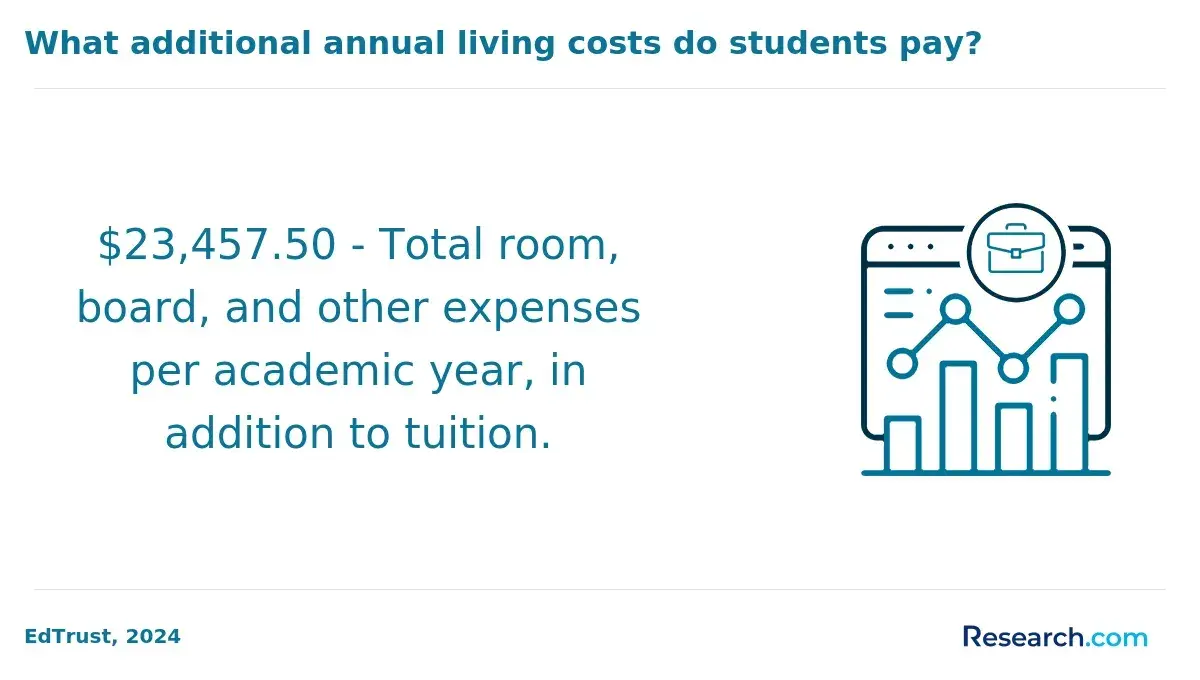
Online programs can be cheaper when they let students avoid relocation, reduce commuting, and continue working. However, students should still check for online course fees, technology fees, proctoring fees, books, internship travel, graduation fees, and residency requirements.
The table below summarizes common timeline patterns so students can compare speed against workload. Faster is not always better if it increases burnout or prevents students from gaining field experience.
| Path | Typical timeline | Trade-off |
| Full-time bachelor's student with few transfer credits | About four years | Predictable pace, but higher opportunity cost if the student cannot work much. |
| Part-time bachelor's student | Often five to six years or more | More manageable for working adults, but longer time before career advancement. |
| Degree completion student with an associate degree | Often about two years | Efficient if credits transfer, but upper-division courses may be demanding. |
| Accelerated online student | Varies by transfer credit and course load | Can reduce calendar time, but may limit internship availability and reflection time. |
To reduce costs, prioritize accredited public options, transfer-friendly programs, employer tuition assistance, community college pathways, scholarships, and federal financial aid eligibility. Avoid borrowing based on optimistic salary assumptions; instead, compare estimated total debt with the types of roles you realistically expect to pursue after graduation.
What are the salary expectations for sociology graduates working in human services fields?
Salary expectations vary by job title, employer, region, education level, experience, and whether the position is clinical, administrative, or support-focused. Sociology graduates entering human services should expect the broad field to include both modestly paid frontline roles and higher-paying management or specialized positions.
The most useful benchmark is the labor market category closest to many human services roles. The U.S. Bureau of Labor Statistics reported a May 2024 median annual wage of $58,380 for community and social service occupations.
That figure is not a promise for sociology graduates, but it helps frame the middle of a broad occupational group that includes counseling, social work, community support, religious work, probation, and related service roles.
The table below explains how to interpret salary differences without treating one number as a guaranteed outcome. Use it to match expectations to the level of responsibility and credentialing required.
| Role type | Typical salary pattern | Why pay varies |
| Entry-level support roles | Often below the broad community and social service occupational median. | These jobs may require less experience and may be funded by nonprofits or public grants. |
| Case management and program coordination | Often closer to the middle of the field as responsibilities increase. | Pay may rise with documentation skills, caseload complexity, bilingual ability, and agency size. |
| Specialized advocacy or corrections-related roles | Can vary substantially by government agency, union structure, risk level, and required training. | Some positions have formal pay scales, while others depend on grant funding. |
| Management and evaluation roles | Often higher than frontline support roles. | Employers may require experience, supervisory skills, budgeting ability, and data reporting expertise. |
| Licensed clinical roles | Typically follow separate salary patterns from bachelor's-level sociology jobs. | These roles usually require a qualifying graduate degree, supervised experience, and state licensure. |
Students should also think about benefits, loan burden, schedule stability, advancement potential, and mission fit. A lower starting salary may still make sense if the program is affordable and the role builds experience for graduate school or supervisory work, while an expensive degree may be harder to justify if it does not improve access to target jobs.
What is the job outlook and demand for sociology-trained human services professionals?
Demand for human services workers is shaped by mental health needs, aging communities, housing instability, substance use treatment demand, reentry services, school and youth support needs, and public-sector funding. Sociology-trained graduates are most competitive when they combine social systems knowledge with applied experience, documentation ability, and comfort using data.
BLS employment projections released for the 2024-2034 period show continued need across several community and social service occupations, although growth differs by role. For readers, the key takeaway is that "human services" is not one labor market; job stability can vary depending on whether the position is funded through healthcare systems, government agencies, schools, nonprofits, courts, or temporary grants.
Several trends are especially important for online sociology students planning human services careers. These trends affect what employers look for and what students should build into their degree plan.
- Data-informed services: Agencies increasingly track outcomes, referrals, client engagement, and program impact, so sociology students with statistics and research methods skills can stand out.
- Integrated care models: Human services work often overlaps with healthcare, behavioral health, housing, education, and legal systems, making cross-system communication valuable.
- Remote and hybrid service delivery: Some outreach, intake, case follow-up, and training now happen online, but in-person service remains essential for many vulnerable populations.
- Credential-based advancement: Entry-level jobs may accept a bachelor's degree, while supervisory, clinical, or school-based roles often require graduate credentials or licenses.
- AI-assisted administration: Tools can help draft reports or analyze program data, but employers need workers who can protect privacy, verify accuracy, and avoid biased conclusions.
The smartest strategy is to treat the online sociology degree as a platform. Add internships, volunteer work, specialized electives, certificates, or graduate prerequisites based on the population you want to serve, such as youth, older adults, people returning from incarceration, families, immigrants, people with disabilities, or communities affected by poverty.
Are there certifications or licenses that sociology majors need for human services careers?
A sociology major does not usually come with one universal license. Requirements depend on the job, state, employer, funding source, and whether the role involves clinical treatment, school-based services, substance use counseling, child welfare, corrections, or general community support.
For many entry-level human services jobs, employers may provide required onboarding, background checks, safety training, HIPAA-related training, mandated reporter training, or agency-specific documentation training. For regulated roles, students should verify requirements before enrolling because the degree title matters.
The table below shows how credentials commonly differ across human services career goals. It can help students avoid choosing a sociology program when a specialized professional degree is required.
| Career goal | Possible credential issue | What to verify before enrolling |
| Case support, outreach, nonprofit services | Often no state license is required for entry-level nonclinical roles. | Check employer preferences for bachelor's degree, experience, bilingual skills, and background checks. |
| Substance use counseling | Certification or licensure rules vary widely by state and role level. | Confirm education, supervised hours, exams, and whether a sociology degree qualifies. |
| Child welfare or protective services | States and agencies may require training academies, background checks, and specific qualifications. | Ask whether sociology is an accepted major and whether fieldwork is preferred. |
| Clinical social work | Usually requires an accredited social work graduate degree and post-degree supervised experience. | Confirm CSWE-accredited MSW requirements and state licensure steps. |
| Marriage and family therapy | Usually requires a qualifying graduate degree, clinical training, supervised hours, and state licensure. | Review state board requirements and compare qualifying graduate programs. |
| School psychology | Typically follows specialist-level or doctoral training and state credential rules. | Verify NASP alignment, practicum, internship, and state education agency requirements. |
Students interested in therapy should plan early. Sociology can be excellent preparation for understanding families and social context, but licensure-focused therapy careers typically require graduate study; students comparing that route can review online marriage and family therapy masters programs to see how clinical training differs from a sociology curriculum.
The practical rule is simple: if the job title includes "licensed," "clinical," "therapist," "counselor," or "school psychologist," verify state requirements before choosing a program. If the job is nonclinical support, coordination, outreach, advocacy, or program work, an accredited online sociology degree plus relevant experience may be enough to start.
Other Things You Should Know About Sociology
A sociology degree in 2027 prepares students for both direct service and policy work. Core courses develop analytical and communication skills, making graduates versatile for roles like social worker or policy analyst, depending on their interest and chosen electives.
Yes. They can volunteer locally, complete approved internships near home, join virtual research projects, work in entry-level service roles, and build a portfolio of writing, data, and community assessment projects.
Useful minors include psychology, social work, criminal justice, public health, nonprofit management, statistics, human development, public policy, Spanish, or data analytics. The best choice depends on the population and setting you want to serve.
References
- Online Master’s in Human Services Degree Programs - OnlineEducation.com https://www.onlineeducation.com/social-work/human-services-programs
- 2025 Most Affordable Online Sociology Degrees https://www.onlineu.com/most-affordable-colleges/sociology-degrees
- Health and Human Services: Campus & Online Degrees and Careers https://www.publichealthonline.org/human-services/online-degree-programs/
- Social Work Jobs That Don’t Require A License | Pacific Oaks https://www.pacificoaks.edu/voices/social-work/social-work-degree-careers-dont-require-license/
- Want a Job That Makes a Positive Difference? Start Here https://www.trade-schools.net/human-services/
- Login https://www.britsoc.co.uk/what-is-sociology/sociologist-careers/
- 10 Job Opportunities for Sociology Majors (and How to Land One) | The Muse https://www.themuse.com/advice/sociology-degree-major-jobs-careers
- 20 Great Value Online Colleges for a Sociology Degree (Bachelor’s) https://www.greatvaluecolleges.net/online-colleges-sociology-bachelors/
- 10 Best Human and Social Services Degree Programs - Social Work Degree Center https://www.socialworkdegreecenter.com/best-human-services-degree-programs/
- Best Sociology Degree Jobs: 12+ Career Paths for 2026 | Extern https://www.extern.com/post/sociology-degree-jobs-career-guide