
2027 Best Online Doctorate in Organizational Psychology Programs

Co-Founder and Chief Data Scientist
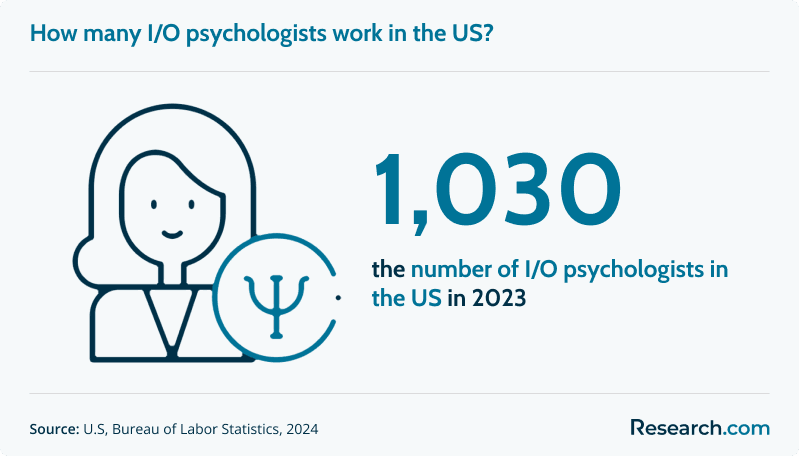
Choosing an online doctorate in organizational psychology is a major career and financial decision. The degree can prepare professionals to study workplace behavior, improve talent systems, lead organizational change, consult with employers, or teach and conduct research. It is also a specialized field: in 2023, there were around 1,030 industrial-organizational psychologists employed in the US, and employment for psychologists is projected to grow 6% from 2022 to 2032.
This guide is for working professionals, graduate students, HR leaders, consultants, and psychology graduates comparing online doctoral programs in organizational psychology. You will learn what these programs include, how online and campus formats differ, what they may cost, which schools stand out, what admissions committees expect, and how to judge whether the investment fits your goals.
Quick answer: Is an online doctorate in organizational psychology worth it?
An online doctorate in organizational psychology can be worth it if you want advanced research, consulting, leadership, or academic roles focused on workplace behavior and organizational performance. The median salary for industrial-organizational psychologists is approximately $147,420, with reported salaries ranging from $45,860 to $219,810 per year. However, outcomes depend on your experience, industry, location, research skills, network, and the reputation and accreditation of the program you choose.
- A doctorate can support careers in consulting, human resources, organizational development, talent management, research, academia, and executive leadership.
- The online format is best suited for disciplined students who need flexibility while continuing to work or manage personal responsibilities.
- The strongest programs combine research training, faculty mentorship, applied projects, ethical practice, and credible institutional accreditation.
What should you expect from the best online doctorate in organizational psychology programs?
The best online doctorate in organizational psychology programs train students to apply psychological science to workplace problems. Instead of focusing only on individual mental health, organizational psychology examines how people behave in teams, departments, companies, government agencies, schools, healthcare organizations, and other work settings.
Doctoral students usually study leadership, motivation, personnel selection, assessment, statistics, organizational culture, employee well-being, performance management, diversity and inclusion, and organizational change. Strong programs also require students to learn how to evaluate evidence, design research, interpret data, and translate findings into recommendations that employers can use.
Most online programs include a mix of asynchronous coursework, live virtual sessions, research milestones, dissertation work, and faculty advising. Some also require residencies, intensives, practicums, internships, or applied consulting projects. Before enrolling, confirm how much of the program is fully online and whether any in-person requirements fit your schedule and budget.
Where can graduates work with an online doctorate in organizational psychology?
Graduates can work in corporate, consulting, government, healthcare, education, nonprofit, and research settings. The degree is especially relevant to roles that require expertise in employee behavior, leadership development, selection systems, organizational effectiveness, culture change, and workforce analytics.
Common work settings include management consulting firms, HR departments, leadership development teams, universities, research organizations, government agencies, healthcare systems, and large employers with internal organizational development or people analytics functions. Some graduates build independent consulting practices, while others move into senior roles in talent strategy, learning and development, or workforce transformation.
How much can you earn with an online doctorate in organizational psychology?
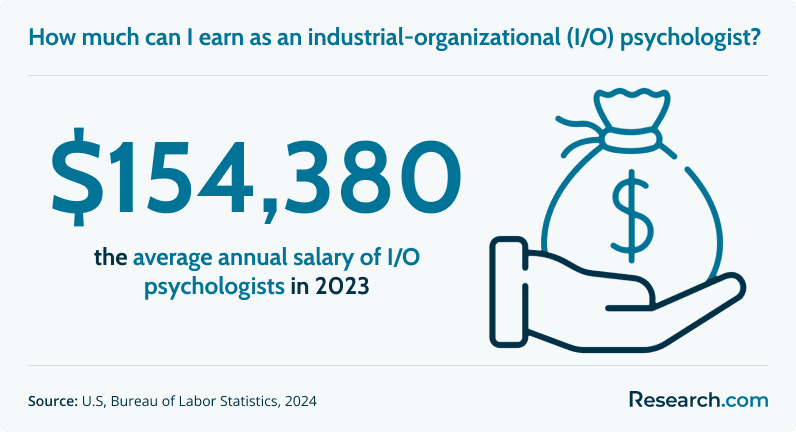
Earnings vary widely by role, employer, region, experience, and whether you work in consulting, corporate leadership, academia, or research. Salaries in this field typically range from $45,860 to $219,810 per year. The median annual salary for industrial-organizational psychologists is approximately $147,420, and the average annual salary for I/O psychologists in 2023 is $154,380.
The highest-paying industry for I/O psychologists in 2023 is management, scientific, and technical consulting services, with an average salary of $169,890. There were around 470 I/O psychologists working in the management, scientific, and technical consulting services industry in 2023. These figures suggest strong earning potential, but a doctorate does not guarantee a specific salary. Your results will depend on your prior experience, applied skills, professional network, and the demand for your specialization.
- Top online doctorate programs in organizational psychology for 2027
- Program length and completion timeline
- Online vs. on-campus organizational psychology doctorates
- Typical cost of an online doctorate in organizational psychology
- Financial aid options for doctoral students
- Admissions requirements and prerequisites
- Common doctorate-level courses
- Available specializations and focus areas
- Using prior education to shorten your doctoral path
- How to choose the right online doctoral program
- How to evaluate accreditation
- How technology is changing online doctoral training
- Challenges to consider before enrolling
- How interdisciplinary study can strengthen your degree
- Success factors for online doctoral students
- How programs address diversity, equity, and inclusion
- Research trends in organizational psychology
- Why alumni outcomes and networking matter
- Using clinical insight in workplace mental health strategy
- How complementary certifications can expand career options
- When clinical psychology training may complement I/O psychology
- Employer views of online doctorates
- Program red flags to avoid
- How to evaluate financial return
- How to confirm legitimacy and reputation
- Accelerated programs that may support doctoral study
- Related educational paths to consider
- Career paths after graduation
- Job market outlook
- Skills developed in the doctorate
- Reasons to choose the online format
Best Online Doctorate in Organizational Psychology Programs for 2027
How do we rank schools?
This program list is based on Research.com’s review of institutional and program data using our methodology. Our team used the IPEDS database from the National Center for Education Statistics for institutional data, Peterson’s database and its Distance Learning Licensed Data Set for program-level information, and the College Scorecard for outcomes and cost context.
| School and program | Best fit | Length | Credits | Published cost information | Accreditation |
| Liberty University - PhD in Psychology in Industrial/Organizational | Students seeking a research-focused PhD that integrates workplace psychology with biblical principles | ~4 years | 60 | $595 full-time; $650 part-time | Southern Association of Colleges and Schools Commission on Colleges (SACSCOC) |
| The Chicago School at Los Angeles - PhD in Business Psychology with an Industrial and Organizational specialization | Students interested in a business psychology model with post-master’s and post-bachelor’s entry options | 3 years post-master's; 5 years post-bachelor's | 61 credits post-master’s; 97 credits post-bachelor’s | $1,737 per credit | Western Association of Schools and Colleges Senior College and University Commission (WSCUC) |
| Keiser University-Ft Lauderdale - PhD in Industrial/Organizational Psychology | Students looking for a scholar-practitioner model with applied research and organizational behavior training | 36-48 months | 60 | $32,984 tuition | Southern Association of Colleges and Schools Commission on Colleges (SACSCOC) |
| Adler University - PhD in Industrial/Organizational Psychology | Students who want organizational psychology training with a social justice emphasis | ~3 to 4 years | 66 | $91,312 tuition | Higher Learning Commission |
| Walden University - PhD in Industrial/Organizational Psychology | Students who want post-master's and post-bachelor's tracks with optional blended coursework | ~5 years; 8 years max | 65 post-master's; 95 post-bachelor's | $620 per credit | Higher Learning Commission |
1. Liberty University - PhD in Psychology in Industrial/Organizational
Liberty University’s PhD in Psychology with a specialization in Industrial/Organizational Psychology is designed for students who want doctoral-level research training connected to workplace problem-solving. The curriculum emphasizes human behavior in organizations, productivity, professional development, critical thinking, and research skills, while also incorporating biblical principles into the learning model.
- Program Length: ~4 years
- Required Credits to Graduate: 60
- Cost per Credit: $595 (full-time); $650 (part-time)
- Accreditation: Southern Association of Colleges and Schools Commission on Colleges (SACSCOC)
2. The Chicago School at Los Angeles - PhD in Business Psychology with a specialization in Industrial and Organizational
The Chicago School at Los Angeles offers a PhD in Business Psychology with an Industrial and Organizational Track. The program blends business and I/O psychology to prepare students for consulting, leadership, research, and academic roles. Students may enter after a bachelor’s or master’s degree; those entering after a bachelor’s degree complete a master’s degree within the program before moving into doctoral study.
- Program Length: 3 years (post-master's); 5 years (post-bachelor's)
- Required Credits to Graduate: 61 credits (post-master’s); 97 credits (post-bachelor’s)
- Cost per Credit: $1,737
- Accreditation: Western Association of Schools and Colleges Senior College and University Commission (WSCUC)
3. Keiser University-Ft Lauderdale PhD in Industrial/Organizational Psychology
Keiser University-Ft Lauderdale offers a PhD in Industrial/Organizational Psychology built around a scholar-practitioner approach. Students study organizational behavior, leadership, quantitative analysis, change management, and the use of research to address business challenges. The program is designed to connect theory with practical organizational improvement.
- Program Length: 36-48 months
- Required Credits to Graduate: 60
- Tuition: $32,984
- Accreditation: Southern Association of Colleges and Schools Commission on Colleges (SACSCOC)
4. Adler University PhD in Industrial/Organizational Psychology
Adler University’s online PhD in Industrial/Organizational Psychology prepares students to use research and psychological theory to improve organizations with attention to ethics, equity, and social responsibility. The program is relevant to students interested in consulting, corporate roles, nonprofits, public sector work, academia, and organizational culture improvement.
- Program Length: ~3 to 4 years
- Specializations/Concentrations: Social Justice
- Required Credits to Graduate: 66
- Tuition: $91,312
- Accreditation: Higher Learning Commission
5. Walden University - PhD in Industrial/Organizational Psychology
Walden University’s PhD in Industrial/Organizational Psychology is structured for students who want to become scholar-practitioners. The program covers workplace behavior, research methods, I/O applications, and organizational change. Walden offers a track for students with a master’s degree in I/O psychology and another for students with a bachelor’s degree in any field.
- Program Length: ~5 years (8 years max)
- Specializations/Concentrations: Social Justice
- Required Credits to Graduate: 65 (post-master's); 95 (post-bachelor's)
- Cost per Credit: $620
- Accreditation: Higher Learning Commission
Key labor market facts for I/O psychology
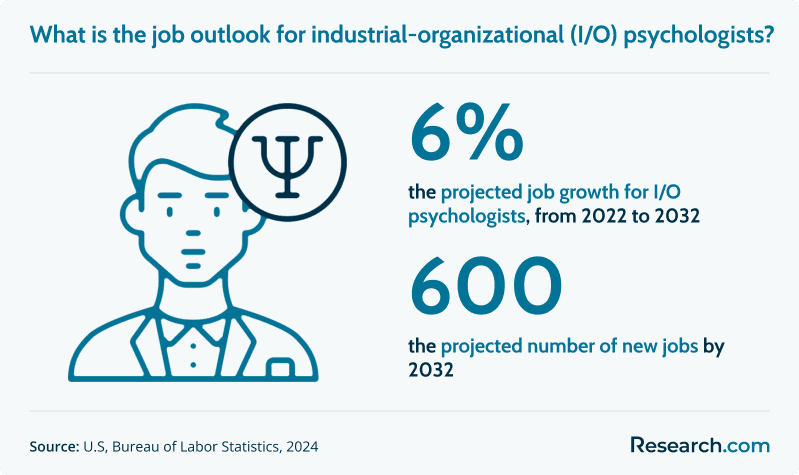
- Industrial-organizational psychologist jobs are projected to grow 6% from 2022 to 2032.
- By 2032, approximately 600 new jobs for I/O psychologists are expected to be created.
- The average annual salary for I/O psychologists in 2023 is $154,380.
- The highest-paying industry for I/O psychologists in 2023 is management, scientific, and technical consulting services, with an average salary of $169,890.
- There were around 470 I/O psychologists working in the management, scientific, and technical consulting services industry in 2023.
- There are around 1,030 I/O psychologists employed in the US in 2023.
How long does it take to complete an online doctorate in organizational psychology program?
Most online doctorate programs in organizational psychology take three to five years to complete. Your actual timeline depends on whether you enter with a bachelor’s or master’s degree, whether you enroll full time or part time, how quickly you complete research milestones, and whether the program requires residencies, internships, practicums, or dissertation defenses.
Students who already have graduate psychology coursework may move faster if the doctoral program accepts transfer credits. Related programs, such as affordable graduate programs in forensic psychology, can also build research and assessment foundations, although transferability is always determined by the receiving school.
Some universities offer accelerated pacing, but doctoral study still requires sustained research work. Many institutions give students a maximum of eight years to graduate, so ask both about the average completion time and the maximum time allowed.
| Student profile | Typical timeline | What may speed up completion | What may slow completion |
| Post-master’s applicant | Often closer to three to five years | Transferable graduate credits, clear dissertation topic, full-time study | Changing research direction, part-time enrollment, limited advisor availability |
| Post-bachelor’s applicant | Often longer because master’s-level work is included | Strong undergraduate preparation, continuous enrollment | Additional foundational coursework, research delays |
| Working professional | Varies by workload and program flexibility | Asynchronous courses, employer support, protected study time | Travel, family obligations, inconsistent weekly study schedule |
How does an online doctorate in organizational psychology compare to an on-campus program?
An online doctorate is usually the better fit for working professionals who need flexibility. Students can complete coursework from different locations, often while continuing in HR, consulting, management, education, or research roles. Online learning can also allow students to apply what they are studying directly to their current workplace.
An on-campus doctorate may be better for students who want more face-to-face interaction, easier access to physical research facilities, frequent in-person networking, and a traditional campus-based academic environment. Both formats can be rigorous, but the student experience differs significantly.
Online does not always mean fully remote. Like some affordable online master's in special education programs, doctoral programs in I/O psychology may include in-person practicums, residencies, or intensive sessions. Confirm these requirements before applying.
| Factor | Online doctorate | On-campus doctorate | Decision guidance |
| Flexibility | High, especially with asynchronous coursework | Lower because classes and meetings usually follow campus schedules | Choose online if you need to keep working while studying. |
| Networking | Depends on virtual cohorts, residencies, faculty access, and alumni programming | Often easier through campus events and informal interaction | Ask online programs how students build professional relationships. |
| Research support | Can be strong if faculty mentorship and digital resources are well designed | May offer easier access to labs and campus research groups | Compare faculty research alignment, not just delivery format. |
| Practical experience | May use local placements, remote consulting projects, or virtual simulations | May use campus partnerships and nearby organizations | Verify practicum, internship, or applied project expectations. |
After graduation, students may enter many industries. In 2023, the top industry for I/O psychologists was the management, scientific, and technical consulting services industry. See the chart below for more details.
What is the average cost of the best online doctorate in organizational psychology program?
The typical psychology degree online cost for a doctorate in organizational psychology ranges from $30,000 to more than $90,000 in total tuition. The average cost per credit hour is $1,001, with a range from $620 to $1,385 depending on the institution. Some of the cheapest online PhD psychology programs are available for less than $30,000.
Tuition is only one part of the true cost. Also account for fees, books, technology, travel for residencies or intensives, dissertation continuation fees, lost work time, and the cost of extending your program if research takes longer than expected.
| Cost factor | Why it matters | Question to ask the school |
| Per-credit tuition | Programs with similar credit totals can differ sharply in total price. | Is the published rate fixed, or can it increase while I am enrolled? |
| Total credits | Post-bachelor’s tracks often require more credits than post-master’s tracks. | How many credits will I personally need based on my prior education? |
| Residencies or intensives | Travel and lodging can add meaningful costs. | Are any in-person sessions required, and where are they held? |
| Dissertation fees | Research delays can increase total cost. | What fees apply after coursework is completed? |
| Employer reimbursement | Tuition benefits can reduce out-of-pocket costs. | Does the program qualify for my employer’s education benefit? |
The possible return can be attractive because I/O psychologists earn from $45,000 to more than $200,000 per year, and the average annual salary was $154,380 in 2023. Still, ROI should be evaluated against your current salary, debt level, career plan, and the types of roles you are likely to pursue after graduation.
What financial aid options are available for online doctorate students in organizational psychology?
Financial aid can make doctoral study more manageable, including for students comparing cheap online degrees. Aid availability depends on the institution, enrollment status, program type, financial need, academic record, and employer benefits.
- Scholarships: University and external scholarships may be available to doctoral students and do not require repayment.
- Grants: Some students may qualify for federal or state support; you can review government grant opportunities through Federal and state grants.
- Assistantships: Some doctoral programs provide teaching or research assistantships that may include a stipend, tuition support, or both.
- Loans: Federal and private student loans can cover tuition and related expenses, but repayment costs should be included in your ROI calculation.
- Employer Sponsorships: Some employers offer tuition reimbursement or sponsorship for employees pursuing advanced degrees tied to leadership, HR, analytics, or organizational development.
What are the prerequisites for enrolling in online doctorate in organizational psychology programs?
Admissions requirements differ by school and by entry track. Some programs admit students after a bachelor’s degree, while others require a master’s degree in psychology or a related area. Applicants commonly submit transcripts, recommendations, a statement of purpose, a resume or CV, and sometimes GRE scores.
Post-Bachelor’s Track
- Bachelor’s Degree: Applicants generally need a bachelor’s degree in psychology or a related field.
- Minimum GPA: Programs often expect a minimum undergraduate GPA of 3.0 to 3.5, though requirements vary.
- GRE Scores: Many programs require GRE scores, while some offer waivers based on academic or professional qualifications.
- Letters of Recommendation: Two to three recommendations from academic or professional sources are typically requested.
- Statement of Purpose: Applicants usually explain their research interests, career goals, and reasons for pursuing doctoral study.
- Resume or CV: A current document should highlight academic preparation, work experience, research activity, leadership, and relevant accomplishments.
Post-Master's Track
- Master’s Degree: A master’s degree in psychology or a closely related discipline is usually required.
- Minimum GPA: A graduate GPA of 3.0 to 3.5 is commonly expected.
- GRE Scores: Some schools require GRE scores, but policies vary by institution.
- Letters of Recommendation: Most programs request two to three academic or professional references.
- Statement of Purpose: The statement should connect your research interests and career objectives to the program’s faculty and curriculum.
- Resume or CV: Your resume or CV should document relevant graduate study, work history, research experience, and professional achievements.
Do not rely only on general admission summaries. Review each program’s official admissions page and ask whether your background meets the expected psychology, statistics, or research preparation.
What courses are typically in online doctorate in organizational psychology programs?
Coursework varies by institution, but most online organizational psychology doctorates include advanced training in psychological theory, research methods, data analysis, and organizational application.
- Advanced Organizational Behavior: Examines leadership, motivation, teamwork, culture, and group dynamics. Related leadership-focused topics may also appear in programs such as a Doctor of Psychology in Behavioral Health Leadership.
- Personnel Selection and Assessment: Covers employee evaluation, structured interviews, psychometric tools, performance appraisal, and evidence-based hiring practices.
- Organizational Development and Change: Focuses on diagnosing organizational problems, designing interventions, managing change, and evaluating improvement efforts.
- Workplace Diversity and Inclusion: Studies equity, bias, inclusive leadership, and strategies for building fairer workplaces.
- Research Methods and Statistics: Builds doctoral-level skills in research design, quantitative and qualitative analysis, measurement, and interpretation of organizational data.
Some professionals use graduate psychology certificate programs to build targeted expertise before, during, or after a doctorate. The highest paying industry for I/O psychologists in 2023 was the management, scientific, and technical consulting services industry. See the chart below for more details.
What types of specializations are available in online doctorate in organizational psychology programs?
Specializations let students connect doctoral training to specific career goals. Not every school offers every focus area, and in some programs industrial-organizational psychology is itself the specialization within a broader psychology or business psychology doctorate.
| Specialization | What it emphasizes | Best suited for |
| Human Resource Management | Recruiting, employee development, performance management, assessment, and the use of psychology in HR functions | HR leaders, talent managers, and people operations professionals |
| Consulting Psychology | Organizational diagnosis, leadership advising, team effectiveness, change management, and client-facing problem-solving | Internal or external consultants |
| General Practice | Broad I/O psychology training without a narrow concentration | Students who want flexibility across consulting, research, HR, and leadership roles |
| International Business | Cross-cultural management, global workforce issues, and multinational organizational behavior | Professionals working with global teams or international employers |
| Social Justice | Equity, diversity, inclusion, ethical practice, and organizational responsibility | Students focused on inclusive systems and organizational fairness |
| Self-Designed | A customized plan built with advisor approval around a student’s research or career interests | Students with a defined niche, such as workplace mental health, analytics, or leadership development |
If your long-term goal is counseling or therapy, remember that organizational psychology is not automatically a licensure pathway. Students researching the fastest way to become a licensed counselor should compare counseling and clinical requirements carefully before choosing an I/O-focused doctorate.
In 2023, there were 1,030 I/O psychologists working in the US.
How can prior educational achievements accelerate your doctoral journey?
Prior graduate study can shorten or strengthen your doctoral path if the program accepts transfer credits or waives overlapping coursework. Students who have completed an accelerated master's in psychology online may enter with stronger preparation in research methods, statistics, assessment, and psychological theory.
Credit transfer is not automatic. Some institutions allow up to a 30% curriculum overlap between master's and PhD-level courses, but policies vary. Ask whether previously completed courses must match doctoral course outcomes, whether credits expire after a certain period, and whether transfer credits reduce tuition or only reduce course requirements.
Prior education may also help in less obvious ways. Graduate-level research experience can make dissertation planning easier, and an existing network of faculty, supervisors, or professional colleagues can help you identify research questions, field sites, or mentors.
How do you choose the best online doctorate in organizational psychology program?
The right program is not always the cheapest, fastest, or highest ranked. The best fit is the accredited program that matches your career goal, research interests, budget, learning style, and life constraints.
- Accreditation: Confirm institutional accreditation through a recognized accrediting body. Accreditation affects credibility, transferability, and access to federal financial aid. Students comparing counseling pathways should also understand field-specific accreditation, such as CACREP accredited online counseling programs.
- Curriculum and Specializations: Make sure required courses and electives match your target role, whether that is consulting, HR leadership, research, teaching, people analytics, or organizational development.
- Faculty Expertise: Review faculty publications, consulting work, research areas, and dissertation supervision experience. A strong match with your dissertation topic matters.
- Program Flexibility: Compare asynchronous coursework, live session requirements, full-time and part-time options, residency requirements, and maximum time to completion.
- Cost and Financial Aid: Look beyond tuition. Include fees, travel, technology, dissertation costs, loan interest, and employer tuition support.
- Reputation and Outcomes: Ask about alumni roles, career services, dissertation completion support, employer partnerships, and graduate placement data.
- Practicum and Internship Opportunities: Applied projects can be valuable for students who want consulting or organizational development roles. Confirm whether the school helps students find placements.
| Before you apply, ask this question | Why it matters |
| Is the institution accredited by a recognized agency? | Unaccredited degrees may create financial aid, transfer, and employer recognition problems. |
| Who will supervise my dissertation area? | Faculty fit can affect research quality, timeline, and motivation. |
| How many students finish on time? | Completion patterns reveal whether students receive enough support. |
| Are residencies or intensives required? | Hidden travel obligations can disrupt work and increase cost. |
| What career support exists for online doctoral students? | Networking, consulting opportunities, and alumni access can influence post-graduation options. |
Is the online doctorate in organizational psychology accredited by recognized agencies?
Accreditation should be one of your first filters. At minimum, confirm that the institution holds accreditation from a recognized regional or institutional accrediting body. This helps verify academic quality and can affect federal financial aid eligibility, transfer credit, and employer confidence.
Be careful with psychology accreditation claims. The American Psychological Association is an important resource for psychology education and careers, but not every organizational psychology doctorate is APA-accredited or designed for clinical licensure. If you are comparing broader psychology doctoral programs, check whether each program is designed for research, consulting, clinical practice, or licensure preparation.
How do online doctorate programs in organizational psychology integrate technological innovations?
Online doctoral programs increasingly rely on learning management systems, virtual collaboration tools, research databases, analytics software, and simulation-based activities. These tools matter because organizational psychologists often work with data, remote teams, digital workplaces, and technology-mediated communication.
When comparing schools, ask whether students receive training in modern research tools, workplace analytics, virtual consulting methods, and collaborative project management. Students who want broader preparation may also compare psychology master's programs online to strengthen technical or research foundations before doctoral study.
What challenges should prospective students consider before enrolling in an online doctorate in organizational psychology?
The main challenge of an online doctorate is not academic quality; it is sustainability. Doctoral work requires independent reading, writing, research planning, statistical analysis, and long-term dissertation progress. Without a campus routine, students must create structure for themselves.
- Time management: Working professionals need weekly blocks for reading, assignments, research, and faculty meetings.
- Digital readiness: Students must be comfortable with online platforms, databases, video meetings, and collaborative tools.
- Networking effort: Online students may need to be more intentional about building relationships with faculty, peers, alumni, and employers.
- Research persistence: The dissertation can take longer than expected if the topic, data access, or committee feedback process is unclear.
- Fit with goals: If you want a faster undergraduate or master’s route, the fastest online psychology degree options may be more appropriate than a doctorate.
How can interdisciplinary collaboration boost your online doctorate in organizational psychology?
Organizational problems rarely fit inside one discipline. Strong I/O professionals often draw from psychology, business, data analytics, leadership, communications, public health, law, and behavioral science. Interdisciplinary study can help you design better interventions and communicate with executives, HR teams, clinicians, and operations leaders.
For example, coursework or professional learning connected to ABA master's programs online may offer useful behavioral frameworks for performance improvement, feedback systems, and behavior change. The goal is not to collect unrelated credentials, but to build a coherent expertise profile around the workplace problems you want to solve.
What factors drive success in an online doctorate in organizational psychology program?
Successful online doctoral students usually combine self-direction with strong institutional support. They choose a research topic early, communicate frequently with advisors, keep a consistent writing schedule, and use program resources before problems become serious.
- Faculty mentorship: Regular advisor access can keep research milestones moving.
- Research alignment: Students progress more smoothly when their interests match faculty expertise.
- Student services: Writing support, library access, statistics help, and career advising matter in an online format.
- Applied learning: Practicums, consulting projects, or workplace-based research can make the degree more useful.
- Clear expectations: Programs should explain dissertation steps, residency rules, grading policies, and timeline requirements.
Students comparing practice-oriented psychology doctorates may also review online PsyD programs, especially if their interests include applied psychological intervention rather than I/O-focused organizational research.
How do online doctorate programs promote diversity, equity, and inclusion?
Diversity, equity, and inclusion are central to many organizational psychology questions: hiring fairness, inclusive leadership, bias reduction, psychological safety, pay equity, and employee belonging. Online doctoral programs may address DEI through courses, case studies, research projects, assessment design, and organizational intervention planning.
Students should look for more than a single DEI course. Stronger programs integrate equity considerations into research methods, talent systems, leadership development, and ethical decision-making. Professionals who want a more clinically oriented perspective on individual and group well-being may also compare cheapest PsyD programs as a separate educational path.
What are the emerging research trends shaping online doctorate in organizational psychology?
Current workplace changes are shaping doctoral research in organizational psychology. Relevant areas include remote and hybrid work, digital transformation, employee well-being, leadership under uncertainty, workforce analytics, inclusion, psychological safety, and the impact of technology on team behavior.
Online programs may prepare students for these topics through virtual research collaboration, data analysis tools, simulations, and applied projects. Students comparing broader research-oriented options can review PhD online programs psychology to see how different doctoral formats approach research training.
How do alumni outcomes and networking opportunities impact your career advancement?
Alumni outcomes help you judge whether a program’s promises translate into real career pathways. Look for evidence of graduates working in consulting, HR leadership, research, academia, government, healthcare, or organizational development. Strong alumni networks can also provide mentorship, referrals, dissertation advice, and consulting opportunities.
Ask whether online students can attend alumni events, career panels, employer sessions, and research presentations. Programs with structured networking may offer benefits similar to those found in other cohort-based doctoral pathways, including accelerated PsyD programs.
How does clinical insight enhance workplace mental health strategies?
Organizational psychologists do not typically replace licensed clinicians, but clinical insight can help them design better workplace mental health strategies. Understanding stress, burnout, prevention, referral systems, and supportive management practices can improve employee well-being initiatives.
If your primary goal is therapy, counseling, or clinical treatment, make sure your education path matches licensure requirements. Students asking what degree do you need to be a therapist should compare counseling, clinical psychology, social work, and marriage and family therapy pathways separately from I/O psychology.
How can complementary certifications, including those in child psychology, enhance career opportunities?
Complementary certifications can help organizational psychology students build specialized expertise, but they should be chosen strategically. Useful areas may include data analytics, human resources, leadership coaching, change management, assessment, or workplace well-being.
A child psychology credential may be relevant for professionals working on family-friendly workplace policies, employee wellness benefits, education organizations, or developmental perspectives in workforce support. If you are considering that direction, review What jobs can I get with a child psychology certificate? to understand how the credential connects to career options.
Can integrating clinical psychology enhance your online doctorate in organizational psychology?
Clinical psychology concepts can complement organizational psychology when the focus is employee well-being, stress prevention, resilience, trauma-informed leadership, or supportive workplace systems. However, clinical training and I/O psychology training serve different professional purposes.
Some students may benefit from comparing integrated or adjacent pathways, such as dual PsyD programs, if they want deeper preparation in clinical assessment and intervention. For strictly organizational roles, targeted coursework in workplace mental health may be more efficient than adding a full clinical doctorate.
Do employers value an online doctorate in organizational psychology?
Employers are more likely to value an online doctorate when the institution is accredited, the curriculum is rigorous, and the graduate can demonstrate applied skills. Hiring managers typically care about research ability, data interpretation, communication, consulting experience, leadership judgment, and the ability to solve practical workplace problems.
The online format itself is usually less important than evidence of competence. A dissertation, consulting portfolio, applied project, publications, presentations, or measurable workplace outcomes can strengthen your profile. Some professionals also add targeted credentials, such as an associate's degree in substance abuse counseling, when their work involves employee assistance, recovery-informed workplaces, or behavioral health support systems.
What red flags should you watch for in an online doctorate in organizational psychology program?
A weak doctoral program can cost years of time and substantial tuition. Watch for vague accreditation claims, unclear faculty qualifications, poor dissertation support, limited research expectations, outdated technology, minimal student services, and little transparency about outcomes.
| Red flag | Why it is risky | Better alternative |
| No clear institutional accreditation | The degree may not be recognized by employers or eligible for aid. | Verify accreditation through recognized agencies before applying. |
| Unclear dissertation process | Students may face delays, added fees, or inconsistent committee expectations. | Ask for a written dissertation timeline and support model. |
| Faculty profiles lack research detail | You may struggle to find a suitable advisor. | Choose a program with faculty whose work aligns with your interests. |
| No applied learning options | Consulting and HR leadership roles often require practical evidence. | Look for practicums, projects, internships, or workplace-based research. |
| Forced unrelated career claims | A program may be overstating outcomes. | Ask for alumni roles and employer examples. |
Students interested in other helping-profession pathways can compare options such as an MFT degree online, but should not assume those programs and I/O psychology doctorates lead to the same roles.
Is pursuing an online doctorate in organizational psychology a sound financial investment?
The investment can make sense if the degree helps you move into higher-level consulting, research, HR, organizational development, academic, or leadership roles. It may be less practical if your target role does not require doctoral training or if the program cost would create debt that your expected career path cannot support.
Compare total tuition, time to completion, loan repayment, opportunity cost, employer reimbursement, and realistic salary outcomes. Do not base the decision only on the highest reported salary. Students building a broader human services background may also compare a cheap online bachelor's degree in human services, but a bachelor’s pathway serves a very different purpose from a doctorate.
How can I verify that my online doctorate program is accredited and respected?
Start by checking the institution’s accreditation status directly with the accrediting agency, not only on the school website. Then review faculty qualifications, dissertation requirements, research expectations, student support, alumni outcomes, and whether employers in your target field recognize the degree.
If you are unsure how accreditation works in psychology, use resources such as what is the best accreditation for a psychology degree to understand the difference between institutional accreditation, programmatic accreditation, and licensure-related approval.
How can complementary accelerated programs enhance your doctoral studies?
Accelerated programs can help students build prerequisite knowledge or adjacent skills before entering a doctorate. For organizational psychology, useful complements may include social work, human services, leadership, data analytics, HR, or behavioral science, depending on your career direction.
For example, accelerated MSW programs online may be relevant for professionals interested in workplace well-being, crisis response, employee support systems, or social-service organizations. The key is to choose complementary study that supports a clear career plan rather than adding credentials without purpose.
What other educational paths can complement an online doctorate in organizational psychology?
Some students are not ready for a doctorate or may not need one. An online masters in industrial organizational psychology can provide a strong foundation in workplace psychology and may be enough for certain HR, talent development, consulting, or organizational development roles.
Other complementary paths include graduate certificates in analytics, leadership coaching, human resources, business administration, diversity and inclusion, or change management. Choose based on the role you want, the skills employers request, and the gaps in your current experience.
What career paths are available for graduates of online doctorate in organizational psychology programs?
An online doctorate in organizational psychology can support several career paths, especially for professionals who combine the degree with strong research skills, business understanding, and applied experience.
- Organizational Consultant: Consultants assess workplace problems, recommend interventions, improve leadership systems, and help organizations strengthen culture, productivity, and employee experience. This consulting path differs from the work of someone with a traditional or online masters in legal studies, though both may advise organizations in specialized areas.
- Human Resources Manager: HR managers use psychological principles to improve recruiting, development, performance management, conflict resolution, and employee engagement.
- Director of Talent Management: Talent leaders design strategies for hiring, developing, retaining, and assessing employees across an organization.
- Academic Professor: Faculty members teach, conduct research, publish scholarship, mentor students, and contribute to the development of the field.
- Research Scientist: Researchers study workplace behavior, organizational dynamics, assessment methods, employee well-being, and leadership effectiveness in academic, corporate, or institutional settings.
What is the job market for graduates with an online doctorate in organizational psychology degree?
The job market is specialized but promising for candidates with strong research, consulting, and organizational problem-solving skills. The projected job growth for industrial-organizational psychologists is 6% from 2022 to 2032, which translates to approximately 600 new job opportunities by 2032.
Because there are around 1,030 I/O psychologists employed in the US in 2023, competition for formal I/O psychologist titles may be meaningful. Many graduates also pursue adjacent roles in HR leadership, organizational development, consulting, analytics, academia, and talent strategy, where the doctorate can be useful even if the job title is not “industrial-organizational psychologist.”
What skills will you develop in an online doctorate in organizational psychology program?
Doctoral study develops advanced skills that go beyond general psychology knowledge. The strongest programs train students to use evidence, data, and behavioral science to solve complex organizational problems.
- Advanced Research and Analytical Skills: Students learn to design studies, evaluate evidence, use quantitative and qualitative methods, analyze data, and turn findings into practical recommendations.
- Leadership and Strategic Thinking: Coursework often covers decision-making, change management, conflict resolution, leadership development, and organizational strategy.
- Psychological Assessment and Intervention Design: Students learn how to evaluate workplace dynamics, employee attitudes, performance systems, and organizational needs.
- Diversity and Inclusion Expertise: Programs often examine cultural dynamics, bias, fairness, and strategies for building more equitable workplaces.
- Communication and Collaboration: Online doctoral work requires clear writing, virtual teamwork, stakeholder communication, and the ability to explain research to non-specialists.
Students who want to broaden their behavior science foundation may also explore an accredited behavioral psychology degree online, especially if they are interested in behavior management, intervention design, or applied behavioral analysis.
Why choose an online doctorate in organizational psychology?
The online format is best for students who need doctoral-level training without relocating or leaving their current role. It can allow professionals to continue earning income, apply coursework to real workplace challenges, and study with peers from different locations and industries.
Online programs may include asynchronous courses, live webinars, virtual simulations, digital libraries, remote research tools, career services, and faculty mentoring. However, flexibility does not mean easier. Students must manage time carefully and remain engaged with research, writing, and advisor feedback.
If your interest is more business leadership than psychological research, an MBA in Organizational Leadership may be a better fit. If you want to become a research-driven expert in workplace behavior, an online doctorate in organizational psychology may be the stronger path.
Common mistakes to avoid when choosing an online doctorate in organizational psychology
- Choosing based only on tuition: A low price matters, but poor dissertation support or weak faculty fit can increase time and total cost.
- Ignoring accreditation: Always verify institutional accreditation before applying or borrowing.
- Assuming online means no travel: Some programs require residencies, intensives, or practicum experiences.
- Confusing I/O psychology with clinical licensure: Organizational psychology usually prepares students for workplace-focused roles, not independent therapy practice.
- Relying only on rankings: Rankings can help you start a list, but your final decision should depend on curriculum, faculty, cost, outcomes, and fit.
- Underestimating the dissertation: Dissertation planning, data access, committee feedback, and revisions can strongly affect completion time.
Key Insights
- An online doctorate in organizational psychology is best for professionals seeking advanced roles in consulting, HR strategy, organizational development, research, academia, or leadership.
- Employment for psychologists is projected to grow 6% from 2022 to 2032, and I/O psychologist salaries range from $45,860 to $219,810 per year, with a median of approximately $147,420.
- Program costs vary widely, typically from $30,000 to more than $90,000 in total tuition, so students should calculate full cost and not just per-credit tuition.
- The strongest programs provide recognized accreditation, relevant faculty expertise, rigorous research training, practical experience, and transparent student support.
- Online study offers flexibility, but doctoral success depends on self-discipline, advisor communication, research persistence, and a clear career goal.
- Before enrolling, confirm whether the program is designed for organizational, research, consulting, or clinical goals; these paths are not interchangeable.
References:
- American Psychological Association. (2024). Pursuing a career in industrial and organizational psychology. APA.
- U.S. Bureau of Labor Statistics. (2024). Occupational employment and wages, May 2023 - 19-3032 Industrial-organizational psychologists. Retrieved August 14, 2024, from BLS.
- U.S. Bureau of Labor Statistics. (2024). Psychologists - Job outlook. Retrieved August 14, 2024, from BLS.
Other Things You Should Know About Online Doctorate In Organizational Psychology Programs
The typical duration for online doctorate programs in organizational psychology in 2027 is approximately 3 to 5 years. Factors such as program structure, part-time or full-time enrollment, and dissertation completion time can influence the exact length.
Graduates of online doctorate programs in organizational psychology in 2027 can pursue careers as organizational consultants, academic researchers, corporate trainers, and human resources directors. These roles typically require advanced skills in applied psychology, leadership, and data analysis, offering opportunities in both corporate and educational settings.
Yes. Most online doctorate in organizational psychology programs require a dissertation or dissertation-in-practice as the capstone. Typical requirements include an approved research proposal, faculty supervision, and final oral defense. Many programs expect this to be completed after core coursework and research methods training.


