2027 Speech Pathology Degree Master's Programs Accepting Students Now

Co-Founder and Chief Data Scientist

Reviewed by Rhea Paul, PhD
SLP Education & Research Expert
Choosing a speech pathology master’s program is a licensure decision, not just a graduate school decision. For most future speech-language pathologists, the master’s degree is the academic requirement that connects undergraduate preparation to supervised clinical training, state licensure, and professional practice.
The stakes are practical. A well-matched program can help you complete prerequisites, secure appropriate clinical experiences, manage cost, and stay aligned with certification and state licensing rules. A poor fit can delay graduation, limit placement options, increase debt, or leave you with coursework that does not meet the requirements in the state where you plan to work.
This guide is for communication sciences and disorders majors, career changers, working adults comparing online or hybrid formats, and applicants who need to understand admissions expectations before applying. It explains what speech pathology master’s programs include, how to evaluate accreditation and clinical training, what GPA and prerequisite standards usually mean, how long programs take, what costs to expect, which aid options may reduce expenses, and what career outcomes graduates can reasonably pursue.
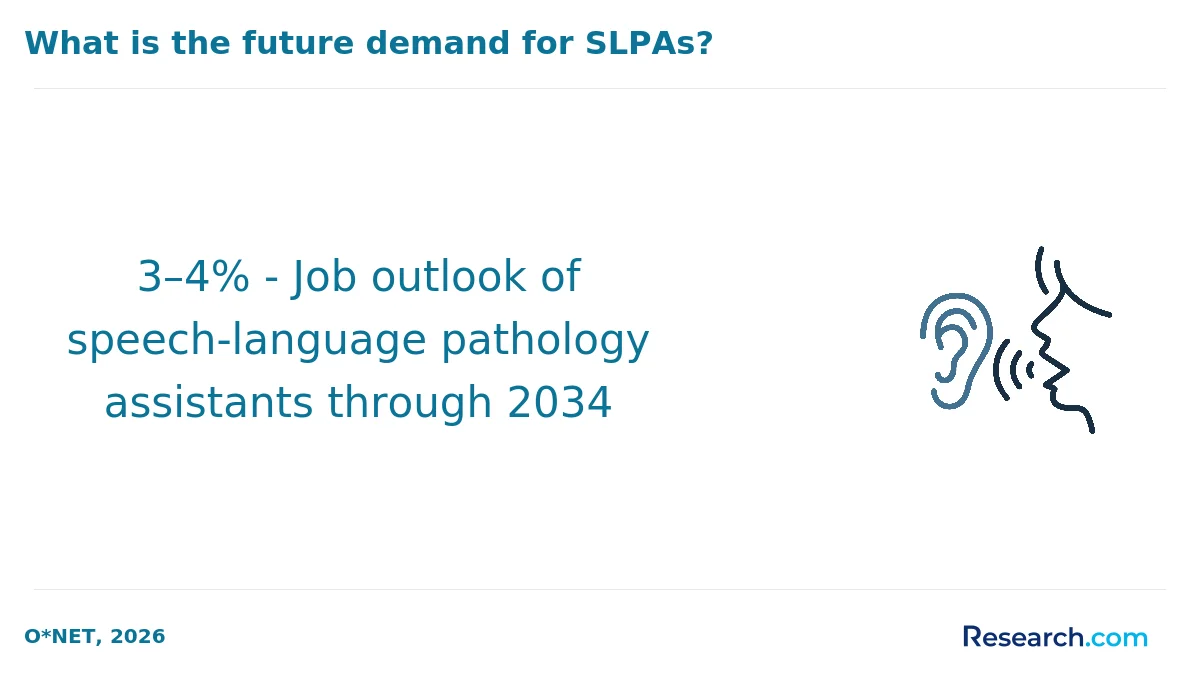
Demand is one reason many students are considering the field. The U. S. Bureau of Labor Statistics projects a 17% growth in speech-language pathology jobs through 2035, with opportunities in schools, hospitals, rehabilitation centers, private practices, and community-based settings. Strong demand, however, does not remove the need to choose carefully: licensure alignment, supervised clinical preparation, and program quality remain essential.
Key Things to Know About Speech Pathology Degree Master's Program Accepting Students Now
- Many master's programs offer flexible schedules, including evening and weekend classes, enabling working professionals to pursue advanced speech pathology studies without interrupting their careers.
- Accelerated pathways allow students to gain essential clinical and theoretical skills within 18 to 24 months, meeting accreditation requirements rapidly while maintaining program quality.
- Access to global networks through online platforms and international partnerships enhances collaboration, internships, and job placement opportunities across diverse healthcare settings.
What Are Speech Pathology Master's Programs, and Who Are They Designed For?
A speech pathology master’s program is graduate-level professional preparation for students who want to become speech-language pathologists. The degree combines advanced coursework with supervised clinical education so students can learn to assess, diagnose, document, and treat communication and swallowing disorders across the lifespan.
These programs are designed for several types of applicants. Students with a bachelor’s degree in communication sciences and disorders may be ready to enter the graduate sequence directly. Applicants from unrelated majors often need prerequisite or leveling coursework before they can begin clinical graduate study. Working adults may prefer online or hybrid programs, but they should expect in-person clinical practica because supervised client contact cannot be completed entirely through remote coursework.
The master’s degree is also distinct from undergraduate study. Undergraduate programs introduce speech, language, hearing, development, anatomy, and related sciences. Master’s programs require students to apply that foundation to clinical decisions: selecting assessments, interpreting results, building treatment plans, working with families and teams, writing documentation, and using evidence-based practice. Doctoral study is usually a better fit for students focused on research, university teaching, senior leadership, or highly specialized scholarship.
Who is a strong fit for this degree?
- Future licensed clinicians: Students who want to work as speech-language pathologists in schools, healthcare, rehabilitation, private practice, or community settings generally need graduate clinical preparation.
- Communication sciences graduates: Applicants with relevant undergraduate coursework may be able to move into a traditional graduate sequence with fewer prerequisite gaps.
- Career changers: Applicants from education, psychology, healthcare, linguistics, biology, or other fields may qualify after completing leveling courses.
- Working adults: Online and hybrid options can make coursework more accessible, but clinical scheduling still requires local availability and approved supervision.
- Students interested in applied science: The field suits people who want a career combining anatomy, neuroscience, language, development, counseling, documentation, and direct client service.
Before applying, ask one central question: will this program prepare you for the credentialed clinical role you want in the state where you intend to practice? Convenience matters, but it should never outweigh accreditation, clinical placement quality, licensure alignment, and faculty support. With a projected 17% employment growth from 2025 to 2035, speech-language pathology remains an appealing licensed profession for students who want a career in healthcare or education. Students comparing other practical graduate and undergraduate routes may also review degrees you can get online that pay well as part of broader career planning.
Which Speech Pathology Master's Programs Are Currently Accepting Applications?
Speech pathology master’s programs open and close applications according to each school’s calendar, cohort size, and review model. Some programs use rolling admissions, while others have fixed fall or spring deadlines. A program may also close early if clinical capacity or cohort seats are filled, so applicants should always verify current deadlines, start terms, prerequisite rules, and format details on the university’s official admissions page.
When you see that a program is accepting applications, do not treat that as enough information to apply immediately. First confirm whether you meet the prerequisite requirements, whether the program is accredited, how clinical placements are arranged, and whether the schedule matches your work and family obligations. A fast deadline is not useful if the program requires courses you have not completed or clinical availability you cannot provide.
| Program | Best fit | Important application consideration |
| University of Northern State - Professional Speech Pathology Program | Applicants seeking practice-focused clinical preparation | Uses rolling admissions and does not require a thesis component, which may appeal to students focused on direct clinical practice. |
| East Coast University - Thesis-Based Master's Track | Students considering research, academic work, or future doctoral study | Requires a thesis and follows fixed fall and spring deadlines, so applicants need stronger planning around research interests and faculty fit. |
| Midwest Accelerated Speech Pathology Master's | Highly prepared students who want a faster graduate sequence | Offers admissions twice yearly with strict deadlines, and the accelerated pace may be difficult for students with work or prerequisite gaps. |
| West Valley State University - Hybrid Admission Options | Students who want a mix of online coursework and campus-based learning | Some terms use rolling admissions, while others use fixed deadlines, so timing depends on the start term. |
| South Bay College - Clinical Scientist Pathway | Applicants interested in both clinical practice and research preparation | Uses fixed admission windows aligned with academic semesters and may require careful planning around research and clinical expectations. |
The strongest application target is not always the program with the nearest deadline. If you still need leveling courses, an accelerated program may actually extend your timeline. If you work full time, a daytime cohort may be unrealistic even if the admissions office is currently accepting files. Applicants comparing intensive graduate pathways in other helping professions can review one year MSW programs to see how cohort pacing and field placement requirements differ across disciplines.
What Are the Admission Requirements for a Speech Pathology Master's Program?
Speech pathology master’s programs use admissions requirements to determine whether applicants are ready for graduate coursework and clinical training. Most programs require official transcripts, prerequisite coursework, letters of recommendation, a statement of purpose, and a resume or curriculum vitae. Some still require GRE scores, while others have made the GRE optional or removed it after the pandemic.
The most important admissions issue for many applicants is prerequisite readiness. A bachelor’s degree by itself may not be sufficient if it did not include the required background in communication sciences and disorders or related sciences. Career changers may need leveling courses in areas such as anatomy, linguistics, psychology, biology, speech and hearing science, or language development before entering the master’s sequence.
| Requirement | What programs use it to evaluate | Applicant tip |
| Official transcripts | Degree completion, GPA, prerequisite coursework, academic trend, and repeated courses | Order transcripts early, especially if you attended more than one institution or completed post-baccalaureate courses. |
| Letters of recommendation | Academic ability, professionalism, communication skills, clinical readiness, and reliability | Choose recommenders who can describe specific examples of your writing, maturity, collaboration, and follow-through. |
| Statement of purpose | Motivation for the profession, fit with the program, relevant experience, and career direction | Explain why speech pathology is a deliberate career goal and connect your experience to the populations or settings you hope to serve. |
| Resume or curriculum vitae | Work, volunteer, research, observation, service, and leadership experience | Highlight experience with children, older adults, disability services, healthcare, education, communication support, or research. |
| GRE or other tests | Standardized academic indicators, if the program still reviews them | Confirm whether scores are required, optional, or not considered before registering for an exam. |
Some programs may also ask for interviews, writing samples, observation hours, portfolios, background checks, or proof of relevant certifications. Because requirements vary widely, create a separate checklist for each school. One missing transcript, prerequisite, recommendation, or test score can make an otherwise competitive application incomplete.
For career changers, the application process can feel especially complex because they may be managing full-time work, prerequisite review, multiple transcripts, and letters of recommendation at the same time. One professional who entered an online speech pathology master’s program described the process as “daunting but manageable.” He said collecting transcripts from several institutions and requesting recommendations while working full time created stress, but writing the statement of purpose helped him clarify why the field was the right fit. “I appreciated programs that waived the GRE requirement-it eased my anxiety,” he noted.
The practical lesson is to start with prerequisites and deadlines, then work backward. Confirm course equivalencies, request transcripts, contact recommenders, and tailor your statement to each program before the final deadline approaches.
The commonly cited minimum GPA for a speech pathology master’s program is a 3.0 on a 4.0 scale. That number usually means you are eligible for review, not that admission is likely or guaranteed. Competitive programs may expect stronger academic performance, especially in prerequisite courses tied to communication sciences, anatomy, language, psychology, and human development.
Admissions committees often review GPA in context. They may look at cumulative GPA, major GPA, prerequisite GPA, grades in the final semesters of college, repeated courses, post-baccalaureate coursework, and evidence that the applicant can manage graduate-level clinical expectations. A student with a lower early GPA but a strong upward trend may be evaluated differently from a student whose grades declined in advanced coursework.
- Typical minimum: Many programs use a 3.0 GPA as the baseline for graduate admission review.
- Competitive reality: Selective programs may prefer applicants above the stated minimum because clinical cohort seats are limited.
- Prerequisite grades: Strong performance in communication sciences, anatomy, linguistics, psychology, or related coursework can strengthen the file.
- Academic trend: Improved grades later in college may help offset weaker earlier performance.
- Conditional admission: Some schools may admit borderline applicants with specific academic performance requirements for continued enrollment.
If your GPA is below or close to the minimum, contact admissions before paying application fees. Ask whether the program considers post-baccalaureate coursework, repeated prerequisites, professional experience, optional explanations of academic circumstances, or conditional admission. Recent data show that roughly 40% of speech pathology master's programs have become more flexible in evaluating applicants' overall profiles beyond GPA alone, partly driven by rising application numbers. Students comparing admissions standards in adjacent licensed helping professions may also review CACREP accredited counseling programs.
Most speech pathology master’s programs take one to two years of full-time study. Part-time programs commonly extend the timeline to two to four years. Some schools offer accelerated 12-month formats, and combined bachelor’s and master’s pathways, often called 4+1 programs, allow students to complete both degrees in roughly five years.
The timeline depends on more than the number of semesters printed on a program page. Students who lack prerequisites may need additional leveling coursework before the graduate sequence begins. Thesis tracks can take longer because they add research design, data collection, writing, and faculty review. Non-thesis tracks may be more direct for students focused on clinical practice, although they may offer less preparation for research-heavy roles or doctoral study.
| Format | Typical timeline | Best for | Trade-off |
| Full-time | One to two years | Students who can prioritize coursework and clinical availability | Heavy workload and limited flexibility for employment or caregiving |
| Part-time | Two to four years | Working adults or students with major outside obligations | Longer path to graduation, licensure eligibility, and full-time professional earnings |
| Accelerated | 12-month formats may be available | Highly prepared students with few outside constraints | Limited room for illness, work demands, remediation, or placement delays |
| 4+1 pathway | Roughly five years for both degrees | Undergraduates who plan early and stay at a participating institution | Less useful for transfer students or career changers who did not enter the pathway early |
Clinical internships and practicum requirements can also affect timing. Placements depend on approved site availability, supervisor capacity, program policies, and sometimes geographic location. Transfer credits may shorten selected academic requirements, but clinical requirements are usually tightly controlled because they must align with professional standards.
Do not choose a program only because it appears to be the shortest. In speech pathology, accreditation, clinical supervision quality, placement support, and licensure alignment can matter more than finishing one semester earlier.
A graduate of an online speech pathology master’s program said flexible coursework helped her continue working, but the clinical internship required careful planning. “The program felt fast-paced at times, but every step prepared me thoroughly for real-world practice,” she said. Her experience illustrates a common trade-off: online coursework can improve schedule flexibility, but clinical training still requires coordinated, supervised, in-person availability.
The cost of a speech pathology master’s program includes more than tuition. Students should budget for tuition, university fees, books and materials, clinical expenses, travel, living costs, and possible lost income from reduced work hours. Tuition may be charged per credit hour or by term. Public universities may use different rates for in-state and out-of-state students, while private universities may charge one tuition rate for all students.
National estimates place the total cost of earning a speech pathology master's degree between about $30,000 and over $70,000, depending on whether the school is public or private and how many credits and clinical components are required. Use that range as a planning estimate only. Your real cost depends on program length, residency status, fees, aid, clinical placement requirements, and whether you need prerequisite coursework.
Costs to include before comparing programs
- Tuition: Usually the largest expense and often based on the number of credits required for coursework and clinical training.
- University and program fees: These may include technology, lab, simulation, clinical placement, assessment, graduation, or administrative fees.
- Clinical expenses: Background checks, immunizations, liability insurance, transportation, professional attire, and placement travel can add meaningful costs.
- Residency and campus visits: Online or hybrid programs may still require campus sessions, labs, or travel for intensives.
- Living and opportunity costs: Housing, food, commuting, childcare, and reduced employment may affect affordability as much as tuition.
- Prerequisite coursework: Career changers may need to pay for leveling courses before the master’s program begins.
The number to compare is net cost, not advertised tuition. Net cost reflects tuition and fees after scholarships, grants, assistantships, employer benefits, and other aid are applied. Before enrolling, ask each program for a full cost breakdown and confirm whether tuition increases, clinical placement fees, residency rules, or required campus visits could change your total cost in later terms.
Speech pathology master’s students often combine several funding sources, including federal loans, institutional scholarships, fellowships, assistantships, employer tuition benefits, and private awards. Because graduate students typically have fewer grant options than undergraduates, it is important to compare financial aid early and distinguish gift aid from money that must be repaid.
For many U.S. students, the first step is completing the Free Application for Federal Student Aid (FAFSA). The FAFSA is used to determine eligibility for federal graduate loan programs and may also be required for some institutional aid.
| Aid option | How it may help | What to verify |
| Federal loans through FAFSA | Can provide a common funding source for graduate study | Loan limits, interest, repayment options, and whether you are borrowing only what you need |
| Institutional grants and fellowships | May reduce tuition or fees without repayment | Eligibility criteria, renewal rules, GPA requirements, and whether awards cover all terms |
| Graduate assistantships | May provide tuition support and stipends in exchange for work | Work hours, duties, impact on clinical scheduling, and whether assistantships are guaranteed |
| Employer tuition benefits | Can reduce out-of-pocket cost for students already working in related settings | Reimbursement limits, grade requirements, service commitments, and eligible programs |
| Private and discipline-specific scholarships | May support students entering speech-language pathology or related service areas | Deadlines, essays, recommendation requirements, and whether awards are one-time or renewable |
A lower-tuition program is not always the lowest-cost program after aid. A school with higher tuition may become more affordable if it offers assistantships, scholarships, or strong clinical placement support that reduces relocation and travel expenses. Read award letters carefully, separate grants and scholarships from loans, and ask whether each award is renewable for the full program.
Yes. Speech pathology master’s students can find scholarships through universities, professional associations, foundations, government-related resources, and community organizations. Institutional awards may be listed through the financial aid office, graduate school, or speech pathology department. External scholarships may focus on academic merit, financial need, research interests, bilingual service, rural practice, disability advocacy, or students from underrepresented backgrounds.
Examples of external sources include the American Speech-Language-Hearing Foundation (ASHFoundation) and the National Black Association for Speech-Language and Hearing (NBASLH). Students can also search databases such as Fastweb or Scholarship.com and federal tools such as the U.S. Department of Labor’s CareerOneStop.
How to improve your scholarship search
- Search both inside and outside the university: Departmental awards and external scholarships often have different eligibility rules, so use both channels.
- Start before admission decisions arrive: Some deadlines fall early, and waiting until enrollment may cause you to miss major opportunities.
- Check renewal requirements: Some awards are one-time payments, while others require continued enrollment, GPA maintenance, service commitments, or annual reapplication.
- Use professional associations strategically: Membership may provide access to scholarships, mentorship, conferences, leadership opportunities, and early career networks.
- Match your application to the award’s purpose: Strong essays connect your background, service goals, clinical interests, and long-term plans to the funder’s mission.
Recent data shows that over 60% of speech pathology master's students receive some form of financial aid, which makes scholarship research worth the time even if you expect to use loans. Students planning a longer path from undergraduate study to graduate clinical training may also compare funding patterns in related fields by reviewing resources on a bachelors in psychology online.
The best online speech pathology master’s program is accredited, clinically well supported, aligned with your state licensure goals, manageable for your schedule, and financially realistic. It is not automatically the cheapest program, the fastest program, or the one with the most flexible-sounding website.
Start by verifying institutional accreditation and programmatic accreditation from the Council on Academic Accreditation in Audiology and Speech-Language Pathology (CAA). Accreditation matters because graduates typically must meet licensure and certification standards before they can practice independently.
| Factor | Why it matters | Question to ask |
| Accreditation | Supports licensure eligibility, certification pathways, and employer recognition | Is the institution accredited, and is the speech pathology program CAA-accredited? |
| Clinical placement support | Online students still need approved supervised clinical experiences | Does the program secure placements, assist with coordination, or expect students to find sites independently? |
| State licensure alignment | Licensure rules vary by state | Does the program meet educational requirements for the state where you plan to practice? |
| Course delivery | Online formats can differ significantly | Are classes asynchronous, synchronous, hybrid, or tied to required campus visits? |
| Faculty and supervision | Clinical and research expertise can shape training quality | Do faculty interests match your goals in schools, healthcare, pediatrics, dysphagia, voice, fluency, or other areas? |
| Student support | Online learners need reliable advising and technical infrastructure | What licensure advising, career services, placement support, and technical help are available? |
| Total cost | Fees, travel, and clinical expenses can change affordability | What is the full estimated cost after aid, required visits, and placement-related expenses? |
Online study can be a strong option for working adults and students who cannot relocate, but speech pathology programs are not fully remote in the casual sense. Clinical practica require approved supervision, and some programs may require campus visits, synchronous labs, or local placement availability. Students comparing flexible accredited pathways can review online masters in speech language pathology options while checking each school’s accreditation status and clinical placement policies.
Cost comparisons should also account for how online graduate pricing differs by field. For broader context on online tuition and fee structures, students may compare criminal justice degree cost information while remembering that speech pathology has distinct clinical and licensure requirements.
Accreditation directly affects the value of a speech pathology master’s degree because it can influence licensure eligibility, certification pathways, employer acceptance, and access to federal financial aid. In this field, accreditation is not a minor quality signal; it is one of the first items applicants should verify.
There are two forms to understand. Institutional accreditation applies to the college or university as a whole and indicates that the institution meets broad academic, administrative, and financial standards. Programmatic accreditation evaluates the speech pathology program specifically. The key programmatic accreditor in this field is the Council on Academic Accreditation in Audiology and Speech-Language Pathology (CAA), which is part of the American Speech-Language-Hearing Association (ASHA).
- Institutional accreditation: Helps determine whether the school is eligible for federal financial aid and whether its degrees and credits are broadly recognized.
- Programmatic accreditation: Indicates that the speech pathology curriculum and supervised clinical training meet field-specific standards.
- Licensure relevance: State licensing boards usually require graduation from a CAA-accredited speech pathology program for lawful clinical practice.
- Employer confidence: Employers often prefer or require graduates from accredited programs because accreditation supports consistent clinical preparation.
- Risk reduction: Enrolling in an unaccredited or improperly accredited program can create barriers to licensure, certification, employment, and financial aid.
Do not rely only on terms such as “recognized,” “approved,” “aligned with standards,” or “designed for licensure.” Verify accreditation through official sources such as the U.S. Department of Education's Database of Accredited Postsecondary Institutions and Programs and the program’s accreditor. If you know where you want to practice, also review that state’s licensing board requirements before enrolling.
Graduates with a master’s degree in speech pathology can pursue speech-language pathology roles in schools, hospitals, rehabilitation facilities, outpatient clinics, skilled nursing facilities, private practices, research settings, and community programs. Their clients may include children with language delays, adults recovering from stroke or brain injury, people with voice or fluency disorders, and individuals with swallowing difficulties.
According to the U.S. Bureau of Labor Statistics, speech-language pathologists earn a median wage around $97,870 per year, with employment expected to grow 17% from 2025 to 2035, significantly faster than average. Actual outcomes vary by state, employer, setting, licensure status, experience, specialization, and local demand.
| Career setting | Typical focus | What to consider |
| Schools | Supporting students with communication needs and collaborating with teachers, families, and special education teams | School calendars, caseload structure, documentation demands, and state education requirements can affect the role. |
| Hospitals and rehabilitation facilities | Assessment and treatment related to swallowing, cognition, speech, language, and voice | These roles may involve medically complex clients and close collaboration with physicians, nurses, and therapists. |
| Outpatient clinics | Ongoing therapy for children or adults with communication, fluency, voice, or swallowing needs | Caseloads may be specialized or mixed depending on the clinic’s population. |
| Skilled nursing facilities | Communication and swallowing support, often for older adults | Documentation, reimbursement rules, and interdisciplinary care are important parts of practice. |
| Private practice | Independent or group-based clinical services after meeting licensure and experience requirements | Business operations, referrals, billing, and compliance become part of the career path. |
Specialization can also shape career direction. Advanced focus areas may include pediatric language, autism support, aphasia, dysphagia, voice, fluency, or augmentative and alternative communication. The master’s degree is especially important because independent clinical practice generally requires graduate-level preparation, followed by the licensure and certification steps required in the relevant jurisdiction.
Career outcomes are influenced by more than the degree title. Clinical supervisors, practicum sites, alumni networks, professional associations, licensure advising, and career services can all affect how smoothly graduates move from student placements into full-time employment.
What Graduates Say About Their Speech Pathology Degree Master's Program
- : "Choosing the master's degree in speech pathology was a decisive step for me because I wanted a career that offers both challenge and reward by helping others communicate. Although the cost was a concern, the quality of education and support services made each dollar worth it. The program's rigorous training truly transformed my professional path, enabling me to confidently work with diverse populations in clinical settings. — Meena"
- : "Reflecting on my decision to pursue a master's in speech pathology, I was drawn by the opportunity to combine science and empathy in my work. The affordability of the program compared to others made it accessible and practical for me as a working adult. Since graduating, the degree has opened doors to specialized roles, greatly enhancing my career growth and job satisfaction. — Amanda"
- : "The master's program in speech pathology equipped me with essential skills and deep knowledge that I needed to establish a credible career in healthcare. The investment was significant, but the long-term professional benefits, including increased earning potential and job stability, made it worthwhile. I appreciate how this degree helped me build a network of colleagues and mentors that continues to support my career advancement. — Henry"
Other Things You Should Know About Speech Pathology Degrees
Prerequisites typically include a bachelor's degree in communication sciences or a related field, completion of specific coursework such as phonetics and audiology, and a minimum GPA of 3.0. Check individual program requirements for exact details and exceptions.
Many 2027 speech pathology master’s programs require the GRE, but some waive it entirely. Programs that still use test scores usually set minimum verbal and quantitative thresholds, and official scores must be sent directly from ETS before the application deadline.
- U.S. Bureau of Labor Statistics - Speech-Language Pathologists https://www.bls.gov/ooh/healthcare/speech-language-pathologists.htm
- ASHA EdFind - Accredited Speech-Language Pathology Programs https://find.asha.org/ed/
- ETS Praxis - Speech-Language Pathology (5331) https://praxis.ets.org/test/speech-language-pathology-5331.html
- Pepperdine University - Master of Science in Speech-Language Pathology https://healthscience.pepperdine.edu/online-masters-in-speech-language-pathology/
- University of North Carolina at Greensboro - Speech-Language Pathology, M.A. (Online) https://csd.uncg.edu/graduate/masters-of-arts-online/
- Idaho State University - Master of Science in Speech-Language Pathology (Online/Distance Education) https://www.isu.edu/slp/programs-offered/slp-graduate-program/
- California State University-San Marcos - Online MS in Speech-Language Pathology https://www.csusm.edu/slp/programs/mastersonline/index.html
- Maryville University - Master of Science in Speech-Language Pathology https://www.maryville.edu/masters/speech-language-pathology/