
2027 What Can You Do with a Speech Pathology Master's Degree? Careers, Salaries & Growth

Co-Founder and Chief Data Scientist

Reviewed by Rhea Paul, PhD
SLP Education & Research Expert
Choosing a speech pathology master's degree is a licensing, cost, and career decision—not just an academic one. For most aspiring speech-language pathologists, the master's degree is the key credential that prepares them for supervised clinical practice, certification, and state licensure. The field also has strong demand: according to the Bureau of Labor Statistics, employment for speech-language pathologists is projected to grow 17% from 2025 to 2035, much faster than the average for all occupations.
This guide explains what prospective students should know before applying: common admission requirements, GPA expectations, cost and funding options, program length, career paths, salary ranges, certifications, hiring industries, job outlook, and the skills developed in graduate training. It is designed for students comparing programs, career changers planning prerequisite coursework, and working professionals deciding whether an online, hybrid, or campus-based pathway fits their goals.
Key Things to Know About What You Can Do with a Speech Pathology Master's Degree
- Speech pathology master's programs typically require a relevant bachelor's degree and include clinical practicum hours, combining coursework with hands-on experience to prepare graduates for certification and licensure.
- Graduates can expect median salaries around $80,000 annually, with higher earnings in hospitals or private practice; salaries vary by region and level of experience.
- Employment in speech pathology is projected to grow 17% through 2035, driven by aging populations and increased awareness, with flexible online and on-campus programs supporting diverse student needs.
What Are the Admission Requirements for a Speech Pathology Master's Program?
Admission to a speech pathology master's program usually depends on academic preparation, prerequisite coursework, clinical exposure, and evidence that the applicant understands the profession. Because these programs prepare students for a regulated clinical field, admissions committees look for more than general graduate-school readiness.
- Bachelor's degree: Applicants typically need a bachelor's degree. A related major such as communication sciences, psychology, linguistics, education, or a similar field can make the transition smoother, but many programs also admit career changers who complete required prerequisite courses.
- Prerequisite coursework: Programs may require courses in anatomy, physiology, statistics, language development, phonetics, speech and hearing science, or related areas. Applicants without a communication sciences background should check whether prerequisites must be completed before applying or can be taken as leveling courses after admission.
- Minimum GPA: Many programs expect an undergraduate GPA near 3.0 on a 4.0 scale, though the exact cutoff varies by institution and applicant pool.
- Standardized tests: Some programs still require the GRE, while others have made it optional or removed it. The GMAT is rarely relevant for speech pathology admissions because it is designed for business programs.
- Letters of recommendation: Most applicants submit two or three letters. Strong letters usually come from faculty, clinical supervisors, research mentors, or professionals who can speak to communication skills, maturity, academic discipline, and readiness for client-facing work.
- Personal statement: A strong statement explains why the applicant wants to become a speech-language pathologist, what populations or settings interest them, and how their background supports success in graduate clinical training.
- Observation or field experience: Some programs require or prefer clinical observation hours, volunteer work, or relevant experience in schools, hospitals, clinics, disability services, or early intervention settings.
Applicants should verify whether the program is accredited, how clinical placements are arranged, and whether graduates are eligible to pursue certification and state licensure. Students comparing flexible formats can review online slp masters programs while also looking at how other online fields present affordability and delivery information, such as online artificial intelligence degree programs.
What Is the Minimum GPA Requirement for a Speech Pathology Master's Program?
The minimum GPA requirement for a speech pathology master's program commonly falls between 2.75 and 3.0 on a 4.0 scale. A minimum, however, is not the same as a competitive GPA. Selective programs may admit students whose academic records are stronger than the posted cutoff, especially when applicant volume is high.
- Typical GPA range: Many programs list a minimum GPA between 2.75 and 3.0. Applicants below the stated minimum may be screened out unless the school allows exceptions or conditional admission.
- Program selectivity matters: Private institutions, highly ranked programs, and programs with limited clinical placement capacity may expect stronger academic records than less selective options.
- Recent coursework can help: Applicants with a lower overall GPA may strengthen their file by earning high grades in recent prerequisite or post-baccalaureate coursework related to communication sciences and disorders.
- Holistic review is common: Admissions committees may also evaluate clinical exposure, recommendation letters, personal statements, interviews, research experience, and evidence of professional maturity.
- Lower GPA strategy: Applicants below the typical range should explain academic challenges briefly and focus on evidence of improvement, readiness, and fit for clinical graduate training.
The field's demand can make admissions competitive even when job prospects are strong. According to the U.S. Bureau of Labor Statistics, employment of speech-language pathologists is projected to grow 17% from 2025 to 2035. Applicants comparing timelines may also find it useful to examine how accelerated graduate formats are described in other fields, including fast-track online EdD programs.
How Much Does a Speech Pathology Master's Degree Cost and How Can You Finance It?
A speech pathology master's degree can be a major investment, so applicants should compare total cost—not just tuition. The real cost includes tuition, university fees, books and materials, background checks, clinical placement expenses, commuting or relocation, technology requirements, and lost income if the program limits work hours.
- Tuition and expenses: Public in-state programs typically cost between $20,000 and $50,000, while private institutions may charge over $70,000. Online options can reduce relocation and commuting costs, but students should still budget for tuition, fees, course materials, and any required in-person clinical activities.
- Scholarships and fellowships: Department scholarships, graduate fellowships, and university awards can reduce borrowing. Some awards are merit-based, while others may focus on service commitments, financial need, or specialization areas.
- Graduate assistantships: Teaching, research, or clinical assistantships may provide stipends, tuition support, or tuition waivers. These positions are valuable but can be competitive and may add weekly work obligations.
- Employer support: Working students should ask whether their employer offers tuition reimbursement or professional development funding. This is especially relevant for employees already working in schools, healthcare, rehabilitation, or disability services.
- Federal student loans: Federal loans can help cover remaining costs and may offer income-driven repayment plans after graduation. Students should borrow conservatively and compare expected monthly payments against likely starting salaries.
- Lower-cost choices: In-state public universities, funded assistantships, part-time enrollment, and programs that place students near their current location can reduce total cost.
Return on investment depends on the program's total price, completion time, clinical placement quality, licensure preparation, and the graduate's target work setting. Students interested in pediatric, neurogenic, medical, school-based, or private practice roles should compare whether a program's clinical experiences align with those goals before paying a premium.
Most full-time speech pathology master's programs take 1.5 to 2 years to complete. The timeline can be longer for part-time students, students completing leveling coursework, or students in programs with complex clinical placement schedules.
- Full-time enrollment: Many full-time students finish in 1.5 to 2 years. This schedule usually combines classroom study, labs, supervised clinical practice, and externship experiences.
- Part-time and online options: Part-time and online programs often take 3 or 4 years. These formats can be better for working adults, but students should confirm how clinical placements are arranged and whether placements are available near their location.
- Prerequisite or leveling courses: Students without a related undergraduate background may need additional coursework before or during the master's program, which can extend the timeline.
- Accelerated or combined pathways: Some universities offer combined bachelor's/master's options or accelerated tracks that shorten the total time by integrating undergraduate and graduate requirements.
- Transfer credits: Programs may allow limited transfer credit for prior graduate-level coursework, but policies vary and clinical requirements are often not easily replaced.
- Thesis versus non-thesis tracks: A thesis can be valuable for students considering research or doctoral study, but it may add time. Non-thesis tracks often focus more directly on coursework and clinical preparation.
- Clinical placement scheduling: Practicum and internship availability can affect graduation timing. Students should ask how placements are secured, whether evening or weekend options exist, and what happens if a site becomes unavailable.
Students comparing time to completion should evaluate cost at the same time. For broader context on how affordability is presented across online degree markets, some applicants review resources such as affordable online business degree programs.
A speech pathology master's degree prepares graduates for clinical and related roles across healthcare, education, research, administration, public service, and technology. The right path depends on the populations a graduate wants to serve, preferred work environment, tolerance for documentation requirements, and interest in direct care versus program leadership or product development.
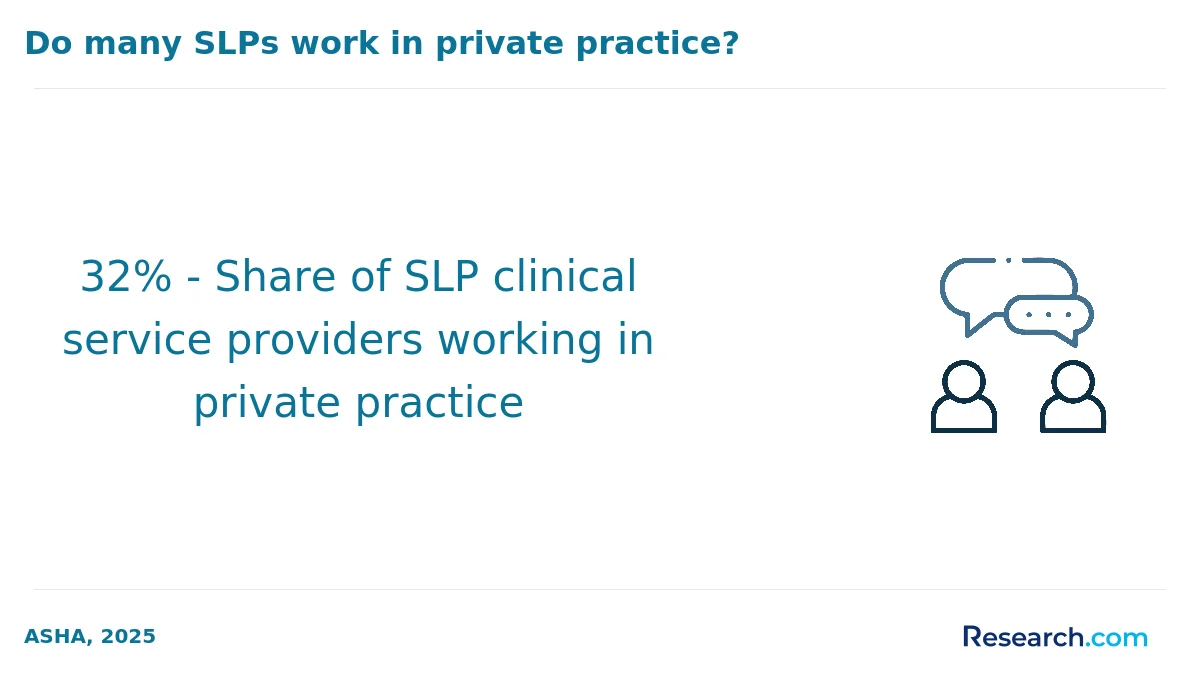
- Direct clinical practice: Many graduates work as speech-language pathologists in hospitals, rehabilitation centers, outpatient clinics, skilled nursing facilities, schools, early intervention programs, or private practices. These roles involve assessment, diagnosis, therapy planning, documentation, family education, and collaboration with other professionals.
- School-based services: Speech-language pathologists in schools support students with communication needs, participate in Individualized Education Programs, collaborate with teachers and families, and help students access the curriculum.
- Medical speech-language pathology: Medical roles may involve swallowing disorders, cognitive-communication disorders, voice disorders, aphasia, traumatic brain injury, stroke rehabilitation, and progressive neurological conditions.
- Academic and research roles: Some graduates work in research labs, university clinics, or clinical education. Faculty and advanced research positions may require additional doctoral study.
- Leadership and administration: Experienced clinicians may become program managers, clinical directors, department leads, compliance coordinators, or supervisors in healthcare organizations, school districts, or nonprofit agencies.
- Government and nonprofit work: Public health programs, veterans' services, disability organizations, and advocacy groups may hire speech pathology professionals for service delivery, training, program design, or policy-related work.
- Technology and private industry: Companies developing speech therapy platforms, augmentative and alternative communication tools, speech recognition systems, or assistive technologies may value clinicians who can translate client needs into product design and training.
Graduates should choose clinical placements strategically. A student interested in hospitals should seek medical placements when possible, while a student aiming for schools should gain experience with pediatric assessment, IEP documentation, and collaboration with educators.
Salary for speech pathology master's degree holders varies by setting, location, experience, specialization, and employer pay structure. A master's degree can produce a salary premium over bachelor's-level roles because independent clinical practice generally requires graduate-level preparation, supervised experience, certification, and licensure.
- Entry-level salaries: New graduates typically earn between $60,000 and $75,000 annually. Starting pay may differ sharply between public schools, hospitals, outpatient clinics, and private practices.
- Mid-career earnings: Professionals with five to ten years of experience often earn $75,000 to $90,000 per year. Specialized clinical experience, strong documentation skills, and high-demand settings can improve earnings.
- Senior-level compensation: Experienced speech pathologists, supervisors, and managers frequently earn $90,000 or more. In metropolitan areas and large healthcare organizations, compensation can sometimes exceed $100,000 annually.
- Geographic variation: Salaries are generally higher in states like California and New York than in less populated regions, though higher wages may come with higher living costs.
- Employer differences: Public schools often use salary schedules, while healthcare employers may offer differentials, productivity expectations, or specialized clinical ladders. Private practices may include performance bonuses or profit sharing.
- Degree salary premium: Holding a master's degree typically results in a 20% to 30% salary advantage over bachelor's degree holders, reflecting the advanced clinical preparation associated with the field.
- Benefits and total compensation: Health insurance, retirement plans, paid time off, continuing education support, and schedule flexibility can materially affect the value of an offer.
Applicants should compare salaries against program cost, debt load, local demand, and desired work setting. A higher-cost program may not be the best choice if a lower-cost accredited option provides similar clinical preparation and licensure eligibility.
Professional certification can strengthen employability, support licensure pathways, and signal clinical competence. Students should distinguish between a graduate degree, state licensure, national certification, and specialty credentials because each serves a different purpose.
- Certificate of Clinical Competence in Speech-Language Pathology (CCC-SLP): Offered by the American Speech-Language-Hearing Association (ASHA), this is the most recognized credential for speech-language pathologists in many schools, healthcare organizations, and private practices. Eligibility requires a master's degree, completion of a supervised clinical fellowship, and passing a national examination. The CCC-SLP must be renewed every three years through continued professional development.
- State licensure: Licensure is separate from certification and is required for practice in many settings. Requirements vary by state, so students should check the rules where they plan to work before enrolling.
- Board Certified Specialist in Fluency Disorders (BCS-F): This specialty credential is relevant for clinicians who want to focus on stuttering and fluency disorders. It generally requires experience beyond entry-level practice and can support niche clinical roles.
- Royal College of Speech and Language Therapists (RCSLT) Certification: For professionals seeking credentials in the UK, RCSLT certification may be important. Eligibility depends on education, clinical practice, professional standards, and ongoing development requirements.
- Timing strategy: Most graduates prioritize the CCC-SLP and state licensure first because these credentials are tied to employability in core practice settings. Specialty certifications are usually more useful after a clinician has built experience with a defined population or disorder area.
Students who are still early in their education planning may compare entry-level academic pathways before committing to graduate training; resources such as associate degree pathway guides can provide general context, though speech-language pathology practice requires advanced preparation.
Speech pathology master's graduates are hired across industries that serve people with communication, language, voice, fluency, cognitive-communication, and swallowing needs. The best industry for a graduate depends on clinical interests, desired schedule, documentation preferences, and long-term advancement goals.
- Healthcare sector: Hospitals, outpatient clinics, rehabilitation centers, and skilled nursing facilities employ speech-language pathologists to assess and treat speech, language, cognitive-communication, voice, and swallowing disorders. These settings often value CCC-SLP preparation, medical documentation skills, and comfort working on interdisciplinary teams.
- Educational institutions: Public and private K-12 schools and early intervention programs hire speech pathologists to support children and students. Knowledge of Individualized Education Programs, family collaboration, developmental communication disorders, and educational law can improve job fit.
- Telehealth services: Telehealth platforms offer remote speech therapy and can expand access for rural or underserved communities. Clinicians in this area need strong virtual assessment skills, technology fluency, privacy awareness, and knowledge of rules governing remote care.
- Technology and assistive devices: Companies developing speech recognition tools, communication apps, augmentative and alternative communication devices, and therapy platforms may hire speech pathology professionals for product development, clinical consulting, training, or user research.
- Government and public service: Veterans' services, public health agencies, disability programs, and community organizations may need clinicians for direct service, program coordination, consultation, and advocacy.
- Labor market outlook and preparation: Employment in speech-language pathology is projected to increase by 17% through 2035, significantly outpacing average occupation growth. Students can improve their prospects by choosing clinical placements and electives that match their target industry.
The highest-paying speech pathology roles usually combine advanced clinical skill, experience, specialization, leadership responsibility, or business ownership. Compensation also depends heavily on geography, employer type, demand, and whether the role is salaried, contract-based, or tied to private practice revenue.
- Speech-language pathologist in healthcare settings: Specialists in hospitals and rehabilitation centers often earn median salaries typically ranging from $85,000 to $100,000 annually. Work may involve complex cases such as swallowing disorders, neurological conditions, stroke recovery, and acute rehabilitation.
- Clinical director or manager: These professionals oversee speech pathology teams, clinical quality, staffing, compliance, and service delivery. Earnings range between $90,000 and $120,000 depending on organization size, leadership scope, credentials, and location.
- School-based speech-language pathologist: School practitioners support children with communication needs and typically see median pay from $70,000 to $85,000. Higher wages may be available in affluent districts or large metropolitan areas, especially for clinicians with strong special education expertise.
- Private practice owner or contractor: Private practitioners can exceed average salary ranges, but income depends on referrals, payer mix, billing systems, local demand, clinical niche, and business management skill. This route offers autonomy but carries more financial risk.
- Academic or researcher in speech pathology: Professionals in universities or research centers earn between $75,000 and $110,000, with potential for more through tenure, administrative roles, or external grant funding. A doctoral degree and publication record are often important for advancement.
Students focused on high earnings should not choose a program based on cost alone. They should examine clinical placement strength, medical or specialty training opportunities, certification preparation, alumni outcomes, and access to high-demand markets.
The job outlook for speech pathology professionals is strong. According to the U.S. Bureau of Labor Statistics (BLS), employment of speech-language pathologists is projected to increase about 17% from 2025 to 2035, far outpacing the 5-6% average growth rate for all occupations.
- Aging population: Older adults may need speech-language pathology services after stroke, brain injury, dementia, progressive neurological conditions, or other age-related communication and swallowing challenges.
- Demand in schools: Schools continue to need speech-language pathologists to support students with language, articulation, fluency, social communication, and related needs.
- Telepractice growth: Telepractice has expanded access to therapy, especially for rural and underserved communities. It also creates more flexible employment models for some clinicians.
- Limited automation risk: Speech pathology relies on individualized assessment, clinical judgment, relationship-building, and adaptation to client needs, making it less vulnerable to full automation than many routine tasks.
- Healthcare and insurance factors: Increased healthcare spending and improvements in insurance coverage for therapy services can support demand, though reimbursement rules and employer budgets still affect hiring.
Students weighing graduate school should connect job outlook with practical questions: Will the program prepare them for licensure in their intended state? Are clinical placements available in their preferred setting? Does the program support school, medical, pediatric, adult, or telehealth career goals? Those comparing allied health and psychology-related graduate options may also review online PsyD program resources to understand how other advanced professional degrees structure flexibility and career preparation.
A speech pathology master's program develops the clinical, analytical, interpersonal, and professional skills needed to assess and treat communication and swallowing disorders. The strongest programs help students connect research evidence, client needs, ethical practice, and hands-on clinical judgment.
- Assessment and diagnosis: Students learn to gather case histories, select appropriate assessment tools, interpret results, identify communication or swallowing needs, and explain findings clearly to clients, families, and other professionals.
- Treatment planning: Graduate training emphasizes measurable goals, individualized therapy plans, evidence-based intervention, progress monitoring, and adjustment of treatment when clients are not improving as expected.
- Clinical documentation: Students practice writing clear reports, treatment notes, evaluation summaries, and recommendations. Documentation quality matters in schools, healthcare, insurance reimbursement, and interprofessional care.
- Communication and counseling: Effective clinicians must explain complex information in plain language, listen carefully, build trust, and support clients and families through sensitive diagnoses and long-term therapy plans.
- Critical thinking: Students learn to evaluate research, compare intervention options, interpret data, and make defensible clinical decisions rather than relying on one-size-fits-all methods.
- Collaboration: Speech-language pathologists frequently work with physicians, teachers, occupational therapists, physical therapists, psychologists, audiologists, families, caregivers, and administrators.
- Cultural and ethical competence: Programs prepare students to serve diverse clients, consider linguistic and cultural differences, protect client privacy, and follow professional standards.
- Leadership and adaptability: Case management, supervision, advocacy, and program improvement skills can support advancement into senior clinical, administrative, or consulting roles.
These competencies are transferable across schools, hospitals, clinics, research settings, telehealth platforms, and technology companies. Applicants should look for programs that provide supervised practice with the populations they hope to serve after graduation.
What Graduates Say About Their Speech Pathology Master's Degree
- : "Applying for admission to an online speech pathology master's program felt overwhelming at first, but focusing on accredited institutions helped narrow my choices significantly. Official academic catalogs made the course sequence and clinical expectations easier to understand, which helped me stay on track and meet professional standards. — Ruby"
- : "Reviewing accredited schools showed me how much programs can differ in format, clinical placement support, and specialization options. Using federal education resources and accreditation information gave me more confidence that I was choosing a credible program with appropriate faculty and professional preparation. — Alexis"
- : "The admissions process became more manageable once I focused on official catalogs, accrediting agencies, and clear degree requirements. That approach helped me compare programs based on fit rather than marketing language and choose a path aligned with my career goals. — Irma"
Other Things You Should Know About Speech Pathology Degrees
A master's degree in speech pathology typically leads to higher starting salaries compared to entry-level roles without the degree. Over time, professionals with this degree often experience steady wage growth, especially when they acquire certifications such as the Certificate of Clinical Competence (CCC). Experience combined with advanced credentials can open doors to leadership positions, which come with increased earning potential.
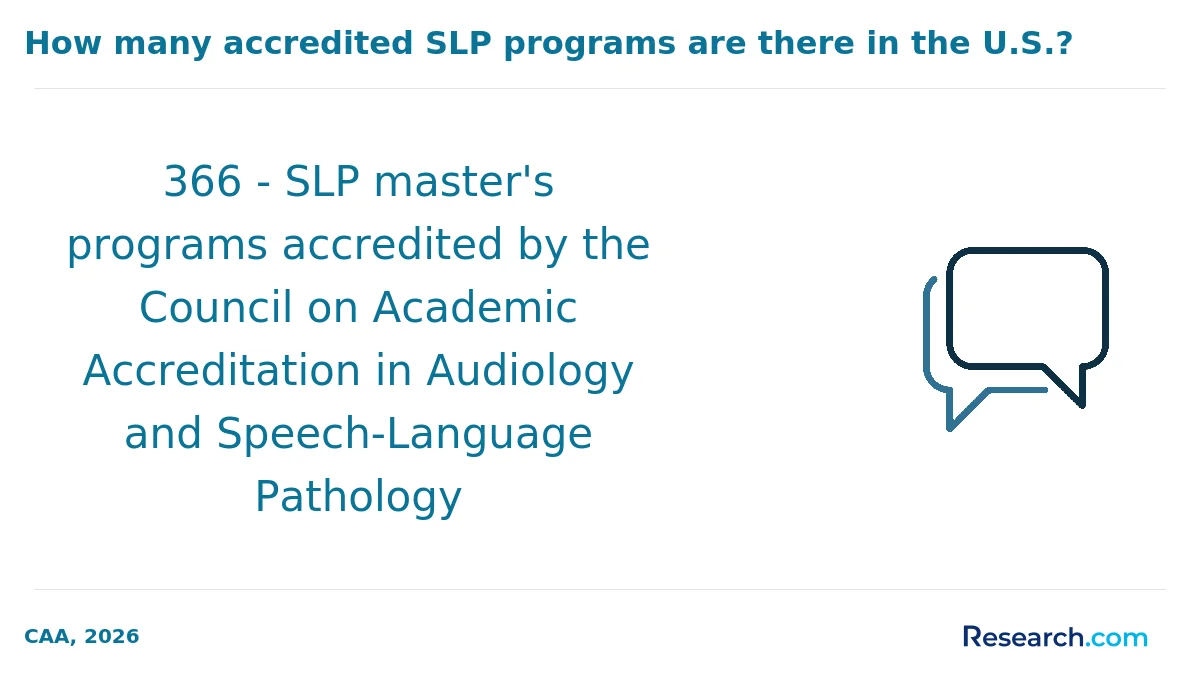
A speech pathology master's program should hold accreditation from the Council on Academic Accreditation in Audiology and Speech-Language Pathology, or CAA. In the United States, this Council on Education of the American Speech-Language-Hearing Association recognition is the standard used for licensure eligibility and clinical fellowship requirements.
In 2027, a Speech Pathology master's degree can enhance your career by qualifying you for specialized roles in healthcare, education, and private practice. It often leads to increased responsibility, opportunities in research and teaching, and higher salaries, reflecting the demand for skilled professionals in this field.
- U.S. Bureau of Labor Statistics - Speech-Language Pathologists https://www.bls.gov/ooh/healthcare/speech-language-pathologists.htm
- ASHA EdFind - Accredited Speech-Language Pathology Programs https://find.asha.org/ed/
- Audiology and Speech-Language Pathology Interstate Compact https://aslpcompact.com/compact-map/
- Abilene Christian University - Master of Science in Speech-Language Pathology (Online) https://acu.edu/academics/graduate/master-of-science-in-speech-language-pathology/
- New England Institute of Technology - Master of Science in Speech Language Pathology https://www.neit.edu/academics/graduate-degrees/speech-language-pathology-ms
- California State University-East Bay - Online Master of Science in Speech-Language Pathology https://ce.csueastbay.edu/programs/speech-language-pathology/
- Baylor University - Master of Science in Speech-Language Pathology (Online) https://csd.robbins.baylor.edu/graduate/online-csd-graduate-program
- University of Nebraska at Kearney - Speech-Language Pathology, Master of Science in Education (Online Track) https://www.unk.edu/online/degrees-programs/speech-language-pathology-online.php


