
2027 Highest-Paying Jobs with a Speech Pathology Master's Degree

Co-Founder and Chief Data Scientist

Reviewed by Rhea Paul, PhD
SLP Education & Research Expert
A master's degree in speech pathology can lead to stable clinical work, specialized healthcare roles, education positions, private practice, and leadership opportunities. The harder question is which path offers the best mix of pay, workload, licensure requirements, patient population, and long-term career growth. According to the U.S. Bureau of Labor Statistics, clinical speech-language pathologists earn a median annual wage of $82,000, but compensation can rise or fall depending on setting, specialization, location, and responsibility level.
This guide explains where speech pathology master's graduates are most likely to find higher-paying opportunities, which industries and states tend to offer stronger compensation, what entry-level salaries may look like, and how specialization, skills, online study, and executive advancement affect earning potential. Use it to compare options before choosing a program, negotiating a job offer, or planning a move into a higher-paying role.
Key Benefits of the Highest-Paying Jobs with a Speech Pathology Master's Degree
- Graduates from top speech pathology master's programs often secure salaries 15-25% above the national median within their first year, enhancing immediate earning potential.
- Specialized training expedites advancement to executive-level roles like clinical directors, where compensation can exceed $120,000 annually.
- Growing demand in healthcare ensures long-term financial stability, with a projected 21% job growth supporting sustained high incomes.
What Are the Highest-Paying Jobs With a Speech Pathology Master's Degree?
The highest-paying jobs for speech pathology master's degree holders usually combine advanced clinical judgment with management, specialization, or business responsibility. Top professionals may earn more than 20% above the median wage according to the U.S. Bureau of Labor Statistics, but those roles typically require experience beyond graduation, strong licensure standing, and proof that the clinician can improve outcomes or lead services effectively.
- Clinical Director: Clinical directors oversee speech-language pathology departments, supervise clinicians, manage budgets, and set service standards. This role pays more because it blends clinical accountability with hiring, compliance, productivity, and quality management.
- Speech-Language Pathology Consultant: Consultants advise healthcare systems, schools, agencies, or private organizations on assessment protocols, therapy models, staffing, documentation, and program design. Earnings can be strong when the consultant has a recognized niche, measurable outcomes, and the ability to solve operational problems.
- Rehabilitation Manager: Rehabilitation managers coordinate speech, occupational, physical, and related therapy services in hospitals, rehabilitation centers, or outpatient settings. Pay reflects the complexity of multidisciplinary care, patient flow, payer requirements, and staff leadership.
- University Professor: Professors in speech pathology programs teach future clinicians, supervise research, mentor graduate students, and contribute to academic program development. Tenured positions typically offer substantial financial rewards, although academic hiring is competitive and often values research productivity and teaching experience.
- Private Practice Owner: Practice owners may earn more than salaried clinicians when they build a steady referral base, manage billing well, hire effectively, and control overhead. The trade-off is business risk: income depends on client volume, reimbursement, staffing, marketing, and administrative systems.
Students who want to reach higher-paying roles faster should focus less on the shortest path alone and more on program quality, clinical placement strength, accreditation, licensure preparation, and specialization. Accelerated options such as a 1 year online masters may help some students move more quickly, but speed should not come at the expense of supervised clinical preparation or eligibility for professional credentials.
Which Industries Offer the Highest Salaries for Speech Pathology Master's Graduates?
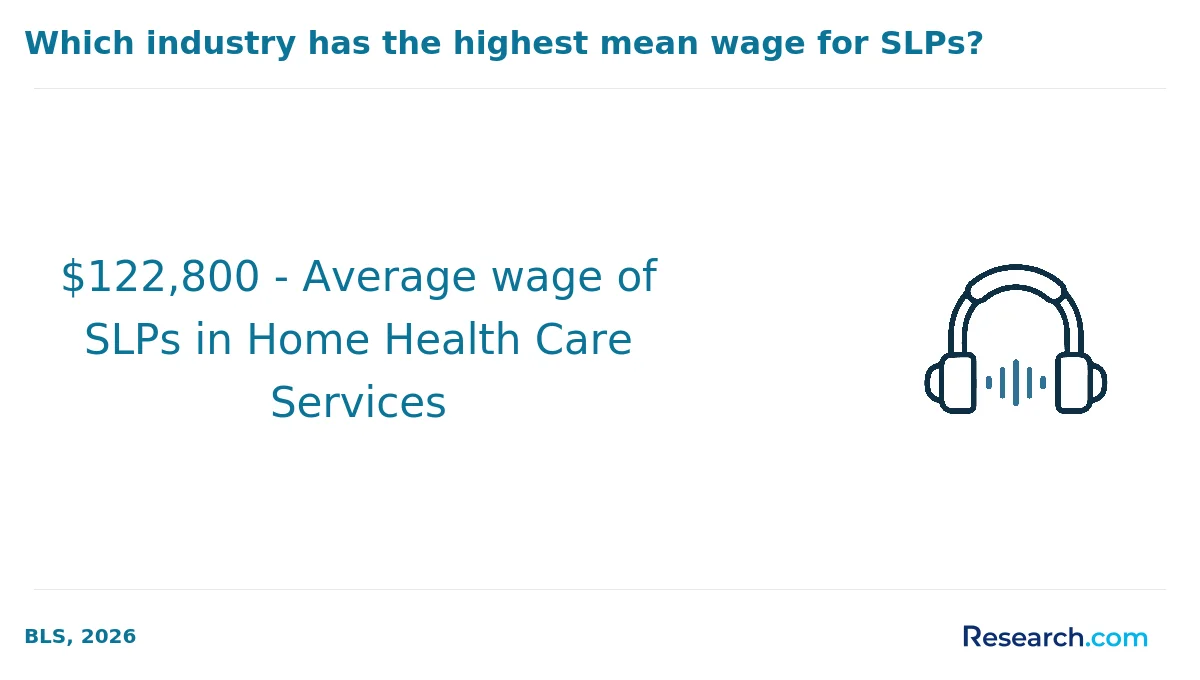
Industry choice is one of the biggest salary variables for speech pathology master's graduates. Recent labor statistics show that healthcare settings generally offer salaries about 15% higher than the sector average, largely because medical cases can be complex, documentation standards are demanding, and employers need clinicians who can work across interdisciplinary teams.
- Healthcare and Hospitals: Hospitals, rehabilitation units, and medical clinics often pay well because clinicians may treat swallowing disorders, neurological communication impairments, trauma-related conditions, and medically fragile patients. These settings can offer strong compensation, but they may also involve fast-paced schedules, acute cases, and strict documentation demands.
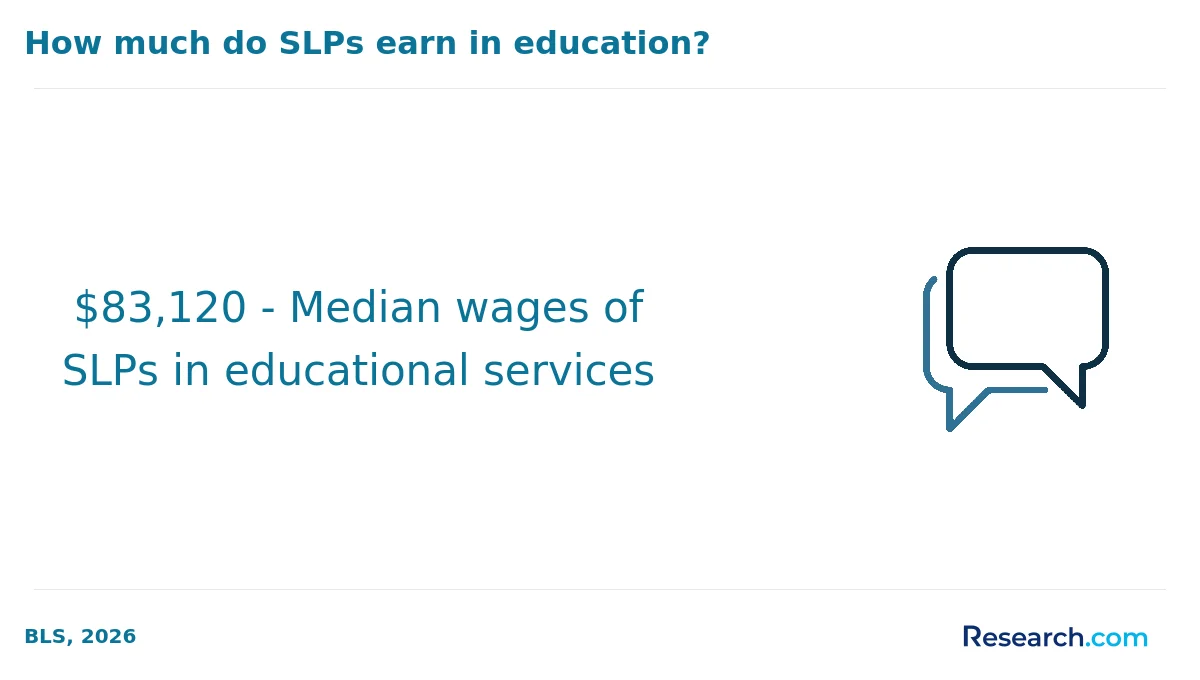
- Educational Services: Schools and specialized education providers employ speech-language pathologists to support students with communication, language, fluency, and learning-related needs. Pay can vary by district or institution, but benefits, schedule predictability, and pension structures may improve the total compensation package.
- Corporate and Private Practice: Private practices, specialty clinics, and corporate service providers may offer higher earning potential through flexible service models, premium client services, contract work, or ownership opportunities. Income can be less predictable than in public-sector roles, especially for clinicians paid by visit or client volume.
- Government Agencies: Public health programs, veterans services, correctional systems, and state or local agencies may offer stable employment, structured pay scales, and strong benefits. Salaries may not always be the highest in base pay, but retirement plans, health benefits, and job security can make total compensation competitive.
- Research and Development: Research roles may involve assistive communication tools, therapeutic technologies, outcome measurement, or clinical trials. These positions typically favor clinicians with advanced technical skills, research literacy, and the ability to translate evidence into usable products or protocols.
When comparing industries, look beyond salary alone. A higher-paying setting may involve heavier caseloads, productivity targets, travel, evening hours, or more complex patients. Professionals who want to strengthen their qualifications for specialized sectors may also consider relevant job certifications online, especially when the credential supports a clearly defined clinical or technical skill.
What Is the Starting Salary with a Speech Pathology Master's Degree?
The starting salary with a speech pathology master's degree depends on setting, geography, licensure status, clinical preparation, and employer demand. Median entry-level compensation hovers around $66,000 annually, but a new graduate's first offer can differ substantially depending on whether the role is in a school, hospital, outpatient clinic, skilled care setting, or private practice.
- Employment Setting: Hospitals and private clinics may offer higher starting pay when patient needs are complex or demand is strong. Schools may offer more predictable schedules and benefits, while outpatient and contract roles can vary based on caseload and reimbursement.
- Experience and Clinical Exposure: Employers look closely at practicum experience, internships, supervised clinical hours, and familiarity with the patient populations they serve. A graduate with strong medical placements, pediatric experience, or exposure to specialized disorders may be more competitive than one with limited clinical variety.
- Certification and Licensure: Certification and state licensure requirements matter. Holding or actively progressing toward credentials such as the Certificate of Clinical Competence (CCC) can improve marketability, but graduates should verify the exact credential and supervision requirements for their state and intended setting.
- Special Skills and Language Proficiency: Bilingual ability, AAC experience, dysphagia exposure, telepractice readiness, and comfort with assessment tools can make a candidate more valuable. These skills are especially useful when they match a community's patient or student population.
- Local Market Demand: Areas with clinician shortages or high service demand may offer stronger starting salaries. Before accepting an offer, compare pay against workload, benefits, supervision quality, relocation costs, and whether the employer supports credential completion.
Prospective students should evaluate whether programs provide the clinical preparation employers actually reward. Comparing accredited programs, placement support, faculty expertise, and affordability is more useful than choosing based on convenience alone. Students beginning with undergraduate planning may review online universities as part of a broader cost-conscious education strategy.
State-level pay differences are driven by demand, cost of living, healthcare concentration, school staffing needs, rural access issues, and local reimbursement patterns. Some states offer wage premiums that surpass 15% above the national median, but a high salary does not automatically mean a better financial outcome if housing, taxes, commuting, or licensure transfer costs are high.
- California: Large metropolitan areas, major healthcare systems, and high demand for specialized services can support stronger salaries. The high cost of living is a major consideration, so clinicians should compare net income rather than base pay alone.
- New York: New York's healthcare market, dense education systems, and demand for specialized services can increase earning potential. Competition may also be strong, especially in desirable urban areas.
- Massachusetts: Concentrated healthcare, research, and academic institutions can create opportunities for clinicians interested in hospitals, specialty care, or research-linked roles. Advanced specialization may be especially useful in this type of market.
- Washington: Public health infrastructure, healthcare demand, and government-supported services can contribute to wage premiums for qualified speech pathology professionals.
- Alaska: Geographic isolation and a limited workforce can lead employers to offer financial incentives to attract and retain clinicians. Candidates should weigh higher pay against travel demands, isolation, cost of living, and access to professional support.
Relocating for salary can be worthwhile, but it should be treated as a full financial and professional decision. One graduate described the challenge clearly: "I had to weigh more than just salary-considering relocation costs, licensing requirements, and support networks was crucial." The strongest offer is often the one that balances pay with supervision, manageable caseloads, credential portability, and quality of life.
Specialization can raise earning potential because employers pay more for clinicians who can handle complex cases, use advanced tools, or serve high-need populations. Experts in niche fields may earn up to 20% more than general practitioners, especially when their skills align with medical, technological, or hard-to-staff service needs.
- Neurogenic Communication Disorders: This specialization focuses on communication problems related to stroke, traumatic brain injury, degenerative disease, and other neurological conditions. These clinicians are valuable in hospitals, rehabilitation centers, and outpatient neurological programs because treatment often requires coordination with physicians, therapists, and caregivers.
- Swallowing and Dysphagia Disorders: Dysphagia specialists assess and treat swallowing difficulties that can affect nutrition, safety, and medical recovery. Because these cases can carry serious health risks, clinicians with strong dysphagia training are often in demand in acute care and rehabilitation settings.
- Pediatric Speech-Language Pathology: Pediatric specialists work with children experiencing developmental language disorders, speech sound disorders, fluency concerns, and communication delays. Higher pay may be available in specialized clinics, early intervention programs, or private practice settings with strong demand.
- Voice Disorders: Voice specialists work with clients who have vocal injury, professional voice demands, neurological voice changes, or post-surgical needs. This niche can be valuable in medical centers, ENT-linked clinics, and practices serving singers, teachers, performers, and other voice professionals.
- Augmentative and Alternative Communication (AAC): AAC specialists evaluate, design, and support communication systems for individuals with complex communication needs. Their combination of clinical reasoning, technology knowledge, training ability, and family or team consultation can support strong salary prospects.
When choosing a specialization, consider more than pay. The best specialty is one that matches your clinical interests, local job market, preferred age group, tolerance for medical complexity, and willingness to pursue continuing education. A niche can improve compensation, but only if you build enough experience to be trusted with high-stakes cases.
A master's degree opens the door to the profession, but specific skills often determine how quickly a graduate can move into better-paid work. Recent studies reveal that professionals with advanced expertise can earn up to 15% more than those without these capabilities. The most valuable skills are those that improve outcomes, reduce service gaps, help teams work better, or support revenue and compliance.
- Advanced Diagnostic Techniques: Clinicians who can handle complex assessments, interpret results accurately, and connect findings to practical treatment plans are more valuable in medical, pediatric, and specialty settings. Strong diagnostic skill also supports confidence in referrals and interdisciplinary meetings.
- Data Analysis and Outcome Measurement: Employers increasingly value clinicians who can show whether therapy is working. Skills in tracking progress, interpreting clinical data, and documenting outcomes can support quality improvement, program evaluation, and leadership roles.
- Interdisciplinary Collaboration: Speech-language pathologists often work with physicians, nurses, teachers, psychologists, occupational therapists, physical therapists, families, and administrators. Clinicians who communicate clearly across teams can influence care plans and improve continuity of services.
- Leadership and Team Management: Supervising assistants, mentoring new clinicians, managing caseload systems, leading initiatives, or coordinating service delivery can move a clinician toward higher-paid administrative or director-level roles.
- Technology Proficiency, Including Telepractice: Telepractice platforms, AAC tools, digital documentation systems, and remote assessment workflows are increasingly important. Clinicians who can use technology effectively may qualify for more flexible roles and broader service opportunities.
A working professional pursuing a master's degree in speech pathology summarized the shift well: "It's not just about knowing techniques, but about learning to lead teams and use technology to reach patients who can't come to the clinic." That perspective matters because salary growth often comes from combining clinical skill with reliability, communication, technology use, and the ability to improve service delivery.
For most employers, the format of a speech pathology master's degree matters less than accreditation, clinical training quality, licensure eligibility, and the graduate's ability to perform in supervised practice. Research indicates that master's degree holders generally earn about 20% more than those with only a bachelor's degree, but the salary difference between online and on-campus graduates is usually shaped by program quality rather than delivery format alone.
Online programs can be a strong option when they provide rigorous coursework, qualified faculty, supervised clinical placements, and clear preparation for certification and state licensure. On-campus programs may offer easier access to campus clinics, faculty relationships, peer networks, and local employer connections. Neither format is automatically better for salary; the stronger choice is the one that gives the student credible clinical experience and a clear path to practice.
Students comparing flexible graduate options should look closely at placement support, local clinical site availability, cohort structure, exam preparation, and total cost. A carefully selected masters in speech pathology online program may lead to comparable earning potential when it meets professional standards and gives students enough supervised experience to compete for quality roles.
Before enrolling, ask how clinical placements are arranged, whether students must secure their own sites, how supervision is verified, and whether graduates have successfully entered the settings you want. Those details are more predictive of career outcomes than whether classes meet online or in person.
Speech pathology master's graduates can be more competitive for executive and senior administrative roles, especially when they pair clinical expertise with leadership, finance, operations, compliance, and staff management experience. The degree alone is not a shortcut to executive work, but it establishes professional credibility and can support advancement into director, program manager, department head, or service-line leadership roles.
- Leadership Preparation: Graduate study can build skills in ethical decision-making, supervision, service coordination, and clinical problem-solving. These abilities are useful for managing teams and resolving service delivery challenges.
- Decision-Making Authority: Master's-level preparation often involves complex case management and treatment planning. Over time, that experience can translate into stronger judgment for policy, staffing, and program decisions.
- Organizational Impact: Internships, practicum experiences, and later professional roles can show whether a clinician can improve workflows, reduce service delays, support compliance, or strengthen patient and student outcomes.
- Professional Credibility: Advanced education signals commitment to the field and helps build trust with clinicians, administrators, families, and external partners. Credibility becomes especially important when leading clinical teams.
- Networking Opportunities: Graduate programs can connect students with supervisors, faculty, alumni, and employers. Those relationships may lead to mentorship, referrals, and leadership opportunities over time.
Professionals aiming for executive work should add business and management skills to their clinical foundation. Budgeting, staffing models, payer documentation, school compliance, conflict resolution, and performance measurement can matter as much as therapy expertise. For readers comparing lower-cost academic pathways before committing to graduate education, resources on the easiest associate's degree to get may be useful for general planning, although it is not a substitute for the master's-level preparation typically required in speech pathology.
The ROI of a speech pathology master's degree depends on tuition, debt, time out of the workforce, licensure progress, salary growth, and the type of role a graduate enters. Speech-language pathologists with a master's degree earn a median annual salary approximately 20% higher than those with only a bachelor's degree, but individual returns vary widely by program cost and career path.
- Tuition Costs: Lower tuition, scholarships, assistantships, employer support, and careful borrowing can improve ROI. A less expensive program may be a smart choice if it still provides strong clinical training and licensure preparation.
- Salary Growth: ROI improves as graduates move from entry-level roles into specialized, medical, supervisory, consulting, or private practice positions. The degree can create access, but earnings rise fastest when graduates develop high-demand skills.
- Opportunity Cost: Full-time study may reduce income while the student is enrolled. Part-time or online study may help some students keep working, but it can also extend the timeline, so students should compare both cost and time.
- Career Mobility: A master's degree can support movement across schools, hospitals, clinics, telepractice, research, consulting, and leadership. That flexibility can improve long-term financial security.
- Networking Value and Job Stability: Graduate programs can provide supervisors, mentors, alumni connections, and clinical references. In a field with steady demand, those relationships can help graduates enter better roles faster.
A strong ROI usually comes from choosing an affordable, accredited program; minimizing unnecessary debt; completing licensure requirements efficiently; and targeting settings with clear advancement potential. Students comparing graduate models in related helping professions may also review accelerated online MFT programs for perspective on program length and cost trade-offs, while recognizing that speech pathology has its own credentialing and clinical requirements.
The job outlook for speech pathology master's degree holders is strong. The U.S. Bureau of Labor Statistics projects a 17% employment growth rate for speech-language pathologists between 2025 and 2035, indicating demand that is stronger than most occupations. This outlook is supported by healthcare needs, school service requirements, aging-related conditions, and broader awareness of communication and swallowing disorders.
- Long-Term Demand: Older adults may need services related to stroke, neurological disease, voice changes, and swallowing disorders, while children continue to need support for speech, language, fluency, and developmental communication needs.
- Skill Evolution: New therapy methods, assessment tools, and evidence-based practices reward clinicians who continue learning after graduation. Specialization can help graduates stand out in competitive markets.
- Technological Innovation: Telepractice and digital care tools can expand access, especially for clients who cannot easily reach clinics or schools. Clinicians who adapt well to technology may have more flexible job options.
- Leadership Development: Healthcare systems, school districts, and private practices need clinicians who can manage programs, supervise staff, document outcomes, and improve service delivery. These needs create pathways beyond direct therapy.
- Economic Stability: Speech pathology is tied to essential healthcare and education services, which can provide stronger job security than fields dependent mainly on discretionary spending.
Graduates should still evaluate local market conditions carefully. A strong national outlook does not guarantee equal opportunity in every city, specialty, or setting. The best employment prospects often go to candidates who are licensed or license-ready, clinically adaptable, comfortable with documentation, and willing to serve high-need populations.
What Graduates Say About the Highest-Paying Jobs with a Speech Pathology Master's Degree
- Esteban: "Choosing to pursue a master's degree in speech pathology was a game-changer for me. Although the cost was significant, the investment paid off as I now work in a high-paying hospital setting where my skills are highly valued. The financial stability and job satisfaction I've gained make every penny worth it."
- Alexis: "Reflecting on my master's program in speech pathology, I appreciate how it opened doors to specialized roles like working with pediatric clients and in private practice. The initial tuition seemed steep, but the diverse career paths and potential earnings have justified that expense. I feel confident knowing my education directly impacts both my salary and professional growth."
- Eli: "From a professional standpoint, obtaining a master's in speech pathology was a strategic move. The cost was manageable thanks to scholarships, and I quickly recouped those expenses through employment in a high-demand public school district. The degree truly elevated my financial prospects and allowed me to make a meaningful difference in people's lives."
Other Things You Should Know About Speech Pathology Degrees
Clinical experience directly affects salary growth in speech pathology careers. Professionals with several years of diverse clinical practice tend to qualify for higher-paying positions, including supervisory or managerial roles. Employers value demonstrated practical expertise, which often leads to better compensation and advancement opportunities.
Most high-paying speech pathology jobs require a state license issued by the state board of speech-language pathology, plus the CCC-SLP from ASHA for many clinical roles. To earn the CCC-SLP, candidates need a master’s degree, 400 supervised clinical hours, and a passing score on the Praxis Speech-Language Pathology exam.
- U.S. Bureau of Labor Statistics - Speech-Language Pathologists https://www.bls.gov/ooh/healthcare/speech-language-pathologists.htm
- ASHA EdFind - Accredited Speech-Language Pathology Programs https://find.asha.org/ed/
- Audiology and Speech-Language Pathology Interstate Compact https://aslpcompact.com/compact-map/
- Baylor University - Master of Science in Speech-Language Pathology (Online) https://csd.robbins.baylor.edu/graduate/online-csd-graduate-program
- West Virginia University - Speech-Language Pathology, M.S. - Online https://medicine.hsc.wvu.edu/communications-sciences-and-disorders/speech-language-pathology-ms/future-students/curriculum/online-slp-program/
- Maryville University - Master of Science in Speech-Language Pathology https://www.maryville.edu/masters/speech-language-pathology/
- University of Scranton - Master of Science (M.S.) in Speech-Language Pathology https://www.scranton.edu/academics/pcps/health-and-human-performance/programs/speech-language-pathology/index.shtml
- California State University-East Bay - Online Master of Science in Speech-Language Pathology https://ce.csueastbay.edu/programs/speech-language-pathology/


