
2027 Different Types of Speech Pathology Master's Degrees: Specializations, Careers, and Salaries

Co-Founder and Chief Data Scientist

Reviewed by Rhea Paul, PhD
SLP Education & Research Expert
The main choice in a speech pathology master's degree is not simply whether to enroll. It is which program type, delivery format, specialization, clinical training model, and cost structure will move you toward the role you actually want. A student planning to work in a hospital may need different clinical exposure than someone preparing for school-based practice, early intervention, voice therapy, or assistive communication technology.
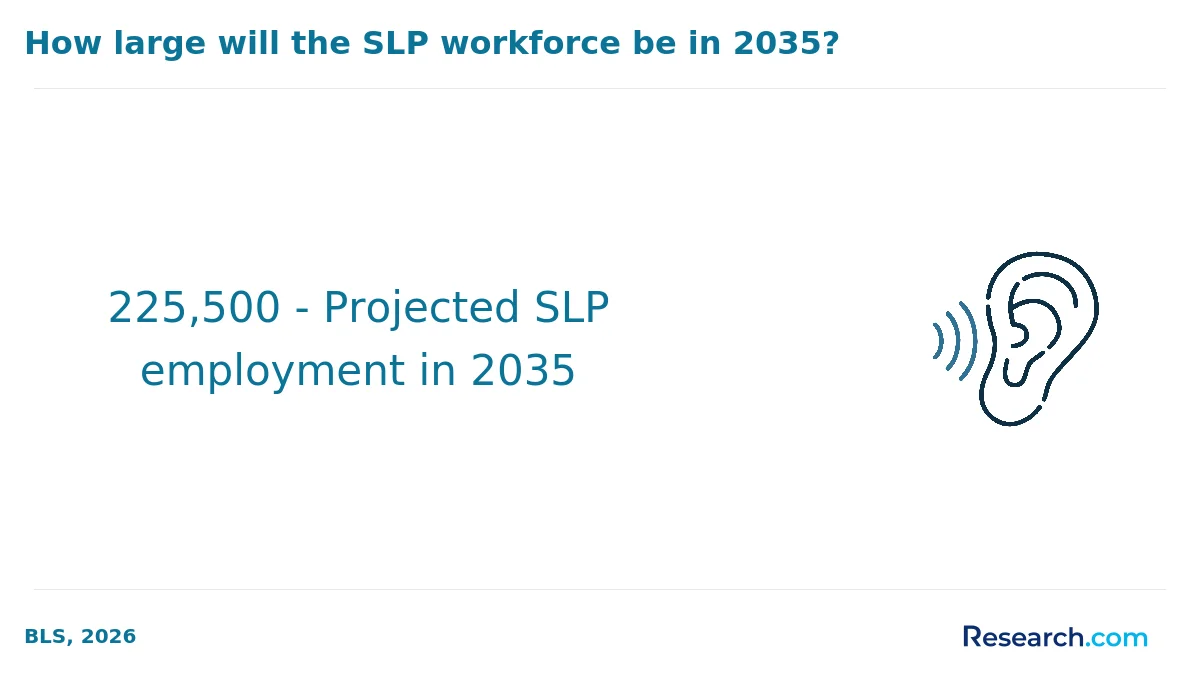
Demand is a major reason students are weighing this field carefully. The Bureau of Labor Statistics projects a 17% growth in speech-language pathology jobs through 2035, and online master's programs now serve over 40% of speech pathology graduate students. That flexibility can make graduate school more accessible, but program quality, clinical placement support, accreditation, and total cost still vary widely.
This guide explains the main types of speech pathology master's degrees, common specializations, typical timelines, accelerated and online options, costs, jobs, salary factors, and decision points. The goal is to help you compare programs based on licensure readiness, career fit, affordability, and long-term return on investment.
Key Points About the Different Types of Speech Pathology Master's Degrees
- Many online speech pathology master's programs feature streamlined admissions, often requiring only a bachelor's degree and minimum GPA, reflecting a 15% rise in accessible graduate enrollment since 2018.
- Flexible online formats allow students to balance studies with work, as 62% of speech pathology graduate students now choose part-time or asynchronous courses tailored to busy schedules.
- Graduates benefit from strong earning potential, with the Bureau of Labor Statistics projecting a 17% employment growth and median salaries exceeding $80,000 annually by 2035.
What Are the Different Types of Speech Pathology Master's Degrees Available?
The most common graduate credentials for future speech-language pathologists are the Master of Science (MS) and Master of Arts (MA) in speech-language pathology, communication sciences and disorders, or a closely related field. The title matters less than whether the program provides the academic coursework, supervised clinical experience, and accreditation needed for certification and licensure.
Students should treat the degree name as a starting point, not the final measure of quality. A strong program should prepare graduates for clinical practice, offer appropriate practicum placements, and align with the setting where the student hopes to work.
- Master of Science (MS): Often emphasizes anatomy, physiology, research methods, diagnostics, clinical intervention, and evidence-based practice. This route is common for students who want direct clinical roles in hospitals, rehabilitation centers, private practices, schools, and outpatient settings.
- Master of Arts (MA): Usually covers the same professional preparation but may place more emphasis on communication theory, language development, social context, and interdisciplinary study. In many cases, an MA and MS can lead to the same clinical career outcomes if both meet professional requirements.
- Master of Education (MEd): More likely to appeal to students focused on school-based practice, special education collaboration, and services for children. Students should confirm that the curriculum still supports speech-language pathology licensure rather than only broader education roles.
- Master of Public Health (MPH): Less common as a speech pathology route, but relevant in programs or dual-degree pathways that connect communication disorders with population health, prevention, access to care, or community-based services.
- Master of Business Administration (MBA) and Master of Fine Arts (MFA): Rarely used as stand-alone paths into speech-language pathology. They may appear in unusual interdisciplinary options, such as healthcare management, private practice leadership, performing voice, or arts-based communication work.
According to the American Speech-Language-Hearing Association (ASHA), over 100,000 certified speech-language pathologists hold master's degrees, most of whom complete either an MS or MA. For most applicants, the practical question is whether the program prepares them for certification, licensure, and the clinical population they want to serve.
If you are comparing healthcare, education, and communication science pathways more broadly, reviewing flexible online degree options can help you understand how speech pathology differs from other graduate routes in cost, clinical requirements, and time to completion.
What Specializations Are Available in Speech Pathology Master's Degrees?
Speech pathology master's programs usually prepare students as generalist clinicians first, then allow them to build depth through electives, practicum placements, research projects, and clinical supervisors. A specialization can influence where you train, which populations you serve, and what types of jobs you pursue after graduation.
The U.S. Bureau of Labor Statistics projects employment growth of 17% for speech-language pathologists from 2025 to 2035, reflecting strong demand and median salaries often exceeding $80,000. However, salary and job fit depend heavily on setting, location, experience, and the complexity of the cases you handle.
- Medical Speech Pathology: Focuses on communication and swallowing disorders related to stroke, traumatic brain injury, cancer treatment, respiratory conditions, surgery, and other medical events. Students interested in hospitals, inpatient rehabilitation, skilled nursing, or outpatient medical clinics should look closely at medical placements and dysphagia training.
- Pediatric Speech Pathology: Centers on speech sound disorders, language delays, developmental disabilities, autism-related communication needs, fluency, and early intervention. This path fits students who want to work in schools, pediatric clinics, early childhood programs, or family-centered therapy settings.
- Augmentative and Alternative Communication (AAC): Prepares clinicians to support people who use communication boards, speech-generating devices, eye-gaze systems, or other assistive technologies. AAC is especially relevant for clients with complex communication needs, severe motor impairments, or developmental and neurological conditions.
- Voice Therapy and Rehabilitation: Addresses vocal fold injury, vocal misuse, neurological voice disorders, post-surgical recovery, and professional voice care. This specialization may appeal to students interested in performers, teachers, transgender voice services, medical voice clinics, or laryngology teams.
- Neurogenic Communication Disorders: Focuses on aphasia, dysarthria, apraxia of speech, cognitive-communication disorders, and progressive neurological conditions such as Parkinson's and ALS. Students pursuing this track should prioritize programs with adult medical practicum opportunities and faculty expertise in neurological rehabilitation.
Applicants should be careful not to choose a specialization only because it sounds prestigious. A better test is whether the program offers enough supervised clinical experience in that area to make you competitive for the jobs you want. Students comparing admission flexibility across graduate options may also review master's programs with accessible admissions pathways, while keeping in mind that speech pathology programs still require substantial clinical preparation.
How Long Does It Take to Complete Each Type of Speech Pathology Master's Degree?
Most speech pathology master's degrees require a significant time commitment because students must complete both graduate coursework and supervised clinical training. The exact timeline depends on full-time or part-time enrollment, prerequisite requirements, thesis expectations, clinical placement availability, and whether the program follows a traditional, hybrid, online, or accelerated calendar.
Admission can also affect timing. Acceptance rates are frequently under 30%, so some applicants spend additional time strengthening prerequisites, observation hours, references, or application materials before entering a program.
- Full-time study duration: Full-time students typically complete the degree in one to two years. A thesis track may take longer because it includes research design, data collection, writing, and faculty review. A non-thesis track may move faster but still requires clinical competence and practicum completion.
- Part-time options: Part-time formats usually last three to four years. They can work well for students with jobs, caregiving responsibilities, or financial limits, but the longer timeline may delay licensure, full-time clinical employment, and salary growth.
- Clinical and practicum obligations: Clinical training is not optional. Students must coordinate supervised experiences with coursework, site availability, client schedules, and program requirements. Delays in practicum placement can extend a student's path even when coursework is on schedule.
- Accelerated tracks: Some intensive programs advertise completion within 12 to 15 months. These formats can reduce time in school but often require heavier course loads, fewer breaks, and strong readiness for clinical work from the beginning.
A graduate described the trade-off clearly: "Balancing the thesis research alongside clinical hours was challenging but rewarding. I opted for the full-time thesis program, which stretched close to two years. The process was intense, especially managing deadlines and practical training simultaneously, but it gave me confidence and a deeper understanding of the profession. For anyone considering this degree, it's important to plan carefully and be prepared for a rigorous yet fulfilling journey."
Yes, accelerated speech pathology master's degree programs exist, but they are not simply shorter versions of a standard program. They compress coursework, clinical preparation, and assessment into a tighter schedule. That can be valuable for students who want to enter the workforce sooner, but it can also create pressure if clinical placements, prerequisite knowledge, or personal responsibilities are not well managed.
- Heavier course loads: Accelerated students often take more credits per term and may complete clinical work at the same time. This format rewards strong organization and can be difficult for students who need substantial outside work hours.
- Year-round classes: Many fast-track options use summer sessions, shorter breaks, or continuous enrollment. The benefit is faster progress; the drawback is less recovery time between demanding clinical and academic terms.
- Combined bachelor's-master's pathways: Some schools allow undergraduates to begin graduate-level coursework before completing the bachelor's degree. These pathways can shorten total time in school, but students must plan early and meet program-specific GPA and prerequisite standards.
- Greater self-discipline and clinical intensity: Speech pathology is skills-based. Students must learn assessment, treatment planning, documentation, ethics, and client interaction quickly enough to perform safely in supervised settings.
Accelerated programs are best for students who already understand the profession, have completed prerequisites, can handle a dense schedule, and have reliable support for transportation, technology, finances, and clinical placement requirements. They are less ideal for students who need a slower transition into graduate-level science or who are unsure which clinical population they want to serve.
Reducing time in school can improve return on investment by lowering some opportunity costs and allowing earlier entry into the job market. Still, speed should not come at the expense of accreditation, clinical quality, or licensure eligibility. Students evaluating cost-conscious professional degrees may compare the structure with options such as affordable online EMBA programs, while recognizing that speech pathology requires supervised clinical training that business programs do not.
Online speech pathology master's degrees can be as credible as campus-based degrees when they are properly accredited, include required clinical training, and are offered by institutions with strong student support. Employers and licensing boards generally care less about whether lectures were online and more about whether the graduate met academic, clinical, and certification standards.
A 2023 study found that about 85% of students in accredited online healthcare graduate programs reported satisfaction with their experience, which reflects growing acceptance of virtual graduate education. Still, online speech pathology programs require careful review because the clinical component cannot be completed entirely through recorded lectures or discussion boards.
- Accreditation: Programs accredited by recognized bodies such as the Council on Academic Accreditation help ensure that online and traditional degrees meet essential academic and professional standards. Students should verify accreditation before applying, especially if they plan to pursue certification or licensure.
- Employer acceptance: Employers generally accept online degrees from accredited institutions when graduates can demonstrate strong clinical skills, documentation ability, professional judgment, and completion of supervised practicum experiences.
- Flexibility advantages: Online programs can help working adults, parents, military-affiliated students, and students far from campus complete coursework without relocating. Recorded lectures, digital simulations, and remote faculty access can make studying more manageable.
- Clinical placement challenges: The biggest risk is not online coursework; it is placement logistics. Students should ask whether the program finds placements, helps arrange them, or expects students to secure local sites independently.
- Student discipline: Online formats require consistent time management. Students must keep pace with assignments, participate actively, prepare for clinical work, and communicate early when placement or technology issues arise.
Students comparing flexible graduate routes should evaluate accreditation, practicum support, total cost, and licensure outcomes before choosing among online ms slp programs.
One graduate who chose an online speech pathology master's path said the flexibility made completing coursework more manageable alongside full-time employment. He noted, "Scheduling clinical hours required extra planning compared to on-campus peers, but the online resources and recordings helped me understand complex topics on my own time."
He added, "Employers respected my degree as long as I demonstrated my clinical skills, which I achieved through carefully arranged practicum experiences. For me, the online format was easier and just as valid as traditional study."
Speech pathology master's degree costs vary by institution type, residency status, delivery format, credit requirements, fees, and clinical placement expenses. Students should calculate the full cost of attendance, not just advertised tuition, because practicum travel, technology, supplies, background checks, and professional requirements can increase the total bill.
- Tuition range: On average, full master's programs in speech pathology cost between $30,000 and $70,000. Public universities are often less expensive for in-state students, while private institutions commonly fall toward the higher end.
- Online versus hybrid formats: Fully online programs often have lower tuition fees, commonly ranging from $30,000 to $50,000. Hybrid programs, which include in-person requirements or campus-based clinical components, usually cost more, frequently between $40,000 and $70,000.
- Credit hours and program length: Most speech pathology master's degrees require 60 to 70 credit hours. Programs that charge per credit can become significantly more expensive when they require extra prerequisites, leveling courses, or extended clinical enrollment.
- Additional fees and expenses: Students should budget for clinical practicum fees, supplies, technology costs, registration charges, background checks, immunizations, professional liability coverage, travel to placement sites, and possible relocation or lodging for short in-person sessions.
- Tuition trends: Tuition prices for speech pathology programs have increased about 3% annually over the past decade, so applicants should request current tuition sheets and ask whether rates are locked, cohort-based, or subject to annual increases.
A practical cost comparison should include three questions: how much you will borrow, how soon you can start earning after graduation, and whether the program's clinical support reduces the risk of delayed completion. The cheapest option is not always the best value if weak placement support slows your path to licensure.
A speech pathology master's degree generally prepares graduates for speech-language pathologist roles across healthcare, education, rehabilitation, private practice, and community-based settings. The degree type itself matters less than accreditation, clinical preparation, state licensure requirements, and the populations served during practicum.
The U.S. Bureau of Labor Statistics reports a median annual wage of $97,870 for speech-language pathologists. Actual job options and pay vary by state, employer, experience, setting, and specialization.
- Clinical practice roles: Graduates commonly work as speech-language pathologists in schools, hospitals, rehabilitation centers, outpatient clinics, skilled nursing facilities, early intervention programs, and private practices. A master's degree is generally required for licensure as a speech-language pathologist.
- Pediatric specialization: Pediatric-focused graduates may work in school districts, children's hospitals, developmental clinics, early childhood programs, and private pediatric practices. These roles often involve collaboration with teachers, families, occupational therapists, psychologists, and physicians.
- Geriatric specialization: Clinicians serving older adults may work in nursing homes, outpatient clinics, home health, rehabilitation hospitals, and medical centers. Their work may include swallowing disorders, cognitive-communication challenges, aphasia, motor speech disorders, and progressive neurological conditions.
- Medical and rehabilitation roles: Students with strong medical placements may pursue work in acute care, inpatient rehabilitation, outpatient rehabilitation, or specialty clinics. These jobs can be clinically demanding and may require comfort with interprofessional medical teams.
- Leadership and education: Experienced graduates may become clinical supervisors, program directors, department leads, faculty members, or administrators. Some management or research positions may accept a related bachelor's degree combined with experience, but advanced clinical authority typically depends on graduate preparation and licensure.
- Job security and career advancement: Speech pathology offers career flexibility because clinicians can shift among age groups, service settings, and specialties over time. Additional training, certifications, supervisory experience, and strong clinical documentation can improve advancement potential.
Students interested in broader behavioral health, education, or developmental support roles may also compare speech pathology with an affordable online master's in psychology, although the licensure paths and scopes of practice are different.
Salary differences in speech pathology are usually driven more by work setting, specialization, geography, experience, and credentials than by whether the diploma says MA, MS, or another master's title. A clinically accredited MA and MS can lead to similar roles when they meet licensure and certification requirements.
According to the U.S. Bureau of Labor Statistics, the median annual wage for speech-language pathologists was about $81,000 in 2022. Salaries can differ substantially across schools, hospitals, rehabilitation settings, private practices, telepractice roles, and high-cost metropolitan areas.
- Specialization impact: Specializations such as pediatric speech pathology, neurogenic communication disorders, dysphagia, AAC, and voice can influence pay by opening access to different employers and more complex caseloads. Medical settings often pay differently from school-based settings because the clinical demands and schedules may differ.
- Industry demand: Healthcare and hospital-based roles may command higher wages than some school-based positions, particularly when the work involves acute care, swallowing disorders, or medically complex clients. School roles may offer different advantages, such as academic calendars, public benefits, or predictable schedules.
- Experience level: Entry-level clinicians generally earn less than experienced speech-language pathologists. Supervisory duties, advanced clinical skills, specialty expertise, and doctoral education can improve earning potential, though outcomes vary by employer and region.
- Geographic location: Metropolitan areas and states with higher costs of living often offer higher compensation than rural or less populated regions. Students should compare salary against housing, transportation, taxes, and loan payments rather than looking at wages alone.
- Employment model: Full-time employment, contract work, school-year schedules, private practice, home health, and telepractice can produce different income patterns. Higher hourly rates may not always include benefits, paid time off, or stable caseloads.
Prospective students focused primarily on income should compare the expected salary in their target setting with the total cost of attendance and the time required to become licensed. Those considering alternative high-growth graduate paths may also review an online MS in data science, while recognizing that it leads to a very different labor market and professional role.
The best speech pathology master's degree is the one that meets professional standards, fits your life, supports your clinical goals, and makes financial sense. Applicants should compare programs using evidence, not just reputation, convenience, or the promise of a fast timeline.
- Program format: Decide whether online, hybrid, or in-person learning matches your schedule, location, learning style, and need for campus support. Online flexibility is useful, but clinical placement coordination must be clear before you enroll.
- Accreditation: Verify accreditation through recognized bodies such as the Council on Academic Accreditation in Audiology and Speech-Language Pathology (CAA). Accreditation is central to professional preparation, certification pathways, and licensure planning.
- Licensure alignment: Review whether the curriculum and supervised experiences support requirements in the state where you plan to work. If you may move, ask how graduates have handled licensure in multiple states.
- Cost and financial aid: Compare tuition, fees, living costs, clinical travel, loan options, scholarships, grants, and assistantships. A program with a higher sticker price may still be competitive if it offers strong aid or faster completion.
- Time commitment: Consider whether the program's pace is realistic. Full-time, part-time, and accelerated formats affect work hours, family responsibilities, stress level, and time to professional income.
- Clinical practicum opportunities: Strong practicum experiences are essential. Ask about placement sites, supervisor qualifications, medical versus school-based opportunities, telepractice exposure, and what happens if a placement falls through.
- Specialization fit: If you want pediatrics, medical speech pathology, AAC, voice, or neurogenic disorders, look for relevant electives, faculty expertise, labs, clinics, and practicum sites.
- Earning potential and job market: Speech-language pathologists earn a median annual wage around $97,870, but local salaries and job availability should guide your decision. Compare expected earnings in your preferred setting with total debt and repayment obligations.
A common mistake is choosing the most convenient program without confirming clinical placement quality. Another is choosing the cheapest program without checking licensure outcomes. A careful applicant should request outcome data, speak with current students or alumni, and confirm every requirement in writing before committing.
A speech pathology master's degree can be worth it if you want a licensed clinical career helping people with communication and swallowing disorders and you are prepared for the cost, academic rigor, and supervised clinical requirements. It is less likely to be the right investment if you want a quick, low-clinical-contact credential or are unsure about working directly with clients.
- Career advancement: A master's degree is typically required for certification and licensure, making it the standard path into professional speech-language pathology roles in healthcare, schools, rehabilitation, and private practice.
- Salary potential: Graduates may improve their earning power, particularly when they build expertise in areas such as pediatric therapy, medical speech pathology, AAC, voice, or neurogenic communication disorders. Salary outcomes still depend on employer, location, experience, and work setting.
- Industry demand: National demand remains strong, giving qualified graduates access to roles across age groups and service environments. Demand alone, however, does not guarantee the same salary or workload in every region.
- Investment considerations: The degree requires substantial tuition, clinical time, and opportunity cost. Students should compare total debt with realistic starting pay and should understand how long licensure and certification may take after graduation.
- Personal fulfillment: Many speech-language pathologists value the visible impact of their work, from helping a child communicate more clearly to supporting an adult recovering language after a stroke. That purpose can be a major part of the degree's value.
The degree is most worth it for students who have observed the profession, understand the clinical demands, and can choose an accredited program with strong placement support. Before enrolling, calculate affordability, confirm licensure alignment, and make sure the specialization you want is supported by real clinical opportunities.
What Graduates of Speech Pathology Master's Degree Programs Say About Their Specialization, Career, and Salary
- : "I chose to enroll in the Speech Pathology master's degree program after researching careers that combined science and helping others. Although the cost was a concern, with the average program price around $40,000, the investment paid off quickly as my salary increased significantly once I started working. This degree truly opened doors I hadn't imagined before. — Camille"
- : "Reflecting on my journey, getting into the speech pathology master's program was challenging but rewarding, especially considering the cost which was higher than I initially expected. Still, the skills and knowledge I acquired have allowed me to advance my career and earn a salary that reflects the program's value. Overall, it was a meaningful professional investment. — Shelly"
- : "Professionally, enrolling in the speech pathology master's program was a strategic decision driven by my goal to enhance my expertise and career prospects. The average cost of attendance was an important factor, but the program's impact on my salary and opportunities confirmed it was worth every dollar. I now feel more confident and equipped for the challenges ahead. — Kara"
Other Things You Should Know About Speech Pathology Degrees
Most states require a supervised clinical practicum plus a 36-week Clinical Fellowship, with the American Speech-Language-Hearing Association recommending at least 400 hours of supervised practicum during the master’s program. Licensure rules are set by each state board, and the Praxis Speech-Language Pathology exam is commonly required.
Yes, specializing in pediatric or adult speech pathology can impact salary. Pediatric speech pathologists often work in schools or early intervention programs, while those focusing on adults may be employed in medical settings. Typically, adult speech pathologists working in hospitals or rehabilitation may earn higher salaries due to the complexity and medical nature of the cases.
Obtaining certifications such as the Certificate of Clinical Competence in Speech-Language Pathology (CCC-SLP) can enhance job opportunities and salary potential. Some speech pathologists pursue credentials in specialized areas like fluency disorders or voice therapy to increase their expertise and marketability. These certifications often require clinical experience and passing a national examination.
- U.S. Bureau of Labor Statistics - Speech-Language Pathologists https://www.bls.gov/ooh/healthcare/speech-language-pathologists.htm
- ASHA EdFind - Accredited Speech-Language Pathology Programs https://find.asha.org/ed/
- ETS Praxis - Speech-Language Pathology (5331) https://praxis.ets.org/test/speech-language-pathology-5331.html
- New England Institute of Technology - Master of Science in Speech Language Pathology https://www.neit.edu/academics/graduate-degrees/speech-language-pathology-ms
- California State University-East Bay - Online Master of Science in Speech-Language Pathology https://ce.csueastbay.edu/programs/speech-language-pathology/
- Maryville University - Master of Science in Speech-Language Pathology https://www.maryville.edu/masters/speech-language-pathology/
- Idaho State University - Master of Science in Speech-Language Pathology (Online/Distance Education) https://www.isu.edu/slp/programs-offered/slp-graduate-program/
- Baylor University - Master of Science in Speech-Language Pathology (Online) https://csd.robbins.baylor.edu/graduate/online-csd-graduate-program


