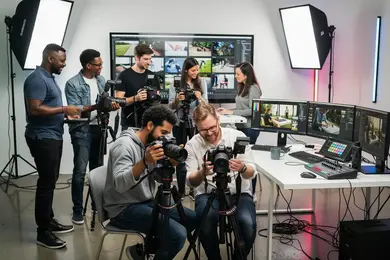
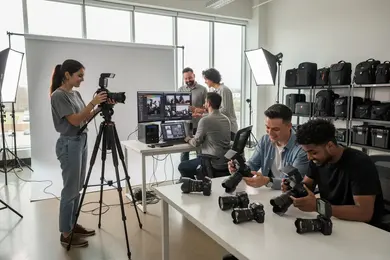
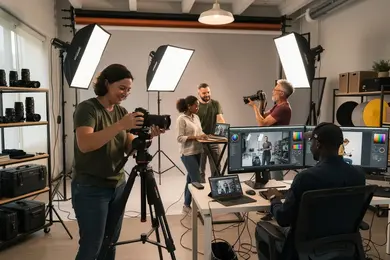
2027 Online Digital Photography Degrees With Veteran-Friendly Funding Support

Co-Founder and Chief Data Scientist
Choosing an online digital photography degree is a funding decision as much as an artistic one, especially for veterans using education benefits. BLS May 2024 wage data places median photographer pay near $44,000, which means program cost, portfolio value, and career fit matter.
This guide is for veterans, active-duty service members, military spouses, and dependents comparing accredited online photography programs. You will learn how VA benefits apply, which school features to verify, what courses to expect, and how to judge whether the degree supports your creative and financial goals.
Key Things You Should Know
- Accredited online digital photography degrees are available at the associate, bachelor's, and graduate levels, but veterans should confirm both institutional accreditation and VA approval before enrolling.
- The Post-9/11 GI Bill can cover up to the full in-state public tuition rate or up to the VA's annual private-school cap, which is $28,937.09 for the 2024-2025 academic year, with Yellow Ribbon funding potentially reducing remaining costs.
- BLS May 2024 data shows photographer pay varies widely by industry, location, and self-employment status, so students should evaluate portfolio development, business training, and transfer credit policies-not just tuition.
What is an online digital photography degree with veteran-friendly funding support?
An online digital photography degree is a college program that teaches image capture, lighting, editing, visual storytelling, portfolio development, and the business side of photography through distance learning. Depending on the school, students may complete an associate degree, Bachelor of Arts, Bachelor of Fine Arts, Bachelor of Science, master's degree, or professional certificate with stackable credits.
"Veteran-friendly funding support" means the school does more than accept online students. It should participate in applicable VA education benefit programs, understand military tuition assistance, evaluate Joint Services Transcript or Community College of the Air Force credits when appropriate, and provide advising that helps students avoid wasting benefits on credits they do not need.
This path can make sense for veterans who want a structured route into commercial photography, content creation, photojournalism, studio work, digital media production, or freelance business ownership. It may not be the best investment for someone who only wants a hobby-level skill, already has a strong paid portfolio, or needs a licensed career with a clearer wage floor.
The key trade-off is flexibility versus hands-on access. Online programs can be strong for editing, critique, digital workflow, branding, and portfolio review, but students usually need to supply or access their own camera, lighting, backdrop, storage, editing software, and shoot locations. A good program explains these requirements before enrollment, not after the first term begins.
The table below compares common online photography credential levels. Use it to match the credential to your career goal before comparing tuition or military benefits.
| Credential | Typical focus | Best fit | Decision note |
| Certificate | Camera operation, editing, lighting, or portfolio basics | Career changers testing the field or working photographers filling a skill gap | Lower cost, but may not qualify for all aid unless it is an approved, eligible program |
| Associate degree | Foundational photography plus general education | Students seeking entry-level skills or transfer into a bachelor's program | Can be cost-effective if credits transfer cleanly |
| Bachelor's degree | Advanced image-making, visual communication, business, portfolio, and capstone work | Students aiming for broader creative, media, or management roles | Usually the strongest degree option for long-term flexibility |
| Master's degree | Conceptual practice, advanced critique, research, teaching, or exhibition work | Experienced photographers seeking academic, leadership, or specialized creative roles | Best when the student already has a clear professional direction |
Which accredited online schools offer digital photography degrees with VA and military benefits?
Several U.S. institutions offer online photography or closely related digital imaging degrees and also serve students using VA or military education benefits. Availability, modality, tuition, VA approval, and Yellow Ribbon participation can change, so treat any school list as a starting point and verify details through the school's veterans office and the VA's WEAMS Institution Search before applying.
The table below highlights examples of schools commonly considered by online photography students. It is not a ranking; it is a comparison framework to help veterans ask the right funding and accreditation questions.
| School | Example online photography-related option | Accreditation to verify | Veteran-funding items to confirm |
| Southern New Hampshire University | Online BA in Digital Photography | Regional institutional accreditation through NECHE | GI Bill acceptance, military tuition policies, transfer credit review, and online student support |
| Arizona State University Online | Online art or digital photography pathway options, depending on catalog availability | Regional institutional accreditation through HLC | VA certification process, Yellow Ribbon participation where applicable, and residency rules |
| Academy of Art University | Online photography degree options at undergraduate and graduate levels | Institutional and any relevant specialized accreditation listed by the school | VA benefit processing, Yellow Ribbon details, equipment expectations, and portfolio requirements |
| Savannah College of Art and Design | Online photography or related visual media degree options, depending on current offerings | Regional institutional accreditation through SACSCOC | VA eligibility, Yellow Ribbon participation, fees, and required studio or portfolio components |
| Full Sail University | Online digital photography or media-focused bachelor's options, depending on catalog availability | Institutional accreditation listed by the school and recognized by the U.S. Department of Education | GI Bill certification, accelerated schedule implications, technology fees, and supplies |
Veterans comparing creative degrees may also want a practical benchmark from other military-friendly online fields. For example, the same funding and accreditation checks used for photography also apply when reviewing the best online cybersecurity degree programs for veterans, even though the career outcomes and portfolios are very different.
Before choosing a school, ask whether online photography courses are fully asynchronous, whether critique sessions require live attendance, whether credits are semester-based or competency-based, and whether the degree title appears exactly as advertised on transcripts. These details affect scheduling, transferability, and employer interpretation.
How do online digital photography degrees compare to campus programs for veterans?
Online and campus photography programs can both produce strong portfolios, but they serve different student realities. Veterans often compare them based on relocation needs, work schedules, disability accommodations, housing allowance, access to equipment, and the type of creative community they want.
The table below summarizes the main trade-offs. Use it to decide which format fits your life before you compare individual schools.
| Factor | Online photography degree | Campus photography degree | Best choice when... |
| Schedule flexibility | Often better for active-duty, working, or caregiving students | Usually tied to studio schedules and set class times | Choose online if you need to study around service, work, or family obligations |
| Equipment access | Student usually supplies camera gear, computer, storage, and software | Campus may provide studios, printers, lighting labs, and checkout equipment | Choose campus if access to specialized equipment is central to your goals |
| Critique and networking | Delivered through discussion boards, video critiques, and portfolio reviews | More face-to-face critique, exhibitions, and local industry events | Choose campus if you learn best through live studio interaction |
| Cost structure | May reduce relocation and commuting costs but can include technology and equipment expenses | May include higher housing, transportation, and campus fees | Compare total cost, not tuition alone |
| VA housing allowance | Online-only enrollment may produce a different housing allowance than in-person enrollment | In-person enrollment can use the campus location rate when eligibility rules are met | Ask the veterans office to estimate benefit impact before registering |
Online programs are especially useful for students who can create photo assignments in their own community: portraits, events, documentary projects, product shoots, real estate images, sports, or nature work. Campus programs can be stronger for students who need studio lighting bays, darkrooms, large-format printing, gallery shows, or intensive face-to-face mentorship.
A common mistake is assuming online means easier. In photography, online students must be self-directed because they manage shoots, recruit subjects, solve lighting problems, submit files on deadline, and revise work after critique. If you need external structure, choose a program with frequent instructor feedback, small class sizes, required portfolio checkpoints, and clear weekly deliverables.
What GI Bill, Yellow Ribbon, and military tuition assistance options apply to photography majors?
Photography majors can use many of the same education benefits as students in business, technology, or healthcare, as long as the school and program are approved for the benefit. The important distinction is that creative programs may have higher equipment costs and may include fees that are handled differently from tuition.
The major funding options below are the ones veterans and service-connected students most often evaluate for an online photography degree.
- Post-9/11 GI Bill: This can cover tuition and eligible fees up to the public in-state rate or up to the VA's annual private-school cap, plus a housing allowance for eligible students and a books-and-supplies stipend. The 2024-2025 private-school cap is $28,937.09, so students at higher-cost private institutions should ask about remaining balances.
- Yellow Ribbon Program: Participating schools can contribute funds above the GI Bill private-school cap, and the VA can match the school's contribution. Not every school participates, and schools can limit awards by degree level, number of students, or college division.
- Montgomery GI Bill: Some veterans still use this benefit instead of the Post-9/11 GI Bill. The best choice depends on eligibility, course load, housing needs, tuition level, and personal benefit history.
- Military Tuition Assistance: Active-duty service members may be eligible for tuition support through their branch, commonly calculated by credit hour. Branch rules, annual caps, degree-level limits, and approval timelines vary.
- Veteran Readiness and Employment: Veterans with a service-connected disability may qualify if the degree supports an approved employment plan. Photography business ownership or media employment may require careful documentation of career feasibility.
- Scholarships and institutional military discounts: Some schools offer military-specific tuition rates or creative arts scholarships. Ask whether these stack with VA benefits or reduce the school's Yellow Ribbon contribution.
One practical step is to ask for a written benefits estimate before you enroll. The estimate should separate tuition, mandatory fees, equipment, software, books, housing allowance assumptions, transfer credits, and any balance not covered by VA or military funds.
Students should also confirm whether their benefit covers the exact program version they plan to enter. A school may be VA-approved while a new certificate, concentration, or noncredit photography sequence is not yet eligible.
What courses and specializations are typically included in an online digital photography curriculum?
An online digital photography curriculum usually combines technical image-making, visual design, editing, critique, portfolio development, and business preparation. Bachelor's programs also include general education courses, which can help students communicate with clients, write proposals, understand culture and media, and manage professional projects.
The table below shows common curriculum areas and why they matter for employability. Course names vary by school, but the underlying competencies are similar.
| Curriculum area | Typical topics | Why it matters |
| Camera and exposure | Manual settings, lenses, composition, motion, depth of field, file formats | Builds the technical control needed for consistent professional results |
| Lighting | Natural light, studio lighting, flash, modifiers, product setups, portrait lighting | Separates casual image-making from client-ready work |
| Digital editing | Color correction, retouching, workflow, metadata, non-destructive editing | Supports efficient delivery and professional image quality |
| Visual storytelling | Documentary projects, sequence, narrative, ethics, audience interpretation | Helps photographers create cohesive bodies of work, not isolated images |
| Business and marketing | Pricing, contracts, licensing, client communication, branding, entrepreneurship | Especially important for freelancers and studio owners |
| Portfolio and capstone | Project development, critique, artist statements, web portfolio, final presentation | Creates the evidence employers and clients actually review |
Specializations differ by institution. Common paths include portrait photography, commercial photography, product photography, editorial or documentary photography, fine art photography, sports and events, real estate and architectural photography, and multimedia content creation.
Current technology trends are changing what students should look for. AI-assisted editing, automated culling, generative imagery, content authenticity concerns, and metadata workflows are becoming more relevant in creative production. Students who want deeper technical training beyond photography may compare a visual media degree with an AI degree, especially if they are interested in computational imaging, creative automation, or digital asset systems.
Veterans should prioritize programs that teach both creative judgment and production workflow. A camera course alone is not enough if the goal is paid work; the curriculum should help students plan shoots, respond to critique, deliver files professionally, understand image rights, and build a portfolio aimed at a defined market.
What are the admission requirements and application steps for online photography programs?
Admissions requirements vary by degree level and selectivity. Many online undergraduate photography programs are accessible to students with a high school diploma or GED, while BFA and graduate programs may require a portfolio. Transfer-friendly schools may also evaluate prior college credits, military training, and professional experience.
The table below outlines typical requirements so you can prepare before speaking with admissions. Always confirm the current catalog requirements for the exact start term.
| Program level | Common requirements | Portfolio expectation | Veteran-specific consideration |
| Certificate | Application, proof of education, possibly placement or advising | Usually none or informal | Confirm benefit eligibility because not all certificates qualify |
| Associate degree | High school diploma or GED, transcripts, placement information | Often not required | Ask whether military credits satisfy electives |
| Bachelor's degree | Transcripts, application, possible personal statement, transfer review | May be required for BFA or advanced standing | Check whether prior credits reduce time to degree |
| Master's degree | Bachelor's degree, portfolio, statement of purpose, resume, recommendations | Usually required | Explain professional goals clearly if using benefits for a career transition |
A strong application process is organized and funding-aware. Follow these steps before committing to a program.
- Identify your target outcome, such as freelance portrait work, commercial studio work, documentary projects, media production, or preparation for graduate study.
- Check whether the school is institutionally accredited by an agency recognized by the U.S. Department of Education.
- Confirm that the exact online photography program is eligible for your VA, military, or employer education benefit.
- Request an unofficial transfer evaluation using prior college transcripts, Joint Services Transcript, Community College of the Air Force transcript, or other documented training.
- Ask for a total cost estimate that includes tuition, fees, camera gear, lighting, computer, software, printing, storage, and portfolio hosting.
- Prepare a portfolio if required, using your strongest 10 to 20 images with consistent editing and a clear point of view.
- Submit the application, benefit paperwork, transcripts, and any military tuition assistance request before the school's funding deadline.
If timing is your biggest constraint, compare term calendars carefully. Some online programs use traditional semesters, while others use short terms or frequent start dates; students who need flexibility can research online colleges starting soon to understand how rolling starts can affect planning.
A red flag is any admissions process that rushes you to enroll before your transfer evaluation or benefit estimate is complete. For veterans, even a one-term mistake can consume benefits that cannot be recovered easily.
How much do online digital photography degrees cost, and what aid can reduce expenses?
The cost of an online digital photography degree depends on institution type, credit requirements, transfer credits, fees, equipment, software, and whether the student pays in-state, military, or private-school tuition. College Board's 2024-2025 data shows average published tuition and fees of $11,610 for in-state students at public four-year institutions and $43,350 at private nonprofit four-year institutions, which shows why veterans should compare net cost after benefits rather than sticker price.
Photography students should look beyond tuition because creative programs often have technology and production expenses. The list below shows common costs that may appear in addition to credit-hour charges.
- Tuition and mandatory online learning fees
- Camera body, lenses, memory cards, batteries, and tripod
- Lighting equipment, backdrops, reflectors, and studio accessories
- Computer capable of editing large image files
- Photo-editing software subscriptions or licenses
- External storage, cloud backup, calibration tools, and portfolio hosting
- Printing, mounting, shipping, or exhibition costs for portfolio work
Students using benefits should ask which of these costs are considered tuition, fees, books, supplies, or out-of-pocket equipment. The GI Bill books-and-supplies stipend can help, but it may not cover all gear required for a serious photography program.
The most effective cost-reduction strategies usually combine transfer planning, benefit coordination, and realistic equipment choices. Consider these actions before you enroll.
- Choose an accredited program that accepts prior college and eligible military credits so you do not repeat general education courses.
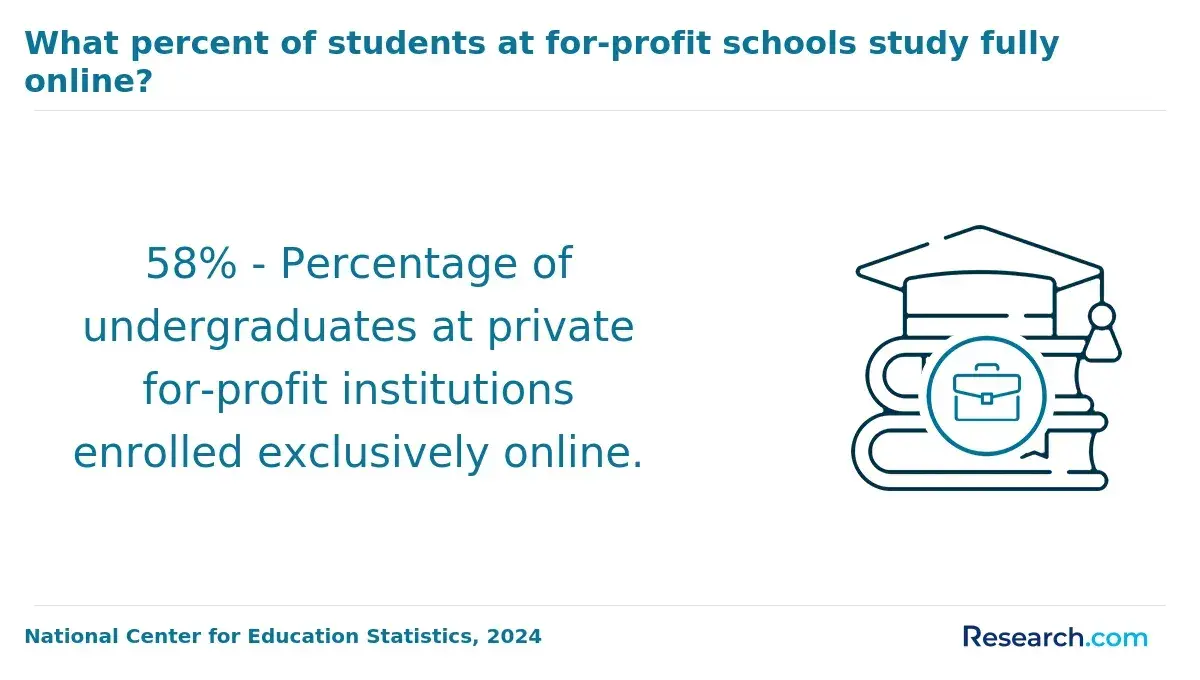
- Compare public, private nonprofit, and private for-profit options by net price after VA benefits, scholarships, Yellow Ribbon funds, and transfer credits.
- Ask whether the school offers a military tuition rate and whether that rate applies to online photography courses.
- Buy used or midrange equipment only after confirming the program's minimum specifications.
- Use community college transfer pathways if your goal is a bachelor's degree and the credits are guaranteed to apply.
- Avoid borrowing for expensive gear until you know which specialization you will pursue.
For ROI, compare the total amount you would personally pay against your likely career path. A degree may be more defensible if it builds a strong portfolio, business skills, and transferable media competencies. It may be less defensible if the program is expensive, requires heavy borrowing, and does not connect to a realistic client or employer market.
What careers can graduates pursue with an online digital photography degree?
Graduates can pursue photography roles directly, but many also use the degree in broader digital media, marketing, communications, education, and content production jobs. The most employable graduates usually combine image-making with editing, client management, writing, branding, video, web presentation, or social media strategy.
The table below connects common career directions with typical responsibilities. Use it to decide which specialization and portfolio projects to prioritize while in school.
| Career path | Typical responsibilities | Portfolio evidence to build |
| Portrait or wedding photographer | Client consultations, posing, lighting, event coverage, retouching, album or gallery delivery | Consistent portraits, event sequences, low-light examples, client-ready edits |
| Commercial or product photographer | Product staging, studio lighting, brand-aligned imagery, ecommerce deliverables | Product sets, controlled lighting, clean backgrounds, before-and-after edits |
| Photojournalist or documentary photographer | Visual reporting, captions, ethical storytelling, deadline editing | Photo essays, captions, documentary sequences, publication-style projects |
| Real estate or architectural photographer | Interior and exterior shoots, perspective control, editing, fast client turnaround | Rooms, exteriors, twilight images, vertical correction, consistent delivery sets |
| Digital content creator | Photography, short-form video, social media assets, campaign visuals | Cross-platform campaigns, brand visuals, motion clips, analytics-informed projects |
| Photo editor or digital asset coordinator | Image selection, metadata, color consistency, rights management, archive organization | Editing workflows, contact sheets, metadata samples, curated collections |
Veterans may have an advantage when they can translate military experience into civilian value: discipline under deadlines, operational planning, leadership, logistics, travel experience, public affairs exposure, or technical equipment handling. These strengths matter in event coverage, documentary projects, agency work, and entrepreneurial photography.
Some graduates eventually move into teaching, training, instructional media, or curriculum work, especially if they enjoy explaining visual concepts. Those considering education-focused roles can compare photography with adjacent graduate pathways such as the best online teaching master's programs to see whether instructional design or visual learning better fits their long-term goals.
Students should not assume that the degree alone will win clients. In photography, hiring often depends on portfolio quality, reliability, niche expertise, referrals, editing speed, and business communication. Use school assignments to create market-specific work, not just images that satisfy a course rubric.
What are the salary expectations and job outlook for digital photography professionals?
Salary outcomes in photography are highly variable because many professionals are self-employed, part-time, seasonal, or paid by project. BLS May 2024 wage data places median photographer pay near $44,000, but that figure should be treated as a labor-market midpoint, not a promise for degree graduates.
The table below summarizes how compensation context differs across common photography-related paths. It helps explain why students should evaluate business skills and industry niche alongside the degree itself.
| Role type | Income pattern | What affects earnings most | Planning advice |
| Freelance photographer | Project-based and often uneven | Client base, pricing, referrals, niche, editing speed, local market | Build business, contracts, marketing, and bookkeeping skills early |
| Studio or commercial photographer | More structured but competitive | Portfolio quality, lighting skill, product or brand experience | Create polished commercial samples before graduation |
| Media or editorial photographer | Can be staff, contract, or assignment-based | News judgment, speed, ethics, captions, multimedia ability | Add video, writing, and publication-style projects |
| Digital content specialist | Often salaried within marketing or communications | Photography plus social media, video, analytics, and brand consistency | Broaden skills beyond still images |
| Photo editor or asset coordinator | More operations-focused | Editing judgment, metadata, rights management, software systems | Document workflow skills in your portfolio |
Job outlook should also be interpreted carefully. Demand for visual content remains strong across ecommerce, social media, real estate, events, and digital marketing, but competition is high because camera technology is widely accessible. AI-assisted editing can speed production, yet it also raises employer expectations for turnaround time, consistency, and ethical image handling.
The smartest career strategy is to combine a niche with adjacent skills. A graduate who can shoot, edit, manage client files, create short-form video, write captions, and understand usage rights is usually more adaptable than someone who only knows camera settings.
Before enrolling, compare expected personal cost with the kind of work you want. If you want a stable salaried role, prioritize programs with digital media, marketing, or production coursework. If you want freelance work, prioritize business training, client-facing assignments, and portfolio reviews from working professionals.
How can students verify accreditation and choose a reputable, veteran-supportive photography program?
Accreditation is the first filter. A reputable online photography degree should come from an institution accredited by an agency recognized by the U.S. Department of Education. Specialized arts accreditation can be useful, but institutional accreditation is the baseline for federal financial aid, transferability, and employer confidence.
Veterans should also verify VA approval separately. Accreditation and VA approval are related but not identical; a school can be accredited while a specific program, location, or delivery format still requires benefit confirmation.
Use the checklist below when comparing programs. It focuses on decisions that affect cost, benefit usage, and career value.
- Confirm institutional accreditation through the U.S. Department of Education's recognized accreditor listings or the school's official accreditation page.
- Verify the school and exact program in the VA's WEAMS Institution Search or with a school certifying official.
- Ask whether the school participates in Yellow Ribbon and whether photography students are eligible.
- Request written estimates for tuition, fees, equipment, software, transfer credits, and remaining out-of-pocket cost.
- Review faculty portfolios to see whether instructors have experience in the specialization you want.
- Ask how online critique works, how often students receive instructor feedback, and whether capstone projects are reviewed by professionals.
- Check graduation, retention, transfer, and career services information where available, but do not rely on marketing claims alone.
- Look for student work samples that match current industry expectations in lighting, editing, storytelling, and presentation.
Watch for red flags: unclear accreditation language, pressure to enroll immediately, vague equipment requirements, no written benefit estimate, no portfolio-building sequence, weak transfer policies, or claims that the degree will automatically lead to high-paying freelance work. Photography careers are built through skill, portfolio, network, business practices, and persistence; the degree should support those factors rather than replace them.
The best program is not necessarily the cheapest or the most famous. It is the accredited, benefit-compatible program that helps you build a credible portfolio at a cost you can justify for your chosen career path.
Other Things You Should Know About Digital Photography
While a professional camera is beneficial, many 2027 online digital photography programs accommodate learners with varying equipment. Some courses might require access to a camera for specific assignments, but entry-level models or even smartphones can suffice initially, allowing students to upgrade as they progress.
Yes, and many students use school projects to build a portfolio and test services. Keep business activity realistic, use written contracts, track expenses, and avoid promising services that exceed your current skill level.
A certificate may be enough for focused skills such as editing, lighting, or portrait basics. A degree is usually better if you want broader visual communication training, general education, transfer options, or a more substantial portfolio process.
Yes, many 2027 online digital photography degrees require an internship, practicum, or field-work component, usually 120 to 180 hours. Programs often let veterans complete these hours at approved local studios, media organizations, or community partners, with prior military experience sometimes counted only if documented and approved by the department.
References
- How Much Does it Cost to Learn Photography? https://blog.nobledesktop.com/learn/photography/photography-cost-to-learn
- Photography Jobs Outlook 2026: Is Studying Photography Still a Good Career Investment? https://www.baph.co.uk/blog/photography-jobs-outlook-2026--is-studying-photography-still-a-good-career-investment-
- Top 10 Online Photography Classes You Can't-Miss: From Beginner to Pro https://www.zno.com/blog/top-10-online-photography-classes.html
- What Can You Do With a Photography Degree? https://pnca.willamette.edu/academics/bfa/photography/career-options
- Best Online Photography Degrees https://www.onlineu.com/degrees/photography
- Should you Study Photography at College or are There Better Options Now? https://digital-photography-school.com/should-you-study-photography-at-college-or-are-there-better-options-now/
- Best Online Universities for Military Veterans: Tuition Benefits and Support https://lakewood.edu/best-online-universities-for-military-veterans-tuition-benefits-and-support/
- How to Choose the Right Photography Program https://nossi.edu/how-to-choose-the-right-photography-program/
- Admission requirements master Photography & Society https://www.kabk.nl/en/programmes/master/master-photography-society/admission-requirements
- Initiation Course in Digital Photography | Summer Courses | LCI Barcelona https://barcelona.lcieducation.com/en/programs-and-courses/initiation-course-digital-photography