2027 Online Digital Photography Degrees With Photo Editing Coursework

Co-Founder and Chief Data Scientist
Choosing a photography degree now means weighing creative training against a market shaped by smartphones, AI editing, e-commerce, and visual content demand. The U. S. Bureau of Labor Statistics reported a median photographer salary of $40,760 in its 2024 Occupational Outlook Handbook update, showing why students need realistic career and cost expectations. This guide is for aspiring photographers, career changers, and working creatives comparing online programs. You will learn how these degrees work, what editing coursework includes, which schools offer them, and how to choose a program that fits your budget, portfolio goals, and career path.
Key Things You Should Know
- Accredited online digital photography degrees usually combine camera technique, lighting, visual storytelling, digital workflow, Photoshop or Lightroom editing, portfolio development, and business coursework.
- College Board's 2024 pricing report shows average published tuition and fees at $11,610 for in-state public four-year colleges and $43,350 for private nonprofit four-year colleges, so total cost can vary sharply by school type, transfer credits, and equipment needs.
- The BLS projects photographer employment to grow 4% from 2023 to 2033, which means opportunities exist, but graduates often need a strong portfolio, editing fluency, client skills, and niche specialization to compete.
What is an online digital photography degree with photo editing coursework?
An online digital photography degree is a college program that teaches students how to plan, shoot, edit, organize, and present photographic work using digital tools. It may be offered as an associate degree, bachelor's degree, or, less commonly, a graduate degree focused on photography, digital media, visual communication, or fine arts.
The "photo editing coursework" part matters because modern photography is rarely finished when the shutter clicks. Students typically learn image correction, RAW processing, retouching, compositing, color management, file organization, output preparation, and ethical editing practices. These skills are used in portrait studios, weddings, journalism, advertising, real estate, sports, product photography, and social media content production.
An online degree in photography is usually best for students who want structured creative training, portfolio feedback, and a credential while keeping work or family flexibility. It may be less useful for learners who only need one narrow skill, such as Lightroom basics, and would be better served by a short certificate, workshop, or self-paced course.
The main degree levels differ in purpose and depth. This comparison can help students decide whether they need a quick skills credential or a broader college degree.
| Program type | Typical focus | Best fit | Important limitation |
| Certificate or nondegree coursework | Specific skills such as editing, lighting, or digital workflow | Hobbyists, freelancers, or working photographers updating skills | May not include general education, a full portfolio sequence, or a recognized degree |
| Associate degree | Foundational photography, editing, design, and portfolio development | Students seeking entry-level skills or a transfer pathway | May not provide the same depth in business, theory, or advanced studio work as a bachelor's degree |
| Bachelor's degree | Advanced photographic practice, editing, visual communication, electives, and professional portfolio work | Students pursuing broader creative careers, management paths, or graduate study | Costs more and takes longer, so ROI depends heavily on career goals and portfolio quality |
| Master's degree | Advanced creative direction, fine art practice, research, critique, or teaching preparation | Experienced photographers, artists, educators, or creative leaders | Usually unnecessary for entry-level freelance or studio photography roles |
How do online digital photography programs compare to campus-based options?
Online photography programs can be highly practical when they include critique, portfolio reviews, digital editing labs, and clear equipment expectations. The main trade-off is that students must create their own shooting environments instead of relying on campus studios, darkrooms, lighting labs, or shared gear.
The best format depends on how you learn, what equipment you can access, and whether your career goal requires intensive studio practice. This table summarizes the most important differences for decision-making.
| Factor | Online digital photography degree | Campus-based photography degree | Decision point |
| Schedule | Often asynchronous or hybrid, allowing students to shoot and edit around work | More fixed class times, critiques, and studio sessions | Online is better for working adults; campus is better for students who need daily structure |
| Equipment access | Students may need their own camera, computer, software, lighting, and storage | Schools may offer studio spaces, printers, lighting kits, and rental equipment | Online affordability can shrink if equipment costs are high |
| Critique and feedback | Usually delivered through discussion boards, video meetings, annotated images, and portfolio reviews | Often live, group-based, and more immediate | Ask how often instructors provide individualized critique |
| Networking | Depends on virtual events, alumni groups, internships, and local fieldwork | Often stronger for local internships, exhibitions, and peer collaboration | Campus may help students who need a local creative community |
| Editing coursework | Well suited to online delivery because editing uses digital files and software | Also strong, especially when combined with print labs and studio production | Online can be excellent if software access and file submission standards are clear |
Students comparing creative online degrees may notice similar trade-offs in design-heavy fields. For example, someone researching a best online architecture degree also has to ask how remote programs handle critique, technical software, studio culture, and portfolio-building; photography students should ask the same kinds of format-specific questions.
Choose online study if you already have access to subjects, locations, lighting, and a reliable editing setup. Choose campus study if you need shared equipment, face-to-face critique, darkroom access, gallery experiences, or a highly immersive creative environment.
Which accredited schools offer online digital photography degrees in the United States?
Accredited online photography degrees are available, but students should read program pages carefully because schools may label them as photography, digital photography, digital media, graphic design with a photography concentration, or visual arts. Institutional accreditation is the baseline to verify first because it affects federal financial aid eligibility, credit transfer, and general academic credibility.
The examples below are not a ranking. They show U.S. schools that have offered online or distance-accessible photography-related degree pathways and should be verified against the latest catalog before applying.
| School | Example online photography-related pathway | Accreditation point to verify | Good fit for |
| Southern New Hampshire University | Online bachelor's-level digital photography pathway | Institutional accreditation through NECHE | Students seeking a flexible bachelor's degree with digital workflow and portfolio development |
| Academy of Art University | Online photography degrees at undergraduate and graduate levels | Institutional accreditation through WSCUC | Students seeking an art-school model with critique and advanced creative options |
| Savannah College of Art and Design | Online creative degree options that may include photography study depending on catalog availability | Institutional accreditation through SACSCOC | Students looking for a design-focused creative school with strong portfolio culture |
| Rocky Mountain College of Art + Design | Online photography or related visual arts pathways, depending on current offerings | Institutional accreditation through HLC | Students who want an art and design environment with online creative coursework |
| Liberty University | Online digital design programs with photography-related coursework or concentrations | Institutional accreditation through SACSCOC | Students seeking a broader digital design credential that includes photography skills |
Because program names change, do not rely on a search result alone. Before you request information, confirm whether the degree is fully online, whether any campus residency is required, what editing software is used, and whether the portfolio outcomes match your target niche.
What photo editing and digital imaging courses are included in these programs?
Photo editing coursework teaches students how to turn digital captures into polished, technically sound, and ethically appropriate images. In strong programs, editing is not treated as a shortcut for weak shooting; it is part of a complete workflow that begins with planning, exposure, composition, lighting, file management, and creative intent.
Course titles vary by school, but most online digital photography programs include several of the following learning areas. These topics matter because employers and clients often judge photographers by both capture quality and post-production consistency.
- Digital imaging fundamentals, including resolution, file formats, metadata, color profiles, and image output standards
- Adobe Lightroom or comparable RAW workflow tools for importing, organizing, correcting, exporting, and archiving image sets
- Adobe Photoshop or comparable pixel-editing tools for retouching, masking, compositing, restoration, and advanced corrections
- Color correction and color management for print, web, editorial, product, and brand-consistent delivery
- Portrait and beauty retouching with attention to realistic skin texture, client expectations, and ethical representation
- Commercial image editing for product, food, fashion, real estate, advertising, and e-commerce use cases
- Digital asset management, backup strategy, naming conventions, and client delivery workflow
- Portfolio production, sequencing, artist statements, presentation formats, and critique-based revision
AI-assisted editing is also becoming part of the conversation. Students should learn what tools can speed up selections, cleanup, background extension, and organization, but they should also understand disclosure norms, copyright concerns, image authenticity, and employer policies. This is especially important for journalism, documentary, academic, and legal contexts where excessive manipulation can damage credibility.
A practical way to judge editing coursework is to ask whether students complete finished projects rather than isolated software exercises. A strong class should require before-and-after files, instructor critique, consistent file naming, export settings, and a portfolio-ready final image series.
What are typical admission requirements for online digital photography degrees?
Admissions requirements depend on the degree level and selectivity of the school. Many online undergraduate photography programs are accessible to first-time college students, while art schools and graduate programs may place more weight on portfolios, statements of purpose, or prior creative experience.
Most applicants should be ready to submit the following materials. Requirements vary, so students should confirm details directly with the admissions office before paying an application fee.
- Completed online application and application fee or fee waiver request
- High school transcript, GED documentation, or prior college transcripts
- Transfer credit evaluation if the student has completed college coursework
- Portfolio samples for selective programs, advanced standing, or graduate admission
- Personal statement or creative goals statement for programs that evaluate artistic fit
- Proof of English proficiency for applicants whose prior education was not in English
- Financial aid forms, including the FAFSA for eligible U.S. students seeking federal aid
Students changing fields should not assume they need years of professional photography experience to apply. For many bachelor's programs, curiosity, visual potential, and readiness for college-level work matter more than having a polished commercial portfolio.
Transfer planning is especially important for affordability. Students who are comparing multiple online majors, such as photography and an online Spanish degree, should ask each school how general education credits, community college courses, military training, and prior learning assessments apply to the final degree plan.
The biggest admissions mistake is applying before checking whether the program's creative expectations match your skill level. If a portfolio is required, ask whether the school wants finished professional work, experimental images, school assignments, or a range of visual samples that show potential.
How long do online digital photography programs take, and what do they cost?
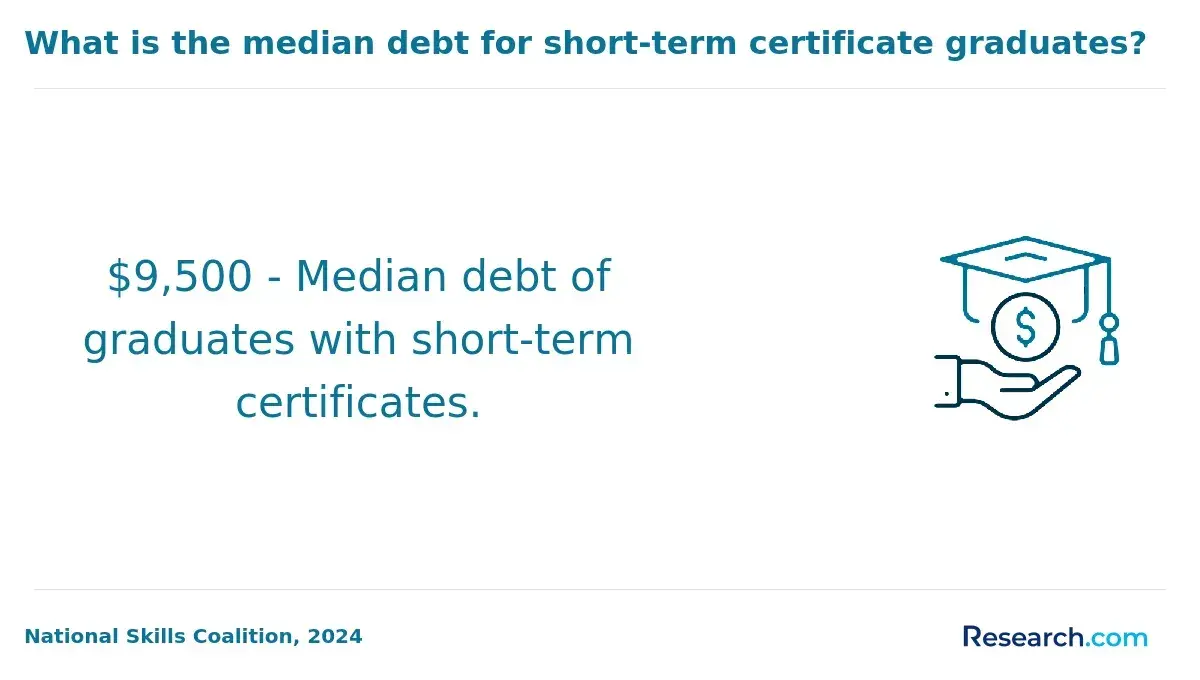
Program length depends on degree level, transfer credits, term structure, and whether the student studies full time or part time. A certificate may take a few months to a year, an associate degree often takes about two years of full-time study, and a bachelor's degree commonly takes about four years for students starting without transfer credits.
Cost is more variable than timeline. College Board's 2024 Trends in College Pricing and Student Aid reported average published tuition and fees of $11,610 for in-state students at public four-year colleges and $43,350 at private nonprofit four-year colleges for 2024-25. Those figures are not photography-specific, but they show why students should compare total net cost rather than assuming all online degrees are inexpensive.
Photography students should budget for both tuition and production expenses. The following cost factors can change the real price of an online digital photography degree.
- Tuition rate per credit and whether online students pay in-state, out-of-state, or flat-rate tuition
- Transfer credits accepted toward general education, electives, or major requirements
- Camera body, lenses, tripod, lighting, backdrop, memory cards, and external storage
- Computer specifications, monitor quality, calibration tools, and cloud backup
- Photo editing software subscriptions or school-provided licenses
- Printing, portfolio presentation, web hosting, domain registration, and exhibition fees
- Travel costs for local shoots, internships, optional residencies, or portfolio events
To reduce cost, start by asking for a degree audit before enrolling, not after. A generous transfer policy can save more than a small tuition discount if it reduces the number of credits required to graduate.
Students should also compare certificate-versus-degree value. A certificate may be enough for a working designer who needs better photo editing skills, while a bachelor's degree may be more useful for someone who wants broader creative training, access to internships, a stronger academic credential, or graduate school eligibility.
What careers can graduates pursue with a digital photography degree?
A digital photography degree can support several creative and media careers, but the degree alone is rarely the main hiring factor. Employers and clients usually evaluate portfolio quality, editing skill, reliability, communication, niche experience, and the ability to deliver usable files on deadline.
The table below connects common career paths with the kind of work graduates may do. It can help students identify whether they need broad photography training, specialized electives, business coursework, or a different credential.
| Career path | Typical responsibilities | Helpful coursework | Portfolio evidence to build |
| Portrait or wedding photographer | Photograph individuals, families, couples, events, and ceremonies | Lighting, posing, retouching, client workflow, business practices | Consistent portrait sets, event coverage, edited galleries, client-style delivery samples |
| Commercial or product photographer | Create images for brands, catalogs, e-commerce, packaging, and advertising | Studio lighting, product styling, color accuracy, compositing | Clean product images, before-and-after edits, brand-consistent image series |
| Photo editor or digital imaging specialist | Retouch, organize, color-correct, composite, and prepare image files | Photoshop, Lightroom, color management, asset management | Retouching samples, workflow documentation, image correction comparisons |
| Real estate or architectural photographer | Photograph interiors, exteriors, property details, and spaces | Wide-angle composition, HDR workflow, perspective correction, drone basics | Interior and exterior sets, twilight edits, corrected verticals, delivery-ready galleries |
| Editorial, journalism, or documentary photographer | Tell visual stories for publications, nonprofits, communities, or media outlets | Visual storytelling, ethics, captions, documentary practice | Photo essays, captions, event coverage, minimally manipulated documentary work |
| Social media content creator | Produce still images, short-form visuals, campaign assets, and brand content | Digital media, branding, image editing, basic video, analytics | Campaign mockups, platform-ready images, brand style consistency |
Some graduates move into adjacent fields such as digital marketing, visual content management, creative operations, or media production. Others combine photography with writing, design, video, or analytics. For example, students interested in sports media may pair photography with statistics and broadcasting knowledge when exploring a path as a sports analyst or visual content specialist covering teams, athletes, and fan engagement.
This degree is usually worth considering if you want a structured portfolio and broader creative foundation. It may not be the best investment if your goal is a highly regulated field, a guaranteed salary ladder, or a career that values a different credential more than photographic skill.
What salary ranges and earning potential exist for digital photographers?
Photography earnings vary widely because many professionals are self-employed, freelance, part time, seasonal, or paid per project rather than by salary. Location, niche, client base, editing speed, business skill, licensing strategy, and reputation can influence income as much as the degree itself.
The BLS Occupational Outlook Handbook update published in 2024 reported a median annual wage of $40,760 for photographers using May 2023 wage data. Readers should treat that figure as a labor-market midpoint, not a promise of what a graduate will earn, because it includes workers across many industries and experience levels.
Different roles have different earning dynamics. This comparison explains why two photography graduates may see very different financial outcomes.
| Work setting | How earnings are commonly shaped | Income stability | Key ROI consideration |
| Freelance portrait, wedding, or event photography | Project pricing, packages, referrals, seasonality, and local competition | Variable | Business coursework and marketing skills can matter as much as artistic training |
| Commercial studio or in-house creative team | Employer budget, product volume, editing workload, and experience | More stable than freelance work | A polished product or studio-lighting portfolio can improve competitiveness |
| Photo editing or retouching | Speed, technical precision, software fluency, and industry specialization | Moderate, depending on employer or client base | Strong before-and-after samples are essential |
| Real estate and architectural photography | Local real estate market, turnaround time, drone capability, and package pricing | Can fluctuate with housing activity | Fast delivery and add-on services may affect earning potential |
| Editorial or documentary work | Publication budgets, grants, assignments, and reputation | Often variable | Ethics, storytelling, captions, and networking are especially important |
Students evaluating ROI should estimate monthly loan payments, equipment replacement costs, software subscriptions, taxes for self-employment, insurance, and marketing expenses. A lower-cost program with strong portfolio feedback may be a better financial choice than a more expensive program with weak career support.
What is the job outlook and industry demand for digital photography professionals?
The BLS projects employment for photographers to grow 4% from 2023 to 2033, which is about as fast as the average for all occupations. For students, this means the field is not disappearing, but it is competitive and increasingly shaped by specialization, technical workflow, and business adaptability.
Demand is strongest where photography solves a business, communication, or documentation need. E-commerce sellers need accurate product images, real estate professionals need fast property visuals, brands need platform-ready content, and organizations need image libraries for websites, fundraising, recruiting, and social media.
Several current trends should influence how students prepare. These trends do not eliminate the need for photographers, but they change what clients and employers expect.
- AI-assisted editing is speeding up routine tasks, so students should learn both tool use and ethical boundaries instead of ignoring automation.
- Hybrid photo-video expectations are growing, especially for social media, events, marketing teams, and small businesses.
- Clients increasingly expect quick turnaround, organized galleries, consistent color, and licensing clarity, not just attractive images.
- Drone photography can expand opportunities in real estate, construction, tourism, and events, but commercial drone operation may require FAA Part 107 certification.
- Portfolio niches matter more as entry-level image creation becomes more accessible through smartphones and automated tools.
The best way to respond to the outlook is to graduate with a focused body of work. A student who can show a complete real estate package, product campaign, editorial photo essay, or portrait brand system is easier to evaluate than a student with unrelated one-off images.
How can students evaluate and choose a reputable online photography program?
A reputable online photography program should be accredited, transparent about costs, clear about equipment requirements, and serious about critique-based portfolio development. Students should look beyond attractive sample images and ask how the program will help them produce work that fits a real career goal.
Use the following steps before enrolling. They are designed to help you avoid common mistakes that can make a creative degree more expensive or less useful than expected.
- Verify institutional accreditation through the school's website and the U.S. Department of Education or CHEA-recognized accreditation databases.
- Confirm the exact credential name, delivery format, residency requirements, credit total, and whether the photography coursework is a major, concentration, certificate, or elective cluster.
- Request a full cost breakdown that includes tuition, fees, software, equipment, portfolio expenses, and any required campus visits.
- Ask for a transfer credit review before committing, especially if you have community college, military, AP, dual-enrollment, or prior college credits.
- Review actual course descriptions for Lightroom, Photoshop, digital imaging, lighting, portfolio, and business coursework.
- Ask how critiques work online, how often instructors respond, and whether students receive portfolio reviews from faculty or industry professionals.
- Compare graduate portfolio examples, internship options, career services, alumni outcomes, and opportunities to build client-style projects.
- Check whether the program teaches copyright, contracts, model releases, licensing, invoicing, and client communication.
Red flags include vague accreditation language, unclear tuition pages, no published curriculum, unrealistic salary claims, limited instructor feedback, missing software requirements, and programs that show beautiful marketing images without explaining student learning outcomes.
The right program should match your target work. A future wedding photographer needs client workflow and lighting practice; a future retoucher needs advanced editing samples; a future commercial photographer needs product, studio, and business training. If the curriculum does not help you build the portfolio your market expects, keep comparing options.
Other Things You Should Know About Digital Photography
In 2027, starting an online digital photography degree typically does not require owning a professional camera initially. Many programs suggest beginners use any DSLR or mirrorless camera they have access to. As skills progress, investing in a more advanced camera might be beneficial for developing technical expertise and completing coursework involving advanced photo editing techniques.
Often, yes. Some programs allow students to arrange local internships with studios, media organizations, nonprofits, real estate firms, or marketing teams, but approval rules and credit requirements vary by school.
Most online digital photography degrees teach Adobe Photoshop and Lightroom, with some programs also using Capture One or Adobe Bridge. Coursework usually covers RAW processing, color correction, retouching, masking, and non-destructive editing across 15 to 30 credit hours of studio and digital post-production classes.
References
- How To Choose A Photography Class Or Workshop https://digital-photography-school.com/how-to-choose-a-photography-class-or-workshop/
- How to Choose the Right Photography Program https://nossi.edu/how-to-choose-the-right-photography-program/
- 5 Key Factors to Consider When Choosing a Photography Course | Vogue College of Fashion https://www.voguecollege.com/articles/madrid/5-key-factors-to-consider-when-choosing-a-photography-course/
- Photography Jobs Outlook 2026: Is Studying Photography Still a Good Career Investment? https://www.baph.co.uk/blog/photography-jobs-outlook-2026--is-studying-photography-still-a-good-career-investment-
- College Certificate vs Online Photography School | Cameraderie https://cameraderie.org/threads/college-certificate-vs-online-photography-school.56322/
- How to evaluate an online photography course https://www.upskillist.com/blog/how-to-evaluate-an-online-photography-course/
- How Much Does it Cost to Learn Photography? https://blog.nobledesktop.com/learn/photography/photography-cost-to-learn
- What Can You Do With a Photography Degree? https://pnca.willamette.edu/academics/bfa/photography/career-options
- The Photography Institute https://www.thephotographyinstitute.com/us/en/blog-evaluating-online-courses
- Photography and Digital Imaging https://www.ncad.ie/continuing-education/photography-and-digital-imaging-certificate-pdi/