2027 Best Online Digital Photography Degrees for Visual Storytelling Careers

Co-Founder and Chief Data Scientist
Choosing an online digital photography degree is really a career investment decision: will the program help you build a portfolio, master visual storytelling tools, and compete for paid creative work? The U. S. Bureau of Labor Statistics reports a May 2024 median annual wage of $42,520 for photographers, while related media roles can pay more with video, editing, design, or art direction skills. This guide is for aspiring photographers, career changers, and working creatives comparing accredited online options, costs, admissions, courses, and career outcomes.
Key Things You Should Know
- Accreditation, portfolio support, faculty feedback, and access to studio-style critique matter more than whether a photography degree is online or campus-based.
- College Board's 2024-25 published tuition averages show a wide cost spread, from $11,610 for in-state public four-year tuition and fees to $43,350 at private nonprofit four-year institutions.
- BLS projects 4% employment growth for photographers from 2024 to 2034, so students should pair photography with video, editing, social content, lighting, business, and AI-aware production skills.
What is an online digital photography degree and how does it prepare visual storytellers?
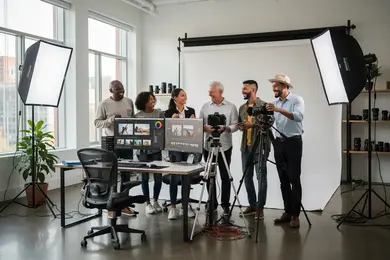
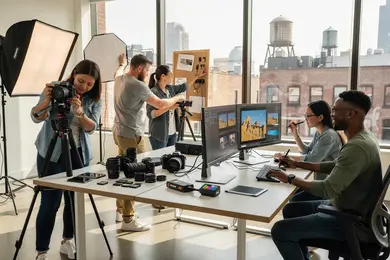
An online digital photography degree is a college program that teaches image-making, editing, lighting, composition, visual communication, and professional portfolio development through a remote learning format. Most programs combine asynchronous coursework, live critiques, digital submissions, project-based assignments, and faculty feedback. Students usually complete hands-on work from home, in local environments, or in rented studio spaces rather than in a campus lab every week.
For visual storytelling careers, the value of the degree is not only technical camera training. A strong program helps students learn how to plan a story, create a visual sequence, direct subjects, edit for mood and meaning, and present work to clients or employers. This matters because many photography jobs now overlap with social media, documentary content, brand campaigns, video production, ecommerce, and multimedia journalism.
Online programs can be a good fit for students who want structure but need flexibility. They are especially useful for adult learners, working assistants, military students, parents, and freelancers who need to keep working while building a stronger portfolio. Students comparing online photography degrees should look beyond the label and ask whether the curriculum includes critique, business training, career services, and portfolio review.
The table below explains the main degree levels and how each one usually supports a different career goal. Use it to avoid overpaying for a credential that is either too broad or too advanced for your current stage.
| Program type | Typical focus | Best fit | Decision point |
| Certificate | Camera operation, Lightroom or Photoshop, lighting basics, portfolio samples | Beginners, hobbyists moving toward paid work, or professionals adding visual content skills | Useful for skills, but may not satisfy employers that prefer a degree |
| Associate degree | Foundational photography, design, digital imaging, general education | Students seeking lower-cost entry, transfer pathways, or technical roles | Check transfer agreements before enrolling |
| Bachelor's degree | Advanced photography, visual storytelling, art history, business, capstone portfolio | Students targeting commercial, editorial, nonprofit, documentary, or creative media careers | Often the strongest all-around credential for long-term career mobility |
| Master's degree | Conceptual practice, advanced critique, research, teaching preparation, professional body of work | Experienced photographers, artists, educators, or creative directors | Best when tied to a clear portfolio, teaching, or leadership goal |
A degree is worth considering if you need feedback, deadlines, a credential, and a portfolio-building path. A shorter certificate or self-directed route may make more sense if you already have a degree, only need software training, or plan to work in a niche where clients judge almost entirely by portfolio and referrals.
Which schools offer the best accredited online digital photography programs in the United States?
The "best" online digital photography program depends on your career goal, budget, transfer credits, and preferred learning style. For most students, the safest starting point is a regionally accredited institution or a properly accredited art school with a documented online delivery model, portfolio review process, and transparent tuition policies.
The schools below are commonly considered by U.S. students seeking online or substantially online photography and visual storytelling education. Program names, delivery formats, and accreditation status can change, so verify each item directly with the institution before applying.
| School | Example online photography pathway | Accreditation to verify | Why it may fit |
| Southern New Hampshire University | BA in Digital Photography | Institutional accreditation through NECHE | Flexible online bachelor's format with career-oriented digital imaging and portfolio work |
| Academy of Art University | Online photography degrees at undergraduate and graduate levels | Institutional accreditation through WSCUC; program-specific art/design recognition where applicable | Art-school environment with studio critique, commercial emphasis, and advanced portfolio development |
| Savannah College of Art and Design | Online or low-residency creative programs that may include photography-related study | Institutional accreditation through SACSCOC | Strong creative-industry orientation for students seeking a design, fashion, editorial, or fine-art network |
| Dakota College at Bottineau | Online photography associate-level study | Institutional accreditation through HLC | Potentially practical option for students seeking a shorter, lower-cost entry route |
| Sessions College | Online digital photography and visual design programs | Distance education and institutional accreditation status | Skills-focused option for students prioritizing digital production and portfolio assignments |
When building a shortlist, separate "photography major" programs from broader "digital media," "graphic design," "visual communication," or "journalism" programs that include photography courses. A broader program can be a smarter choice if you want to work in content marketing, social media, video, or brand storytelling; a dedicated photography program is usually better if you want deeper critique, lighting, and image-making practice.
Be cautious with any school that emphasizes equipment packages, admissions speed, or vague creative outcomes more than curriculum, faculty, student work, completion expectations, and total cost. A reputable program should make it easy to find accreditation, tuition, transfer rules, required software, faculty credentials, and examples of capstone or portfolio expectations.
How do online digital photography degrees compare to campus programs for hands-on learning?
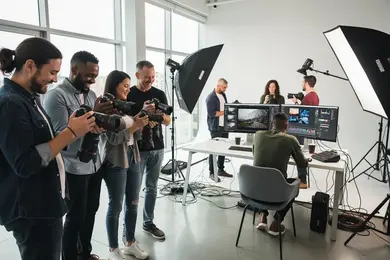
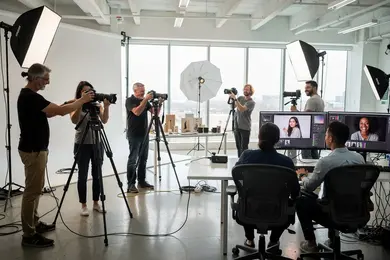
Online photography degrees can be hands-on, but they require more self-direction. Instead of walking into a campus studio, students often build assignments around local subjects, home studio setups, natural light, rented gear, community events, or workplace projects. The quality of learning depends on how well the program replaces campus access with structured critique, clear technical demonstrations, and realistic project briefs.
The comparison below shows where online and campus programs usually differ. Use it to decide whether flexibility is worth the trade-off in equipment access and in-person creative community.
| Factor | Online degree | Campus degree | Best choice when |
| Studio access | Student may need home equipment, rentals, or local spaces | Campus may provide lighting labs, studios, printers, and check-out gear | Campus is stronger if you need extensive controlled studio practice |
| Critique | Often through uploaded work, video feedback, discussion boards, and live sessions | Usually in-person group critique and studio review | Online works well if faculty feedback is frequent and specific |
| Schedule | More flexible for working adults and freelancers | More fixed class and lab times | Online is stronger if you need to keep working |
| Networking | Requires intentional outreach, online communities, internships, and local projects | More spontaneous peer, faculty, gallery, and campus connections | Campus is stronger if you want immersion in a creative community |
| Portfolio development | Can be strong if assignments are rigorous and critique is consistent | Can be strong through studio culture and exhibitions | Either can work if the final portfolio matches your target market |
Online students can close the hands-on gap by being deliberate. Before enrolling, ask whether the school provides equipment lists, lighting alternatives for small spaces, cloud-based software access, remote printing guidance, and live critique opportunities.
Use this sequence to test whether an online program can support real practice rather than just theory:
- Review at least three sample assignments and confirm they require original shooting, editing, critique, and revision.
- Ask how often faculty provide individual feedback on images rather than general comments on discussion posts.
- Confirm the required camera, computer, lighting, storage, and software costs before comparing tuition.
- Look for portfolio milestones throughout the program, not only a final capstone course.
- Ask whether students can complete internships, exhibitions, client projects, or local documentary work for credit.
Online learning is not a shortcut. It is best for students who can plan shoots independently, solve logistical problems, and seek feedback proactively. Campus learning may be better if you need frequent in-person supervision, access to specialized labs, or the daily discipline of a physical studio environment.
What admission requirements do online digital photography bachelor's and master's programs typically have?
Admission requirements vary by institution and degree level, but most online photography programs evaluate academic readiness, creative potential, and ability to complete studio-style work remotely. Open-admission or transfer-friendly universities may not require a portfolio for entry, while art schools and graduate programs often place much heavier weight on creative work.
For bachelor's programs, applicants should expect requirements like these. The details matter because missing a transcript, portfolio file, or transfer deadline can delay enrollment by a full term.
- High school diploma, GED, or equivalent credential.
- Official transcripts from high school and any colleges previously attended.
- Application form and school-specific fee or waiver process.
- Minimum GPA requirement, if the institution uses one.
- Portfolio, artist statement, or creative sample when required by the program.
- English proficiency documentation for applicants whose prior education was not in English.
- Transfer credit evaluation for students bringing prior college coursework.
Master's programs are usually more selective because they assume the student already has technical and conceptual foundations. Applicants may need to show a coherent body of work, not just attractive individual images.
- Bachelor's degree from an accredited institution, often in photography, art, design, media, journalism, or a related field.
- Portfolio showing technical control, visual consistency, and potential for advanced study.
- Statement of purpose explaining artistic goals, research interests, or career direction.
- Letters of recommendation from faculty, creative supervisors, editors, or professional collaborators.
- Resume or CV listing exhibitions, freelance work, publications, teaching, awards, or media projects.
- Interview or additional writing sample for some MFA or MA programs.
Students without a traditional art background should not automatically rule themselves out. Some programs accept applicants with strong professional experience, related media work, or a compelling portfolio. However, if your portfolio is thin, it may be smarter to complete a certificate, community college photography sequence, or supervised portfolio course before applying to a selective bachelor's completion or graduate program.
What core courses and specializations are included in most online digital photography curricula?
Most online digital photography curricula combine technical image-making, visual literacy, software fluency, storytelling, business skills, and portfolio development. The strongest programs do not treat photography as a single-camera skill; they teach students to create visual messages for different audiences, platforms, and professional contexts.
Core courses usually include the following areas. These courses help students move from "taking good pictures" to planning, producing, editing, and presenting professional-quality visual work.
- Digital camera operation, exposure, lenses, file formats, and workflow.
- Composition, color, visual hierarchy, sequencing, and narrative structure.
- Lighting for portraits, products, interiors, events, and location work.
- Photo editing, retouching, digital asset management, and non-destructive workflow.
- History of photography, visual culture, ethics, copyright, and representation.
- Studio, documentary, editorial, commercial, or fine-art photography projects.
- Business practices, pricing, contracts, client communication, and marketing.
- Portfolio development, capstone production, artist statements, and professional presentation.
Specializations can shape your career path, so choose them based on the type of work you want to be paid to do. For example, students drawn to buildings, interiors, real estate, or spatial storytelling may compare photography study with an architecture degree if they want deeper design, construction, or built-environment expertise.
The table below summarizes common specializations and the outcomes they tend to support. It can help you match the curriculum to a realistic market rather than choosing courses only because they sound interesting.
| Specialization | What students practice | Possible career direction |
| Commercial and product photography | Lighting control, brand style, retouching, ecommerce image standards | Product photographer, studio assistant, ecommerce content producer |
| Portrait and wedding photography | Client direction, posing, events, editing volume, customer workflow | Portrait photographer, wedding photographer, small business owner |
| Documentary and photojournalism | Ethics, captioning, visual reporting, sequencing, fieldwork | Editorial photographer, nonprofit storyteller, documentary producer |
| Fine art photography | Concept development, critique, exhibition, artist statements | Gallery artist, arts educator, MFA applicant, residency applicant |
| Multimedia and video storytelling | Motion, audio, editing, short-form video, cross-platform campaigns | Content creator, video editor, social media producer, brand storyteller |
Current curricula are also responding to AI-assisted editing, generative image tools, authenticity concerns, and content provenance. Students should look for programs that teach ethical disclosure, copyright basics, workflow documentation, and when AI tools are appropriate in commercial or editorial work.
How long do online digital photography degrees take and what do they cost?
Program length depends on degree level, transfer credits, enrollment intensity, and whether the school uses semester, quarter, or accelerated terms. A bachelor's degree commonly requires about 120 credits, while associate degrees are often about 60 credits and master's programs vary widely by studio, thesis, or MFA requirements.
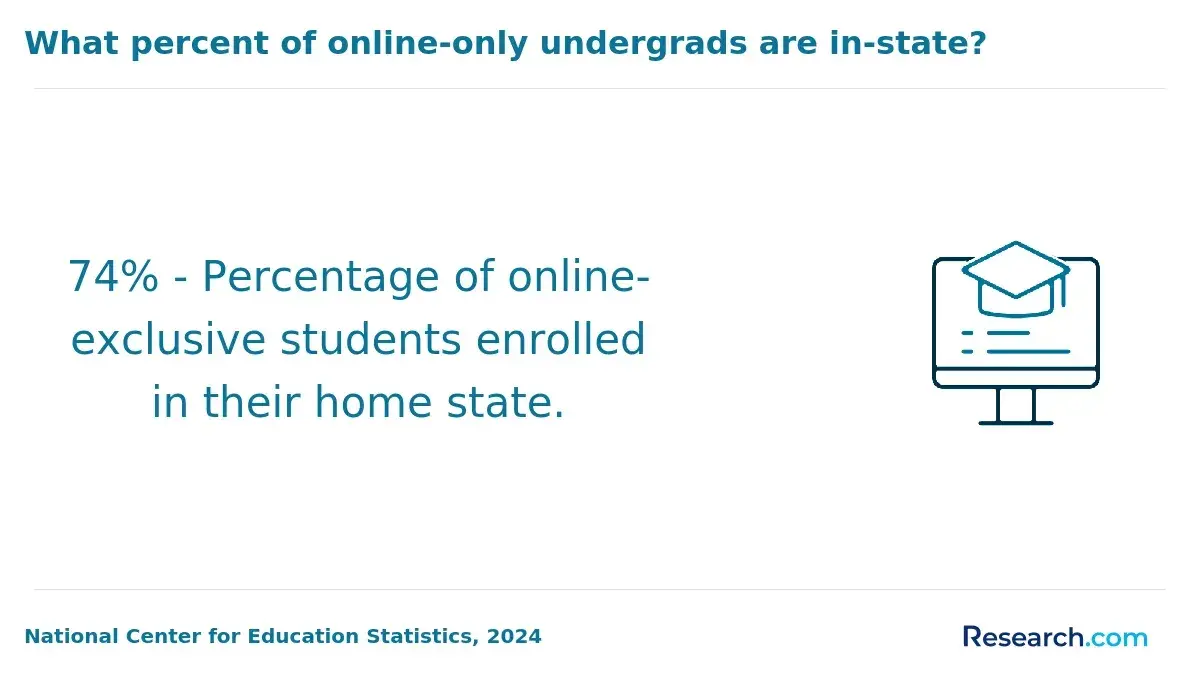
Cost is more variable than many students expect. College Board's 2024-25 data places average published tuition and fees at $11,610 for in-state students at public four-year institutions and $43,350 at private nonprofit four-year institutions. Those figures are not photography-specific and do not include every online fee, but they show why net price, transfer credit, and time to completion can change the total investment dramatically.
The table below gives a practical planning view of timelines and cost factors. Use it as a checklist for asking schools for a complete estimate rather than comparing tuition alone.
| Degree level | Common full-time timeline | Common part-time timeline | Major cost factors |
| Certificate | Several months to 1 year | 1 to 2 years | Software, camera gear, course fees, limited financial aid eligibility |
| Associate degree | 2 years | 3 to 4 years | Tuition, general education credits, transfer pathway, equipment |
| Bachelor's degree | 4 years | 5 to 6 years or more | Transfer credits, institutional aid, online fees, capstone costs, software subscriptions |
| Master's degree | 1 to 3 years | 2 to 4 years | Graduate tuition, residency requirements, exhibition or thesis production, portfolio materials |
Students who need flexibility should also compare academic calendars. Some online colleges with frequent start dates may help working adults begin sooner, but faster starts are not automatically cheaper or better. Always check withdrawal deadlines, refund rules, course load expectations, and whether accelerated terms compress studio assignments into an unrealistic schedule.
To reduce costs without weakening your education, focus on controllable variables. These steps can make a meaningful difference before you commit.
- Request a written transfer credit evaluation before enrolling, especially if you have community college or prior art coursework.
- Compare net price after grants and scholarships, not just published tuition.
- Ask whether required software is included, discounted, or paid separately.
- Choose gear strategically; many programs accept entry-level interchangeable-lens cameras if they meet technical requirements.
- Confirm whether portfolio, printing, cloud storage, exhibition, or graduation fees are required.
- Avoid taking unnecessary electives that do not support your portfolio or degree audit.
The cheapest program is not always the best value if it lacks critique, career support, or portfolio depth. The most expensive program is not automatically better either. The best financial choice is the program that helps you produce market-ready work at a total cost you can justify under realistic earning conditions.
What careers can you pursue with an online digital photography degree in visual storytelling?
An online digital photography degree can support several creative career paths, but most graduates build careers by combining photography with adjacent skills such as editing, video, design, marketing, writing, production, or client management. The degree is rarely a single-job ticket; it is a foundation for a portfolio-based creative career.
The table below connects common roles with the kind of work they involve. It also shows why students should choose courses and portfolio projects that match a specific market.
| Career path | Typical responsibilities | Portfolio evidence employers or clients may expect |
| Commercial photographer | Create images for products, brands, advertisements, catalogs, and campaigns | Product lighting, consistency, retouching, brand-aligned image sets |
| Portrait or event photographer | Photograph individuals, families, weddings, corporate events, or community events | Client galleries, low-light work, posing, editing consistency, testimonials |
| Editorial or documentary photographer | Produce visual stories for publications, nonprofits, newsrooms, or advocacy groups | Photo essays, captions, ethical storytelling, sequencing, field projects |
| Digital content producer | Create photo, short-form video, and social assets for brands or organizations | Campaign samples, platform-specific content, basic video edits, analytics awareness |
| Photo editor or retoucher | Select, edit, color-correct, retouch, archive, and prepare images for publication | Before-and-after editing samples, workflow documentation, color control |
| Visual media entrepreneur | Run a photography business, manage clients, price services, and market work | Portfolio site, packages, client process, contracts, business branding |
Visual storytelling also appears in specialized settings such as sports, healthcare, education, real estate, travel, public relations, and nonprofit communications. A student interested in sports media, for example, might combine action photography and video with data-aware storytelling; that path is different from becoming a sport analyst, but both fields reward people who can interpret events clearly for an audience.
Students should think in terms of entry points and advancement. A realistic path may begin with assistant work, second-shooting, campus media, internships, content internships, ecommerce production, or freelance assignments. Advancement usually comes from a stronger portfolio, reliable client delivery, referrals, specialization, and the ability to produce both still and motion content.
This degree may be a strong fit if you enjoy independent production, visual problem-solving, deadlines, critique, and portfolio-building. It may be a poor fit if you want guaranteed employment, dislike self-promotion, or are uncomfortable with variable freelance income. For many students, the smartest strategy is to build a flexible skill stack: photography plus video, editing, design, writing, marketing, or business operations.
What are typical salaries for digital photography and visual storytelling professionals?
Salaries in digital photography vary widely because many professionals are self-employed, freelance, part-time, or paid by project. Location, client type, specialization, portfolio quality, business skill, and ability to deliver video or campaign assets can all affect income. BLS data is useful as a baseline, but it should not be read as a promise of what any individual graduate will earn.
The table below uses U.S. Bureau of Labor Statistics May 2024 wage data for closely related occupations. Some visual storytelling jobs do not map perfectly to one BLS category, so use these figures as reference points when comparing career directions.
| Occupation | May 2024 median annual wage | How it relates to digital photography |
| Photographers | $42,520 | Closest direct category for still photography roles across commercial, portrait, news, and other settings |
| Film and video editors and camera operators | $67,130 | Relevant for students adding motion storytelling, production, and editing skills |
| Graphic designers | $61,300 | Relevant for visual storytellers who combine photography with layout, brand, and digital design |
| Art directors | $111,040 | Relevant as an advanced leadership path requiring strong creative judgment and experience |
The salary takeaway is clear: photography alone can be competitive, especially for beginners, but hybrid skills may expand options. Students who can shoot, edit, manage assets, understand branding, produce short videos, and communicate with clients are often better positioned than students who only build a narrow still-image portfolio.
When estimating return on investment, compare expected debt against conservative entry-level income, not only median wages. New photographers may start with assistant roles, hourly production work, internships, or smaller freelance assignments before building a full client base. A lower-cost accredited program plus strong portfolio development can sometimes be more financially sensible than a high-cost program with limited career support.
How strong is the job outlook and industry demand for digital photography careers?
The job outlook for photography is stable but competitive. BLS projects 4% employment growth for photographers from 2024 to 2034, which indicates continued demand but not a rapidly expanding market. For students, that means the degree should be paired with a clear niche, strong portfolio, and marketable digital production skills.
Demand is shifting rather than disappearing. Organizations still need original images for ecommerce, websites, social media, fundraising, internal communications, events, real estate, journalism, education, and brand storytelling. At the same time, smartphones, stock libraries, templates, and AI-generated visuals have made basic image production easier to access. The result is a market where routine work can be price-sensitive, while high-trust, high-skill, and story-driven work remains more defensible.
Several current trends should influence how students choose a program and build a portfolio. These trends are practical because they affect what clients and employers may ask you to produce.
- Short-form video is increasingly bundled with photography services, especially for brands, events, nonprofits, and social media teams.
- AI-assisted editing can speed up selection, masking, retouching, and background work, but editorial and commercial clients may require disclosure or restrictions.
- Authenticity and trust matter in documentary, news, nonprofit, and public-facing work, making ethics and caption accuracy important professional skills.
- Remote and hybrid work have increased the need for digital asset management, cloud collaboration, and clear file delivery workflows.
- Small businesses often prefer creators who can provide a complete package: photos, reels, basic graphics, captions, and campaign-ready exports.
The strongest employment strategy is to avoid being a generic beginner. Build a portfolio around a marketable use case, such as product photography for local makers, documentary stories for nonprofits, portraits for professionals, sports action packages, food photography for restaurants, or visual content for education and healthcare organizations.
How can you evaluate and choose a reputable, accredited online digital photography program?
Choosing a reputable online digital photography program requires more than reading rankings or comparing tuition. The right program should be accredited, transparent, portfolio-focused, technically current, and aligned with the kind of visual storytelling career you want. Because photography careers are portfolio-driven, weak feedback and shallow assignments can be costly even if tuition looks affordable.
Start with accreditation. In the U.S., institutional accreditation is the baseline signal that a college meets recognized academic standards and may participate in federal financial aid if otherwise eligible. Programmatic accreditation or art/design recognition can add value in some contexts, but it does not replace the need to verify the institution itself.
Use the following evaluation steps before you apply. They are designed to help you compare programs on quality, cost, and career fit.
- Verify institutional accreditation through the school and the U.S. Department of Education's recognized accreditation resources.
- Request the full curriculum map and confirm that photography courses include original shooting, critique, revision, and portfolio milestones.
- Ask for a complete cost estimate that includes tuition, fees, software, equipment, storage, printing, travel, and graduation expenses.
- Review faculty profiles for professional photography, editing, commercial, documentary, fine-art, or media experience that matches your goals.
- Ask whether online students receive live critique, office hours, career advising, internship support, and portfolio reviews.
- Check transfer credit rules, residency requirements, minimum grades, and whether credits are likely to transfer if you later change schools.
- Compare student work, capstone expectations, alumni outcomes, and employer-facing portfolio support.
Also watch for red flags. A school may not be the right fit if it avoids direct answers about accreditation, pressures you to enroll immediately, will not provide total cost information, promises unrealistic job outcomes, or treats portfolio development as optional. Be especially careful with programs that rely heavily on software tutorials but provide little faculty critique or professional context.
The best choice is usually the program that matches your target role, gives you repeated expert feedback, helps you finish with a coherent portfolio, and keeps debt manageable. If two programs look similar, choose the one with stronger transfer policies, clearer course expectations, more relevant faculty, and better support for internships or real-world projects.
Other Things You Should Know About Digital Photography
Most online digital photography degree programs in 2027 do not require a photography portfolio from beginners. They typically offer foundational courses to develop skills, allowing students to build their portfolios over time. Always check the specific admissions requirements of each program for detailed information.
Policies vary by school and assignment. Some instructors allow AI-assisted editing for workflow tasks, while others restrict generative changes that alter documentary truth or authorship. Always follow the program's academic integrity and disclosure rules.
Most programs require a laptop or desktop with at least 16 GB RAM, a recent processor, and reliable internet for video classes and file uploads. Students usually need Adobe Photoshop and Lightroom, plus a calibrated monitor and external storage for large RAW image files.
References
- Digital Photography - The International College of Creative Arts (ICCA) https://collegeofartslagos.com/certificates/course-digital-photography/
- Is Photography a Good Career in 2026? Scope, Jobs & Salary Guide https://www.hamstech.com/hamstech-blog/is-photography-good-career-in-2026
- Online Photography Degrees | Photography Programs & Courses https://www.onlinecolleges.net/degrees/photography/
- What Can You Do With a Photography Degree? https://pnca.willamette.edu/academics/bfa/photography/career-options
- Photography Jobs Outlook 2026: Is Studying Photography Still a Good Career Investment? https://www.baph.co.uk/blog/photography-jobs-outlook-2026--is-studying-photography-still-a-good-career-investment-
- Professional photographer: how much do they earn and how to become one https://www.ied.edu/profession/photographer
- Industries & Fields - Vault https://vault.com/industries/photography/industry-outlook
- Best Online Photography Degrees https://www.onlineu.com/degrees/photography
- The 8 Best Online Photography Classes | ProGrade Digital https://progradedigital.com/the-8-best-online-photography-classes/
- What's the Outlook for Photographer Jobs? | All Art Schools https://www.allartschools.com/photography/outlook-photography-jobs/