2027 Online Digital Photography Degrees for Students Who Want Freelance and Studio Career Paths

Co-Founder and Chief Data Scientist
Choosing an online digital photography degree is really a decision about career fit, portfolio growth, and return on investment. The U. S. Bureau of Labor Statistics projects photographer employment to grow 4% from 2024 to 2034, so opportunity exists, but competition and income variation remain real.
This guide is for students who want freelance, portrait, commercial, product, event, or studio-based careers. You will learn how online programs work, what they cost, which credentials matter, and how to compare schools before enrolling.
Key Things You Should Know
- Online digital photography programs can work well for freelance and studio goals if they include portfolio reviews, lighting assignments, image editing, business training, and access to faculty critique rather than only self-paced tutorials.
- The BLS lists $42,520 as the median annual wage for photographers in 2024, but freelance income can vary widely based on specialty, market, client base, pricing, and business skills.
- For 2024-25, the College Board reported average published tuition and fees of $4,050 at public two-year colleges, $11,610 for in-state public four-year colleges, and $43,350 at private nonprofit four-year colleges, making credential type and transfer credit major cost decisions.
What is an online digital photography degree and how does it prepare you for freelance and studio careers?
An online digital photography degree is a college credential that teaches camera operation, lighting, composition, digital workflow, post-production, visual storytelling, and professional presentation through remote coursework. Unlike a short tutorial course, a degree usually combines technical training with critique, art history, communication, business practices, and a portfolio sequence that helps students show consistent, client-ready work.
For freelance and studio paths, the most useful programs connect creative skill with commercial execution. A photographer may need to plan shoots, direct subjects, manage files, edit images, deliver galleries, price services, negotiate usage rights, and maintain client relationships. A degree can help by giving students repeated project cycles: concept, production, editing, critique, revision, and presentation.
The best fit is usually a student who wants structured feedback, a credential for employment or transfer, and enough time to build a portfolio. It may be less useful for someone who already has a strong client base, needs only one software skill, or can learn more efficiently through a targeted certificate, apprenticeship, or workshop.
Students should look for programs that develop both creative and business competencies. The following areas matter most because freelance and studio photographers are often judged by final images, reliability, workflow, and client experience rather than by the credential alone.
- Technical control: Exposure, lenses, color, lighting ratios, studio setup, tethered shooting, file formats, and print or web output.
- Visual direction: Composition, concept development, posing, styling, narrative, mood boards, and image sequencing.
- Digital production: RAW processing, retouching, asset management, color correction, backup workflows, and delivery formats.
- Professional practice: Pricing, contracts, releases, copyright basics, client communication, invoicing, marketing, and portfolio presentation.
In practical terms, the degree is not a shortcut to automatic bookings. It is a structured environment for building a portfolio, professional habits, and a clearer specialty. Students who treat every assignment as a future portfolio piece tend to get more value than students who complete assignments only for grades.
How do online digital photography programs compare with campus-based options for hands-on training?
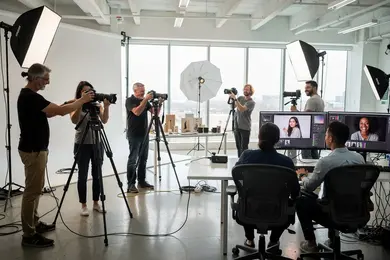
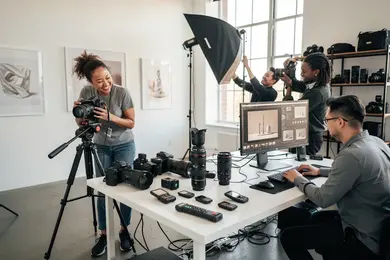
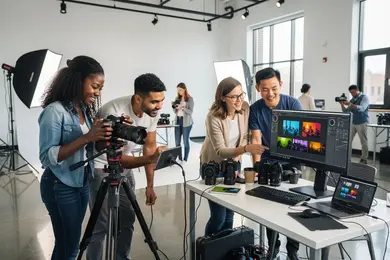
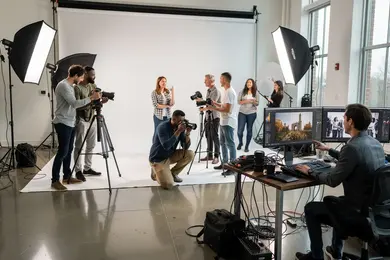
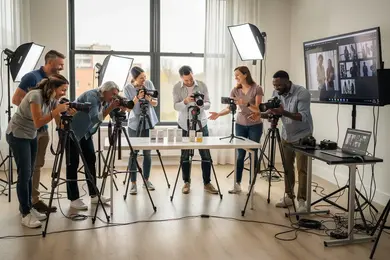
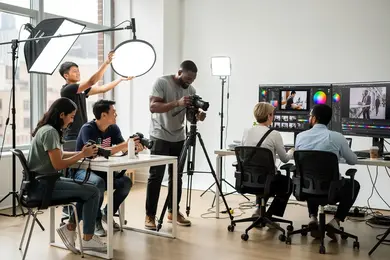
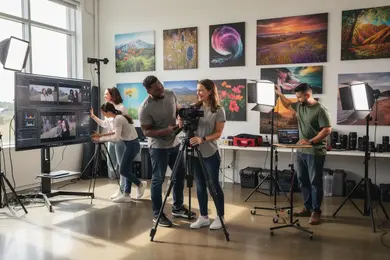
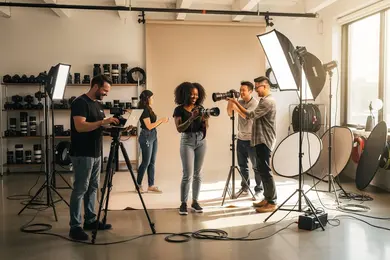
Online digital photography programs can be surprisingly hands-on because students use their own cameras, lighting kits, spaces, and local subjects. The main difference is where supervision happens. Campus programs provide shared studios and immediate in-person critique, while online programs require students to create shooting conditions at home, rent local studio time, or use community locations.
The comparison below shows where online and campus formats differ most. This matters because photography is a practice-based field, and the learning format should match how much structure, equipment access, and peer interaction you need.
| Training factor | Online digital photography degree | Campus-based photography program | Best fit |
| Studio access | Students usually build a home setup, use portable lights, or rent local studio space. | Students may access school studios, lighting labs, darkrooms, printers, and equipment cages. | Campus may be better if you need expensive shared equipment. |
| Critique | Critiques often happen through uploaded galleries, video feedback, live sessions, and discussion boards. | Critiques usually happen in person with immediate peer and faculty discussion. | Online works if feedback is detailed and frequent; campus works if you learn best face-to-face. |
| Scheduling | More flexible for working adults, parents, military-connected students, and freelancers with irregular hours. | More fixed schedules, but easier access to scheduled labs and collaborative shoots. | Online is better for flexibility; campus is better for immersion. |
| Networking | Networking depends on virtual critique groups, local assisting, internships, and self-directed outreach. | Networking may happen through classmates, visiting artists, campus exhibitions, and local employers. | Campus may offer easier built-in networks; online students must be proactive. |
| Portfolio development | Can be strong when assignments require real shoots, revision, and professional presentation. | Can be strong when students use labs, exhibitions, and faculty mentorship consistently. | Either format can work if the program requires a capstone portfolio. |
Online is usually the smarter choice when you already have access to basic gear, need schedule flexibility, and can find local subjects or clients for assignments. Campus may be worth the commute or higher living cost when you need a controlled studio environment, advanced printing labs, in-person collaboration, or direct access to faculty and equipment.
A common mistake is assuming "online" means "less practical." The more important question is whether the program requires original photo shoots, live or recorded critiques, revisions, and final portfolio work. If assignments can be completed only by watching videos and taking quizzes, the program may not provide enough hands-on preparation for studio or freelance work.
Which accreditation and institutional quality indicators matter most for online digital photography degrees in the U.S.?
For U.S. students, institutional accreditation is the first quality check. A school should be accredited by an agency recognized by the U.S. Department of Education or the Council for Higher Education Accreditation. This matters because accreditation can affect federal financial aid eligibility, transfer credit, employer confidence, and admission to future degree programs.
Photography programs do not typically lead to state licensure in the way nursing, teaching, or counseling programs do. That makes institutional quality indicators especially important. In addition to accreditation, students should review evidence that the program can actually support portfolio-based career preparation.
Use the indicators below as a screening checklist before speaking with admissions. They help separate reputable online photography degrees from programs that may be visually appealing but weak in student support, transparency, or outcomes.
- Recognized institutional accreditation: Confirm the accreditor through official databases, not only the school's marketing page.
- Clear program outcomes: Look for portfolio requirements, capstone expectations, internship options, exhibition opportunities, and examples of student work.
- Faculty relevance: Review whether instructors have current professional photography, studio, editorial, commercial, fine art, or imaging experience.
- Transparent tuition and fees: Ask for total program cost, technology fees, software costs, equipment expectations, and whether tuition differs for out-of-state online students.
- Student support: Prioritize programs with academic advising, career services, library access, tutoring, disability services, and technical support for online learners.
- Transfer and articulation policies: If you may continue from a certificate to an associate or bachelor's degree, confirm how credits apply before enrolling.
Specialized art and design accreditation, such as National Association of Schools of Art and Design review, can be a positive signal for some programs, but it is not a universal requirement for photography careers. Employers and clients are more likely to evaluate your portfolio, reliability, and professional references. Still, specialized accreditation or external review can indicate that the curriculum, faculty, facilities, and assessment practices have undergone discipline-specific evaluation.
Red flags include vague accreditation claims, pressure to enroll quickly, no public tuition details, no portfolio sequence, no faculty biographies, and promises of guaranteed freelance income. Photography careers are market-dependent, so no school can honestly guarantee a specific salary, booking volume, or client base.
What types of digital photography degrees and certificates are available online for different career goals?
Online digital photography credentials range from short certificates to bachelor's degrees. The right choice depends on whether your goal is to start booking clients, transfer to a four-year program, pursue studio employment, or build a broader creative career in visual media.
The table below compares common credential levels. It is useful because the least expensive option is not always the best option, and the longest degree is not always necessary for every photography career goal.
| Credential | Typical focus | Common length | Best for | Trade-off |
| Certificate in digital photography | Camera basics, editing, lighting, and portfolio starter projects. | A few months to one year. | Beginners, hobbyists moving toward paid work, or working adults needing focused skills. | May not carry as much transfer value or general education depth. |
| Associate degree | Technical photography, digital imaging, composition, business basics, and general education. | About two years full time. | Students seeking an affordable college credential or transfer pathway. | May offer fewer advanced electives than a bachelor's program. |
| Bachelor's degree | Advanced studio practice, visual culture, portfolio development, business, electives, and capstone work. | About four years full time, less with transfer credit. | Students seeking broader creative roles, teaching-adjacent opportunities, art direction pathways, or graduate study preparation. | Higher total cost and longer time commitment. |
| Post-baccalaureate or professional certificate | Specialized portfolio refinement, editing, commercial workflow, or a niche such as portrait, product, or documentary photography. | Varies by school. | Career changers who already hold a degree or professionals adding a new specialty. | May not qualify for the same aid options as degree programs. |
A certificate can make sense if you want to test the field, learn Lightroom or Photoshop workflows, or start a small portrait or event business. An associate degree may be the value choice if you want a structured credential without committing to a four-year cost. A bachelor's degree is often more appropriate if you want deeper conceptual development, a stronger liberal arts base, or a pathway into creative leadership roles.
Photography also overlaps with adjacent visual fields. Students who are more interested in interactive media, 3D environments, or entertainment design may want to compare photography with a game design and development degree, because the career outcomes, software tools, and portfolio expectations can be very different.
What core courses and specialized electives are typically included in an online digital photography curriculum?
A strong online digital photography curriculum should move from technical control to intentional image-making and professional presentation. Introductory courses build camera and editing fundamentals, while advanced courses should push students into consistent visual style, client scenarios, and portfolio-ready bodies of work.
Most programs combine core requirements with electives. The core creates a common foundation, while electives help students align their portfolio with freelance, studio, commercial, editorial, or fine art goals.
| Curriculum area | Typical courses | Why it matters for freelance and studio careers |
| Camera and exposure fundamentals | Digital camera operation, lenses, exposure, metering, focus, and image capture. | Clients expect consistent technical quality across different lighting and shooting conditions. |
| Lighting | Natural light, studio lighting, flash, modifiers, product lighting, and portrait lighting. | Lighting skill is central to portrait, product, fashion, food, and studio photography. |
| Digital workflow | RAW processing, file management, retouching, color correction, printing, and output. | Efficient workflow protects client files and improves turnaround time. |
| Visual communication | Composition, storytelling, art history, design principles, and image sequencing. | Strong visual decision-making separates portfolio work from technically correct snapshots. |
| Business and professional practice | Contracts, copyright, client relations, pricing, marketing, and portfolio development. | Freelancers need business systems as much as creative skill. |
| Capstone or portfolio | Final portfolio, exhibition, website, artist statement, or professional presentation. | A polished portfolio is often the most important job-search or client-acquisition asset. |
Specialized electives are where students should be strategic. A future product photographer needs different assignments than a wedding photographer, and a studio portrait photographer needs different practice than a documentary or sports photographer.
- Portrait and headshot photography: Useful for studio, family, senior, personal branding, actor, and corporate clients.
- Commercial and product photography: Useful for e-commerce, advertising, food, beverage, catalog, and small business clients.
- Event and wedding photography: Useful for students who can manage fast timelines, client communication, low-light scenes, and high-volume editing.
- Editorial and documentary photography: Useful for storytelling, journalism-adjacent work, nonprofit projects, and long-form visual narratives.
- Retouching and digital imaging: Useful for studio assistants, post-production roles, product work, fashion, and portrait finishing.
- Video and multimedia: Useful because many clients now ask photographers to provide short-form video, reels, behind-the-scenes clips, or hybrid visual packages.
AI is also changing the curriculum conversation. Students should not choose a program that ignores generative imaging, AI-assisted culling, automated masking, content authenticity, and ethical disclosure. Photographers who understand both creative authorship and emerging tools may be better prepared for changing client expectations. Students more interested in machine learning research than image production may eventually explore an online PhD in AI, but that is a different academic path from professional photography training.
What are the typical admission requirements for online digital photography programs?
Admission requirements for online digital photography programs vary by credential level. Certificates may have open or simplified admissions, while associate and bachelor's programs usually require standard college application materials. Portfolio requirements are more common in selective bachelor's, art school, or upper-division programs.
The following requirements are typical, but students should confirm details with each school. Requirements can differ based on whether the program is housed in a community college, public university, private nonprofit institution, or specialized art and design school.
- High school diploma or equivalent: Most undergraduate programs require proof of completion through transcripts or an approved equivalency credential.
- Application form and fee: Some community colleges and online programs keep this process simple, while selective schools may require more materials.
- Transcripts: Transfer students should submit all prior college transcripts so the school can evaluate credit and reduce duplicate coursework.
- Portfolio: Some programs ask for a sample of images to assess readiness, but many beginner-friendly programs do not require professional-level work.
- Personal statement: Applicants may be asked to explain creative interests, career goals, or reasons for choosing online study.
- Technology readiness: Students may need a reliable computer, internet access, camera, editing software, storage, and sometimes specific operating system requirements.
A portfolio requirement should not automatically discourage beginners. Schools that request a portfolio often want to see potential, curiosity, and commitment, not a fully developed professional brand. If you are applying with limited experience, choose a small set of your strongest images, avoid repeating similar shots, and write clearly about what you were trying to achieve.
Students with prior credits should pay close attention to transfer policies. A program that accepts general education, art, business, or digital media credits can reduce both time and cost. Ask whether transfer credits apply directly to the major, only to electives, or only to general education requirements.
How long do online digital photography degrees take, and what tuition and fees should you expect?
Program length depends on credential level, enrollment intensity, transfer credit, and whether courses are offered in accelerated terms or traditional semesters. A certificate may be completed in less than a year, an associate degree often takes about two years full time, and a bachelor's degree commonly takes about four years full time. Part-time students should expect a longer timeline.
Cost varies widely, so students should compare total cost rather than tuition alone. For 2024-25, the College Board reported these average published tuition and fee benchmarks, which can help you understand the broad price landscape before comparing specific schools.
- Public two-year college tuition and fees: $4,050 per year on average for in-district students.
- Public four-year college tuition and fees: $11,610 per year on average for in-state students.
- Private nonprofit four-year college tuition and fees: $43,350 per year on average.
Those figures are not photography-specific and do not include every possible expense, but they show why credential level and institution type matter. A student who completes lower-division credits at a community college and transfers may spend much less than a student who completes all four years at a private institution.
The table below summarizes common time and cost drivers. It helps you identify which expenses are predictable and which ones depend heavily on your program, equipment choices, and local market.
| Cost or timeline factor | What to check | Why it matters |
| Enrollment pace | Full-time, part-time, asynchronous, synchronous, or accelerated options. | Faster programs may reduce time away from higher-earning work, but heavier course loads can limit shoot time. |
| Transfer credit | Maximum transferable credits and how they apply to the major. | Transfer credit can reduce tuition, but only if credits count toward degree requirements. |
| Equipment | Camera body, lenses, tripod, lighting, color tools, storage, and backup drives. | Photography costs can rise quickly if the program requires specific gear. |
| Software | Adobe Creative Cloud, capture software, portfolio platforms, and cloud storage. | Subscriptions can become recurring costs beyond tuition. |
| Studio access | Home setup, rental studio, campus intensives, or local lab fees. | Studio work may require space, backgrounds, lights, and insurance considerations. |
| Portfolio and printing | Website hosting, prints, books, exhibitions, and final portfolio presentation. | Graduating with a strong portfolio may require costs not included in base tuition. |
Financial aid may be available if the institution and program are eligible for federal aid. Students should complete the FAFSA, ask about scholarships for art or design students, and compare net price after grants rather than relying only on sticker price. The maximum federal Pell Grant for the 2024-25 award year was $7,395, which can be meaningful for eligible students but may not cover all costs.
One common cost mistake is buying expensive equipment before reading the program's official gear list. A better approach is to start with required equipment, rent or borrow specialty lenses when possible, and upgrade only when your portfolio direction makes the investment practical.
What freelance, studio, and related job roles can you pursue with an online digital photography degree?
An online digital photography degree can support several freelance, studio, and related visual roles. The degree itself is rarely the only hiring factor; employers and clients typically evaluate portfolio quality, dependability, communication, editing skill, and whether your style fits their needs.
The table below connects common roles with responsibilities and portfolio priorities. Use it to decide whether your program's assignments match the work you actually want to do.
| Role | Typical responsibilities | Portfolio evidence to build |
| Freelance portrait photographer | Plan sessions, direct clients, manage lighting, edit galleries, sell packages, and maintain client communication. | Consistent portraits across ages, skin tones, lighting conditions, and locations. |
| Studio photographer | Use studio lighting, backgrounds, props, tethered capture, and controlled workflows for portraits or products. | Clean lighting setups, repeatable style, product accuracy, and polished retouching. |
| Wedding or event photographer | Document fast-moving events, coordinate timelines, manage low light, back up files, and deliver large galleries. | Full event stories, not only highlight images, with examples from preparation through reception or closing moments. |
| Product or e-commerce photographer | Create accurate and appealing images for online stores, catalogs, advertisements, and social commerce. | White-background products, lifestyle product scenes, detail shots, and consistent color. |
| Photo editor or retoucher | Select images, correct color, retouch portraits or products, prepare files, and maintain brand consistency. | Before-and-after edits, natural skin work, compositing examples, and organized workflows. |
| Studio assistant or digital tech | Set up equipment, manage files, assist lighting, troubleshoot tethering, and support lead photographers. | Technical competence, behind-the-scenes setup knowledge, and software workflow examples. |
| Content creator or visual marketing specialist | Create photo and short-form visual assets for brands, campaigns, websites, and social platforms. | Campaign-style image sets, brand consistency, basic analytics awareness, and multimedia samples. |
Freelance paths require more business development than many students expect. A freelancer may spend as much time on proposals, emails, invoices, social media, website updates, bookkeeping, and client follow-up as on shooting. Students interested in brand campaigns, paid social media, or client acquisition may also compare photography training with the MS in digital marketing degree cost USA to understand how marketing education differs from visual production training.
Studio employment can be more structured, especially for assistants, retouchers, product photographers, school portrait companies, media teams, and e-commerce departments. These roles may offer steadier workflows than freelancing, but they may also require meeting production targets, following brand standards, and working under an art director or lead photographer.
The strongest students build career evidence while enrolled. That means photographing real subjects, assisting local professionals, documenting behind-the-scenes setups, creating a clean website, and seeking critique from people who understand the specialty they want to enter.
What are the salary ranges and earning potential for freelance and studio photographers in the U.S.?
Photography earning potential varies more than many degree fields because a large share of workers are self-employed, part time, project based, or seasonal. The BLS listed $42,520 as the median annual wage for photographers in 2024. That median is useful as a national baseline, but it does not predict what a new freelancer will earn in a specific city, niche, or client segment.
Use salary data as a planning tool, not a promise. The table below summarizes how earning potential often differs by work setting and what usually drives variation.
| Career setting | Typical earning pattern | Main factors that affect income |
| Entry-level studio assistant | Often hourly or salaried, with pay tied to local employer budgets and technical responsibilities. | Lighting knowledge, file management, reliability, software skill, and local studio demand. |
| Employed photographer | May provide steadier income than freelancing, though creative control can be narrower. | Industry, geography, employer size, production volume, and portfolio match. |
| Freelance portrait or event photographer | Can fluctuate by season, referrals, booking volume, package pricing, and client retention. | Local market, branding, reviews, sales process, editing speed, and repeat clients. |
| Commercial or product photographer | May command higher project rates when serving businesses with recurring image needs. | Client type, licensing terms, studio capability, styling, retouching, and usage rights. |
| Retoucher or digital imaging specialist | May be freelance, contract, or staff-based, with pay linked to technical quality and turnaround time. | Software expertise, consistency, speed, specialization, and ability to follow creative direction. |
For students evaluating ROI, the key question is not simply whether photographers can earn a living. The better question is whether the program helps you build a portfolio and business model that fit a paying market. A low-cost certificate may have strong ROI if it helps you book local clients quickly, while a bachelor's degree may make more sense if you want broader creative employment, leadership potential, or future graduate study.
New freelancers should be especially cautious with revenue assumptions. Gross booking revenue is not take-home income. Business expenses may include equipment, insurance, editing software, website hosting, taxes, marketing, accounting, second shooters, transportation, studio rental, and replacement gear. A realistic plan should estimate both revenue and expenses before taking on debt for a program.
Technology is also affecting earning potential. AI-assisted editing can speed up culling, masking, noise reduction, and background cleanup, but it also raises client questions about authenticity and originality. Photographers who can combine efficient tools with strong direction, lighting, client experience, and ethical disclosure may be better positioned than those competing only on basic image output.
How can you choose a reputable online digital photography program aligned with your career plans?
Choosing a reputable online digital photography program starts with your intended career path. A student aiming for wedding photography needs event storytelling and business training, while a student aiming for product photography needs studio lighting, color accuracy, and commercial workflow. Program selection should begin with the portfolio you want to graduate with.
Follow these steps before enrolling. They are designed to help you compare programs on career fit, total cost, academic quality, and practical support rather than relying only on advertising or rankings.
- Define your target specialty, such as portrait, wedding, product, editorial, retouching, or studio assisting.
- Confirm recognized institutional accreditation through official accreditation databases.
- Request the full curriculum and identify where lighting, editing, business practice, critique, and portfolio development appear.
- Ask whether assignments require original shoots, resubmissions after critique, and a final portfolio or capstone.
- Review faculty portfolios, professional experience, and whether instructors are active in relevant photography markets.
- Calculate total cost, including tuition, fees, camera gear, lenses, lighting, software, storage, printing, and website costs.
- Ask how transfer credits are evaluated and whether prior learning or professional experience can reduce requirements.
- Review student work examples to see whether graduates produce images similar in quality and specialty to your goals.
- Ask career services how they support portfolio reviews, internships, assisting opportunities, freelance business setup, and alumni networking.
- Compare at least three programs before committing, and avoid enrolling during a high-pressure admissions call.
The strongest program is not always the most expensive or the most prestigious. It is the one that gives you enough critique, technical development, business preparation, and portfolio evidence for your intended market at a cost you can reasonably manage.
Students with military benefits, transfer credits, or complex scheduling needs should ask extra questions about credit evaluation, online support, and benefit certification. Similar comparison habits are useful across online fields; for example, students researching online electrical engineering degree programs for veterans often need to verify accreditation, benefits processing, transfer credit, and remote student services before enrolling.
Common mistakes include choosing a program only because the sample images look impressive, ignoring the total cost of gear, assuming a degree will automatically bring clients, and failing to check whether the curriculum matches your desired specialty. A better approach is to work backward from your first paid role or client niche, then choose the credential that helps you build the right proof.
Other Things You Should Know About Digital Photography
Not always. Many beginner courses allow an entry-level mirrorless or DSLR camera, but you should wait for the official equipment list before buying. Lenses, lighting, storage, and software can matter as much as the camera body.
Some introductory or visual storytelling assignments may allow smartphone images, but degree programs usually expect students to learn manual camera controls and professional workflows. Ask the program what equipment is required for upper-level courses.
In 2027, photography students pursuing freelance or studio careers should assess business structures, potentially requiring a license or permit depending on their location and scale. Ensure compliance with tax regulations, copyright laws, and contracts to maintain a professional operation.
Most online digital photography degrees require at least 6 to 9 credit hours in post-production tools such as Adobe Photoshop and Lightroom. Students also complete assignments in color correction, file management, and workflow organization, which are essential for freelance delivery and studio production standards.
References
- Transforming Accreditation by Centering Students - Center for American Progress https://www.americanprogress.org/article/transforming-accreditation-by-centering-students/
- Digital Photography Program https://coned.georgebrown.ca/courses-and-programs/digital-photography-program
- Learn Photography: Resources, Career Advice & Programs https://www.sessions.edu/digital-photography/
- Should you Study Photography at College or are There Better Options Now? https://digital-photography-school.com/should-you-study-photography-at-college-or-are-there-better-options-now/
- How Online Professional Photography Course may Help You Become Successful https://www.globaledulink.co.uk/how-taking-a-professional-photography-course-online-may-help-you-become-successful/
- What Is Digital Accreditation? How Online Schools Can Get Accredited in 2025 https://iacde.org/iacde-insights/what-is-digital-accreditation/
- Top 5 reasons to study a photography degree online https://www.falmouth.ac.uk/news/top-5-reasons-study-photography-degree-online
- Photography School, Degree, and Career Guide | All Art Schools https://www.allartschools.com/photography/
- Computer graphic arts - digital photography https://www.starkstate.edu/academics/explore-all-programs/digital-photography-major/
- Diploma in Digital Photography and Photoshop | Free Course | Alison https://alison.com/course/diploma-in-digital-photography