2027 Online Digital Photography Degrees for Students Who Want Long-Term Photography Careers

Co-Founder and Chief Data Scientist
Choosing an online digital photography degree is really a career investment question: will the program build the technical, creative, and business skills needed to earn consistently? The U. S. Bureau of Labor Statistics reported a median annual wage of $42,520 for photographers in May 2024, showing that professional photography can be viable but competitive. This guide is for students comparing online programs, certificates, and degree paths. You will learn how online photography degrees work, what they cost, how to evaluate quality, and which choices best support long-term creative careers.
Key Things You Should Know
- Online digital photography degrees are strongest for students who need flexibility but can still complete regular shooting assignments, critiques, editing projects, and a portfolio-based capstone.
- College Board's 2024 data shows average published tuition and fees of $4,050 at public two-year colleges, $11,610 for in-state public four-year colleges, and $43,350 at private nonprofit four-year colleges for 2024-25, so school type and transfer credits can significantly affect ROI.
- The BLS reported a May 2024 median annual wage of $42,520 for photographers, but earning potential varies widely by niche, client base, location, portfolio quality, business skills, and whether you freelance or work for an employer.
What is an online digital photography degree and how does it prepare you for professional work?
An online digital photography degree is a college program that teaches image-making, lighting, editing, visual storytelling, portfolio development, and the business side of photography through distance-based coursework. Unlike a short hobby course, a degree usually includes general education, structured critiques, sequential studio assignments, and a final portfolio or capstone that demonstrates professional readiness.
The word digital matters because most professional photography now involves the full image pipeline: planning a shoot, capturing files, managing color, editing RAW images, exporting for print or web, archiving assets, and delivering images to clients or employers. A strong online program should therefore train students to think beyond the camera. It should prepare them to solve visual problems for real audiences, not just create technically attractive images.
Students usually choose this degree for one of three reasons: they want to become working photographers, they already do photography informally and want stronger credentials, or they want a visual media role where photography overlaps with marketing, social media, journalism, e-commerce, design, or content production. The degree is most useful when the curriculum produces a portfolio, not just completed credits.
For long-term career preparation, look for programs that combine creative development with employable skills. A degree should help you practice the kinds of work clients and employers actually request, including:
- Camera operation, exposure control, composition, studio lighting, location lighting, and visual problem-solving under real constraints.
- Digital workflow skills such as RAW processing, file management, retouching, color correction, metadata, printing, and web delivery.
- Professional habits, including critique participation, revision, client communication, budgeting, copyright awareness, and portfolio presentation.
- Career-specific projects such as portraits, events, product photography, documentary stories, editorial images, commercial campaigns, or fine-art bodies of work.
An online degree is not automatically better than self-teaching, but it can be more efficient for students who need deadlines, faculty feedback, a credential, and a guided sequence of projects. It may be less appropriate for students who already have a strong portfolio, steady clients, and only need a targeted skill such as lighting, retouching, drone operation, or business pricing.
How do online digital photography programs compare to campus-based options for skill development and networking?
Online photography programs can build strong technical and creative skills, but they require more self-direction than campus-based studio programs. The biggest difference is not whether you can learn photography online; it is how much access you have to equipment, live critique, studio spaces, peers, and local professional networks.
Online programs work best when they are designed around active production rather than passive lectures. A serious online course should require students to shoot, upload work, receive critique, revise images, and document their process. If a program mostly relies on quizzes and readings, it may not provide enough practice for professional development.
The table below compares the practical trade-offs students should weigh before choosing an online or campus-based photography format.
| Decision factor | Online digital photography program | Campus-based photography program |
| Schedule flexibility | Best for working adults, parents, military-connected students, and students far from campus. | Best for students who can attend scheduled studio sessions and critiques. |
| Equipment access | Students may need to own or rent cameras, lenses, lighting, and editing hardware. | Students may have access to campus studios, lighting kits, printers, labs, and checkout equipment. |
| Critique experience | Often asynchronous, with uploaded files, discussion boards, video comments, and recorded reviews. | Often live, with immediate group critique and studio feedback. |
| Networking | Depends on virtual critique groups, alumni access, internships, local shoots, and faculty responsiveness. | Often easier through campus events, visiting artists, peer collaboration, and local creative communities. |
| Best fit | Students who are disciplined, resourceful, and able to build a local shooting network. | Students who want frequent in-person feedback and access to shared facilities. |
One useful way to evaluate online photography is to compare it with other studio-based online fields. For example, an architecture online degree also depends on critiques, portfolio development, software proficiency, and design thinking, which shows that practice-heavy subjects can work online when the program is intentionally structured.
Students considering online photography should avoid one common mistake: assuming flexibility means less time. In a rigorous course, you may spend hours scouting locations, setting up light, reshooting images, editing files, and writing artist statements. Flexibility helps you choose when to work, but it does not remove the need for consistent production.
Which types of digital photography degrees are available online and what careers do they support?
Online photography programs are available at several academic levels, and the right choice depends on your current experience, budget, career goal, and need for a credential. A certificate may be enough for targeted skill-building, while a bachelor's degree may be more useful for students who want broader creative media roles or eventual graduate study.
The table below summarizes common online digital photography credentials and the kinds of outcomes they generally support.
| Program type | Typical focus | Who it fits | Career paths it may support |
| Certificate in digital photography | Camera skills, editing, lighting basics, and portfolio samples. | Beginners, hobbyists turning professional, or working creatives adding photography skills. | Assistant photographer, freelance beginner, social media content creator, product image assistant. |
| Associate degree in photography or visual media | Foundational photography, general education, digital imaging, and early portfolio development. | Students who want an affordable starting point or plan to transfer into a bachelor's program. | Studio assistant, portrait photographer, event photographer, e-commerce imaging technician. |
| Bachelor's degree in photography, digital photography, or visual arts | Advanced portfolio development, visual storytelling, professional practice, art history, and specialized projects. | Students seeking a deeper credential for commercial, editorial, fine-art, education-adjacent, or creative media roles. | Commercial photographer, editorial photographer, photo editor, visual content producer, art studio professional. |
| Master's degree or MFA with photography concentration | Advanced artistic research, critique, exhibition work, theory, and teaching preparation. | Experienced photographers pursuing college teaching, fine-art practice, or advanced creative leadership. | Fine-art photographer, adjunct instructor, curator-adjacent roles, advanced visual artist. |
Photography also overlaps with other digital creative fields. Students interested in immersive visuals, 3D environments, concept art, or interactive media may want to compare photography programs with online colleges for game design, because both paths can use composition, lighting, visual storytelling, and digital asset production.
A degree is usually worth considering if you need structure, feedback, a stronger portfolio, and a credential for broader media roles. A shorter certificate may make more sense if you already have a degree or if your goal is narrowly defined, such as learning studio lighting for portraits or retouching for product photography.
How can you tell if an online digital photography program is properly accredited and reputable?
Accreditation is one of the first quality checks for any online degree. In the United States, institutional accreditation means a recognized accreditor has reviewed the school's academic quality, student support, governance, and financial practices. For students, it can affect federal financial aid eligibility, credit transfer, graduate school options, and employer confidence.
Photography-specific programmatic accreditation is less common than accreditation in fields such as nursing or engineering, so students should focus first on whether the institution is accredited by an agency recognized by the U.S. Department of Education or the Council for Higher Education Accreditation. After that, evaluate the strength of the photography department itself.
Before enrolling, take these practical steps to verify legitimacy and program quality:
- Confirm institutional accreditation through the school's official accreditation page and an independent accreditation database.
- Check whether online students receive the same credential as campus students, especially if the school offers both formats.
- Review faculty portfolios, professional experience, exhibitions, publications, client work, or industry background.
- Ask to see examples of student work, graduate portfolios, exhibitions, publications, or alumni outcomes.
- Verify transfer credit policies, refund policies, technology requirements, and whether courses are taught by faculty or mostly by automated modules.
- Look for student support services such as library access, technical help, career advising, internship guidance, and portfolio review.
Red flags include vague accreditation language, pressure-heavy admissions calls, unclear tuition disclosures, no faculty information, few portfolio examples, and promises of guaranteed jobs or income. Photography careers are portfolio-driven and market-sensitive, so reputable schools should explain opportunities and limitations honestly.
Reputation should also be judged by fit. A prestigious fine-art program may not be the best choice for a student who wants high-volume product photography, while a commercially focused program may not satisfy a student seeking exhibition-based artistic development. The best program is the one whose curriculum, critique culture, technology requirements, and outcomes match your intended career path.
What courses, software, and hands-on projects are typically included in an online digital photography curriculum?
A strong online digital photography curriculum should move from fundamentals to specialized production. Early courses usually teach exposure, composition, file formats, image editing, and visual analysis. Advanced courses should ask students to create coherent projects for specific audiences, markets, or artistic goals.
Most programs require students to use a DSLR or mirrorless camera with manual controls, reliable storage, and a computer capable of running professional editing software. Adobe Lightroom and Photoshop are common, though some programs may also include Capture One, Bridge, InDesign, Premiere Pro, or portfolio website tools. Students should confirm whether software subscriptions are included in tuition or paid separately.
The following areas commonly appear in online photography programs and help build a career-ready portfolio:
- Technical foundations, including manual exposure, lenses, shutter speed, aperture, ISO, white balance, focus, and file management.
- Lighting courses that cover natural light, flash, continuous light, modifiers, reflectors, studio setups, and location constraints.
- Digital imaging courses focused on RAW editing, retouching, color correction, compositing, printing, and image export standards.
- Visual storytelling courses in documentary photography, editorial photography, narrative sequencing, and photo essays.
- Commercial and applied courses such as product, food, fashion, portrait, real estate, event, sports, or e-commerce photography.
- Professional practice courses covering contracts, licensing, copyright, pricing, client communication, branding, marketing, and portfolio presentation.
- Capstone or portfolio courses requiring a polished body of work that can be used for job applications, freelance clients, exhibitions, or transfer review.
Hands-on projects are the heart of the degree. Online students may photograph local businesses, community events, family portrait sessions, products at home, documentary stories in their area, or staged studio-style assignments using portable lighting. The best projects teach planning and revision, not just image capture.
AI-assisted tools are also changing photography education. Generative fill, automated masking, noise reduction, metadata tools, and AI culling can speed up workflows, but students still need ethical judgment. Programs should teach when AI editing is acceptable, how to disclose manipulation when necessary, and how to protect the credibility of documentary, journalistic, and commercial work.
What are the admission requirements, portfolio expectations, and application steps for online photography degrees?
Admission requirements vary by credential level. Certificate and associate programs are often open to beginners, while bachelor's completion programs, BFA programs, and graduate programs may require prior college credit, a portfolio, or evidence of artistic potential. The more advanced the program, the more important the portfolio becomes.
A portfolio does not need to be perfect, especially for entry-level programs. Admissions teams usually want to see curiosity, consistency, visual awareness, and willingness to revise. For more selective programs, the portfolio should show technical control, intentional subject matter, editing judgment, and a point of view.
Students can use the following sequence to prepare a stronger application:
- Identify the credential level you need by comparing your career goal with certificate, associate, bachelor's, and graduate options.
- Review each school's technical requirements, including camera type, computer specifications, software subscriptions, internet speed, and storage needs.
- Prepare a small but focused portfolio that shows your strongest work rather than every style you have tried.
- Write a short statement explaining what you want to photograph, why the program fits, and how you plan to use the degree.
- Request transcripts early, especially if you plan to transfer credits from community college, military training, or prior college coursework.
- Ask admissions whether online students can access portfolio reviews, internships, career services, student exhibitions, and faculty office hours.
Common application materials include an online application, official transcripts, a portfolio or sample images, a personal statement, recommendation letters for some programs, and financial aid documents. Graduate programs may also ask for an artist statement, resume, exhibition record, or interview.
Do not choose a program simply because it admits you quickly. A fast admissions process can be convenient, but it does not prove that the program fits your goals. Ask whether your preferred photography niche is actually supported by courses, faculty expertise, and portfolio examples.
How long do online digital photography degrees take to complete and what do they cost?
Program length depends on degree level, enrollment pace, transfer credits, and whether courses are offered year-round. Certificates may take a few months to one year, associate degrees commonly take about two years of full-time study, and bachelor's degrees often take about four years for first-time students. Bachelor's completion programs can be shorter if you bring transferable credits.
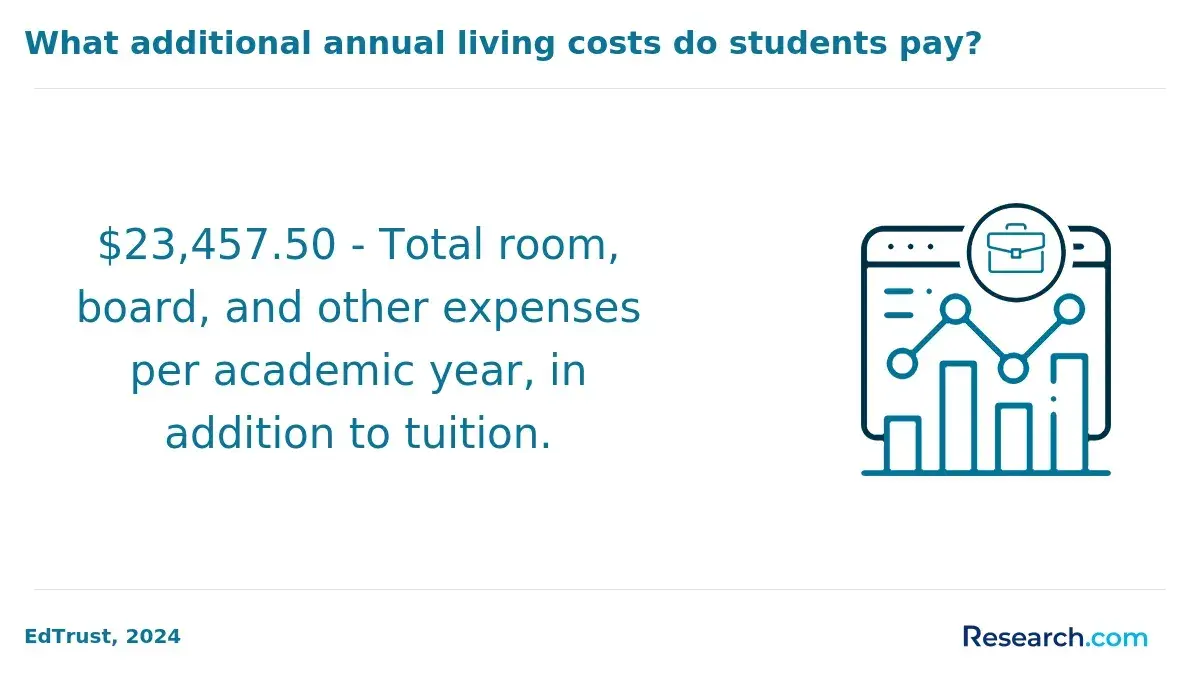
Cost varies widely, so students should compare total cost of attendance rather than tuition alone. College Board's 2024 Trends in College Pricing reported average published tuition and fees of $4,050 at public two-year colleges, $11,610 for in-state students at public four-year colleges, and $43,350 at private nonprofit four-year colleges for 2024-25. Those figures are not photography-specific, but they show why starting at a community college or transferring credits can materially change the investment.
The table below shows common cost drivers that online photography students should include when comparing programs.
| Cost factor | Why it matters | Questions to ask |
| Tuition and fees | This is the largest visible cost, but online fees may vary by school and residency status. | Is tuition charged per credit, per term, or as a flat rate? |
| Camera and lenses | Students may need equipment that supports manual controls and professional file quality. | Can I use existing gear, borrow equipment, or buy used equipment? |
| Lighting and accessories | Studio and portrait assignments may require lights, stands, modifiers, memory cards, and storage. | What equipment is required in the first term versus later courses? |
| Software | Editing software may be required throughout the program. | Are student licenses included, discounted, or paid separately? |
| Printing and portfolio materials | Some courses require physical prints, books, exhibition materials, or portfolio hosting. | Are print labs, discounts, or digital-only alternatives available? |
| Opportunity cost | Time spent studying may reduce paid work hours, especially during intensive project weeks. | Can I study part time without delaying required course sequences too much? |
Students with military benefits, employer tuition assistance, or transfer credits should ask schools to calculate a personalized degree plan before committing. Veterans comparing online creative programs may find it useful to review how benefits and support services are discussed in guides to the best online electrical engineering degree programs for veterans, even though photography has different equipment and portfolio requirements.
To reduce cost without weakening career preparation, prioritize accredited schools, generous transfer policies, transparent equipment lists, and portfolio outcomes. The cheapest program is not always the best value if it lacks critique, career support, or a serious capstone, but the most expensive option is not automatically the strongest either.
What photography careers can you pursue with an online digital photography degree and where do graduates work?
An online digital photography degree can support several career directions, but photography employment is often less linear than careers with formal licensure. Many photographers blend freelance clients, part-time contracts, in-house content work, assistant roles, editing work, and entrepreneurial projects before reaching stable income.
Graduates may work in studios, media companies, marketing departments, universities, hospitals, museums, real estate firms, e-commerce companies, newspapers, nonprofits, government agencies, or their own freelance businesses. The best path depends on the portfolio niche developed during the degree.
The table below connects common photography roles with typical responsibilities and portfolio evidence employers or clients may expect.
| Career path | Typical responsibilities | Portfolio evidence that helps |
| Portrait photographer | Photograph individuals, families, professionals, graduates, performers, or teams. | Consistent lighting, posing, expression, skin-tone handling, and client-ready galleries. |
| Commercial photographer | Create images for brands, advertisements, websites, catalogs, and campaigns. | Product, lifestyle, food, fashion, or branded image sets with clear commercial intent. |
| Event photographer | Cover weddings, conferences, performances, fundraisers, and community events. | Low-light skill, candid storytelling, fast turnaround, and complete event galleries. |
| Photojournalist or documentary photographer | Tell factual stories through images for publications, nonprofits, or public-interest projects. | Ethical storytelling, captions, sequencing, location work, and documentary consistency. |
| Photo editor or digital imaging specialist | Select, retouch, organize, color-correct, and prepare images for publication or commerce. | Before-and-after edits, metadata organization, color accuracy, and workflow samples. |
| Visual content producer | Create photography and related media for social, web, campaigns, and brand storytelling. | Integrated photo, short-form video, layout, and campaign examples. |
Photography careers increasingly reward hybrid skill sets. A photographer who understands branding, analytics, content calendars, and campaign goals may be more useful to employers than someone who only shoots images. Students interested in moving from photography into broader brand strategy or creative leadership may eventually compare visual media experience with a marketing masters, especially if they want management roles rather than full-time shooting work.
The main mistake to avoid is treating the degree as the career plan. The degree should help you build a portfolio, but you still need client outreach, internships, assistant experience, personal projects, referrals, and a clear niche. Long-term photographers usually become known for solving specific visual problems for specific audiences.
What are typical salary ranges and earning potential for digital photographers with formal training?
Photography pay varies more than many degree-based careers because income depends on niche, client budgets, location, employment type, reputation, licensing, usage fees, and business operations. Formal training can improve technical quality and professional readiness, but it does not guarantee a particular income.
The BLS reported a median annual wage of $42,520 for photographers in May 2024. That number is useful as a national benchmark, but students should interpret it carefully: it includes many types of photographers, and it may not reflect freelance income volatility, unpaid business time, equipment expenses, or the higher rates possible in specialized commercial markets.
Several factors can influence earning potential after completing an online photography degree:
- Specialization, because commercial, product, medical, real estate, event, fine-art, and editorial photography can have very different pricing models.
- Business structure, since freelancers must price for taxes, insurance, equipment replacement, marketing, editing time, and non-billable administrative work.
- Location and client base, because local demand and regional business budgets affect rates.
- Portfolio strength, especially whether the work matches the exact niche a client or employer needs.
- Additional skills such as retouching, video, lighting design, drone operation, social media production, art direction, or digital asset management.
Students should evaluate salary potential by researching local job postings, freelance rate norms, alumni outcomes, and the types of clients they want to serve. A school that teaches pricing, contracts, copyright, and client communication may provide stronger long-term value than a program that focuses only on image aesthetics.
For ROI, compare expected debt with realistic early-career income. If you need to borrow heavily for a photography degree, ask the school for completion rates, graduate employment support, portfolio examples, internship access, and total estimated equipment costs. A lower-cost pathway with strong critique and transfer options may be smarter than a high-cost program without clear career support.
How is the job outlook for digital photography and what skills help ensure long-term career success?
The photography job market is competitive, but it is not disappearing. Demand is shaped by e-commerce, social media, events, real estate, journalism changes, brand content, AI editing tools, and the fact that many organizations need frequent visual assets. At the same time, smartphones, templates, stock libraries, and AI-generated imagery have reduced demand for some basic image needs.
The BLS projects photographer employment to grow 4% from 2024 to 2034, which suggests modest demand rather than rapid expansion. For students, the practical takeaway is that long-term success depends less on having a camera and more on offering specialized, reliable, and hard-to-replace visual judgment.
Students who want durable photography careers should build skills that clients and employers cannot easily automate or outsource. Focus on the following areas during and after the degree:
- Lighting mastery, because controlling light in unpredictable environments remains a major professional differentiator.
- Client communication, including briefs, mood boards, estimates, contracts, revision expectations, and delivery timelines.
- Ethical editing and authenticity judgment, especially for documentary, journalistic, legal, scientific, and brand-sensitive work.
- Hybrid media production, including short video, audio basics, social formats, and web-ready content packages.
- Business development, including niche positioning, referral systems, local partnerships, search visibility, licensing, and repeat-client strategy.
- Digital workflow discipline, including backups, color management, metadata, file naming, archiving, and asset delivery.
AI is best viewed as a workflow tool and competitive pressure at the same time. It can speed up selection, masking, retouching, and resizing, but it also raises the bar for originality, trust, and client-specific execution. Photographers who can direct real people, manage real locations, solve lighting problems, and produce credible images for real events will remain more resilient than photographers who only rely on generic visual effects.
The smartest next step is to choose a program based on your intended niche. If you want weddings, look for event storytelling and business courses. If you want commercial work, prioritize lighting, production planning, product work, and client briefs. If you want fine art, critique culture and faculty mentorship matter more. If you want in-house content roles, add video, marketing, and digital asset skills.
Other Things You Should Know About Digital Photography
While having a high-end camera can enhance the learning experience, it is not necessary to start an online digital photography degree. Many programs in 2027 accommodate various budget levels by encouraging students to begin with entry-level DSLRs or mirrorless cameras. Understanding camera basics is more vital than owning expensive equipment.
Students should learn Adobe Photoshop, Lightroom, and basic video editing before graduation. Many programs expect at least one semester of digital post-production, file management, and color correction, because employers want photographers who can edit, organize, and deliver finished images efficiently.
Yes, but keep it focused. A simple portfolio website with your strongest work, contact information, project descriptions, and a clear niche is more useful than a large site with inconsistent images.
It is very important. Photographers need to understand image ownership, licensing, model releases, usage rights, and client agreements so they can protect their work and avoid misunderstandings.
References
- Why Business Skills Are Essential for Success in Photography? https://www.vanarts.com/news-article/why-business-skills-are-essential-for-success-in-photography/
- How to make a perfect photography portfolio for university | University for the Creative Arts https://www.uca.ac.uk/blogs/creating-a-photography-portfolio-for-university/
- Digital Photographer Career Guide - Sessions College https://www.sessions.edu/career-center/photographer/
- MTU Crawford College of Art & Design https://crawford.mtu.ie/how-to-apply/
- Photography Course Toronto: Online Training vs In-Person School Comparison https://www.canadianphotographyschool.ca/blog/photography-course-toronto-online-vs-inperson-comparison/
- Computer graphic arts - digital photography https://www.starkstate.edu/academics/explore-all-programs/digital-photography-major/
- Diploma in Digital Photography and Photoshop | Free Course | Alison https://alison.com/course/diploma-in-digital-photography
- The Photography Institute https://www.thephotographyinstitute.com/us/en/blog-salary
- What can you do with a Photography degree? https://www.falmouth.ac.uk/study/undergraduate/what-can-you-do-photography-degree
- Photography https://www.skillscompetencescanada.com/en/skill_area/photography/