2027 How to Become an OB-GYN Medical Assistant: Salary & Career Paths

Co-Founder and Chief Data Scientist
Becoming an OB-GYN medical assistant is a practical route into women’s healthcare for people who want patient-facing work without spending many years in medical school or nursing school. The role combines clinical support, administrative coordination, privacy-sensitive communication, and hands-on assistance during gynecologic and obstetric visits.
This guide is for students, career changers, and current medical assistants who want to understand what the OB-GYN specialty actually requires before choosing a training program or applying for jobs. You will learn the typical education path, certification options, daily duties, legal and ethical boundaries, salary considerations, job outlook, advancement routes, and common mistakes to avoid when entering this field in 2026.
Quick Answer: How Do You Become an OB-GYN Medical Assistant?
To become an OB-GYN medical assistant, you generally need a high school diploma or GED, completion of a medical assistant certificate, diploma, or associate program, hands-on clinical training through an externship or internship, and, in many cases, national certification such as the CMA, RMA, or CCMA. Employers may prefer candidates who understand women’s health workflows, patient confidentiality, specimen handling, exam-room preparation, electronic health records, and state-specific rules on what medical assistants may perform.
- Fastest entry route: Complete a focused medical assistant certificate or diploma program, then pursue certification and OB-GYN clinical experience.
- Best route for long-term flexibility: Choose an accredited program with externship placement, certification eligibility, transferable credits, and strong clinical preparation.
- Most important warning: Do not assume every medical assistant program prepares you for OB-GYN duties or meets employer expectations in your state.
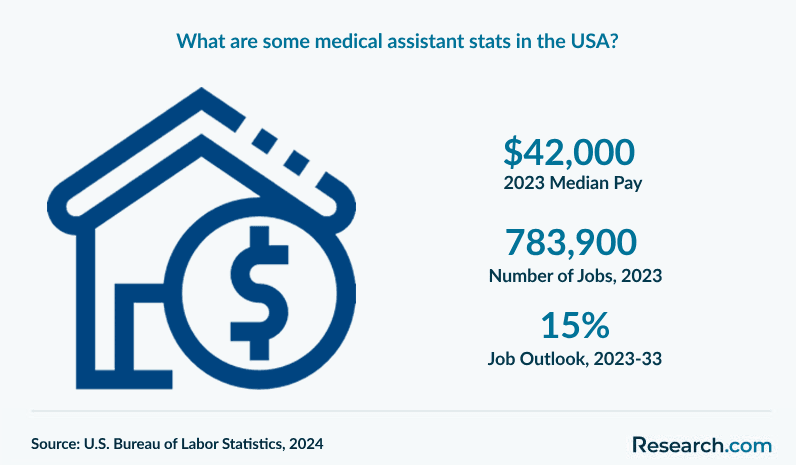
- Job outlook: The broader medical assistant field had 783,900 jobs in 2023 and is projected to grow by 15%, adding about 118,000 jobs by 2033.
- Pay expectations: Salary varies widely by role label, location, certification, experience, and employer type. Reported figures include $44,200 median pay for medical assistants in 2024, $43,211 for certified medical assistants, $38,040 for non-certified medical assistants, and $118,065 for OB/GYN medical assistants in the cited Salary.com source.
- How can you become an OB-GYN medical assistant in 2027?
- What does an OB-GYN medical assistant do?
- What are the educational requirements for becoming an OB-GYN medical assistant?
- What skills are required for OB-GYN medical assistants?
- What is the certification and licensing process for OB-GYN medical assistants?
- What ethical and legal guidelines should you observe as an OB-GYN medical assistant?
- How much can you earn as an OB-GYN medical assistant?
- Can I find cost-effective, accredited training options?
- How can I finance my continuing education and career growth?
- Can OB-GYN medical assistants transition to healthcare administration roles?
- What is the job market like for an OB-GYN medical assistant?
- How can advanced business education enhance your OB-GYN medical assistant career?
- What subspecialties and career paths are available for OB-GYN medical assistants?
- What challenges should you consider as an OB-GYN medical assistant?
- How will digital transformation impact the role of OB-GYN medical assistants?
How can you become an OB-GYN medical assistant in 2027?
The path to becoming an OB-GYN medical assistant is usually straightforward, but the quality of your training matters. OB-GYN practices often expect medical assistants to be comfortable with sensitive patient conversations, reproductive health terminology, specimen collection, exam-room setup, documentation, and infection control. A general medical assistant program can be enough, but you should look for training that includes women’s health exposure or an externship in a relevant setting.
| Step | What to do | Why it matters for OB-GYN work |
| 1. Meet the entry requirement | Earn a high school diploma or GED. | This is the baseline requirement for most medical assistant training programs and employers. |
| 2. Complete medical assistant training | Enroll in a certificate, diploma, or associate program through a vocational school, community college, or university. | Training builds the clinical and administrative foundation needed for patient intake, vitals, records, medication protocols, and office workflow. |
| 3. Seek OB-GYN exposure | Use an externship, internship, or entry-level role to gain experience in women’s health. | OB-GYN settings involve specialized procedures, sensitive communication, and reproductive health documentation. |
| 4. Pursue certification | Consider a recognized credential such as the CMA, RMA, or CCMA. | Certification is not always legally required, but many employers prefer it because it signals standardized training and competency. |
| 5. Check state rules | Review your state’s requirements for medical assistants, delegated tasks, registration, or licensure. | Permitted duties can vary by state and employer policy, especially for injections, medication support, and procedure assistance. |
| 6. Apply strategically | Target OB-GYN offices, women’s health clinics, hospitals, outpatient care centers, and fertility practices. | These settings help you build specialty experience and may lead to advancement into lead medical assistant, supervisor, or administrative roles. |
Some students choose traditional community college programs, while others look at accelerated medical assistant programs when they need a faster entry point. Speed can be useful, but it should not come at the expense of clinical practice, certification eligibility, or employer recognition.
Medical assistants work across several healthcare environments. BLS data shows that offices of physicians employ the largest number, with 427,730 medical assistants. General medical and surgical hospitals employ 107,450, outpatient care centers employ 70,580, offices of other health practitioners employ 61,550, and employment services employ 19,290. These settings are important because OB-GYN medical assistants may work in private practices, hospital departments, outpatient women’s health clinics, or specialty care offices.
What does an OB-GYN medical assistant do?
An OB-GYN medical assistant supports obstetricians, gynecologists, nurses, physician assistants, and other women’s health professionals. The job is not limited to checking in patients or taking vital signs. In many practices, the medical assistant helps keep the visit moving safely and respectfully from scheduling to rooming, exam preparation, documentation, lab coordination, and follow-up instructions.
| Responsibility | Typical tasks | What makes it specific to OB-GYN |
| Patient intake | Confirm identity, document symptoms, update medications, record allergies, and collect relevant history. | Questions may involve menstrual history, pregnancy status, contraception, fertility concerns, sexual health, or prior gynecologic procedures. |
| Vitals and measurements | Measure blood pressure, temperature, pulse, respiration rate, weight, and other required data. | Prenatal visits and high-risk monitoring may require careful tracking and accurate documentation over time. |
| Exam-room preparation | Prepare supplies, arrange instruments, clean rooms, and support patient positioning. | Gynecologic exams require privacy, sensitivity, correct setup, and strict infection-control procedures. |
| Procedure assistance | Hand instruments, label specimens, provide reassurance, and assist clinicians during exams or procedures. | Patients may feel anxious or vulnerable, so communication and professionalism are essential. |
| Basic testing support | Collect and prepare urine, blood, or tissue specimens and perform approved in-office tests. | Pregnancy tests, urinalysis, and reproductive health-related specimens are common in OB-GYN offices. |
| Administrative work | Schedule appointments, manage records, answer phones, process forms, and coordinate referrals. | OB-GYN practices often manage prenatal visit schedules, lab follow-ups, insurance forms, and procedure appointments. |
Good medical assistant training should prepare you for both clinical tasks and front-office responsibilities. In OB-GYN, the strongest assistants are usually those who can switch quickly between patient support, documentation, provider assistance, and administrative follow-through.
What are the educational requirements for becoming an OB-GYN medical assistant?
Most OB-GYN medical assistants begin with a general medical assistant program rather than a degree that is exclusively focused on obstetrics and gynecology. The key is choosing a program that provides enough clinical practice, prepares you for certification, and gives you exposure to real healthcare settings.
| Training option | Best for | What to verify before enrolling |
| Certificate or diploma program | Students who want a faster path into entry-level medical assisting. | Confirm accreditation, externship availability, certification exam preparation, and whether OB-GYN or women’s health topics are included. |
| Associate degree | Students who want broader coursework, potential transfer credits, and more long-term flexibility. | Check total cost, program length, general education requirements, and transfer policies. |
| Accelerated program | Career changers who need a shorter training timeline. | Make sure the program is not so compressed that it weakens clinical skill development or certification eligibility. |
| Online or hybrid program | Students who need flexibility because of work, caregiving, or location. | Confirm how labs, clinical practice, and externships are completed. Fully online coursework is not the same as hands-on clinical preparation. |
- High school diploma or GED: Most programs require this before admission. The same baseline requirement also appears in many fast track degree programs outside medical assisting.
- Medical assistant coursework: Expect anatomy and physiology, medical terminology, pharmacology basics, clinical procedures, infection control, administrative procedures, and electronic health records.
- Women’s health preparation: Look for instruction related to the female reproductive system, prenatal care support, gynecologic exams, specimen collection, pregnancy testing, and patient communication.
- Externship or internship: This is one of the most important parts of training. A placement in an OB-GYN office, women’s health clinic, or outpatient center can make you more competitive for specialty jobs.
If you are comparing schools, do not judge programs only by advertised completion time. A slightly longer program with strong externship placement and certification preparation may be more useful than a shorter program that leaves you underprepared for OB-GYN clinical work.
What skills are required for OB-GYN medical assistants?
OB-GYN medical assistants need technical ability, emotional maturity, privacy awareness, and strong organization. The role often involves sensitive health information and patients who may be anxious, pregnant, experiencing pain, facing infertility, or waiting for difficult test results.
- Clinical accuracy: You must be able to take vital signs, prepare exam rooms, handle specimens, follow infection-control procedures, and assist during approved clinical procedures.
- Clear communication: Patients need explanations that are respectful and easy to understand. Providers need concise, accurate updates. Front-office staff need complete information to prevent scheduling or billing problems.
- Privacy and discretion: OB-GYN visits may involve pregnancy, contraception, sexual health, pregnancy loss, fertility, cancer screening, or family concerns. Confidentiality is not optional.
- Electronic health record skills: Many daily tasks involve entering patient information, updating charts, managing messages, scheduling appointments, and retrieving results. Students who want stronger administrative preparation may also explore affordable medical billing and coding online options.
- Empathy under pressure: A busy OB-GYN office can still require calm, patient-centered communication. A rushed tone can make an already vulnerable patient feel dismissed.
- Attention to detail: Errors in documentation, specimen labeling, medication support, or appointment instructions can create serious care and compliance problems.
- Task prioritization: OB-GYN assistants often balance rooming patients, answering calls, preparing rooms, tracking labs, assisting providers, and updating records in the same shift.
The best candidates are not only technically trained. They are steady, discreet, organized, and comfortable supporting patients through highly personal healthcare experiences.
What is the certification and licensing process for OB-GYN medical assistants?
Medical assistant certification is different from state licensure. Many medical assistants are not licensed in the same way nurses or physicians are, but employers may require or strongly prefer certification. States may also define what tasks medical assistants can perform and whether registration or other state-specific requirements apply.
| Credential or requirement | What it means | Decision point for students |
| CMA | The Certified Medical Assistant credential is offered through the American Association of Medical Assistants (AAMA). | Check whether your program meets eligibility requirements before you enroll. |
| RMA | The Registered Medical Assistant credential is another recognized medical assistant credential. | Review eligibility routes, exam requirements, and employer preferences in your area. |
| CCMA | The Certified Clinical Medical Assistant credential is offered by the National Healthcareer Association. | Useful for candidates seeking a clinical medical assisting credential recognized by many employers. |
| State rules | States may regulate delegated tasks, medication-related duties, injections, registration, or supervision requirements. | Always check the rules in the state where you plan to work, not only the state where your school is located. |
| Continuing education | Certification often requires ongoing education to maintain the credential. | Budget time and money for renewal requirements after graduation. |
Certification can improve employability because it gives employers a standardized signal of training and competence. It does not automatically authorize every clinical task, however. Your actual duties will depend on state law, employer policy, provider delegation, and your documented training.
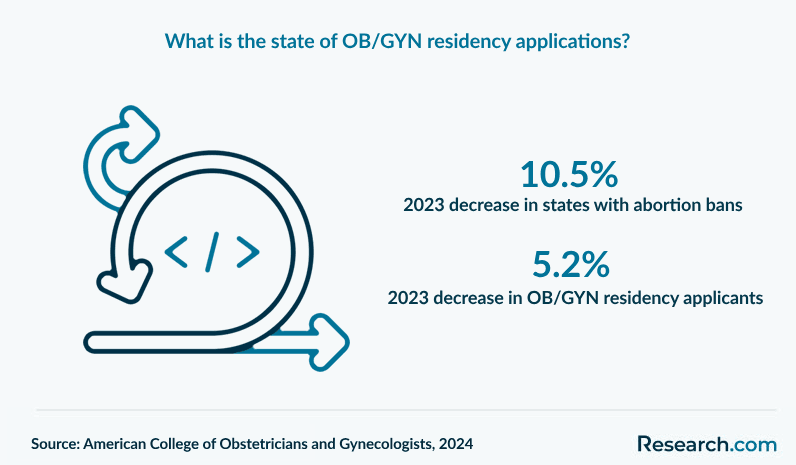
OB-GYN workforce trends also affect the environment in which medical assistants work. After Roe v. Wade was overturned, AAMC reported that states with abortion bans had a 10.5% drop in OB/GYN residency applicants in 2023, compared with a 5.2% decrease nationwide. Changes in physician supply, residency interest, and access to maternity care can influence staffing pressure in women’s health settings.
What ethical and legal guidelines should you observe as an OB-GYN medical assistant?
Ethics and compliance are especially important in OB-GYN because patients often disclose highly personal information. A medical assistant must protect patient privacy, stay within the legal scope of practice, document carefully, and support informed care without overstepping into diagnosis or independent clinical decision-making.
- Protect confidentiality: The Health Insurance Portability and Accountability Act (HIPAA) governs the protection of sensitive patient information. OB-GYN assistants must safeguard electronic records, paper files, verbal discussions, test results, appointment details, and patient messages.
- Stay within scope of practice: Do only the tasks permitted by state rules, employer policy, and provider delegation. If you are unsure whether a task is allowed, ask before performing it.
- Maintain professional boundaries: Patients should feel respected, safe, and never pressured. Avoid inappropriate personal conversations, social media contact, or behavior that could be viewed as exploitative.
- Support informed consent: You may help patients understand where to direct questions or clarify logistical steps, but you should not replace the clinician’s responsibility to explain risks, benefits, and alternatives.
- Document objectively: Record patient information accurately, without assumptions or judgmental language. In OB-GYN, careful documentation can affect continuity of care, prenatal monitoring, lab follow-up, and legal protection.
- Use ethical judgment: When a situation feels unclear, involve a supervisor, clinician, compliance officer, or ethics resource. Sensitive reproductive health scenarios should not be handled casually.
A trustworthy OB-GYN medical assistant understands that technical skill and ethical conduct are inseparable. Patients are more likely to follow care instructions and return for needed services when they feel their privacy and dignity are protected.
How much can you earn as an OB-GYN medical assistant?
Salary is one of the hardest parts of researching this career because different sources may use different job titles, employer categories, and role definitions. When comparing pay, confirm whether the figure refers to a general medical assistant, certified medical assistant, OB/GYN medical assistant, physician assistant, or OB-GYN physician. These are very different roles with different education requirements and responsibilities.
| Role or category | Reported pay figure | How to interpret it |
| Medical assistants | $44,200 per year, or $21.25 per hour, in 2024 | This is the broader medical assistant benchmark cited for the occupation. |
| Certified medical assistants | $43,211 | Certification can support employability, but pay still depends on state, employer, and experience. |
| Certified medical assistants in California | $47,662 | Location can significantly affect pay. |
| Certified medical assistants in Florida | $41,051 | Use state-level pay data when evaluating local job offers. |
| Certified medical assistants in Ohio | $42,261 | Regional differences matter when calculating expected return on training costs. |
| Non-certified medical assistants | $38,040 | Non-certified roles may be available, but some employers prefer certification. |
| OB/GYN medical assistants | $118,065 | This cited figure should be compared carefully against job descriptions and source methodology because it is much higher than broader medical assistant benchmarks. |
| OB/GYN medical assistants in Pennsylvania | $118,627 | State-specific figures can vary from national figures. |
| OB-GYN physician assistants | $120,212 | This is a different profession from medical assisting and usually requires advanced education. |
| OB-GYN physicians | $324,201 | This reflects physician-level training and responsibilities, not medical assistant work. |
Your earning potential may improve with experience, certification, strong EHR skills, specialty experience, and willingness to work in higher-demand settings. Some medical assistants also use their clinical background to move into related specialties. For example, those exploring cosmetic healthcare can compare the pathway for how to become an aesthetic medical assistant, while those focused on credentialing can review how to become an RMA.
Reported compensation varies sharply across related roles. OB-GYN physicians earn an average salary of $324,201, OB-GYN physician assistants earn about $120,212 each year, and OB-GYN medical assistants are reported at about $118,065 annually, with Pennsylvania listed at $118,627. Certified medical assistants are reported at $43,211, with examples of $47,662 in California, $41,051 in Florida, and $42,261 in Ohio. Non-certified medical assistants are reported at about $38,040 per year.
When reviewing the graph below, remember that job titles must be compared carefully. A medical assistant, certified medical assistant, physician assistant, and physician do not have the same education pathway, scope of practice, or compensation structure.
Can I find cost-effective, accredited training options?
Yes, but “affordable” should mean more than low tuition. A cost-effective medical assistant program should prepare you for employment, certification, clinical practice, and any state-specific requirements that affect your duties. If a cheap program lacks an externship, weakens certification eligibility, or has poor employer recognition, it may cost you more in lost opportunities.
| Factor to compare | Why it matters | Question to ask the school |
| Accreditation or recognition | Accreditation can affect certification eligibility, employer trust, and transfer options. | Is this program accredited or otherwise recognized for medical assistant certification eligibility? |
| Externship placement | Hands-on practice is critical for clinical confidence and hiring. | Do students complete an externship, and can placements include OB-GYN or women’s health settings? |
| Total cost | Tuition is only one part of the price. | What are the full costs for tuition, fees, books, supplies, uniforms, background checks, exams, and transportation? |
| Certification preparation | Many employers prefer certified candidates. | Which certification exams does the curriculum prepare students to take? |
| Schedule format | Working adults may need evening, weekend, hybrid, or online options. | How are labs, skills checks, and externships scheduled? |
| Career support | Job search help can shorten the transition from school to employment. | Does the school provide resume support, interview preparation, employer connections, or placement assistance? |
Students who need flexible and lower-cost options can compare online medical assistant programs, but they should verify how clinical training is completed. An online course may teach terminology and administrative systems well, but OB-GYN medical assisting also requires supervised, hands-on practice.
How can I finance my continuing education and career growth?
Financing your education starts with calculating the full cost of the program and then matching that cost to a realistic career plan. Do not borrow for a credential until you understand the jobs it qualifies you for, whether certification is included, and how long it may take to recover the investment through employment.
- Ask employers about tuition support: Some healthcare employers help pay for certification, continuing education, or advancement training after you are hired.
- Compare public and private options: Community colleges may offer lower tuition than private career schools, but schedules and waitlists can differ.
- Use financial aid carefully: If federal or institutional aid is available, compare repayment obligations and program outcomes before committing.
- Prioritize credentials tied to a role: Continuing education should support a specific next step, such as lead medical assistant, billing specialist, office manager, LPN, RN, or healthcare administrator.
- Consider administration only when it fits your goals: If you want to move away from direct patient care, programs such as the cheapest online healthcare administration degree may be worth comparing.
Can OB-GYN medical assistants transition to healthcare administration roles?
Yes. OB-GYN medical assistants can move toward healthcare administration if they build skills in scheduling systems, compliance, billing workflows, staff coordination, patient communication, and clinic operations. This path is best for people who enjoy organizing care delivery and solving operational problems more than performing clinical tasks all day.
Administrative advancement may start with lead medical assistant, front-office coordinator, referral coordinator, billing support, or medical office manager roles. Formal education can help if you want to move into broader management. Flexible options such as the fastest healthcare administration online programs may appeal to working medical assistants who need to study while staying employed.
What is the job market like for an OB-GYN medical assistant?
The job market for OB-GYN medical assistants is tied to the broader demand for medical assistants and the ongoing need for women’s health services. Medical assistants are needed in physician offices, hospitals, outpatient care centers, clinics, and specialty practices. OB-GYN experience can be especially valuable in practices that provide prenatal care, gynecologic care, fertility support, contraception counseling, cancer screening, and procedure assistance.
- National growth is strong: In 2024, median pay for medical assistants was $44,200 per year, or $21.25 per hour. There were approximately 783,900 medical assistant jobs in the United States in 2023.
- Projected growth is above average: Employment for medical assistants is projected to grow by 15% from 2023 to 2033, adding about 118,000 jobs over the decade.
- Women’s health settings vary: OB-GYN medical assistants may work in private practices, hospital OB-GYN departments, community clinics, outpatient women’s health centers, fertility practices, or labor and delivery-adjacent environments.
- Specialty experience can help: Employers may value candidates who understand OB-GYN rooming workflows, sensitive documentation, specimen handling, prenatal visit patterns, and patient privacy.
- Career shifts are possible: Some medical assistants later pursue nursing through options such as medical assistant to LPN bridge program online pathways.
The growth figures shown below point to a favorable outlook for medical assistants overall. Individual job prospects still depend on your local labor market, certification, clinical experience, schedule flexibility, and ability to work effectively in sensitive patient-care environments.
How can advanced business education enhance your OB-GYN medical assistant career?
Business education can help if your goal is leadership, operations, scheduling management, compliance, revenue cycle support, or clinic administration. It is not necessary for entry-level OB-GYN medical assisting, but it may become useful once you have clinical experience and want to supervise teams or manage workflows.
Choose business education carefully. A healthcare administration or healthcare management program is usually more directly aligned with OB-GYN office operations than a general business concentration. Some specialized business degrees, including an MBA sports management concentration, may build general leadership and organizational skills, but students should compare whether the curriculum fits healthcare compliance, clinical operations, finance, and patient services before enrolling.
What subspecialties and career paths are available for OB-GYN medical assistants?
OB-GYN medical assisting can be a destination career or a stepping stone. Some professionals stay in women’s health and become highly experienced clinical support staff. Others move into nursing, administration, billing, health education, fertility support, or supervisory roles.
| Path | What it involves | Best fit for |
| Fertility support | Assisting with patient education, appointment coordination, specimen handling, medication support under protocol, and fertility treatment workflows. | Medical assistants who are detail-oriented and comfortable supporting patients through emotionally intense care. |
| Prenatal care support | Helping with prenatal visits, vitals, urine samples, documentation, patient questions, and follow-up instructions. | Assistants who enjoy continuity of care and patient education. |
| Labor and delivery-related support | Supporting clinical teams in approved tasks around childbirth-related care environments. | Assistants who can stay calm in fast-paced, emotionally charged settings. |
| Lead medical assistant | Coordinating other assistants, training new staff, managing room flow, and supporting provider schedules. | Experienced assistants with strong organization and communication skills. |
| Medical office manager | Overseeing scheduling, staff coordination, billing processes, records, patient flow, and compliance. | Assistants who prefer operations and leadership over primarily clinical duties. |
| Healthcare administration | Moving into management through experience and, often, additional education. | Professionals interested in budgets, staffing, systems, and clinic performance. |
| Registered nurse | Completing nursing education to take on broader patient-care responsibilities. | Assistants who want a larger clinical scope and more direct care authority. |
| Medical coding and billing | Using documentation, coding, and insurance processes to support revenue cycle operations. | Assistants who prefer administrative precision and less direct clinical care. |
| Health educator or women’s health advocate | Supporting patient education, community outreach, wellness initiatives, or access-to-care programs. | Professionals motivated by prevention, education, and community health. |
If you are considering management, an affordable online Master's in Healthcare Administration may be relevant after you have clarified your long-term goals. For many medical assistants, however, the first advancement step is not graduate school. It is usually certification, specialty experience, lead responsibilities, or a targeted bridge program.
What challenges should you consider as an OB-GYN medical assistant?
OB-GYN medical assisting can be meaningful, but it is not an easy job. The role requires emotional steadiness, privacy discipline, physical stamina, and the ability to perform accurately while a clinic is busy.
- Emotionally sensitive care: Patients may be dealing with infertility, pregnancy loss, unexpected diagnoses, sexual health concerns, or high-risk pregnancy. The assistant’s tone and discretion matter.
- Fast patient flow: OB-GYN offices can move quickly, with multiple providers, urgent calls, lab results, prenatal schedules, and procedure rooms competing for attention.
- Physical demands: The job may require long periods of standing, walking between rooms, preparing equipment, and assisting patients with mobility needs.
- Exposure risk: Blood, urine, tissue samples, and other bodily fluids are part of healthcare work. Proper PPE and infection-control procedures are essential.
- Constant learning: Procedures, technology, documentation systems, and workplace protocols change. Continuing education is part of staying competent.
- Scope-of-practice pressure: Busy offices may create pressure to “just help,” but you must know what you are permitted to do and when to ask a licensed clinician.
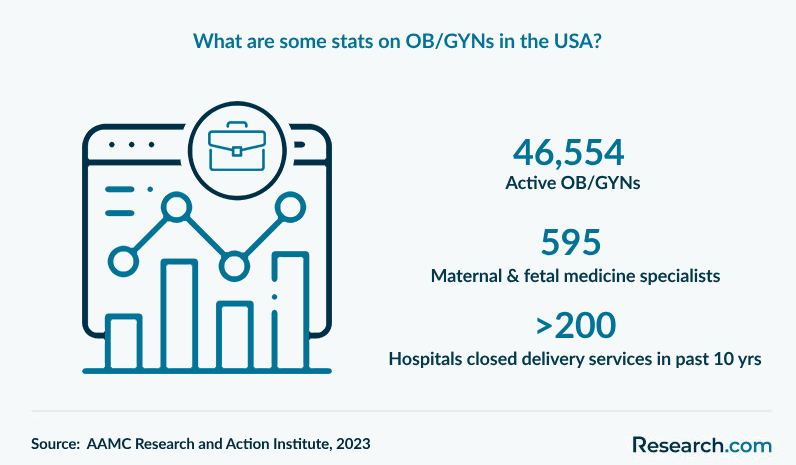
- Workforce strain: The U.S. has 46,554 active OB/GYNs, including 595 maternal and fetal medicine specialists. More than 200 hospitals across the U.S. have closed delivery services in the past decade, and 19 more hospitals planned to discontinue or pause maternity care or change their status in 2024, even though these hospitals still handled nearly 1 in 10 births nationwide.
Comparing specialties can help you decide whether OB-GYN is the right environment. For example, you might review what does a podiatry medical assistant do if you prefer musculoskeletal and mobility-related care, or compare the pediatric medical assistant salary if you are drawn to working with children and families.
The OB/GYN workforce issues shown below affect not only physicians, but also the support teams around them. When practices are understaffed or maternity services close, remaining clinics may face heavier scheduling pressure, more complex patient coordination, and greater demand for efficient medical assistants.
How will digital transformation impact the role of OB-GYN medical assistants?
Digital healthcare is changing how OB-GYN offices schedule visits, document care, communicate with patients, process lab results, and support remote or hybrid services. Medical assistants who are comfortable with electronic health records, patient portals, telehealth workflows, digital intake forms, and remote monitoring tools may be more valuable to employers.
- Electronic health records: Accurate charting, medication updates, lab tracking, and visit documentation are central to daily work.
- Telehealth support: Assistants may help prepare patients for virtual visits, verify information, collect pre-visit data, and manage follow-up instructions.
- Patient portals: Practices increasingly rely on digital messages, appointment reminders, forms, and lab notifications.
- Remote and connected tools: OB-GYN practices may use digital tools to support monitoring, communication, and care coordination, depending on the setting.
- Administrative automation: Scheduling, billing, reminders, and intake processes may become more automated, making digital fluency a practical job skill.
If your long-term goal is to lead technology-driven clinic operations, healthcare management education may help later in your career. Programs such as a fast track MBA in healthcare management online may be relevant for experienced professionals pursuing management, but they are not required for entry-level OB-GYN medical assistant positions.
Common Mistakes to Avoid Before Choosing This Career
| Mistake | Why it can hurt you | Better approach |
| Choosing the cheapest program without checking quality | Low tuition may not help if the program lacks clinical training, certification preparation, or employer recognition. | Compare total cost, accreditation, externship placement, certification eligibility, and graduate support. |
| Assuming all online programs are enough | OB-GYN medical assisting requires hands-on skills that cannot be mastered through reading alone. | Choose online or hybrid programs only if they include supervised labs and clinical placements. |
| Ignoring state rules | Medical assistant duties can vary by state, especially for medication-related and procedure-related tasks. | Review state requirements before enrolling and before accepting a job. |
| Confusing job titles | Medical assistants, physician assistants, nurses, and physicians have different scopes, salaries, and education pathways. | Read job descriptions carefully and compare pay only across equivalent roles. |
| Relying only on rankings or advertisements | Marketing language may not reflect real program outcomes or local employer preferences. | Ask employers, graduates, and certification bodies which programs are respected in your area. |
| Underestimating the emotional side of OB-GYN | The specialty can involve pregnancy loss, infertility, trauma, cancer screening, and difficult diagnoses. | Assess whether you can remain compassionate, calm, and professional in sensitive situations. |
Questions to Ask Before You Enroll or Apply
- Does the program prepare students for the CMA, RMA, CCMA, or another recognized certification?
- Is there an externship, and can students request placement in an OB-GYN or women’s health setting?
- What are the full program costs beyond tuition?
- Will credits transfer if you later pursue nursing, healthcare administration, or another degree?
- What duties are medical assistants allowed to perform in your state?
- How does the employer train new medical assistants for OB-GYN-specific procedures and documentation?
- What EHR systems, scheduling tools, and patient portal workflows will you need to learn?
- How does the clinic handle privacy, chaperone policies, informed consent, and sensitive patient communication?
- What advancement paths exist for experienced medical assistants in that organization?
Key Insights
- The fastest path is not always the best path: A short program can work if it includes clinical practice, certification preparation, and employer-recognized training.
- OB-GYN medical assisting is more sensitive than many entry-level healthcare roles: Patients may discuss reproductive health, pregnancy, fertility, trauma, or loss, so privacy and empathy are core skills.
- Certification can improve job prospects: Employers often prefer credentials such as CMA, RMA, or CCMA, but your actual duties still depend on state law and workplace policy.
- Salary research requires caution: Compare only equivalent job titles. The cited data includes $44,200 median pay for medical assistants, $43,211 for certified medical assistants, $38,040 for non-certified medical assistants, and $118,065 for OB/GYN medical assistants, but role definitions may differ by source.
- Demand is favorable for medical assistants overall: The field had 783,900 jobs in 2023 and is projected to grow by 15%, adding about 118,000 jobs by 2033.
- Women’s health workforce pressures matter: The U.S. has 46,554 active OB/GYNs, and maternity service closures may increase coordination demands for clinical support teams.
- Digital skills are becoming more important: EHR accuracy, telehealth support, patient portals, and digital intake workflows are now practical career assets.
- Advancement is possible: OB-GYN medical assistants can move into fertility support, prenatal care coordination, lead medical assistant roles, office management, billing, nursing, or healthcare administration with the right training and experience.
References:
- American College of Obstetricians and Gynecologists. 2024–25 residency application data show calling to OB-GYN field remains strong. American College of Obstetricians and Gynecologists.
- AMN Healthcare. 2024 review: Weighing physician and APP supply, demand, and compensation metrics. AMN Healthcare.
- Orgera, K., Mahmood, H., & Grover, A. Training location preferences of U.S. medical school graduates post Dobbs v. Jackson Women’s Health. AAMC Research and Action Institute.
- Salary.com. Ob Gyn Medical Assistant Salary. Salary.com.
- Salary.com. Medical Assistant - Certified Salary in California. Salary.com.
- Salary.com. Medical Assistant - Certified Salary in Florida. Salary.com.
- Salary.com. Medical Assistant - Certified Salary in Ohio. Salary.com.
- Salary.com. Medical Assistant - Certified Salary in the United States. Salary.com.
- Salary.com. Medical Assistant - Non-Certified Salary in the United States. Salary.com.
- Salary.com. OB/GYN Salary, Hourly Rate in the United States. Salary.com.
- Salary.com. Ob Gyn Medical Assistant Salary in Pennsylvania. Salary.com.
- U.S. Bureau of Labor Statistics. Medical assistants: Occupational employment and wages, May 2022. U.S. Department of Labor.
Other Things You Should Know About Becoming an OB-GYN Medical Assistant
In 2027, OB-GYN medical assistants typically need certification from a recognized body like the American Association of Medical Assistants (AAMA). The Certified Medical Assistant (CMA) credential requires passing an exam and completing an accredited medical assisting program.
In 2027, becoming an OB-GYN medical assistant typically requires a high school diploma or GED, followed by a medical assistant certificate or associate degree. Accreditation from institutions recognized by agencies like the ABHES or CAAHEP is recommended. Certification, though not mandatory in all states, enhances job prospects.
Strong bedside manner, medical terminology, and electronic health record skills are essential. OB-GYN medical assistants also need basic vital-sign collection, sterilization, specimen handling, and patient-education skills. Employers often look for HIPAA awareness and accurate documentation because the role supports sensitive reproductive and prenatal care.