2027 Online Paralegal Studies Degrees That Maximize Community College Credits

Co-Founder and Chief Data Scientist
Many future paralegals already have community college credits and do not want to pay twice for the same coursework. That matters because College Board's 2024 pricing shows average public two-year in-district tuition is far lower than four-year tuition, making transfer planning one of the biggest cost-control tools. This guide is for students with prior credits, associate degree holders, and working adults comparing online paralegal studies options. You will learn how transfer policies, accreditation, curriculum, timelines, and career outcomes affect the smartest path to a paralegal degree.
Key Things You Should Know
- The most transfer-friendly online bachelor's programs commonly allow up to 90 credits, or about 75% of a 120-credit degree, but legal specialty course rules may still limit what counts toward the major.
- Institutional accreditation is essential for financial aid and credit transfer; ABA approval can strengthen employer confidence, but many online paralegal programs are not ABA-approved and may still be legitimate if regionally accredited.
- The BLS reported a $61,010 median annual wage for paralegals and legal assistants in May 2024, so minimizing tuition through community college transfer can materially improve ROI.
What are online paralegal studies degrees that accept community college credits?
Online paralegal studies degrees that accept community college credits are associate or bachelor's programs in paralegal studies, legal studies, legal support, or law and paralegal studies that let students apply prior college coursework toward graduation requirements. The main value is simple: if your credits transfer cleanly, you may finish faster, borrow less, and move into legal support roles sooner.
These programs are especially useful for students who completed an associate degree, earned general education credits, changed majors, stopped out of college, or began in a lower-cost community college pathway. If your credits are mostly general education rather than legal specialty courses, you may also want to compare a budget friendly online general studies degree as a broader completion route before choosing a specialized paralegal major.
The table below explains the main degree options and when each one makes sense. Use it to match your existing credits with the credential level employers in your target market are likely to value.
| Program type | Typical credit structure | Best fit | Transfer-credit advantage |
| Paralegal certificate | Often 18 to 30 credits | Students who already have a degree and need legal training | Usually short, but may accept limited prior credits because the curriculum is specialized |
| Associate degree in paralegal studies | About 60 credits | First-time college students seeking entry-level legal support roles | Community college credits may apply directly if earned at the same institution or through an articulation agreement |
| Bachelor's degree in paralegal studies or legal studies | About 120 credits | Transfer students who want stronger advancement options or plan to work in larger firms, corporate legal departments, compliance, or government | Often the best option for maximizing transfer because many schools accept up to 90 lower-division and general education credits |
| Bachelor's completion program | Usually designed for students with 60 or more prior credits | Associate degree holders and returning adults | May reduce remaining coursework to upper-division major, writing, ethics, and legal specialty requirements |
A common mistake is assuming "online paralegal degree" always means the same thing. Some programs are designed to train practicing paralegals, while others are broader legal studies degrees that prepare students for legal, policy, compliance, or law school-related paths. Read the curriculum and transfer policy together, not separately.
How do transfer-friendly paralegal programs evaluate community college credits?
Transfer-friendly paralegal programs usually evaluate credits in three layers: whether the sending college was accredited, whether each course matches a requirement, and whether the grade meets the school's minimum standard. General education courses such as English composition, public speaking, U.S. government, statistics, and social science often transfer more easily than legal specialty courses.
The financial stakes are meaningful. College Board's 2024 Trends in College Pricing reported average published tuition and fees of about $4,050 for public two-year in-district students, compared with substantially higher published tuition at four-year institutions. For transfer students, the takeaway is not that community college is automatically better; it is that every accepted credit can reduce the number of higher-cost credits needed later.
Before enrolling, follow this sequence so you do not lose credits unnecessarily:
- Request an unofficial transfer review before applying if the school offers one, especially if you have 45 or more credits.
- Send transcripts from every college attended, even if you completed only one course, because missing transcripts can delay admission or financial aid packaging.
- Ask which credits apply to general education, which apply to electives, and which apply directly to the paralegal major.
- Confirm whether legal specialty courses must be completed at the degree-granting institution, because some programs limit transfer into the core legal curriculum.
- Get the final degree audit in writing after admission and before registering for classes.
The biggest red flag is a school that gives a large transfer-credit promise without showing how those credits apply to the degree plan. A program may accept 90 credits in theory, but if 30 of them transfer only as free electives and do not reduce required courses, the savings may be much smaller than advertised.
Which accredited online paralegal programs accept the most transfer credits?
The programs that tend to accept the most community college credit are online bachelor's or bachelor's-completion programs with published transfer caps near 90 credits. However, "most transfer credits" should not be the only selection factor; you also need to check institutional accreditation, legal specialty requirements, ABA status if relevant, total tuition, and whether the curriculum matches your career goal.
The table below gives examples of institutionally accredited online legal studies or paralegal-related programs that are commonly considered by transfer students. Transfer limits can change, so use the numbers as a starting point and verify them with each registrar before applying.
| School or program example | Online credential | Published transfer-credit strength | Accreditation note | Best for |
| University of Maryland Global Campus | Bachelor's in legal studies | Up to 90 transfer credits toward a 120-credit bachelor's degree | Institutionally accredited; program is broader legal studies rather than a narrowly ABA-approved paralegal curriculum | Students with substantial community college credit who want a flexible legal studies completion path |
| Liberty University | Online bachelor's in paralegal studies | Up to 75% of the degree may be transferred, which is commonly up to 90 credits in a 120-credit program | Institutionally accredited; students should verify current ABA status and state or employer preferences | Students who want a paralegal-labeled bachelor's degree with a high transfer ceiling |
| Purdue Global | Online bachelor's in legal support and services | Up to 75% of eligible undergraduate credits may transfer, subject to evaluation | Institutionally accredited; curriculum is career-focused for legal support roles | Working adults who want an online legal support pathway with prior learning and transfer review |
| Eastern Kentucky University | Online bachelor's in paralegal science | Transfer students may apply prior college credit, with final applicability determined by transcript review | Institutionally accredited; students should confirm current ABA-related delivery requirements for online coursework | Students who want a paralegal science curriculum with stronger professional identity |
| University of Cincinnati | Online bachelor's in law and paralegal studies | Designed for transfer students, with official credit evaluation required | Institutionally accredited; students should confirm how legal specialty credits apply | Students seeking a law-focused paralegal curriculum from a public university |
When comparing schools, ask admissions staff to separate "credits accepted" from "credits applied." A high transfer cap is valuable only if the credits reduce your remaining courses, shorten your timeline, or lower your total cost.
Use these questions to identify the strongest transfer fit:
- What is the maximum number of community college credits that can apply to this specific degree, not just to the university?
- Do associate degree graduates receive a block transfer or general education waiver?
- Are paralegal or legal specialty courses accepted from community colleges, and is there a minimum grade?
- How many credits must be completed in residence at the university?
- Will transferred credits affect eligibility for honors, internships, ABA-related requirements, or financial aid pace-of-completion rules?
Are online paralegal studies degrees better than campus programs?
Online paralegal studies degrees are better for some students, but not for everyone. They are strongest for working adults, parents, military students, rural students, and transfer students who need scheduling flexibility. Campus programs may be stronger for students who want in-person networking, local internship placement, courtroom observation, or direct access to faculty and legal clinics.
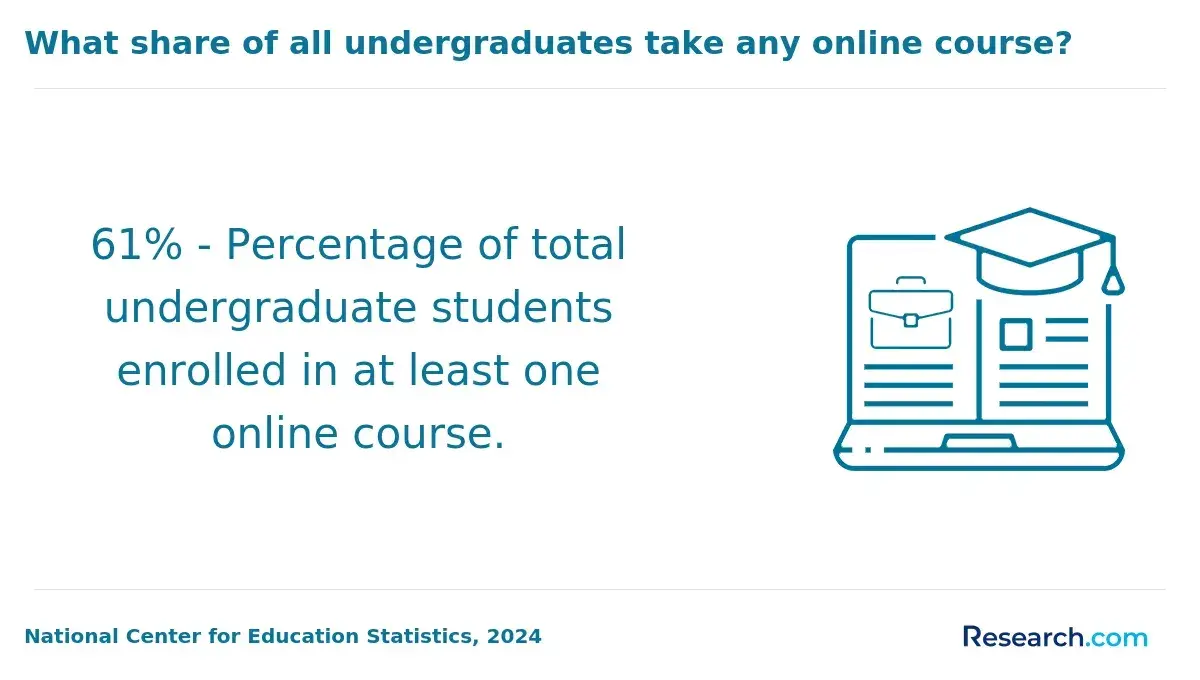
Online learning is no longer unusual in U.S. higher education. Recent NCES reporting published in 2024 shows distance education remains a major part of undergraduate enrollment, which means employers are increasingly familiar with online credentials from accredited institutions. For paralegal students, the more important question is whether the program builds practical legal research, writing, ethics, technology, and document-preparation skills.
The table below compares online and campus formats by the decision factors that usually matter most to transfer students.
| Decision factor | Online paralegal degree | Campus paralegal degree | Better choice when |
| Schedule | Often asynchronous or evening-friendly | Set class times and commute required | Online is better if you work full time or have caregiving responsibilities |
| Transfer flexibility | Many bachelor's completion programs are built for transfer students | May be transfer-friendly, especially at public universities with community college agreements | Online is better if the school publishes a clear 90-credit transfer pathway |
| Networking | Depends on virtual career services, faculty access, and internships | Often easier to build local legal connections | Campus is better if you need local placement support and face-to-face mentoring |
| Skills practice | Can be strong if courses include legal databases, drafting assignments, and simulations | Can be strong if courses include clinics, mock proceedings, and local court exposure | Choose the format with the most practice-based assignments, not just the most convenient schedule |
| Cost | May reduce commuting and relocation costs | May be cheaper if a nearby public college has low tuition | The better option is the one with the lowest total cost after transfer credits and aid |
Online is usually not the right fit if you need frequent in-person accountability, have unreliable internet access, or want a program with required local legal internships that the school helps arrange. Campus is not automatically better either; a poorly connected campus program can be less valuable than a well-designed online program with strong legal writing, research platforms, and career support.
What accreditation should an online paralegal program have?
An online paralegal program should, at minimum, be offered by an institution accredited by an agency recognized by the U.S. Department of Education or the Council for Higher Education Accreditation. Institutional accreditation matters for federal financial aid, transferability, graduate study, and employer trust.
ABA approval is different. The American Bar Association approves some paralegal education programs, but not every legitimate online paralegal degree is ABA-approved. Some employers prefer ABA-approved programs, especially in competitive legal markets, while others focus on degree level, experience, writing ability, legal technology skills, and references.
Use this checklist before you apply, because accreditation mistakes are difficult to fix after you have paid tuition:
- Confirm the institution's accreditation through a recognized accreditor, not just the school's marketing page.
- Ask whether the specific paralegal program is ABA-approved, institutionally accredited only, or not separately approved.
- Check whether ABA-related requirements, if applicable, require synchronous, hybrid, or campus-based legal specialty coursework.
- Ask local employers, bar associations, or internship coordinators whether ABA approval affects hiring in your area.
- Avoid schools that describe themselves with vague phrases such as "fully recognized" without naming the accrediting agency.
The practical rule is this: institutional accreditation is non-negotiable, while ABA approval is a market-dependent advantage. If you plan to work in a large law firm, government legal office, or competitive metropolitan market, ABA approval may carry more weight. If you are already employed in a legal office and need a degree for advancement, an accredited non-ABA online program may still be a reasonable fit.
What courses are included in an online paralegal studies curriculum?
An online paralegal studies curriculum usually combines general education, legal specialty courses, research and writing, ethics, and technology. Transfer students often bring in English, communication, math, social science, and humanities credits, then complete the legal core at the four-year institution.
Current legal work is increasingly shaped by e-discovery, digital filing, legal research databases, contract platforms, and AI-assisted document review. That does not remove the need for paralegals; it raises expectations for accuracy, confidentiality, source checking, and technology judgment. Bilingual ability can also be useful in client-facing settings, so students interested in serving Spanish-speaking communities may want to explore online degrees in Spanish alongside legal training.
The table below shows common curriculum areas and why they matter in daily paralegal work.
| Course area | What students learn | Why it matters |
| Legal research and writing | Case law, statutes, legal databases, citations, objective memos, and persuasive writing | Research and writing are core paralegal tasks in many law offices |
| Civil litigation | Pleadings, discovery, motions, trial preparation, and court rules | Litigation support is one of the most common paralegal career tracks |
| Legal ethics | Confidentiality, conflicts of interest, unauthorized practice of law, and professional responsibility | Ethical mistakes can harm clients and employers, even when unintentional |
| Contracts and business law | Contract formation, interpretation, breach, and business entities | Useful for corporate, compliance, real estate, and transactional roles |
| Family law, criminal law, or estate planning | Practice-area procedures and document preparation | Helps students specialize for local law firm needs |
| Legal technology | E-filing, case management systems, e-discovery, spreadsheets, and document automation | Employers increasingly expect paralegals to work efficiently with digital tools |
Before choosing a program, compare syllabi or course descriptions for writing intensity. A strong paralegal curriculum should require multiple drafts, legal analysis, citations, and realistic documents, not only quizzes about legal terminology.
What admission requirements do online paralegal programs usually ask for?
Admission requirements vary by degree level, but online paralegal programs are usually more transfer-accessible than highly selective majors. Most schools ask for proof of prior education, official transcripts, and a minimum GPA. Bachelor's completion programs may require a certain number of transferable credits before admission or before upper-division standing.
Expect the following requirements when applying as a transfer student:
- High school diploma, GED, or prior college enrollment record, depending on the program level.
- Official transcripts from every community college, university, or dual-enrollment provider attended.
- Minimum GPA, often applied either overall or only to transferable coursework.
- English composition or college writing readiness, because legal writing is central to the major.
- Application form, government ID or residency information, and financial aid documents if using federal aid.
- Possible statement of purpose, resume, or advising appointment for adult-completion programs.
Some programs are open-admission at the institutional level but still require prerequisites for upper-level legal courses. That distinction matters: being admitted to the university does not always mean every prior course has been accepted into the paralegal major.
Common application mistakes include sending unofficial transcripts only, ignoring old credits from a school attended years ago, waiting too long to ask for a degree audit, and assuming an associate degree automatically waives every lower-division requirement. The safer approach is to ask for a written transfer map before committing to the first term.
How long does an online paralegal degree take to finish?
The completion time depends on degree level, transfer credits, course load, and whether the program uses semesters, accelerated terms, or competency-based formats. A student entering with a completed associate degree may finish a transfer-friendly bachelor's much faster than a first-time student starting with no credits.
The table below gives realistic timeline ranges. Use it to estimate your path, but rely on a school-issued degree audit for the final answer.
| Starting point | Likely remaining credits | Typical online timeline | Planning note |
| No prior college credit | About 60 credits for an associate or 120 credits for a bachelor's | About 2 years for an associate or 4 years for a bachelor's at full-time pace | Starting at community college first may reduce cost if credits are guaranteed to transfer |
| Some community college credit | Varies widely | Often 1 to 3 years depending on accepted credits and course load | Ask whether credits apply to requirements or only electives |
| Completed associate degree | Often about 30 to 60 credits for a bachelor's completion path | Often 12 to 24 months if enrolled consistently | Best-case timelines require clean transfer and available upper-division courses |
| Prior bachelor's degree | Often certificate or second-major legal core only | Often under 1 year to 18 months | A certificate may be more efficient than a second bachelor's if your goal is entry-level paralegal work |
To finish faster without wasting money, prioritize course sequencing. Legal research, writing, litigation, and ethics may be prerequisites for advanced electives or internships, so taking courses out of order can delay graduation even if you have enough total credits.
Students should also be cautious with accelerated schedules. Taking two intensive legal writing courses at the same time may look efficient, but it can weaken performance if you are also working full time. Faster is valuable only when it does not reduce learning, grades, or readiness for employer writing tests.
What jobs can you get with a paralegal studies degree?
A paralegal studies degree can prepare students for legal support roles in law firms, corporate legal departments, government agencies, insurance companies, banks, real estate offices, healthcare organizations, and compliance teams. Paralegals do substantive legal work under attorney supervision, but they cannot give legal advice, set legal fees, or represent clients in court unless a jurisdiction has a specific limited-license pathway.
Students interested in law, investigation, and human behavior sometimes compare paralegal studies with adjacent fields such as criminology or forensic psychology. If that broader path interests you, it can be useful to review the types of jobs I can get with a masters in forensic psychology to understand how legal support differs from behavioral science and court-related assessment roles.
The table below summarizes common jobs connected to paralegal studies and the type of work each role usually involves.
| Role | Typical responsibilities | Good fit for students who like |
| Paralegal | Legal research, drafting documents, organizing case files, preparing discovery, and supporting attorneys | Writing, details, deadlines, and legal problem-solving |
| Legal assistant | Scheduling, correspondence, document management, client intake, and administrative legal support | Organization, communication, and office operations |
| Litigation support specialist | E-discovery, trial exhibits, database management, document review, and case technology | Technology, data organization, and litigation workflows |
| Compliance assistant or analyst | Monitoring policies, reviewing documents, tracking regulations, and supporting audits | Rules, risk management, and business operations |
| Contract administrator | Preparing, tracking, reviewing, and maintaining contracts under attorney or business supervision | Business law, negotiation support, and document control |
| Court or government legal support role | Case processing, records, legal forms, public-facing assistance, and procedural support | Public service, procedure, and structured legal environments |
The strongest candidates usually combine the degree with writing samples, internship experience, legal technology skills, and professionalism. If you are changing careers, your prior work may help; experience in healthcare, banking, real estate, insurance, customer service, or administration can translate well into specialized legal environments.
What salary and job outlook can paralegals expect?
The BLS reported a $61,010 median annual wage for paralegals and legal assistants in May 2024. That figure is a national midpoint, not a promise; pay varies by city, employer type, legal specialty, experience, overtime eligibility, and whether the role is closer to administrative support or substantive legal work.
The job outlook is stable but not explosive. BLS projections for paralegals and legal assistants show modest growth over the 2024 to 2034 period, with openings driven largely by replacement needs and ongoing demand for cost-efficient legal services. For students, this means the degree can be worthwhile when total cost is controlled and the program builds practical skills employers can verify.
The table below shows the factors that most often influence paralegal salary and employability. Use it to evaluate ROI more realistically than relying on a single national wage number.
| Factor | How it can affect outcomes | What to look for in a program |
| Location | Large legal markets may offer more roles but also more competition and higher living costs | Career services with regional employer relationships |
| Practice area | Corporate, intellectual property, litigation, compliance, and e-discovery roles may require specialized skills | Electives or projects tied to your target practice area |
| Technology skills | Legal databases, e-discovery tools, spreadsheets, and case management systems can improve competitiveness | Hands-on assignments using current legal technology |
| Experience | Internships, legal office work, and strong writing samples can help entry-level applicants stand out | Internship support, capstone projects, or portfolio-based coursework |
| Transfer cost | Lower remaining tuition can improve ROI even if starting wages are moderate | Clear transfer audit and predictable tuition through graduation |
AI and automation are changing some document review and drafting tasks, but they also increase the need for careful human review, confidentiality, citation checking, and legal judgment under attorney supervision. Students who learn both legal reasoning and technology will be better positioned than students who treat paralegal work as clerical only.
If your interest is more focused on evidence handling, death investigation support, or forensic settings than legal document work, compare this pathway with how to become an autopsy technician before committing to a paralegal degree.
Other Things You Should Know About Paralegal Studies
Certification is usually optional, but it can strengthen a resume. Common options include national paralegal certifications from professional associations. Requirements vary, so check eligibility rules, exam format, renewal requirements, and whether employers in your area value the credential.
It can help you understand legal systems, research, writing, and law office work, but it is not required for law school. Law schools typically consider GPA, LSAT or approved admissions test policies, writing ability, recommendations, and overall academic preparation.
Some paralegals work remotely or hybrid, especially in document review, contracts, compliance, and litigation support. Entry-level roles may still require office time for training, client communication, court filings, or team coordination.
In 2027, many online paralegal studies programs are structured to maximize transfer of community college credits, often accepting up to 60 credits towards a bachelor's degree. This facilitates a quicker, more cost-effective path for students transitioning from community college, making higher education more accessible.
References
- Online Paralegal Degree Programs: Certificate, Associate’s, Bachelor’s and Master’s https://www.becomeaparalegal.org/online-paralegal-studies-degree/
- Paralegal Studies https://www.sunysuffolk.edu/explore-academics/majors-and-programs/paralegal-studies/
- Paralegal | Community College of Denver https://www.ccd.edu/program/paralegal
- Paralegal & Legal Studies Transfer https://bristolcc.edu/learnatbristol/degreescertificatesandclasses/lawandjustice/paralegallegalstudies/plstransferpolicy.html
- Paralegal Studies Transfer Policies and Procedures https://www.ivc.edu/business/dept/paralegal/transfer
- Paralegal Certificate vs Certification | Let's clear up the confusion. https://paralegal.edu/blog/paralegal-certificate-vs-paralegal-certification-lets-clear-up-the-confusion/
- 5 careers you can have with a paralegal studies degree - SMWC https://www.smwc.edu/5-careers-you-can-have-with-a-paralegal-studies-degree-blog-mar-21/
- Online Paralegal Certificate Program | Self-Paced Course https://www.uscareerinstitute.edu/online-paralegal-school
- Paralegal https://www.fanshawec.ca/programs/plg1-paralegal/next
- Paralegal Studies | Coastline College https://www.coastline.edu/programs/paralegal-studies.php