2027 Cheapest Way to Get a Teaching Credential in Idaho: Requirements & Certification

Co-Founder and Chief Data Scientist
The least expensive way to earn a teaching credential in Idaho depends on what you already have: a bachelor’s degree, an out-of-state license, prior educator preparation, or no college credits yet. For many career changers, the lowest-cost route is an approved non-traditional or alternative certification pathway, including options such as the American Board program, which is listed at $1,900 to $2,100. For students starting from scratch, beginning at a community college and transferring into an approved bachelor’s and educator preparation program can reduce total tuition costs.
This guide explains the affordable routes to Idaho teacher certification, what each option requires, where hidden costs appear, how online and out-of-state pathways work, and how to compare programs without choosing a shortcut that delays licensure. It is written for aspiring teachers, career changers, out-of-state educators, international applicants, and working adults who want the most cost-conscious path into Idaho classrooms.
Quick answer: What is the cheapest way to get a teaching credential in Idaho?
The most affordable route is usually an approved alternative or non-traditional educator preparation program if you already have a bachelor’s degree. These programs are commonly listed at $1,900 to $2,100, compared with traditional educator preparation routes that may average around $5,000 before related fees. However, the cheapest valid path is not always the shortest one. You must still meet Idaho certification requirements, pass required assessments when applicable, complete background checks and fingerprinting, and submit the required application materials.
| Pathway | Best for | Cost information stated in this guide | Main trade-off |
| Non-traditional or alternative certification | Career changers who already hold a bachelor’s degree | $1,900 to $2,100 for some non-traditional options | Requires careful confirmation that the route meets Idaho certification rules |
| Traditional educator preparation program | Students earning an education degree from the beginning | Average cost noted at around $5,000 for the preparation program component | Often more structured, but usually more expensive and time-intensive |
| Out-of-state credential pathway | Licensed teachers moving to Idaho | $75 non-refundable application fee, plus background check-related costs | Documents must show that the credential and preparation program meet Idaho expectations |
| Community college transfer pathway | Students without a bachelor’s degree | No single statewide total cost is provided here | Can lower tuition, but requires transfer planning to avoid lost credits |
| Online credential program | Working adults and students who need flexibility | Costs vary by institution and pathway | Must verify accreditation, student teaching arrangements, and Idaho eligibility |
Key Things You Should Know About the Cheapest Way to Get a Teaching Credential in Idaho
- Start with your current status. The lowest-cost path is different for someone with a bachelor’s degree than it is for someone beginning college for the first time.
- Approved preparation matters more than sticker price. A low-cost program only helps if it satisfies Idaho educator certification requirements.
- Alternative authorization can reduce upfront pressure. Some routes may allow candidates to teach while completing remaining certification requirements, which can help offset costs through employment.
- The American Board route may be one of the lower-cost options. The self-paced online program is listed at $1,900 to $2,100 and includes assessments that can lead to an interim certificate.
- Out-of-state preparation can save money if it is properly accredited. If you completed an educator preparation program elsewhere, verify that it is recognized before paying for additional coursework.
- Budget for mandatory fees. Application fees, fingerprinting, background checks, transcripts, testing, and renewal costs can add to the final price.
- How much does it cost to become a teacher in Idaho?
- Can a foreigner get an Idaho teaching license?
- Can I get my teaching credential online in Idaho?
- Can I teach in Idaho with an out of state credential?
- How many years do you have to teach in Idaho to retire?
- What happens if my Idaho teaching credential expires?
- How many units is an Idaho teaching credential?
- How much do teachers in Idaho make?
- What other education careers are available in Idaho?
- What is the job outlook of teachers in Idaho?
- How can pursuing an advanced specialization in special education benefit my career in Idaho?
- What financial aid options can ease your teaching credential journey in Idaho?
- How Can a Child Life Specialist Certification Enhance My Teaching Career in Idaho?
- What is the career path of a teacher in Idaho?
- What are the differences between teaching in public and private schools in Idaho?
- Can subject-specific credentials enhance my high school teaching career in Idaho?
- What are the specialized pathways for early childhood educators in Idaho?
- What are the middle school math teacher requirements in Idaho?
- What Are the Idaho Teacher Certification Requirements?
- What are the requirements for becoming a music teacher in Idaho?
- How can obtaining a kindergarten teaching credential benefit my career in Idaho?
- How do mentorship and professional development programs support new teachers in Idaho?
How much does it cost to become a teacher in Idaho?
The cost to become a teacher in Idaho varies widely by route. If you already have a bachelor’s degree, a non-traditional educator preparation program may be the most affordable option, with some programs listed at $1,900 to $2,100. A traditional educator preparation program may average around $5,000, not including all possible school, testing, transcript, transportation, or background check costs.
Before choosing a program, separate three categories of expenses: tuition, certification-related fees, and living costs while completing coursework or student teaching. The cheapest advertised tuition can become more expensive if the program does not arrange placements, requires extra tests, or fails to meet Idaho certification standards.
| Cost category | What to check before enrolling | How to reduce the cost |
| Program tuition | Whether the program is approved for Idaho certification | Compare public institutions, approved alternative programs, and scholarship options |
| Application and licensing fees | Current Idaho Department of Education fee requirements | Submit a complete application the first time to avoid delays or duplicate document requests |
| Background check and fingerprinting | Whether these are included in program costs or paid separately | Budget for them early because they are not optional |
| Assessments | Which exams are required for your endorsement area | Use official exam guides before paying for retakes |
| Student teaching or clinical placement | Whether unpaid placement time affects your work schedule | Ask whether alternative authorization or paid classroom roles are available |
| Transfer credits | Whether credits from a community college or prior institution apply | Get a written transfer evaluation before committing |
- Non-traditional programs: These can be a strong low-cost choice for adults who already hold a degree and want to enter teaching without completing a second full bachelor’s program.
- Traditional programs: A conventional education degree may be better for first-time college students who want a structured path that includes pedagogy, fieldwork, and student teaching.
- Community college transfer: Students without a degree can often lower costs by completing general education credits first, then transferring into a four-year program.
- Financial aid: Grants, scholarships, institutional aid, and teacher-focused funding can reduce out-of-pocket costs, but eligibility varies by program and student status.
- Earning while preparing: Some candidates reduce financial pressure by working in a school while completing requirements. Those interested in specialized support roles can also review special education career options.
This chart will examine the number of teacher preparation program enrollments by year, offering context on how interest in teacher education has shifted over time.
Can a foreigner get an Idaho teaching license?
Yes. An international educator may be able to earn an Idaho teaching license if the applicant meets Idaho Department of Education requirements. The key issue is not citizenship alone; it is whether the applicant’s education, preparation program, certificate history, transcripts, assessments, and background check materials satisfy Idaho standards.
Foreign-trained educators should pay close attention to accreditation and documentation. If you hold a valid teaching certificate from another state or completed an accredited educator preparation program within the last two years, that may support your Idaho application. Recognized accreditation references in this context include NCATE, TEAC, CAEP, and AAQEP.
- Application fee: The application includes a non-refundable fee of $75. Paying by check or money order may help avoid additional credit card-related charges.
- Background Investigation Check: A Background Investigation Check is required. Processing costs should be included in your budget.
- Official documents: Prepare the application, certificate verification, transcripts, assessment records, and other required materials in one organized packet when possible.
- Transcripts: Official transcripts must verify the bachelor’s degree and certification areas. Electronic transcripts may reduce mailing time and cost when accepted.
- Institutional Recommendation: If you recently completed an accredited program, an Institutional Recommendation may replace the need for an out-of-state certificate in some cases.
International applicants should avoid paying for new coursework until Idaho has clarified whether prior preparation, credentials, or transcripts meet requirements. If you are considering returning to school to meet missing requirements, review practical options for going back to college for a teaching degree.
Can I get my teaching credential online in Idaho?
Yes, it may be possible to complete some or much of your Idaho teacher preparation online, depending on your route, endorsement area, and field placement requirements. Online learning can reduce commuting and scheduling costs, but it does not remove the need for approved preparation, supervised classroom experience, background checks, or required assessments.
- Confirm approval first. Ask whether the online program leads to Idaho certification or whether it is designed for another state.
- Ask how student teaching works. A legitimate online teacher preparation pathway should explain how clinical practice, internships, or student teaching placements are arranged.
- Compare total cost, not tuition alone. Include technology fees, testing, travel to placement sites, background checks, transcripts, and graduation fees.
- Consider alternative certification if you already have a bachelor’s degree. This can be faster and less expensive than starting a traditional education degree.
- Use advising early. Before enrolling, speak with program staff and, if needed, an academic advisor to confirm whether your prior credits and career goals align with the route.
| Online program question | Why it matters |
| Is the program accredited and accepted for Idaho certification? | A program that is inexpensive but not accepted can cost more in the long run. |
| Does the program arrange Idaho-based field placements? | Teacher certification requires practical classroom experience, not just online coursework. |
| Will my existing credits transfer? | Transfer credit can shorten the timeline and reduce tuition. |
| Are exams and background checks included in the quoted cost? | Mandatory certification expenses are often billed separately. |
| Can I keep working while enrolled? | Flexibility matters if you are using employment income to pay for the program. |
This chart from the National Council on Teacher Quality examines enrollments across different teacher preparation program routes.
Can I teach in Idaho with an out of state credential?
Yes, Idaho provides a pathway for educators who hold a teaching credential from another state. The process generally requires proof that your out-of-state license is valid and that your preparation aligns with approved educator preparation standards recognized through the NASDTEC interstate agreement.
- Valid out-of-state certificate: A current certificate from another state can support your Idaho application if it is based on an approved educator preparation program. If you are still comparing preparation backgrounds, review common education degree types.
- Recent program completion: If you completed an accredited educator preparation program within the last two years, you may be able to apply using an Institutional Recommendation rather than a physical out-of-state certificate.
Typical application materials include:
- A completed application form and the non-refundable $75 fee.
- A completed Background Investigation Check packet.
- A copy of the out-of-state teaching license or an eligible Institutional Recommendation.
- Official transcripts showing your degree and certification areas.
If your state does not issue a paper certificate, Idaho may accept a printout from the issuing state’s official website as verification. The most cost-effective move is to gather complete documentation before applying. Missing transcripts, unclear certification areas, or incomplete background materials can slow the process and create additional expense.
If you need additional preparation, compare flexible online teaching degree programs carefully and confirm that they support Idaho certification goals before enrolling.
How many years do you have to teach in Idaho to retire?
Teacher retirement in Idaho is separate from teacher certification. Your eligibility depends on the retirement system rules that apply to your employment, age, years of service, and position. Because retirement rules can affect long-term financial planning, new teachers should review current PERSI information and speak with their district’s human resources office rather than relying on general estimates.
For affordability planning, retirement matters because the cheapest credential is not always the best long-term financial decision. A route that gets you into a benefits-eligible position sooner may be more valuable than a cheaper route that delays full-time employment.
- Ask when service credit begins. Confirm whether your role counts toward retirement benefits while you are completing certification.
- Check benefit eligibility by position. Substitute, paraprofessional, intern, charter, public school, and private school roles may not have the same benefit structure.
- Compare short-term cost with long-term earnings. A slightly higher-cost approved program may be worthwhile if it leads to licensure and full-time employment faster.
- Document prior service. If you taught in another state, ask whether any prior teaching experience affects salary placement or benefits in your Idaho district.
If you are considering education roles outside classroom teaching, you may also want to compare pathways in related fields such as library science careers.
What happens if my Idaho teaching credential expires?
Idaho’s five-year renewable certificate must be renewed on time to remain valid. If the renewal deadline of August 31 passes, the certificate is no longer active and the teacher may need to complete a reinstatement process. Reinstatement can be more complicated than renewal, so the least expensive strategy is to track renewal requirements early.
- Renewal timing: You may begin the renewal application as early as January 1 of the year the certificate expires. Applications submitted before that date will be returned.
- Required materials: Renewal requires a completed application, a non-refundable $75 fee, and evidence of professional development.
- Professional development: The renewal requirement includes six semester credits related to teaching practice, with at least three credits from an accredited institution.
- In-service conversion: In-service hours from Idaho schools may count, with every 15 contact hours converting to one semester credit hour.
- Endorsements: Additional endorsements may be added during renewal without extra fees if the required documentation is provided.
Common renewal mistake: waiting until the deadline to collect proof of professional development. A better approach is to maintain a renewal file from the first year of the certificate, including transcripts, in-service records, workshop documentation, and endorsement paperwork.
How many units is an Idaho teaching credential?
Idaho teacher certification normally starts with a bachelor’s degree. A bachelor’s degree typically requires approximately 120 to 128 semester units and includes general education, subject-area preparation, pedagogy, and clinical teaching requirements. An associate’s degree usually includes about 60 to 64 semester units and can be a lower-cost starting point, but it does not by itself qualify someone for a full teaching credential.
| Education stage | Typical semester units stated | How it fits into teacher certification |
| Associate’s degree | About 60 to 64 semester units | Can reduce lower-division costs before transfer, but is not enough for full certification |
| Bachelor’s degree | Approximately 120 to 128 semester units | Usually required for teacher certification and educator preparation completion |
| Teacher preparation coursework and clinical practice | Varies by program | Provides pedagogy, classroom management, methods courses, and supervised teaching experience |
- Use community college strategically. Complete transferable general education courses at a lower cost when possible.
- Get transfer approval in writing. Do not assume every course will count toward a teacher preparation program.
- Plan endorsement requirements early. Subject-area endorsements may require specific coursework beyond general degree requirements.
- Budget for non-credit requirements. Assessments, background checks, and application fees may not appear in the unit count but still affect total cost.
How much do teachers in Idaho make?
Teacher pay is an important part of the affordability calculation. According to the figures cited here, the average salary for teachers in Idaho is around $61,516, reflecting a 9.1% increase from the previous year. Over the past decade, salaries have increased by 28%, although they remain about 8.5% below the national average of approximately $66,745.
- Starting pay: New educators can expect salaries near $40,000.
- Mid-career pay: Teachers with five to ten years of experience typically earn between $50,000 and $60,000.
- Experienced teachers: Educators with more than 20 years of experience can exceed $70,000.
- District differences: Reported district averages vary significantly, with Blaine County School District listed at $90,942 and some districts averaging as low as $45,512.
Use salary data carefully. Averages do not guarantee individual pay. District salary schedules, years of experience, education level, endorsement area, contract length, and local cost of living can all affect take-home value.
| Decision factor | Why it affects return on investment |
| Credential cost | Lower upfront cost can reduce debt, but only if the route leads to certification. |
| Time to full-time employment | A faster approved pathway may improve earnings sooner. |
| District salary schedule | Pay can differ widely across Idaho districts. |
| Endorsement area | Specialized or shortage-area endorsements may affect hiring prospects. |
| Benefits and retirement | Total compensation includes more than salary. |
What other education careers are available in Idaho?
If classroom teaching is not the right fit, Idaho has education-adjacent careers that still serve students, families, and schools. One option is speech-language pathology, where professionals assess and treat communication and swallowing disorders. This path has its own licensing process, and prospective professionals can review how to obtain an SLP license in Idaho.
Other school-based roles may include instructional support, library services, counseling support, special education advocacy, curriculum work, and early childhood education. Requirements vary, so compare credentials before investing in a program.
What is the job outlook of teachers in Idaho?
The job outlook depends on grade level, endorsement, location, and specialization. The data cited here point to notable demand in special education. Idaho’s number of special education teachers is projected to rise from approximately 530 in 2020 to around 600 by 2030, representing 13% growth over the decade. About 50 new special education teacher positions are expected each year.
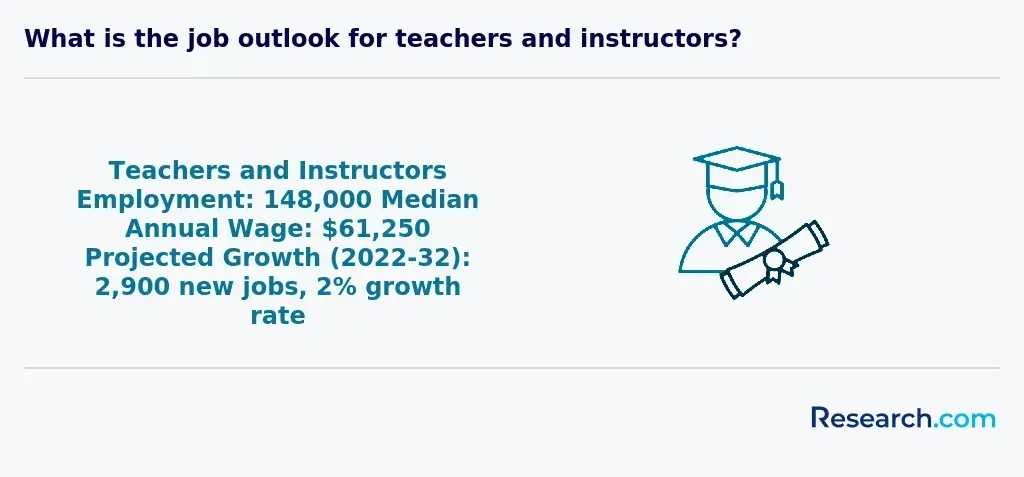
This compares favorably with the national figure cited here, where overall teacher employment growth is expected to be 1% from 2022 to 2032. However, job outlook should not be treated as a job guarantee. Rural districts, high-need schools, special education, STEM-related subjects, and specific grade levels may have different hiring conditions.
- Special education demand is a major factor. Increasing student needs and specialized support requirements can create opportunities for properly credentialed teachers.
- Location matters. Job availability may differ between urban, suburban, rural, charter, and private school settings.
- Endorsements can improve flexibility. Candidates with in-demand subject or special education preparation may have more options.
- Hiring is still competitive. A valid credential, classroom experience, references, and strong interview preparation remain important.
How can pursuing an advanced specialization in special education benefit my career in Idaho?
An advanced specialization in special education can help teachers qualify for more specialized classroom roles, deepen intervention skills, and prepare for leadership in student support, curriculum adaptation, and collaborative service planning. It can be especially valuable in Idaho because the special education outlook cited in this guide shows stronger projected growth than the overall national teacher growth figure.
Cost still matters. Before enrolling in graduate study, compare tuition, employer reimbursement, online flexibility, endorsement impact, and salary schedule recognition. Educators who want a flexible graduate route can explore online master’s degree programs in special education.
What financial aid options can ease your teaching credential journey in Idaho?
Financial aid can make the difference between an affordable credential and an expensive one. Prospective teachers should look at federal aid, state-sponsored grants, institutional scholarships, program-specific awards, district partnerships, and employer support when available. The best time to search is before enrollment, because some aid is tied to program type, credit load, academic level, or certification area.
- Complete financial aid forms early. Deadlines can determine whether you receive grant or scholarship consideration.
- Ask programs about teacher-specific aid. Some education departments maintain scholarships for future educators.
- Check district partnerships. Some districts may support candidates preparing for hard-to-fill roles.
- Compare net price. A school with higher tuition may cost less after grants or scholarships.
- Review subject-specific pathways. If you are considering social studies or history, review how to become a history teacher in Idaho.
How Can a Child Life Specialist Certification Enhance My Teaching Career in Idaho?
A child life specialist certification can expand an educator’s ability to support children outside the traditional classroom, particularly in settings where children face medical, emotional, or developmental stress. This credential is not a substitute for Idaho teacher certification, but it may complement a teaching background for professionals interested in hospitals, community programs, family support, or interdisciplinary child development roles.
Teachers who want to broaden their child-centered expertise can review the path to becoming a child life specialist and compare the credential’s requirements with their teaching goals before committing additional time and money.
What is the career path of a teacher in Idaho?
A teacher’s career path in Idaho often begins with certification, an entry-level classroom role, and ongoing professional development. Over time, educators may add endorsements, move into mentoring, pursue advanced degrees, or transition into administration or district leadership.
| Career stage | Typical focus | Cost-conscious action |
| Preparation | Complete degree, educator preparation, assessments, and background checks | Choose an approved program with clear certification outcomes |
| Initial teaching role | Build classroom management, lesson planning, and student support skills | Use district mentorship and low-cost professional development |
| Early advancement | Add endorsements, lead teams, or mentor peers | Add endorsements during renewal when documentation supports it |
| Experienced educator | Specialize, coach, design curriculum, or pursue leadership | Compare graduate cost with salary schedule and career benefits |
| Leadership or alternative education role | Move into administration, district work, policy, advocacy, or education entrepreneurship | Invest only in credentials required for the next role |
- Classroom leadership: Lead teacher, department chair, mentor teacher, or instructional coach roles may build on classroom experience.
- School administration: Assistant principal and principal roles usually require additional preparation beyond initial teacher certification.
- District-level work: Curriculum, assessment, professional learning, and superintendent pathways require broader leadership skills.
- Policy and advocacy: Experienced educators may work in education reform, community initiatives, or student support systems.
- Education entrepreneurship: Some teachers develop instructional materials, tutoring services, or education technology tools.
What are the differences between teaching in public and private schools in Idaho?
Public and private schools in Idaho can offer very different employment conditions. Public schools generally operate under state certification, curriculum, testing, and accountability requirements. Private schools may have more flexibility in hiring, curriculum, and instructional philosophy, but they may not offer the same salary schedules, benefits, or job protections as public school systems.
| Factor | Public schools in Idaho | Private schools in Idaho |
| Certification expectations | State teacher certification is typically required | Requirements vary by school and may emphasize expertise, degree level, or mission fit |
| Curriculum and testing | More state oversight and standardized expectations | Often more curricular flexibility |
| Class size | May be larger, depending on district and school | May be smaller, depending on school resources |
| Salary and benefits | Often tied to district salary schedules and public benefits | Can vary widely and may not match public school compensation |
| Best fit for | Teachers who want a state-regulated credential pathway and public system benefits | Teachers drawn to a specific educational philosophy, religious mission, or smaller school environment |
If you are interested in non-public school settings, research each employer carefully. Private schools may set their own hiring criteria, so review private school teacher requirements in Idaho before assuming a state credential is either required or unnecessary.
Can subject-specific credentials enhance my high school teaching career in Idaho?
Yes. A subject-specific credential or endorsement can make a high school teacher more competitive by showing preparation in a defined content area. This is especially important at the secondary level, where schools hire teachers for specific courses rather than broad elementary instruction.
Subject specialization can also support curriculum development, advanced course assignments, department leadership, and long-term career mobility. Teachers interested in social studies can review the steps for becoming a high school history teacher in Idaho.
What are the specialized pathways for early childhood educators in Idaho?
Early childhood educators work with young learners during a critical developmental period, so preparation often emphasizes child development, early literacy, classroom routines, play-based learning, family engagement, and developmentally appropriate assessment. Specialized preparation can be useful for preschool, kindergarten readiness, early learning centers, and public or private early education settings.
Before choosing a program, confirm whether it leads to the specific Idaho role you want. Preschool, kindergarten, childcare, and elementary teaching may have different requirements. For a focused overview, review how to become a preschool teacher in Idaho.
What are the middle school math teacher requirements in Idaho?
Middle school math teachers need both mathematics content knowledge and training in how early adolescents learn. A typical route includes a bachelor’s degree in mathematics, education, or a related field with a strong math component, plus teacher preparation, student teaching, content-area evaluation, and Idaho certification steps.
Because math coursework and endorsement requirements can be specific, candidates should verify requirements before taking electives or transferring credits. For a role-specific breakdown, see the guide to middle school math teacher requirements in Idaho.
What Are the Idaho Teacher Certification Requirements?
Idaho teacher certification generally requires proof of an appropriate degree, completion of an approved educator preparation pathway, qualifying assessments when required, official documentation, background checks, and adherence to professional and ethical standards. Teachers must also maintain certification through renewal and professional development.
The exact requirements depend on the grade level, subject area, prior preparation, and whether the applicant is coming from Idaho, another state, or another country. For a detailed step-by-step overview, review Idaho teacher certification requirements.
Here’s What Teachers Have to Say About the Cheapest Ways to Get a Teaching Credential in Idaho
-
: "
Linda’s takeaway: An online alternative certification route made it possible to keep working while completing the required preparation. The flexibility helped reduce financial strain, but instructor support and program structure were still essential.
"
-
: "
Trey’s takeaway: Grants and school-based financial support can meaningfully reduce tuition. The most important step is to ask about funding before enrolling rather than after the bill arrives.
"
-
: "
Angelica’s takeaway: A low-cost certification program can open the door to teaching, but the value also comes from supervised experience, peer networks, and confidence in the classroom.
"
What are the requirements for becoming a music teacher in Idaho?
Music teachers in Idaho need both teaching preparation and music-specific competence. A typical pathway includes a bachelor’s degree with substantial music coursework, pedagogical training, performance or musicianship development, student teaching, and required assessments tied to music instruction.
Because music certification can include specialized expectations beyond general teacher preparation, candidates should compare program requirements carefully. For targeted guidance, review music teacher education requirements in Idaho.
How can obtaining a kindergarten teaching credential benefit my career in Idaho?
A kindergarten teaching credential can position educators for roles focused on early literacy, social-emotional development, classroom routines, foundational numeracy, and school readiness. It can also help distinguish candidates who want to work specifically with young children rather than broader elementary grades.
This credential may be useful in public schools, private schools, and early education settings, depending on the employer and certification requirements. For detailed steps, review how to become a kindergarten teacher in Idaho.
How do mentorship and professional development programs support new teachers in Idaho?
Mentorship and professional development help new teachers manage the first years of classroom practice. Strong programs pair beginners with experienced educators, provide feedback on instruction, support classroom management, and help teachers understand district expectations. They can also help teachers complete professional development requirements for renewal.
For new teachers trying to control costs, district-provided training, peer collaboration, in-service hours, and mentor support can reduce the need for expensive outside workshops. To compare streamlined preparation options, review how to become a teacher in Idaho.
Common mistakes to avoid when choosing the cheapest Idaho teaching credential route
| Mistake | Why it can cost more later | Better approach |
| Choosing a program based only on tuition | Low tuition does not guarantee Idaho certification eligibility. | Verify approval, accreditation, placement support, and endorsement outcomes. |
| Ignoring background check and testing costs | Required fees can increase the real total cost. | Build a full certification budget before enrolling. |
| Assuming online means fully remote | Student teaching or clinical practice usually requires in-person placement. | Ask exactly where and how fieldwork is completed. |
| Transferring without a credit plan | Lost credits can add semesters and tuition. | Get written transfer evaluations from the receiving institution. |
| Relying only on rankings or ads | Marketing may not reflect licensure fit, completion support, or total cost. | Compare outcomes, requirements, fees, and advising quality. |
| Waiting until certificate expiration | Missing the renewal deadline can trigger reinstatement complications. | Track credits and renewal documents throughout the five-year certificate period. |
Key Insights
- The cheapest Idaho teacher credential route is usually an approved alternative or non-traditional program for candidates who already have a bachelor’s degree, with some options listed at $1,900 to $2,100.
- Traditional educator preparation programs may average around $5,000, but they can be a better fit for students who are earning their first bachelor’s degree and want a structured pathway.
- A community college-to-university transfer plan can lower costs for students starting without a degree, but only if credits transfer cleanly into an approved teacher preparation program.
- Out-of-state educators can often avoid unnecessary retraining by documenting a valid certificate, accredited preparation, official transcripts, and required background materials.
- Online teacher preparation can be affordable and flexible, but candidates must confirm Idaho eligibility, accreditation, endorsement alignment, and in-person field placement requirements.
- Budget beyond tuition. Application fees, the $75 non-refundable certification or renewal fee, fingerprinting, background checks, transcripts, testing, and renewal credits all affect the final cost.
- Teacher salaries in Idaho vary by district and experience. The cited average is around $61,516, with starting salaries near $40,000 and major district-level differences.
- Special education is a notable opportunity area in the data cited here, with Idaho special education teacher employment projected to grow from approximately 530 in 2020 to around 600 by 2030.
- The best financial decision is not simply the lowest price. Choose the least expensive approved route that gets you certified, employable, and positioned for the grade level or subject you actually want to teach.
Related Articles for Nearby States
- 2027 Cheapest Way to Get a Teaching Credential in Montana: Requirements & Certification
- 2027 Cheapest Way to Get a Teaching Credential in Washington: Requirements & Certification
- 2027 Cheapest Way to Get a Teaching Credential in Oregon: Requirements & Certification
- 2027 Cheapest Way to Get a Teaching Credential in Nevada: Requirements & Certification
- 2027 Cheapest Way to Get a Teaching Credential in Utah: Requirements & Certification
- 2027 Cheapest Way to Get a Teaching Credential in Wyoming: Requirements & Certification
- 2027 Cheapest Way to Get a Teaching Credential in California: Requirements & Certification
- 2027 Cheapest Way to Get a Teaching Credential in Colorado: Requirements & Certification
- 2027 Cheapest Way to Get a Teaching Credential for Arizona: Requirements & Certification
- 2027 Cheapest Way to Get a Teaching Credential in New Mexico: Requirements & Certification
References:
- Darren Svan (2024). Average teacher salaries jump by 9.1% this year. idahoednews.org https://www.idahoednews.org/west-idaho/average-teacher-salaries-jump-by-9-1-this-year/
- Education.delaware.gov (2022). Educators Certification. https://education.delaware.gov/legacy/home/educators/licensure-and-certification/educators-certification/
- Persi.idaho.gov (n.d.). Early Retirement. persi.idaho.govhttps://www.persi.idaho.gov/docs/brochures/Early-Retirement.pdf
- Salary.com (2024). Public School Teacher Salary in Idaho. salary.com https://www.salary.com/research/salary/benchmark/public-school-teacher-salary/id
Other Things You Should Know About Getting a Teaching Credential in Idaho
Idaho’s educator license application fee is $75, and fingerprint-based background checks are required through the Idaho State Department of Education and approved vendors. The fingerprinting charge varies by provider, so applicants should budget for both the state application fee and the separate background-check cost.
Yes, teachers in Idaho can obtain certification without a master's degree in 2027. The state requires a bachelor's degree from an accredited institution and successful completion of an approved teacher preparation program. Additional requirements include passing the necessary exams and obtaining a background clearance.
In 2027, aspiring teachers in Idaho must pass the Praxis Core Academic Skills for Educators exams and relevant Praxis Subject Assessments. These exams evaluate skills in reading, writing, mathematics, and specific teaching subjects as part of the certification process.