
2027 How to Become a History Teacher in Idaho: Requirements & Certification

Co-Founder and Chief Data Scientist
To become a history teacher in Idaho, you need more than strong knowledge of the past. You must complete an approved path to teacher certification, meet Idaho’s testing and background-check requirements, and choose the right grade level and school setting for your goals. This guide is for future teachers, career changers, out-of-state educators, and current Idaho teachers who want to specialize in history or social studies.
Idaho schools continue to need qualified educators, including social studies teachers, and the role matters because history classes build civic understanding, critical thinking, evidence-based reasoning, and cultural awareness. Below, you will learn the education requirements, certification steps, financial aid options, salary expectations, career paths, professional development resources, and practical decisions that can help you move from interest to classroom readiness.
Quick Answer: How Do You Become a History Teacher in Idaho?
The typical route is to earn a bachelor’s degree, complete an approved educator preparation program, pass the required Idaho teaching assessments, complete clinical or student-teaching experience, clear the background-check process, and apply for certification through the Idaho Department of Education. If you already hold a teaching license from another state, Idaho may review your credentials for certification, but you should expect to submit transcripts, testing records, license documentation, and any proof of educator preparation.
Key Things You Should Know About Becoming a History Teacher in Idaho
- Idaho’s schools need teachers who can help students analyze evidence, understand civic life, and connect national history with local and regional stories.
- History teachers in Idaho often teach broader social studies content, so preparation in government, geography, economics, and civics can strengthen your employability.
- The job outlook for teachers, including history educators in Idaho, is positive, with a projected growth of 20% from 2020 through 2030.
- The average salary for history teachers in Idaho is $56,365 annually, with pay influenced by district, experience, credentials, and grade level.
- Professional development, dual certification, and strong classroom technology skills can improve long-term career flexibility.
- What are the requirements to become a history teacher in Idaho?
- Are there grants or scholarships available for aspiring history teachers in Idaho?
- Do history teachers need special certifications in Idaho?
- Is there certification reciprocity for history teachers in Idaho?
- How much do history teachers make in Idaho?
- What career paths are available for history teachers in Idaho?
- What professional development opportunities are available for history teachers in Idaho?
- What additional steps can aspiring history teachers take to prepare for a career in Idaho?
- Can history teaching skills lead to alternative educational careers in Idaho?
- Should I pursue further education to advance my history teaching career in Idaho?
- Can interdisciplinary approaches elevate history teaching in Idaho?
- What future trends could impact history teaching in Idaho?
- Can collaboration with local libraries enhance history education in Idaho?
- Should I pursue dual certifications to expand my career options in Idaho?
- How do public and private school teaching roles compare for history educators in Idaho?
- Should history teachers develop additional English teaching skills in Idaho?
- How can Idaho history teachers foster inclusive and culturally responsive classrooms?
- Can integrating art enhance history teaching practices in Idaho?
- What are the best resources for history teachers in Idaho?
- How can aspiring teachers streamline their path to teaching history in Idaho?
- What are the challenges of teaching history to students in Idaho?
What are the requirements to become a history teacher in Idaho?
Idaho’s route to becoming a history teacher is built around three major requirements: academic preparation, educator preparation, and state certification. Most candidates prepare to teach history through a social studies or history education pathway because K-12 history instruction is commonly connected to civics, geography, economics, and government.
| Step | What You Need to Do | Why It Matters |
| Earn a bachelor’s degree | Complete at least a bachelor’s degree, ideally in history, social studies education, secondary education, or a related field. | A degree gives you the subject knowledge and academic foundation required for teacher certification. |
| Complete educator preparation | Finish an approved teacher preparation program through a traditional university route or an approved alternative pathway. | Educator preparation connects theory with classroom practice, lesson planning, assessment, and student teaching. |
| Build classroom experience | Complete clinical experience, internship hours, or student teaching as required by your program. | Schools want candidates who can manage a classroom, teach standards-based lessons, and work with diverse learners. |
| Pass required exams | Prepare for Idaho’s required teaching assessments, including the Professional Teaching and Knowledge assessment and relevant subject-area tests. | Testing confirms that you meet the state’s baseline expectations for teaching and content knowledge. |
| Apply for certification | Submit your application, documentation, test results, and background-check materials through the Idaho Department of Education. | Certification is required for public school teaching roles and may also strengthen your prospects in other settings. |
Several Idaho institutions, including Boise State University and Idaho State University, offer preparation that can support future history teachers. When comparing programs, confirm that the educator preparation route is approved for Idaho certification and that it leads to the grade level and subject area you want to teach.
Accreditation also matters. Programs recognized by organizations such as the Council for the Accreditation of Educator Preparation (CAEP) or the Association for Advancing Quality in Educator Preparation (AAQEP) may provide added confidence that the curriculum, clinical practice, and assessment systems meet professional preparation standards. Still, candidates should verify Idaho approval directly rather than relying only on national accreditation labels.
Questions to ask before choosing a teacher preparation program
- Does the program lead to Idaho teacher certification in the correct grade band and subject area?
- How many hours of student teaching or clinical experience are included?
- Where are placements typically located, and can you complete them near your community?
- What are the program’s exam preparation supports?
- Does the program support transfer students, career changers, or working adults?
- Will the credential help you teach only history, or broader social studies courses as well?
Are there grants or scholarships available for aspiring history teachers in Idaho?
Yes. Future history teachers in Idaho can look for state, federal, institutional, and private financial aid. The right mix depends on residency, financial need, academic record, school choice, enrollment status, and whether you are pursuing your first degree or returning for teacher preparation.
| Aid Option | Who It May Help | Amount Mentioned | Important Consideration |
| Idaho Opportunity Scholarship | Idaho residents graduating from an Idaho high school who plan to enroll full time, including education majors. | Up to $3,500 per year, renewable for up to four years. | Check current eligibility rules, deadlines, renewal requirements, and approved institutions before applying. |
| Idaho Governor's Cup Scholarship | Idaho high school seniors enrolling full time in academic programs, including students interested in public service and teaching. | $5,000, renewable for up to four years. | Applicants need a 2.8 GPA or higher and should review service-related expectations. |
| Federal Pell Grant | Undergraduate students with significant financial need. | The maximum award can reach over $6,000 annually, depending on the student’s circumstances. | Eligibility is determined through federal financial aid rules and may change based on enrollment and income. |
| Private scholarships | Education majors, local students, first-generation learners, rural students, or candidates with specific service goals. | Often $500 to several thousand dollars, depending on the scholarship. | Requirements vary widely, so students should track deadlines and essay requirements carefully. |
Do not compare schools based only on sticker tuition. A program with higher tuition may become more affordable after scholarships, grants, transfer credits, and local placement options. Conversely, a cheaper program may cost more if it delays certification, requires travel for student teaching, or does not align with Idaho requirements.
If you are comparing teacher pathways across states, you may also find it helpful to review the steps to becoming a teacher in West Virginia, especially if you are weighing relocation or reciprocity issues.
How to reduce the cost of becoming a history teacher in Idaho
- Submit financial aid forms as early as possible.
- Ask each college how transfer credits apply to education and history requirements.
- Compare total program cost, not just tuition per credit.
- Look for paid paraprofessional, substitute, tutoring, or district-based roles that build experience while you study.
- Ask whether the school offers scholarships specifically for education majors.
- Confirm whether alternative certification is available if you already hold a bachelor’s degree.
Do history teachers need special certifications in Idaho?
History teachers in Idaho generally need a valid teaching certificate with the appropriate subject and grade-level authorization for the roles they want. In public schools, certification is not optional; it is the credential that allows a district to place you in a teaching assignment that matches state requirements.
The core certification process usually includes these components:
- Bachelor’s degree: Complete an undergraduate degree in education, history, social studies, or a related approved field.
- Educator preparation: Finish an approved preparation program that includes pedagogy, classroom management, assessment, and supervised teaching practice.
- Praxis Subject Assessments: Pass the required subject-area tests for social studies or history-related instruction, as applicable to your certification route.
- Professional Teaching and Knowledge assessment: Complete the professional teaching assessment required for Idaho certification.
- Background check: Submit the required materials for state review before licensure is issued.
- Application: Provide transcripts, test results, preparation-program verification, and any additional documentation requested by the Idaho Department of Education.
Because certification requirements can change, applicants should verify the current exam names, endorsement options, and documentation requirements before enrolling in a program or registering for tests. This is especially important for career changers and out-of-state teachers who may already have some, but not all, of the required pieces.
Common certification mistakes to avoid
- Assuming a history degree alone qualifies you to teach in a public school.
- Choosing a program before confirming Idaho approval.
- Waiting too long to schedule required assessments.
- Overlooking background-check timelines.
- Assuming one certification covers every grade level or social studies subject.
- Not keeping copies of transcripts, testing records, and student-teaching documentation.
The chart below shows the distribution of certified social sciences teachers in the United States using the latest National Center for Education Statistics data included in the original source set.
Is there certification reciprocity for history teachers in Idaho?
Idaho can recognize teaching credentials from other states, but reciprocity should not be treated as an automatic license transfer. The state reviews out-of-state credentials individually, so teachers moving to Idaho should prepare for a documentation-heavy process.
Out-of-state history teachers should generally be ready to provide:
- Proof of a bachelor’s degree: Official transcripts from an accredited institution.
- Educator preparation verification: Evidence that you completed an approved preparation program.
- Current license documentation: A valid teaching credential from another state, if applicable.
- Testing records: Passing scores for relevant Praxis or other accepted assessments, when required.
- Alternative-route records: Completion documentation if your original license came through a nontraditional preparation pathway.
- Background-check materials: State-required clearance before certification can be issued.
The safest approach is to contact the Idaho Department of Education before making employment plans. Ask whether your current license, preparation program, and exam history satisfy Idaho requirements or whether you will need additional coursework, tests, or endorsements.
| If You Are... | What to Check First | Best Next Step |
| A licensed teacher from another state | Whether your license area matches Idaho’s history or social studies requirements. | Gather official transcripts, license verification, and testing records before applying. |
| A career changer with a bachelor’s degree | Whether you qualify for an alternative preparation route. | Compare approved alternative programs and ask how quickly you can complete supervised teaching requirements. |
| A private school teacher seeking public school roles | Whether you hold a state-recognized teaching certificate. | Ask Idaho officials which certification requirements you still need to complete. |
| A teacher with an expired license | Renewal, reinstatement, or new application rules. | Request written guidance before paying for coursework or exams. |
How much do history teachers make in Idaho?
History teacher pay in Idaho varies by district, years of experience, education level, contract length, grade level, and additional responsibilities such as coaching, advising clubs, curriculum leadership, or teaching advanced courses. Salary figures should be treated as estimates, not guarantees.
The average salary for a history teacher in Idaho is $56,365 per year. The available salary information also indicates:
- History teachers in Idaho earn approximately $24.52/hour.
- Entry-level positions for history teachers in Idaho may start around $28,697.
- Experienced history educators can earn upwards of $$70,567.
| Salary Factor | How It Can Affect Pay |
| Experience | Teachers generally move into higher salary ranges as they gain classroom experience and meet district salary-schedule requirements. |
| Education level | A master’s degree or additional graduate credits may improve placement on some district salary schedules. |
| Location | Pay can differ across urban, suburban, rural, and remote districts. |
| Grade level and assignment | High school, middle school, social studies, dual-credit, and advanced placement assignments may have different expectations. |
| Additional duties | Coaching, club advising, department leadership, or curriculum work may provide extra compensation in some districts. |
For comparison, the median salary for high school teachers in Idaho is around $52,095. If you are comparing licensure and testing outside Idaho, review the Wisconsin teacher certification exams to understand how state requirements can differ.
How to evaluate whether the salary works for you
- Compare salary schedules from districts where you would actually work.
- Check whether health insurance, retirement contributions, and paid leave are included.
- Estimate commuting, relocation, and student-loan costs.
- Ask how graduate credits affect salary placement.
- Look at the full contract year and required duties, not only the annual salary figure.
What career paths are available for history teachers in Idaho?
A history teaching credential can support several education careers in Idaho. Many teachers begin in middle or high school social studies classrooms, then move into advanced instruction, curriculum leadership, school administration, or higher education after gaining experience and additional credentials.
| Career Path | Typical Preparation | Best Fit For |
| High school history teacher | Bachelor’s degree, educator preparation, Idaho certification, and relevant subject authorization. | Teachers who want to work with teenagers, prepare students for college or careers, and teach U.S. history, world history, government, or social studies. |
| Middle school social studies teacher | Teacher certification aligned with the grade level and subject assignment. | Educators who enjoy helping younger adolescents build foundational civic and historical thinking skills. |
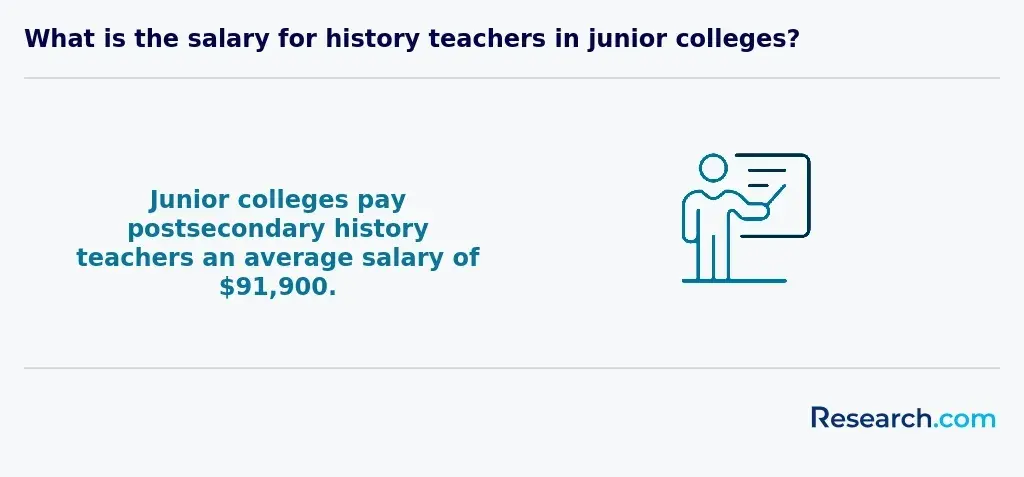
| Community college instructor | A master’s degree is typically required for these roles. | Teachers who want to work with adult learners and teach more specialized history topics. |
| University professor | A doctorate is commonly expected for many full-time university roles. | Educators interested in teaching, research, publication, and academic specialization. |
| Curriculum developer | Classroom experience, standards knowledge, and strong instructional design skills. | Teachers who want to design lessons, assessments, and instructional materials for districts or organizations. |
| Educational administrator | Teaching experience and additional leadership or administrative credentials. | Educators who want to influence school policy, teacher support, staffing, and program quality. |
Examples of potential work settings include high schools such as Boise High School or Eagle High School, community colleges such as the College of Western Idaho, and universities such as Idaho State University or the University of Idaho. Each setting has different credential expectations, so plan your education around the role you ultimately want, not only the job you want first.
If you are researching teacher preparation in other states, Louisiana teacher education programs can provide another point of comparison for certification structure and educator pathways.
What professional development opportunities are available for history teachers in Idaho?
Professional development helps Idaho history teachers stay current with state standards, instructional technology, classroom assessment, local history resources, and culturally responsive teaching practices. It also supports certificate renewal, leadership opportunities, and stronger student outcomes.
- State and district workshops: These sessions may focus on instructional strategies, assessment, standards alignment, and ways to incorporate Idaho history into lessons.
- Professional educator networks: Curriculum committees, social studies councils, and district teams can help teachers share materials and solve classroom challenges.
- History and education conferences: Conferences give teachers access to new scholarship, lesson models, primary-source activities, and peer collaboration.
- Online seminars and webinars: Virtual professional development can be especially useful for rural educators or teachers balancing work and family commitments.
- Museum and archive programs: Local history organizations can help teachers design lessons using artifacts, oral histories, maps, photographs, and other primary sources.
How to choose professional development that is worth your time
- Prioritize sessions that connect directly to your grade level and standards.
- Look for training that gives you classroom-ready materials, not only general theory.
- Ask whether the hours count toward district or certification requirements.
- Choose at least some training in educational technology, AI literacy, and source evaluation.
- Build a portfolio of lesson plans, assessments, and student work samples from your professional learning.
What additional steps can aspiring history teachers take to prepare for a career in Idaho?
Aspiring teachers should map their route before enrolling in a degree or credential program. Start by identifying the grade level you want to teach, then confirm the corresponding Idaho certification requirements, subject-area expectations, and approved preparation options. If your goal is secondary education, review how to become a high school history teacher in Idaho so you can align your coursework, field experience, and exam preparation with high school history and social studies roles.
Helpful preparation steps include tutoring students, volunteering in schools, working as a substitute if eligible, joining history or education organizations, and building confidence with primary-source analysis. Strong candidates can explain not only historical content, but also how they will make complex topics accessible, accurate, and engaging for students with different reading levels and backgrounds.
Can history teaching skills lead to alternative educational careers in Idaho?
Yes. History teachers develop skills that transfer well to other education and communication-focused careers: research, writing, public speaking, curriculum planning, student assessment, and group facilitation. These abilities can support movement into instructional coaching, education administration, museum education, curriculum development, tutoring, educational publishing, and community education roles.
Some educators also explore student-support fields that rely on communication and learning science. If you are interested in a related but clinically distinct path, review how to become a speech pathologist in Idaho to understand how that career differs in education, licensure, and scope of practice.
Should I pursue further education to advance my history teaching career in Idaho?
Further education can be useful, but it should serve a clear purpose. A master’s degree, graduate credits, leadership credential, or targeted certificate may help you qualify for higher-level roles, improve placement on some salary schedules, teach dual-credit courses, or move into administration or curriculum work. However, additional education also costs time and money, so evaluate the likely return before enrolling.
| Further Education Option | When It Makes Sense | When to Be Cautious |
| Master’s in education | You want stronger teaching methods, possible salary-schedule benefits, or leadership preparation. | The program is expensive and does not improve your district pay or career options. |
| Master’s in history | You want deeper subject expertise or future community college teaching possibilities. | You need a credential for K-12 teaching first and the program does not include educator preparation. |
| Additional endorsement | You want broader hiring flexibility across social studies, English, elementary education, or another area. | The endorsement does not align with jobs in your region. |
| Administrative credential | You want to become a department chair, assistant principal, principal, or district leader. | You prefer classroom teaching and do not want management responsibilities. |
If you are returning to school after working in another field, going back to school to be a teacher can help you compare degree and credential options before committing to a path.
Can interdisciplinary approaches elevate history teaching in Idaho?
Interdisciplinary teaching can make history more meaningful when it is done intentionally. Strong history instruction already requires reading, writing, geography, data interpretation, economics, civics, and media literacy. Connecting these skills helps students see history as evidence-based inquiry rather than memorization.
For example, a teacher might use maps to explain migration, charts to analyze economic change, speeches to study rhetoric, or local environmental data to discuss land use and policy. Quantitative reasoning can also support stronger historical analysis, particularly when students examine population shifts, election results, budgets, or industrial growth. Educators interested in cross-subject pedagogy can compare methods used in How to become a middle school math teacher in Idaho?.
What future trends could impact history teaching in Idaho?
Several trends may shape history teaching in Idaho: classroom technology, AI-generated content, renewed attention to civic education, changing curriculum debates, and demand for stronger source-evaluation skills. Teachers will increasingly need to help students distinguish credible sources from weak or misleading information.
AI tools can support lesson planning, document analysis, accessibility, and feedback, but they also create new risks. Students may submit AI-generated writing, encounter inaccurate summaries, or rely on unsourced historical claims. History teachers who understand AI limitations can turn these challenges into lessons about evidence, authorship, bias, and verification.
Teachers who want a faster path into the profession should still avoid choosing a program only because it appears simple. Review the easiest teaching degree as a starting point, but always verify whether the degree meets Idaho certification goals, school district expectations, and your long-term career plans.
Can collaboration with local libraries enhance history education in Idaho?
Yes. Libraries can strengthen history instruction by giving students access to primary sources, local archives, newspapers, photographs, oral histories, community exhibits, and research support. These resources help students connect statewide and national events to people, places, and decisions in their own communities.
Effective library partnerships might include archive-based research projects, local history exhibits, historical newspaper analysis, community interviews, or lessons on evaluating sources. Teachers interested in deeper collaboration with library professionals can review how to become a school librarian in Idaho to better understand the training and responsibilities behind school library work.
Should I pursue dual certifications to expand my career options in Idaho?
Dual certification can be a smart strategy if it aligns with actual hiring demand in the districts where you want to work. A second credential may allow you to teach multiple subjects, move between grade levels, or remain competitive when standalone history openings are limited. It can also help small or rural schools that need teachers who can cover more than one assignment.
However, dual certification is not always necessary. It adds coursework, exams, and cost, so choose an additional area only if it supports your career goals. Elementary education may be useful for educators who enjoy younger learners and broader instruction; to compare that option, review how to become an elementary school teacher in Idaho.
How do public and private school teaching roles compare for history educators in Idaho?
Public and private school history teaching jobs can differ in certification expectations, curriculum flexibility, salary structure, class size, benefits, and hiring process. Public schools generally follow state certification rules closely, while private schools may have more flexibility in hiring depending on their governance and accreditation requirements.
| Factor | Public Schools | Private Schools |
| Certification | State certification is typically required for teaching assignments. | Requirements may vary by school, though certification can still improve competitiveness. |
| Curriculum | Instruction must align with state and district standards. | Schools may have more control over curriculum emphasis and instructional approach. |
| Pay and benefits | Often tied to district salary schedules and public benefits systems. | Compensation packages vary widely by institution. |
| Hiring timeline | District hiring may follow formal posting and contract cycles. | Hiring can be more individualized and school-specific. |
| Best fit | Teachers who want a state-standardized credential path and public school career ladder. | Teachers who value mission-specific school cultures or smaller institutional settings. |
If you are considering independent or faith-based schools, review the private school teacher requirements in Idaho before assuming the hiring standards will match public school rules.
Should history teachers develop additional English teaching skills in Idaho?
Additional English and literacy skills can make history teachers more effective because history classes require reading complex texts, writing arguments, evaluating sources, and discussing competing interpretations. Even if you do not pursue an English credential, training in reading comprehension, academic writing, vocabulary instruction, and discussion facilitation can improve student learning.
A formal English endorsement may also expand job options if districts need teachers who can cover multiple humanities courses. To compare that pathway, review how to become an English teacher in Idaho.
How can Idaho history teachers foster inclusive and culturally responsive classrooms?
Inclusive history teaching does not mean lowering academic standards. It means helping students examine evidence from multiple perspectives, understand whose voices were preserved or excluded, and analyze historical events with accuracy and context. In Idaho, this can include Native history, migration, labor, agriculture, local communities, national conflicts, civic institutions, and regional development.
Practical strategies include using primary sources from different communities, teaching students how to evaluate bias, connecting local history to national themes, and creating classroom norms for respectful discussion. Teachers should also stay aligned with professional expectations and state rules; Idaho teacher certification types and requirements can help educators understand how certification areas and professional standards fit into their planning.
Can integrating art enhance history teaching practices in Idaho?
Art can help students interpret history visually and emotionally, especially when lessons include political cartoons, photographs, architecture, propaganda posters, murals, maps, artifacts, and memorials. Visual analysis encourages students to ask who created a source, for what audience, with what message, and in what historical context.
Teachers might use visual timelines, museum-style exhibits, student-created historical maps, or artifact analysis projects to deepen understanding. History teachers who want stronger arts integration can learn from the requirements to be an art teacher in Idaho, while still keeping historical evidence and standards at the center of instruction.
What are the best resources for history teachers in Idaho?
The strongest resources for Idaho history teachers combine state standards, local primary sources, professional development, and classroom-ready materials. Teachers should build a resource set that supports both required content and inquiry-based learning.
- Idaho State Department of Education resources: The Idaho SDE provides standards-related materials, certification guidance, and instructional information that can help teachers align lessons with state expectations.
- Idaho Digital Learning Alliance (IDLA): IDLA offers online courses and digital learning support that may help teachers supplement instruction, especially in rural or remote communities.
- Idaho State Historical Society (ISHS): ISHS provides educational resources, primary-source materials, archives, museum programs, guided experiences, and teacher workshops focused on Idaho history.
Idaho Content Standards K-12 Social Studies
Idaho’s social studies standards should be one of the first resources future and current teachers review. Standards help teachers identify what students are expected to know and do at each grade level, including historical thinking, civic understanding, geography, economics, and source analysis.
Useful classroom resources often include lesson plans, maps, local archives, historical documents, museum materials, multimedia sources, and professional learning communities. New teachers should also ask their district which curriculum materials are required, which are optional, and how much flexibility they have in selecting supplemental sources.
If you are comparing certification systems outside Idaho, reviewing Virginia teaching credential requirements can help you see how teacher preparation and credentialing vary by state.
Is Idaho a good state for history teachers?
Idaho can be a good state for history teachers who value community connection, local history, and opportunities to shape students’ civic understanding. However, it is important to evaluate both the benefits and trade-offs before committing to the profession.
| Factor | Potential Advantage | Possible Challenge |
| Job market | Idaho has a steady need for qualified educators, including social studies teachers. | Openings can vary by district, grade level, and location. |
| Salary | The average salary of $56,365 annually can provide a stable professional income. | Pay may be lower than in some other states or districts, depending on location and experience. |
| Professional support | State, district, and community resources can support teacher growth. | Mentoring quality and professional development access can differ across districts. |
| Union representation | Organizations such as the Idaho Education Association advocate for educator interests. | Collective bargaining support may be less extensive than in many other states. |
| Curriculum flexibility | Teachers may be able to incorporate local history and community-based projects. | Curriculum debates and uneven supplemental resources can complicate planning. |
| Cost of living | The state’s cost of living at 106.1 can help some teachers manage expenses. | Affordability still depends heavily on housing, family size, commute, and district salary. |
The best fit is usually a teacher who wants to work closely with communities, adapt lessons to local context, and keep improving through professional development. Candidates who need very high starting pay, extensive collective bargaining protections, or abundant urban teaching options should compare Idaho with other states before deciding.

How can aspiring teachers streamline their path to teaching history in Idaho?
The fastest responsible path depends on your starting point. A first-time college student may need a traditional bachelor’s degree with educator preparation, while a career changer who already holds a bachelor’s degree may be able to use an alternative certification route. The key is to move quickly without skipping requirements that determine whether you can actually be hired.
If cost and speed are major concerns, explore the cheapest way to get teaching credential in Idaho. Use that information to compare program price, time to completion, testing support, student-teaching placement, and whether the route is accepted for the role you want.
Step-by-step plan to shorten your timeline
- Identify whether you want middle school, high school, or another teaching level.
- Confirm the Idaho certification and endorsement requirements for that assignment.
- Choose an approved program that matches your current education level.
- Ask for a transcript review before enrolling, especially if you have prior college credits.
- Schedule required exams early enough to allow for retakes if needed.
- Complete field experience in schools similar to where you want to work.
- Keep digital and paper copies of every transcript, test score, background-check record, and program verification form.
What are the challenges of teaching history to students in Idaho?
History teaching can be highly rewarding, but it is not simple. Idaho history teachers must balance standards, community expectations, student engagement, source quality, and limited instructional time. Strong preparation helps teachers handle these pressures professionally.
- Curriculum variation: Districts may differ in how they use supplemental materials such as The Story of America, which can create uneven coverage across classrooms.
- Difficult historical topics: Lessons involving race, culture, conflict, inequality, or contested public memory may require careful planning and strong discussion norms.
- Student engagement: The National Assessment of Educational Progress (NAEP) reported that only 13% of eighth-grade students nationwide scored proficient in U.S. history, underscoring the need for more engaging and effective instruction.
- Resource gaps: Some schools may have stronger access to archives, technology, updated materials, and field-trip opportunities than others.
- Reading demands: Students often struggle with primary sources, academic vocabulary, and long-form historical arguments.
- Technology and AI: Teachers must help students verify information, cite sources, and recognize inaccurate or oversimplified AI-generated content.
Better ways to handle common classroom challenges
| Common Mistake | Better Approach |
| Relying only on textbook summaries | Use primary sources, maps, images, oral histories, and structured inquiry questions. |
| Avoiding difficult topics entirely | Teach them with clear objectives, credible sources, respectful norms, and historical context. |
| Assuming students know how to evaluate sources | Model sourcing, corroboration, bias analysis, and evidence-based writing. |
| Using technology without verification | Require citations, source checks, and discussion of AI limitations. |
| Planning lessons without local relevance | Connect national and global themes to Idaho communities, archives, and regional history. |
The chart below from the National Center for Education Statistics illustrates the reasons why teachers switch schools.
Here’s What History Teachers in Idaho Have to Say About Their Careers
- Alan: Teaching history in Idaho has given him a way to help students connect past events with their own civic identity, while community support and the state’s setting add meaning to the work.
- Austin: He values the chance to combine national history with local stories that students recognize, especially when those connections make the subject feel personal and relevant.
- Jackson: He emphasizes that collaborative projects on Idaho history can build classroom community, strengthen student curiosity, and make historical learning more memorable.
Key Insights
- Becoming a history teacher in Idaho usually requires a bachelor’s degree, approved educator preparation, clinical experience, required exams, a background check, and state certification.
- History teachers often benefit from broader social studies preparation because Idaho schools may need educators who can teach civics, geography, government, and related subjects.
- The average salary for history teachers in Idaho is $56,365 annually, but actual pay depends on district, experience, education level, and added responsibilities.
- Financial aid options such as the Idaho Opportunity Scholarship, Idaho Governor's Cup Scholarship, Federal Pell Grant, and private scholarships can reduce preparation costs.
- Out-of-state teachers should not assume automatic reciprocity; Idaho reviews credentials and documentation individually.
- Dual certification, graduate study, literacy skills, and technology competence can expand long-term career options, but each should be weighed against cost and career value.
- The strongest history teachers combine accurate content knowledge with source evaluation, inclusive perspectives, local history, and practical classroom strategies.
Related Articles for Nearby States
- 2027 How to Become a History Teacher in Montana: Requirements & Certification
- 2027 How to Become a History Teacher in Washington: Requirements & Certification
- 2027 How to Become a History Teacher in Oregon: Requirements & Certification
- 2027 How to Become a History Teacher in Nevada: Requirements & Certification
- 2027 How to Become a History Teacher in Utah: Requirements & Certification
- 2027 How to Become a History Teacher in Wyoming: Requirements & Certification
- 2027 How to Become a History Teacher in California: Requirements & Certification
- 2027 How to Become a History Teacher in Colorado: Requirements & Certification
- 2027 How to Become a History Teacher in Arizona: Requirements & Certification
- 2027 How to Become a History Teacher in New Mexico: Requirements & Certification
References:
- DC.gov (n.d.). Out-of-State Credential Holders (Reciprocity). Retrieved from https://osse.dc.gov/page/out-state-credential-holders-reciprocity
- Idaho Capital Sun (2023). Supplemental History Materials for Idaho Students are a Good Idea. Retrieved from https://idahocapitalsun.com/2023/08/15/supplemental-history-materials-for-idaho-students-are-a-good-idea/
- Idaho Department of Education (n.d.). Be an Educator. Retrieved from https://sde.idaho.gov/be-an-educator/
- Idaho Department of Education (n.d.). Certification. Retrieved from https://www.sde.idaho.gov/cert-psc/cert/
- Idaho State Historical Society (n.d.). Educational Resources. Retrieved from https://history.idaho.gov/educational-resources/
- Idaho State Board of Education (n.d.). Idaho Opportunity Scholarship. Retrieved from https://boardofed.idaho.gov/scholarships/idaho-opportunity-scholarship/
- National Center for Education Statistics (2024). Report on the Condition of Education. Retrieved from https://nces.ed.gov/pubs2024/2024144.pdf
- O*Net OnLine (2024). History Teachers, Postsecondary. Retrieved from https://www.onetonline.org/link/localtrends/25-1125.00?st=ID
- The Nation’s Report Card (n.d.). Achievement-Level Results. Retrieved from https://www.nationsreportcard.gov/ushistory/results/achievement/
- U.S. Bureau of Labor Statistics (n.d.). Occupational Employment and Wages, May 2023: History Teachers, Postsecondary. Retrieved from https://www.bls.gov/oes/current/oes251125.htm
- Zippia (n.d.). Best States for a History Teacher. Retrieved from https://www.zippia.com/history-teacher-jobs/best-states/
- ZipRecruiter (2024). High School Teacher Salary in Idaho. Retrieved from https://www.ziprecruiter.com/Salaries/High-School-Teacher-Salary--in-Idaho#
- ZipRecruiter (2024). History Teacher Salary in Idaho. Retrieved from https://www.ziprecruiter.com/Salaries/History-Teacher-Salary--in-Idaho#
Other Things You Should Know About Becoming a History Teacher in Idaho
Idaho requires applicants for teacher certification to submit a fingerprint-based criminal history check through the Idaho State Department of Education and approved vendors. The check must be cleared before a standard teaching certificate is issued. Any disqualifying offense can delay or prevent certification.
To become a certified history teacher in Idaho in 2027, you must pass the Praxis Subject Assessments in History. This test assesses your knowledge of historical concepts, events, and methodologies. Check the Idaho State Department of Education for specific passing scores and requirements.


