2027 Best Online Higher Education Master’s Degree Programs

Co-Founder and Chief Data Scientist
Choosing an online master’s in higher education is usually a career decision, not just an academic one. Most prospective students are already working in education, student services, admissions, advising, academic operations, nonprofit education, or a related field, and they want to know whether a graduate credential will help them move into better roles without leaving the workforce. This guide explains what online higher education master’s programs teach, how to compare schools, what they cost, which careers they can support, and how to judge whether the degree fits your goals before you enroll.
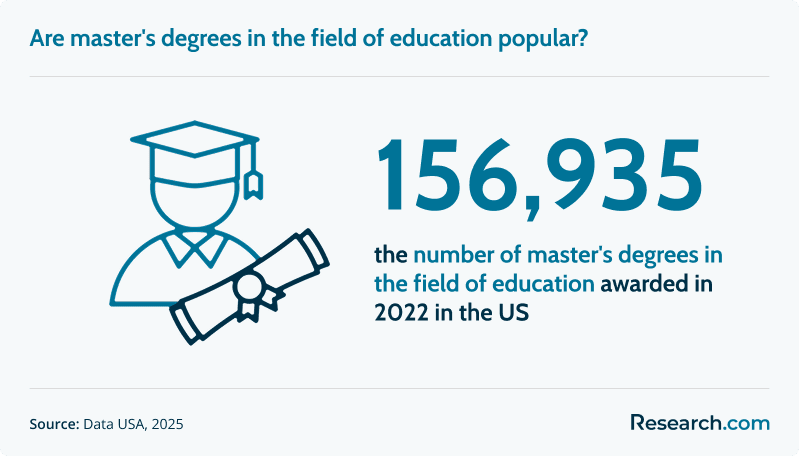
The degree matters because colleges and universities continue to need professionals who understand student success, enrollment pressure, institutional policy, finance, compliance, online learning, and data-informed decision-making. In 2022, over 156,935 master's degrees in education were awarded in the US, which shows how common graduate preparation has become across education careers. Still, the right program depends on accreditation, cost, flexibility, specialization, practicum options, and the kind of higher education role you want after graduation.
Quick answer: Is an online master’s in higher education worth considering?
- An online higher education master’s degree can be a practical option for working professionals who want to move into postsecondary administration, student affairs, academic advising, enrollment management, institutional research, or education leadership roles.
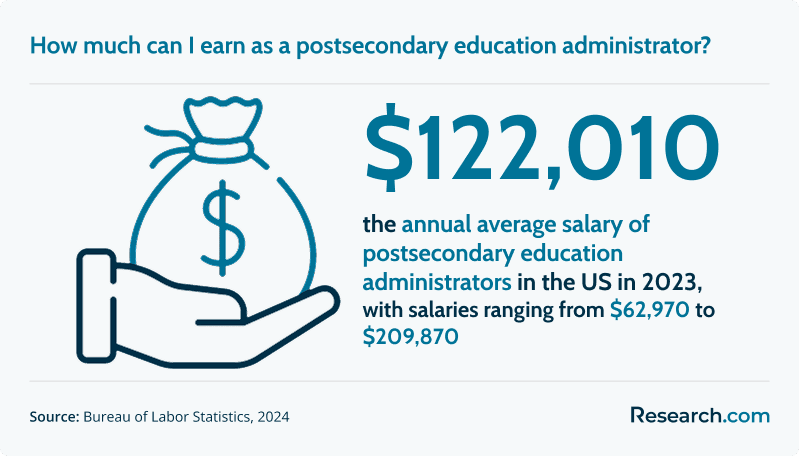
- Postsecondary education administrators in the US earned an average annual salary of $122,010 in 2023, with reported earnings ranging from $62,970 to $209,870 depending on role, institution type, experience, and location.
- The main advantage of studying online is flexibility. Students can often keep working while completing graduate coursework, but they should still verify accreditation, practicum expectations, career support, total cost, and whether the program’s specialization matches their target role.
What can I expect from the best online higher education master's degree programs?
The best online higher education master’s degree programs prepare students to understand how colleges, universities, community colleges, and postsecondary organizations operate. Coursework usually covers administration, student development, institutional policy, higher education law, finance, assessment, leadership, and equity in postsecondary settings.
Most programs are designed for adults who need schedule flexibility. Many use asynchronous coursework, while others include live online sessions, group projects, field experiences, or short residencies. A strong program should do more than assign readings. It should help students apply concepts through case studies, practicum work, capstone projects, institutional research, advising simulations, enrollment planning, or policy analysis.
Accreditation is one of the first details to verify. Regional or institutional accreditation helps confirm that the school meets recognized academic standards and is more likely to be accepted by employers, doctoral programs, and financial aid systems. Students should also compare specializations such as student affairs, enrollment management, academic advising, higher education policy, online learning administration, and institutional research.
| Program feature | Why it matters | What to check before applying |
| Accreditation | Signals that the institution meets recognized academic standards. | Confirm the accreditor on the school website and through official accreditation sources. |
| Flexible course format | Helps working adults balance graduate study with employment and family responsibilities. | Ask whether courses are asynchronous, synchronous, hybrid, accelerated, or cohort-based. |
| Practicum or capstone | Creates evidence of applied skills for resumes, interviews, and promotions. | Review whether projects can be completed at your current workplace or remotely. |
| Specializations | Allows the degree to align with specific roles in advising, student affairs, enrollment, policy, or administration. | Compare required courses, electives, and faculty expertise in your chosen area. |
| Career services | Can help online students build networks and identify role-specific opportunities. | Look for virtual career coaching, alumni access, employer events, and internship support. |
Where can I work after graduating from the best online higher education master's degree programs?
Graduates commonly work in colleges, universities, community colleges, technical schools, online education providers, and nonprofit education organizations. Typical departments include student affairs, academic advising, admissions, financial aid, institutional research, registrar operations, residential life, academic support, diversity and inclusion, and enrollment management.
The degree can also be useful outside traditional campus settings. Some graduates move into government agencies, education policy organizations, higher education consulting, workforce development, corporate learning, instructional design, or nonprofit student-success initiatives. The best fit depends on the student’s prior experience, specialization, local job market, and willingness to build practical experience while enrolled.
Higher-paying or more senior roles often require several years of relevant experience in addition to the master’s degree. Research universities, medical schools, large public systems, online program management organizations, and corporate learning divisions may offer advanced opportunities, but they can also be competitive and may expect evidence of leadership, data analysis, budgeting, or strategic planning experience.
How much can I make with a degree from the best online higher education master's degree program?
For postsecondary education administrators, the average annual salary was $122,010 in 2023, with salaries ranging from $62,970 to $209,870. Pay varies widely by job function, institutional setting, location, experience level, and management responsibility. Professionals working in colleges and universities typically earned around $125,950, while those in government agencies and medical institutions could earn significantly more, with salaries reaching $175,030 or higher. The highest-paying states for these roles included New York, Delaware, and New Jersey, where salaries exceeded $145,000 per year.
Salary data should be used as a benchmark, not a guarantee. A master’s degree may strengthen a candidate’s qualifications, but compensation also depends on prior work history, supervisory experience, institutional budget, union or public-sector pay structures, and the specific department hiring for the role.
- Best Online Higher Education Master’s Degree Programs for 2027
- How long does an online higher education master’s degree take?
- Online vs. on-campus higher education master’s programs
- Average cost of an online higher education master’s degree
- Financial aid options for online graduate students
- Admissions requirements and prerequisites
- Common courses in higher education master’s programs
- Specializations in online higher education programs
- Challenges online higher education graduates may face
- How to choose the right online higher education master’s program
- Certification and licensure considerations
- Is the degree a good investment?
- Should you continue into a doctoral program?
- How employers view online higher education master’s degrees
- Career paths for graduates
- Job market outlook
- Trends shaping online higher education master’s programs
- How online programs stay professionally relevant
- Career services and post-graduation support
- Supplementary credentials and career flexibility
- Interdisciplinary learning in higher education leadership
Best Online Higher Education Master’s Degree Programs for 2027
How do we rank schools?
The 2027 selection of online master’s programs in higher education is based on research conducted by Research.com using a dedicated methodology. The review uses recognized education data sources, including the IPEDS database from the National Center for Education Statistics for institutional information, the Peterson's Database and its Distance Learning Licensed Data Set for online program details, and the College Scorecard for cost and outcome information. Readers should still confirm current tuition, admission rules, and program format directly with each school before applying.
1. Northeastern University - MEd in Higher Education Administration
Northeastern University’s Master of Education (MEd) in higher education administration is a fully online program built for professionals preparing for leadership and administrative roles in postsecondary education. The curriculum combines higher education theory with applied learning, giving students opportunities to examine real institutional challenges and connect with education professionals beyond their local area. Coursework includes diversity, equity, and inclusion topics, with attention to social justice, historically Black colleges and universities (HBCUs), and tribal colleges. Students complete a capstone that involves research, presentation to senior practitioners, and mock interview practice that may support career preparation. Networking opportunities include a summer convening and a residency poster session.
- Program Length: 1-2 years
- Required Credits to Graduate: 45
- Cost per Credit: $726 (per quarter credit)
- Accreditation: New England Commission of Higher Education (NECHE)
2. Grace College and Theological Seminary - Master's of Higher Education
Grace College and Theological Seminary offers an online master’s in higher education that connects postsecondary administration with a biblical worldview. The program introduces the history of higher education and then moves into legal, governmental, financial, research, evaluation, and current-issues coursework. It is intended for professionals who want to lead or advance within Christian or secular higher education environments. Courses are delivered online and taught by faculty with terminal degrees and professional experience in the field.
- Program Length: 2 years
- Required Credits to Graduate: 36
- Total Cost: $16,704
- Accreditation: Higher Learning Commission (HLC)
3. Wilmington University - MEd in Higher Education
Wilmington University’s online MEd in higher education gives students a modular path into postsecondary teaching, student affairs, or administration. The program starts with a 15-credit Foundations of Higher Education certificate focused on research-based practice. Students then choose another 15-credit concentration and finish with a three-credit capstone. The program also includes an immersive field experience designed to help students apply leadership concepts and build professional connections. Courses are fully online and offered in seven-week formats for working adults.
- Program Length: 14 months
- Concentrations: Teaching in Higher Education; Student Affairs in Higher Education; Administration in Higher Education
- Required Credits to Graduate: 33
- Cost per Course: $1,611 (at $537 per credit)
- Accreditation: New England Commission of Higher Education (NECHE)
4. Purdue University - Master's in Higher Education Administration
Purdue University’s online master’s in higher education administration is designed for students preparing for roles in administration, teaching support, and student services. Coursework emphasizes research, writing, critical thinking, multicultural issues, student development, technology, public policy, and access to higher education. Students study the history and organization of postsecondary institutions while learning from faculty with field experience. Purdue Global also offers support through its Graduate Resource Center, including career services, networking resources, and professional development tools.
- Program Length: ~1 year
- Concentrations: College Administration and Leadership; Student Affairs
- Required Credits to Graduate: 50
- Cost per Credit: $420
- Accreditation: Higher Learning Commission (HLC)
5. Abilene Christian University - MEd in Higher Education
Abilene Christian University’s online MEd in higher education combines applied research with faith-informed learning. The program is intended for students who want to evaluate academic programs, influence policy, support enrollment, and improve student success in college and university settings. Concentrations include academic advising, student affairs leadership, and enrollment management. The curriculum emphasizes research, data analysis, and practical application, making it relevant for current higher education professionals and career changers. It can also provide preparation for future doctoral study in higher education.
- Program Length: 21 months
- Concentrations: Academic Advising; Student Affairs Leadership; Enrollment Management
- Required Credits to Graduate: 33
- Cost per Credit: $650
- Accreditation: Southern Association of Colleges and Schools Commission on Colleges (SACSCOC)
6. Drexel University - MS in Higher Education Leadership
Drexel University’s online MS in higher education leadership covers student development, recruitment, diversity, globalization, policy, legal and ethical issues, and risk management. The program is built for professionals seeking entry- to mid-level leadership opportunities or a transition into higher education. Graduates may use the degree in colleges, universities, government agencies, nonprofit organizations, international education settings, and policy-related environments. The program can also support students who plan to pursue doctoral study later.
- Program Length: 2 years
- Concentrations: Education Policy; Global and International Education; Learning Technologies and Instructional Design; Mind, Brain, and Learning; Student Development and Affairs; Creativity & Innovation; Human Resource Development
- Required Credits to Graduate: 45
- Cost per Credit: $1,111
- Accreditation: Middle States Commission on Higher Education (MSCHE)
7. Madonna University - MA in Higher Education Administration
Madonna University offers an MA in higher education administration that combines administrative theory with practical preparation for college and university work. Students study student development, leadership, governance, finance, diversity, and institutional operations. The program offers several delivery options, including online, on-campus, synchronous, and asynchronous formats. Students complete a professional practicum and a research project, which can help connect coursework to career goals in academic support, student success, enrollment management, and administration.
- Program Length: 2 years
- Required Credits to Graduate: 36
- Estimated Cost per Credit: $1,000
- Accreditation: Higher Learning Commission (HLC)
8. Fairleigh Dickinson University-Metropolitan Campus - MA in Higher Education Administration
Fairleigh Dickinson University’s online MA in higher education administration provides preparation for administrative and student support roles. Students study admissions, financial aid, risk management, strategic planning, and other core areas of campus administration. The curriculum includes 15 elective credits, a master’s project, and an internship so students can customize part of the degree and gain applied experience. Students interested in continued graduate study may be able to apply a portion of credits toward FDU’s online EdD in higher education.
- Program Length: 2 years
- Required Credits to Graduate: 36
- Cost per Credit: $672
- Accreditation: Middle States Commission on Higher Education (MSCHE)
9. Arizona State University - MEd in Higher and Postsecondary Education
Arizona State University’s online MEd in higher and postsecondary education prepares students for work in universities, community colleges, colleges, and EdTech organizations. The program emphasizes access, equity, community engagement, institutional structures, student outcomes, faculty collaboration, and leadership development. A required practicum gives students applied experience, while the capstone asks them to connect program learning to real postsecondary challenges. Faculty expertise includes sociology, organizational studies, and ethnic studies.
- Program Length: ~1 to 2 years
- Required Credits to Graduate: 30
- Cost per Credit: $765
- Accreditation: Higher Learning Commission (HLC)
10. Pennsylvania State University - MEd in Higher Education
Pennsylvania State University’s online MEd in higher education is designed for entry- to mid-level professionals who want stronger preparation in administration, student engagement, and institutional research. Penn State brings more than 50 years of experience in higher education training to a curriculum focused on institutional policy, organizational structures, communication, and data-driven decisions. Students may choose an emphasis in administration, student engagement, or institutional research to align the program with career goals.
- Program Length: ~1 to 2 years
- Emphasis Areas: Administration; Student Engagement, and Institutional Research.
- Required Credits to Graduate: 30
- Cost per Credit: $765
- Accreditation: Middle States Commission on Higher Education (MSCHE)
| School | Program | Credits | Notable fit |
| Northeastern University | MEd in Higher Education Administration | 45 | Students who want experiential learning and DEI-focused coursework. |
| Grace College and Theological Seminary | Master's of Higher Education | 36 | Students seeking a Christian perspective on higher education leadership. |
| Wilmington University | MEd in Higher Education | 33 | Students who want short course formats and concentration flexibility. |
| Purdue University | Master's in Higher Education Administration | 50 | Students interested in administration, leadership, and student affairs. |
| Abilene Christian University | MEd in Higher Education | 33 | Students targeting advising, student affairs, or enrollment management. |
How long does it take to complete an online higher education master's degree program?
Completion time depends on the number of required credits, course length, enrollment status, transfer credit rules, and whether the program runs year-round. Many full-time students complete an online higher education master’s program in about one and a half to two years. Part-time students often take three to four years because they are balancing coursework with employment and personal responsibilities.
Students who want to finish faster can compare one year online masters programs. Accelerated formats usually require heavier course loads, shorter terms, and consistent enrollment, so they are best for students who can protect enough weekly study time.
The best timeline is the one you can complete without sacrificing work quality, finances, or learning. A faster route may help someone move into a promotion or career transition sooner, while a slower route may be better for students with demanding jobs. If you are comparing education fields more broadly, you may also want to review what can you do with a master’s in early childhood education to understand how graduate education pathways differ by student population and setting.
With over 156,000 master's degrees in education awarded in 2022, graduate credentials remain a common pathway for education professionals seeking advancement.
| Enrollment pace | Typical completion time | Best for | Trade-off |
| Accelerated | About 1 year in some programs | Students who can handle intensive coursework and want faster completion. | Less schedule flexibility and a heavier workload. |
| Full-time | About one and a half to two years | Students who want steady progress while managing limited outside obligations. | May be difficult with full-time employment. |
| Part-time | Often three to four years | Working adults with demanding jobs, caregiving duties, or budget constraints. | Longer time before graduation and potential tuition changes over time. |
How does an online higher education master's degree program compare to an on-campus program?
An accredited online higher education master’s program can cover similar academic content as an on-campus program, but the student experience is different. Online programs are typically stronger for flexibility, geographic access, and working-adult scheduling. Campus programs may offer more spontaneous face-to-face networking, assistantships, and direct access to campus offices.
For professionals already employed in education, online study can be one of the more realistic paths because it avoids relocation and commuting. Students comparing flexible formats may also find value in Research.com’s guide to the best online degree programs for working adults.
Online learning is not automatically easier. Students need time management, comfort with digital platforms, and willingness to build relationships intentionally. In fields that depend on technical tools, such as the best geographic information systems programs online, online delivery often includes specialized platforms and remote collaboration; higher education programs similarly rely on learning management systems, video discussions, group work, and virtual advising or administrative simulations.
| Factor | Online program | On-campus program |
| Flexibility | Usually better for working adults, especially if courses are asynchronous. | Often follows set class times and campus-based expectations. |
| Networking | Requires intentional participation in virtual events, discussion boards, and professional groups. | May provide easier access to faculty, peers, offices, and campus events. |
| Practical experience | May allow students to complete projects at their current workplace or local institution. | May offer campus assistantships, internships, or in-person field placements. |
| Cost factors | Can reduce commuting or relocation costs, but fees vary by school. | May include campus fees, housing, relocation, or transportation expenses. |
| Best fit | Working adults, rural students, military-connected students, and career changers who need location flexibility. | Students who want immersive campus life, assistantships, or face-to-face networking. |
What is the average cost of an online higher education master's degree program?
Online higher education master’s programs are typically shorter and less credit-heavy than doctoral options such as online EdD programs. For professionals who need a graduate credential for administrative or student support roles but do not yet need doctoral-level research or executive preparation, a master’s degree may be the more cost-efficient step.
Students can expect to pay around $737 per credit on average, with total tuition averaging $27,349. Tuition in the programs reviewed ranges from $16,704 to $49,995. Actual cost depends on tuition model, number of credits, fees, residency rules, transfer credits, employer benefits, and whether a student studies part time or full time.
The salary benchmark for postsecondary education administrators was $122,010 in 2023, but students should not evaluate ROI using salary alone. A better calculation includes total tuition, fees, books, lost work hours, loan interest, likelihood of promotion, local job availability, and whether the program builds skills employers request.
If you are comparing affordability across disciplines, Research.com also reviews options such as the most affordable online English degree, which may lead toward teaching, editing, writing, communications, or related careers.
| Cost item | Why it affects total price | Question to ask |
| Tuition per credit | The largest direct cost in most graduate programs. | Is the rate the same for online, out-of-state, and part-time students? |
| Required credits | More credits usually means higher tuition and more time enrolled. | How many credits are required after transfer or certificate credit review? |
| Fees | Online learning, technology, graduation, or practicum fees can add to tuition. | What is the full program cost, not just tuition? |
| Course load | Part-time enrollment may spread costs out but extend the timeline. | Will tuition change if I take longer to finish? |
| Employer support | Tuition assistance can reduce out-of-pocket costs. | Does my employer reimburse graduate coursework in higher education? |
What are the financial aid options for students enrolling in an online higher education master's degree program?
Graduate school can be expensive, but online students may qualify for several funding options. The best strategy is to combine aid sources when possible and borrow only after reviewing grants, scholarships, employer benefits, and payment plans.
Federal Student Aid (FAFSA)
The Free Application for Federal Student Aid (FAFSA) is the starting point for many US students seeking federal aid. Submitting the FAFSA can help determine eligibility for:
- Federal grants, such as the Pell Grant for eligible students
- Federal student loans, including subsidized and unsubsidized loans
- Work-study programs that allow eligible students to earn money while enrolled
Scholarships and Grants
Graduate education scholarships and grants may come from universities, professional associations, foundations, state programs, or private organizations. Some awards are merit-based, while others consider financial need, professional background, community service, or work with underserved student populations. Unlike loans, scholarships and grants generally do not need to be repaid.
Employer Tuition Assistance
Employees of colleges, universities, school systems, nonprofits, and education companies should ask about tuition reimbursement or tuition remission. Employer benefits can significantly lower the cost of an online master’s degree, but policies often include annual limits, grade requirements, repayment clauses, or restrictions on approved programs.
Private Loans
Private loans may help fill funding gaps, but they typically lack some of the protections and repayment options available with federal loans. Students should compare interest rates, repayment terms, co-signer requirements, and total repayment cost before borrowing privately.
Students pursuing public-service-aligned careers should also review field-specific funding possibilities. For example, those exploring healthcare and service-connected education benefits can compare pathways such as military nurse requirements to understand how scholarships, repayment programs, or service obligations may differ by profession.
Before enrolling, ask the school for a full cost of attendance estimate and a financial aid award letter. Then calculate what you would owe each term, what you would borrow in total, and whether the likely career benefit justifies that amount.
What are the prerequisites for enrolling in an online higher education master's degree program?
Admissions requirements vary, but most online higher education master’s programs expect applicants to show academic readiness, clear career goals, and, in some cases, professional experience in education or a related field.
- A bachelor's degree from an accredited institution. Most programs require a four-year undergraduate degree. Education, psychology, business, communication, public administration, or social science backgrounds may be relevant, though some schools accept applicants from many majors.
- Minimum GPA requirements. Many programs look for an undergraduate GPA of at least 2.5 to 3.0. Some schools review applicants below that range through conditional admission or a holistic review process.
- Professional experience in education. Programs focused on leadership may prefer or require experience in teaching, student services, admissions, advising, training, nonprofit education, or campus operations.
- Letters of recommendation. Applicants are often asked for two to three recommendations from supervisors, faculty members, or professional contacts who can speak to their readiness for graduate study.
- A personal statement or statement of purpose. This essay should connect the applicant’s background, career goals, and interest in higher education leadership to the program’s strengths.
- Standardized test scores, if required. Many programs have removed GRE or MAT requirements, but some institutions may still ask for scores.
- Prerequisite coursework or credentials. Applicants without an education background may need foundational coursework. Students planning a teaching-related pathway should also compare accredited online teaching degree programs because teacher preparation requirements are different from higher education administration preparation.
A strong application usually explains why the applicant wants to work in higher education, which student or institutional problems they want to help solve, and how the program’s curriculum supports that goal.
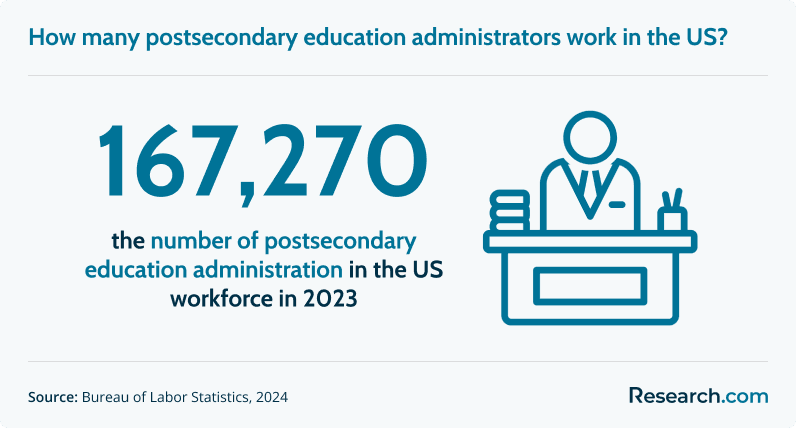
In 2023, there were around 167,270 postsecondary education administrators in the US workforce.
What courses are typically in an online higher education master's degree program?
Online higher education master’s programs are usually built around leadership, student support, policy, finance, law, research, and assessment. Course names vary by school, but many programs include topics similar to the following:
- Higher Education Leadership: Introduces leadership theories, organizational behavior, strategic planning, and decision-making in colleges and universities.
- Student Affairs Administration: Explains student development theory and the role of student affairs professionals in engagement, retention, wellness, and campus support.
- Higher Education Policy and Law: Examines governance, accreditation, student rights, compliance, and legal issues that affect postsecondary institutions.
- Diversity and Inclusion in Higher Education: Focuses on equity, access, accessibility, identity, campus climate, and strategies for supporting diverse student populations.
- Finance and Budgeting in Higher Education: Covers tuition models, budget planning, resource allocation, institutional funding, and financial decision-making.
- Assessment and Evaluation in Higher Education: Teaches students how to measure learning, program effectiveness, retention, and institutional outcomes using evidence.
These courses are meant to help graduates work across colleges, universities, technical schools, government agencies, and other settings where postsecondary training or education administration is important.
In 2023, most postsecondary education administrations, at 133,900, worked in colleges, universities, and professional schools, earning an average salary of $125,950. See the chart below for more employment details.
What types of specializations are available in online higher education master's degree programs?
Specializations help students focus their degree on a specific area of higher education work. The right choice should match the department, population, or function you want to serve after graduation.
- Higher Education Administration. Emphasizes governance, leadership, organizational strategy, and administrative decision-making.
- Student Affairs and Services. Prepares students for roles involving student development, engagement, residential life, campus programs, and support services.
- Academic Advising. Focuses on degree planning, academic progress, career conversations, student success strategies, and retention support.
- Enrollment Management and Admissions. Covers recruitment, admissions operations, financial aid strategy, retention, and student enrollment planning.
- Educational Policy and Leadership. Examines institutional, state, and federal policy issues shaping postsecondary education.
- Online and Distance Learning Administration. Prepares students to support digital learning environments, instructional technology, online student engagement, and virtual program operations.
- Finance and Budgeting in Higher Education. Builds skills in financial planning, tuition strategy, budget analysis, and resource allocation.
- Health Professions Education. Supports students interested in academic administration for medical, nursing, allied health, or health professions programs.
Specialization can influence both job fit and earning potential. Some of the highest-paying industries for postsecondary education administrators are outside traditional university administration. Those working in physician's offices earned the highest with an annual average salary of $317,070 in 2023.
| If your goal is... | Consider specializing in... | Relevant roles |
| Helping students choose courses and persist to graduation | Academic Advising or Student Affairs and Services | Academic advisor, student success coordinator, retention specialist |
| Growing enrollment and improving recruitment strategy | Enrollment Management and Admissions | Admissions counselor, enrollment manager, recruitment coordinator |
| Working with institutional planning and operations | Higher Education Administration or Finance and Budgeting in Higher Education | Program administrator, operations manager, assistant director |
| Supporting digital programs | Online and Distance Learning Administration | Online learning administrator, instructional support manager |
| Working in medical or allied health education | Health Professions Education | Clinical education coordinator, health professions program administrator |
What challenges do online higher education master's degree graduates face?
Online graduates can face the same job competition as campus-based graduates, but they may need to be more intentional about building experience and professional visibility. The most common challenge is proving applied readiness, especially for candidates trying to move from coursework into leadership, advising, student affairs, or enrollment roles.
Some students also underestimate the networking gap. Online programs may offer strong faculty access and peer interaction, but students usually need to attend virtual events, join professional associations, seek mentors, and volunteer for projects to build the same kind of relationships that campus students may develop more naturally.
Employer skepticism is less about the online format and more about quality signals. Candidates should be ready to show that the institution is accredited, the curriculum was rigorous, and the degree included practical work. For competitive roles, reviewing masters in education jobs can help students identify which skills, credentials, and experiences employers value most.
How do you choose the best online higher education master's degree program?
The best online higher education master’s program is the one that fits your career target, schedule, budget, and learning needs. A well-known school is not always the best choice if the specialization is wrong, the practicum is weak, or the total cost is unrealistic.
- Accreditation. Confirm that the institution is accredited by a recognized accreditor and that employers or doctoral programs are likely to accept the credential.
- Curriculum and Specializations. Review required courses and electives to see whether the program prepares you for advising, student affairs, enrollment, institutional research, policy, or administration.
- Program Format and Flexibility. Compare asynchronous, synchronous, hybrid, accelerated, and cohort-based formats. Choose based on how you actually study, not only on speed.
- Faculty Expertise. Look for faculty with higher education leadership, research, policy, student affairs, or administrative experience relevant to your goals.
- Student Support Services. Check whether online students receive career coaching, library access, writing support, mentorship, technical support, and networking opportunities.
- Cost and Financial Aid. Compare total program cost, not just cost per credit. Include fees, books, loan interest, and employer assistance.
- Alumni Outcomes. Ask where graduates work, what roles they hold, and whether the school can provide examples of career advancement without promising specific results.
Students should also understand the broader US higher education system, including institutional types, governance, accreditation, student services, and policy structures. That context is essential for anyone who wants to work across colleges, universities, public systems, or international education partnerships.
| Common mistake | Why it can hurt you | Better approach |
| Choosing a program based only on ranking | A highly ranked program may not offer your needed specialization or schedule. | Match the curriculum to your target role first, then compare reputation and cost. |
| Looking only at tuition per credit | Fees, required credits, and loan interest can change the real cost. | Ask for the full estimated cost of attendance and calculate total repayment. |
| Ignoring practicum requirements | You may need local placement access or workplace approval. | Confirm how fieldwork works for online students before applying. |
| Assuming online means self-paced | Many online programs still have weekly deadlines or live sessions. | Ask for sample course schedules and time expectations. |
| Overlooking accreditation | Unrecognized credentials may limit employment, aid, or doctoral admission options. | Verify accreditation before submitting an application fee. |
Do Online Higher Education Master’s Programs Meet Certification and Licensure Requirements?
Most online master’s programs in higher education are designed for postsecondary administration, not K-12 teacher licensure. That distinction matters. A degree in higher education administration may support roles in colleges, universities, student services, advising, enrollment, policy, or academic operations, but it may not satisfy state requirements for classroom teaching certification.
Before enrolling, students should ask whether the curriculum, practicum, and field experiences meet any certification or licensure requirements tied to their career goal. Those planning to teach in K-12 settings should compare state rules through resources such as teaching degree requirements and should confirm details with the relevant state education board.
Is an Online Higher Education Master's Degree a Sound Investment?
An online higher education master’s degree can be a sound investment when it leads to realistic career advancement, stronger role eligibility, better institutional knowledge, and a manageable debt load. It is less likely to pay off if the student chooses an expensive program without a clear career target or enters a job market where relevant openings are limited.
A practical ROI review should include total tuition, fees, financial aid, loan interest, time to completion, current salary, target salary range, and the likelihood of moving into a higher-responsibility position. Students who want to broaden their academic background outside education may also explore adjacent options such as an online bachelors degree in history, but graduate-level ROI should always be tied to a specific career plan.
| This degree may be worth it if... | You may want another option if... |
| You already work in higher education and need a graduate credential for advancement. | You want K-12 teacher licensure and the program does not meet certification requirements. |
| You are targeting advising, student affairs, enrollment, administration, policy, or institutional research. | You are unsure which education career you want and would need to borrow heavily. |
| Your employer offers tuition assistance or promotion pathways. | The program has weak career support, unclear accreditation, or no applied experience. |
| You can complete the degree while continuing to work. | You need a research-intensive credential for faculty or senior policy research roles now. |
Should I Pursue a Doctoral Degree Following My Online Master's in Higher Education?
A doctoral degree may make sense if your long-term goal involves executive leadership, advanced research, policy analysis, university teaching, or senior administrative roles that prefer doctoral preparation. It is not always necessary for advising, student affairs, enrollment, or many mid-level administrative positions.
Before continuing, evaluate the time commitment, funding options, dissertation or capstone expectations, and the kinds of roles you want. Students comparing costs can review options such as the cheapest online doctoral programs in education, but affordability should be weighed alongside fit, faculty expertise, and doctoral completion support.
How Do Employers Perceive an Online Higher Education Master’s Degree?
Employers are generally more interested in accreditation, school credibility, relevant experience, and demonstrated skills than in whether coursework was completed online or on campus. An online degree from an accredited institution can be credible when the graduate can discuss applied projects, leadership experience, data work, student support experience, or policy knowledge.
Online study can also signal discipline and time management, especially when candidates completed the degree while working full time. For professionals aiming at broader strategic leadership roles, additional graduate study such as a doctorate in leadership online may strengthen long-term positioning, but it should be pursued only when it clearly supports career goals.
What career paths are available for graduates of online higher education master's degree programs?
An online master’s in higher education can support careers in postsecondary administration, student services, enrollment, academic support, institutional planning, and education policy. The degree is often most useful when paired with internships, campus employment, assistantships, project work, or prior education-related experience.
- Postsecondary Education Administrator. Manages academic programs, student affairs, admissions, financial aid, registrar operations, or other college and university functions.
- Academic Advisor. Helps students choose courses, understand degree requirements, plan careers, and stay on track to graduate.
- Student Affairs Director. Leads programs related to student engagement, residential life, student conduct, wellness, or campus support.
- Enrollment Manager. Plans and manages recruitment, admissions, retention, and enrollment strategies.
- Higher Education Consultant. Advises institutions on student success, program improvement, operations, curriculum, or administrative effectiveness.
- Policy Analyst in Higher Education. Studies and evaluates education policies for government agencies, research groups, nonprofits, or think tanks.
- Corporate Training and Development Manager. Designs or manages learning and development programs for employees in corporate environments.
- Online Learning Administrator. Supports virtual learning systems, online program operations, instructional design teams, and digital student engagement.
Students who want to teach at the university level, conduct original research, or move toward senior scholarly leadership may eventually consider an online PhD higher education program. Location can also influence earnings, so students planning a relocation should compare state-level salary data and local job availability.
In 2023, the highest-paying states for postsecondary education administrators were New York ($166,500), Delaware ($157,090), and New Jersey ($148,560).
What is the job market for graduates with an online higher education master's degree?
The job market for postsecondary education administrators is stable but competitive. Demand is projected to grow by 3% over the next decade, compared with 6% growth for other management occupations. Even with modest growth, the field is projected to have 15,200 openings annually, largely because of retirements and workers changing careers.
Graduates may find opportunities in colleges, universities, government agencies, nonprofits, online education companies, and private organizations. However, applicants with only coursework and no practical experience may face a harder search. Students should build evidence of readiness through internships, campus projects, data analysis, committee work, advising experience, enrollment projects, or student support roles.
Professionals seeking executive-level roles may eventually combine education leadership with business training. For example, an online executive MBA may appeal to experienced leaders who need stronger finance, operations, and organizational strategy preparation for senior administration or corporate learning roles.
What Are the Emerging Trends Shaping Online Higher Education Master’s Degree Programs?
Online higher education master’s programs are changing as institutions respond to digital learning growth, student-success pressures, affordability concerns, and employer expectations for applied skills. Programs increasingly use learning analytics, virtual collaboration tools, simulations, and hybrid models that combine scheduled interaction with asynchronous flexibility.
Another important trend is specialization. Colleges need professionals who understand online learning operations, equity and access, enrollment strategy, student retention, compliance, and data-informed planning. Students interested in teaching-focused graduate pathways can compare options such as an online teaching master's degree, but higher education administration programs are usually aimed at postsecondary leadership and support roles rather than classroom certification.
What should you ask graduates and alumni before enrolling?
Instead of relying only on marketing claims, prospective students should speak with alumni, current students, admissions staff, and faculty when possible. Ask practical questions that reveal whether the program delivers useful career preparation for online learners.
- Career relevance: What roles did graduates move into after finishing the program?
- Workload: How many hours per week did students typically spend on reading, writing, group work, and projects?
- Faculty access: Were instructors available and engaged in online courses?
- Networking: Did the program help students connect with alumni, employers, professional associations, or campus offices?
- Applied learning: Were capstones, practicums, or field experiences useful in job interviews or promotions?
- Support: Did online students receive the same quality of advising, library, writing, and career support as campus students?
What Ensures Industry Relevance and Practical Application in Online Programs?
Industry relevance comes from applied learning, not simply from course titles. Strong online higher education master’s programs use projects, practicums, simulations, mentoring, case studies, and institutional data assignments to connect theory to daily administrative work.
Students should look for evidence that the program understands current institutional challenges: student retention, enrollment volatility, equity and access, mental health support, online learning quality, compliance, financial pressure, and technology adoption. Comparing broader education degree online programs can help students see how different programs report outcomes, support online learners, and connect coursework to employer needs.
How Do Career Support Services Enhance Career Success Post-Graduation?
Career support can make a major difference for online students because they may not have regular access to campus-based networking. Useful services include career coaching, resume review, mock interviews, virtual career fairs, alumni mentoring, internship guidance, and access to job boards for higher education roles.
Students should ask whether career services are available to online graduate students during the program and after graduation. They should also ask whether the school has employer relationships in higher education, student affairs, enrollment, advising, or education administration. For students comparing lower-cost graduate education options, Research.com also reviews paths such as a cheap online master's degree in early childhood education.
Can Supplementary Academic Credentials Broaden Your Career Opportunities?
Additional credentials can help when they fill a specific skill gap. Certificates in institutional research, data analytics, student affairs, instructional design, enrollment management, diversity and inclusion, or nonprofit leadership may make a candidate more competitive for targeted roles.
The key is to avoid collecting credentials without a strategy. Choose add-ons that connect directly to job descriptions you want. For example, professionals considering academic support, information services, or student learning resources may explore related career areas such as what jobs can you get with library science degree to understand how adjacent fields overlap with higher education services.
How Can Integrating Interdisciplinary Approaches Elevate Your Online Master's Experience?
Higher education leadership is naturally interdisciplinary. Administrators draw from education, psychology, law, finance, technology, data analysis, communication, public policy, and organizational leadership. Programs that connect these areas can better prepare students for complex campus problems that do not fit neatly into one department.
Students who want a broader academic framework may find useful comparisons in online interdisciplinary studies degrees. For higher education master’s students, the strongest interdisciplinary approach is one that still leads to a clear role: student success, institutional research, enrollment, advising, online learning, administration, or policy.
References:
- Bureau of Labor Statistics. (2024). Occupational employment and wages, May 2023 - 11-9033 education administrators, postsecondary. Retrieved January 29, 2025, from BLS occupational wage data.
- Bureau of Labor Statistics. (2024). Postsecondary education administrators. Retrieved January 29, 2025, from BLS occupational outlook.
- Data USA. (2025). Education. Retrieved January 29, 2025, from Data USA education profile.
Key Insights
- An online master’s in higher education is best for professionals who want roles in postsecondary administration, student affairs, advising, enrollment, institutional research, online learning, or education policy.
- Accreditation, applied learning, specialization fit, and career support matter more than online format alone. Employers are most likely to value the degree when graduates can show practical skills and relevant experience.
- Cost varies substantially. Students can expect around $737 per credit on average, with total tuition averaging $27,349 and reviewed program tuition ranging from $16,704 to $49,995.
- Postsecondary education administrators earned an average annual salary of $122,010 in 2023, but salaries are not guaranteed and depend on experience, location, institution type, and job responsibility.
- The field is projected to grow by 3% over the next decade, with 15,200 openings annually, so students should build experience and networks while enrolled to compete effectively.
- The degree is usually not a teacher licensure program. Anyone planning to teach in K-12 settings should verify state certification requirements before enrolling.
- The best program choice starts with a career goal. Pick the specialization, practicum model, format, and price that support the role you actually want after graduation.
Other Things You Should Know About the Best Online Higher Education Master's Degree Programs
Online higher education master's programs in 2027 typically require a reliable internet connection, a laptop or desktop computer with updated software, and access to specific virtual learning platforms like Moodle or Canvas. Some programs might also recommend headphones with a microphone for interactive sessions.
In 2027, several scholarships are available for online higher education master's programs, including the TEACH Grant for educators and the Distance Learning Scholarship from the AAUW. Eligibility and award amounts vary, so check specific program requirements and deadlines.
Most online higher education master’s programs require 30 to 36 credit hours, and some include a capstone or internship. A full-time student usually finishes in 18 to 24 months, while part-time enrollment often takes 2 to 3 years to complete.