
2027 Ingredients of a Strong MBA Resume

Co-Founder and Chief Data Scientist
An MBA application resume is not the same document you use for a job search. Admissions committees are not only checking where you worked; they are looking for evidence that you can lead, analyze complex problems, contribute to a cohort, and use business school intentionally. Because many competitive MBA programs review large applicant pools and may use screening tools, a weak resume can make strong experience look ordinary.
This guide explains how to build a focused MBA resume for 2026 admissions and career planning. You will learn what to include, what to leave out, how to quantify impact, how to tailor your resume by program, how to make it readable for applicant tracking systems, and how to connect your MBA application to salary expectations, online program choices, accreditation, networking, and long-term return on investment.
Key Insights
- An MBA resume should prove leadership potential, measurable impact, analytical ability, and program fit; it should not simply summarize job duties.
- For most applicants, a one-page reverse-chronological resume with concise achievement bullets is the strongest format.
- Quantified results make your application more credible. Use metrics such as X%, Y%, Z%, N people, or A% when the numbers are accurate and relevant.
- Tailoring matters. A resume for a finance-focused MBA should not look identical to one for entrepreneurship, healthcare management, analytics, or global business.
- ATS-friendly formatting is practical: use clear headings, standard file types, simple layouts, and natural keywords from the program or role.
- Salary data can help with ROI planning, but MBA outcomes vary by school, industry, role, experience, geography, and networking effort.
- Online, executive, affordable, accelerated, and specialized MBA programs can all be worthwhile when accreditation, cost, schedule, career support, and employer recognition align with your goals.
- The best MBA application strategy connects the resume, essays, recommendations, program choice, and financial plan into one coherent career story.
Quick answer: What makes a strong MBA resume?
A strong MBA resume is usually concise, achievement-driven, and tailored to the school. It should show career progression, leadership potential, measurable results, analytical ability, communication skills, and a clear fit with the MBA program. For most applicants, the best format is a one-page reverse-chronological resume with short bullet points that emphasize outcomes rather than daily duties.
What should MBA applicants know before writing their resume?
- There were more than 250,000 graduate students worldwide studying for an MBA.
- A poorly structured resume can prevent an application from moving forward, especially when universities use applicant tracking systems (ATS) to sort large numbers of applications.
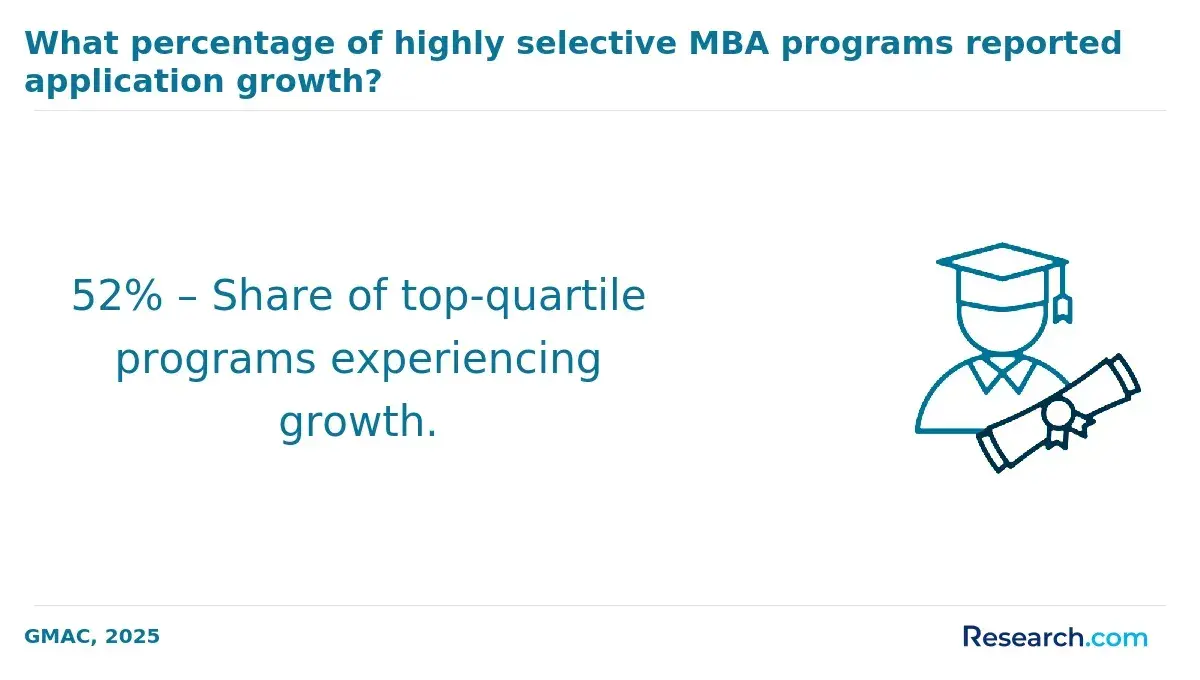
- The top 10 MBA programs including as Harvard, Stanford, and Wharton, have average acceptance rates at around 18%.
- Specifically, Stanford GSB has an acceptance rate of 5.7% to 9%, Harvard Business School has 9.5% to 14%, and Wharton at UPenn has 19.2% to 23%.
- The top 3 U.S. MBA programs for lifetime earnings for graduates are: Harvard Business School with $8,500,000, Northwestern (Kellogg) with $7,860,000, and Pennsylvania (Wharton) with $7,440,000.
- The median annual salary for an MBA graduate is around $97,000.
- MBA graduates in marketing and management roles can earn around $106,000. MBA graduates in finance can earn between $87,966 and $113,569.
- Management occupations in general have a median annual salary of around $116,880.
- What format should an MBA application resume follow?
- Which MBA resume mistakes hurt applicants most?
- How should MBA applicants present skills and qualifications?
- How can you turn work experience into measurable achievements?
- How do you show leadership if you have not managed a large team?
- How should you customize your resume for different MBA programs?
- How do applicant tracking systems review MBA resumes?
- How should research interests appear on an MBA resume?ATS resume guidance
- Which trends are changing MBA jobs?
- What salaries do MBA graduates earn in the U.S.?
- How can MBA networking support career growth?
- How should career changers present their experience?
- Is an online executive MBA worth the cost?Career transition advice
- Which accreditation standards matter for online MBA programs?
- How should healthcare management applicants tailor an MBA resume?
- Can certifications strengthen an MBA resume?
- How can international experience improve an MBA application?
- Which MBA options may be more cost-effective?
- How can online learning improve the MBA experience?
- How likely are you to be accepted into an MBA program?
- How should you evaluate the financial feasibility of an online MBA?Online MBA learning options
- Can a one year online MBA speed up career progress?
How to use this guide before you apply
Before editing individual bullet points, decide what your resume needs to prove. MBA admissions readers usually want to see professional judgment, upward momentum, leadership behavior, academic readiness, and a realistic reason for pursuing business school. Your resume should therefore work with your essays, recommendations, test scores, and interviews rather than repeat them word for word.
The best approach is to build one master resume with all accomplishments, then create a shorter school-specific version for each application. This helps you avoid a generic resume while still keeping your story consistent.
| Applicant situation | Resume priority | What to avoid |
| Traditional business applicant | Show promotions, revenue impact, client results, team leadership, and analytical work. | Listing routine duties that most people in the same role performed. |
| Career changer | Translate past experience into transferable business skills such as strategy, operations, finance, people management, and problem-solving. | Making the resume read like an unrelated industry document. |
| Technical professional | Connect technical work to business outcomes, cost savings, product growth, customer value, or operational improvement. | Using technical language that non-specialist admissions readers may not understand. |
| Healthcare, nonprofit, education, or public sector applicant | Show leadership, impact, budget responsibility, stakeholder management, and measurable community or organizational outcomes. | Assuming admissions committees will automatically understand the scale or difficulty of your work. |
| Online or executive MBA applicant | Emphasize current professional responsibility, leadership readiness, and ability to manage work, study, and personal commitments. | Ignoring program format, time commitment, and return on investment. |
What is the ideal overall structure and format of an MBA application resume?
The most effective MBA resume is easy to scan, specific, and selective. Admissions committees often spend limited time on the first read, so the document must communicate your strongest evidence quickly. In most cases, a reverse-chronological format works best because it shows career progression and recent responsibility clearly.
- Contact information: Include your name, phone number, professional email address, city or region, and relevant professional profile if appropriate.
- Professional summary: Use this only if it adds value. A short summary can help career changers or applicants with unusual backgrounds, but it should not repeat vague claims such as “results-driven leader.”
- Work experience: Put your most relevant roles first in reverse chronological order. Each role should include concise achievement bullets tied to business outcomes.
- Education: Include degrees, institutions, dates, academic honors, relevant coursework when helpful, and continuing education that supports your MBA goals.
- Skills: List only skills that are relevant to your target program or career path, such as financial modeling, data analysis, market research, project management, negotiation, or people leadership.
- Leadership, awards, or community work: Add these when they show initiative, impact, responsibility, or values that fit the program.
For most MBA applications, one page is the safest target. Two pages may be acceptable for applicants with substantial experience, military leadership, research work, or executive-level responsibility, but every line must earn its place. If you have a background outside business, such as completing a criminal justice online degree accredited program, connect internships, investigations, policy work, or operational projects to skills that business schools value.
MBA resume format checklist
| Resume element | Best practice | Why it matters |
| Length | Usually one page; use two pages only when the experience justifies it. | Admissions readers need a focused summary, not a full career archive. |
| Order | Use reverse chronological order for most applicants. | It makes progression, promotions, and current responsibility easy to see. |
| Bullets | Lead with action verbs and end with measurable results when possible. | Results help distinguish impact from job description language. |
| Design | Use a clean, text-based layout with consistent spacing. | Simple formatting improves readability and ATS compatibility. |
| Customization | Adapt the resume for each program’s priorities. | A tailored resume signals genuine fit and stronger preparation. |
What are the most common mistakes applicants make on their MBA resumes?
The biggest MBA resume mistakes usually come from writing for the wrong audience. A job-search resume may be designed to match a specific opening, while an MBA resume must show leadership promise, business judgment, and fit with a school’s learning environment.
- Using generic claims: Phrases such as “hardworking professional” or “dynamic leader” do not prove anything unless supported by outcomes.
- Overcrowding the page: Dense text, tiny margins, and long paragraphs make strong experience harder to absorb.
- Choosing complicated formatting: Graphics, icons, unusual columns, and decorative fonts can confuse readers and resume-screening systems.
- Submitting the same version everywhere: A resume that ignores program focus areas can look careless, especially at selective schools.
- Leaving typos in the final draft: Errors suggest weak attention to detail, which is damaging in a competitive admissions process.
- Writing too much: A long resume that includes every task can dilute your most impressive accomplishments.
- Omitting numbers: Without metrics, admissions readers may not understand the scale of your work.
- Describing duties instead of impact: “Managed reports” is weaker than explaining what changed because of your work.
- Ignoring school priorities: If a program emphasizes entrepreneurship, analytics, healthcare, sustainability, or global business, your resume should reflect relevant evidence.
- Adding irrelevant details: Salary expectations, references, unrelated hobbies, and excessive personal information do not belong on an MBA resume.
- Relying on weak verbs: Start bullets with precise verbs such as led, launched, negotiated, analyzed, redesigned, expanded, or improved.
- Using unexplained jargon: Admissions readers may not share your industry background, so translate technical terms into business value.
Selectivity makes these mistakes costly. For the top 10 MBA programs, such as Harvard, Stanford, and Wharton, the average acceptance rate is around 18%. Specifically, Stanford GSB has an acceptance rate of 5.7% to 9%, Harvard Business School has 9.5% to 14%, and Wharton at UPenn has 19.2% to 23%.
For MBA programs ranked in the top 25, the average acceptance rate tends to be around 25-30%. Examples include Northwestern Kellogg at 20.2% to 31%, Columbia Business School at 16.5% to 22%, and Yale SOM at 17.4% to 28%.
If tuition is a major constraint, compare lower-cost options carefully rather than assuming only the highest-priced programs are worthwhile. Some applicants may find that online Masters under 10k programs fit their budget and career goals better than a full-time residential MBA.
How do I best showcase my skills and qualifications in my resume?
Your skills section should not read like a keyword dump. It should reinforce what your work history already proves. MBA programs commonly value analytical thinking, business judgment, communication, collaboration, leadership, and strategic problem-solving. The strongest resumes show these abilities through accomplishments, not only through a separate skills list.
- Analytical skills: Show how you used data, financial information, market research, or operational metrics to make better decisions.
- Business acumen: Demonstrate exposure to finance, marketing, operations, strategy, customer growth, revenue, budgets, or process improvement.
- Communication: Highlight presentations, stakeholder updates, client communication, negotiation, writing, or cross-functional coordination.
- Interpersonal ability: Include examples of collaboration, conflict resolution, mentoring, or building trust across teams.
- Leadership: Show influence, initiative, team direction, project ownership, or measurable improvements created through others.
- Strategic thinking: Point to long-term planning, market entry, product decisions, operational redesign, or organizational change.
Hard skills and soft skills: what belongs on an MBA resume?
| Skill type | Examples | How to prove it |
| Hard skills | Financial modeling, data analysis tools, market research, operations planning, budgeting, digital marketing, project management. | Attach the skill to a result, such as improved forecasts, reduced costs, increased conversion, or faster delivery. |
| Soft skills | Leadership, communication, teamwork, adaptability, negotiation, coaching, decision-making. | Use examples involving people, conflict, influence, accountability, and measurable outcomes. |
| Transferable skills | Problem-solving, stakeholder management, process improvement, client service, risk assessment, strategic planning. | Explain how the skill applies beyond your original industry or job title. |
When targeting competitive programs or affordable online masters degrees, review each program’s curriculum and admissions language before finalizing your skills. If you want an outside check on clarity and formatting, a free review tool such as JobLeads may help identify issues before submission.
How do I best highlight my achievements on my resume?
Achievements should answer three questions: What did you do? How did you do it? What changed because of your work? Admissions committees do not need a list of every responsibility; they need evidence of impact, scope, and judgment.
- Start with a strong verb: Useful verbs include achieved, boosted, championed, conceptualized, developed, implemented, launched, led, managed, negotiated, optimized, pioneered, restructured, spearheaded, and streamlined.
- Choose the strongest evidence: For each role, select 2-4 meaningful accomplishments instead of filling the page with minor tasks.
- Quantify when possible: Use metrics such as increased sales by X%, reduced costs by Y%, improved efficiency by Z%, managed a team of N people, or grew website traffic by A%.
- Include non-work leadership when relevant: Volunteer projects, student leadership, community initiatives, military assignments, and personal ventures can strengthen the resume if they show responsibility and results.
- Explain scale: If you managed a budget, served a large client base, supported multiple locations, or worked across countries, include that context.
Before-and-after examples for MBA resume bullets
| Weak bullet | Stronger MBA-style bullet |
| Responsible for marketing reports. | Analyzed campaign performance and identified budget shifts that improved efficiency by Z%. |
| Worked with finance team. | Partnered with finance leaders to improve forecasting accuracy by Z% and support quarterly planning. |
| Managed interns. | Trained and coordinated N interns, improving team output and reducing manager review time. |
| Helped with sales strategy. | Developed customer segmentation analysis that supported a sales initiative and increased sales by X%. |
The competition is substantial because MBA programs remain popular in the USA and worldwide. The article’s source figures state that there were over 375,000 students studying for an MBA worldwide in 2025. The total number of MBA students in the United States reached 202,345, with 48,120 full-time MBA students, 94,560 part-time MBA students, 46,211 online MBA students, and 13,454 executive MBA students.
How do I best showcase leadership skills or leadership potential in my resume?
You do not need to be a senior executive to show leadership. MBA programs often look for evidence that you can influence others, take initiative, solve problems under ambiguity, and improve outcomes. Leadership can appear through formal management, project ownership, mentoring, cross-functional work, crisis response, volunteer service, or entrepreneurial activity.
- Show influence without a title: Include examples where you persuaded stakeholders, introduced a better process, led a project team, or solved a problem outside your formal job description.
- Use leadership verbs: Words such as spearheaded, managed, coordinated, facilitated, mentored, coached, motivated, and delegated help signal responsibility when used accurately.
- Connect leadership to results: Strong bullets show what improved, such as team productivity, revenue, efficiency, morale, retention, quality, or customer satisfaction.
- Include mentoring and coaching: Training peers, onboarding new hires, supporting junior staff, or leading volunteers can demonstrate readiness for collaborative MBA environments.
- Do not exaggerate: Admissions committees value honest evidence. If you supported a project, say that. If you led it, explain the scope.
For applicants who later graduate from highly ranked programs, the long-term payoff can be significant, though outcomes vary by individual. The top 3 U.S. MBA programs for lifetime earnings for graduates are: Harvard Business School with $8,500,000, Northwestern (Kellogg) with $7,860,000, and Pennsylvania (Wharton) with $7,440,000.
If your career plan combines management with technical risk, security, or digital strategy, dual-degree or complementary study options may be worth comparing, including the cheapest online master's in cyber security programs.
How can I best tailor my resume to specific programs?
Tailoring is not cosmetic. A program-specific resume helps admissions readers understand why you belong in that particular MBA environment. Start by reviewing the school’s curriculum, concentrations, employment reports, student clubs, experiential learning opportunities, faculty interests, and admissions instructions.
- Follow program instructions first: If a school requests a particular resume length or section order, comply exactly. Ignoring directions can make an otherwise strong application look careless.
- Match your evidence to the school’s focus: A leadership-focused program should see team influence and organizational impact. A quantitative program should see analytics, finance, data-driven decisions, or operations work.
- Create multiple versions: Build separate versions for programs emphasizing entrepreneurship, finance, marketing, healthcare, analytics, sustainability, or global management.
- Use faculty or research fit carefully: If research interests matter, mention relevant projects or methods on the resume and save deeper faculty discussion for essays or statements when appropriate.
- Prioritize relevant achievements: For an entrepreneurship program, highlight startups, product launches, market validation, or innovation. For a marketing program, emphasize campaign results, customer insights, brand growth, or digital strategy.
- Connect technical experience to business value: Applicants interested in analytics may also compare options such as the cheapest data science masters online programs if their goals are more data-specialized than general management-focused.
How to tailor the same experience for different MBA goals
| Target program theme | Resume angle to emphasize | Example evidence |
| Finance | Analysis, forecasting, valuation, risk, budgeting, profitability. | Improved financial forecasting accuracy by Z% or supported investment analysis. |
| Operations | Efficiency, process design, supply chain, quality, resource allocation. | Reduced costs by Y% or streamlined a workflow across teams. |
| Marketing | Customer insight, campaign performance, brand growth, digital channels. | Increased brand awareness by X% through social media strategy. |
| Entrepreneurship | Opportunity identification, product testing, launch execution, growth. | Built a pilot, validated demand, negotiated partnerships, or launched a new service. |
| Research-focused MBA | Methods, inquiry, analysis, publication, faculty alignment. | Investigated the impact of X on Y using Z methodology. |
What are applicant tracking systems (ATS) and how do I optimize my resume for them?
Applicant Tracking Systems (ATS) are software tools that help organizations collect, scan, filter, and manage applications. Universities and employers may use ATS-style systems to organize large applicant pools and identify keywords, work history, education details, and required information.
ATS optimization should not make your resume robotic. The goal is to keep the document readable for software and humans at the same time.
- Use simple formatting: Avoid graphics, icons, text boxes, unusual columns, and heavy design elements that may not parse correctly.
- Choose a standard file type: Submit .docx or .pdf only when allowed by the application instructions.
- Use clear headings: Labels such as Work Experience, Education, Skills, Leadership, and Certifications are easier for systems and readers to interpret.
- Include relevant keywords naturally: Pull language from program requirements, concentration descriptions, and your intended career field, but do not stuff keywords.
- Keep contact details in the main body: Do not hide your email or phone number in a header or footer if the system may miss it.
- Customize every submission: A resume tailored to each school or role will usually perform better than a one-size-fits-all version.
- Avoid decorative templates: Many attractive templates sacrifice clarity, space, or ATS readability.
The large number of MBA applicants and enrolled students helps explain why efficient screening matters. Your resume should therefore be designed for quick comprehension, not visual novelty.
How can I showcase my research interests on my resume for research-focused programs?
Most MBA resumes should focus on professional impact, but research-oriented programs may value evidence of inquiry, methods, analysis, and academic fit. If research is central to your application, make it visible without turning the resume into an academic CV unless the program specifically asks for one.
- Add a short research interests section: Use 2-3 bullets near the top or bottom of the resume if your interests are relevant to the program.
- Integrate research into work bullets: Describe projects where you investigated a market, tested a hypothesis, analyzed consumer behavior, evaluated financial data, or studied operational performance.
- Explain the method: A strong bullet may say that you investigated the impact of X on Y using Z methodology.
- List publications or presentations when applicable: Include title, authors, outlet, and year if the work is relevant and credible.
- Connect to program strengths carefully: If your interests align with faculty research, mention the connection in the appropriate application component rather than forcing too much detail into the resume.
What emerging trends will impact MBA jobs in the coming years?
MBA career outcomes are being shaped by technology, specialization, and changing employer expectations. The degree can still support advancement, but applicants should be realistic: employers increasingly want evidence of applied skills, not just a credential.
- Digital transformation: AI, data analytics, automation, product strategy, and digital marketing are influencing many management roles.
- Sustainability and ESG: Organizations are paying more attention to environmental, social, and governance practices, especially in strategy, finance, supply chain, and reporting roles.
- Healthcare and biotech growth: These sectors continue to create management needs in operations, finance, compliance, innovation, and service delivery.
- More competition: MBA graduates may face crowded applicant pools, especially in consulting, finance, and technology roles.
- Entrepreneurship: Some graduates use the MBA to launch or scale ventures rather than pursue traditional corporate jobs.
- Broader skill expectations: Employers often want communication, adaptability, critical thinking, and cross-functional problem-solving in addition to technical business knowledge.
- Global and remote work: Managing distributed teams and navigating cross-cultural business environments are increasingly relevant.
What are the average salaries for MBAs in the U.S.?
MBA salaries vary widely by role, industry, school reputation, location, pre-MBA experience, and career path. The figures below should be treated as reference points, not guaranteed outcomes.
| Source or category | Reported salary figure |
| Payscale: MBA | $97k/year |
| Payscale: MBA, Marketing and Management | $106k/year |
| Payscale: MBA, Finance | $106k/year |
| Indeed.com: Director of Marketing | $91,394/year |
| Indeed.com: Management Analyst | $77,576/year |
| Indeed.com: Director of Operations | $96,334/year |
| Indeed.com: Research Analyst | $66,256/year |
| Indeed.com: Marketing Manager | $70,297/year |
| Indeed.com: Medical Services Manager | $75,984/year |
| Indeed.com: Human Resources Manager | $78,321/year |
| Indeed.com: Investment Banker | $78,664/year |
| Indeed.com: MBA graduates in finance, insurance, and real estate | $87,966/year |
| BLS: Management Analysts | $99,410/year |
| BLS: Business and Financial Occupations | $79,050/year |
| BLS: Management Occupations | $116,880/year |
| DataUSA.io: Management Occupations | $106,157/year |
| DataUSA.io: Management, Business, and Financial Occupations | $100,025/year |
| DataUSA.io: Business | $98,335/year |
| Salary.com: MBA | $104,964/year |
| Salary.com: MBA in Marketing | $64,772/year |
| Salary.com: MBA in Finance | $88,984/year to $113,569/year |
Several takeaways are useful for applicants evaluating return on investment. The median annual salary for an MBA graduate is around $97,000. MBA graduates in marketing and management roles can earn around $106,000. MBA graduates in finance can earn between $87,966 and $113,569. Management occupations in general have a median annual salary of around $116,880. Other business and financial roles, such as management analysts, directors of marketing/operations, and investment bankers, can earn between $66,256 and $96,334.
How can I leverage MBA networking opportunities for career advancement?
MBA networking is most valuable when treated as a long-term relationship strategy rather than a last-minute job search tactic. Use the program to build ties with classmates, alumni, faculty, recruiters, mentors, student clubs, and industry speakers. Case teams, consulting projects, virtual events, in-person residencies, and alumni panels can all become sources of career insight.
Applicants considering an accelerated leadership route may also compare formats such as a 1 year executive MBA online. The right program should provide not only coursework, but also access to relevant professional communities, career coaching, and alumni connections in your target industry.
How can I effectively present a career transition on my MBA resume?
Career changers should make the bridge between past experience and future goals obvious. Start by identifying transferable strengths: analysis, leadership, stakeholder management, budgeting, process improvement, client service, project execution, or strategic planning. Then rewrite bullets so they show business impact rather than industry-specific tasks.
A clear objective can help if your background is not immediately connected to your MBA goals. Relevant coursework, certifications, volunteer leadership, or additional education can also support the transition. For applicants comparing lower-cost graduate business options, the cheapest online MBA resource may be useful during program research.
Is the investment in an online executive MBA worthwhile?
An online executive MBA can be worthwhile when it supports a specific career outcome: promotion, broader leadership responsibility, industry transition, entrepreneurial growth, or stronger executive decision-making. It is less likely to pay off if you choose a program without checking cost, accreditation, employer recognition, schedule demands, and career services.
To evaluate return on investment, compare tuition, fees, time away from work, employer sponsorship, expected promotion timeline, and salary benchmarks in your field. Resources on online executive MBA cost can help you compare program prices before committing.
Which accreditation and quality standards should I consider for an online MBA?
Accreditation is one of the first quality checks for any online MBA. Institutional accreditation matters for degree recognition, transfer credit, and financial aid eligibility. Business-specific accreditation can also signal that the program meets additional standards for curriculum, faculty qualifications, assessment, and continuous improvement.
- AACSB: Often associated with research-active business schools and widely recognized in business education.
- ACBSP: Commonly emphasizes teaching quality, student learning, and continuous improvement.
- EQUIS: An international accreditation standard often associated with global business education quality.
Do not choose a program on accreditation alone. Also compare faculty experience, curriculum relevance, career outcomes, student support, alumni network, employer reputation, and total cost. Budget-conscious applicants can review the cheapest AACSB online MBA options to balance price and program recognition.
How can I tailor my MBA resume for healthcare management roles?
Healthcare management applicants should translate clinical, administrative, operational, or policy experience into management language. Admissions readers should see your ability to improve systems, manage people, understand regulation, coordinate stakeholders, and support better organizational outcomes.
- Emphasize healthcare operations, compliance, patient experience, budgeting, quality improvement, technology implementation, or service delivery.
- Show measurable results, such as efficiency gains, cost control, process improvements, team coordination, or patient-care-related outcomes when available.
- Include multidisciplinary leadership, especially work involving clinicians, administrators, insurers, vendors, or public agencies.
- List relevant certifications or training that support health administration goals.
If your MBA goal is specifically tied to health administration, compare specialized options such as the best affordable online MBA in healthcare management.
How can supplementary certifications boost my MBA resume?
Certifications can strengthen an MBA application when they fill a real gap or support a clear career goal. They are most useful when they validate practical skills in areas such as project management, analytics, finance, digital marketing, operations, cybersecurity, or healthcare administration.
List each certification with the issuing organization, completion date, and relevant skill area. If the certification led to a measurable work outcome, connect it to an achievement bullet. Applicants interested in project leadership can also compare options such as a cheap online project management degree.
How can you demonstrate international experience and global perspectives on your MBA resume?
Global experience can make an MBA application stronger when it shows cultural awareness, international collaboration, market understanding, language ability, or cross-border leadership. The key is to show what you did and why it mattered, not simply that you traveled or worked with people in another country.
1. Highlight international work experience
- Global roles: Describe overseas assignments, international market responsibilities, or regional business ownership with clear outcomes.
- Cross-border collaboration: Include projects involving international clients, suppliers, partners, or distributed teams.
2. Emphasize multilingual abilities
- Languages spoken: List languages when they are relevant to business communication, client work, negotiation, or team leadership.
- Cultural adaptability: Explain how language skills helped you build trust, avoid misunderstandings, or operate effectively across cultures.
3. Include international education or exchange programs
- Study abroad programs: Mention academic experiences that deepened your understanding of global business, economics, or culture.
- International coursework: Add relevant coursework in international business, global markets, trade, policy, or comparative management.
4. Showcase global projects
- International clients or markets: Identify the regions, stakeholders, and business problem involved.
- Global expansion efforts: Highlight market research, entry strategy, partnerships, localization, or operational planning.
5. Show cross-cultural competency
- Cultural sensitivity: Use examples involving diverse teams, international customers, or work in unfamiliar environments.
- Leadership in multicultural teams: Describe how you adapted communication, decision-making, or team processes across cultures.
Cost-Effective MBA Options for Career Advancement
An MBA can be expensive, so applicants should compare program cost against likely career value. A lower-cost program may make sense when it is accredited, respected by employers in your field, flexible enough to let you keep working, and connected to your target role. Applicants interested in finance may want to review cheapest online MBA finance programs as part of a broader cost comparison.
Why choose an affordable MBA program?
- Lower borrowing pressure: Lower tuition may reduce reliance on student loans and make post-graduation career choices more flexible.
- Work-study balance: Online and part-time formats may allow students to keep earning income while studying.
- Targeted specialization: Affordable programs may still offer concentrations in fields such as finance, marketing, entrepreneurship, analytics, or technology.
- Potentially faster ROI: A lower total cost can make the degree easier to justify if career outcomes align with your goals.
How can online learning enhance my MBA experience?
Online MBA programs can work well for professionals who need flexibility, geographic access, and the ability to apply coursework immediately at work. However, the format requires discipline, time management, and careful evaluation of student support.
- Flexibility for working professionals: Online MBAs may make it easier to continue working while completing coursework.
- Diverse peer networks: Virtual cohorts can include students from different regions, industries, and career stages.
- Technology-enabled learning: Online platforms may include simulations, analytics tools, digital collaboration spaces, and recorded lectures.
- Specialized pathways: Some programs allow students to focus on information technology, business analytics, cybersecurity, finance, or marketing.
Applicants whose goals sit at the intersection of management and technology may want to compare an affordable online MBA in information technology.
What are my chances of getting accepted Into an MBA program?
Your chances of admission depend on more than acceptance rate. Schools evaluate work experience, academic history, test scores when required, essays, recommendations, interview performance, leadership evidence, goals, and fit. A highly selective school may still admit a nontraditional applicant with a compelling story, while a less selective school may reject an applicant who cannot explain why the program makes sense.
Use acceptance rates to build a balanced school list. Include reach, target, and safer options, and compare programs that match your credentials and goals. Applicants seeking programs with more accessible admissions profiles can review MBA programs with high acceptance rates.
Evaluating the Financial Feasibility of Pursuing an Online MBA
Financial feasibility is not just tuition. A realistic MBA budget should include fees, books, technology costs, residencies or travel, lost income if you reduce work hours, loan interest, and the time required to complete the degree. Online programs may reduce relocation and commuting costs, but they still require careful comparison.
The average cost of MBA online programs varies widely, so applicants should compare total program cost rather than advertised tuition alone. Scholarships, employer tuition assistance, military benefits, payment plans, and transfer credit policies can all change the final cost.
Also evaluate career services, alumni outcomes, employer recognition, specialization options, and networking access. A cheaper program is not automatically better if it lacks support in your target field, but an expensive program is not automatically a better investment either.
Can a one year online MBA accelerate my career progression?
A one year online MBA can speed up completion for students who already have strong professional experience, clear goals, and enough time to handle an intensive schedule. The shorter format may help graduates return to the job market sooner, but it can also reduce time for internships, networking, reflection, and career exploration.
Before enrolling, review course sequencing, weekly workload, live-session requirements, career support, alumni access, and whether the accelerated pace fits your responsibilities. A program comparison such as the one year online MBA listings can help identify options that match your timeline.
Questions to ask before finalizing your MBA resume and program list
- Does my resume show measurable impact, or does it mostly list responsibilities?
- Can a reader understand my leadership potential within 30 seconds?
- Have I tailored the resume to each school’s curriculum, culture, and career pathways?
- Are my bullets clear to someone outside my industry?
- Have I removed jargon, filler, outdated details, and unsupported claims?
- Does my program list include a realistic mix of reach, target, and safer schools?
- Have I checked accreditation, total cost, format, career services, and alumni outcomes?
- Does the expected return justify the tuition, time, and opportunity cost?
Common MBA resume and program-selection mistakes to avoid
| Mistake | Why it hurts | Better approach |
| Choosing a program based only on ranking | A high rank may not match your industry, budget, format needs, or location goals. | Compare curriculum, cost, career outcomes, accreditation, and employer relevance. |
| Ignoring accreditation | Recognition, transferability, and employer acceptance may be affected. | Verify institutional accreditation and relevant business accreditation before applying. |
| Focusing only on tuition | Fees, travel, technology, loan interest, and lost income can change total cost. | Calculate full cost of attendance and expected ROI. |
| Using one generic resume | Admissions readers may not see fit with their program. | Create a customized resume for each target school. |
| Assuming salary outcomes are guaranteed | MBA earnings vary by role, industry, location, experience, and school network. | Use salary data as a planning tool, not a promise. |
| Overdesigning the resume | Complex layouts can reduce readability and ATS compatibility. | Use clean formatting, standard headings, and concise bullets. |
References:
- Association of MBAs & Business Graduates Association. (2025). AMBA & BGA Application and Enrollment Report 2025. https://www.associationofmbas.com/research/reports/
- American Management Association. (2025). Leadership skills for business professionals. https://www.amanet.orgAssociation of MBAs & Business Graduates Association reports
- CareerOneStop. (2025). Salary finder: Business occupations. https://www.careeronestop.org/Toolkit/WagesAMBA & BGA research reports
- Coursera Staff. (2025, December 17). How to write an effective MBA resume. https://www.coursera.org/articles/mba-resume
- Federal Reserve Bank of St. Louis. (2025). Economic data on employment and wages. https://fred.stlouisfed.org
- Federal Reserve Economic Data Graduate Management Admission Council. (2025). How to write an MBA resume. https://www.mba.com/how-to-apply/apply-to-programs/how-to-write-an-mba-resumeCoursera MBA resume guide
- MBA Mission. (2026, March 17). How to build the ideal resume for your MBA application. https://www.mbamission.com/blog/how-to-build-the-ideal-resume-for-your-mba-application
- Society for Human Resource Management. (2025). Resume best practices for professionals. https://www.shrm.org
- The Consortium for Graduate Study in Management. (2025). How to create a great resume for business school applications. https://cgsm.org/how-to-create-a-great-resume-for-your-business-school-applications/
- U.S. Bureau of Labor Statistics. (2025). Management occupations outlook. https://www.bls.gov/ooh/management/home.htm
- U.S. Small Business Administration. (2025). Building a strong resume for business careers. https://www.sba.gov BLS management occupations outlook Consortium business school resume adviceCoursera MBA resume articleAssociation of MBAs research reports
Other Things You Should Know About MBA Resumes and Careers
Yes. Each role should show measurable results, such as revenue growth, cost savings, team size, or process improvements. Admissions readers look for evidence of impact in 2 to 5 bullet points per position, using clear action verbs and specific numbers whenever possible.
A standout MBA resume in 2027 should emphasize leadership experiences, quantifiable achievements, and a clear career trajectory. Highlight your ability to work in diverse teams and any entrepreneurial experiences or initiatives you've led. Customization for each program, with a focus on how you align with its values and offerings, is crucial.
In 2027, MBA resumes should highlight skills such as data analysis, strategic thinking, and leadership. These skills demonstrate the ability to adapt to the evolving business landscape and are highly valued by admissions committees seeking candidates with strong problem-solving abilities.


