2027 Accredited Online Teaching Degree Programs for Working Adults: Flexible, Part-Time, and Self-Paced Options

Co-Founder and Chief Data Scientist
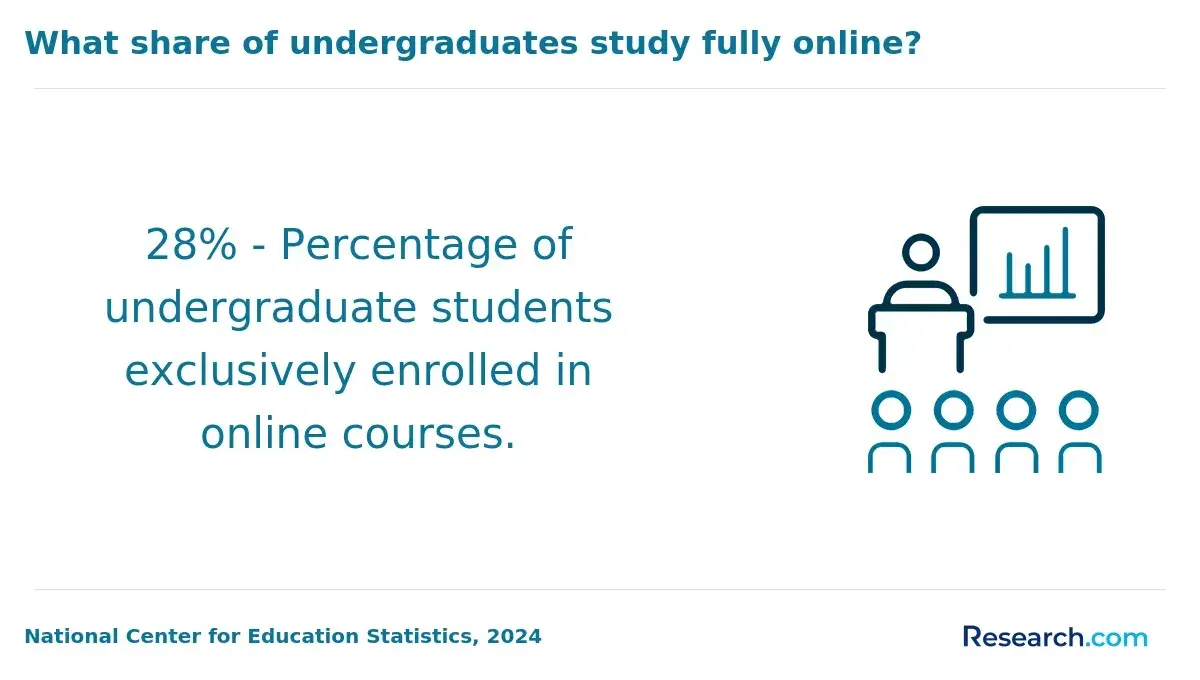
Choosing an online teaching degree while working full time means balancing accreditation, state licensure rules, cost, and weekly workload. NCES reported in 2024 that more than half of U.S. postsecondary students took at least one distance education course, showing how central online learning has become for adults who cannot pause work or family obligations.
This guide is for career changers, paraprofessionals, substitute teachers, and degree completers comparing accredited online teaching programs. You will learn how formats differ, what flexibility really means, and how to choose a program that fits your schedule and long-term teaching goals.
Key Things You Should Know
- Accreditation matters because state-approved, regionally accredited programs are more likely to qualify for federal aid, credit transfer, employer recognition, and teacher licensure review.
- Working adults usually do best with part-time or asynchronous formats; expect roughly 10 to 15 hours per week for one accelerated course and more for full-time enrollment, while student teaching may require daytime availability.
- Cost and speed depend heavily on transfer credit: public four-year tuition benchmarks from College Board's 2024 pricing data show in-state tuition and fees averaging $11,610, and generous transfer policies can reduce both total credits and out-of-pocket cost.
What Is an Accredited Online Teaching Degree Program and Why Does Accreditation Matter?
An accredited online teaching degree program is a college program delivered fully or mostly online by an institution recognized by an approved accreditor. For future licensed teachers, the program also needs to align with state educator preparation requirements, because a bachelor's or master's degree alone may not be enough to qualify for certification.
There are two accreditation layers to understand. Institutional accreditation applies to the college or university as a whole. Program approval or programmatic accreditation applies to the teacher preparation pathway, such as elementary education, special education, secondary math, or English language arts. Some programs may also hold recognition from education-focused accreditors, but state approval is often the most important licensure factor.
The table below summarizes the accreditation checks that matter most when comparing online teaching programs. Use it to separate legitimate flexibility from risky shortcuts.
| Accreditation or approval factor | Why it matters for working adults | What to verify before applying |
| Institutional accreditation | Supports federal financial aid eligibility, credit transfer, graduate admission, and employer acceptance. | Confirm the college is accredited by an agency recognized by the U.S. Department of Education or CHEA. |
| State educator preparation approval | Determines whether the program can lead to initial teacher licensure in a specific state. | Ask whether the program is approved for the state where you plan to teach. |
| Programmatic education recognition | Can signal external review of curriculum, clinical practice, assessment, and faculty standards. | Check whether the education school lists current recognition and whether it applies to your exact program. |
| Licensure disclosure for online students | Online programs may enroll students nationwide, but licensure rules are state-specific. | Request a written licensure disclosure for your state before enrolling. |
Accreditation also affects return on investment. If you later want to pursue graduate study, endorsement areas, or leadership roles, schools are more likely to accept credits and credentials from accredited institutions. If you are still deciding whether teaching is the right field, comparing education with other good majors in college can help clarify whether your strengths point toward classroom instruction, counseling, administration, or another service-oriented career path.
Which Flexible Teaching Degree Formats Are Best for Working Adults: Part-Time, Full-Time, or Self-Paced?
The best format depends on your work schedule, family responsibilities, prior credits, and tolerance for deadlines. "Online" does not automatically mean self-paced, and "flexible" does not always mean you can study whenever you want.
The table below compares common online teaching degree formats. It focuses on practical trade-offs for adults who need to protect work income while making steady academic progress.
| Format | Best fit | Main advantage | Main trade-off |
| Part-time asynchronous | Adults working full time or managing family caregiving | Weekly deadlines without required class meeting times | Graduation usually takes longer than full-time study |
| Full-time online | Students who can reduce work hours or have strong schedule control | Faster completion and stronger academic momentum | Higher weekly workload and less flexibility during fieldwork |
| Self-paced or competency-based | Experienced adults who can move quickly through familiar material | Potential to finish some courses faster | Requires high self-discipline and may have term or subscription limits |
| Cohort-based online | Students who want structure and peer support | Clear sequence, predictable due dates, and stronger community | Less freedom to pause, accelerate, or change course order |
| Hybrid online | Students near campus or partner school sites | Combines online coursework with in-person practice | Travel or scheduled campus sessions may conflict with work |
Part-time formats are usually safest if you cannot reduce work hours. Full-time formats may be worth considering if you have financial support, a predictable job schedule, or an urgent need to qualify for licensure. Self-paced formats can be valuable for disciplined learners, but they are not ideal if you need frequent instructor reminders, fixed class meetings, or a highly guided schedule.
Before choosing a format, ask schools how flexibility works in practice. These questions help you avoid assuming that every online program operates the same way:
- Are courses asynchronous, synchronous, or a mix of both?
- How many courses do most working adults take per term?
- Are assignments due weekly, at the end of the term, or when competencies are completed?
- Can students pause enrollment without losing their catalog year or financial aid status?
- Are field placements available near the student's home, or must students use specific partner districts?
What Are the Admission Requirements for Accredited Online Teaching Degree Programs?
Admission requirements vary by degree level and whether the program leads to initial teacher licensure. Bachelor's programs usually focus on general admission, transfer credits, and readiness for teacher education coursework. Master of Arts in Teaching programs often serve career changers who already hold a bachelor's degree in another field.
The table below outlines common requirements by applicant type. Use it as a starting point, then confirm exact requirements with each school and state education agency.
| Applicant pathway | Common requirements | Important working-adult consideration |
| Online bachelor's in education | High school diploma or GED, transcripts, minimum GPA, general education placement, and possible background check | Transfer students should request an official transfer evaluation before committing. |
| Degree-completion program | Prior college credits, minimum transferable GPA, prerequisite coursework, and sometimes an associate degree | These programs can be efficient if you already completed lower-division credits. |
| Master of Arts in Teaching | Regionally accredited bachelor's degree, transcripts, GPA threshold, statement of purpose, and subject-area prerequisites | Career changers may need extra content courses before entering licensure coursework. |
| Endorsement or certificate pathway | Existing teaching license or degree, state eligibility review, and targeted coursework | Useful for licensed teachers adding special education, ESL, reading, or STEM credentials. |
Many teaching programs also require fingerprinting, background checks, liability insurance, or entrance assessments before field placement. These requirements are normal because students work with children and schools must meet safety and compliance standards.
To avoid admission delays, gather documents early and request clarification in writing. A practical application checklist should include:
- Order official transcripts from every college previously attended.
- Ask for a preliminary transfer-credit review before paying an enrollment deposit.
- Confirm whether your chosen concentration matches the grade level and subject you want to teach.
- Check whether entrance exams, prerequisite courses, or background checks must be completed before upper-level education courses.
- Ask whether admission to the university is separate from admission to the teacher education program.
How Much Does an Online Teaching Degree Cost, and What Financial Aid Options Are Available?
Online teaching degree costs depend on tuition, fees, residency status, transfer credits, books, technology, testing, and field-placement expenses. College Board's 2024 pricing data reported average published tuition and fees of $11,610 for in-state students at public four-year institutions, $30,780 for out-of-state students, and $43,350 at private nonprofit four-year institutions. Online programs may price differently, but these benchmarks help you judge whether a quoted tuition rate is unusually high or competitive.
Common costs include:
- Tuition charged per credit, per term, or through competency-based subscription pricing
- Online learning, technology, student services, or course-specific fees
- Textbooks, digital access codes, classroom supplies, and assessment platforms
- Background checks, fingerprinting, certification exams, and licensure application fees
- Travel, unpaid time, or schedule changes during practicum and student teaching placements
Financial aid can make an accredited online teaching degree more manageable, but only if the school and program are eligible. Federal aid generally requires enrollment at an eligible accredited institution and completion of the FAFSA. Some students also use employer tuition assistance, state teacher grants, military benefits, scholarships, or loan forgiveness programs tied to qualifying public service employment.
When comparing costs, look beyond the advertised tuition rate. A lower per-credit price may not be the best deal if the school accepts few transfer credits, charges high fees, or requires extra prerequisite courses. If affordability is your top concern and you are comparing graduate-level pathways, reviewing affordable master degree programs can help you benchmark tuition models across online fields.
Use this cost-comparison process before enrolling:
- Request a full program cost estimate based on your transfer credits, not just the catalog tuition rate.
- Ask whether tuition is locked for online students or may increase during the program.
- Confirm whether student teaching can be completed near your home and whether it may reduce your paid work hours.
- Compare net price after grants, scholarships, employer aid, and transfer credit.
- Calculate monthly loan payments before borrowing, using only realistic salary assumptions for your state and role.
How Long Does It Take to Complete an Online Teaching Degree, and Can Transfer Credits Help You Graduate Faster?
Completion time depends on degree level, enrollment intensity, transfer credits, fieldwork sequencing, and whether courses are offered year-round. A full bachelor's degree commonly requires about 120 credits, while master's-level initial licensure programs often require fewer credits but may include intensive clinical practice.
The table below compares typical timelines and workloads. These ranges are practical planning estimates rather than guarantees, because each school sets its own calendar and credit structure.
| Program type | Typical completion pattern | Working-adult workload consideration |
| Full online bachelor's | About 4 years full time, longer part time | Best for students with few prior credits and a stable long-term study plan. |
| Bachelor's degree completion | Often 1.5 to 3 years depending on transfer credit | Strong fit for adults with an associate degree or substantial prior coursework. |
| Master of Arts in Teaching | Often 1 to 2.5 years depending on pace and placement requirements | Can be efficient for career changers, but student teaching may disrupt full-time work. |
| Endorsement or certificate | Often several courses to about 1 year | Useful for licensed teachers adding a specialty without completing another full degree. |
| Competency-based program | Variable by pace and prior knowledge | May reduce time for self-directed learners, but progress depends on assessment completion. |
Transfer credit can be one of the biggest time savers. Adult learners may bring credits from community college, military training, prior universities, professional learning, or standardized exams, but policies vary widely by institution and by teacher education rules.
Ask these transfer-credit questions before you choose a program:
- What is the maximum number of credits that can transfer into the degree?
- Will education, psychology, child development, or subject-area courses count toward the major?
- Are there expiration limits for science, math, technology, or education courses?
- Does the school award credit for prior learning, military training, or professional credentials?
- Will transfer credits reduce only electives, or can they shorten the actual licensure sequence?
Accelerated models can be attractive, but they are not always easier. For comparison, fields such as an accelerated social work degree also compress coursework and field requirements, which shows why adults should evaluate both calendar length and weekly workload before choosing a faster path.
What Should You Look for When Comparing Accredited Online Teaching Degree Programs?
Comparing accredited online teaching degree programs is not just about finding the cheapest tuition or the fastest schedule. The right program should match your licensure goal, state requirements, learning style, work schedule, and support needs.
The table below highlights the most important comparison factors. Use it to identify strong programs and spot red flags before you apply.
| Comparison factor | Strong sign | Red flag |
| Accreditation and licensure alignment | The school provides clear state-by-state licensure disclosures. | The program says it is "nationally accepted" without explaining state requirements. |
| Flexibility | The schedule specifies asynchronous, synchronous, part-time, and fieldwork expectations. | The website says "flexible" but does not list class meeting times or deadlines. |
| Transfer policy | You receive a written transfer evaluation before enrollment. | Transfer credit is discussed only after you commit or register. |
| Clinical placement support | The program helps coordinate local school placements when allowed. | Students must find placements alone with little guidance. |
| Total cost transparency | Tuition, fees, testing, books, and placement costs are clearly explained. | The advertised price excludes recurring fees or licensure expenses. |
| Student support | Advising, tutoring, tech help, and licensure guidance are available outside standard business hours. | Support is limited to times when working adults are unavailable. |
A good comparison process should include both objective checks and personal fit. Follow these steps before deciding:
- Choose your target grade level and subject area before comparing programs.
- Verify institutional accreditation and state educator preparation approval.
- Request written confirmation that the program can support licensure in your state.
- Compare course delivery formats, including live sessions, assignment windows, and exam proctoring.
- Ask how many hours per week successful part-time students usually study.
- Review field placement timing and whether daytime classroom hours are required.
- Calculate total net cost after transfer credits and aid.
- Speak with an advisor about what happens if work or family obligations force you to slow down.
Career changers should also compare teaching against other graduate or professional pathways if they are unsure about classroom work. For example, an MBA operations management online may fit adults interested in training, process improvement, or education operations rather than direct K-12 instruction.
What Career Opportunities and Salary Potential Can You Expect With a Teaching Degree?
A teaching degree can lead to classroom and education-adjacent roles, but outcomes depend on licensure, subject area, location, school type, and experience. The most direct path is K-12 classroom teaching, yet graduates may also work in curriculum support, tutoring, instructional coordination, education technology, early childhood settings, or nonprofit education programs.
BLS 2024 wage data places many K-12 teaching occupations in the low-to-mid $60,000 median annual wage range nationally. That figure is useful as a broad benchmark, but salaries vary significantly by state, district salary schedule, union agreement, degree level, and years of service.
The table below summarizes common roles linked to teaching degrees. It focuses on what the work involves and what credential issues to check.
| Career path | Typical responsibilities | Credential consideration |
| Elementary teacher | Teach multiple subjects, manage classroom routines, assess student progress, and communicate with families. | Usually requires state licensure for elementary grades. |
| Secondary teacher | Teach a specific subject such as math, science, English, history, or career education. | Often requires subject-area coursework or exams. |
| Special education teacher | Support students with disabilities, develop IEP-related instruction, and collaborate with specialists. | Requires specialized licensure or endorsement in most states. |
| ESL or bilingual teacher | Support multilingual learners through language development and content instruction. | May require an ESL, TESOL, or bilingual endorsement. |
| Instructional coordinator | Support curriculum design, teacher training, assessment review, and instructional improvement. | Often requires teaching experience and sometimes a master's degree. |
| Tutor or education program specialist | Provide academic support, enrichment, intervention, or program coordination. | Licensure may be preferred but not always required outside public schools. |
Employment demand is shaped by local budgets, teacher turnover, retirements, enrollment changes, and shortages in specific subject areas. Special education, bilingual education, STEM, and high-need geographic areas often have stronger hiring needs than general elementary roles, but availability changes by district.
An online teaching degree may be worth it if it leads to the credential you need, keeps debt manageable, and fits a career goal you genuinely want. It may not be the right investment if you cannot complete daytime clinical requirements, need a much higher near-term salary, or prefer adult training, counseling, or administrative work. Adults drawn to helping professions but uncertain about classroom teaching may also compare education with top masters in social work programs to understand different service-oriented career paths.
How Can Working Adults Balance a Teaching Degree With Full-Time Work and Family Responsibilities?
Balancing a teaching degree with full-time work is possible, but it requires a realistic plan. The biggest mistake is treating online coursework as something that can be squeezed into leftover time. Education courses often include readings, lesson planning, discussion posts, group projects, classroom observations, and assessments that require consistent weekly effort.
Use the following planning steps before the term begins. They are designed for adults who cannot simply stop working when school gets busy:
- Choose a course load based on your busiest work weeks, not your easiest weeks.
- Block recurring study time on your calendar before the first assignment is due.
- Tell family members or housemates which hours are protected for coursework.
- Use vacation days strategically for exams, major projects, or field observations.
- Ask your employer whether temporary schedule adjustments are possible during student teaching.
- Build a backup plan for childcare, eldercare, transportation, and internet outages.
- Review the withdrawal and leave-of-absence policy before you need it.
Asynchronous courses are often the best match for full-time workers because they remove commuting and scheduled class meetings. However, they still have deadlines. Self-paced courses offer more independence, but they can become risky if you procrastinate or underestimate the time needed for assessments.
Working adults should also watch for burnout signals. If you are consistently missing sleep, submitting rushed assignments, or falling behind in discussion boards, reducing your course load may be smarter than pushing through and risking withdrawal, failed courses, or financial aid complications.
What Student Support Services and Online Learning Resources Should You Expect From a Teaching Degree Program?
Strong online student support can make the difference between finishing and stopping out, especially for adults who study at night or on weekends. A quality teaching program should support both online learning and professional preparation for schools.
The table below outlines support services worth expecting from an accredited online teaching degree program. These services are especially important when you are not regularly visiting campus.
| Support service | Why it matters | What to ask |
| Academic advising | Keeps you on track for prerequisites, licensure sequence, and graduation. | Will I have an assigned advisor who understands teacher licensure? |
| Licensure advising | Helps you prepare for exams, background checks, applications, and state rules. | Does the program provide state-specific licensure guidance? |
| Online tutoring and writing help | Supports lesson plans, research papers, presentations, and assessment preparation. | Are services available evenings or weekends? |
| Technology support | Reduces disruption during online exams, video submissions, and learning platform use. | Is tech help available outside standard business hours? |
| Field placement coordination | Helps arrange observations, practicums, and student teaching in approved settings. | Who contacts schools, and how far might I need to travel? |
| Career services | Supports resumes, interview preparation, job fairs, and district hiring connections. | Does career support include teacher hiring timelines and licensure documentation? |
Online teaching programs increasingly use video teaching demonstrations, virtual simulations, digital portfolios, learning analytics, and AI-supported study tools. These technologies can be useful, but they do not replace supervised practice with real students. Ask how the program evaluates teaching performance and how faculty provide feedback on lesson delivery.
Also ask whether support is proactive. Programs designed for adults should flag missed assignments, offer early alerts, and provide clear steps when students fall behind. If all support depends on you finding the right office during weekday business hours, the program may not be built for working learners.
Do Online Teaching Degree Programs Include Internships, Practicums, or Other Hands-On Learning Requirements?
Yes, most licensure-focused online teaching degree programs include hands-on learning requirements. Online coursework can teach theory, lesson planning, assessment, classroom management, and child development, but future teachers must also practice in real school settings.
The table below explains common clinical requirements. These experiences may be called different names by different schools, but they usually build from observation to supervised teaching.
| Requirement | What it usually involves | Scheduling impact for working adults |
| Observation hours | Watching licensed teachers and reflecting on classroom practices. | Often requires daytime school visits during normal K-12 hours. |
| Practicum | Limited teaching tasks, small-group instruction, or supervised classroom participation. | May require weekly blocks of time at an approved school site. |
| Student teaching | Extended full-time or near-full-time supervised teaching experience. | Can be difficult to combine with full-time employment. |
| Performance assessment | Portfolio, video lesson, teaching reflection, or state-required assessment. | Requires planning, permissions, recording, and faculty review. |
Student teaching is the requirement most likely to disrupt a work schedule. Some adults use savings, employer leave, reduced hours, substitute teaching arrangements, or family support during this phase. Others choose programs with year-round or part-time pacing so they can prepare financially before the intensive clinical term arrives.
Before enrolling, clarify these placement details:
- Will the program place you in a school near your home, or must you find your own site?
- Can you complete fieldwork at your current workplace if you are a paraprofessional or school employee?
- How many hours are required before student teaching begins?
- Can student teaching be completed part time, or is full-time availability required?
- What happens if your state, district, or background check delays placement?
Do not enroll in a licensure program until you understand the clinical calendar. A program may be fully online academically while still requiring in-person daytime classroom experience.
Other Things You Should Know About Teaching
Yes, if the online degree is from an accredited institution and the teacher preparation program meets the licensure requirements for the state where you plan to teach. Always verify state approval before enrolling.
Employers usually care more about accreditation, licensure eligibility, student teaching experience, and institutional reputation than whether courses were self-paced. The key is confirming that the program meets professional requirements.
The academic expectations are often similar, but online programs require more self-management. Working adults must be prepared to track deadlines, communicate proactively, and reserve weekly study time.
Many students work full time during coursework, especially in part-time asynchronous programs. The main challenge is clinical practice, particularly student teaching, which may require daytime availability in a school setting.
References
- Best Affordable Online Teaching Degrees https://www.affordablecollegesonline.org/degrees/education-and-teaching-programs/
- Self-Paced Online Degree Programs https://www.umassglobal.edu/why-umassglobal/flexible-ways-to-learn/self-paced
- Online Learning for Adults: Unveiling Hidden Benefits https://advantagesschool.com/benefits-of-online-learning-for-adults/
- The Most Flexible Online Teaching Programs for Busy Adults https://moreland.edu/resources/blog-insights/flexible-online-teaching-programs-busy-adults
- Costs of Online and Campus Colleges | University of Phoenix https://www.phoenix.edu/blog/comparing-the-costs-of-online-and-campus-colleges.html
- Online Degree vs. Traditional: Choosing the Right Path https://beal.edu/online-degree-vs-traditional/
- The Advantages of Online Learning for Working Professionals https://www.tuw.edu/school-news/advantages-of-online-learning/
- Best Accredited Online Universities in 2025 https://www.study.eu/article/best-accredited-online-universities
- Best Online Colleges For Adult Education - OnlineDegree.com https://www.onlinedegree.com/article/best-online-colleges-for-adult-education/
- What Are the Benefits of Online Education for Adult Learners? https://www.straighterline.com/blog/self-paced-what-are-the-benefits-of-online-education-for-adult-learners