2027 Competency-Based Online Legal Studies Master's Degrees

Co-Founder and Chief Data Scientist
A competency-based online legal studies master’s degree can be useful if you already work around contracts, compliance, policy, risk, human resources, government, or legal operations and want graduate-level legal knowledge without committing to a traditional semester schedule. Instead of advancing because a term ends, you move forward by proving you have mastered defined skills.
This model can be especially appealing to working adults, career changers, and professionals who have already built relevant experience. Recent data shows that 67% of online legal studies master's students prefer competency-based programs for their customizable pacing and career relevance. The trade-off is that flexibility requires discipline: students must manage deadlines, assessments, technology, and pacing without the structure of weekly classroom meetings.
This guide explains how competency-based legal studies master’s programs work, what admissions teams usually review, how GPA and prior learning may be evaluated, what costs and timelines to expect, and how to judge accreditation, curriculum quality, assessment methods, and career value. It also clarifies an important point: a legal studies master’s degree is not the same as a JD and generally does not qualify graduates to practice law or sit for the bar unless a separate jurisdiction-specific pathway applies.
Key Benefits of Competency-Based Online Legal Studies Master's Degree
- Competency-based online legal studies programs offer flexible pacing, allowing working professionals to balance employment and education without fixed semester schedules.
- They enable accelerated skill acquisition by focusing on mastery of specific legal competencies rather than accumulating credit hours, reducing overall completion time.
- Students gain access to a diverse global network of peers and experts, fostering cross-cultural collaboration and broader career opportunities in an interconnected legal landscape.
What Is a Competency-Based Legal Studies Master's Degree, and How Does It Work?
A competency-based legal studies master’s degree is an online graduate program built around demonstrated mastery rather than time spent in a course. Students complete structured modules, submit assessments, and move ahead when they show they can apply legal concepts, research methods, analysis, writing, ethics, and compliance-related skills at the required level.
The degree is designed for legal-adjacent careers, not attorney licensure. It may support roles in compliance, contracts, risk management, policy, legal operations, or regulatory affairs, but students who want to become licensed attorneys should carefully review JD and bar admission requirements in their jurisdiction.
- Mastery matters more than seat time: In a traditional credit-hour model, students usually progress by completing weekly assignments across a fixed academic term. In a competency-based model, progress depends on proving that you meet specific learning outcomes.
- Pacing is flexible but not effortless: Students can move quickly through familiar topics and slow down when they encounter new or difficult material. This is useful for working professionals, but it requires consistent planning and strong self-management.
- Assessments determine advancement: Exams, research memos, legal analysis papers, compliance projects, case-based simulations, and capstone work are commonly used to verify mastery. Students do not simply watch lectures and receive credit for participation.
- Faculty and mentors still matter: Good CBE programs are not independent study with no support. Students should expect access to instructors, evaluators, academic coaches, writing support, library resources, and technical help.
- The model rewards prior knowledge: Professionals with experience in contracts, policy, business operations, law offices, compliance, or government may complete some competencies faster because they can connect coursework to real workplace problems.
| Feature | Competency-Based Legal Studies Master’s | Traditional Legal Studies Master’s |
| Progression | Based on demonstrating mastery of defined competencies | Based on completing courses over fixed terms |
| Pacing | Often self-paced within enrollment-period rules | Usually follows a semester, quarter, or module schedule |
| Best fit | Self-directed adults with relevant experience or clear career goals | Students who prefer predictable weekly structure and cohort interaction |
| Assessment style | Projects, papers, simulations, portfolios, exams, and rubrics | Weekly assignments, discussions, exams, papers, and final projects |
The growing popularity of competency-based online legal studies programs reflects their adaptability and appeal, with enrollment increasing about 8% annually according to data from the National Center for Education Statistics. For readers comparing flexible graduate pathways with other efficient education options, this model is often discussed alongside resources on short careers that pay well, though a master’s degree should always be evaluated by accreditation, cost, curriculum, and career fit rather than speed alone.
What Are the Admission Requirements for a Competency-Based Online Legal Studies Master's Program?
Admission to a competency-based online legal studies master’s program usually starts with the same foundation as other graduate programs: a completed bachelor’s degree from an accredited institution. What differs is how some CBE programs evaluate readiness. Instead of relying only on GPA or test scores, they may place more weight on professional experience, writing ability, motivation, and evidence that the applicant can succeed in an independent online format.
- Bachelor’s degree and transcripts: Most programs require a bachelor’s degree from an accredited institution and official transcripts from prior colleges. Transcripts help confirm degree completion and show whether the applicant has the academic background needed for graduate-level work.
- Professional experience: Relevant work in law offices, compliance, contracts, government, human resources, business administration, policy, finance, healthcare administration, or regulatory environments can strengthen an application. Experience is not always mandatory, but it can be especially helpful in an applied CBE program.
- Statement of purpose: Applicants should explain why they want graduate legal studies, how the degree connects to their career goals, and why the competency-based format fits their learning style. A vague statement about wanting a flexible program is weaker than a clear explanation of professional objectives.
- Letters of recommendation: Programs may request recommendations from supervisors, faculty members, or professional colleagues who can speak to analytical ability, writing, ethics, reliability, and readiness for graduate study.
- Writing sample or admissions assessment: Because legal studies requires precise reading and writing, some programs may ask for a writing sample or diagnostic assessment. Applicants should treat this as evidence of readiness, not as a formality.
- Standardized tests: Many competency-based legal studies master’s programs waive GRE or GMAT scores. When test scores are optional, applicants with strong work experience or writing samples may not need them, but those with weaker academic records should ask whether scores could help.
- Holistic review: Admissions committees may consider academic record, experience, recommendations, personal statement, writing ability, and evidence of independent learning. This can help applicants from nontraditional backgrounds, but it does not mean standards are lower.
Applicants can improve their chances by showing specific, relevant competencies: legal research exposure, document review, policy analysis, contract management, compliance monitoring, investigative work, or structured business writing. If a student is still building undergraduate credentials before applying, an option such as an accelerated psychology bachelor's degree online may be relevant for those pursuing interdisciplinary preparation, though the best undergraduate path depends on the target legal studies program and career goal.
What Is the Minimum GPA Requirement for a Legal Studies Competency-Based Master's Program?
Many accredited legal studies CBE master’s programs generally expect applicants to have at least a 3.0 undergraduate GPA on a 4.0 scale. That benchmark signals graduate-level academic readiness, especially for programs that require substantial reading, legal analysis, and formal writing.
A GPA below the stated minimum does not always end the conversation. Because competency-based programs often use a broader review process, applicants may be able to offset a lower GPA with strong professional experience, a persuasive statement, recent academic success, a writing sample, certifications, or a portfolio of relevant work.
- Published GPA minimums matter: If a program lists a minimum GPA, applicants should take it seriously. Some schools enforce the requirement strictly, while others allow conditional admission or additional review.
- Recent performance can help: Applicants with older low grades may strengthen their file by showing stronger recent coursework, professional training, or graduate-level readiness through current work responsibilities.
- Portfolio evidence can be valuable: A portfolio may include policy memos, compliance reports, contract-related work, research projects, training certificates, or examples of professional writing, as long as confidential information is removed.
- Competency reviews may supplement transcripts: Some programs use assessments or interviews to evaluate whether applicants can handle the format and subject matter.
- Requirements vary by institution: Students should check each school’s admissions page and ask whether lower-GPA applicants are considered, whether conditional admission is available, and what evidence carries the most weight.
A professional who enrolled in a competency-based online legal studies master's shared that despite a GPA below the standard cutoff, his extensive work in legal aid helped offset academic concerns. "I was worried my grades wouldn't be enough," he said, "but submitting a detailed portfolio of my casework and completing the initial competency assessments made a real difference." He emphasized how the personalized admissions process and open dialogue with the school eased his anxieties and ultimately affirmed his decision to pursue the degree.
How Long Does It Take to Complete a Competency-Based Legal Studies Master's Degree Online?
The completion timeline depends on the program structure, the student’s weekly study time, prior knowledge, transfer or prior learning options, and how quickly the student can pass assessments. Highly driven learners can finish in as little as 12 months, while many take between 18 months to 3 years, especially when working full time or managing family responsibilities.
- Self-paced does not mean unlimited time: Programs usually set term lengths, satisfactory academic progress rules, maximum completion windows, and assessment deadlines. Students should ask how much flexibility actually exists.
- Prior experience can shorten the path: Students familiar with legal documents, compliance systems, workplace investigations, policy analysis, or contract administration may move faster through related competencies.
- Subscription tuition can reward speed: Many programs charge by term or month. If tuition is subscription-based, finishing faster may lower total cost, but falling behind can make the degree more expensive.
- Transfer credit and prior learning assessment may help: Accepted prior coursework or demonstrated competencies can reduce the number of requirements a student must complete.
- Writing-heavy work takes time: Legal studies master’s programs often require careful reading, citation, analysis, and revision. Students should not assume they can accelerate every course simply because the format is online.
| Student profile | Likely pacing consideration | Planning advice |
| Full-time worker with legal or compliance experience | May accelerate through familiar competencies | Block weekly study time and complete assessments early in each term |
| Career changer with limited legal background | May need more time for legal terminology, research, and writing | Use tutoring, writing support, and faculty feedback before resubmitting work |
| Student with family or caregiving obligations | Progress may vary by month or term | Choose a program with clear pause, extension, or part-time policies |
Before enrolling, estimate how many hours per week you can realistically study, then ask admissions advisers to explain the typical competency-based legal studies master's program duration for students with a similar schedule. Students comparing flexible and affordable graduate models may also review cacrep accredited programs online for perspective on how accreditation and tuition structures vary across online professional programs.
How Much Does a Competency-Based Online Legal Studies Master's Degree Cost?
The cost of a competency-based online legal studies master’s degree depends heavily on how tuition is charged. Some programs use a flat subscription model for each enrollment period, while others charge per competency or per credit. The right comparison is not just published tuition; it is the total expected cost based on how long you are likely to remain enrolled.
- Subscription-based tuition: Students pay a flat rate per term or month and may complete as many competencies as allowed during that period. This can be cost-effective for disciplined students who move quickly, but expensive for students who pause frequently or underestimate the workload.
- Per-competency or per-credit pricing: Some programs charge by completed competency or credit, with rates typically between $300 and $800 per credit. This structure can feel more predictable, but total cost depends on the number of required credits and fees.
- Fees and materials: Online students may still pay technology fees, assessment fees, graduation fees, textbook or database costs, proctoring costs, and software expenses. These should be included in the budget before enrollment.
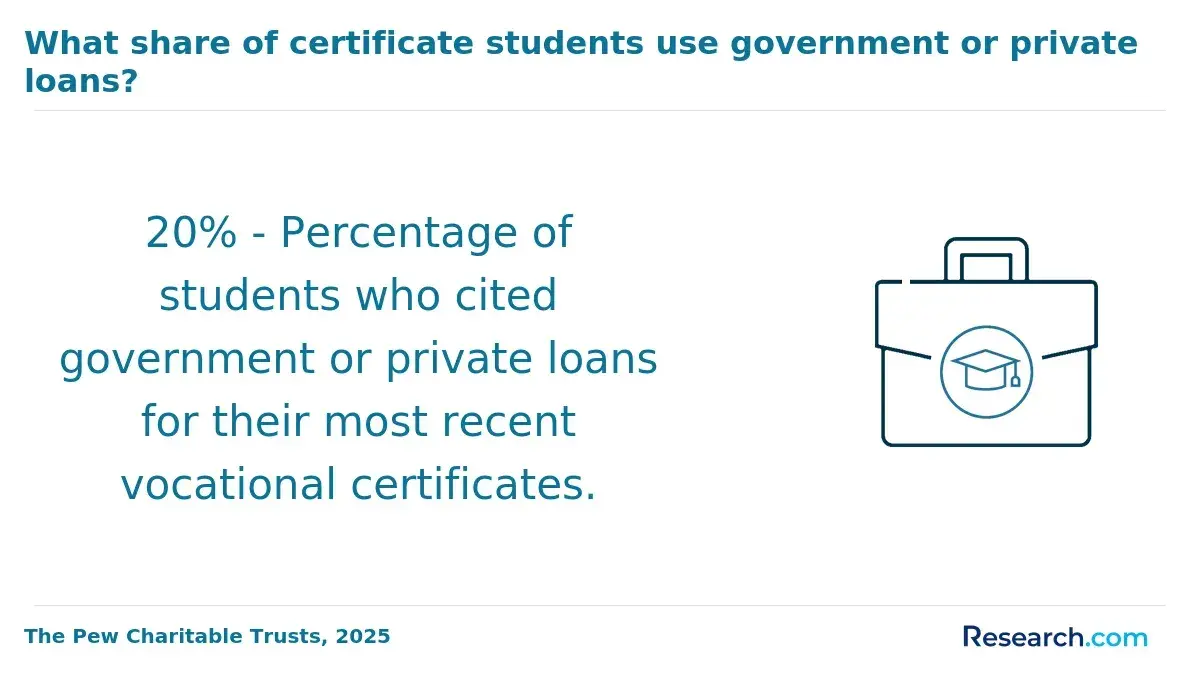
- Financial aid: Eligible students may be able to use federal student aid if the institution and program qualify. Applicants should confirm eligibility directly with the school’s financial aid office rather than assuming every online or CBE program qualifies.
- Employer tuition support: Legal studies can align with compliance, HR, government, contracting, healthcare administration, or corporate risk roles, so some employers may offer reimbursement. Students should ask whether reimbursement requires a minimum grade, continued employment, or manager approval.
- Opportunity cost: The fastest program is not always the best value. A cheaper degree that lacks accreditation, career relevance, faculty support, or employer recognition can be a poor investment.
| Cost question to ask | Why it matters |
| Is tuition charged by term, month, competency, or credit? | The billing model determines whether faster pacing actually saves money. |
| Are there required fees beyond tuition? | Fees can change the total cost even when tuition appears affordable. |
| Is the program eligible for federal student aid? | Accreditation and program eligibility affect loan and aid options. |
| What happens if I need to stop out or slow down? | Pause policies can affect both cost and completion timeline. |
A professional who transitioned careers after completing a competency-based online legal studies master's program shared that while the upfront tuition seemed manageable, the unpredictable pace required careful budgeting for monthly subscription fees. She appreciated how the model allowed her to accelerate through familiar topics but also highlighted that balancing work, study, and extra costs like upgraded software subscriptions demanded constant attention. Her insight was that understanding all potential expenses upfront, beyond just tuition, was vital for success and financial peace of mind throughout the program.
Which Accrediting Bodies Recognize Competency-Based Legal Studies Master's Programs?
Accreditation is one of the most important quality checks for any online legal studies master’s program. It affects degree credibility, transfer possibilities, employer confidence, and access to federal financial aid. For competency-based programs, accreditation also helps confirm that the school has a legitimate method for measuring learning outside the traditional credit-hour model.
- Regional accreditation: The strongest institutional quality signal for CBE legal studies programs typically comes from recognized regional accreditors such as the Higher Learning Commission (HLC), Southern Association of Colleges and Schools Commission on Colleges (SACSCOC), and WASC Senior College and University Commission (WSCUC). These agencies evaluate the institution as a whole, including academic quality, student support, governance, and assessment practices.
- Programmatic accreditation: Some legal studies programs may pursue specialized recognition related to law, legal studies, paralegal education, or professional preparation. Programmatic accreditation is less common at the master’s level in legal studies, so students should verify exactly what is accredited: the institution, the program, or both.
- Competency assessment review: Accreditors expect schools to show that competencies are clearly defined, assessments are reliable, faculty oversight is appropriate, and students meet graduate-level outcomes.
- Federal database verification: Prospective students should confirm accreditation through the U.S. Department of Education's Database of Accredited Postsecondary Institutions and Programs (DAPIP). This is more reliable than relying only on marketing language.
- Warning signs: Be cautious with schools that use vague claims such as “fully recognized,” “internationally accredited,” or “licensed” without naming an accreditor recognized by the Department of Education or CHEA. Also be wary of programs that promise unusually fast completion with little assessment.
Students should also distinguish legal studies from law school. A master’s in legal studies may improve legal literacy and career mobility in law-adjacent roles, but it is not automatically a pathway to attorney licensure. If bar eligibility is your goal, verify requirements with the relevant state bar authority before enrolling.
What Core Competencies and Curriculum Areas Are Covered in a Legal Studies CBE Master's Program?
A legal studies CBE master’s program should make its competencies visible before students enroll. The best programs define what graduates should be able to do, how those skills will be assessed, and how the curriculum connects to legal, regulatory, business, or public-sector work.
- Legal research and analysis: Students learn to locate legal sources, interpret statutes and regulations, analyze cases, and apply legal reasoning to workplace problems.
- Legal writing and communication: Programs often require memos, briefs, policy explanations, compliance reports, contract summaries, and executive-facing legal analysis. Clear writing is one of the most important outcomes.
- Contracts and transactions: Coursework may cover contract formation, interpretation, risk allocation, negotiation concepts, and common contract management issues.
- Compliance and regulatory frameworks: Students may study how organizations identify obligations, monitor risk, document compliance, and respond to regulatory change.
- Civil procedure and dispute resolution: Some programs introduce litigation processes, evidence concepts, mediation, arbitration, and dispute-management strategies.
- Ethics and professional responsibility: Students examine confidentiality, conflicts of interest, unauthorized practice of law, organizational ethics, and professional boundaries for nonlawyer legal professionals.
- Leadership and decision-making: Graduate-level legal studies often emphasizes advising organizations, communicating with stakeholders, managing legal risk, and making practical recommendations.
- Applied projects: Instead of relying only on traditional exams, CBE programs often require scenario-based projects that resemble workplace tasks.
| Competency area | What students should be able to demonstrate |
| Legal analysis | Interpret legal materials and apply them to a defined factual situation |
| Research | Use appropriate legal and regulatory sources to support conclusions |
| Writing | Produce clear, organized, audience-appropriate legal or compliance documents |
| Ethics | Recognize professional boundaries, confidentiality concerns, and ethical risks |
| Applied problem-solving | Recommend practical actions for organizational or client-facing scenarios |
Before applying, review the program’s competency map, sample assessments, course descriptions, capstone requirements, and faculty qualifications. A strong curriculum should match the career you want, whether that is compliance, contracts, legal operations, policy, risk management, or another law-adjacent field.
What Delivery Formats and Technology Platforms Are Used in Online Legal Studies CBE Programs?
Online legal studies CBE programs usually rely on a learning management system, digital library resources, writing tools, assessment portals, and communication platforms. The technology is not just a convenience; it shapes how students receive feedback, submit evidence of mastery, communicate with faculty, and stay on pace.
- Learning management systems: Programs may use Canvas, Blackboard, or proprietary systems to house readings, lectures, assignments, assessment instructions, rubrics, grades, and instructor feedback.
- Asynchronous instruction: Most CBE programs emphasize asynchronous learning, which means students can access materials and complete much of the work on their own schedule. This is helpful for working adults but requires strong time management.
- Synchronous components: Some programs include live webinars, faculty meetings, group discussions, virtual office hours, or required presentations. These can improve engagement, but students should confirm scheduling expectations before enrolling.
- Legal research access: Graduate legal studies students may need access to legal databases, academic journals, government sources, compliance resources, and citation guidance. Ask what research tools are included in tuition.
- Assessment platforms: CBE programs may use portals for uploading projects, receiving rubric-based feedback, taking proctored exams, or tracking competency completion.
- Accessibility: Quality platforms should support captioning, screen readers, keyboard navigation, mobile access, and disability accommodations. Students who need accommodations should contact the school before enrollment.
- Technical support: Reliable help desk access matters because delayed submissions or platform problems can affect progress in a self-paced program.
Ask for a platform demonstration, sample course shell, or orientation preview if available. Pay attention to how easy it is to find assignments, understand rubrics, contact instructors, access library resources, and track progress. Students comparing flexible online formats in related fields may also review online masters mft listings to see how different professional programs structure online learning and student support.
How Are Students Assessed, and How Is Mastery Demonstrated in Legal Studies CBE Programs?
In a legal studies CBE program, assessment is the center of the degree. Students demonstrate mastery by completing tasks that show they can use legal knowledge accurately and professionally. The emphasis is less on accumulating points and more on meeting a clearly defined performance standard.
- Performance tasks: Students may analyze legal scenarios, prepare research memos, draft compliance recommendations, review contract issues, or respond to simulated workplace problems.
- Simulations: Some assessments place students in realistic roles, such as advising a compliance team, preparing a policy response, or identifying legal risks for an organization.
- Capstone projects: A capstone may require students to integrate research, analysis, writing, ethics, and professional judgment into one substantial project.
- Portfolios: Students may collect completed work that demonstrates competency across multiple areas. A strong portfolio can also support job interviews if it is polished and does not contain confidential information.
- Rubric-based faculty evaluation: Faculty or assessors use standardized rubrics to judge whether work meets expectations. Students should review rubrics before beginning an assignment, not after receiving feedback.
- Revision and resubmission: When students do not demonstrate mastery, they may receive feedback and resubmit. This can be a major benefit of CBE, but repeated revisions can also extend the timeline.
- Objective and written assessments: Some programs still use exams or quizzes, especially for foundational legal terminology and concepts. A strong program uses the assessment method that best fits the competency.
| Assessment type | What it shows | Student preparation tip |
| Legal memo or analysis paper | Research, reasoning, writing, and application of law | Use the rubric to structure the document before drafting |
| Compliance or policy project | Ability to translate legal requirements into organizational action | Be practical, concise, and evidence-based |
| Simulation | Professional judgment in a realistic scenario | Explain assumptions and support recommendations |
| Portfolio | Growth and mastery across multiple competencies | Revise work for clarity and remove confidential material |
Because CBE assessment produces concrete work products, students can leave with examples that communicate skills more clearly than a transcript alone. Those comparing reputable online institutions may also explore famous online colleges while keeping in mind that accreditation, curriculum fit, and assessment quality matter more than name recognition alone.
What Transfer Credit and Prior Learning Assessment Options Exist for Legal Studies CBE Programs?
Transfer credit and prior learning assessment can reduce duplication, shorten completion time, and lower cost, but policies vary widely. Students should ask about these options before enrolling, because approval is often easier during admission than after starting the program.
- Graduate transfer credit: Students who have completed relevant graduate coursework may be able to transfer credits if the prior institution was accredited, the courses match program outcomes, and grades meet school policy.
- Portfolio evaluation: Applicants may submit evidence of professional learning, certifications, training, legal support work, compliance projects, policy work, or other relevant experience. Faculty then determine whether the evidence matches program competencies.
- Standardized exams: Programs often accept nationally recognized tests like CLEP (College Level Examination Program) and DSST (DANTES Subject Standardized Tests). These are more common for lower-level or foundational credit, so graduate applicants should confirm whether they apply to a master’s program.
- Challenge exams: Some schools use internal exams to let students demonstrate mastery of a specific course or competency without completing the full instructional sequence.
- Professional certifications and training: Compliance, contract management, paralegal, HR, privacy, risk, or government training may be considered if it maps clearly to legal studies outcomes.
- Transfer credit limits: To maintain academic quality, most programs cap the amount of credits that can be earned via PLA or transfer, typically allowing between 30% and 50% of degree requirements through prior learning options.
- Documentation requirements: Students may need syllabi, transcripts, certificates, work samples, supervisor letters, job descriptions, or detailed explanations of duties. Confidential or privileged information should never be submitted without proper redaction and permission.
Before applying, create an inventory of prior coursework, workplace training, certifications, and relevant projects. Then ask each program these questions: What is the maximum transfer allowance? Is prior learning charged separately? Who evaluates portfolios? How long does review take? Can denied credits be appealed? Clear answers can help you decide whether a program’s advertised flexibility will translate into actual time and cost savings.
What Career Outcomes and Professional Opportunities Does a Legal Studies CBE Master's Degree Unlock?
A competency-based online legal studies master’s degree can support advancement in law-adjacent roles where legal literacy, risk awareness, research, writing, and regulatory understanding are valuable. It is best suited for professionals who need to work with legal concepts but do not necessarily plan to become attorneys.
- Compliance roles: Graduates may pursue or advance in compliance positions that require monitoring regulations, developing policies, documenting controls, and supporting audits.
- Legal analyst positions: Some graduates work in roles that involve research, document review, litigation support, regulatory analysis, or internal legal operations.
- Contract administration: A legal studies background can support work involving contract review workflows, vendor agreements, procurement, risk terms, and contract lifecycle management.
- Regulatory consulting: Professionals in healthcare, finance, government contracting, privacy, insurance, or other regulated sectors may use legal studies training to advise teams on obligations and risk.
- Government and policy work: The degree may be relevant for roles involving statutes, administrative rules, public programs, investigations, or policy implementation.
- Career differentiation through portfolios: CBE students often graduate with work samples that show practical competence. These can help in interviews when they are relevant, polished, and free of confidential information.
- Networking and professional associations: Alumni networks, legal studies associations, compliance groups, and employer-sponsored professional communities can help graduates identify job openings and mentors.
Legal studies graduates typically earn median salaries between $60,000 and $90,000 annually, with variations depending on industry, experience, and location. Salary outcomes are not guaranteed, and a degree alone rarely replaces experience, professional reputation, certifications, or industry knowledge. Students should compare program outcomes, employer partnerships, alumni roles, and career services before enrolling.
The clearest return on investment usually occurs when the degree aligns with a specific career path: moving from paralegal work into legal operations, from HR into employment compliance, from business operations into contract administration, or from a regulated industry role into risk or policy leadership. If your goal is to practice law, confirm whether you need a JD and bar admission instead of, or in addition to, a legal studies master’s.
What Graduates Say About Their Competency-Based Online Legal Studies Master's Degrees
- Derick: "Choosing a competency-based online legal studies master's program was a game-changer for me because it offered the flexibility I needed to balance work and study. The cost was surprisingly affordable compared to traditional programs, making it a smart investment. Most importantly, the skills I gained helped me advance rapidly in my career, proving the practical value of this approach."
- Gil: "Pursuing a competency-based online master's degree in legal studies allowed me to tailor my learning pace around my professional commitments, which was crucial. I appreciated the transparency in tuition costs, which helped me plan my finances without stress. Reflecting back, this degree has profoundly improved my confidence and effectiveness in navigating complex legal challenges at work."
- Arianne: "The reason I opted for a competency-based online legal studies master's program was the outcome-focused curriculum that emphasized real-world application. Despite the competitive pricing, I never felt I was sacrificing quality. This program has significantly broadened my career opportunities and expanded my network within the legal profession, making it a truly worthwhile investment."
Other Things You Should Know About Legal Studies Degrees
Most competency-based legal studies master's degrees in 2027 require around 30-36 credit hours for completion. These programs often allow students to progress by demonstrating mastery of material rather than adhering to a fixed semester schedule.
Students must have a reliable internet connection, a recent computer running Windows 10 or macOS 11, and access to specific software like Microsoft Office 365. Technical support is often provided by schools, but initial setup is the student's responsibility.
References
- Best Online Master's Degrees in Legal Studies for 2025 https://www.onlinemastersdegrees.org/best-programs/legal-studies/
- Master of Legal Studies https://onlinegrad.pepperdine.edu/law/online-mls/
- What Can You Do with a Master’s in Legal Studies? https://onlinemasteroflegalstudies.com/career-guides/mls/
- Legal Education Tech — The Legal Tech Guide https://thelegaltechguide.com/legal-education-tech
- How Digital Platforms Are Transforming Legal Studies Today https://www.leaders-in-law.com/breaking-barriers-how-digital-platforms-are-transforming-legal-studies/
- Accreditation https://www.nationalparalegal.edu/accreditation.aspx
- What Can You Do with a Master’s in Legal Studies? https://online.law.pitt.edu/blog/master-of-studies-in-law-jobs
- Master of Legal Studies Jobs: Career Paths, Salaries & ROI https://mls.law.wfu.edu/articles/what-can-you-do-with-a-master-of-legal-studies/
- ABA-Approved Legal Studies Master's (MA) | Webster University https://www.webster.edu/humanities-social-sciences/ma-legal-studies.php
- What Can You Do With a Master of Legal Studies (MLS)? https://mls.uclawsf.edu/articles/what-can-you-do-with-master-of-legal-studies/