2027 Easiest Early Childhood Education (ECE) Degree Programs

Co-Founder and Chief Data Scientist
Choosing an early childhood education degree is not just a school decision. It affects where you can work, whether you qualify for licensure, how much field experience you must complete, how quickly you can graduate, and whether the program fits your life if you are working, caregiving, or returning to college after time away. This guide is for students who want an accessible path into early childhood education without sacrificing program quality, accreditation, or career readiness.
In this guide, “easy” does not mean low-effort or academically weak. Early childhood education programs still require serious study, supervised practice, background checks, and preparation for working with young children. Here, easier programs are those that may be more manageable because they offer online or hybrid formats, flexible scheduling, transfer-friendly policies, supportive student services, clearer admissions processes, or multiple pathways to licensure and non-licensure roles.
You will learn what to expect from an early childhood education degree, how to compare programs, what careers and salaries are possible, how accreditation affects your options, and which programs may be easier to enter or complete based on structure and student support.
Quick Answer: What Makes an Early Childhood Education Degree Program Easier to Complete?
The easiest early childhood education degree programs are usually flexible, transfer-friendly, and clearly aligned with a student’s career goal. A manageable program may offer online coursework, asynchronous classes, generous transfer credit policies, no standardized test requirement, part-time enrollment, strong advising, tutoring, and local field placement support. However, any program leading to teacher licensure will still require state-specific coursework, supervised classroom experience, and eligibility checks such as background screening.
If your goal is to become a licensed preschool, pre-K, or early elementary teacher, prioritize accreditation and state licensure alignment over convenience alone. If your goal is to work in childcare leadership, family services, curriculum support, or non-certified early learning roles, a non-licensure early childhood education track may provide more flexibility.
Why Early Childhood Education Degrees Matter
Early childhood education focuses on the development and learning of young children, commonly from birth through age 8. The field combines child development, family engagement, classroom management, language and literacy, inclusive education, assessment, and curriculum planning. Students learn how children grow physically, socially, emotionally, and cognitively, then apply that knowledge in classrooms, childcare centers, community programs, and family-support settings.
The career path is especially important because early educators often help children build foundational skills before formal schooling becomes more academically structured. For students who enjoy working with young children and families, an ECE degree can lead to direct teaching, childcare administration, early intervention, curriculum development, nonprofit programming, and related education roles.
Benefits of Choosing an Accessible Early Childhood Education Program
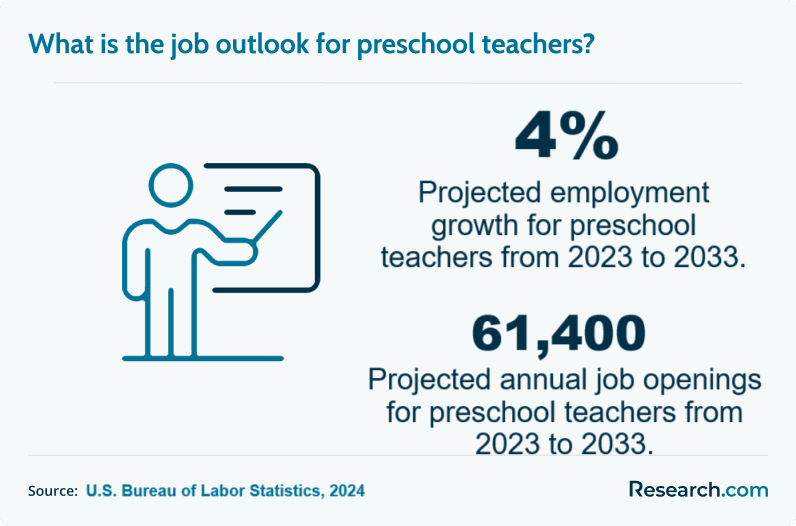
- Steady employment need: The U.S. Bureau of Labor Statistics projects preschool teacher employment to grow 4% from 2023 to 2033.
- Clear entry points into education: ECE graduates may work as preschool teachers, childcare professionals, assistant teachers, family support workers, early learning coordinators, or, with the right licensure pathway, pre-K or kindergarten teachers.
- Flexible program formats: Many programs now offer online, hybrid, evening, accelerated, or part-time options, making the degree more realistic for working adults and caregivers.
- Multiple career directions: Students can choose classroom teaching, childcare center administration, special education support, curriculum planning, community programming, or advanced study.
- Pathway to advancement: A bachelor’s degree can support future graduate study, leadership credentials, specialized certifications, or transition into higher-paying roles in education administration or special education.
What Can I Expect From an Easy Early Childhood Education Degree Program?
An accessible ECE program should still be academically credible. You should expect coursework in child development, curriculum design, family engagement, observation and assessment, inclusive education, and classroom practice. If the degree leads to licensure, you should also expect state-specific requirements, supervised fieldwork, and possible certification exams.
The difference is not that the work is easier. The difference is that the program removes unnecessary barriers and gives students more ways to finish successfully.
| Feature | Why It Matters | What to Check Before Enrolling |
| Online or hybrid coursework | Helps students balance school with employment, caregiving, or commuting limits. | Ask whether classes are asynchronous, live, or a mix of both. |
| Transfer credit options | Can shorten the time and cost needed to finish a bachelor’s degree. | Request a transfer evaluation before committing to the program. |
| Clear admissions requirements | Reduces uncertainty for applicants with nontraditional backgrounds. | Confirm GPA, test score, prerequisite, and prior college credit rules. |
| Field placement support | Practicums and student teaching can be difficult to arrange independently. | Ask whether the school helps place online students near their home. |
| Student support services | Tutoring, advising, career coaching, and licensure guidance can improve completion odds. | Look for dedicated education advisors and accessible faculty support. |
Where Can I Work With an Early Childhood Education Degree?
Graduates can work in settings that serve infants, toddlers, preschoolers, kindergarteners, early elementary students, and families. The exact roles available depend on degree level, state licensure, experience, and employer requirements.
- Preschools and childcare centers: Teach young children, assist lead teachers, coordinate classrooms, or support daily programming.
- Public and private schools: Work in pre-kindergarten, kindergarten, or early elementary classrooms if the degree meets licensure requirements.
- Head Start and community programs: Support early learning, family engagement, school readiness, and child development initiatives.
- Nonprofit organizations: Coordinate literacy, parenting education, child development, or family support services.
- Government agencies: Assist with early childhood policy, child welfare, public education, or health-linked education programs.
- Childcare administration: Manage staffing, compliance, parent communication, curriculum quality, and center operations.
- Special education and early intervention: Support children with developmental delays, disabilities, or additional learning needs, depending on credentials and state rules.
How Much Can I Make With an Early Childhood Education Degree?
Pay in early childhood education varies widely by role, degree level, state, employer type, licensure, and years of experience. According to the U.S. Bureau of Labor Statistics, preschool teachers earn an average annual salary of around $41,400, while kindergarten teachers earn an average annual salary of $67,790.
Leadership and specialized roles may pay more. Education and childcare administrators for preschool and daycare earn an average annual salary of $61,320. Special education teachers for preschool earn an average of $76,420 per year.
Salary should not be evaluated in isolation. Students should also compare tuition, debt, licensure eligibility, local job availability, transfer credits, and whether the program prepares them for the role they actually want.
- List of the Easiest Early Childhood Education Degree Programs for 2027
- How long does it take to complete an early childhood education degree program?
- What are the typical prerequisites for enrolling in an early childhood education degree program?
- What courses are typically included in early childhood education degree programs?
- What is the average cost of attending an early childhood education degree program?
- What are the financial aid options for students enrolling in ECE degree programs?
- How do I choose the best and easiest early childhood education degree programs to get into?
- What career paths are available for graduates of early childhood education degree programs?
- Can an Advanced Degree Accelerate Career Advancement in Early Childhood Education?
- What additional certifications can enhance my early childhood education career?
- How can I evaluate the quality and accreditation of an early childhood education degree program?
- How do I measure the return on investment for an early childhood education degree?
- How can advanced leadership credentials boost your early childhood education career?
- Can combining an early childhood education degree with interdisciplinary studies enhance career prospects?
- What types of specializations are available in early childhood education degree programs?
- What is the job market like for early childhood education degree holders?
- How can cross-disciplinary skills drive innovation in early childhood education?
- What are the most common challenges students face in early childhood education degree programs?
- How can accelerated programs fast-track your teaching career in early childhood education?
- How do industry trends impact long-term salary growth in early childhood education?
List of the Easiest Early Childhood Education Degree Programs for 2027
How Research.com Evaluates Accessible ECE Programs
Research.com recognizes that an early childhood education degree requires a major investment of time, money, and personal energy. Our ranking approach uses established education data sources, including the IPEDS database, Peterson’s database, the College Scorecard database, and The National Center for Education Statistics. These sources help create a data-informed view of institutions and programs.
For this list, “easy” refers to relative accessibility, not lower academic standards. Programs may be considered easier to enter or complete when they provide flexible delivery, online options, transfer pathways, student support, streamlined admissions, or clear licensure and non-licensure routes. To learn more about the broader ranking approach, review Research.com’s methodology page.
Program Comparison Snapshot
| School | Program Format | Program Length | Credits Required | Best Fit |
| National University | Online or in-person | 4 years | 180 | Students wanting flexible delivery and a simplified application process. |
| University of Florida | 100% online | 4 years | Not stated | Students seeking an online pathway tied to Florida certification and endorsements. |
| Eastern University | Traditional undergraduate program | 4 years | 120 credits minimum | Students pursuing Certification in Early Childhood Education (PK-4). |
| Pacific Oaks College | On-campus and online | 4 years | 121 | Students interested in California child development permits and specialization options. |
| Winona State University | Online | 4 years | 120 | Students with prior college credit or an associate degree. |
| Florida International University | On-campus and fully online | 4 years | 120 | Students who want a birth-to-age-8 early education foundation. |
| Oakland City University | Not stated | 3 years | 120 | Students comparing Indiana licensure and non-licensure options. |
| Chaminade University of Honolulu | Online | 3 years | 120 | Students preparing for teacher licensure in Hawaii. |
| University of Northern Colorado | Not stated | 4 years | 120 | Students seeking field experience and teacher education or liberal arts emphasis options. |
| Charter Oak State College | Online asynchronous | 3-5 years | 120 | Working adults interested in non-certified administrative or teaching positions. |
1. National University
National University offers a Bachelor of Arts in Early Childhood Education with online and in-person study options. The BAECE program is built around contemporary educational perspectives, current theory, and research-informed practice. Students study learning environments, instructional approaches, adaptive curriculum, and classroom strategies designed to support young children’s development.
National University may appeal to students who want fewer application barriers. The university describes its admissions process as simplified and streamlined, with no essays or exams required. Students also have access to free tutoring, 24/7 support services, career support, mentoring, and resources for veterans and military families.
- Location: San Diego, CA
- School type: Private
- Program length: 4 years
- Total estimated program cost: $67,400
- Required credits to graduate: 180
- Accreditation: Western Association of Schools and Colleges
2. University of Florida
The University of Florida provides a 100% online Bachelor of Arts in Early Childhood Education. The program is an interdisciplinary teacher education pathway for students preparing to work with children from age three to third grade and their families.
Graduates who complete the program are eligible for professional certification in Prekindergarten/Primary (age 3 to grade three), along with endorsements in Prekindergarten Disabilities, Reading, and English for Speakers of Other Languages (ESOL).
Minimum admission requirements include passing General Knowledge test scores from the Florida Teacher Certification Examination, completion of all General Education requirements including a writing requirement, a minimum 2.6 GPA, a minimum of 60 credits, and a Personal Goals Statement, among other requirements.
- Location: Gainesville, FL
- School type: Public
- Program length: 4 years
- Tuition per credit hour: $111.92 (in-state) | $500 (out of state)
- Accreditation: Council for the Accreditation of Educator Preparation (CAEP)
3. Eastern University
Eastern University offers a Bachelor of Science in Early Childhood Education through its College of Education and Behavioral Sciences. The program is designed for students who want to pursue Certification in Early Childhood Education (PK-4) and prepare for work in early learning and elementary education settings.
Students develop skills in communication, cultural awareness, critical thinking, inclusive interventions, technology use, collaboration, service, and independent learning.
Applicants are expected to have completed a college preparatory high school curriculum that includes humanities, mathematics, laboratory sciences, and social studies. A cumulative high school GPA of 2.0 or higher is expected. SAT and/or ACT scores are not automatically required, though the university may request them.
- Location: Saint Davids, PA
- School type: Private Christian
- Program length: 4 years
- Tuition: $18,840 per semester for traditional undergraduate programs
- Required credits to graduate: 120 credits minimum
- Accreditation: Middle States Commission on Higher Education (MSCHE); National Association for the Education of Young Children (NAEYC)
4. Pacific Oaks College
Pacific Oaks College offers a B.A. in Early Childhood Education in both online and on-campus formats. The program prepares students to create supportive learning environments for children from birth through 8 years old. Coursework addresses cognitive and motor development, language development, psychosocial learning, and culturally responsive approaches.
The program includes coursework, fieldwork, and practicum experiences connected to child development permits in California. Available specialization and credential areas include trauma studies, STEAM, elementary education, and elementary education and special education.
Applicants must have a 2.0 high school GPA or higher or must have 24 credits of transferable credits with a grade of C from a regionally accredited post-secondary institution.
- Location: Pasadena, CA
- School type: Private
- Program length: 4 years
- Tuition: $890 per credit hour
- Required credits to graduate: 121
- Accreditation: Accrediting Commission for Schools Western Association of Schools and Colleges
5. Winona State University
Winona State University offers an online bachelor’s program in early childhood education for students preparing to teach children from birth to Grade 3. The curriculum covers literacy and numeracy instruction and includes hands-on learning, teaching experiences, and preparation for licensure to teach children from birth to third grade.
This pathway is especially relevant for students who already hold an associate degree or have completed college-level coursework. Admission requires 30 completed college-level credits, no more than 4 credits of pass/no credit, a cumulative GPA of at least 2.75, a grade of B or better in a 3-credit college-level writing course, a grade of B or better in a 3-credit college-level speech course, and a grade of C or better in a 3-credit college-level math course. Students must also complete 15 hours of early clinical experience before or during the application semester through work or volunteer experience involving groups of two or more children after high school graduation.
- Location: Winona, MN
- School type: Public
- Program length: 4 years
- Tuition: $4,193.75 per semester (resident) | $7,559.85 per semester (non-resident)
- Required credits to graduate: 120
- Accreditation: Minnesota Professional Educator Licensing and Standards Board
6. Florida International University
Florida International University offers a Bachelor of Science in Early Childhood Education with on-campus and fully online options. The degree focuses on the development of the whole child, including cognitive, language, social, and emotional development. Students also study general and early education theory and practice for children from birth to 8 years old.
Applicants should submit SAT, ACT and/or CLT test scores.
- Location: Miami, FL
- School type: Public
- Program length: 4 years
- Tuition: $329.77 per credit
- Required credits to graduate: 120
- Accreditation: Council for the Accreditation of Educator Preparation
7. Oakland City University
Oakland City University offers a B.A. in Early Childhood Education that can lead to the Indiana state license for Pre-K to third grade. The program combines coursework and field experience to prepare students for teaching needs in the public school system. Topics include child development theory, special education, programming for children, and developmentally appropriate curriculum for diverse young learners.
The university also offers a non-licensure option for students aiming for leadership roles in licensed childcare facilities, head-start programs, and non-public school settings.
Teacher licensing requires 3.0 overall and in major courses. Non-licensure students must have 2.0 GPA average overall and must have 2.3 GPA in majors.
- Location: Oakland City, IN
- School type: Private
- Program length: 3 years
- Tuition: $930 per credit hour
- Required credits to graduate: 120
- Accreditation: The Higher Learning Commission
8. Chaminade University of Honolulu
Chaminade University of Honolulu offers an online Bachelor of Science in Early Childhood Education that prepares students for teacher licensure in Hawaii. The program emphasizes culturally responsive teaching and includes field experiences or practicum placements in local early childhood settings.
Students learn how to select and apply instructional strategies for early childhood learners while examining the ethics, responsibilities, values, and commitments of the teaching profession within school communities.
- Location: Honolulu, HI
- School type: Private (Marianist)
- Program length: 3 years
- Tuition: $600 per credit hour
- Required credits to graduate: 120
- Accreditation: Western Association of Schools and Colleges (WASC)
9. University of Northern Colorado
University of Northern Colorado offers a B.A. in Early Childhood Education with small classes, faculty support, and extensive classroom and field experience. The Early Childhood Teacher Education degree includes two options: Teacher Education or Liberal Arts. The BAECE option with preparation for initial teacher licensure and ECE endorsement focuses on children from birth to 8 years old. In Colorado, students may take the PRAXIS teacher certification exam and have licensure extended to include fourth, fifth, and sixth grades as well.
Students study child development, learning principles, elementary teaching, educational change, and research-based curriculum projects. The program also emphasizes diversity and practical classroom experience in childcare centers and elementary schools.
- Location: Greeley, CO
- School type: Public
- Program length: 4 years
- Tuition: $478 per credit hour
- Required credits to graduate: 120
- Accreditation: Higher Learning Commission
10. Charter Oak State College
Charter Oak State College offers an online Bachelor of Science in Child Studies with a concentration in Early Childhood Education. The asynchronous format is designed for working adults and other nontraditional students who need schedule flexibility.
The program covers child development, learning theory, curriculum design, and assessment. It prepares students for non-certified administrative or teaching positions serving children from birth to 8 years old.
- Location: New Britain, CT
- School type: Public
- Program length: 3-5 years
- Tuition: $560 per credit
- Required credits to graduate: 120
- Accreditation: New England Commission of Higher Education (NECHE)
How Long Does It Take to Complete an Early Childhood Education Degree Program?
Completion time depends on the credential, transfer credits, course load, and whether you study full time or part time. An associate degree in ECE typically takes two years of full-time study. A bachelor’s degree usually takes four years. A master’s degree may add one to two years, while doctoral study may take three to five years.
Students who already have transfer credits, an associate degree, or documented prior learning may finish faster. Accelerated schedules can also shorten the timeline, but they require strong time management because courses move quickly. Students comparing graduate routes may also review the best 1 year online master's in education program options if they want a shorter graduate pathway.
| Degree Level | Typical Full-Time Timeline | Best For | Important Caution |
| Associate degree | Two years | Entry-level childcare roles or transfer into a bachelor’s program. | May not qualify you for licensed teaching roles in public schools. |
| Bachelor’s degree | Four years | Teaching, childcare leadership, and licensure pathways depending on state approval. | Licensure requirements vary by state and program. |
| Master’s degree | One to two years | Career advancement, specialization, leadership, or higher-level education roles. | Cost and time should be weighed against likely salary improvement. |
| Doctoral degree | Three to five years | Policy, research, administration, higher education, or senior leadership roles. | Often unnecessary for entry-level classroom teaching. |
What Are the Typical Prerequisites for Enrolling in an Early Childhood Education Degree Program?
Admissions requirements vary by institution, degree level, and licensure status. Programs that prepare students for licensed teaching usually have more requirements than non-licensure child studies or early childhood leadership tracks.
- High school diploma or GED: Associate and bachelor’s programs generally require proof of secondary school completion.
- Minimum GPA: Many colleges set a GPA threshold, often around 2.5–3.0, although some accessible programs use lower or more flexible standards.
- Test scores: Some schools request ACT, SAT, CLT, or teacher certification test scores, while others are test optional.
- Recommendations: Programs may ask for references from teachers, supervisors, or mentors who can address readiness for education work.
- Background check: Because students work with children during field experiences, schools often require background clearance.
- Experience with children: Some campus-based and online colleges for early childhood education prefer applicants with childcare, classroom, volunteer, or youth program experience.
Graduate programs may require a bachelor’s degree in education or a related area, a statement of purpose, professional references, and sometimes teaching experience. Students interested in child development outside a traditional teacher-preparation route may also compare related programs such as human development and family studies online programs.
What Courses Are Typically Included in Early Childhood Education Degree Programs?
ECE coursework blends theory, development, teaching practice, and supervised application. The exact course list depends on the degree level and whether the program leads to licensure, but most programs include the following areas:
- Child development: Covers cognitive, physical, emotional, language, and social growth in young children.
- Curriculum planning and design: Teaches students how to build age-appropriate lessons, activities, and learning environments.
- Classroom management: Focuses on positive behavior support, routines, communication, and emotionally safe classrooms.
- Diversity and inclusion: Prepares educators to support children from different cultural, linguistic, socioeconomic, and ability backgrounds.
- Educational psychology: Connects learning theories to early childhood teaching practice.
- Literacy and language development: Emphasizes early reading, writing, vocabulary, oral language, and communication skills.
- Observation and assessment: Helps future educators document child progress and use assessment results responsibly.
- Practicum or field experience: Gives students supervised teaching or observation experience in real early childhood settings.
What Is the Average Cost of Attending an Early Childhood Education Degree Program?
ECE degree costs vary by institution type, state residency, online status, transfer credits, and whether the program is associate, bachelor’s, or graduate level. Students should calculate total cost, not tuition alone.
- Associate Degrees: Tuition costs range from $3,000 to $10,000 per year at community colleges or online institutions.
- Bachelor’s Degrees: Public universities charge around $9,000 to $20,000 per year for in-state students, while private institutions can cost upwards of $30,000 annually.
- Master’s Degrees: Graduate programs typically range from $15,000 to $40,000 total, depending on the institution and program length. Students comparing graduate costs can review the cheapest online master's degree in early childhood education options.
Also include books, background checks, assessment fees, technology fees, transportation to field sites, childcare, and lost work hours if field placements occur during daytime schedules. Students who already hold a degree or want a licensure route should also compare the cost of an accredited teacher certification program online.
Salary Comparison for Education Roles
The table below compares annual average salary figures for teaching and education leadership roles. These figures are useful for evaluating potential return, but they do not guarantee individual outcomes.
| Type of Teacher/Role | Annual Average Salary |
| Preschool Teachers | $41,410 |
| Kindergarten Teachers | $67,790 |
| Elementary Teachers | $70,740 |
| Middle School Teachers | $71,460 |
| Secondary School Teachers | $73,800 |
| Special Education Preschool Teachers | $76,420 |
| Special Education Kindergarten and Elementary School Teachers | $71,770 |
| Special Education Middle School Teachers | $73,630 |
| Special Education Secondary School Teachers | 74,670 |
| Education and Childcare Administrators, Preschool and Daycare | $61,320 |
| Education Administrators, Kindergarten through Secondary | $111,020 |
What Are the Financial Aid Options for Students Enrolling in ECE Degree Programs?
Financial aid can make an ECE degree more affordable, but students should understand the terms of each funding source before accepting money. Grants and scholarships do not usually require repayment, while loans do.
- Federal financial aid: Complete the Free Application for Federal Student Aid (FAFSA) to be considered for federal grants, loans, and work-study.
- Scholarships: Schools, community organizations, and education associations may offer awards for early childhood education or teacher preparation students, including programs such as the TEACH Early Childhood® Scholarship Program and opportunities connected to NAEYC.
- State and local grants: Some states fund students preparing for high-need education roles, including early childhood education.
- Employer tuition support: Childcare centers, school districts, and education employers may reimburse tuition or help fund credentials for current employees.
- Work-study: Eligible students may earn money through part-time work while enrolled.
- Loan forgiveness programs: Graduates working in qualifying nonprofit or public service roles may be eligible for programs such as Public Service Loan Forgiveness (PSLF), depending on federal rules and employer eligibility.
How Do I Choose the Best and Easiest Early Childhood Education Degree Programs to Get Into?
The best program is not always the one with the simplest admissions process. A good early childhood education degree should match your career goal, fit your schedule, meet accreditation expectations, and prepare you for any licensure or certification required in your state.
Decision Checklist Before You Apply
- Clarify your end goal: Decide whether you want licensure, childcare leadership, early intervention support, family services, or graduate study.
- Verify accreditation: Confirm institutional accreditation and, when relevant, educator preparation accreditation or state approval.
- Check state licensure alignment: Do not assume an online program automatically qualifies you to teach in your state.
- Request a transfer credit review: Transfer credits can significantly affect cost and timeline.
- Ask about field placements: Online students should confirm whether placements can be completed locally.
- Compare total cost: Include tuition, fees, books, exams, background checks, travel, and time away from work.
- Evaluate support services: Look for advising, tutoring, licensure guidance, career coaching, and help for working adults.
| If You Want... | Choose This Type of Program | Avoid This Mistake |
| Licensed teaching in public schools | A state-approved teacher preparation program with required fieldwork. | Choosing a non-licensure degree because it looks faster or cheaper. |
| Childcare center leadership | An ECE or child studies program with administration, leadership, and compliance coursework. | Ignoring state childcare director credential rules. |
| Maximum flexibility | An online or hybrid program with asynchronous classes and local placement support. | Assuming online means self-paced; many online courses still have weekly deadlines. |
| Fast completion | A transfer-friendly or accelerated program. | Taking an overloaded schedule without planning for field hours. |
| Special education work | A program with early intervention, disability, or special education coursework. | Assuming one ECE degree qualifies you for every special education role. |
What Career Paths Are Available for Graduates of Early Childhood Education Degree Programs?
An early childhood education degree can lead to several education and child development careers. Some roles require licensure, while others depend more on degree level, experience, employer standards, and state childcare regulations.
- Preschool teacher: Supports children aged 3-5 through play, early literacy, social development, routines, and foundational learning.
- Kindergarten teacher: Teaches young learners in elementary school settings and typically requires state teacher licensure.
- Childcare center director: Oversees staff, curriculum, safety, licensing compliance, parent communication, and daily operations.
- Early intervention specialist: Works with children who have developmental delays or disabilities, often in collaboration with families and specialists.
- Curriculum developer: Creates learning materials, activities, and program resources for early childhood classrooms or organizations.
- Family support specialist: Helps families connect with services that support child development, learning, health, and stability.
- Community program coordinator: Manages or supports programs in literacy, nutrition, school readiness, parenting education, or child development.
Students interested in communication development, speech, hearing, or language-related support for children may also explore an online communication disorders degree as a related pathway.
Can an Advanced Degree Accelerate Career Advancement in Early Childhood Education?
An advanced degree can help early childhood educators move beyond entry-level classroom roles into leadership, administration, curriculum design, policy, coaching, research, or higher education. The value depends on your current role, local salary structures, employer requirements, and whether the advanced degree aligns with a specific career target.
Educators who want doctoral-level preparation while continuing to work may compare flexible options such as an online EdD. Before enrolling, confirm whether the degree supports the exact role you want, such as program director, district leader, faculty member, instructional coach, or policy specialist.
What Additional Certifications Can Enhance My Early Childhood Education Career?
Certifications can strengthen an ECE résumé when they match employer needs and state requirements. Useful areas may include infant and toddler care, early intervention, special education support, bilingual education, trauma-informed practice, literacy instruction, childcare administration, or digital learning tools.
Some educators also build complementary skills through related fields. For example, research, information organization, and children’s literacy skills developed through a librarian degree online may support work in community learning programs, early literacy initiatives, and educational resource development. Always verify that any certificate or degree is recognized by your employer or state agency before investing.
How Can I Evaluate the Quality and Accreditation of an Early Childhood Education Degree Program?
Accreditation is one of the most important filters when comparing ECE programs. Institutional accreditation affects credit transfer, graduate school eligibility, and federal financial aid access. Program approval or educator preparation accreditation may also matter if you need teacher licensure.
- Check institutional accreditation: Confirm the school is recognized by an appropriate accrediting body.
- Confirm educator preparation approval: If you want to teach in public schools, verify that the program meets your state’s teacher preparation requirements.
- Review fieldwork expectations: Strong programs provide supervised practice in real early childhood settings.
- Ask about licensure exam preparation: Programs should explain how coursework supports required exams, if applicable.
- Look at support and outcomes: Ask about advising, placement support, graduate employment, and certification pass-rate information when available.
Students building broader humanities and communication skills may also consider interdisciplinary learning such as a history degree online, but that should supplement—not replace—licensure-aligned preparation if the goal is certified teaching.
How Do I Measure the Return on Investment for an Early Childhood Education Degree?
To evaluate ROI, compare the full cost of attendance against realistic career outcomes in your area. Include tuition, fees, books, certification exams, transportation, fieldwork hours, time away from paid work, loan interest, and the wage range for your intended role.
- Identify the role you want: Preschool teacher, kindergarten teacher, director, intervention specialist, or another path.
- Check credential requirements: Determine whether the job requires licensure, a bachelor’s degree, graduate study, or a specific certificate.
- Calculate net program cost: Subtract grants, scholarships, employer aid, and transfer-credit savings from total cost.
- Compare expected pay: Use official labor data, local job postings, and employer salary schedules when possible.
- Evaluate advancement potential: Consider whether the degree opens access to higher-paying roles over time.
Educators considering leadership or doctoral-level advancement can also compare the easiest EdD programs to understand how cost, time, and career direction may affect long-term value.
How Can Advanced Leadership Credentials Boost Your Early Childhood Education Career?
Leadership credentials can help experienced early childhood professionals qualify for roles that involve supervision, program improvement, policy implementation, curriculum oversight, and organizational decision-making. These credentials are most useful when they match a clear advancement goal, such as becoming a center director, district early learning coordinator, nonprofit program leader, or administrator.
Professionals interested in organizational change, strategic planning, and executive-level education leadership may consider an online doctorate degree in organizational leadership. This type of program is generally better suited for experienced professionals than for students seeking an entry-level teaching role.
Can Combining an Early Childhood Education Degree With Interdisciplinary Studies Enhance Career Prospects?
Interdisciplinary study can be valuable when it strengthens skills directly used in early childhood settings. Communication, literacy, family studies, psychology, special education, social work, language development, and child health are especially relevant. However, interdisciplinary coursework should be chosen with purpose, not added randomly.
For example, educators who want stronger writing, storytelling, and language instruction skills may find value in programs such as the cheapest English degree online. The key question is whether the added study improves your teaching, expands your eligibility, or supports a specific career move.
What Types of Specializations Are Available in Early Childhood Education Degree Programs?
Specializations allow students to tailor an ECE degree toward a role, age group, or child-development need. Not every program offers the same concentrations, so compare options carefully before applying.
- Special Education: Focuses on strategies for supporting young children with developmental delays, disabilities, or learning needs. Graduate-level students can compare the top special education graduate programs if they want deeper preparation in this area.
- Infant and Toddler Development: Emphasizes development, caregiving, attachment, routines, and learning for children from birth to age three.
- Early Literacy Education: Prepares educators to support oral language, vocabulary, print awareness, phonological skills, reading readiness, and writing foundations.
- STEM in Early Childhood: Teaches developmentally appropriate ways to introduce science, technology, engineering, and math concepts.
- Administration and Leadership: Builds skills for managing childcare centers, early learning programs, staff, compliance, and family communication.
- Diversity and Inclusion: Focuses on culturally responsive teaching, equity, multilingual learners, and inclusive classroom practice.
- Play-Based Learning: Examines how structured and open-ended play supports social, emotional, cognitive, language, and motor development.
What Is the Job Market Like for Early Childhood Education Degree Holders?
The job market for ECE graduates depends on location, licensure, employer type, public funding, and local childcare demand. According to the U.S. Bureau of Labor Statistics, employment for preschool teachers is projected to grow 4% from 2023 to 2033, which is as fast as the average for all occupations. The BLS also reports 61,400 projected job openings for preschool teachers each year, on average, over this 10-year period.
ECE roles appear in preschools, childcare centers, public schools, private schools, Head Start programs, nonprofits, government-funded initiatives, and family support organizations. Students comparing education careers more broadly can review current education jobs in demand to understand how early childhood roles compare with other teaching and support positions.
How Can Cross-Disciplinary Skills Drive Innovation in Early Childhood Education?
Early childhood educators often benefit from skills outside traditional teacher preparation. Art, music, language, technology, family studies, psychology, health, history, and storytelling can all enrich early learning when used in developmentally appropriate ways.
For example, educators who study historical thinking and narrative structure through the cheapest master degree in history online programs may strengthen their ability to build context-rich stories, cultural activities, and inquiry-based learning experiences. Cross-disciplinary study is most valuable when it directly improves curriculum design, family engagement, or child-centered instruction.
What Are the Most Common Challenges Students Face in Early Childhood Education Degree Programs?
ECE programs are accessible for many students, but they are not effortless. The most common obstacles are practical, emotional, and logistical.
- Time management: Students often balance coursework, family, employment, and field experiences. Flexible accredited online teaching degree programs may help, but online study still requires consistent weekly effort.
- Field experience scheduling: Practicums, observations, and student teaching may require daytime availability and travel to approved sites.
- Emotional demands: Working with young children requires patience, empathy, behavior support skills, and the ability to respond calmly to developmental and family needs.
- Academic workload: Child development, educational psychology, curriculum planning, assessment, and inclusive education require reading, writing, observation, and applied projects.
- Cost pressure: Tuition, books, fees, transportation, certification costs, and unpaid field hours can create financial stress.
- Licensure confusion: Students sometimes discover too late that a program does not meet their state’s certification requirements.
Common Mistakes to Avoid
| Mistake | Why It Can Hurt You | Better Approach |
| Choosing the cheapest program without checking accreditation | You may lose access to financial aid, transfer credit, graduate school, or licensure eligibility. | Verify institutional accreditation and state approval before applying. |
| Assuming every online ECE degree leads to licensure | Licensure is state-specific and may require approved field placements and exams. | Ask the program to confirm licensure alignment in writing. |
| Ignoring fieldwork logistics | Practicum requirements can conflict with work schedules or location limits. | Ask where, when, and how field placements are arranged. |
| Comparing only tuition | Fees, books, exams, travel, and lost work hours can change total cost. | Build a full cost estimate before enrolling. |
| Relying only on rankings | A highly ranked program may not fit your state, schedule, budget, or career goal. | Use rankings as a starting point, then compare requirements and outcomes. |
| Assuming salary outcomes are guaranteed | Pay depends on role, location, employer, licensure, and experience. | Check local job postings and official wage data for your target role. |
How Can Accelerated Programs Fast-Track Your Teaching Career in Early Childhood Education?
Accelerated ECE programs can reduce completion time through condensed courses, higher course loads, transfer credit, prior learning assessments, and year-round enrollment. They are best for organized students who can handle a faster pace and have enough time for fieldwork.
Acceleration is not always the best option. If you work full time, care for children, or need a slower pace for academic success, a part-time online program may be more sustainable. Students comparing timeline options can review What is the shortest path to earning a teaching degree?.
How Do Industry Trends Impact Long-Term Salary Growth in Early Childhood Education?
Long-term salary growth in early childhood education is influenced by employer funding, state policy, licensure requirements, union or district salary schedules, advanced credentials, local childcare demand, and leadership opportunities. Technology and AI are also changing expectations: educators may increasingly use digital assessment tools, family communication platforms, adaptive resources, and data-informed planning, while still relying on human judgment, relationship-building, and developmentally appropriate practice.
Students should monitor local wage trends and compare education roles across fields. For perspective on how credentials can affect pay in adjacent education and information careers, Research.com’s guide to library science masters salary may be useful. The larger lesson is the same across education careers: credentials matter most when they align with employer demand and advancement pathways.
What Graduates Say About Their Early Childhood Education Degrees
- My early childhood education program gave me the practical experience I needed to understand how young children learn, communicate, and build confidence. The classroom practice helped me connect developmental theory with real teaching decisions. Susannah
- I expected the degree to be mostly about lesson planning, but it also taught me patience, observation, communication, and emotional awareness. Those skills are now central to how I support children every day. Francis
- Online study made it possible for me to continue my education while managing other responsibilities. The strongest part of the program was learning how to use creativity and play as serious tools for early learning. Taylor
Questions to Ask Before Choosing an Early Childhood Education Program
- Does this program lead to licensure, or is it a non-licensure degree?
- Is the institution accredited, and is the educator preparation program approved for my state?
- Can online students complete fieldwork near home?
- How many credits will transfer from my previous college work?
- Are classes asynchronous, live, hybrid, or self-paced?
- What background checks, exams, or practicum requirements are required?
- What is the full estimated cost after fees, books, exams, and fieldwork expenses?
- What jobs have recent graduates pursued?
- Does the school provide licensure advising and career support?
- If I move to another state, will this degree still support my career goal?
Key Insights
- “Easy” should mean accessible, not low quality. The strongest programs reduce barriers through flexibility, transfer credit, advising, and support while still maintaining academic and professional standards.
- Licensure alignment is critical. If you want to teach in public schools, confirm state approval before enrolling, especially in an online program.
- Fieldwork can be the hardest part to schedule. Ask early about practicum placements, student teaching, background checks, and whether placements can be completed locally.
- Cost should be measured against realistic outcomes. Compare total program cost with the salary range for your target role, not just advertised tuition.
- Specializations can improve career fit. Areas such as special education, infant and toddler development, early literacy, STEM, and administration can help align your degree with specific roles.
- Accelerated programs are useful only if sustainable. A faster degree is valuable when you can handle the workload, deadlines, and field requirements without risking completion.
- Career advancement often requires additional credentials. Leadership roles, special education positions, and administrative jobs may require graduate study, certification, licensure, or documented experience.
References:
- United States Bureau of Labor Statistics. (2024, April 3). Occupational Employment and Wage Statistics. BLS.
- United States Bureau of Labor Statistics. (2024, April 3). Occupational Employment and Wages | 25-2011 Preschool Teachers, Except Special Education. BLS.
- United States Bureau of Labor Statistics. (2024, August 29). Occupational Outlook Handbook | Preschool Teachers. BLS.
Other Things You Should Know About Early Childhood Education Degree Programs
In 2027, there are fast-track Early Childhood Education programs designed for career changers. These programs, often known as alternative certification pathways, allow individuals to enter the teaching profession without a traditional degree, providing intensive coursework and student teaching opportunities to meet credentialing requirements efficiently.
Yes. Most accredited ECE associate and bachelor’s programs require a supervised practicum or student-teaching placement, usually 120 to 600 hours, before graduation. Placements are often completed in licensed childcare centers or preschool classrooms and are reviewed by the program’s education department.