
2027 What Can You Do With a Bachelor’s Degree In Early Childhood Education?

Co-Founder and Chief Data Scientist
A bachelor’s degree in early childhood education can lead to classroom teaching, childcare leadership, child development support, curriculum work, advocacy, and, with additional graduate study, clinical or administrative careers. The best path depends on where you want to work, whether you are willing to meet state licensure rules, how much direct child interaction you want, and whether you plan to move into leadership later.
This guide is for students considering an early childhood education major, current bachelor’s degree holders comparing career options, and working educators deciding whether to pursue certification, a master’s degree, or a non-classroom role. You will learn what jobs are available for 2027, what credentials are usually required, how salaries compare, which states report higher pay, and how to avoid common mistakes when planning your career.
Quick Answer: What Can You Do With a Bachelor’s Degree in Early Childhood Education?
With a bachelor’s degree in early childhood education, you can work as a preschool teacher, kindergarten teacher, elementary school teacher, childcare center director, child development specialist, curriculum support professional, education consultant, or program coordinator. Public school teaching roles usually require state certification or licensure, while some private childcare, nonprofit, and support roles may have different requirements. Some careers, such as child psychologist, require graduate-level education beyond the bachelor’s degree.
- Common teaching careers include preschool, kindergarten, and elementary school teaching, with reported salaries ranging from $37,130 to $63,680.
- The degree can also support non-teaching roles, including childcare center director, child development specialist, education consultant, and program support specialist.
- Career advancement often depends on licensure, experience, specialized training, leadership skills, and, for some roles, a master’s or doctoral degree.
- What jobs can you get with a bachelor's degree in early childhood education for 2027?
- What are the requirements for becoming an early childhood education teacher for 2027?
- What non-teaching jobs can you get with an early childhood education degree?
- What is the average salary for early childhood educators for 2027?
- Which states pay the most for early childhood education jobs?
- How do you advance in an early childhood education career?
- What are the best specializations for early childhood education?
- Can you work remotely with an early childhood education degree?
- Can you start a daycare with an early childhood education degree?
- How is technology changing early childhood education careers?
- Can a fast-track doctoral program expedite my career advancement in early childhood education?
- How can I identify the most affordable online EdD programs for career advancement?
- What are the emerging trends in early childhood education?
- How can creative arts integration enhance early childhood development?
- Can you teach abroad with an early childhood education degree?
- Is program accreditation essential for ensuring quality education?
- How do you get involved in early childhood education advocacy?
- How can a master’s degree shape your career in early childhood education?
- Can advanced leadership training transform administrative practices in early childhood education?
- What is the shortest teaching degree?
- Can interdisciplinary expertise in library science enrich early childhood education?
- Can historical perspectives enhance early childhood education curricula?
What jobs can you get with a bachelor's degree in early childhood education for 2027?
A bachelor’s degree in early childhood education prepares graduates for work with young children, families, schools, childcare organizations, and community programs. The most direct route is teaching, but the degree can also lead to program administration, curriculum work, child development services, and advocacy.
The right job depends on three practical questions: Do you want to teach in a public school? Do you prefer younger children or early elementary grades? Do you want to remain in the classroom or move toward leadership?
| Career option | Typical work setting | Credential considerations | Reported pay or outlook |
| Preschool teacher | Childcare centers, private preschools, public pre-K programs | An associate degree may meet some requirements, but a bachelor’s degree is often preferred or required in school-based settings. | Median annual wage of $37,130 in May 2023; employment projected to grow by 4% from 2023 to 2033. |
| Kindergarten teacher | Public and private elementary schools | Public school roles generally require a bachelor’s degree and state certification or licensure. | Median annual wage of $62,690 in May 2023. |
| Elementary school teacher | Public and private elementary schools | Public school teachers must usually complete a state-approved pathway and pass required exams. | Median annual wage of $63,680 in May 2023. |
| Childcare center director | Childcare centers, preschools, early learning organizations | Requirements vary by state and employer; leadership experience and knowledge of licensing rules are important. | Median salary of around $54,290 annually. |
| Child development specialist | Clinics, school districts, community agencies, early intervention programs | May require specialized experience, additional training, or employer-specific credentials. | Average salary of approximately $45,796 per year. |
| Child psychologist | Clinical, school, hospital, or private practice settings | A bachelor’s degree alone is not enough; advanced psychology education is required. | Median annual wage for clinical psychologists is about $92,740. |
Preschool Teacher
Preschool teachers work with children who are usually younger than five and not yet enrolled in kindergarten. Their work focuses on early literacy, communication, motor development, routines, social behavior, and emotional growth. They may teach in public pre-K programs, private preschools, nonprofit centers, or childcare facilities.
The US Bureau of Labor Statistics (BLS) reported that preschool teachers earned a median annual wage of $37,130 in May 2023. The BLS also projected 4% employment growth for preschool teachers from 2023 to 2033. This role may be a strong fit if you enjoy hands-on classroom interaction, play-based learning, and helping children build school-readiness skills.
Kindergarten and Elementary School Teacher
Kindergarten and elementary teachers help children develop foundational skills in reading, math, science, social studies, communication, and classroom behavior. These roles usually involve lesson planning, assessment, parent communication, classroom management, and collaboration with other school professionals.
Public school teachers typically need a bachelor’s degree and a state-issued certification or license. In May 2023, the median annual wage was $62,690 for kindergarten teachers, excluding special education, and $63,680 for elementary school teachers, excluding special education. Although employment for kindergarten and elementary school teachers is projected to decline by 1% from 2023 to 2033, retirements and career changes are expected to create around 106,500 openings annually.
How to choose between preschool, kindergarten, and elementary teaching
| If you prefer... | Consider this path | Why it may fit |
| Play-based learning, routines, and social-emotional growth | Preschool teacher | The work centers on early development, language, behavior, and school readiness. |
| A bridge between early childhood and formal academics | Kindergarten teacher | You support early literacy and numeracy while still using developmentally appropriate activities. |
| Structured academic instruction across multiple subjects | Elementary school teacher | You teach broader academic content and often work within a more formal school system. |
| Leadership and operations instead of daily classroom instruction | Childcare center director or program coordinator | You manage staff, compliance, family communication, scheduling, and program quality. |
What are the requirements for becoming an early childhood education teacher for 2027?
Requirements depend heavily on the state, the age group you want to teach, and whether the employer is a public school, private school, childcare center, Head Start program, nonprofit provider, or international school. The safest approach is to check licensure rules before choosing a program or accepting that a degree alone will be enough.
Education Requirements
For many school-based teaching roles, a bachelor’s degree in early childhood education or a closely related field is the standard entry credential. Some preschool positions may accept an associate degree or a different childcare credential, but public pre-K, kindergarten, and elementary school roles often expect a bachelor’s degree aligned with state educator preparation rules.
Students who want elementary licensure should confirm that their program satisfies the state’s teacher preparation requirements. If you are comparing flexible options, an online elementary education degree may be worth reviewing, especially if your goal is to teach beyond preschool.
State Certification and Licensure
Public school teaching positions generally require state certification or licensure. Requirements may include an approved educator preparation program, supervised student teaching, background checks, required exams, and renewal through continuing education. Because rules differ by state, verify the requirements in the state where you plan to work, not only where your college is located.
Continuing Education
Teachers often complete professional development to keep their credentials active, improve classroom practice, or qualify for specialized assignments. Areas such as special education, bilingual education, early intervention, literacy, and leadership may require additional coursework, certificates, or endorsements.
Questions to ask before enrolling in an early childhood education program
- Does the program lead to the specific state license or certification I need?
- Is student teaching or field placement included, and where does it take place?
- Will the degree qualify me for preschool only, or also kindergarten and elementary roles?
- Does the program meet requirements in the state where I want to work?
- Are online courses paired with in-person practicum or student teaching requirements?
- Can transfer credits reduce my time to completion or total cost?
- What exam, background check, and renewal requirements apply after graduation?
What non-teaching jobs can you get with an early childhood education degree?
An early childhood education degree does not lock you into classroom teaching. Many graduates use their knowledge of child development, family engagement, assessment, and learning environments in administrative, support, consulting, and advocacy roles.
Childcare Center Director
Childcare center directors supervise daily operations in preschools and childcare programs. Their responsibilities may include hiring and training staff, managing enrollment, maintaining safety and licensing compliance, communicating with families, planning budgets, and overseeing curriculum quality. The median salary for this role is around $54,290 annually.
Child Development Specialist
Child development specialists support children who may have developmental delays, learning challenges, behavioral needs, or family support needs. They may work with schools, clinics, private providers, or community programs. The average salary for a child development specialist is approximately $45,796 per year.
Child Psychologist
A bachelor’s degree in early childhood education can be a useful foundation for graduate study in psychology, but it does not by itself qualify someone to work as a child psychologist. Child psychologist education requirements usually include a master’s or doctoral degree in psychology. The median annual wage for clinical psychologists is about $92,740, though actual earnings vary by setting, location, and level of training.
Other non-classroom paths to consider
- Curriculum assistant or curriculum developer: Helps design age-appropriate learning activities, classroom materials, and assessment tools.
- Family engagement coordinator: Connects families with resources and helps improve school-home communication.
- Program coordinator: Supports operations, compliance, staff scheduling, quality improvement, and reporting for early learning programs.
- Education consultant: Advises schools, childcare providers, nonprofits, or agencies on curriculum, training, compliance, and classroom practice.
- Advocacy or policy associate: Works with organizations focused on early learning access, funding, regulation, and community education.
What is the average salary for early childhood educators for 2027?
Salary in early childhood education varies widely because the field includes public school teachers, private childcare workers, center administrators, specialists, consultants, and graduate-level professionals. Location, employer type, licensure, grade level, union status, years of experience, and education level can all affect pay.
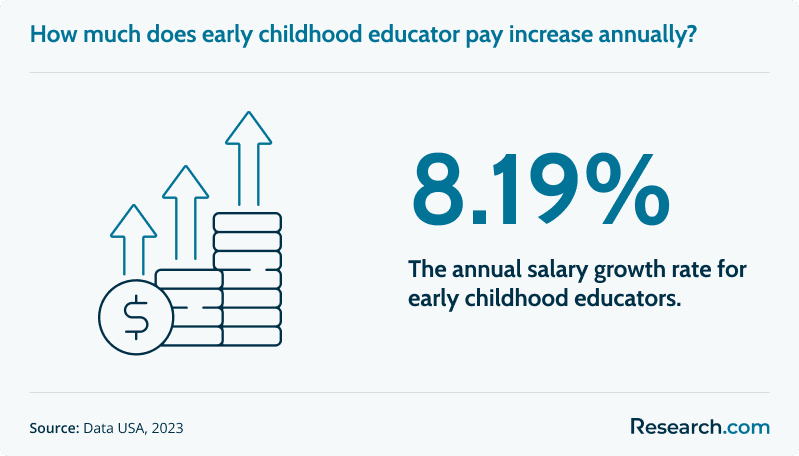
According to Data USA, the average salary for early childhood education and teaching positions is $64,648, with a projected 8.19% yearly increase. This figure should be interpreted carefully because specific roles within the field can pay very differently.
| Role | Salary information cited | Important context |
| Preschool teacher | $37,130 median annual wage in May 2023 | Pay may differ by public, private, nonprofit, and childcare settings. |
| Kindergarten teacher | $62,690 median annual wage in May 2023 | Public school roles usually require state licensure. |
| Elementary school teacher | $63,680 median annual wage in May 2023 | Often tied to district salary schedules and state certification rules. |
| Childcare center director | Around $54,290 annually | Leadership, licensing knowledge, and operational experience matter. |
| Child development specialist | Approximately $45,796 per year | Employer requirements can vary significantly. |
| Clinical psychologist | About $92,740 median annual wage | Requires advanced psychology education beyond the bachelor’s degree. |
If higher pay is one of your main goals, compare the long-term earnings and credential requirements of several education paths before committing. Some graduates eventually move into other teaching levels; for example, an online secondary education degree may support a transition into middle or high school teaching, depending on state licensure requirements.
Which states pay the most for early childhood education jobs?
Pay can change substantially by state because of cost of living, public school funding, union contracts, workforce demand, and employer type. Higher wages do not automatically mean a better financial outcome, so compare salaries with housing, commuting, licensure transfer rules, and childcare market conditions.
According to BLS data cited for early childhood education roles, the following states and districts report some of the highest wages:
| Role | Top-paying states or districts cited | Reported annual wage |
| Preschool teachers | District of Columbia | $61,980 |
| Preschool teachers | California | $50,150 |
| Preschool teachers | New Jersey | $49,490 |
| Kindergarten teachers | California | $93,510 |
| Kindergarten teachers | New York | $91,300 |
| Kindergarten teachers | Massachusetts | $88,800 |
| Elementary school teachers | New York | $94,600 |
| Elementary school teachers | California | $93,880 |
| Elementary school teachers | Washington | $91,390 |
How to compare states beyond salary
- Check whether your teaching license transfers or whether you must complete additional exams or coursework.
- Compare salary schedules with local cost of living instead of looking only at the highest wage.
- Review whether public pre-K, private preschool, and elementary positions are paid on different scales.
- Ask employers about benefits, retirement plans, planning time, class size, and professional development support.
How do you advance in an early childhood education career?
Career growth in early childhood education usually comes from combining experience with targeted credentials. Advancement may mean becoming a lead teacher, mentor teacher, program coordinator, director, curriculum specialist, instructional coach, district leader, advocate, or faculty member in higher education.
Pursue Higher Education
A master’s degree or specialized graduate certificate can help educators qualify for leadership, curriculum, administration, policy, or specialist roles. Many working educators compare online education master’s programs because online formats can be easier to balance with full-time teaching.
Gain Experience Strategically
Experience matters most when it builds evidence of leadership. Volunteer for curriculum committees, mentor new teachers, lead family engagement initiatives, assist with accreditation or licensing reviews, or document improvements in classroom outcomes. These activities can strengthen your case for director, coordinator, or instructional leadership roles.
Build a career advancement timeline
| Career stage | Common goal | What to focus on |
| Student or recent graduate | Secure a first classroom or childcare role | Complete fieldwork, understand licensure rules, build classroom management skills, and gather references. |
| Early-career educator | Become a stronger teacher or lead teacher | Improve lesson planning, assessment, family communication, and child development documentation. |
| Experienced educator | Move into coordination, coaching, or administration | Develop staff training, compliance, budgeting, and curriculum leadership skills. |
| Advanced professional | Enter district, policy, higher education, or executive leadership | Consider graduate study, research experience, advocacy work, or doctoral-level preparation. |
What are the best specializations for early childhood education?
The strongest specialization is the one that matches your target role and local employer demand. A specialization can help you stand out, but it should connect to licensure, classroom needs, leadership goals, or a clearly defined career path.
- Special Education: This focus prepares educators to support children with disabilities, developmental delays, individualized learning needs, and inclusive classroom supports.
- Bilingual Education: This option can be valuable in communities where children and families speak more than one language and schools need educators who can support language development.
- Child Development: This specialization deepens understanding of cognitive, social, emotional, physical, and language development in young children.
- Early Childhood Administration: This path supports careers in childcare leadership, program management, licensing compliance, and staff supervision.
- Curriculum and Instruction: This option fits educators who want to design learning materials, train teachers, or improve instructional quality across classrooms.
If your goal is administration, compare leadership-focused graduate options carefully. A program such as the cheapest online master's in education administration may be relevant if it aligns with your state requirements and career plans.
Who should choose a specialization?
| Choose this specialization if... | Best-fit specialization | Possible career direction |
| You want to work with children who need individualized support. | Special Education | Inclusive classroom teacher, early intervention support, specialist pathway. |
| You want to support multilingual learners and families. | Bilingual Education | Bilingual classroom teacher, family engagement, language-focused support role. |
| You are interested in assessment, developmental milestones, and intervention. | Child Development | Child development specialist, program support, early intervention-related work. |
| You want to manage a center or lead programs. | Early Childhood Administration | Childcare center director, program coordinator, administrator. |
| You enjoy designing lessons and training other educators. | Curriculum and Instruction | Curriculum developer, instructional coach, education consultant. |
Can you work remotely with an early childhood education degree?
Yes, but remote work is more common in support, compliance, curriculum, consulting, and administrative roles than in direct teaching of young children. Early childhood education depends heavily on observation, interaction, play, supervision, and relationship-building, so many core roles remain in person.
- State and county program support: Education agencies may hire professionals to monitor programs, review documentation, support policy implementation, or help providers meet requirements. Some positions may be remote or hybrid.
- Registry management: Some states maintain systems that track educator training, credentials, and professional development. Supporting these systems can sometimes be done remotely.
- Educational consulting: Experienced professionals may advise childcare centers, schools, agencies, or nonprofits on curriculum, compliance, teacher training, and program quality.
- Curriculum development: Companies and organizations that produce early learning materials may need experts to write activities, lesson plans, assessments, and training content.
- Online teaching and tutoring: Remote instruction for very young children is less common than in older grades, but virtual preschool support, tutoring, family coaching, and home-based learning services exist in some settings.
Graduate preparation can help with remote-friendly roles in instructional design, administration, and program development. If that is your goal, compare options such as the cheapest online master's degree in early childhood education while checking whether the curriculum includes leadership, research, curriculum, or technology-focused coursework.
Remote work is a better fit if you want to...
- Design curriculum instead of managing a classroom every day.
- Support teachers, families, or programs through training and consultation.
- Work for a state agency, nonprofit, online learning company, or educational publisher.
- Use your classroom background to move into administration, compliance, or instructional design.
Can you start a daycare with an early childhood education degree?
Yes. A bachelor’s degree in early childhood education can provide a strong foundation for opening a daycare, but it is not the only requirement. Running a daycare is both an educational responsibility and a regulated business. You must meet state and local licensing standards, create a safe environment, hire qualified staff, manage finances, and comply with ongoing inspection requirements.
- Licensing and compliance: States set rules for staff-to-child ratios, facility requirements, background checks, program records, supervision, and curriculum expectations.
- Health and safety standards: Providers are often expected to meet rules related to sanitation, first aid, emergency planning, nutrition, safe sleep practices, inspections, and staff screening.
- Business and financial planning: Tuition pricing, payroll, insurance, rent or mortgage costs, supplies, marketing, enrollment management, and cash flow can determine whether the center is sustainable.
Checklist before starting a daycare
- Review childcare licensing rules for your state and city.
- Decide whether you will operate an in-home daycare or a larger childcare center.
- Estimate startup costs, monthly expenses, staffing needs, and enrollment targets.
- Create policies for safety, family communication, curriculum, discipline, illness, and emergencies.
- Confirm insurance, zoning, background check, and facility inspection requirements.
- Consider additional training in childcare management, accounting, marketing, or small business operations.
Some graduates begin with a small in-home daycare, while others build toward a larger center. Grants, childcare funding programs, and small business loans may help, but the feasibility depends on local demand, licensing requirements, and operating costs.
How is technology changing early childhood education careers?
Technology is changing early childhood education in two ways: it is adding new classroom tools, and it is creating more demand for educators who can use data, communication platforms, and digital learning resources responsibly. The goal is not to replace hands-on learning. For young children, technology works best when it supports active, social, developmentally appropriate experiences.
- Interactive learning tools: Educational apps, digital games, tablets, smartboards, and AI-powered learning platforms can reinforce early literacy and numeracy when used with clear instructional purpose.
- Virtual classrooms and remote learning: Online platforms may support early intervention, family coaching, special education services, or supplemental preschool learning, but they generally complement rather than replace in-person early childhood education.
- Administrative efficiency: Cloud-based systems can help teachers and administrators manage attendance, lesson planning, progress notes, family updates, assessments, scheduling, and compliance documents.
Technology skills early childhood educators may need
- Choosing age-appropriate digital materials.
- Using classroom technology without overreliance on screens.
- Communicating with families through secure platforms.
- Tracking child progress while protecting privacy.
- Understanding how AI-supported tools can help planning without replacing professional judgment.
Can a fast-track doctoral program expedite my career advancement in early childhood education?
A fast-track doctoral program may help experienced educators move more quickly toward senior leadership, research, policy, or higher education roles, but it is not necessary for most classroom teaching jobs. Doctoral study is most useful when your goal involves systems-level decision-making, program evaluation, faculty work, executive administration, or research-based improvement.
Before enrolling, compare time commitment, dissertation or capstone requirements, accreditation, faculty expertise, and whether the degree supports your target role. If speed is important, review the fastest online EdD programs and confirm that an accelerated format still provides the research, leadership, and field-based preparation you need.
How can I identify the most affordable online EdD programs for career advancement?
Affordability should include more than tuition. Compare fees, residency requirements, technology costs, transfer credit policies, employer tuition assistance, dissertation support, and the time it takes to finish. A lower sticker price may not be the best value if the program lacks strong advising, relevant coursework, or recognized accreditation.
For early childhood professionals seeking doctoral-level leadership roles, the cheapest online EdD programs can be a starting point for comparison. Use cost as one factor, not the only factor, and make sure the degree aligns with your administrative, policy, research, or academic goals.
What are the emerging trends in early childhood education?
Several developments are shaping early childhood education careers. Employers increasingly value educators who can support social-emotional learning, work with diverse families, use technology carefully, document child progress, and collaborate across disciplines. Programs are also paying more attention to inclusive classrooms, family engagement, and developmentally appropriate use of digital tools.
Interdisciplinary learning is another trend. Early childhood educators may draw from STEM, literacy, arts, psychology, health, and community services. Creative communication can also strengthen curriculum design. For educators interested in writing-centered enrichment, exploring a creative writing degree online may offer ideas for storytelling, language development, and expressive classroom activities.
How can creative arts integration enhance early childhood development?
Creative arts can support language, motor skills, emotional expression, memory, problem-solving, and social interaction. In early childhood classrooms, arts integration may include storytelling, music, movement, dramatic play, drawing, painting, puppetry, and simple writing activities. These activities help children communicate ideas before they can fully express themselves through formal academic work.
Educators who want to strengthen this part of their practice can study storytelling, genre, voice, and expression through writing programs online. The key is to adapt creative strategies to the developmental level of young children rather than applying adult writing models directly.
Can you teach abroad with an early childhood education degree?
Teaching abroad can be possible with an early childhood education degree, especially in international schools, bilingual programs, Montessori schools, private preschools, and early learning centers. Requirements vary by country and employer, so research each destination carefully before assuming your US degree or license will be accepted.
- Qualifications and certifications: Some countries or schools may require a teaching license, while English-language roles may ask for a TEFL/TESOL certification.
- Language requirements: English-speaking schools may not require fluency in the local language, but language ability can improve communication with families and colleagues.
- Job opportunities: International preschools, bilingual schools, private institutions, and some government-sponsored programs may recruit early childhood educators.
Before applying, check visa rules, contract terms, housing support, health insurance, local childcare regulations, and whether your experience will count toward future licensure or advancement when you return.
Is program accreditation essential for ensuring quality education?
Accreditation matters because it helps students verify that a college or program meets recognized academic standards. For future teachers, accreditation can also affect licensure eligibility, transfer credits, financial aid access, and employer acceptance. Do not assume that every online or accelerated program will meet your state’s educator preparation requirements.
When comparing online education degree programs, check both institutional accreditation and any program-level approval required for teacher certification. If you plan to teach in a public school, confirm the program’s licensure alignment in writing before enrolling.
How do you get involved in early childhood education advocacy?
Early childhood education advocacy focuses on improving access, funding, quality standards, educator support, family resources, and public understanding of early learning. Educators can become advocates without leaving the field; many start by sharing classroom realities and supporting policy conversations in their communities.
- Join advocacy organizations: Groups such as the National Association for the Education of Young Children (NAEYC) and local nonprofits work on early learning policy, professional standards, and public awareness.
- Raise awareness: Educators can explain the value of early childhood education through community events, social media, school newsletters, and conversations with families.
- Engage in policy change: Writing to lawmakers, attending public meetings, and participating in education forums can influence decisions about funding and regulations.
- Support underserved communities: Volunteering, mentoring, donating resources, or partnering with local programs can help improve access for families with fewer early learning options.
How can a master’s degree shape your career in early childhood education?
A master’s degree can help early childhood educators move beyond entry-level classroom roles into leadership, curriculum, coaching, policy, research, or administration. It may also deepen expertise in child development, assessment, family systems, inclusive education, and evidence-based teaching.
The value of graduate study depends on your goals. If you want to remain a classroom teacher, compare the cost against salary schedules and licensure benefits. If you want leadership or specialized roles, a master’s degree may support access to high-paying jobs with a master's in education, though salary outcomes are never guaranteed.
Can advanced leadership training transform administrative practices in early childhood education?
Advanced leadership training can help administrators improve staffing, compliance, budgeting, curriculum quality, family engagement, and organizational culture. In early childhood settings, strong leadership is especially important because directors must balance child development, safety, regulation, staff support, and business operations.
Educators aiming for senior administrative or organizational leadership roles may consider advanced graduate pathways, including the cheapest online doctorate in organizational leadership. Before enrolling, confirm that the curriculum applies to education settings and supports your intended leadership responsibilities.
What is the shortest teaching degree?
The shortest teaching degree depends on your prior credits, state licensure requirements, program format, and whether you need student teaching. Accelerated programs can reduce completion time, but they should not bypass accreditation, field experience, or certification requirements.
If you need a faster route into teaching, compare accelerated bachelor’s, post-baccalaureate, alternative certification, and master’s pathways. For a deeper explanation of expedited options, review What is the shortest teaching degree?.
Can interdisciplinary expertise in library science enrich early childhood education?
Library science skills can strengthen early childhood education by improving how teachers select books, organize learning resources, support early literacy, and teach children to explore information. Educators who understand resource curation can create richer classroom environments and connect families with useful materials.
This interdisciplinary path may also appeal to educators interested in school libraries, children’s programming, educational technology, or literacy-focused resource development. Related career ideas are discussed in our guide to master of library science careers.
Can historical perspectives enhance early childhood education curricula?
Historical perspectives can help educators understand how teaching methods, family roles, childhood expectations, and education policy have changed over time. This context can make curriculum more culturally aware and help teachers examine why certain practices exist.
Educators who enjoy interdisciplinary study may use history to enrich social studies, storytelling, community projects, and culturally responsive lessons. For those considering deeper study, the cheapest master's degree in history online may offer one way to connect historical analysis with education-focused work.
Common Mistakes to Avoid With an Early Childhood Education Degree
- Assuming the degree automatically leads to licensure: Public school teaching usually requires state certification or licensure in addition to the degree.
- Choosing a program without checking accreditation: Accreditation can affect financial aid, credit transfer, employer acceptance, and licensure eligibility.
- Looking only at tuition: Fees, student teaching costs, commuting, lost work hours, and time to completion can change the real cost of a program.
- Ignoring state differences: A program that works for one state may not meet requirements in another.
- Assuming online means fully remote: Many online education programs still require in-person fieldwork, practicum hours, or student teaching.
- Expecting salary outcomes to be guaranteed: Pay depends on location, employer, grade level, licensure, experience, and funding.
- Waiting too long to gain leadership experience: If you want director or coordinator roles, start building evidence of leadership before applying.
Here’s What Graduates Have to Say About Their Bachelor’s Degree In Early Childhood Education
My bachelor’s program helped me understand how young children learn through routines, play, language, and relationships. The classroom practice and child development courses gave me enough confidence to begin working in preschool after graduation, and the most meaningful part of the job is watching children become more independent and curious. Emma
I started in teaching, but the degree also prepared me for leadership. After gaining classroom experience, I moved into a childcare center director role where I now support teachers, guide curriculum decisions, and work closely with families. Carlos
The program changed how I think about social-emotional development and early learning challenges. I now work with children who need extra support, and I use what I learned about development, observation, and family communication every day. Sophie
Key Insights
- A bachelor’s degree in early childhood education most directly supports preschool, kindergarten, and elementary teaching, but it can also lead to administration, curriculum, consulting, advocacy, and child development roles.
- Public school teaching usually requires state certification or licensure, so students should verify requirements before choosing a program.
- Preschool teacher employment is projected to grow by 4% from 2023 to 2033, while kindergarten and elementary school teacher employment is projected to decline by 1%; retirements and career changes are still expected to create 106,500 openings annually.
- Reported salaries vary by role: preschool teachers had a median annual wage of $37,130, kindergarten teachers $62,690, and elementary school teachers $63,680 in May 2023.
- Location matters. Kindergarten teachers in California earned $93,510, and elementary school teachers in New York earned $94,600 annually in the cited data.
- Advancement is usually tied to experience, specialization, leadership responsibility, and additional education rather than the bachelor’s degree alone.
- Accreditation, licensure alignment, field placement quality, and total program cost are more important than choosing a school based only on speed or tuition.
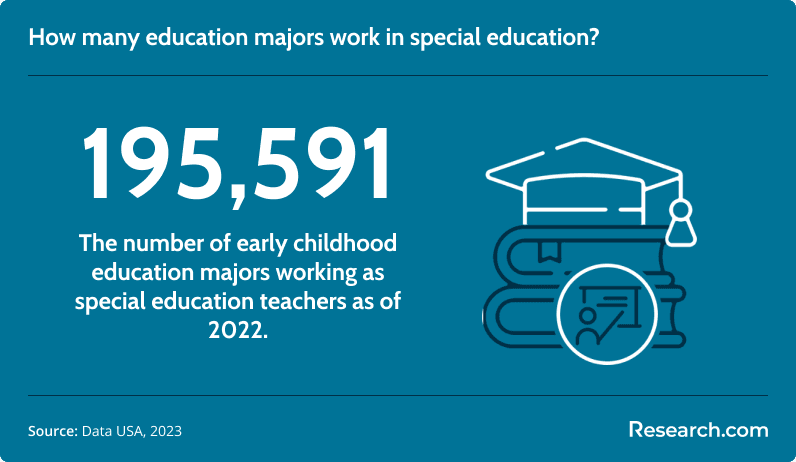
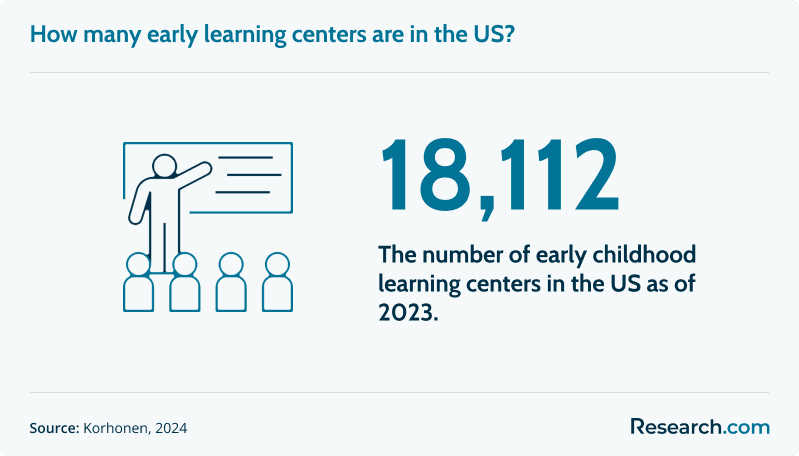
- The US had 18,112 early childhood learning centers in 2023, and 195,591 early childhood education majors were working in special education as of 2022.
- Data USA reported an average salary of $64,648 for early childhood education and teaching positions, with an 8.19% annual increase.
References:
- BLS. (2024, April 3). Elementary School Teachers, Except Special Education. BLS.
- BLS. (2024, April 3). Kindergarten Teachers, Except Special Education. BLS.
- BLS. (2024, April 3). Preschool Teachers, Except Special Education. BLS.
- BLS. (2024, August 29). Kindergarten and elementary school teachers. BLS.
- BLS. (2024, August 29). Preschool and childcare center directors. BLS.
- BLS. (2024, August 29). Preschool teachers. BLS.
- BLS. (2024, August 29). Psychologists. BLS.
- Data USA. (2023). Early Childhood Education & Teaching. datausa.io.
- Korhonen, V. (2024, December 2). U.S. number of early childhood learning centers 2013-2023. Statista.
- ZipRecruiter. (2025). Child development Specialist salary: Hourly rate (USA). ziprecruiter.com.
Other Things You Should Know About What You Can Do With a Bachelor’s Degree In Early Childhood Education
A bachelor’s degree in early childhood education can qualify graduates to teach children from birth through age 8, depending on state rules. Public-school pre-K and K–3 roles usually require state teacher certification, while child care leadership jobs may require only the degree plus licensing or director credentials.
To gain teacher certification with a Bachelor's in Early Childhood Education in 2027, candidates must typically complete a state-approved teacher preparation program, pass relevant exams such as the edTPA, and fulfill student teaching requirements. Requirement specifics vary by state, so checking with local education bodies is crucial.


