2027 How to Become a Licensed Counselor (LPC) in Iowa

Co-Founder and Chief Data Scientist
Becoming a Licensed Professional Counselor in Iowa is a serious career decision because it requires graduate education, supervised clinical work, national examination, and ongoing continuing education. It can also lead to meaningful work in mental health clinics, schools, rehabilitation settings, private practice, substance use treatment, and community agencies. Iowa already has approximately 2,000 licensed professionals practicing in the field, yet only around 30% specialize in substance abuse counseling, which suggests that focused expertise can help new counselors stand out.
This guide explains how Iowa counselor licensure works, which programs to compare, what supervised experience is required, how salary and job prospects look, and how to choose a path that fits your goals. It is written for students considering counseling graduate programs, psychology graduates weighing next steps, out-of-state counselors exploring Iowa licensure, and working professionals planning a counseling specialization.
Quick answer: Is becoming an LPC or LMHC in Iowa worth it?
Becoming a licensed counselor in Iowa can be worth it if you are prepared for a graduate-level training path, at least two years of supervised postgraduate experience, and ongoing continuing education. The strongest candidates choose CACREP-accredited or equivalent counseling programs, plan early for the 3,000 supervised hours requirement, and build expertise in areas with steady need, such as mental health counseling, school counseling, trauma, rehabilitation, marriage and family work, or substance abuse treatment.
Key facts to know before starting the Iowa counseling licensure path
- The National Counselor Examination pass rate in Iowa is reported at 74%.
- Iowa requires 3,000 hours of postgraduate supervised mental health counseling experience for full licensure.
- License renewal requires 40 hours of continuing education.
- A licensed professional counselor (LPC) may expect an annual income of $45,000.
- Roughly 42,000 job openings are available for licensed counselors each year within this decade.
| Decision point | What it means for you | Best next step |
| Graduate education | You need a qualifying counseling graduate program, preferably CACREP-accredited or equivalent. | Check accreditation before applying, not after admission. |
| Supervised experience | The 3,000-hour requirement is often the longest part of the path after graduation. | Identify potential supervisors and approved clinical sites early. |
| Examination | Iowa accepts the NCE or NCMHCE for licensure. | Choose the exam that best matches your training and clinical strengths. |
| Specialization | Focused training can improve fit for specific roles and client populations. | Compare internships, electives, and certificate options by career goal. |
| Renewal | Licensure is not a one-time requirement; continuing education is mandatory. | Track CE hours throughout each renewal period. |
- Top Iowa counseling programs for 2027
- How do you become a licensed counselor in Iowa?
- How much do licensed counselors make in Iowa?
- What is the job outlook for Iowa counselors?
- Which counseling jobs are available in Iowa?
- How can advanced coursework strengthen your counseling career?
- How does specialization affect counselor career options?
- What nontraditional careers can licensed counselors pursue?
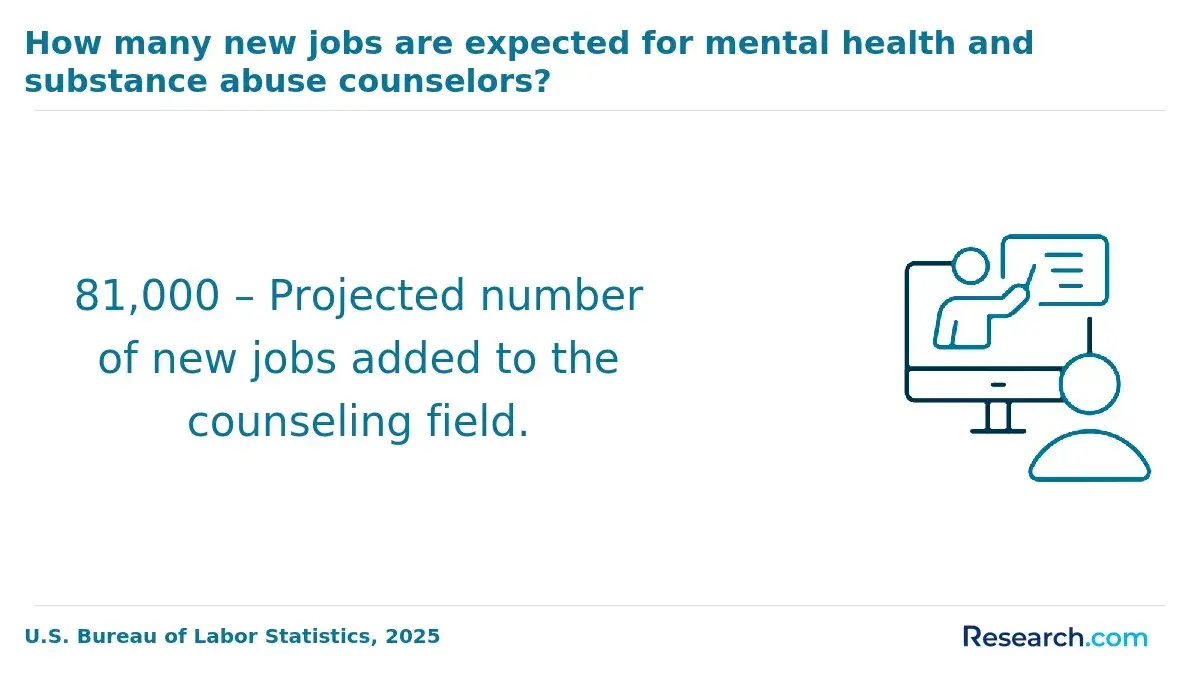
- How do you focus on substance abuse counseling in Iowa?
- How is telehealth changing counseling in Iowa?
- How are counseling and psychology careers different in Iowa?
- How can you pursue pastoral counseling?
- How should you choose an Iowa counseling program?
- How do counselors and social workers differ in Iowa?
- How can counselors move into behavior analysis?
- What licensure problems should applicants watch for?
- Which certifications can add value to a counseling career?
- Which professional associations support Iowa counselors?
- How does licensure reciprocity help out-of-state counselors?
- What are the first practical steps to start?
- What is the fastest route to Iowa counselor licensure?
- How can counselors reduce legal and liability risk?
- Why does accreditation matter for Iowa counseling programs?
Top Iowa counseling programs for 2027
The right Iowa counseling program depends on your target role, preferred client population, schedule, budget, and licensure plan. Before applying, confirm whether the program is CACREP-accredited, whether it includes the practicum and internship structure needed for Iowa licensure, and whether graduates are prepared for the NCE or NCMHCE.
| School | Program level | Best fit | Accreditation noted | Cost information provided |
| University of Iowa | Master’s, Doctoral | Students seeking multiple counseling pathways, including clinical mental health, rehabilitation, school counseling, or counselor education | CACREP | $1,226.75 per credit hour |
| University of Northern Iowa | Master’s | Students interested in clinical mental health counseling or school counseling with substantial practicum exposure | CACREP | $21,010 resident | $32,482 non-resident |
| Drake University | Master’s | Working adults who need evening and weekend coursework | CACREP | $535 per credit hour |
1. University of Iowa
The University of Iowa Department of Counselor Education provides several counseling options for students preparing for clinical, school-based, rehabilitation, or academic counselor education careers.
Master of Arts in Clinical Mental Health Counseling. This CACREP-accredited program prepares students to support clients with mental, emotional, and wellness-related concerns across a range of settings.
Master of Arts in Rehabilitation Counseling. This program is designed for students who want to help clients address psychological wellness and disability-related barriers to independent living, employment, and community participation.
Master of Arts in School Counseling. This CACREP-accredited program trains future K-12 school counselors to support students’ academic progress, social and emotional development, career planning, and school success.
Doctor of Philosophy in Counselor Education and Supervision. This CACREP-accredited Ph.D. pathway is built for professionals interested in counselor training, supervision, research, and advanced counseling scholarship.
Location: Iowa City, IA
Status: Public
Programs offered: Master’s, Doctoral
Accreditation: CACREP
Tuition and fees: $1,226.75 per credit hour
2. University of Northern Iowa
The University of Northern Iowa College of Social & Behavioral Sciences offers a Master of Arts in Clinical Mental Health Counseling and a Master of Arts in School Counseling.
UNI’s School Counseling program is built on a long-standing preparation model and faculty engagement in practice, service, and research at local, state, regional, and national levels.
The Clinical Mental Health Counseling program at UNI was the first accredited program in the country. Its curriculum prepares students to assess, diagnose, and treat mental health concerns using training in psychopathology, psychopharmacology, assessment, treatment planning, addiction, dual diagnosis, and culturally responsive practice.
Students complete a required 700 practicum hours in communities across the state. Both programs use a wellness-oriented framework and prepare graduates to collaborate with multidisciplinary teams. Both programs are CACREP-accredited.
Location: Cedar Falls, IA
Status: Public
Programs offered: Master’s
Accreditation: CACREP
Tuition and fees: $21,010 (resident) | $32,482 (non-resident)
3. Drake University
Drake University offers a Master of Science in Counseling with specialization options in clinical rehabilitation, clinical mental health counseling, rehabilitation, and school counseling. The program is structured for working adults, with on-campus classes scheduled during evenings and weekends. Students learn from faculty involved in teaching, research, and professional service.
Location: Des Moines, IA
Status: Private
Programs offered: Master’s
Accreditation: CACREP
Tuition: $535 per credit hour
What Iowa counseling graduates say about the career path
-
: "
“My Iowa counseling program helped me sharpen clinical skills while building a more grounded understanding of mental health needs. The training and field experiences played a major role in how quickly I grew professionally.” — Jennifer
"
-
: "
“The strongest part of studying counseling in Iowa was the mix of classroom theory and direct practice. Working with communities here taught me how to build trust with clients in a more human and personal way.” — Mark
"
-
: "
“Training in Iowa exposed me to a wide range of client needs and practice environments. That experience expanded the counseling strategies I use and encouraged me to keep improving.” — Grace
"
How do you become a licensed counselor in Iowa?
Iowa’s professional counseling licensure process was previously overseen by the Iowa Board of Behavioral Science. As of FY2026, professional licensing and related health and occupational licenses fall under the Iowa Department of Inspections, Appeals, and Licensing as part of the state government’s updated structure.
DIAL evaluates counselor licensure applications and issues licenses under Iowa counseling regulations and the rules previously administered by the Board. The purpose is to protect the quality and competence of licensed mental health counselors, behavior analysts, and marital and family therapists.
Education required for Iowa counselor licensure
The first major requirement is completing the right academic preparation. Iowa applicants typically begin with undergraduate study and then complete graduate counseling education aligned with licensure expectations.
- Bachelor’s Degree in Counseling
- Master’s Degree in Counseling
- Doctorate in Counseling
A bachelor’s program in counseling is not the only possible starting point. Some students complete a psychology degree online or on campus before applying to a graduate counseling program focused on mental health counseling. For Iowa licensure, the graduate program should be accredited by the Council for Accreditation of Counseling and Related Educational Programs (CACREP).
If the graduate program is not CACREP-accredited, Iowa may accept it only if it is equivalent and has a mental health counseling emphasis. In that case, applicants must contact the Center for Credentialing and Education for a content equivalency evaluation and report, then include that report with the licensure application.
Students asking, what can you do with a psychology degree, may find that graduate counseling study is a practical route if they want direct client work rather than research-heavy or nonclinical psychology roles.
To qualify for licensed mental health counseling roles in Iowa, your graduate training must include an appropriate practicum, internship, and coursework in key counseling areas:
- Career development
- Social and cultural diversity
- Human growth and development
- Diagnosis and treatment planning
- Psychotherapy
- Assessment
- Group work
You must also complete coursework in professional orientation and ethical practice. This prepares you to understand counselor responsibilities, client welfare, confidentiality, boundaries, reporting obligations, and ethical decision-making. Your school sends official transcripts to DIAL as part of the application process.
Iowa LMHC licensure process
The Iowa licensure process takes 2 to 3 years on average after graduate education. Iowa’s National Counselor Examination pass rate is reported at 74%, but applicants should still plan for structured exam preparation and careful documentation.
| Step | Requirement | Why it matters |
| 1 | Register for the NCE or NCMHCE | Iowa requires a passing national counselor exam score for temporary or permanent LMHC licensure. |
| 2 | Secure an eligible supervisor | Your supervised clinical experience must be completed under an approved professional. |
| 3 | Apply for temporary LMHC licensure when needed | A temporary license allows supervised counseling practice while you complete requirements. |
| 4 | Complete 3,000 supervised hours | This is the core postdegree clinical experience requirement for full licensure. |
| 5 | Apply for permanent LMHC licensure | DIAL reviews your education, exam, supervision, and application documentation. |
Step 1: Register with the National Board for Certified Counselors
Applicants must register with the NBCC for one of the approved exams. Iowa accepts either of the following exams for temporary or permanent licensed mental health counselor licensure:
- National Counselor Examination (NCE)
- National Clinical Mental Health Counseling Examination (NCMHCE)
When registering, list DIAL as the score recipient. The Center for Credentialing and Education, an NBCC partner, administers both exams through the ProCounselor portal. Iowa applicants do not need prior authorization from DIAL or the Board of Behavioral Science before registering. Both exams are taken at a local testing center.
The NCE and NCMHCE handbooks explain exam content. The NCE is a 200-question multiple-choice test with a three-hour-and-forty-five-minute time limit and covers core graduate counseling content. The NCMHCE is a three-hour exam built around 10 clinical simulations.
Step 2: Choose a qualified clinical supervisor
You must identify a supervisor before beginning the supervised experience process. You and your supervisor complete the Supervision Plan and submit it with the temporary LMHC application when applicable. The supervisor must be one of the following:
- An LMHC or marriage and family therapist with three years of post-licensure clinical experience
- A supervisor approved by the NBCC
Step 3: Apply for temporary LMHC licensure
The temporary LMHC application is submitted online through DIAL. After review and approval, DIAL issues the temporary license, which authorizes supervised counseling practice under your approved supervisor.
The temporary LMHC license is valid for three years and may be renewed at DIAL’s discretion. However, if you are completing supervised counseling experience only to satisfy the LMHC supervised experience requirement, the temporary LMHC license is not required.
Step 4: Complete Iowa’s supervised counseling experience requirement
Full LMHC licensure requires 3,000 hours of postgraduate supervised mental health counseling experience. The experience must meet the following conditions:
- At least 1,500 hours must be direct client contact.
- At least 200 hours must be clinical supervision.
- At least 100 of the supervision hours must be individual supervision.
- The experience must be completed over at least two years of full-time work or the part-time equivalent.
After finishing the required supervised experience, submit the Supervision Report within 30 days.
Step 5: Apply for permanent LMHC licensure
Once supervision is complete, you may apply for the full LMHC license. DIAL reviews your application, education, exam results, supervision documentation, and other requirements. If approved, you receive permanent LMHC licensure in Iowa.
Iowa license renewal requirements
A permanent LMHC license expires every two years on September 30 of even-numbered years. Renewal can be completed online up to 60 days before expiration.
Iowa also requires continuing education for renewal. Counselors must complete 40 hours of continuing education during the renewal period. LMHCs who work with children must complete two hours of child abuse identification and reporting training.
How much do licensed counselors make in Iowa?
Reported earnings vary by role, setting, specialization, experience, and source. A licensed professional counselor (LPC) can anticipate an average annual income of $52,000. The Bureau of Labor Statistics data released in 2025 reports that substance abuse, behavioral disorder, and mental health counselors have a higher median salary of approximately $60,370 annually.
Salary should not be viewed as guaranteed. Private practice counselors, school counselors, agency counselors, rehabilitation counselors, and substance abuse counselors may face different pay structures, caseload expectations, benefits, and advancement options. Specialization can also influence earning potential, especially when it aligns with employer demand or allows a counselor to serve a clearly defined client population.
| Factor | How it can affect earnings | Question to ask before choosing a path |
| Work setting | Private practice, schools, hospitals, clinics, and agencies may pay differently and offer different benefits. | Do I prefer income flexibility, stable benefits, or a structured agency environment? |
| Specialization | Focused skills in substance abuse, trauma, school counseling, rehabilitation, or family systems may improve fit for certain roles. | Which client population do I want to serve long term? |
| Experience | Early-career counselors usually have less autonomy and may earn less than independently licensed or specialized clinicians. | What supervised roles will help me build strong clinical skills? |
| Location | Urban, rural, and underserved communities may differ in hiring demand and compensation structure. | Am I willing to work in areas with greater service needs? |
| Credentials | Additional certifications or school-based credentials may expand role options. | Which credential directly supports my intended job? |
What is the job outlook for counselors in Iowa?
Counseling career growth in Iowa is expected to increase by 18% by 2032, which is faster than many occupations. Demand is influenced by several factors:
- Roughly 42,000 job openings are projected each year within this decade, largely because workers retire or move into other careers.
- More people, including youth, need treatment for mental health and behavioral disorders.
- Addiction-related services remain important, including support for people affected by opioid use disorder.
Students concerned about cost may begin with an affordable undergraduate option, such as a low-cost online psychology degree, before moving into graduate counseling study. However, the least expensive route is not always the best route if it delays licensure, lacks appropriate accreditation, or does not provide strong practicum placement support.
Which counseling jobs are available in Iowa?
Iowa counselors can work in many settings, including private practice, schools, addiction treatment programs, community mental health agencies, rehabilitation services, and healthcare organizations. Around 60% of licensed professional counselors favor private practice, but many counselors build strong careers outside private practice as well.
| Counseling role | Typical focus | Best fit for professionals who want to... |
| Educational, guidance, and career counselors | Academic development, student support, social-emotional growth, and career planning | Work with students and educational systems |
| Substance abuse, behavioral disorder, and mental health counselors | Addiction, behavioral challenges, recovery support, and mental health treatment | Serve clients with complex clinical or recovery needs |
| Rehabilitation counselors | Support for people with physical, mental, or emotional disabilities | Help clients improve independence and community participation |
| Marriage and family therapists | Relationship systems, couples, families, and interpersonal conflict | Focus on relational and family-based treatment |
| Occupational therapists | Therapeutic support for daily living and working skills | Help clients restore or strengthen functional abilities |
The best role is not simply the one with the highest pay. Consider your preferred client age group, tolerance for crisis work, interest in diagnosis, desired schedule, documentation expectations, and whether you want to work independently or as part of a team.
How can advanced coursework strengthen your counseling career?
Advanced courses can make your counseling career more focused, but they should be chosen strategically. The most useful training is tied to a real clinical population, employer need, licensure requirement, or long-term practice goal.
- Build a specialty. Additional study in specific disorders, trauma, addiction, child and adolescent counseling, family systems, or crisis intervention can improve your ability to serve clients with defined needs.
- Add leadership and management skills. Courses in supervision, program administration, ethics, budgeting, and team leadership may help counselors move toward clinical director, supervisor, or agency leadership roles.
- Understand Iowa’s mental health needs. An estimated 84,000 Iowans have severe mental illness, including schizophrenia, severe bipolar disorder, and major depression. A Treatment Advocacy Center report notes that only about 35,000 receive treatment in a year. Counselors who understand these local gaps can prepare for service in high-need settings.
Iowa ranks 7th in the nation for Licensed Professional Counselors per capita and has a higher than average rate of mental health disorders at 18.5% of adults. In that environment, advanced training can help you clarify your value, improve clinical competence, and serve clients more effectively.
| Advanced learning area | Career value | When it makes sense |
| Addiction counseling | Supports work with substance use and co-occurring disorders | You want roles in treatment centers, recovery programs, or integrated behavioral health |
| Trauma-informed care | Improves care for clients affected by violence, grief, disaster, or chronic stress | You expect to work with complex mental health presentations |
| School counseling | Prepares for student support and educational environments | You want to work in K-12 schools |
| Clinical supervision | Supports future supervisory responsibilities | You plan to mentor new counselors or lead clinical teams |
| Practice management | Helps with documentation, ethics, billing, and operations | You want to open or manage a private practice |
How does specialization affect counselor career options in Iowa?
Specialization can improve career fit by helping counselors serve a more clearly defined client group. In Iowa, focused expertise may be useful in areas such as marriage and family therapy, addiction counseling, trauma treatment, rehabilitation counseling, school counseling, and rural mental health service.
For example, counselors interested in relationship and family systems work may pursue training that prepares them to support couples, families navigating transitions, and individuals dealing with relationship stress. If this area fits your goals, review the requirements for becoming a marriage and family therapist in Iowa.
The key is alignment. A specialization is most valuable when it matches your preferred client population, practicum experience, employer expectations, and long-term practice model.
What nontraditional careers can licensed counselors pursue?
Counseling skills can transfer into roles beyond one-on-one therapy. Active listening, assessment, conflict resolution, behavior change planning, ethical decision-making, and crisis response are useful in education, human services, workforce development, and organizational settings.
- Life coach: Counselors may use goal-setting and behavior-change skills to help clients improve habits, relationships, wellness, or personal direction. Coaching is not the same as clinical counseling, so scope of practice must be clear.
- Human resources manager: Counseling training can support conflict resolution, employee development, workplace communication, and staff support.
- Career coach consultant: Counselors can help clients clarify professional goals, understand barriers, and create realistic career plans.
- Community service manager: Clinical and interpersonal skills can support program management, crisis response, staff coordination, and community needs assessment.
- School administrator: Counseling knowledge may be useful in student services, academic advising, behavioral support, and school mental health planning.
Before leaving traditional counseling, check whether the new role requires separate licensure, certification, administrative credentials, or a different ethical framework.
How do you specialize in substance abuse counseling in Iowa?
Substance abuse counseling requires more than general interest in addiction treatment. Counselors should seek coursework in substance use disorders, co-occurring mental health conditions, ethics, assessment, relapse prevention, family impact, and treatment planning. A clinical internship or supervised role in an addiction treatment environment can help build the practical skills employers expect. Iowa-specific certification and regulatory rules should also be reviewed before committing to a training plan. For a more focused pathway, see how to become a substance abuse counselor in Iowa.
How is telehealth changing counseling practice in Iowa?
Telehealth has made counseling more flexible for clients and providers, especially when distance, transportation, scheduling, or rural access creates barriers. Iowa counselors using telehealth must still protect confidentiality, use secure platforms, document care appropriately, follow informed consent practices, and comply with applicable state and federal rules.
Students preparing for modern practice should look for programs that address virtual care, digital documentation, remote client engagement, and ethical technology use. Online graduate options, including a master’s in marriage and family therapy online, may be worth comparing if flexibility is important, but applicants should verify that any online program meets Iowa licensure requirements.
How are counseling and psychology careers different in Iowa?
Counseling and psychology both involve mental health, but the training models and career outcomes differ. Licensed Professional Counselors focus heavily on therapeutic intervention, client support, and practical counseling skills in community, school, agency, and private practice settings. Psychology careers often involve broader assessment training, research preparation, and clinical or academic responsibilities depending on degree level and licensure.
If you are choosing between the two, compare degree length, supervised training, licensure rules, assessment authority, research expectations, and the type of client work you want to do. For the psychology route, review how to become a psychologist in Iowa.
How can you pursue pastoral counseling in Iowa?
Pastoral counseling combines spiritual care with counseling knowledge. It may appeal to professionals who want to support clients through grief, relationships, life transitions, faith concerns, or emotional distress within a spiritually informed framework. However, pastoral counseling roles can differ depending on whether the practitioner is providing ministry-based care, clinical mental health counseling, or both.
Before choosing this route, compare program curriculum, accreditation, supervised practice requirements, and Iowa licensure expectations. A detailed overview is available in this guide to becoming a pastoral counselor.
How should you choose the best counseling program in Iowa?
Choose an Iowa counseling program by starting with your end goal. A student who wants to work in K-12 schools should evaluate different criteria than a student preparing for private clinical practice, addiction treatment, or rehabilitation counseling. Accreditation, licensure alignment, practicum quality, cost, schedule, faculty expertise, and graduate support all matter.
| What to check | Why it matters | Red flag |
| CACREP accreditation or approved equivalency | It can simplify licensure eligibility and reduce uncertainty. | The school cannot clearly explain how graduates meet Iowa requirements. |
| Practicum and internship placements | Clinical training quality affects readiness for supervised practice. | Students must find placements with little school support. |
| Exam preparation | Programs should prepare students for the NCE or NCMHCE. | No structured guidance is provided for national exams. |
| Total cost | Tuition is only one part of the investment. | The program discusses tuition but not fees, travel, books, or unpaid clinical time. |
| Schedule format | Working adults may need evening, weekend, hybrid, or online options. | The schedule conflicts with practicum, employment, or family obligations. |
| Career alignment | Specializations and faculty expertise should match your intended role. | The program’s focus does not match your target population or setting. |
Students comparing broader behavioral science options can also review strong psychology colleges in Iowa when deciding whether counseling, psychology, or another mental health pathway fits best.
How do Licensed Professional Counselors and Social Workers differ in Iowa?
Licensed Professional Counselors typically focus on counseling theory, psychotherapy, assessment, diagnosis, treatment planning, and client-centered behavioral change. Social workers may provide clinical services as well, but their training often includes case management, community resources, advocacy, policy, and systems-level support.
The better path depends on your preferred work. Choose counseling if your main goal is therapy-focused practice. Consider social work if you want a broader role that may combine therapy, resource coordination, community advocacy, and social service systems. To compare the social work route, read how to become a social worker in Iowa.
How can counselors transition into behavior analysis in Iowa?
Counselors who want to add behavior analytic skills may need additional coursework, supervised experience in behavior analysis, and certification exams. This route can be useful for professionals interested in structured behavior-change interventions, developmental disabilities, autism services, or applied behavioral support.
Because behavior analysis has its own credentialing expectations, do not assume counseling licensure is enough. Review the steps for becoming a behavior analyst in Iowa before investing in coursework or supervision.
What licensure challenges should Iowa counseling applicants expect?
Common licensure problems include incomplete transcripts, uncertainty about non-CACREP equivalency, delayed supervision paperwork, unclear documentation of direct client hours, and missed reporting deadlines. These issues can slow the process even when the applicant has completed the required education and experience.
| Common mistake | Why it causes problems | Better approach |
| Choosing a program before checking accreditation | Non-CACREP programs may require additional equivalency review. | Confirm CACREP status or Iowa equivalency before enrolling. |
| Waiting too long to find a supervisor | Supervision approval and documentation can delay postdegree hours. | Discuss supervision plans before graduation. |
| Tracking only total hours | Iowa also requires direct client contact and supervision categories. | Maintain detailed logs from the start. |
| Assuming online programs automatically qualify | Online format does not guarantee Iowa licensure alignment. | Ask the program for Iowa-specific licensure documentation. |
| Focusing only on tuition | Fees, travel, books, exam costs, and unpaid clinical time affect total cost. | Build a full cost estimate before applying. |
If speed is a major concern, compare program format, transfer policies, practicum sequencing, and licensure support. This guide to the fastest way to become a counselor in Iowa can help you evaluate realistic acceleration options.
Which additional certifications can strengthen an Iowa counseling career?
Additional certifications can help when they support a defined practice area. Trauma-informed care, addiction counseling, cultural competence, executive counseling, crisis response, or school-focused credentials may be useful depending on your career plan. Avoid collecting certificates that do not improve your clinical scope, employer fit, or client outcomes.
Counselors who want to work in schools should review the specific education and credential pathway for becoming a school counselor in Iowa. School-based roles are not interchangeable with private clinical counseling roles, so requirements should be checked early.
Which professional associations and networking options support Iowa counselors?
Professional associations can help counselors find continuing education, policy updates, mentorship, conferences, job leads, and peer support. They are especially valuable for students, provisionally licensed counselors, and professionals moving into a new specialization.
- Iowa Mental Health Counselors Association (IMHCA): Supports LMHCs through continuing education, professional resources, and advocacy for the counseling profession.
- American Counseling Association of Iowa: Offers professional connection, advocacy, educational resources, conference opportunities, and support for students and practicing counselors.
- Iowa School Counselor Association (ISCA): Provides resources and professional support for school counselors across educational levels and has served the field for over 60 years.
- National Alliance on Mental Illness Iowa: Connects professionals and communities through events, conferences, education, and peer support training.
- Iowa Association for College Admission Counseling: Operating since 1937, this association supports counselors involved in college admissions and student transition planning.
Joining professional groups can help people exploring counseling careers understand the field, meet mentors, and stay current with Iowa practice expectations.
How does licensure reciprocity help counselors moving to Iowa?
Counselors licensed in another state may pursue Iowa licensure reciprocity if their license, education, examination, and supervised experience are substantially equivalent to Iowa’s standards. Reciprocity can reduce duplication, but it does not mean automatic approval. DIAL still reviews documentation.
- More employment options: Reciprocity can help licensed counselors relocate to Iowa and apply for roles in mental health agencies, schools, private practices, or underserved communities.
- Potentially shorter licensing process: Counselors with equivalent out-of-state credentials may not need to repeat every Iowa requirement, including supervised hours, if their experience satisfies Iowa standards.
- Ability to serve high-need communities: Iowa rural and underserved areas may benefit from experienced counselors who can begin practicing after approval.
Steps to apply for Iowa licensure reciprocity
- Confirm eligibility: Compare your current license with Iowa’s Licensed Mental Health Counselor requirements. DIAL determines whether the license is equivalent.
- Submit required records: Provide documentation of your out-of-state license, education, examination, and supervised clinical experience.
- Prepare for Iowa law and ethics requirements: You may need to show knowledge of Iowa counseling regulations, legal duties, and ethical expectations.
- Complete any required continuing education: Additional CE may be required if Iowa-specific rules apply before full licensure is granted.
What practical steps should you take to start an Iowa counseling career?
Start by confirming that counseling, rather than psychology, social work, coaching, or another helping profession, matches the type of work you want. Then choose a CACREP-accredited or equivalent graduate program that supports Iowa licensure. A detailed walkthrough is available in this guide on how to become a licensed mental health counselor in Iowa.
- Review Iowa LMHC requirements before applying to graduate school.
- Compare CACREP-accredited and equivalent programs by cost, placement support, format, and specialization.
- Complete required coursework, practicum, and internship experiences.
- Register for the NCE or NCMHCE and send scores to DIAL.
- Identify a qualified supervisor and document supervised hours carefully.
- Apply for temporary LMHC licensure if needed for your supervised practice situation.
- Complete the 3,000-hour supervised experience requirement.
- Submit your permanent LMHC application and maintain continuing education for renewal.
What is the fastest way to become a licensed counselor in Iowa?
The fastest realistic path is not about skipping requirements. It is about avoiding delays. Students can shorten the timeline by choosing the right program from the beginning, staying organized with supervision paperwork, preparing for the exam on schedule, and selecting practicum sites that align with licensure requirements. For broader acceleration strategies, review the fastest way to become a counselor.
- Choose an efficient master’s program: Accelerated or carefully sequenced programs can reduce downtime between courses and fieldwork.
- Use hybrid options strategically: Online coursework may improve scheduling flexibility, but in-person practicum and internship requirements still matter.
- Align internship with licensure goals: Clinical placements that match Iowa expectations can prevent wasted hours or documentation problems.
- Prepare early for the exam: Passing the NCE or NCMHCE on schedule helps avoid licensure delays.
- Track supervision correctly: Accurate logs protect your progress toward the 3,000-hour requirement.
How can Iowa counselors manage legal and liability risks?
Legal and liability risk is part of professional counseling practice. Iowa counselors should use clear informed consent documents, maintain accurate clinical records, understand mandated reporting duties, protect confidentiality, document risk assessments, and carry appropriate malpractice coverage. Regularly reviewing Iowa LPC license requirements can help counselors stay aligned with changing expectations.
Risk management also includes consultation. Peer review, supervision, legal guidance, ethics training, and continuing education can help counselors make better decisions when facing complex clinical situations.
Why does accreditation matter for Iowa counseling programs?
Accreditation is one of the most important factors when choosing a counseling program. For Iowa counselor licensure, CACREP accreditation is especially important because it signals that the curriculum, faculty standards, clinical training, and program structure meet national counselor education expectations.
Accreditation and licensure eligibility
Iowa licensure applicants must complete an approved counseling education pathway. Graduating from a CACREP-accredited program can make that process clearer. If a program is not CACREP-accredited, applicants may need a content equivalency evaluation, which can add time and uncertainty to the licensure process.
Programs such as those offered by the University of Iowa and University of Northern Iowa give students a clearer alignment with Iowa’s expectations because their listed counseling programs include CACREP-accredited options.
Accreditation and clinical training quality
Accredited counseling programs commonly maintain structured practicum and internship expectations. They may also have relationships with schools, agencies, clinics, and community organizations that help students gain supervised experience. This matters because strong field training prepares students for postdegree supervised practice and eventual independent licensure.
Accreditation and online program selection
Online counseling programs can be flexible, but students should verify accreditation and Iowa licensure alignment before enrolling. If school counseling is your goal, compare accredited options such as affordable online school counseling programs and ask whether the curriculum and fieldwork meet Iowa requirements.
Key Insights
- Iowa LMHC licensure requires a qualifying graduate counseling education, a passing NCE or NCMHCE score, and 3,000 hours of postgraduate supervised mental health counseling experience.
- CACREP accreditation matters because it can reduce uncertainty around licensure eligibility and program quality.
- The supervised experience stage is where many delays occur, so applicants should plan supervision, documentation, and direct client hour tracking early.
- Salary varies by setting, specialization, experience, and employment model. Reported figures include $45,000, $52,000, and approximately $60,370 annually for specific counselor categories.
- Specialization is most useful when it matches a real career goal, such as substance abuse counseling, school counseling, marriage and family therapy, rehabilitation, or trauma-informed care.
- Online and hybrid programs can offer flexibility, but students must confirm that coursework, practicum, internship, and accreditation meet Iowa licensure expectations.
- Professional associations, continuing education, and careful legal documentation are important for long-term career stability after licensure.
Related Articles for Nearby States
- 2027 How to Become a Licensed Counselor (LPC) in Minnesota
- 2027 How to Become a Licensed Counselor (LPC) in Wisconsin
- 2027 How to Become a Licensed Counselor (LPC) in Illinois
- 2027 How to Become a Licensed Counselor (LPC) in Nebraska
- 2027 How to Become a Licensed Counselor (LPC) in South Dakota
- 2027 How to Become a Licensed Counselor (LPC) in Missouri
- 2027 How to Become a Licensed Counselor (LPC) in Kansas
- 2027 How to Become a Licensed Counselor (LPC) in Indiana
- 2027 How to Become a Licensed Counselor (LPC) in North Dakota
- 2027 How to Become a Licensed Counselor (LPC) in Michigan
References:
- American Counseling Association. (2025). State licensure requirements for professional counselors. https://www.counseling.org/licensure-requirements
- American Psychological Association. (2025). Careers in counseling psychology. https://www.apa.org/education-career/guide/careers/counseling
- Council for Accreditation of Counseling and Related Educational Programs. (2025). Accredited counseling programs directory. https://www.cacrep.org/directory
- Council for Accreditation of Counseling and Related Educational Programs. (2026). Standards for counseling programs. https://www.cacrep.org/standards
- Iowa Board of Behavioral Science. (2026). Licensure requirements for mental health counselors. https://idph.iowa.gov/licensure/mental-health-counselor
- Iowa Department of Inspections, Appeals, and Licensing. (2025). DIAL FY2026 strategic plan. https://dom.iowa.gov/media/881/download?inline Treatment Advocacy Center Iowa profile Treatment Advocacy Center Iowa profile
- Iowa Employment Trends: 19-3033.00 - Clinical and counseling psychologists. (n.d.). https://www.onetonline.org/link/localtrends/19-3033.00?st=IA
- Iowa School Counselor Association. (2025). About ISCA. https://www.iowaschoolcounselors.org/about-isca O*NET Iowa local trends
- Mental & Behavioral health licensure. (n.d.). Department of Inspections, Appeals, & Licensing. https://dial.iowa.gov/i-need/licenses/medical/mental-health/mental-behavioral
- Mental Health Professional Loan Repayment program. (n.d.). Department of Education. https://educate.iowa.gov/higher-ed/financial-aid/loan-repayment/mental-health-professional-loan-repayment-program
- National Alliance on Mental Illness. (2025). Mental health workforce and counselor demand. https://www.nami.org/Support-Education/Mental-Health-Professionals Iowa mental health professional loan repayment program
- National Board for Certified Counselors. (2025). National counselor examination (NCE) requirements. https://www.nbcc.org/exams/nce
- National Board for Certified Counselors. National counselor examination information. https://www.nbcc.org/exams/nce
- Salary.com. (n.d.). Licensed Professional Counselor salary in Iowa | Salary.com. https://www.salary.com/research/salary/recruiting/licensed-professional-counselor-salary/ia
- U.S. Bureau of Labor Statistics. (2025). Occupational Outlook Handbook: Substance Abuse, Behavioral Disorder, and Mental Health Counselors. https://www.bls.gov/ooh/community-and-social-service/substance-abuse-behavioral-disorder-and-mental-health-counselors.htm Salary.com Iowa LPC salary page
- American Psychological Association career guide. https://www.apa.org/education-career/guide/careers/counseling American Counseling Association licensure resource. https://www.counseling.org/licensure-requirements
Other Things You Should Know About Being an LPC in Iowa
To obtain LPC licensure in Iowa in 2027, candidates must complete 3,000 hours of supervised clinical experience over at least 24 months. This must be under the supervision of a licensed mental health professional and comply with the state's specific regulations and guidelines.
To become a Licensed Professional Counselor (LPC) in Iowa in 2027, candidates must have a master's degree in counseling or a related field from a regionally accredited institution. The program must include at least 60 semester hours and cover necessary coursework in counseling theories, techniques, and ethics.
The Iowa Board of Behavioral Health Professionals issues LPC licenses and enforces the rules. It also reviews applications, approves supervision and education standards, and handles renewals and disciplinary actions under Iowa licensing law.