2027 Best Psychology Schools in Iowa – Accredited Colleges & Programs

Co-Founder and Chief Data Scientist
Choosing a psychology school in Iowa is not just a question of which campus looks appealing. The bigger decision is whether a program will prepare you for the kind of psychology, counseling, school-based, forensic, behavioral, or mental health career you actually want. Because many psychology careers require graduate study, supervised experience, exams, and state licensure, the school you choose can affect your timeline, costs, and career options.
This guide is for students comparing Iowa psychology programs at the undergraduate, master’s, and doctoral levels. It explains how psychology training works in Iowa, what to expect from program length and tuition, how licensure pathways differ, which schools offer relevant programs, and how to evaluate whether a psychology degree fits your goals. Psychology studies the science of behavior and mental processes, and students who are new to the field can start with this overview of what professionals do in the field of psychology.
Iowa also has options for students interested in clinical psychology, counseling, school psychology, behavioral science, and related paths. The United States has a six percent projected growth of psychologists by 2033, and Iowa psychology graduates may work in healthcare, schools, social services, research, business, and community organizations. Students comparing related programs may also want to review behavioral science degree pathways before deciding which psychology track fits best.
Best Psychology Schools in Iowa Table of Contents
- Is psychology a strong career choice in Iowa?
- Steps to become a licensed psychologist in Iowa
- How long psychology programs take in Iowa
- Psychology tuition and cost considerations in Iowa
- Scholarships and financial aid for Iowa psychology students
- Preparing for a criminal psychology career in Iowa
- School psychologist requirements in Iowa
- Specialized psychology fields influencing Iowa programs
- Iowa schools offering psychology programs for 2027
- Psychology versus other mental health counseling degrees in Iowa
- Moving from psychology into substance abuse counseling in Iowa
- Using forensic science to strengthen a psychology career in Iowa
- Psychology degree ROI in Iowa
- Fastest route from psychology graduate to counseling career in Iowa
- How to choose a psychology program in Iowa
- Steps for Marriage and Family Therapy licensure in Iowa
- Career resources offered by Iowa psychology programs
- Licensure and career planning for Iowa psychology students
- Steps toward BCBA board certification in Iowa
- Transitioning from psychology to mental health counseling in Iowa
Quick Answer: What Should Students Know About Psychology Schools in Iowa?
The best psychology school in Iowa depends on your target career. Students who want to become licensed psychologists generally need a doctoral degree, supervised experience, and a passing score on the Examination for Professional Practice in Psychology. Students aiming for counseling, school psychology, substance abuse counseling, marriage and family therapy, or behavior analysis may need different graduate programs and licenses. A bachelor’s degree in psychology can be a useful foundation, but it usually does not qualify graduates for independent clinical practice.
| If your goal is... | Look for this type of program | Important decision point |
| Licensed psychologist | Doctoral psychology program such as a Ph.D. or Psy.D. | Confirm accreditation, supervised experience rules, and EPPP preparation. |
| Mental health counselor | Clinical mental health counseling master’s program | Check whether the curriculum aligns with Iowa counseling licensure expectations. |
| School psychologist | Graduate program in school psychology or a closely related field | Verify state-approved internship and school-based training requirements. |
| Research or graduate study | Bachelor’s or doctoral psychology program with faculty research opportunities | Compare labs, thesis options, statistics training, and faculty mentorship. |
| Applied behavioral work | Psychology or behavior analysis coursework with supervised fieldwork | Confirm whether courses support BCBA-related goals and Iowa requirements. |
Is a psychologist a good job in Iowa?
Psychology can be a strong career direction in Iowa for students who are prepared for the education, training, and licensure process. Mental health needs, school-based support services, organizational consulting, assessment, research, and behavioral health programs all create roles for professionals with psychology training. However, students should separate “studying psychology” from “becoming a psychologist.” The licensed psychologist route is usually longer and more regulated than many students expect.
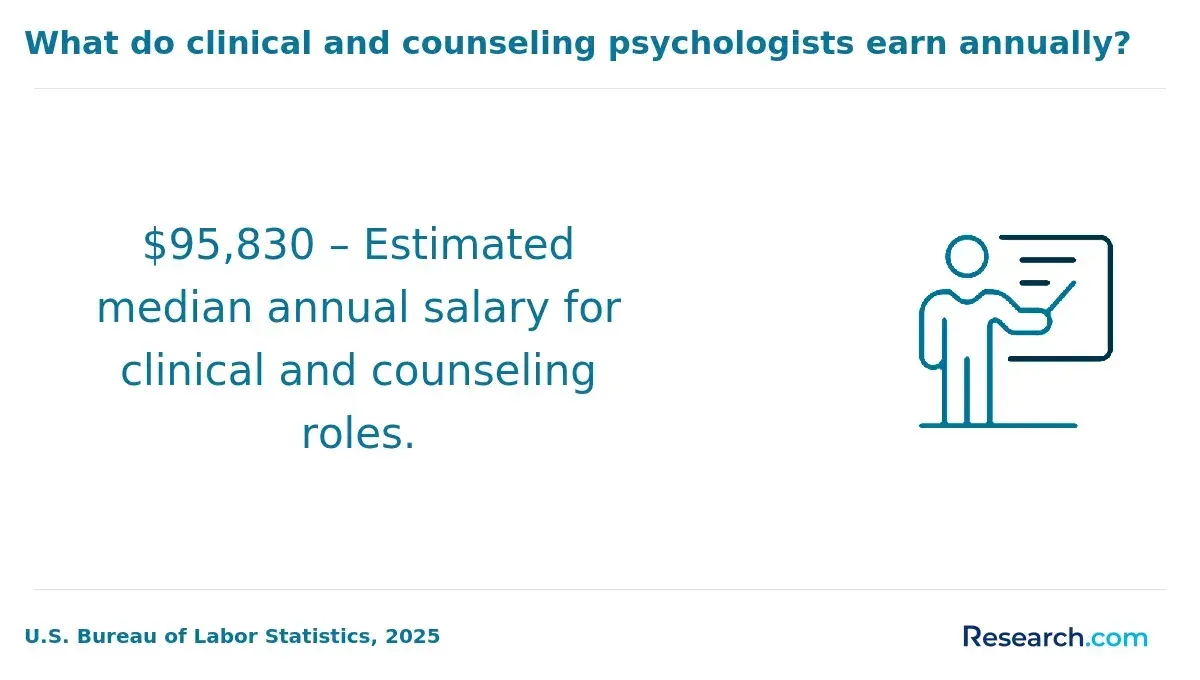
Salary potential depends on specialization, employer, location, degree level, licensure status, and years of experience. The average base salary of clinical psychologists in Iowa is $168,422 (Indeed, 2025). Specialized areas can also influence compensation. For example, students considering workplace behavior, employee assessment, and organizational performance may want to compare clinical routes with industrial-organizational psychology degree options.
| Reason psychology may be a good fit | Reason to be cautious |
| You want a career centered on behavior, assessment, mental health, research, or human development. | Many higher-level roles require graduate school, supervised hours, exams, and licensure. |
| Iowa has established universities with psychology, counseling, and school-based training options. | A bachelor’s degree alone may lead to support roles rather than licensed clinical practice. |
| Psychology can connect to healthcare, education, business, forensic, and community-service careers. | Program cost, internship availability, and licensure fit should be checked before enrolling. |
What are the steps to becoming a psychologist in Iowa?
Becoming a licensed psychologist in Iowa requires a planned sequence of education, supervised professional experience, examination, and board review. Students should start by reviewing Iowa-specific requirements early rather than waiting until graduate school, because practicum placements, internships, and doctoral program type can affect eligibility.
A typical path begins with a bachelor’s degree in psychology, behavioral science, or a related field. Students exploring online or flexible undergraduate options can compare programs such as a behavioral science online degree. Many future psychologists then pursue graduate-level training, and those seeking independent psychology licensure usually complete a doctoral degree. Career planning resources such as psychology career guides can help students distinguish psychologist roles from counselor, therapist, social worker, and behavioral specialist roles.
- Complete an undergraduate foundation. Build coursework in psychology, statistics, research methods, biology, human development, abnormal psychology, and social behavior.
- Choose a graduate direction. Decide whether your goal requires a doctoral psychology program, a counseling master’s program, a school psychology route, or another mental health credential.
- Complete doctoral training if pursuing psychologist licensure. Iowa psychologist licensure generally requires a doctoral degree, supervised experience, and exam completion.
- Gain supervised professional experience. Students must complete hands-on supervised training that meets Iowa Board of Psychology expectations.
- Pass the EPPP. The Examination for Professional Practice in Psychology is a required licensing exam for psychologist candidates.
- Apply through the Iowa Board of Psychology. Applicants must document education, training, examination results, and any additional requirements. Psychologists licensed in other states may have reciprocity options, but additional conditions can apply to out-of-state and international applicants.
What extracurricular opportunities can enhance a psychology student's education in Iowa?
Psychology students in Iowa should treat extracurricular experiences as part of career preparation, not just résumé padding. The strongest applicants for graduate programs, internships, and entry-level human services roles often show evidence of research ability, ethical awareness, communication skills, and real exposure to people-focused work.
- Faculty research and independent projects: Research experience helps students understand experimental design, data interpretation, academic writing, and ethical review processes. It is especially valuable for students considering graduate psychology programs.
- Internships and practicum-style experiences: Placements in clinics, schools, nonprofit organizations, hospitals, or community agencies help students test whether they enjoy applied work before committing to a longer licensure pathway.
- Psychology clubs and honor societies: Organizations such as Psi Chi can connect students with peers, faculty, speakers, conference opportunities, and graduate school advice.
- Volunteer service: Work with crisis lines, youth organizations, disability services, shelters, or mental health nonprofits can build empathy, professionalism, and familiarity with community needs.
- Conferences and workshops: Regional and national events expose students to current research, specialized fields, ethical issues, and professional networks.
- Mentoring relationships: Faculty members, graduate students, alumni, and licensed professionals can help students understand admissions expectations, licensure choices, and realistic career paths.
Psychologist Program Length in Iowa
The timeline depends on the degree level and intended credential. A bachelor’s degree typically provides the academic base for psychology-related work or graduate admission. The major licensure step for psychologists is a doctoral degree, commonly a Psy.D. or Ph.D., which can involve five to seven years of study, research, coursework, assessment training, and supervised clinical preparation.
Students may focus on areas such as behavioral psychology, clinical psychology, counseling psychology, developmental psychology, social psychology, or neuroscience-related study. Iowa candidates must gain 10 months of supervised experience to become licensed psychologists in Iowa. After completing the doctoral degree and supervised training, candidates take the Examination for Professional Practice in Psychology and apply for licensure through the Iowa Board of Psychology.
| Degree or credential stage | Typical purpose | Planning advice |
| Bachelor’s degree | Foundation for graduate school or psychology-adjacent roles | Prioritize research methods, statistics, writing, and applied experiences. |
| Master’s degree | Counseling, school, research, or specialized professional preparation depending on program | Confirm whether the degree supports the license or credential you want. |
| Doctoral degree | Core academic requirement for licensed psychologist pathways | Compare accreditation, internship match support, faculty fit, and funding. |
| Supervised experience and exam | Final professional preparation before independent practice | Track documentation carefully and verify Iowa Board requirements. |
Tuition and Costs of Psychology Programs in Iowa
Psychology program costs in Iowa vary by institution, degree level, residency status, delivery format, and whether the program includes clinical training. Students should compare the full cost of attendance, not just tuition, because fees, books, transportation, practicum travel, technology, exam preparation, and lost work time can materially affect affordability. Iowa offers options ranging from bachelor’s degrees to graduate and online programs, including paths such as an online master’s degree in psychology.
The estimated cost of attendance for the University of Iowa for undergraduate students is $24,795 for Iowa residents and $47,605 for non-residents. Graduate tuition and fees vary by program, but for the 2025 academic year, the estimated cost of attendance for graduate students is $12,478 for Iowa residents and $31,524 for non-residents.
| Psychology Programs in Iowa | Cost per Credit |
| University of Iowa | $1,825 |
| Iowa State University | $1,210 |
| University of Northern Iowa | $450 |
| Cornell College | $1,450 |
Cost factors students often overlook
- Residency rules: Public university costs can differ significantly for Iowa residents and non-residents.
- Graduate funding: Assistantships, tuition waivers, stipends, and research roles can change the real cost of doctoral study.
- Clinical placement expenses: Practicum or internship sites may require commuting, background checks, immunizations, professional clothing, or liability coverage.
- Licensure costs: Exam fees, application fees, study materials, and supervision-related expenses should be included in long-term budgeting.
- Time to completion: A lower per-credit price may not be cheaper if the program requires more credits, delays graduation, or offers limited course availability.
Scholarships and Financial Aid for Psychology Students in Iowa
Students should build a funding plan before committing to a psychology program, especially if they expect to continue into graduate school. Funding can come from institutional scholarships, federal aid, state grants, assistantships, work-study, employer support, and professional association awards. The best approach is to compare both direct aid and long-term debt burden.
Many Iowa colleges award scholarships based on academic performance, financial need, major, research interests, leadership, or service. The University of Iowa, for example, offers psychology-related funding such as the Psychology Department Scholarship. Students should ask whether awards are renewable and whether they require a minimum GPA, full-time enrollment, research participation, or separate departmental application.
Professional organizations can also be useful. The Iowa Psychological Association (IPA) may offer awards or funding opportunities for psychology students, and national organizations such as the American Psychological Association (APA) provide grants and scholarships that can support undergraduate and graduate training.
Students interested in working with children should also look for funding connected to developmental, school-based, pediatric, and family-focused training. These opportunities may help reduce the cost of meeting child psychologist education requirements.
Federal and state aid can also matter. Eligible students may use need-based federal aid such as Pell Grants and subsidized loans. Iowa residents attending private colleges in the state may explore options such as the Iowa Tuition Grant. Graduate students should ask about assistantships, teaching roles, research employment, and tuition remission because these can be more valuable than small one-time scholarships.
| Funding source | Best for | Question to ask |
| Institutional scholarships | Undergraduate and graduate students with academic or financial need | Is the award renewable for every year of the program? |
| Department awards | Psychology majors with research, service, or academic strength | Does the psychology department require a separate application? |
| Assistantships | Graduate students who can teach, assist faculty, or support research | Does the package include tuition support, stipend, or both? |
| Federal and state aid | Eligible students with demonstrated financial need | What is the total loan amount required after grants and scholarships? |
| Professional association grants | Students with defined research or career interests | Are awards limited to members or graduate-level applicants? |
How Can I Tailor My Education for a Criminal Psychology Career in Iowa?
Students interested in criminal psychology should build a plan that combines psychology coursework with exposure to law, criminology, forensic assessment, abnormal behavior, research methods, and ethics. A general psychology major can be a starting point, but students should use electives, internships, research projects, and field experiences to develop a clearer forensic or criminal justice focus.
Useful experiences may include coursework in forensic psychology, criminal behavior, trauma, substance use, developmental risk factors, and psychological assessment. Students can also benefit from internships or volunteer work with courts, correctional programs, victim services, reentry organizations, law enforcement partnerships, or community mental health providers. For a focused career roadmap, review how to become a criminal psychologist in Iowa.
What are the school psychologist requirements in Iowa?
Students who want to work as school psychologists in Iowa should choose graduate training that is designed for school-based practice. Programs typically cover child and adolescent development, psychoeducational assessment, consultation, counseling, learning and behavior interventions, crisis response, special education processes, and collaboration with families and educators.
Prospective school psychologists must complete an accredited graduate degree specializing in school psychology or a closely related field. They also need practical training in educational settings, including state-approved internship experiences that demonstrate readiness to support students with diverse academic, behavioral, social, and emotional needs. Candidates may also need to pass state-specific examinations or meet additional credentialing rules. For a detailed pathway, see this guide to school psychologist requirements in Iowa.
What emerging specialized fields are shaping Iowa psychology education?
Psychology programs are adapting as mental health care, education, technology, and workplace expectations change. Students may now see more emphasis on trauma-informed practice, behavioral health integration, digital mental health tools, neuropsychology, applied data skills, diversity-informed care, and interdisciplinary collaboration. These areas do not replace core psychology training, but they can help students become more competitive for specialized graduate programs and applied roles.
Students who want to stand out should look for programs that offer research labs, applied electives, field placements, and faculty expertise in their target specialty. For example, students interested in motivation, performance, coaching, and athlete well-being can explore the sports psychologist career pathway as one example of a specialized psychology direction.
Iowa Schools Offering Psychology Programs for 2027
Iowa colleges and universities offer psychology-related programs at multiple levels, including bachelor’s, master’s, and doctoral study. The right option depends on whether you want a broad undergraduate foundation, preparation for graduate school, a counseling credential, or doctoral psychology training. The programs below should be compared on accreditation, faculty fit, required credits, cost per credit, supervised training, research opportunities, and licensure alignment.
University of Iowa
The Department of Psychological and Brain Sciences at the University of Iowa offers undergraduate psychology study and graduate programs for students pursuing a Ph.D. Academic work is available in behavioral and cognitive neuroscience, clinical psychology, developmental psychology, perception and cognition, and social psychology. Students can expect a research-centered environment with both traditional and online course options.
- Program Length: 5-6 years
- Tracks/concentrations: Ph.D. in Clinical Psychology
- Cost per Credit: $1,825
- Required Credits to Graduate: 96-105
- Accreditation: American Psychological Association
Iowa State University
The Department of Psychology at Iowa State University provides doctoral training in cognitive psychology, counseling psychology, and social psychology. Its graduate model emphasizes close work with a major professor and faculty committee. The program’s philosophy treats psychologists as scientists and practitioners who use research skills to generate knowledge, evaluate interventions, and improve practice.
- Program Length: 5-6 years
- Tracks/concentrations: Ph.D. in Psychology
- Cost per Credit: $1,210
- Required Credits to Graduate: 90
- Accreditation: American Psychological Association
University of Northern Iowa
The psychology offerings at the University of Northern Iowa include undergraduate study, graduate programs, and certificate options. The curriculum is intended to give students a broad grounding in psychology while also supporting more focused career preparation. Its Master of Arts in Clinical Mental Health Counseling prepares students for licensed professional counselor pathways.
- Program Length: 2 years
- Tracks/concentrations: M.A. in Clinical Mental Health Counseling
- Cost per Credit: $450
- Required Credits to Graduate: 60
- Accreditation: Council for Accreditation of Counseling and Related Educational Programs
Cornell College
The BA Psychology program at Cornell University develops students’ understanding of human behavior, psychological science, and the methods researchers use to expand knowledge. The program includes study in Perception, Cognition, and Development (PCD), Behavioral Evolutionary Neuroscience (BEN), and Social/Personality Psychology. It can serve students preparing for graduate study, human services, research support, education-related roles, or other psychology-adjacent careers.
- Program Length: 4 years
- Tracks/concentrations: BA Psychology
- Cost per Credit: $1,450
- Required Credits to Graduate: 120
- Accreditation: Higher Learning Commission
Upper Iowa University
The Bachelor of Science in Psychology at Upper Iowa University gives students a broad introduction to behavior and mental processes. Coursework covers biological bases of behavior, human development, learning, cognition, personality, abnormal psychology, and social behavior. The program includes a wide course selection, allowing students to shape their studies around graduate school goals, applied human services interests, or other professional plans.
- Program Length: 4 years
- Tracks/concentrations: BA Psychology
- Cost per Credit: $450
- Required Credits to Graduate: 120
- Accreditation: Higher Learning Commission
How Do Psychology Programs Compare to Other Mental Health Counseling Degrees in Iowa?
Psychology and counseling programs overlap, but they are not interchangeable. Psychology programs often emphasize research design, psychological theory, assessment, cognition, behavior, development, and evidence-based practice. Counseling programs usually focus more directly on therapeutic relationships, diagnosis, counseling techniques, ethics, group work, and supervised client contact. The right choice depends on the license and job title you want.
| Program type | Common emphasis | Best fit for students who... |
| Psychology bachelor’s degree | Behavioral science, research, human development, statistics | Want a foundation for graduate school or psychology-adjacent roles. |
| Psychology doctoral program | Advanced research, assessment, clinical training, specialization | Want to pursue psychologist licensure or research-intensive careers. |
| Clinical mental health counseling master’s | Counseling methods, supervised client work, diagnosis, ethics | Want a counseling licensure pathway rather than psychologist licensure. |
| Social work or LPC-related pathways | Client systems, advocacy, therapy, community services, case coordination | Want direct mental health practice with a different credential structure. |
Students comparing credentials should look closely at licensure rules, not just course titles. A useful starting point is this comparison of LCSW vs LPC degree and career differences.
How Can I Transition to a Substance Abuse Counseling Career in Iowa?
A psychology degree can be a useful starting point for substance abuse counseling, but it may not be sufficient by itself. Students and graduates should identify Iowa’s credentialing requirements, then fill any gaps through targeted coursework, supervised fieldwork, and approved training in addiction counseling, co-occurring disorders, motivational interviewing, ethics, group counseling, and relapse prevention.
The most efficient strategy is to choose internships and electives early. Experience in community behavioral health, residential treatment, correctional programs, youth services, or recovery organizations can help graduates demonstrate commitment and build relevant skills. For a credential-focused roadmap, review how to become a substance abuse counselor in Iowa.
How Can Forensic Science Complement a Psychology Career in Iowa?
Forensic science can strengthen a psychology background for students who want to work near the legal system, investigations, corrections, victim advocacy, risk assessment, or behavioral analysis. Psychology contributes knowledge of behavior, cognition, trauma, development, and decision-making, while forensic science adds methods for evidence handling, investigative reasoning, and legal-context analysis.
This combination can be useful, but students should be clear about the job they want. A forensic scientist, forensic psychologist, criminal investigator, victim advocate, and correctional treatment specialist may require different education and credentials. Students considering the science side of the field can review the degrees needed to work in forensic science in Iowa before adding coursework or a second credential.
What is the potential return on investment for a psychology degree in Iowa?
The return on investment for a psychology degree depends heavily on degree level, total borrowing, graduate school plans, licensure outcome, and career direction. A bachelor’s degree may open doors to support roles, research assistantships, case management, human services, business, or graduate admission. Licensed psychologist roles generally require a much longer training path but may offer stronger earning potential in specialized settings.
To estimate ROI, compare tuition, fees, living costs, financial aid, time to completion, supervised experience requirements, and realistic salaries for your target role. Students pursuing psychologist licensure should map the full sequence of education and supervised practice against Iowa psychology license requirements. Do not assume that attending a highly visible school automatically produces a high salary; career outcomes depend on credential, location, specialty, and experience.
| ROI factor | Why it matters | How to evaluate it |
| Total program cost | Debt can affect career flexibility after graduation. | Calculate tuition, fees, living costs, exam costs, and interest. |
| Licensure alignment | A degree that does not meet credential rules can delay employment. | Confirm requirements with the relevant Iowa licensing board. |
| Clinical or field placement quality | Supervised experience often affects employability and readiness. | Ask where students complete practicum, internship, or fieldwork. |
| Graduate school preparation | Many psychology careers require advanced degrees. | Review research opportunities, faculty mentoring, and graduate placement support. |
| Career services | Job search support can help students move from degree to employment. | Ask about employer partnerships, alumni outcomes, and licensure advising. |
What is the quickest path from a psychology graduate to a counseling career in Iowa?
The fastest route depends on what degree you already hold and which counseling credential you want. A psychology bachelor’s graduate usually needs a counseling-related graduate program before becoming eligible for licensed counseling work. A student who already has relevant graduate coursework may need fewer additional steps, but Iowa licensure rules still determine what counts.
To move quickly, choose a program that clearly aligns with Iowa counseling requirements, offers accessible practicum placements, provides licensure advising, and accepts eligible transfer credits when appropriate. Students should avoid enrolling in a generic psychology or counseling program without confirming whether it meets the credential they intend to pursue. For a more focused overview, read about the fastest way to become a counselor in Iowa.
What to Look for in a Psychology Program in Iowa
A strong psychology program is not always the most famous or most expensive option. The best choice is the program that fits your degree level, career goal, budget, learning format, and licensure needs. Use the following criteria before applying or enrolling.
- Accreditation and licensure fit: Verify institutional accreditation and, for clinical pathways, whether programmatic accreditation or board approval matters for your intended credential.
- Job outlook and career alignment: Opportunities for psychologists in Iowa can be found in healthcare, education, private practice, government, business, and community settings, but each role has different degree and license expectations.
- Licensure exam support: Ask whether the program prepares students for required exams. Iowa State University, for example, has an 83% passing rate at the Examination for Professional Practice in Psychology.
- Program reputation and fit: Iowa includes reputable institutions such as the University of Iowa and Franklin University, but students should compare outcomes, faculty specialties, and student support rather than relying on name recognition alone.
- Curriculum depth: Look for coursework that matches your interests, such as clinical psychology, counseling, neuroscience, behavioral science, research methods, assessment, child development, or organizational psychology.
- Research and applied learning: Strong programs give students access to labs, internships, practicum opportunities, community partnerships, and faculty mentorship.
- Cost of living: Iowa’s relatively affordable living environment can help students manage housing, food, transportation, and other expenses, but individual city and campus costs still vary.
- Online versus campus delivery: Online courses can add flexibility, but students should confirm how labs, internships, practicum hours, and supervision are handled.
Questions to ask before choosing a psychology school in Iowa
| Question | Why it matters |
| Does this program meet the education requirements for my intended Iowa license or credential? | Licensure mismatch can force students to take extra coursework later. |
| Where do students complete internships, practicum, or supervised fieldwork? | Placement quality affects readiness, networking, and employability. |
| What percentage of students receive funding, assistantships, or scholarships? | Financial support can change the real cost of attendance. |
| How does the program support EPPP or other licensing exam preparation? | Exam readiness is essential for regulated careers. |
| Are faculty members active in my area of interest? | Faculty fit is especially important for research and doctoral programs. |
| Can I complete required courses on a predictable schedule? | Limited course availability can delay graduation. |
What are the specific steps to meet Marriage and Family Therapy licensure requirements in Iowa?
Students who want to become marriage and family therapists should choose graduate training that focuses on systems theory, family development, couples counseling, relational assessment, ethics, and supervised clinical practice. A general psychology degree may be useful preparation, but MFT licensure requires specific academic and clinical components.
The practical steps include selecting an appropriate graduate program, completing required MFT coursework, documenting supervised client-contact experience, preparing for required examinations, and submitting materials to the Iowa licensing authority. Because rules can change and documentation matters, students should review the detailed guide to Iowa MFT license requirements.
What career-focused resources do Iowa psychology programs offer?
Iowa psychology programs may provide career resources that help students connect classroom learning to employment, graduate study, and licensure. These supports are especially important in psychology because many career paths require more than completing courses.
- Internship and practicum support: Schools may partner with clinics, hospitals, schools, nonprofits, research centers, and community agencies so students can gain supervised experience in real settings.
- Career advising and job search help: Universities such as the University of Iowa and Iowa State University offer services that may include résumé support, interview preparation, networking events, employer connections, and graduate school advising.
- Licensure and certification guidance: Some programs help students understand EPPP preparation, counseling credential requirements, documentation rules, and supervised experience expectations.
- Research mentoring: Faculty-led research can prepare students for doctoral applications, conference presentations, thesis work, and research assistant roles.
- Professional networking: Student groups, Psi Chi, alumni panels, conferences, and faculty connections can help students learn about career options that are not obvious from course catalogs.
Students who want to shorten their undergraduate timeline may also compare an accelerated psychology degree online, but they should still confirm transfer policies, graduate school readiness, and licensure relevance before enrolling.
Navigating Licensure and Career Pathways in Iowa Psychology
Licensure planning should begin before graduate enrollment. Psychology, counseling, marriage and family therapy, school psychology, social work, substance abuse counseling, and behavior analysis each have different education and supervised experience requirements. Choosing the wrong program can delay credentialing even if the coursework seems related.
Students should identify their target title first, then work backward. For example, someone who wants to be a licensed psychologist usually needs doctoral training and EPPP preparation. Someone who wants to be a licensed professional counselor needs a counseling-focused pathway. Someone pursuing marriage and family therapy must meet MFT-specific education and clinical requirements.
For specialized therapist careers, students should review Iowa-specific guidance early. For example, understanding MFT licensing requirements in Iowa can help students choose appropriate coursework, internships, and supervision before they graduate.
Good psychology programs help students interpret these requirements through faculty advising, licensure preparation resources, and clinical placement guidance. Students should still verify information with the relevant licensing board because state requirements, documentation standards, and approved training rules can change.
What steps should I take to pursue BCBA board certification in Iowa?
Students interested in behavior analysis should plan their coursework and supervised experience carefully. A psychology background can help, but BCBA board certification requires specific academic content, fieldwork, supervision, and examination preparation. Students should confirm that graduate coursework meets Behavior Analyst Certification Board expectations and also aligns with Iowa’s requirements.
The basic strategy is to select a program with behavior analysis coursework, secure supervised fieldwork under qualified mentors, document hours accurately, and prepare for the certification examination. Students comparing programs should ask whether faculty have behavior analysis expertise and whether practicum placements are available. For a step-by-step explanation, review how to become a BCBA in Iowa.
How can I transition from a psychology degree to a mental health counseling career in Iowa?
A psychology degree can provide a strong base for mental health counseling because it develops knowledge of behavior, development, abnormal psychology, research, and human interaction. However, counseling licensure usually requires counseling-specific graduate education, supervised clinical experience, and examination requirements. Students should not assume that a psychology degree alone qualifies them for counseling practice.
To transition efficiently, compare graduate counseling programs, confirm Iowa licensure alignment, seek clinical or volunteer experiences, and build counseling skills in ethics, diagnosis, treatment planning, group work, and multicultural practice. University partnerships with local agencies can be valuable because they help students gain practical experience while building professional networks. For a credential-focused plan, use this guide on how to become a mental health counselor in Iowa.
Common Mistakes to Avoid When Choosing a Psychology Program in Iowa
- Assuming all psychology degrees lead to licensure: A bachelor’s degree in psychology is not the same as becoming a licensed psychologist, counselor, or therapist.
- Ignoring accreditation: Always check institutional accreditation and whether programmatic accreditation matters for your intended role.
- Looking only at tuition: Compare total cost of attendance, fees, travel, supervision, exams, and time to completion.
- Choosing a program before choosing a career direction: Psychology, counseling, school psychology, MFT, substance abuse counseling, and BCBA pathways require different preparation.
- Assuming online programs automatically meet Iowa requirements: Online study can be convenient, but practicum, internship, and licensure rules still apply.
- Overvaluing rankings: Reputation helps, but licensure fit, faculty mentorship, placement access, and funding may matter more.
- Waiting too long to get experience: Research, volunteer work, internships, and field exposure help students make better graduate school and career decisions.
Best Psychology Schools in Iowa
Iowa has several respected institutions offering psychology and psychology-related programs for students who want to enter the field, pursue graduate study, or build careers in mental health, education, research, business, or human services. Students can also consult external career resources about a career in the field of psychology to understand how state requirements and professional roles connect.
The best program is the one that fits your goals. If you want to become a licensed psychologist, prioritize doctoral training, accreditation, supervised experience, and EPPP preparation. If you want counseling, compare counseling-specific programs and licensure alignment. If you want research, focus on faculty fit and lab access. If you want the most affordable route, compare net price, assistantships, transfer credits, and time to completion.
Key Insights
- Career goal comes first: Choose the credential you want before choosing the school. Psychologist, counselor, school psychologist, MFT, BCBA, and substance abuse counselor paths are different.
- Licensure requires planning: Iowa psychologist candidates generally need a doctoral degree, supervised experience, and the EPPP, while other mental health careers follow separate rules.
- Costs vary widely: Iowa psychology programs list cost-per-credit figures such as $1,825, $1,210, $450, and $1,450, but the real cost depends on credits, aid, fees, and completion time.
- Salary data should be interpreted carefully: The average base salary of clinical psychologists in Iowa is listed as $168,422 (Indeed, 2025), while another cited benchmark lists $156,700; actual earnings vary by role, license, setting, and experience.
- Experience matters: Research, internships, volunteer work, practicum placements, and mentorship can make students stronger applicants for graduate school and employment.
- Accreditation and fit are nonnegotiable: Do not enroll until you verify accreditation, licensure alignment, faculty expertise, placement access, and financial feasibility.
Related Articles for Nearby States
- 2027 Best Psychology Schools in Minnesota – Accredited Colleges & Programs
- 2027 Best Psychology Schools in Wisconsin – Accredited Colleges & Programs
- 2027 Best Psychology Schools in Illinois – Accredited Colleges & Programs
- 2027 Best Psychology Schools in Nebraska – Accredited Colleges & Programs
- 2027 Best Psychology Schools in South Dakota – Accredited Colleges & Programs
- 2027 Best Psychology Schools in Missouri – Accredited Colleges & Programs
- 2027 Best Psychology Schools in Kansas – Accredited Colleges & Programs
- 2027 Best Psychology Schools in Indiana – Accredited Colleges & Programs
- 2027 Best Psychology Schools in North Dakota – Accredited Colleges & Programs
- 2027 Best Psychology Schools in Michigan – Accredited Colleges & Programs
References:
- American Psychological Association. (2026). Accreditation standards for education and employment outcomes. https://irp.cdn-website.com/a14f9462/files/uploaded/APA-IR_Section_C-M.pdf
- American Psychological Association. (2025). Board of Educational Affairs nomination statement. https://nomination.apa.org/docs/apaboard/BoardofEducationalAffairs.pdf
- American Psychological Association. (2026). Continuing Education Committee terms beginning 2026. https://nomination.apa.org/docs/apaboard/ContinuingEducationCommittee.pdf
- American Psychological Association. (2026). Continuing Education Committee terms beginning 2026. https://nomination.apa.org/docs/apaboard/ContinuingEducationCommittee.pdf
- National Center for Education Statistics. (n.d.). College Navigator. U.S. Department of Education. https://www.nces.ed.gov/collegenavigator/
- U.S. Bureau of Labor Statistics. (2025). Psychologists: Occupational Outlook Handbook. https://www.bls.gov/ooh/life-physical-and-social-science/psychologists.htm
- U.S. Bureau of Labor Statistics. (2025). Field of degree: Psychology. https://www.bls.gov/ooh/field-of-degree/psychology/psychology-field-of-degree.htm
- U.S. Office of Personnel Management. (2026). General Schedule qualification standards. https://www.opm.gov/policy-data-oversight/classification-qualifications/general-schedule-qualification-standards/
Other Things You Should Know About The Best Psychology Schools in Iowa
Many accredited psychology programs in Iowa require an internship, practicum, or field experience before graduation, especially at the bachelor’s and master’s levels. These placements are usually arranged through the department and may require a minimum GPA, background check, and faculty approval before students can enroll.
The top psychology programs in Iowa for 2027 typically require a high GPA from previous studies, competitive GRE scores, letters of recommendation, a statement of purpose, and relevant experience in the field. Deadlines and specific requirements can vary by institution.