2027 How to Become a School Psychologist in Iowa - School Psychology Programs and Certifications Online & Campus

Co-Founder and Chief Data Scientist
If you want to work as a school psychologist in Iowa, the main decision is not simply whether the career fits you. You also need to understand which graduate program will qualify you, how Iowa’s licensing process works, what internship experience is required, and whether the role matches your long-term goals in education and mental health. This guide explains the Iowa school psychologist pathway in practical terms so you can compare programs, avoid licensing mistakes, prepare for supervised experience, and decide whether school psychology—or a related counseling, behavior analysis, or mental health career—is the right next step.
Quick answer: How do you become a school psychologist in Iowa?
To become a school psychologist in Iowa, you generally need to complete a specialist-level school psychology program, meet Iowa Board of Educational Examiners requirements, finish the required supervised internship experience, submit official documentation, and maintain your license through renewal and professional development. Iowa candidates commonly complete at least 60 graduate semester hours and a supervised internship of at least 1,200 hours, with at least 600 hours in a school setting. Candidates should confirm current requirements directly with the Iowa Board of Educational Examiners before applying, because licensure rules can change.
Key Things You Should Know About Becoming a School Psychologist in Iowa
- Licensing authority: Iowa school psychologist licensure is handled by the Iowa Board of Educational Examiners (BoEE), which sets credentialing standards for professionals working in school settings.
- Degree requirement: Candidates typically need a specialist-level school psychology degree, such as an Ed.S. or equivalent credential, from an accredited institution. Programs commonly include at least 60 graduate semester hours and supervised internship training.
- Exam expectation: The Praxis School Psychologist exam is commonly used to evaluate school psychology knowledge in assessment, consultation, intervention, and related practice areas.
- Application materials: Applicants should be prepared to submit official transcripts, proof of internship completion, test documentation when required, a completed BoEE application, and background check materials.
- License maintenance: Licensed Iowa school psychologists must complete continuing education for renewal. The article text identifies 30 hours of professional development every five years, while later sections describe BoEE renewal credits; applicants should verify the current renewal format with BoEE before planning coursework.
- Educational requirements for Iowa school psychologists
- Iowa certification and licensing process
- Internship and supervised experience requirements
- Job market, employers, and salary outlook in Iowa
- Challenges and rewards of the role
- Alternative careers with a school psychology degree
- Legal and ethical responsibilities in Iowa schools
- Financial aid, scholarships, and cost planning
- Moving from school psychology into counseling
- Using school psychology skills in forensic psychology
- Adding family therapy concepts to student support
- Professional organizations and Iowa resources
- Trends shaping school psychology in Iowa
- Working with board certified behavior analysts
- Collaborating with speech-language pathologists
- Staying current on Iowa licensing changes
- Advocating for school mental health policy
- Reducing burnout and building resilience
- Other Iowa mental health career options
- Continuing education and advancement options
- Partnering with special education teams
- Collaborating with neuropsychologists in complex cases
What are the educational requirements for school psychologists in Iowa?
Iowa school psychologist candidates usually need graduate-level preparation that goes beyond a general psychology master’s degree. The standard pathway is a specialist-level program in school psychology, often completed after or as part of master’s-level study. The program should prepare candidates for assessment, consultation, behavioral intervention, special education decision-making, ethics, and work with children and adolescents in school systems.
The main educational components include:
- Graduate degree sequence: Candidates commonly complete a master’s degree in psychology, education, or a closely related field, followed by a Specialist degree such as an Ed.S. in school psychology. Some professionals pursue a Ph.D. or Psy.D. if they want broader research, leadership, university, or clinical opportunities.
- Minimum graduate preparation: Iowa candidates are expected to complete at least 60 graduate semester hours, including a supervised internship of at least 1,200 hours.
- Core coursework: Strong programs should include child and adolescent development, psychoeducational assessment, learning theory, consultation, behavior intervention, counseling skills, crisis response, ethics, legal issues, and special education procedures.
Most students should expect the education and training process to take 3 to 5 years, depending on whether they attend full time, enter with transfer credits, or continue into doctoral study.
| Education option | When it may fit | Important limitation |
| Master’s plus specialist-level school psychology program | Best fit for candidates who want to work as school psychologists in K-12 settings in Iowa. | A general psychology master’s degree alone is usually not enough for school psychologist licensure. |
| Ed.S. or equivalent specialist degree | Common route for candidates seeking direct entry into school-based practice. | Students must verify that the program meets Iowa endorsement and internship expectations. |
| Ph.D. or Psy.D. in school psychology | Useful for candidates interested in advanced practice, supervision, research, leadership, or expanded career mobility. | Doctoral programs may take longer and cost more, so students should compare return on investment carefully. |
Before enrolling, ask the program director whether graduates are eligible for Iowa school psychologist licensure and whether the internship meets BoEE requirements. If you are still weighing psychology as a field, reviewing the career value of a psychology degree can help you compare school psychology with other psychology-related paths.
What is the certification and licensing process for school psychologists in Iowa?
The Iowa school psychologist licensing process is designed to confirm that candidates have completed the correct graduate preparation, supervised field experience, and professional documentation. The exact steps depend on your education history, endorsement status, and whether you are applying for an initial, standard, or temporary license category.
Typical Iowa school psychologist licensing steps
- Complete an approved graduate program. Candidates should graduate from a school psychology program that meets Iowa requirements and is accredited by NASP or APA. The article identifies qualifying routes as a master’s degree with at least 60 graduate semester hours, a specialist degree of at least 60 graduate semester hours, or a doctoral program with a minimum of 60 graduate semester hours.
- Finish required supervised experience. Students must document internship completion, including the required school-based hours.
- Prepare application records. Applicants typically need official transcripts, internship verification, exam documentation when applicable, and background check materials.
- Apply through the Iowa Board of Educational Examiners. The BoEE reviews credentials for school-based licensure and endorsement.
- Renew and maintain the credential. School psychologists must complete renewal requirements, including professional development and mandatory child and dependent adult abuse training.
Iowa license categories mentioned for school psychologists
| License type | Purpose | Length or condition |
| Initial Professional Service License | Used after candidates complete the required preparation and begin professional service. | Valid for two years. |
| Standard Professional Service License | Used after the initial period when candidates meet the requirements for the longer-term credential. | Valid for five years. |
| Class A License | May be used for candidates who still need to complete an internship or thesis required by an approved program. | Nonrenewable. |
Iowa does not identify a separate state-specific examination in the source article, but candidates should make sure their school psychology program and endorsement documentation meet BoEE standards. If the Praxis School Psychologist exam is required for your route, plan your testing timeline early so scores do not delay your application.
School-based licensure is not the same as independent psychological practice outside schools. If you want to provide psychological services outside an educational setting, you may need a separate application through the Iowa Board of Psychology. Students comparing state requirements can also review psychology license requirements in California to see how licensure rules differ across jurisdictions.
What are the internship and supervised experience requirements in Iowa?
Iowa candidates must complete a structured internship as part of their school psychology preparation. The internship is not a formality; it is where candidates learn to manage assessments, consult with teachers, participate in special education meetings, support families, and respond to student mental health needs under supervision.
The article identifies Iowa’s internship expectation as at least 1,200 hours, with at least 600 hours devoted to direct service in a school setting. Candidates should confirm with their university and BoEE that the placement, supervisor credentials, and documentation format meet current standards.
Where Iowa candidates may complete internships
- Public and private school districts: District placements allow interns to work with real student cases, multidisciplinary teams, and Iowa school procedures.
- University-coordinated placements: Programs such as those associated with the University of Iowa and Iowa State University may coordinate with local schools to place interns.
- Grant-funded or high-need placements: Some larger districts or funded initiatives may offer paid positions, although students should not assume every internship will provide compensation.
What supervised experience should include
- Observation and evaluation: Supervisors should observe the intern’s work and document progress toward professional standards.
- Case consultation: Interns should receive regular feedback on assessment decisions, intervention planning, documentation, and collaboration with families and educators.
- Ethical and legal guidance: Supervision should help interns apply confidentiality rules, special education requirements, reporting obligations, and professional boundaries.
Common internship mistake to avoid
Do not wait until your final year to ask about placements. Internship sites can be competitive, and some districts may have specific application windows. Start networking with Iowa school psychologists, attend professional events, and ask your program about placement history before you need to apply.
-
: "
One Iowa school psychologist described internship as the point when training became real: managing several cases at once was stressful, but close supervision helped turn uncertainty into professional confidence.
"
What is the job market and career outlook for school psychologists in Iowa?
Iowa schools continue to need professionals who can connect mental health, learning, assessment, and special education services. Demand is shaped by student mental health concerns, special education evaluation needs, rural access challenges, and the growing expectation that schools provide coordinated student support.
School psychologists in Iowa may work in several settings, including public and private K-12 schools, educational support services, childcare facilities, colleges, and universities. Public school districts are the most direct employment setting for candidates pursuing a BoEE school psychologist credential.
| Career factor | What Iowa candidates should know |
| Salary expectations | The article identifies average annual earnings for Iowa school psychologists at around $89,410. Actual pay can vary by district, location, contract structure, experience, and institution type. |
| Competition | Urban areas may attract more applicants, while rural districts may face different recruitment and service-access challenges. |
| Ways to improve employability | Complete strong internship experiences, build relationships with district teams, gain crisis response or behavioral intervention experience, and keep documentation of assessment and consultation skills. |
| Advancement options | Experienced school psychologists may move into district mental health coordination, special education leadership, crisis intervention roles, training, supervision, or specialized consultation. |
Candidates who are unsure whether school psychology is the right long-term fit can compare related helping professions, including non-traditional therapy careers, before committing to a specialist-level program.
What are the challenges and rewards of being a school psychologist in Iowa?
School psychology can be deeply meaningful, but it is not a low-pressure role. Iowa school psychologists often balance evaluations, consultation, crisis response, family communication, intervention planning, and compliance timelines. In rural areas, limited access to community mental health services can increase the importance of school-based support.
Common challenges
- High caseloads: Assessment deadlines and student support needs can create heavy workloads, especially during peak evaluation periods.
- Role overload: School psychologists may be asked to handle testing, counseling, behavior planning, crisis response, and staff consultation at the same time.
- Resource gaps: Some Iowa schools, particularly in rural communities, may have fewer nearby mental health providers or specialized services.
- Emotional strain: Working with trauma, family stress, disability identification, and student safety concerns can contribute to burnout if supports are weak.
Rewards of the profession
- Direct student impact: School psychologists help students access services, build coping skills, and overcome barriers to learning.
- Meaningful collaboration: The role involves close work with teachers, families, administrators, counselors, special education staff, and community providers.
- Community value: In many schools, the school psychologist is one of the key professionals connecting academic, behavioral, and mental health support.
- Career stability: The continued focus on student mental health and special education services supports ongoing need for qualified professionals.
Burnout prevention strategies
- Protect boundaries: Define work hours when possible, set realistic timelines, and communicate capacity clearly.
- Use systems, not memory: Digital tracking tools can help manage evaluations, meetings, consent forms, and intervention follow-up.
- Build peer consultation: Regular contact with other school psychologists can reduce isolation and improve decision-making.
- Advocate for staffing and support: Use data on caseloads, evaluation timelines, and service needs when speaking with administrators.
-
: "
An Iowa practitioner summarized the trade-off this way: the workload can be intense, but watching a student regain confidence after sustained support is the reason the work remains worthwhile.
"
What alternative career paths are available with a school psychology degree in Iowa?
A school psychology degree is most directly aligned with school-based practice, but the training can also support roles in assessment, behavioral consultation, research, program development, and mental health-adjacent work. The best alternative depends on your license, supervised experience, additional coursework, and whether you want to work inside or outside K-12 schools.
| Alternative path | How school psychology training applies | What to check before switching |
| Educational consultant | Uses assessment, intervention, and systems-level problem-solving skills. | Whether the role requires additional credentials or district experience. |
| Behavior intervention specialist | Applies functional behavior assessment, data collection, and intervention planning. | Whether BCBA training or another behavior credential is expected. |
| Research or program evaluation | Uses data analysis, measurement, and child development knowledge. | Whether the employer prefers doctoral preparation or research experience. |
| Community mental health or counseling-adjacent roles | Uses consultation, developmental knowledge, and intervention skills. | Whether a counseling, psychology, or therapy license is required for clinical services. |
| Policy or advocacy roles | Applies expertise in special education, student support systems, and school mental health. | Whether experience with state policy, grant writing, or administration is needed. |
If you are considering a broader psychology career shift, explore jobs you can pursue with a psychology degree and compare the additional credentials each role may require.
What are the legal and ethical considerations for school psychologists in Iowa?
Iowa school psychologists work at the intersection of education law, mental health ethics, family rights, and student safety. Strong practice requires more than good assessment skills; it also requires careful documentation, appropriate consent procedures, confidentiality awareness, and compliance with federal and state special education rules.
Key legal responsibilities
- Mandatory reporting: Iowa school psychologists must report suspected child abuse or neglect as required by law.
- Special education compliance: They help schools meet obligations under the Individuals with Disabilities Education Act (IDEA) and Iowa special education rules.
- Appropriate records management: Student files, evaluation data, and service notes must be handled according to applicable education privacy requirements.
Confidentiality and privacy
- Student records must be protected under the Family Educational Rights and Privacy Act (FERPA).
- Confidentiality has limits, especially when there is a risk of harm to the student or others.
- School psychologists should explain privacy boundaries clearly to students, families, and school staff.
Ethical dilemmas that often arise
- Balancing student needs with parent requests, staff expectations, and administrative priorities.
- Managing dual roles when the same professional is asked to assess, counsel, consult, and help determine eligibility.
- Communicating assessment findings honestly while avoiding overstatement or unsupported conclusions.
- Ensuring culturally responsive practice when evaluating students from diverse backgrounds.
How to reduce legal risk
- Document decisions, consent, assessment tools, eligibility recommendations, and intervention plans carefully.
- Consult supervisors, legal guidance, or professional standards when a case raises ethical uncertainty.
- Stay current on Iowa BoEE requirements, special education procedures, and mandated training expectations.
What financial aid and scholarships are available for school psychology students in Iowa?
School psychology programs can require several years of graduate study, so cost planning should begin before enrollment. Students should compare tuition, fees, assistantships, internship pay, travel costs, and whether the program’s timeline allows them to work while studying.
Scholarship and aid options to investigate
- Iowa School Psychologists Association scholarships: Graduate students pursuing school psychology may find scholarship opportunities through the Iowa School Psychologists Association, with awards often connected to academic performance and commitment to the profession.
- University scholarships: Schools such as the University of Iowa and Iowa State University may offer program-specific scholarships, assistantships, or graduate financial aid. Students should contact the department and financial aid office directly.
- Federal and state aid: Completing the Free Application for Federal Student Aid (FAFSA) is the standard first step for determining eligibility for many forms of aid.
- Loan repayment support: The article identifies the Iowa Loan Repayment Program as a potential option for school psychologists who serve in designated shortage areas.
Estimated cost range
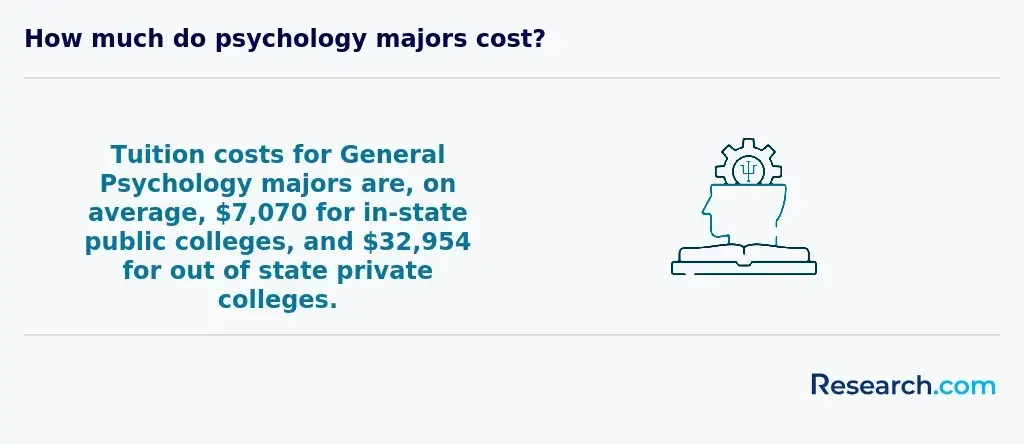
The article identifies the average cost of a school psychology degree in Iowa as $20,000 to $40,000, depending on the institution and program length. Students should treat this as a planning range and request a current cost estimate from each program, including tuition, fees, books, practicum expenses, and internship-related costs.
| Cost question | Why it matters |
| Is the internship paid or unpaid? | An unpaid full-time internship can affect borrowing, savings, and work availability. |
| Does the program offer assistantships? | Assistantships may reduce tuition or provide income, but availability can be limited. |
| Will transfer credits be accepted? | Accepted credits can shorten the program and reduce total cost. |
| Does the program meet Iowa licensure requirements? | A cheaper program is not a good value if it does not qualify you for the credential you need. |
| Are grants available during internship? | Internship grants can help with living expenses and travel costs during fieldwork. |
How can school psychologists transition to counseling roles in Iowa?
School psychologists who want to move into counseling should not assume their school credential automatically authorizes broader clinical counseling practice. The transition may require additional coursework, supervised clinical hours, and a separate Iowa counseling license. Existing skills in assessment, intervention, consultation, child development, and crisis response can be useful, but the scope of practice is different. For a counseling-specific overview, see the guide on how to become a therapist in Iowa.
How Can School Psychology Expertise Be Applied in Forensic Psychology Roles?
School psychology training can support forensic-related work when paired with additional legal, assessment, and ethical preparation. Professionals with school backgrounds may bring useful expertise in child development, behavioral patterns, educational records, crisis response, and disability-related evaluations. However, forensic work has distinct legal standards and usually requires specialized training. Candidates interested in this direction can review how educational and assessment knowledge may apply to a forensic psychologist career path.
How Can School Psychologists Incorporate Family Therapy Approaches to Improve Student Support?
Students’ academic and emotional concerns often connect to family stress, communication patterns, transitions, or home-school conflict. School psychologists can benefit from family-systems concepts when collaborating with parents and caregivers, even if they are not functioning as family therapists. Additional workshops or coursework can help professionals use family-informed strategies while staying within their role and scope. For related credential expectations, review marriage and family therapist education requirements in Iowa.
What are the professional organizations and resources for school psychologists in Iowa?
Professional organizations help Iowa school psychologists stay connected to licensing updates, professional development, mentorship, and advocacy. Membership can be especially valuable for graduate students, interns, and early-career practitioners who need guidance on placements, job searches, and ethical practice.
- Iowa Association of School Psychologists: This organization focuses on school psychology practice, advocacy, networking, and professional learning for those working in Iowa educational settings.
- Iowa Psychological Association: The Iowa Psychological Association supports psychologists in the state through education, advocacy, and professional resources.
- National Association of School Psychologists: NASP offers credentialing information, practice standards, research, and national professional development resources.
Students should use these organizations to find conferences, mentorship opportunities, training sessions, job postings, and updates on professional standards. Practicing school psychologists can also use them to build peer consultation networks, which are important for ethical decision-making and burnout prevention.
What are the trends and innovations in school psychology in Iowa?
School psychology in Iowa is being shaped by the same pressures affecting school mental health nationwide: more attention to trauma, anxiety, crisis response, behavioral needs, special education evaluation, and equitable access to services. Iowa’s rural communities also make service delivery models especially important, because families may have limited access to outside mental health providers.
Trends candidates should understand
- Greater focus on student mental health: School psychologists are increasingly involved in identifying trauma-related concerns, anxiety, social-emotional needs, and barriers to learning.
- Team-based support models: Schools are relying more on collaboration among educators, families, counselors, nurses, administrators, and community mental health partners.
- Telehealth and remote consultation: Technology can improve access to support, particularly in rural areas, although confidentiality and service quality must be managed carefully.
- Digital assessment and data tools: Digital systems can help organize evaluations, intervention data, progress monitoring, and communication, but professionals still need strong clinical judgment.
- Social-emotional learning and prevention: Schools are using SEL, bullying prevention, and crisis intervention programs to address needs before they escalate.
Future growth in Iowa school psychology will likely depend on training capacity, district funding, recruitment, and licensing policies. Candidates who want stronger behavioral expertise may consider related training, such as a master's degree in behavioral psychology, if it aligns with their career goals.
How Can School Psychologists Collaborate With Board Certified Behavior Analysts in Iowa?
School psychologists and board certified behavior analysts can work together on behavior assessment, intervention design, data review, and staff consultation. The collaboration is strongest when responsibilities are clearly divided: school psychologists may contribute psychoeducational assessment and systems-level consultation, while BCBAs may bring deeper behavior analytic intervention expertise. Professionals interested in behavior analysis credentials can review how to become a BCBA in Iowa.
How Can School Psychologists Collaborate With Speech-Language Pathologists in Iowa?
Many students have overlapping learning, communication, behavioral, and social-emotional needs. Collaboration with speech-language pathologists can improve evaluation accuracy and intervention planning, especially when language processing, pragmatic communication, or speech-language delays affect classroom performance. For details on speech-language credentials, see the Iowa SLP license requirements.
How Can School Psychologists Keep Up With Evolving Licensing Regulations in Iowa?
Licensing rules, renewal procedures, training requirements, and application processes can change. Iowa school psychologists should rely on official BoEE communications, professional associations, employer updates, and policy-focused continuing education rather than informal advice alone. For a related overview, consult psychology licensure requirements in Iowa.
How Can School Psychologists Advocate for Policy Changes in Iowa?
School psychologists can advocate for better student support by sharing data on caseloads, evaluation timelines, crisis needs, and service gaps with district leaders and policymakers. Effective advocacy may include participating in school board discussions, working through professional organizations, contributing to committee recommendations, and collaborating with related professionals. School counselors are often important partners, and understanding the requirements to be a school counselor in Iowa can help clarify complementary roles.
How Can School Psychologists Manage Burnout and Enhance Resilience in Iowa?
Burnout prevention should be treated as a professional practice issue, not a personal weakness. Iowa school psychologists can protect sustainability by using structured caseload systems, seeking supervision or peer consultation, setting documentation routines, practicing reflective decision-making, and communicating workload limits. Some professionals also explore counseling-related roles or additional credentials to broaden their options; reviewing the fastest way to become a counselor in Iowa can help clarify whether that transition is realistic.
What other mental health careers are available in Iowa?
School psychology is only one route into student and family mental health support. Iowa professionals may also consider school counseling, licensed counseling, marriage and family therapy, behavior analysis, speech-language pathology, clinical psychology, or special education leadership. Anyone considering marriage and family therapy should review the MFT licensing requirements in Iowa before planning a transition.
What are the continuing education and career advancement opportunities for school psychologists in Iowa?
Continuing education helps Iowa school psychologists maintain licensure, improve practice, and qualify for more specialized responsibilities. The Iowa Board of Educational Examiners requires ongoing professional development as part of license renewal, so practitioners should track credits carefully and keep documentation organized.
License renewal requirements
The article states that school psychologists with a Standard License must complete four renewal credits, or two renewal credits if holding a doctoral or specialist degree, along with mandatory training on child and dependent adult abuse. Because renewal rules may change, professionals should verify the current requirement directly with BoEE before registering for courses.
Advanced credentials
School psychologists who want broader recognition may pursue the National Certification in School Psychology (NCSP). This credential can strengthen professional credibility and may support mobility, though candidates should still check each state’s specific licensure rules.
Specialization areas
- Trauma-informed school practice
- Behavioral interventions and functional behavior assessment
- Crisis prevention and response
- Social-emotional learning
- Culturally responsive assessment
- Equity-focused student support
Leadership pathways
Experienced school psychologists may move into district-level mental health coordination, special education administration, supervision, professional development, or program evaluation. A doctorate in school psychology or additional education administration preparation may be useful for some leadership roles.
How to choose useful professional development
- Prioritize training that solves a real problem in your district, such as crisis response, behavior intervention, or assessment equity.
- Confirm that the provider is accepted for Iowa renewal purposes before paying.
- Balance short-term workshops with deeper skill-building experiences, such as supervised training or certificate programs.
- Keep certificates, transcripts, agendas, and proof of completion in one renewal file.
Aspiring professionals who are still comparing programs can review psychology colleges in Iowa to identify institutions that may support school psychology preparation or related graduate study.
How Can School Psychologists Effectively Collaborate With Special Education Professionals in Iowa?
School psychologists and special education professionals work together on eligibility decisions, intervention planning, progress monitoring, and family communication. The strongest collaboration happens when teams clarify timelines, share data early, avoid duplicating assessments, and connect recommendations to classroom supports. Professionals who want to deepen special education knowledge can explore special education certification online Iowa options.
How Can Interdisciplinary Collaboration With Neuropsychologists Enhance School Psychology Practice in Iowa?
Some students present complex cognitive, neurological, medical, or learning profiles that benefit from interdisciplinary input. Collaboration with neuropsychologists can help school psychologists interpret advanced assessment findings, align school-based supports with clinical recommendations, and avoid fragmented services. Professionals interested in this specialty can review resources on how to become neuropsychologist.
What graduates say about becoming a school psychologist in Iowa
-
: "
"I chose to become a school psychologist in Iowa because I wanted to make a difference in my community. The support from local schools and the emphasis on mental health initiatives made it clear that my work would be valued. I’ve seen firsthand how my interventions help students overcome challenges, and it’s incredibly rewarding. The connections I’ve built with families and educators have enriched my life and career. I feel like I’m part of something bigger, contributing to the well-being of our youth. It’s a fulfilling path that I’m proud to be on." – Sonia
"
-
: "
"Working as a school psychologist in Iowa has allowed me to blend my passion for education with mental health advocacy. The state’s commitment to comprehensive mental health services in schools has been inspiring. I’ve had the opportunity to implement programs that promote resilience and emotional well-being among students. The collaborative environment among educators and mental health professionals here is exceptional, making it easier to create impactful change. I love being part of a community that prioritizes the mental health of its children." – Jonah
"
-
: "
"Becoming a school psychologist in Iowa has been a transformative journey for me. Growing up in a rural area, I witnessed the struggles students faced with limited resources. Now, I’m dedicated to bridging that gap." – Josh
"
Related Articles for Nearby States
- 2027 How to Become a School Psychologist in Minnesota - School Psychology Programs and Certifications Online & Campus
- 2027 How to Become a School Psychologist in Wisconsin - School Psychology Programs and Certifications Online & Campus
- 2027 How to Become a School Psychologist in Illinois - School Psychology Programs and Certifications Online & Campus
- 2027 How to Become a School Psychologist in Nebraska - School Psychology Programs and Certifications Online & Campus
- 2027 How to Become a School Psychologist in South Dakota - School Psychology Programs and Certifications Online & Campus
- 2027 How to Become a School Psychologist in Missouri - School Psychology Programs and Certifications Online & Campus
- 2027 How to Become a School Psychologist in Kansas - School Psychology Programs and Certifications Online & Campus
- 2027 How to Become a School Psychologist in Indiana - School Psychology Programs and Certifications Online & Campus
- 2027 How to Become a School Psychologist in North Dakota - School Psychology Programs and Certifications Online & Campus
- 2027 How to Become a School Psychologist in Michigan - School Psychology Programs and Certifications Online & Campus
Common mistakes to avoid when becoming a school psychologist in Iowa
| Mistake | Why it can hurt you | Better approach |
| Choosing a program before checking licensure fit | A program that does not meet Iowa requirements can delay or block licensure. | Ask the program for written confirmation that it prepares graduates for Iowa BoEE school psychologist licensure. |
| Assuming a general psychology degree is enough | School psychology requires specialized graduate preparation and supervised school-based experience. | Choose a specialist-level school psychology pathway if your goal is school-based practice. |
| Ignoring internship placement details | Hours, supervision, and school-based service requirements must be documented correctly. | Confirm the internship structure before committing to a placement. |
| Planning around tuition only | Fees, unpaid internship time, travel, books, and lost income can change total cost. | Build a full cost estimate and ask about assistantships, scholarships, and loan repayment options. |
| Relying on outdated licensing advice | Licensure and renewal requirements can change. | Use BoEE and professional association updates as your primary sources. |
| Assuming salary outcomes are guaranteed | Pay varies by district, location, contract, experience, and role. | Review local job postings and salary schedules before estimating return on investment. |
References:
- nasponline.org (n.d.). School Psychology Credentialing Resources. National Association of School Psychologists.
- bls.gov (03 Apr 2024). Occupational Employment and Wages, May 2023. U.S. Bureau of Labor Statistics.
- iowapsychology.org (n.d.). APA Services stops abusive insurance recoupment demands over $100,000 Months of advocacy lead to Wellmark Blue Cross and Blue Shield of Iowa withdrawing demands for payment from psychologists. Iowa Psychological Association.
- Emily Sohn (01 Jan 2024). There’s a strong push for more school psychologists. American Psychological Association.
Key Insights
- Iowa school psychologist candidates should plan for specialist-level graduate preparation, commonly including at least 60 graduate semester hours and a 1,200-hour internship.
- The Iowa Board of Educational Examiners is the key authority for school-based licensure, but professionals who want to practice outside schools may need a separate psychology or counseling credential.
- Program choice matters. Before enrolling, confirm accreditation, Iowa licensure alignment, internship support, cost, transfer policies, and graduate outcomes.
- The role offers strong purpose and community impact, but high caseloads, limited rural resources, and compliance pressures make supervision, systems, and peer support essential.
- Career flexibility exists, but alternative roles in counseling, forensic psychology, behavior analysis, or family therapy usually require additional training or licensure.
- The smartest next step is to contact Iowa programs and BoEE directly, compare requirements in writing, and build a realistic timeline for coursework, internship, application, and renewal.
Other Things You Should Know about How to Become a School Psychologist in Iowa
To become a licensed school psychologist in Iowa by 2026, you must earn an accredited specialist-level degree in school psychology, complete a supervised internship, and pass the Praxis School Psychologist exam. Additionally, you'll need to apply for licensure with the Iowa Board of Educational Examiners.
In 2027, the median salary for school psychologists in Iowa is projected to be around $76,000 annually, according to recent data from the Bureau of Labor Statistics. This may vary based on experience, location, and the specific school district. **Relevant PAA Questions** 1. What degree do you need to be a school psychologist? 2. How long does it take to become a school psychologist? 3. Are there online programs for school psychology graduate degrees in Iowa? 4. Do you need a PhD to be a school psychologist? Feel free to ask if you need more information or any other assistance.
To become a school psychologist in Iowa in 2027, you need a specialist-level degree (e.g., Ed.S.) in school psychology from an accredited program. Additionally, you must complete a supervised internship and obtain a license from the Iowa Board of Educational Examiners.