2027 Pennsylvania Psychology Licensure Requirements – How to Become a Psychologist in Pennsylvania

Co-Founder and Chief Data Scientist
Becoming a licensed psychologist in Pennsylvania is a long-term professional pathway, not a quick credential. You need the right doctoral education, supervised experience, required state training, background checks, and passing scores on the national and Pennsylvania law exams before you can practice independently as a psychologist in the state.
This guide is for students comparing psychology programs, master’s-level mental health professionals considering a doctoral path, and out-of-state psychologists evaluating Pennsylvania psychology license requirements. It explains what the license allows you to do, how the application and renewal process works, which education choices matter most, and how to avoid costly mistakes before investing years in training.
Pennsylvania Psychology Licensure Requirements Table of Contents
- Pennsylvania psychology licensure overview
- Education required for a Pennsylvania psychology license
- Application, exams, supervised experience, and renewal
- Top psychology programs in Pennsylvania for 2027
- How online PsyD programs may fit a Pennsylvania licensure plan
- Current trends affecting psychology practice in Pennsylvania
- Behavior analysis as a complementary practice area
- How difficult is a psychology degree in Pennsylvania?
- Licensed Psychologist vs. LPC in Pennsylvania
- Financial resources for psychology students in Pennsylvania
- Steps to become a school psychologist in Pennsylvania
- Why continuing education matters after licensure
- Whether counselor credentials can broaden your career
- Other mental health licensure options in Pennsylvania
- Psychology careers beyond private practice
- Certification options that can strengthen your practice
- Forensic psychology as a professional specialization
- Exam preparation for Pennsylvania psychology licensure
Quick Answer: How Do You Become a Licensed Psychologist in Pennsylvania?
To become a licensed psychologist in Pennsylvania, you generally need a doctorate in psychology from an American Psychological Association (APA)- or Canadian Psychological Association (CPA)-accredited program, at least two years of supervised experience, completion of required child abuse recognition training, a criminal background check, and passing scores on the Examination for Professional Practice in Psychology (EPPP) and the Pennsylvania Psychology Law Examination.
| Requirement | What Pennsylvania applicants should know |
| Minimum degree | Doctorate in psychology from an APA- or CPA-accredited program |
| Supervised experience | At least two years; the predoctoral internship may count as the first year, with another year requiring 1,500 hours in 12 months |
| Required training | Three continuing education units in child abuse recognition for applicants |
| Background check | Criminal History Records Check dated within 90 days of application submission |
| Application fee | $105 for the initial application |
| Required exams | EPPP and Pennsylvania Psychology Law Examination |
| Renewal cycle | Every November 30th of every odd-numbered year |
| Renewal fee | $300 |
| Continuing education for renewal | 30 contact hours, including three in ethics, one in suicide prevention, and two in child abuse recognition |
Overview of the Psychology Industry in Pennsylvania
Pennsylvania offers several employment settings for psychologists, including hospitals, community mental health centers, schools, universities, correctional facilities, private practices, research organizations, and corporate employers. The state’s licensing system is overseen by the Pennsylvania State Board of Psychology, which evaluates applicants, regulates practice standards, and can discipline psychologists who violate ethical or professional requirements.
Access to mental health care remains a major issue. One cited provider-access figure for Pennsylvania is a 320:1 ratio of residents per mental health provider. Because provider shortage measures can vary by organization, year, and definition, students should treat figures such as 320:1 and 420:1 as signals to verify current workforce data rather than as the only measure of demand.
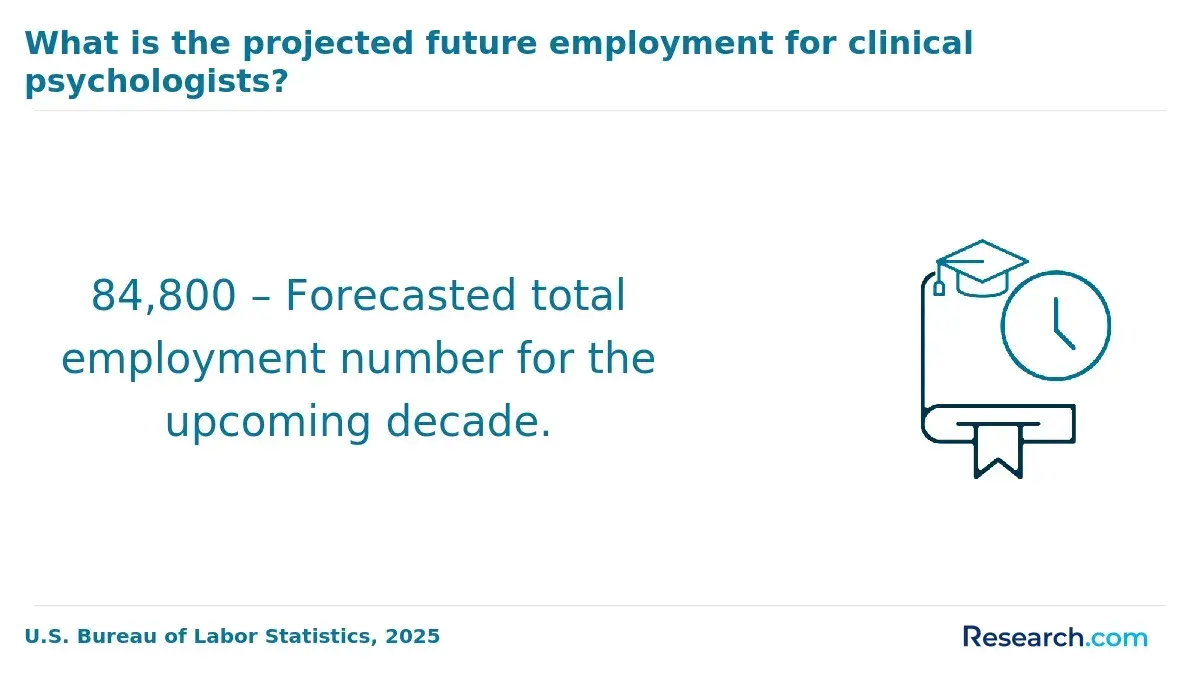
The broader job outlook for psychologists is projected to grow by 6% from 2024 to 2034. In Pennsylvania, clinical and counseling psychologists account for 3,850 jobs, school psychologists account for 2,240 jobs, postsecondary psychology teachers account for 2,240 jobs, and all other psychologists account for 520 jobs. Consumers and employers can confirm a professional’s authorization to practice through the Pennsylvania psychology license lookup on the Bureau of Professional and Occupational Affairs website.
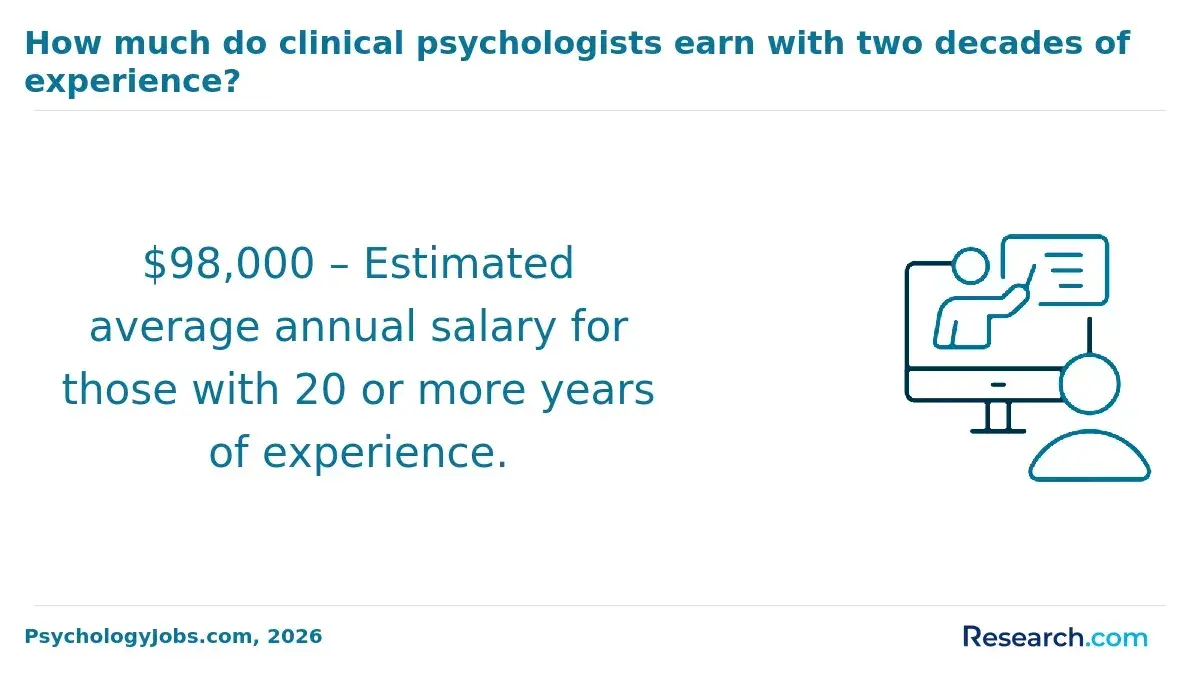
Salary data should be read carefully because sources use different job titles, time periods, and methodologies. Figures cited for Pennsylvania psychologists include an annual wage of $124,224, compared with a national average of $129,957. Other cited wage figures include $94,120 for psychologists in Pennsylvania and $85,330 nationally. Clinical psychologists are cited at $57.96 per hour or $120,550 annually, while industrial-organizational psychologists are cited at $120,814 annually. Before choosing a specialty based on income, compare official labor data, job postings, employer type, location, and years of experience.
Specialization matters. Students interested in workplace behavior may compare online industrial-organizational psychology programs, while those evaluating long-term earnings can review the highest-paying psychology career paths. Still, compensation should not be the only decision point. Licensure eligibility, clinical fit, internship quality, supervision opportunities, and population served are often more important during training.
Educational Requirements for Psychology License in Pennsylvania
Pennsylvania requires aspiring licensed psychologists to complete doctoral-level training in psychology. The doctorate should come from an APA- or CPA-accredited program for the clearest licensure path. Before enrolling, confirm accreditation directly with the program and with official accreditation directories, because institutional accreditation alone is not the same as programmatic psychology accreditation.
The path usually begins with a bachelor’s degree in psychology or a related field, followed by graduate study and doctoral training. Students who are still at the undergraduate stage can explore online behavioral psychology degree programs or other psychology majors that build foundations in research methods, statistics, human development, abnormal psychology, and ethics. Students considering specialized practice areas may also compare sports psychology degree requirements, clinical training routes, or school psychology pathways.
| Education stage | Typical purpose | Licensure relevance in Pennsylvania |
| Bachelor’s degree | Builds psychology fundamentals and research literacy | Not enough for psychologist licensure, but required for graduate admission |
| Master’s degree | May strengthen doctoral applications or support other counseling-related paths | Not the standard endpoint for psychologist licensure in Pennsylvania |
| PsyD | Practice-focused doctoral training, often emphasizing clinical service delivery | Can meet licensure education requirements if properly accredited and structured |
| PhD | Research-intensive doctoral training with clinical, academic, or scientific emphasis | Can meet licensure education requirements when the program aligns with state rules |
| EdS or school psychology route | Designed for school-based assessment and intervention roles | May support school psychologist certification, which is separate from psychologist licensure |
Doctoral applicants should also distinguish between APA-accredited clinical, counseling, and school psychology doctoral programs; regionally accredited master’s programs; and non-licensure psychology degrees. A psychology degree can be academically valuable without qualifying you for independent psychologist practice.
Application and Renewal Process of Psychology License in Pennsylvania
Licensure rules differ by state, so applicants should not assume that training completed elsewhere will automatically satisfy Pennsylvania requirements. The American Psychological Association notes that most states, including Pennsylvania, require applicants to hold doctoral degrees, although a few states have different rules for certain psychology-related credentials.
Step-by-Step Pennsylvania Psychology License Application Process
- Complete the required education. Earn the undergraduate and graduate preparation needed for admission to a doctoral psychology program. If cost is a concern during the graduate stage, compare options such as the most affordable online psychology master’s programs, but verify whether each program supports your intended doctoral or licensure pathway.
- Choose an accredited doctoral program. Confirm that the doctorate is APA- or CPA-accredited and that it includes the practicum, internship, and supervision structure required for licensure.
- Complete supervised experience. Pennsylvania requires at least two years of supervised experience. A qualifying predoctoral internship may satisfy the first year, leaving another year of 1,500 hours in 12 months.
- Finish child abuse recognition training. Applicants must complete three continuing education units focused on child abuse recognition.
- Submit a background check. Request a Criminal History Records Check from the Pennsylvania State Police. The report must be dated within 90 days of application submission.
- Apply through PALS and pay the fee. The initial application fee is $105, and the application is submitted through the Pennsylvania Licensing System.
- Take the required exams after Board approval. Applicants must pass the EPPP and the Pennsylvania Psychology Law Examination. Psychologists already licensed in another state may qualify for Pennsylvania psychology license reciprocity or may be exempt from retaking the EPPP, depending on Board review.
Renewal Requirements for Pennsylvania Psychologists
- Know the renewal date. Pennsylvania psychology licenses expire every November 30th of every odd-numbered year. The Board sends an email notice about two months before expiration.
- Complete continuing education. Licensed psychologists need 30 contact hours during the renewal period. Required topics include three contact hours in ethics, one hour in suicide prevention, and two hours in child abuse recognition. Pennsylvania recognizes Board-approved providers and APA-approved continuing education sponsors.
- Pay the renewal fee. The PA psychology license renewal fee is $300.
| Common licensing mistake | Better approach |
| Choosing a doctorate without confirming APA or CPA accreditation | Verify accreditation before applying, again before enrolling, and before starting internship planning |
| Assuming a master’s degree is enough for psychologist licensure | Confirm whether your goal is psychologist licensure, LPC licensure, MFT licensure, school certification, or another credential |
| Waiting until graduation to understand supervised experience rules | Ask programs how practicum, internship, and postdoctoral supervision are documented for Pennsylvania |
| Focusing only on tuition | Compare total cost, internship placement, time to completion, funding, fees, relocation, and lost income |
| Assuming online coursework automatically satisfies licensure requirements | Check accreditation, residency requirements, clinical placements, and state authorization |
| Ignoring license renewal obligations | Track continuing education early, especially ethics, suicide prevention, and child abuse recognition hours |
Choosing a psychology program in Pennsylvania should start with the license or career outcome you want. A student preparing for licensed clinical practice needs a different program profile than someone interested in research, positive psychology, organizational consulting, substance abuse counseling, school-based services, or forensic evaluation.
Accreditation should be your first filter. For psychologist licensure, programmatic APA or CPA accreditation is especially important. Institutional accreditation from a recognized regional accreditor also matters for financial aid, transferability, and graduate admissions, but it does not replace psychology-specific licensure alignment.
After accreditation, compare curriculum focus, practicum access, internship placement history, faculty supervision, research fit, cohort size, exam preparation support, and graduate outcomes. For example, aspiring clinical psychologists should look closely at assessment training, evidence-based therapy instruction, internship match support, and supervised clinical hours. Students interested in educational or developmental work should evaluate school partnerships and child assessment training.
Research.com’s guide to the best colleges for psychology in Pennsylvania can help you identify institutions worth comparing, but rankings should be a starting point rather than the final decision. Always verify current admissions rules, accreditation status, tuition, and licensure alignment directly with each school.
List of Top Psychology Programs in Pennsylvania for 2027
The best psychology program for you depends on your intended credential. Some programs are designed for doctoral clinical practice, while others support undergraduate preparation, research training, workplace psychology, or non-licensure specialization. If you are still exploring the field, resources explaining what child psychologists do can help you connect academic choices with real career responsibilities.
| School | Program | Best fit | Accreditation listed |
| Indiana University of Pennsylvania | Clinical Psychology PsyD | Students seeking a practice-focused doctoral path toward clinical psychology licensure | American Psychological Association (APA) |
| Pennsylvania State University | Ph.D. in Clinical Psychology | Students seeking research-intensive clinical training with adult or child specialization | American Psychological Association (APA), Psychological Clinical Science Accreditation System (PCSAS) |
| University of Pennsylvania | Master of Applied Positive Psychology | Professionals interested in applied positive psychology, organizations, coaching, or leadership contexts | Middle States Commission on Higher Education (MSCHE) |
| Widener University | Bachelor of Arts in Psychology | Undergraduates preparing for graduate study or psychology-adjacent careers | Middle States Commission on Higher Education (MSCHE) |
| University of Pittsburgh | Bachelor of Science in Psychology | Students seeking a research-oriented undergraduate psychology foundation | Middle States Commission on Higher Education (MSCHE) |
Indiana University of Pennsylvania
Indiana University of Pennsylvania offers a Clinical Psychology PsyD for students preparing for clinical practice. Applicants with a bachelor’s degree may enter the program and earn a master’s degree along the way while progressing toward the doctorate. The program reports an average class size of 15 students per year, which can be valuable for advising, supervision, and clinical training support. Its predoctoral internship component is especially important for students planning to meet Pennsylvania psychology license requirements.
- Program length: 5 years, including 12 months of predoctoral internship
- Cost per credit: $516 for in-state students; $774 for out-of-state students
- Credits required: 99
- Accreditation: American Psychological Association (APA)
Pennsylvania State University (Penn State)
Pennsylvania State University offers a Ph.D. in Clinical Psychology with adult and child tracks. The program has held APA accreditation since the 1940s and emphasizes clinical science, research competence, and evidence-informed practice. The adult track includes training relevant to issues such as post-traumatic stress disorder (PTSD), anxiety disorders, and addiction, while the child track focuses on mental health services for children and families.
- Program length: 6-7 years, including one year of predoctoral internship
- Cost per credit: $700 for in-state students; $1,175 for out-of-state students
- Credits required: 70
- Accreditation: American Psychological Association (APA), Psychological Clinical Science Accreditation System (PCSAS)
University of Pennsylvania
The University of Pennsylvania offers the Master of Applied Positive Psychology (MAPP), described as the first program of its kind in the world. Students study positive psychology with faculty including Dr. Martin Seligman, the field’s founder, and learn how to apply positive psychology concepts in workplaces, organizations, and community settings. The program has an alumni network of more than 600 graduates.
- Program length: 1 year
- Cost per credit: $7,282
- Credits required: 9
- Accreditation: Middle States Commission on Higher Education (MSCHE)
Widener University
Widener University offers a Bachelor of Arts in Psychology with an accelerated option for students who want to continue into master’s-level study. The undergraduate curriculum includes scientific research, communication, critical thinking, and exposure to developmental, social, and applied psychology. Students who want to become licensed psychologists would still need graduate and doctoral training after completing the bachelor’s degree.
- Program length: 4 years
- Cost per credit: $1,676
- Credits required: 121-122
- Accreditation: Middle States Commission on Higher Education (MSCHE)
University of Pittsburgh
The University of Pittsburgh offers a Bachelor of Science in Psychology through the Dietrich School of Arts and Sciences. The program emphasizes research, analysis, and the study of biological, social, and environmental influences on behavior. It can serve as a strong undergraduate foundation for students who plan to pursue graduate study and eventually apply for a Pennsylvania psychology license.
- Program length: 4 years
- Cost per credit: $672 for Pennsylvania residents; $1,284 for out-of-state students
- Credits required: 120 credits
- Accreditation: Middle States Commission on Higher Education (MSCHE)
How Online PsyD Programs Can Support Your Path to Licensure in Pennsylvania
An online or hybrid PsyD can make doctoral study more accessible for working adults, caregivers, and students who cannot easily relocate. However, flexibility does not automatically mean licensure eligibility. Pennsylvania applicants should evaluate online PsyD programs with the same rigor they would apply to campus-based doctoral programs.
When an Online PsyD May Make Sense
- You need schedule flexibility. Some programs use asynchronous coursework that can help students manage work or family responsibilities.
- You cannot relocate easily. Online coursework may reduce the need to move, although clinical placements, residencies, and internship requirements may still require in-person participation.
- You want to reduce indirect costs. Online study may lower commuting or housing expenses, but tuition, fees, technology costs, and travel for residencies can still be significant.
What to Verify Before Enrolling
Before choosing an online PsyD, confirm whether the program is APA-accredited, whether clinical placements are available in Pennsylvania, whether the internship structure aligns with licensure requirements, and whether graduates have successfully pursued licensure in the state. Ask the admissions office for documentation rather than relying only on marketing language.
Students comparing flexible doctoral options can review Research.com’s list of online PsyD programs, but final decisions should be based on accreditation, supervised training access, licensure outcomes, and total cost.
What Are the Emerging Trends in Psychology in Pennsylvania?
Psychology practice in Pennsylvania is being shaped by changes in care delivery, school-based mental health needs, workforce shortages, technology, and employer expectations. These trends do not replace licensure requirements, but they can influence which skills and specializations become more valuable.
- Telepsychology and hybrid care: Remote therapy and assessment-related services have expanded access for clients who face transportation, scheduling, disability, or rural access barriers. Psychologists must still comply with ethical, privacy, documentation, and jurisdictional rules.
- Trauma-informed practice: Schools, community agencies, correctional facilities, and healthcare settings increasingly value clinicians who understand trauma’s effects on behavior, learning, relationships, and treatment engagement.
- Integrated and whole-person care: Some practices combine psychological treatment with mindfulness, behavioral health collaboration, lifestyle interventions, and medical care coordination. Psychologists should stay within scope and use evidence-informed methods.
- Cultural responsiveness: Pennsylvania’s diverse communities need psychologists who can work effectively across language, culture, race, religion, disability, socioeconomic status, gender identity, and family systems.
- Forensic and legal applications: Psychological assessment is used in areas such as child custody, competency, criminal matters, and risk evaluation, creating opportunities for psychologists with specialized legal training.
- School mental health demand: Student anxiety, behavioral concerns, learning disabilities, and crisis response needs continue to make school-based psychological services important.
- Data, assessment tools, and AI: Data analytics and artificial intelligence may support screening, workflow, and treatment planning, but psychologists remain responsible for clinical judgment, ethics, bias awareness, and client safety.
How Can an Integrated Behavior Analysis Approach Benefit Your Practice in Pennsylvania?
Behavior analysis can complement psychology practice by adding structured, measurable strategies for understanding and changing behavior. This can be especially useful when working with developmental disabilities, autism services, school-based interventions, parent training, and treatment plans that require clear behavioral goals. If you are considering this adjacent credential, review Research.com’s guide on how to become a BCBA in Pennsylvania.
Is it Hard to Earn a Psychology Degree in Pennsylvania?
Psychology degrees can be demanding because they combine theory, research, statistics, writing, ethics, and applied training. Doctoral programs add clinical supervision, practica, internship preparation, dissertation or research expectations, and licensure planning. The difficulty is manageable for students who plan early, seek mentorship, and understand the difference between general psychology study and licensure-focused doctoral preparation. For a broader discussion, see is earning a psychology degree hard?
What Are the Key Differences Between a Licensed Psychologist and an LPC in Pennsylvania?
A licensed psychologist in Pennsylvania typically holds a doctoral degree and is trained in psychological assessment, diagnosis, research, intervention, and advanced clinical practice. A Licensed Professional Counselor (LPC) usually follows a master’s-level counseling route focused on counseling services, therapeutic relationships, and mental health support under a separate licensing framework. If your goal is counseling rather than doctoral psychology practice, compare the process for becoming an LPC in Pennsylvania.
| Path | Typical degree level | Common focus | Best for |
| Licensed Psychologist | Doctoral degree | Assessment, diagnosis, psychotherapy, research, consultation, supervision, and advanced practice | Students who want the broadest psychology practice authority and are prepared for lengthy doctoral training |
| LPC | Master’s degree | Counseling, talk therapy, treatment planning, and client support | Students who want a counseling career without completing a psychology doctorate |
| MFT | Master’s degree | Relationship, couple, and family systems therapy | Students focused on marriage and family therapy rather than psychologist licensure |
| School Psychologist | Specialist or graduate-level school psychology training | Student assessment, school interventions, consultation, and learning support | Students who want to work primarily in educational settings |
What Financial Resources Can Support Your Psychology Education in Pennsylvania?
Psychology training can be expensive, especially at the doctoral level. Students should compare tuition, fees, assistantships, stipends, internship costs, health insurance, relocation, technology, and the opportunity cost of reduced work hours. Complete the FAFSA when eligible, ask about graduate assistantships, and investigate scholarships, grants, work-study, employer benefits, and loan repayment programs for mental health professionals.
Do not assume the lowest tuition produces the lowest total cost. A funded doctoral program with a longer timeline may be financially better than an unfunded program with high out-of-pocket costs. Students comparing mental health careers may also review what degree is needed to become a social worker in Pennsylvania, since social work can offer a different training length, cost structure, and licensure route.
Questions to Ask a Psychology Program Before You Enroll
- Is the program currently APA- or CPA-accredited, if my goal is psychologist licensure?
- How does the program document practicum, internship, and supervised experience for Pennsylvania applicants?
- What percentage of students complete the program on time?
- What funding, assistantships, or tuition support are available?
- Where do students complete internships and postdoctoral supervision?
- How does the program support EPPP and Pennsylvania law exam preparation?
- Are online, hybrid, or out-of-state placements approved for Pennsylvania licensure planning?
- What are the total estimated costs beyond tuition?
What Are the Essential Steps to Become a School Psychologist in Pennsylvania?
School psychologists work at the intersection of education, assessment, behavior, learning, and student mental health. Their pathway is not identical to licensed psychologist practice. Candidates usually complete specialized school psychology training, supervised school-based practice, and state-specific certification requirements. If this is your preferred setting, review the detailed process for becoming a school psychologist in Pennsylvania.
What Are the Benefits of Continuing Education for Licensed Psychologists in Pennsylvania?
Continuing education is more than a renewal requirement. It helps licensed psychologists maintain ethical competence, adapt to new clinical research, improve assessment and treatment skills, and respond to changes in law, technology, and client needs. Specialized continuing education can also support practice expansion in areas such as forensic evaluation, trauma care, suicide prevention, telepsychology, and criminal justice-related work. Professionals interested in that direction may compare the path to becoming a criminal psychologist in Pennsylvania.
Could Combining Licensure with Counselor Credentials Accelerate Your Career in Pennsylvania?
Adding counselor-related credentials can broaden a professional profile, but it does not replace psychologist licensure and may not shorten the doctoral route. Dual credentials can make sense for professionals who want to serve different client populations, qualify for specific roles, or transition between counseling and psychology-related services. Before pursuing multiple licenses, compare the added coursework, supervision, exams, fees, scope of practice, and renewal obligations. If you are evaluating counseling as a faster alternative, review the shortest path to become a counselor in Pennsylvania.
Are There Other Licensure Options for Mental Health Professionals in Pennsylvania?
Not every mental health career requires becoming a licensed psychologist. Pennsylvania also has pathways for counselors, social workers, marriage and family therapists, school psychologists, behavior analysts, and substance abuse counselors. For example, the MFT license in Pennsylvania is designed for professionals who want to practice marriage and family therapy and typically involves a master’s degree, supervised clinical hours, and a licensure exam.
What Are the Career Opportunities for Psychologists in Pennsylvania Beyond Traditional Roles?
Licensed psychologists often work in therapy or assessment roles, but psychology training can also apply to business, education, public policy, healthcare administration, research, legal systems, and organizational consulting. The right path depends on your degree level, license, specialization, and willingness to build skills outside traditional clinical practice.
- Clinical and counseling practice: Hospitals, clinics, private practices, integrated care settings, and community agencies hire psychologists for evaluation, diagnosis, treatment, consultation, and supervision.
- School and educational settings: Psychologists and school psychology professionals support assessment, behavioral interventions, student mental health, disability services, and learning strategies.
- Industrial-organizational psychology: Professionals in this area may work on hiring systems, leadership development, employee engagement, training, performance, and workplace culture. Students interested in this route can compare an affordable online master’s in organizational psychology.
- Academic and research roles: Universities, labs, and research organizations employ psychologists to teach, publish, evaluate programs, and study human behavior.
- Government and nonprofit work: Psychologists may contribute to public health campaigns, crisis response, mental health policy, program evaluation, and community services.
- Corporate and consulting roles: Some professionals use psychology expertise in user research, human factors, leadership assessment, employee wellness, and organizational change.
How Can Certification Programs Complement Your Psychology Practice in Pennsylvania?
Certifications can deepen expertise, but they should be chosen strategically. A certification may help if it is respected by employers, aligned with your license, connected to real supervised practice, and useful for the population you serve. Examples include forensic psychology, neuropsychology, crisis intervention, trauma-focused care, and substance use treatment. If substance use work is part of your plan, compare requirements for becoming a substance abuse counselor in Pennsylvania.
How Can a Forensic Psychology Degree Enhance Your Professional Practice in Pennsylvania?
Forensic psychology connects psychological science with legal questions. In Pennsylvania, this specialization can be useful for professionals interested in competency evaluations, child custody matters, risk assessment, correctional settings, expert testimony, or legal consulting. A forensic psychology degree can strengthen legal-system knowledge, but psychologists must still practice within their competence, follow ethical standards, and meet any applicable court or employer requirements.
How Can Effective Exam Preparation Enhance Your Pennsylvania Licensure Success?
Exam preparation should begin before you receive Board approval to test. The EPPP requires broad knowledge across psychology domains, while the Pennsylvania Psychology Law Examination focuses on state-specific legal and ethical rules. Build a study calendar, use practice questions, review official content outlines, and ask recent graduates how they prepared. If you are comparing parallel credentials, reviewing Pennsylvania LPC license requirements can also clarify how psychology and counseling licensure expectations differ.
Is Becoming a Licensed Psychologist in Pennsylvania Worth It?
Becoming a licensed psychologist in Pennsylvania can be worth it if you want doctoral-level authority to assess, diagnose, treat, consult, supervise, teach, or specialize in advanced psychological practice. It is less likely to be the right route if you primarily want a faster counseling career, cannot commit to doctoral study, or do not need psychologist licensure for your intended role.
| Choose the psychologist path if... | Consider another mental health path if... |
| You want doctoral-level clinical authority and broad psychology training | You want to enter counseling practice sooner through a master’s-level route |
| You are interested in psychological assessment, diagnosis, research, and advanced intervention | You prefer family systems therapy, social work, school-based certification, or substance use counseling |
| You can commit to a multi-year doctoral program, internship, exams, and continuing education | You need a lower-cost or shorter training path |
| You want the option to work in private practice, healthcare, academia, consulting, or specialized assessment | Your career goal does not require independent psychologist licensure |
Students interested in workplace-focused practice can also explore an industrial-organizational psychology degree, which may lead to business and consulting roles that differ from licensed clinical psychology.
Key Insights
- Pennsylvania requires doctoral preparation for psychologist licensure. A bachelor’s or master’s degree can be useful, but the standard route to becoming a licensed psychologist requires a qualifying doctorate.
- Accreditation is a make-or-break factor. Confirm APA or CPA accreditation for doctoral programs before committing time and money.
- Supervised experience must be planned early. Pennsylvania requires at least two years, with a predoctoral internship potentially counting as the first year and another year requiring 1,500 hours in 12 months.
- The application involves more than exams. Applicants also need child abuse recognition training, a Criminal History Records Check, an application through PALS, and payment of the $105 fee.
- Licensure renewal is ongoing. Pennsylvania psychologists renew every November 30th of every odd-numbered year, pay a $300 renewal fee, and complete 30 contact hours of continuing education.
- Salary and shortage figures vary by source. Compare numbers such as $124,224, $129,957, $94,120, $85,330, 320:1, and 420:1 by checking methodology, date, and job title before making financial assumptions.
- There are multiple mental health career routes. If doctoral psychology practice is not your goal, compare LPC, MFT, social work, school psychology, BCBA, and substance abuse counseling pathways before choosing a program.
Related Articles for Nearby States
- 2027 New Jersey Psychology Licenure Requirements – How to Become a Psychologist in New Jersey
- 2027 Delaware Psychology Licensure Requirements – How to Become a Psychologist in Delaware
- 2027 Maryland Psychology Licensure Requirements – How to Become a Psychologist in Maryland
- 2027 New York Psychology Licensure Requirements – How to Become a Psychologist in New York
- 2027 West Virginia Psychology Licensure Requirements – How to Become a Psychologist in West Virginia
- 2027 Ohio Psychology Licensure Requirements – How to Become a Psychologist in Ohio
- 2027 Virginia Psychology Licensure Requirements – How to Become a Psychologist in Virginia
- 2027 Connecticut Psychology Licensure Requirements – How to Become a Psychologist in Connecticut
- 2027 Rhode Island Psychlogy Licensure Requirements – How to Become a Psychologist in Rhode Island
- 2027 Massachusetts Psychology Licensure Requirements – How to Become a Psychologist in Massachusetts
References
- American Psychological Association. Accredited Programs. https://accreditation.apa.org/accredited-programs
- Bureau of Labor Statistics. Pennsylvania occupational employment data. https://www.bls.gov/oes/current/oes_pa.htm
- Bureau of Labor Statistics. Psychologists, Occupational Outlook Handbook. https://www.bls.gov/ooh/life-physical-and-social-science/psychologists.htm
- Bureau of Labor Statistics. Occupational Employment and Wage Statistics, Pennsylvania. https://data.bls.gov/oes/#/area/4200000
- Mental Health America / NAMI Pennsylvania data sheet. https://www.nami.org/wp-content/uploads/2025/05/Pennsylvania-GRPA-Data-Sheet-8.5-x-11-wide.pdf
- Pennsylvania Department of State. Psychologist Licensure Requirements Snapshot. https://www.dos.pa.gov/ProfessionalLicensing/BoardsCommissions/Psychology/Pages/Psychologist-Licensure-Requirements-Snapshot.aspx
- Pennsylvania Department of State. Renewal. https://www.dos.pa.gov/ProfessionalLicensing/BoardsCommissions/Psychology/Pages/Renewal.aspx
- Widener University. Clinical Psychology, Ph.D. https://catalog.widener.edu/preview_program.php?catoid=41&poid=6340
- ZipRecruiter. Clinical Psychologist Salary in Pennsylvania. https://www.ziprecruiter.com/Salaries/Clinical-Psychologist-Salary--in-Pennsylvania
- ZipRecruiter. Industrial-Organizational Psychologist Salary in Pennsylvania. https://www.ziprecruiter.com/Salaries/Industrial-Organizational-Psychologist-Salary--in-Pennsylvania
- ZipRecruiter. Psychologist Salary in Pennsylvania. https://www.ziprecruiter.com/Salaries/Psychologist-Salary--in-Pennsylvania
Other Things You Should Know About The Pennsylvania Psychology Licensure Requirements
Pennsylvania requires 2 years of supervised experience, usually totaling at least 3,000 hours, after the doctoral degree. At least one year must be predoctoral internship or postdoctoral supervised experience approved by the Pennsylvania State Board of Psychology, with supervision documented to meet licensure standards.
In Pennsylvania, psychology licenses must be renewed biennially. Psychologists are required to complete 30 hours of continuing education within each renewal period. Of these, at least 3 hours must cover ethical issues, and 2 hours must focus on child abuse recognition and reporting.
Aspiring psychologists in Pennsylvania must pass the Examination for Professional Practice in Psychology (EPPP). This standardized test assesses knowledge in psychology domains essential for professional practice. Successful completion of the EPPP is crucial for licensure.
Pennsylvania requires 1,750 hours of supervised experience for licensure, obtained post-doctorally. Supervision must be conducted by a licensed psychologist and include direct client contact, support services, and professional development activities to ensure comprehensive, practical training.