2027 Virginia Psychology Licensure Requirements – How to Become a Psychologist in Virginia

Co-Founder and Chief Data Scientist
Virginia needs more qualified mental health professionals, and psychology licensure is one of the most rigorous pathways into clinical practice. According to the Virginia Health Care Foundation (VHCF), 38% of Virginians live in a mental health professional shortage area, compared with a 29% average across all states (VHCF, 2024). For students, career changers, and licensed psychologists considering relocation, that shortage creates both an opportunity and a responsibility: entering the field requires careful planning, verified education, supervised experience, and ongoing compliance with state rules.
This guide explains the Virginia psychology licensure requirements in practical terms. You will learn what degree is required, how supervised experience and the EPPP fit into the process, how renewal works, which Virginia programs may support your goals, and when another mental health credential may be a better fit. It also covers related pathways such as school psychology, counseling, forensic psychology, behavior analysis, and substance abuse counseling, so you can choose a route aligned with your career goals and the broader goals of psychology.
Virginia Psychology Licensure Requirements Table of Contents
- Overview of the Psychology Industry in Virginia
- Educational Requirements for Psychologists in Virginia
- Virginia Licensure Application and Renewal Process
- Exploring Financial Aid and Scholarships for Psychology Students in Virginia
- List of Top Psychology Programs in Virginia for 2027
- How can I transition into substance abuse counseling in Virginia?
- How can forensic psychology expand career opportunities in Virginia?
- What additional certification and training opportunities can elevate psychology practice in Virginia?
- How can psychologists in Virginia engage in telehealth practice?
- How Can Integrating Social Work and Psychology Enhance Mental Health Services in Virginia?
- Can School Psychology Bridge the Mental Health Gap in Virginia?
- Pathways for Aspiring Psychologists in Virginia Without a Traditional Doctoral Program
- What are the alternative mental health careers in Virginia that do not require a psychology license?
- What Are the Virginia LPC License Requirements?
- Should Behavior Analysis Be Considered in Virginia's Mental Health Landscape?
- What are the benefits of pursuing an LPC license in Virginia?
- What are the career prospects for criminal psychology in Virginia?
- How Can I Fast-Track My Counseling Career in Virginia?
- Alternative Pathways to Becoming a Licensed Psychologist in Virginia
Quick Answer: How do you become a licensed psychologist in Virginia?
To become a licensed psychologist in Virginia, you generally need a doctoral degree in psychology from a regionally accredited institution, qualifying supervised professional experience, a passing score on the Examination for Professional Practice in Psychology (EPPP) part 1, and approval from the Virginia Board of Psychology. Virginia also requires annual license renewal with 14 hours of continuing education, including at least 1.5 hours in ethics.
| Requirement | What Virginia Applicants Should Know |
| Degree | A doctoral degree in psychology is the standard route for licensure as a psychologist in Virginia. |
| Supervised experience | Applicants must complete at least 1,500 hours of supervised experience in a public psychological services setting under a licensed psychologist in Virginia. |
| Examination | The Board requires the Examination for Professional Practice in Psychology (EPPP) part 1. |
| Renewal | Virginia psychologists renew annually and complete 14 hours of continuing education per year, including a minimum of 1.5 hours in ethics. |
| Best fit | This path is designed for people who want the scope, title, and responsibilities of a licensed psychologist rather than a counseling, social work, or behavior analysis credential. |
Overview of the Psychology Industry in Virginia
Virginia offers several employment settings for psychologists, including hospitals, outpatient clinics, mental health centers, schools, universities, government agencies, correctional settings, and private practices. The right setting depends on your specialization, preferred client population, geographic location, and long-term career plans. If you are still comparing options, a broader guide to what you can do with a psychology degree can help you understand how undergraduate, graduate, and doctoral preparation lead to different roles.
The state’s need for psychologists is part of a broader national demand for mental health services. According to the Bureau of Labor Statistics, employment of psychologists is projected to grow 6% from 2024 to 2034, about as fast as the average for all occupations (BLS, 2024). Growth is connected to factors such as an aging population, greater public awareness of mental health, expanded service access, and the increasing relevance of mental performance and wellness issues, including research related to mental health issues even in sports psychology.
Opportunities are not distributed evenly across the Commonwealth. Northern Virginia and Richmond typically offer more clinical employers, health systems, universities, and private practice networks. Rural areas may have fewer job postings, but they can have substantial service needs because of provider shortages. That trade-off matters: urban markets may offer more openings and specialization options, while underserved communities may provide stronger mission alignment and potential eligibility for certain service-based funding or repayment programs.
The median annual salary for clinical and counseling psychologists in Virginia was $94,500 in 2024. This is higher than the national median salary of $87,200 (BLS, 2024). Actual earnings vary by specialization, years of experience, employment setting, insurance participation, supervisory responsibilities, and location. Psychologists in private practice and healthcare settings often have higher earning potential, but those roles may also involve business operations, billing systems, productivity expectations, and liability considerations.
| Virginia Practice Setting | Typical Work | Best For | Trade-Offs to Consider |
| Hospitals and healthcare systems | Assessment, diagnosis, treatment planning, consultation, and integrated care | Psychologists who want interdisciplinary clinical work | May involve productivity targets, complex documentation, and coordination with medical teams |
| Private practice | Therapy, psychological testing, niche services, telehealth, and client management | Professionals seeking autonomy and specialization | Requires business, billing, marketing, risk management, and referral development skills |
| Schools and universities | Student support, assessment, prevention, counseling, and consultation | Those focused on youth, learning, and early intervention | Licensure route and scope may differ from clinical psychology practice |
| Community mental health | Care for underserved populations, crisis-related work, and coordinated services | Mission-driven professionals who value access and public service | Caseloads may be demanding, and resources can vary by region |
| Forensic and correctional settings | Risk assessment, evaluation, treatment, consultation, and rehabilitation | Psychologists interested in law, public safety, and behavioral assessment | May require specialized training, strong documentation, and comfort with legal systems |
Before choosing a program or job market, compare the region where you want to practice, the population you want to serve, and the type of work you want to do every week. A psychology license can support many paths, but the best choice depends on whether you value clinical depth, research, testing, administration, teaching, forensic work, or private practice independence.
Educational Requirements for Psychologists in Virginia
Virginia’s licensure pathway is demanding because licensed psychologists are authorized to provide high-level psychological assessment, diagnosis, treatment, consultation, and related services. In 2024, a total of 175 job openings were posted for licensed clinical psychologist roles in Virginia, along with other behavioral health workers, including psychiatrists, clinical workers, and professional counselors (Virginia Department of Health Professions, 2024). Expanding the pipeline matters because the state continues to face mental health workforce pressure and a wider therapist shortage.
The Virginia Board of Psychology sets the requirements for psychologist licensure. The standard route includes doctoral education, supervised experience, and required examinations. Specialized roles can follow different rules; for example, the preparation needed for becoming a sports psychologist may not be identical to the requirements for school psychology, counseling psychology, or clinical psychology practice.
For full psychologist licensure in Virginia, applicants generally need a doctoral degree in psychology from a regionally accredited institution. The most common doctoral options are a Doctor of Philosophy (PhD) in Psychology or a Doctor of Psychology (PsyD). Before doctoral study, students usually complete a bachelor’s degree in psychology or a closely related field, although some doctoral programs consider applicants from other academic backgrounds when they have strong research, statistics, or behavioral science preparation.
A master’s degree in psychology alone does not meet the standard Virginia requirement for full psychologist licensure. However, some graduates with a master’s-level background may qualify for a school psychologist-limited license in Virginia, which allows practice within a defined educational setting rather than the full independent scope of a licensed psychologist.
Doctoral programs should include coursework and training aligned with Virginia’s licensure requirements. Common areas include assessment, diagnosis, intervention, ethics, research methods, statistics, clinical foundations, and supervised practice. The doctoral internship is especially important because it gives students supervised experience in psychological assessment, diagnosis, treatment, and professional decision-making.
| Education Option | Can It Lead to Full Virginia Psychologist Licensure? | When It Makes Sense |
| Bachelor’s in psychology | No | Good starting point for research assistant roles, human services work, or preparation for graduate school |
| Master’s in psychology | Not by itself for full psychologist licensure | Useful for research, school psychology-limited routes, organizational roles, or doctoral preparation |
| PhD in Psychology | Yes, if it satisfies state requirements | Best for students interested in research, academia, assessment, clinical science, or specialized practice |
| PsyD | Yes, if it satisfies state requirements | Often suited to students focused primarily on clinical practice and applied training |
| Counseling, social work, or MFT degree | No for psychologist licensure | May lead to another mental health license with a different scope of practice |
Questions to ask before choosing a psychology program in Virginia
- Will this degree meet Virginia Board of Psychology expectations? Do not assume a psychology-related program qualifies for psychologist licensure.
- Does the program provide supervised clinical experience and internship preparation? Coursework alone is not enough for licensure.
- Is the institution regionally accredited? Accreditation affects licensure eligibility, transferability, and financial aid access.
- What are the program’s clinical training sites? Strong placements can affect your readiness for supervised practice and future employment.
- Does the curriculum match your intended specialization? Clinical, counseling, school, forensic, health, and industrial-organizational paths can lead to very different careers.
Virginia Licensure Application and Renewal Process
Start preparing for the Virginia psychology license before your final year of doctoral study. The application process depends on documented education, supervised experience, examination results, and the Board’s review of your professional fitness. Applicants should use the Virginia Board of Psychology’s official materials as the controlling source because rules, forms, fees, and documentation standards can change.
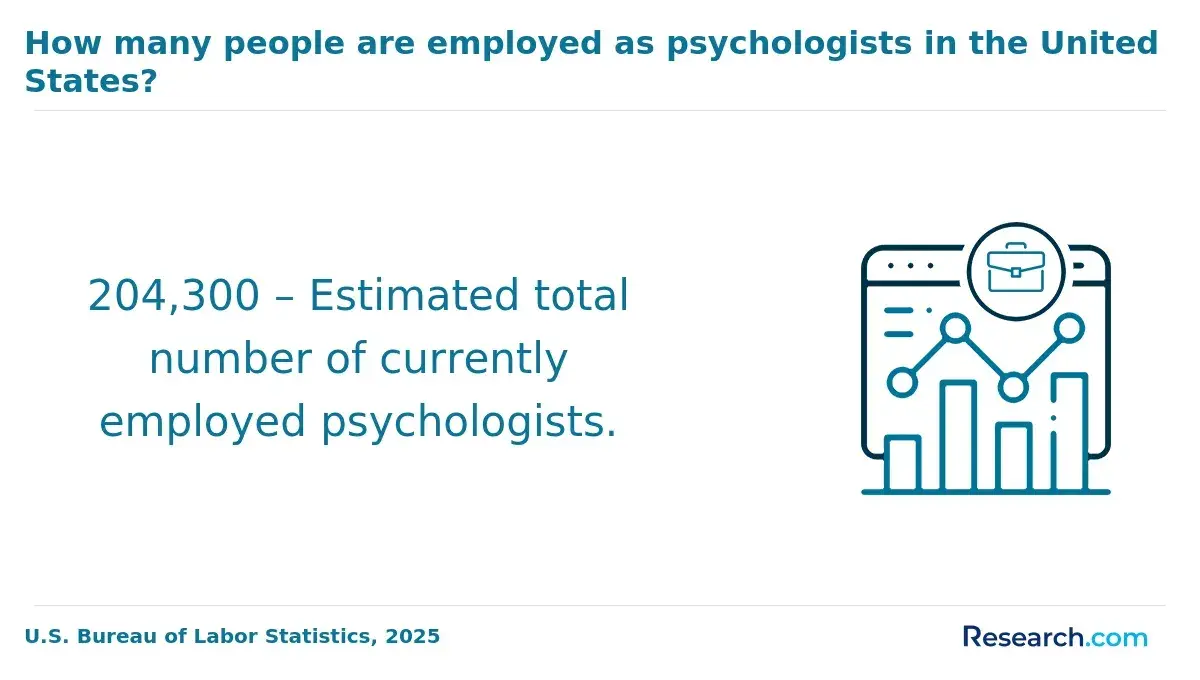
From 3,614 licensees in 2018, the total number of licensed psychologists in Virginia reached 4,860 in 2024, or an increase of approximately 34.5% since 2018 (Virginia Department of Health Professions, 2024). Even with that growth, the shortage data show that many Virginians still live in areas with limited access to mental health professionals.
The Virginia Board of Psychology evaluates psychologist licensure and registration applications using several core criteria:
- Education. Applicants need a doctoral degree in psychology from an accredited program.
- Examination. Applicants must pass the Examination for Professional Practice in Psychology (EPPP) part 1.
- Supervised experience. Applicants must complete at least 1,500 hours of supervised experience in a setting that provides psychological services to the public, with supervision from a licensed psychologist in Virginia.
- Good moral character. Applicants must demonstrate professional fitness and should not have criminal convictions or disciplinary history that would compromise safe and ethical psychology practice.
The Board reviews transcripts, EPPP documentation, supervised experience verification, references, and other required materials. In some cases, the Board may interview an applicant before making a licensing decision.
Virginia’s review is not a simple checklist with one universal outcome. Psychology practice includes multiple specialties, populations, and risk levels, so the Board evaluates applications individually. In addition to psychologist licensure, the Board also issues a sex offender treatment provider license.
| Step | What to Do | Common Mistake to Avoid |
| 1. Verify degree eligibility | Confirm that your doctoral program and institution meet Virginia expectations. | Assuming any doctoral psychology degree automatically qualifies. |
| 2. Track supervised experience | Document hours, setting, supervisor credentials, and services provided. | Waiting until the end of training to reconstruct supervision records. |
| 3. Prepare for the EPPP | Build a study timeline and confirm testing requirements with the Board. | Underestimating the time needed to prepare for the exam. |
| 4. Submit a complete application | Provide transcripts, score reports, verification forms, references, and fees. | Submitting partial documents and delaying Board review. |
| 5. Maintain compliance after approval | Complete annual continuing education and renew by the deadline. | Treating licensure as finished after initial approval. |
After meeting Virginia psychology licensure requirements, some psychologists choose to pursue the National Register of Health Service Psychologists (NRHSP) credential. This voluntary credential requires documentation of education, experience, examination results, a personal statement, and two letters of recommendation. If approved, the psychologist receives the Health Service Psychologist (HSP) credential, which some employers and healthcare organizations recognize as an additional professional signal.
Licensed psychologists moving between states should verify the current rules for endorsement, mobility, and specialty credentials before accepting a position. The original license may support mobility, but each state’s board controls whether and how a psychologist may practice within that jurisdiction. Psychologists should not begin practice in another state until they have confirmed authorization.
How do I renew my psychologist license in Virginia?
Virginia psychologists must renew their license each year. The renewal requirement includes 14 hours of continuing education (CE) per year, with at least 1.5 hours in ethics. Psychologists must also submit the renewal application and pay the required renewal fee.
CE can be completed online, in person, or through a combination of formats. The safest approach is to confirm that each course is accepted before enrolling, especially if the topic involves ethics, telehealth, supervision, risk management, or specialty practice.
The renewal deadline is June 30 each year. Missing the deadline can make a license inactive, which may interrupt practice and create administrative problems with employers, insurers, and clients.
If a psychologist fails to renew on time, reinstatement generally requires a late fee and a reinstatement application. Additional CE may also be required, depending on the circumstances. Keeping a CE file with certificates, dates, providers, and topic areas can prevent avoidable renewal problems.
Exploring Financial Aid and Scholarships for Psychology Students in Virginia
Psychology education can be expensive because full licensure typically requires doctoral-level training, supervised clinical preparation, and several years of study. Students should evaluate affordability early rather than waiting until admission offers arrive. Tuition is only one part of the cost; fees, books, transportation, internship relocation, unpaid practicum time, examination costs, and lost work hours can also affect the total investment.
Federal and State Financial Aid
The first step for many students is completing the Free Application for Federal Student Aid (FAFSA). The FAFSA may help students access federal grants, loans, and work-study opportunities. Virginia students should also review state-based aid, including the Virginia Commonwealth Grant, if they meet applicable eligibility criteria.
Psychology-Specific Scholarships
Scholarships may be available through universities, professional associations, foundations, and psychology departments. The Virginia Psychological Association (VPA), for example, awards scholarships to graduate psychology students who show academic strength and commitment to the profession. Students comparing programs among the best colleges for psychology in Virginia should ask each school about departmental scholarships, assistantships, research funding, and tuition remission opportunities.
Employer and Military Benefits
Working professionals may be able to use employer tuition reimbursement or professional development benefits. Military members, veterans, and eligible family members may also consider education benefits such as the Post-9/11 GI Bill. Because doctoral psychology programs can have residency, internship, and practicum requirements, students using benefits should confirm how funding applies to each stage of training.
Steps to Maximize Financial Aid Opportunities
- Apply for financial aid and scholarships early, since some funding is limited or awarded before final admission deadlines.
- Ask each school’s financial aid office and psychology department about assistantships, grants, tuition discounts, and program-specific awards.
- Compare total cost of attendance, not just tuition, and include internship-related expenses in your budget.
- Research loan repayment or service-based programs that may apply to professionals working in underserved areas.
- Review whether part-time enrollment, transfer credit, or assistantship work could reduce borrowing without delaying licensure too much.
| Cost Factor | Why It Matters | What to Ask |
| Tuition and mandatory fees | These drive the largest direct cost for many students. | What is the full program cost from admission through completion? |
| Practicum and internship expenses | Clinical training may require commuting, relocation, or reduced paid work. | Where are placements located, and are paid internships available? |
| Assistantships and funding | Research or teaching roles may reduce costs and build experience. | How many students receive assistantships, and what do they cover? |
| Exam and licensure costs | Application, exam, background, and renewal costs continue beyond graduation. | Which costs should students budget for before independent practice? |
| Time to completion | Longer programs can increase living costs and delay full-time earnings. | What is the typical completion timeline for students with similar backgrounds? |
List of Top Psychology Programs in Virginia for 2027
The programs below represent different psychology pathways in Virginia, from undergraduate preparation to doctoral study. A “top” program is not automatically the best program for every student. Match the degree level, specialization, clinical training model, faculty research, internship preparation, funding, and location to your career goal.
College of William & Mary: BA/BS in Psychology
The College of William & Mary offers a BA or BS in psychology that fits well within a liberal arts education. Students study behavior, cognition, research design, statistics, and communication while building analytical skills useful for graduate study and many nonclinical careers. The major includes exposure to instruction using laboratory and social research methodologies. William & Mary also offers a neuroscience specialization that combines psychology with biology, mathematics, and chemistry coursework.
George Mason University: Ph.D. in Psychology
The Ph.D. in Psychology at George Mason University emphasizes core psychological science and the application of that knowledge to human problems in relationships, work, learning, and behavior. The curriculum covers foundational areas such as biological, social, cognitive, individual, and historical bases of psychology. Concentration options include applied developmental psychology, clinical psychology, cognitive and behavioral neuroscience, human factors/applied cognition, and industrial/organizational psychology.
Old Dominion University: Health Psychology Ph.D.
Old Dominion University offers a health psychology Ph.D. focused on using psychological research and practice to address real-world health challenges. Students participate in research throughout the program and may engage with projects supported by federal and nonfederal agencies such as the National Institutes of Health (NIH) and the National Science Foundation (NSF). Training can include grant proposal development, research design, data collection, data analysis, and dissemination of findings.
Virginia Commonwealth University: Ph.D. in Counseling Psychology
Virginia Commonwealth University uses a scientist-practitioner model in its counseling psychology doctoral training. The program prepares students to contribute to counseling psychology through research, evidence-based intervention, ethical practice, and innovative and interdisciplinary approaches to service delivery. Graduates may work in academia, medical settings, hospitals, communities, universities, and other clinical environments. Students interested in organizational leadership or consulting can also explore how a psychology business degree connects psychology with workplace and business applications.
University of Virginia: PhD in Psychology
The University of Virginia offers a Ph.D. in Psychology with seven concentrations, including clinical psychology, cognitive psychology, quantitative psychology, and developmental psychology. Applicants are not required to have an undergraduate psychology major, but they should be able to explain why psychology is the right discipline for their goals and how their prior academic background supports graduate study. Admitted students may request master’s degree credit toward the Ph.D.; however, after a student enters a specialization, transfers between programs are no longer allowed.
How can I transition into substance abuse counseling in Virginia?
Substance abuse counseling can be a strong alternative or complementary path for people who want to work directly with individuals affected by addiction, recovery, relapse prevention, and co-occurring mental health concerns. This route is different from the psychologist licensure track because it usually focuses on addiction-specific coursework, supervised clinical practice, treatment planning, ethics, and credentialing requirements tied to substance use services.
If your goal is to enter the behavioral health workforce sooner than a doctoral psychology route allows, review Virginia’s credentialing expectations carefully and compare them with your existing education. Research.com’s guide on how to become a substance abuse counselor in Virginia explains education, certification, supervised experience, and career progression options for this field.
How can forensic psychology expand career opportunities in Virginia?
Forensic psychology connects psychological knowledge with legal, correctional, and public safety systems. In Virginia, this specialization may involve offender assessment, competency-related work, risk evaluation, rehabilitation planning, expert consultation, and collaboration with attorneys, courts, law enforcement, or correctional agencies.
This field is best suited to professionals who are comfortable with formal reports, legal standards, high-stakes decision-making, and careful documentation. Students who want targeted graduate training can explore forensic psychology master's programs online while also confirming whether their intended role requires psychologist licensure, counseling licensure, or another credential.
Successfully Navigate the Virginia Psychology Licensure Requirements
Virginia’s psychology licensure framework is designed to protect the public by ensuring that psychologists have advanced education, supervised practice experience, examination readiness, and ethical grounding. The process is lengthy, but each stage builds competence for independent psychological assessment, diagnosis, intervention, consultation, and documentation.
If your primary interest is clinical assessment and doctoral-level psychological practice, the psychologist route may be the right fit. If you mainly want to provide therapy, work in schools, support families, treat addiction, or enter mental health practice more quickly, another credential may be more practical. Research.com’s guide to what you can do with a clinical psychology degree can help you compare clinical roles before committing to a program.
What additional certification and training opportunities can elevate psychology practice in Virginia?
Specialized training can help psychologists and related mental health professionals serve narrower populations, qualify for specific roles, or build a more distinctive practice. Examples include behavioral intervention, trauma-informed care, telehealth, forensic assessment, child and adolescent services, supervision, and integrated healthcare.
One option is an applied behavior analysis certification online, which can strengthen skills in behavior assessment and intervention. Additional credentials should be chosen strategically: they should match your client population, employer expectations, scope of practice, and long-term career plan rather than simply adding letters after your name.
How can psychologists in Virginia engage in telehealth practice?
Telehealth has become a major part of mental health care because it can reduce travel barriers, expand access for rural and underserved communities, and allow more flexible scheduling. For Virginia psychologists, telehealth can be valuable, but it must be handled with the same legal, ethical, and clinical care as in-person practice.
- Licensure and jurisdiction. Psychologists offering telehealth in Virginia must be licensed by the Virginia Board of Psychology. If a client is located outside Virginia, the psychologist must confirm whether practice is legally permitted in that state or jurisdiction.
- Privacy and informed consent. Telehealth requires secure, appropriate technology and clear informed consent. Clients should understand confidentiality limits, technology risks, emergency procedures, and what happens if a session is interrupted.
- Clinical fit. Telehealth is not equally appropriate for every client, diagnosis, crisis level, or assessment need. Psychologists should decide whether remote care is clinically suitable before proceeding.
- Emergency planning. Providers should know the client’s location during sessions, have emergency contacts when appropriate, and understand local crisis resources.
- Competency training. Psychologists should seek CE or training on virtual rapport, remote risk assessment, documentation, platform security, and technology disruptions.
| Telehealth Question | Why It Matters |
| Where is the client physically located during the session? | Licensure rules are tied to jurisdiction, not just the psychologist’s office location. |
| Is telehealth clinically appropriate for this client? | Some situations require in-person evaluation, crisis intervention, or higher levels of care. |
| Is the platform secure and appropriate for health information? | Privacy and confidentiality obligations apply in virtual care. |
| Has the client received telehealth-specific informed consent? | Clients need to understand risks, benefits, limits, and emergency procedures. |
How Can Integrating Social Work and Psychology Enhance Mental Health Services in Virginia?
Psychology and social work often address different parts of the same client problem. Psychologists may focus on assessment, diagnosis, testing, psychotherapy, consultation, and behavioral science. Social workers often add case management, systems navigation, family support, resource coordination, advocacy, and community-based intervention.
Combining these perspectives can improve care for clients whose mental health is affected by housing instability, poverty, family stress, disability, transportation barriers, or limited access to medical services. Students interested in interdisciplinary practice can review what degree you need to be a social worker in Virginia to understand how social work credentials compare with psychology training.
Can School Psychology Bridge the Mental Health Gap in Virginia?
School psychologists can play a major role in early identification and prevention because they work where children and adolescents spend much of their time. Their responsibilities may include psychoeducational assessment, behavioral consultation, crisis response, mental health support, family collaboration, and intervention planning with teachers and administrators.
This route may appeal to students who want to work with children, learning differences, school systems, and prevention rather than pursue private clinical practice with all age groups. To compare the education and credentialing steps, see Research.com’s guide on how to become a school psychologist in Virginia.
Pathways for Aspiring Psychologists in Virginia Without a Traditional Doctoral Program
Full psychologist licensure in Virginia generally requires doctoral education, but not every mental health career requires the psychologist title. If a traditional doctoral path is not realistic because of time, cost, relocation, or career goals, you can still pursue meaningful work in counseling, schools, social services, behavior analysis, substance abuse treatment, organizational psychology, or related fields.
Online PsyD Programs: A Flexible Alternative
Some students consider online or hybrid PsyD programs because they need greater scheduling flexibility. These programs may combine online coursework with in-person residencies, practicums, internships, and supervised clinical training. If you are comparing psyd online programs, confirm accreditation, Virginia licensure alignment, internship placement support, residency requirements, and total cost before enrolling.
Key benefits of online PsyD programs include:
- Scheduling flexibility. Online coursework can help working adults manage school, family, and employment responsibilities.
- Specialization options. Some programs offer clinical, forensic, school, or other applied psychology tracks.
- Licensure-focused preparation. Programs that meet Virginia requirements can prepare students for supervised training and the EPPP, but students must verify eligibility directly.
School Psychology as an Entry Point
A master’s-level background may support a school psychologist-limited license in Virginia, depending on program fit and state requirements. This option allows professionals to work in educational settings rather than provide the full independent scope of a licensed psychologist.
Advantages of this pathway include:
- Earlier workforce entry. A master’s route may take less time than completing a doctorate before entering a school-based role.
- Defined population focus. The work centers on students, learning, behavior, prevention, and school-based mental health support.
Bridge Programs for Career Advancement
Professionals with graduate degrees in counseling, social work, education, or a related field may look for bridge or advanced-standing options. These programs can fill academic gaps, but they do not automatically replace doctoral psychology training. Always confirm whether the program leads to the credential you want in Virginia.
Continuing Education and Certification
If you are not ready for doctoral study, certifications in counseling-related areas, substance abuse treatment, behavior analysis, or specialized mental health topics can help you gain experience. These credentials may support career mobility, but they should be evaluated based on scope of practice, employer recognition, and state rules.
What are the alternative mental health careers in Virginia that do not require a psychology license?
Several mental health careers in Virginia do not require full psychologist licensure. Depending on your interests, you may consider counseling, social work, marriage and family therapy, substance abuse treatment, school-based services, behavior analysis, or case management. For example, earning an MFT license in Virginia can prepare professionals to provide therapy to individuals, couples, and families through a family-systems lens.
These alternatives can be a better fit if you want to provide therapy without completing a psychology doctorate, prefer a master’s-level route, or want a more specialized scope of practice. The key is to compare the credential, supervision requirements, independent practice rules, insurance recognition, and client population before choosing a program.
What Are the Virginia LPC License Requirements?
The Licensed Professional Counselor pathway is one of the most common alternatives to psychologist licensure for people who want to provide therapy. Virginia’s LPC route requires graduate counseling education, supervised clinical experience, examination requirements, and ongoing continuing education after licensure.
Prospective counselors should verify that their master’s degree in counseling or a closely related field meets Virginia’s coursework standards. They should also understand supervision rules before graduating, because post-degree hours and supervisor qualifications can affect the licensing timeline. For a detailed breakdown, review Research.com’s guide to Virginia LPC license requirements.
Should Behavior Analysis Be Considered in Virginia's Mental Health Landscape?
Behavior analysis can expand the mental health and developmental services workforce by focusing on behavior assessment, intervention planning, skill-building, and measurable treatment goals. It is especially relevant in services for autism spectrum disorder, developmental disabilities, and complex behavioral needs.
This path is not the same as becoming a licensed psychologist, but it can complement psychology, education, and healthcare services. Professionals interested in this field should review credentialing expectations, supervised experience, and practice settings through Research.com’s guide on how to become a BCBA in Virginia.
What are the benefits of pursuing an LPC license in Virginia?
An LPC license can be a practical route for people who want to provide counseling services without completing a doctoral psychology program. The pathway typically centers on a master’s degree in counseling, supervised clinical work, examinations, and continuing education.
This option may make sense if your main goal is direct therapy in private practice, community agencies, hospitals, schools, telehealth, or nonprofit settings. It may also allow earlier entry into the counseling workforce than the psychologist route. To understand the full process, see Research.com’s guide on how to become an LPC in Virginia.
What are the career prospects for criminal psychology in Virginia?
Criminal psychology applies psychological concepts to criminal behavior, investigation, correctional rehabilitation, victim services, risk assessment, and public safety. In Virginia, professionals with this interest may work in forensic units, correctional systems, government agencies, research organizations, or legal-adjacent roles.
Because job titles and legal authority vary, students should distinguish between criminal psychology, forensic psychology, clinical psychology, and law enforcement roles. Some positions require psychologist licensure, while others may accept related graduate training. Research.com’s guide on how to become a criminal psychologist in Virginia explains education and career steps in more detail.
How Can I Fast-Track My Counseling Career in Virginia?
If your goal is to begin counseling work as efficiently as possible, a doctoral psychology program may not be the fastest route. Virginia counseling pathways may offer a shorter timeline through master’s-level education, supervised clinical training, and licensure as a counselor or related provider.
Fast does not mean skipping quality controls. You still need an eligible degree, approved supervision, examination readiness, and ethical competence. The best accelerated path is the one that meets Virginia standards without creating licensure problems later. For practical comparisons, read Research.com’s guide to the shortest path to become a counselor in Virginia.
Alternative Pathways to Becoming a Licensed Psychologist in Virginia
Most people who become licensed psychologists in Virginia complete a PhD or PsyD in psychology. However, there are related routes for people who want to use psychological knowledge without holding the psychologist title. These pathways can lead to valuable careers in business, education, counseling, behavioral services, and community mental health.
Pursuing a Master’s in Organizational Psychology
Organizational psychology applies behavioral science to workplaces, leadership, teams, hiring, motivation, employee wellbeing, performance, and organizational change. This route does not lead to psychologist licensure, but it can support careers in human resources, talent development, employee experience, consulting, and leadership coaching.
An affordable online master's in organizational psychology can be useful for students who want psychology-based training with a business focus. It may be a better fit than clinical psychology if you prefer workplace systems over diagnosis, therapy, and healthcare regulation.
Bridge Programs for Those with Related Degrees
Bridge programs may help students with backgrounds in counseling, social work, education, or human services transition into a psychology-related graduate path. These programs can reduce duplication of coursework, but they do not guarantee eligibility for psychologist licensure. Students should request written confirmation about degree outcomes, licensure alignment, and supervised training requirements.
Licensed Professional Counselor (LPC) Track
The LPC track is often a better match for people who want to provide therapy but do not need the full scope of a licensed psychologist. LPCs may work in private practice, agencies, schools, hospitals, and telehealth settings, depending on their license status and employer requirements.
Telehealth Opportunities
Telehealth can expand access to services and increase flexibility for licensed mental health professionals. However, telehealth practice depends on licensure rules, client location, informed consent, privacy protections, and clinical appropriateness. Students interested in virtual therapy should choose a licensure path that clearly authorizes the services they want to provide.
Post-Graduate Specialization Certifications
Post-graduate certificates can help professionals focus on areas such as forensic psychology, health psychology, child psychology, trauma, assessment, or behavioral intervention. These credentials are most valuable when they build real competency, satisfy employer expectations, and fit within the professional’s legal scope of practice.
Common Mistakes to Avoid When Planning a Virginia Psychology Career
- Choosing a program without checking licensure alignment. A psychology-related degree is not always a licensure-eligible psychology degree.
- Looking only at tuition. Total cost includes fees, practicum travel, internship relocation, exam costs, and lost income.
- Assuming online programs automatically qualify. Online and hybrid programs must still meet Virginia’s education and supervised training expectations.
- Confusing similar credentials. Psychologist, LPC, MFT, social worker, school psychologist, and BCBA roles have different scopes of practice.
- Ignoring geography. Job markets, salaries, training sites, and service shortages vary across Virginia.
- Waiting too long to document supervised experience. Incomplete supervision records can delay licensure.
- Assuming salary outcomes are guaranteed. Earnings depend on specialization, employer, location, experience, and practice model.
Key Insights
- Virginia has a documented access problem. VHCF reports that 38% of Virginians live in a mental health professional shortage area, compared with a 29% average across all states.
- Full psychologist licensure is a doctoral-level pathway. A PhD or PsyD in psychology is the standard route; a master’s degree alone does not usually qualify for full psychologist licensure in Virginia.
- The core licensure steps are education, supervised experience, examination, and Board approval. Applicants need at least 1,500 hours of supervised experience and must pass the EPPP part 1.
- Licensure does not end after approval. Virginia psychologists renew annually and complete 14 hours of continuing education each year, including at least 1.5 hours in ethics.
- Alternative credentials may be smarter for some goals. If you primarily want to provide counseling, work in schools, support families, treat substance use disorders, or practice behavior analysis, compare LPC, school psychology, MFT, social work, LSATP, and BCBA pathways before committing to a doctorate.
- Program choice should be decision-based, not ranking-based. Accreditation, licensure alignment, clinical placements, faculty fit, funding, location, and completion timeline matter more than name recognition alone.
Related Articles for Nearby States
- 2027 West Virginia Psychology Licensure Requirements – How to Become a Psychologist in West Virginia
- 2027 Maryland Psychology Licensure Requirements – How to Become a Psychologist in Maryland
- 2027 North Carolina Psychology Licensure Requirements – How to Become a Psychologist in North Carolina
- 2027 Tennessee Psychology Licensure Requirements – How to Become a Psychologist in Tennessee
- 2027 Kentucky Psychology Licensure Requirements – How to Become a Psychologist in Kentucky
- 2027 Pennsylvania Psychology Licensure Requirements – How to Become a Psychologist in Pennsylvania
- 2027 South Carolina Psychology Licensure Requirements – How to Become a Psychologist in South Carolina
- 2027 Ohio Psychology Licensure Requirements – How to Become a Psychologist in Ohio
- 2027 Delaware Psychology Licensure Requirements – How to Become a Psychologist in Delaware
- 2027 New Jersey Psychology Licenure Requirements – How to Become a Psychologist in New Jersey
References:
- Psychology.org. (2024). What Can You Do With A Psychology Degree? https://www.psychology.org/resources/alternative-careers-for-psychology-majors/
- Virginia Health Care Foundation. (2024). Virginia Health Care Foundation. https://www.vhcf.org/research/mental-health-shortage-2024
- Virginia Department of Health. (2024). Virginia Behavioral Health Workforce Report. https://www.vdh.virginia.gov/behavioral-health/workforce-report/
- U.S. Bureau of Labor Statistics. (2025). Psychologists: Occupational Outlook Handbook. https://www.bls.gov/ooh/life-physical-and-social-science/psychologists.htm
Other Things You Should Know About The Virginia Psychology Licensure Requirements
To apply for a psychology license in Virginia in 2027, you must submit an application to the Virginia Board of Psychology. This includes proof of a doctorate from an accredited program, verification of supervised experiences, and passing scores on the EPPP and Virginia State Exam. Ensure all documents and fees are submitted as required.
In Virginia, psychologists must renew their license every two years. Renewal requires completing 14 hours of continuing education annually, including ethics or standards of professional practice. This ensures that psychologists maintain their competency and stay updated with professional standards.
To become a licensed psychologist in Virginia in 2027, candidates must complete 1,500 hours of supervised experience in no less than 12 months and receive a successful evaluation. This experience can be obtained through an approved practicum, internship, or residency in psychology.
In Virginia, psychologists licensed in another state can practice if they meet endorsement requirements, including proof of an active license in good standing and fulfillment of Virginia's educational and experience criteria. A formal application with the Board is required for verification and approval.
You must complete 14 hours of continuing education annually, with at least 1.5 hours dedicated to ethics. Continuing education can be completed online, in person, or through a combination of both.